

Poems in this topic
Romantic Love
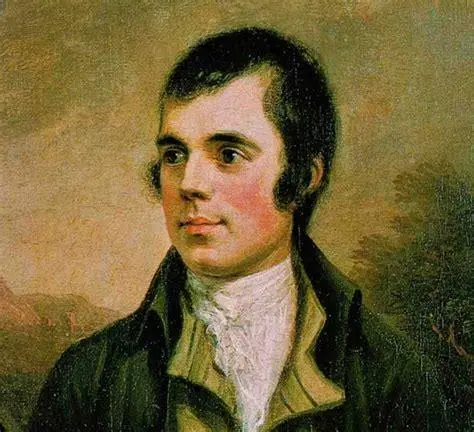
Robert Burns
On A Bank Of Flowers
On A Bank Of Flowers
On a bank of flowers in a summer day
For summer lightly drest,
The youthful, blooming Nelly lay,
With love and sleep opprest;
When Willie, wand'ring thro the wood
Who for her favour oft had suedÑ
He gaz'd, he wish'd He fear'd, he blush'd
And trembled where he stood.
Her closèd eyes, like weapons sheath'd,
Were sealed in soft repose;
Her lips, still as she fragrant breath'd,
It richer dyed the rose.
The springing lilies, sweetly Crest,
Wild-wanton kissed her rival breast:
He gaz'd, he wish'd, He fear'd he blush'd
His bosom ill at rest.
Her robes, light-waving in the breeze,
Her tender limbs embrace;
Her lovely form, her native ease,
All harmony and grace.
Tumultuous tides his pulses roll,
A faltering, ardent kiss he stole;
He gaz'd, he wish'd, He fear'd, he blush'd,
And sigh'd his very soul.
As flies the partridge from the brake
On fear-inspired wings
So Nelly starting, half-awake
Away affrighted springs.
But Willie, follow'd---as he should
He overtook her in the wood;
He vow'd, he pray'd, He found the maid
Forgiving all, and good.
On a bank of flowers in a summer day
For summer lightly drest,
The youthful, blooming Nelly lay,
With love and sleep opprest;
When Willie, wand'ring thro the wood
Who for her favour oft had suedÑ
He gaz'd, he wish'd He fear'd, he blush'd
And trembled where he stood.
Her closèd eyes, like weapons sheath'd,
Were sealed in soft repose;
Her lips, still as she fragrant breath'd,
It richer dyed the rose.
The springing lilies, sweetly Crest,
Wild-wanton kissed her rival breast:
He gaz'd, he wish'd, He fear'd he blush'd
His bosom ill at rest.
Her robes, light-waving in the breeze,
Her tender limbs embrace;
Her lovely form, her native ease,
All harmony and grace.
Tumultuous tides his pulses roll,
A faltering, ardent kiss he stole;
He gaz'd, he wish'd, He fear'd, he blush'd,
And sigh'd his very soul.
As flies the partridge from the brake
On fear-inspired wings
So Nelly starting, half-awake
Away affrighted springs.
But Willie, follow'd---as he should
He overtook her in the wood;
He vow'd, he pray'd, He found the maid
Forgiving all, and good.
233
Robert Burns
Ny Nannie, O
Ny Nannie, O
Behind yon hills, where Lugar flows,
'Mang moors an' mosses many, O,
The wintry sun the day has clos'd,
And I'll awa to Nannie, O.
The westlin wind blaws loud and shill;
The night's baith mirk an' rainy, O;
But I'll get my plaid, an' out I'll steal,
An' owre the hills to Nannie, O.
My Nannie's charming, sweet, an' young:
Nae artfu' wiles to Will ye, O:
May ill befa' the flattering tongue
That wad beguile my Nannie, O.
Her face is fair, her heart is true,
She's spotless as she's bonnie, O:
The op'ning gowan, wet wi' dew,
Nae purer is than Nannie, O.
A country lad is my degree,
And few there be that ken me, O;
But what care I how few they be
I'm welcome aye to Nannie, O.
My riches a' 's my penny-fee,
An' I maun guide it cannie, O;
But warl's gear ne'er troubles me,
My thoughts are a' my Nannie, O.
Our auld guidman delights to view
His sheep and kye thrive bonnie, O;
But I'm as blythe that hauds his pleugh,
An' has nae care but Nannie, O.
Come weel, come woe, I care na by,
I'll tak' what Heav'n will sen' me, O;
Nae ither care in life have I,
But live, an' love my Nannie, O.
Behind yon hills, where Lugar flows,
'Mang moors an' mosses many, O,
The wintry sun the day has clos'd,
And I'll awa to Nannie, O.
The westlin wind blaws loud and shill;
The night's baith mirk an' rainy, O;
But I'll get my plaid, an' out I'll steal,
An' owre the hills to Nannie, O.
My Nannie's charming, sweet, an' young:
Nae artfu' wiles to Will ye, O:
May ill befa' the flattering tongue
That wad beguile my Nannie, O.
Her face is fair, her heart is true,
She's spotless as she's bonnie, O:
The op'ning gowan, wet wi' dew,
Nae purer is than Nannie, O.
A country lad is my degree,
And few there be that ken me, O;
But what care I how few they be
I'm welcome aye to Nannie, O.
My riches a' 's my penny-fee,
An' I maun guide it cannie, O;
But warl's gear ne'er troubles me,
My thoughts are a' my Nannie, O.
Our auld guidman delights to view
His sheep and kye thrive bonnie, O;
But I'm as blythe that hauds his pleugh,
An' has nae care but Nannie, O.
Come weel, come woe, I care na by,
I'll tak' what Heav'n will sen' me, O;
Nae ither care in life have I,
But live, an' love my Nannie, O.
216
Robert Burns
My Nannie, O
My Nannie, O
Behind yon hills, where Lugar flows,
'Mang moors an' mosses many, O,
The wintry sun the day has clos'd,
And I'll awa to Nannie, O.
The westlin wind blaws loud and shill;
The night's baith mirk an' rainy, O;
But I'll get my plaid, an' out I'll steal,
An' owre the hills to Nannie, O.
My Nannie's charming, sweet, an' young:
Nae artfu' wiles to Will ye, O:
May ill befa' the flattering tongue
That wad beguile my Nannie, O.
Her face is fair, her heart is true,
She's spotless as she's bonnie, O:
The op'ning gowan, wet wi' dew,
Nae purer is than Nannie, O.
A country lad is my degree,
And few there be that ken me, O;
But what care I how few they be
I'm welcome aye to Nannie, O.
My riches a' 's my penny-fee,
An' I maun guide it cannie, O;
But warl's gear ne'er troubles me,
My thoughts are a' my Nannie, O.
Our auld guidman delights to view
His sheep and kye thrive bonnie, O;
But I'm as blythe that hauds his pleugh,
An' has nae care but Nannie, O.
Come weel, come woe, I care na by,
I'll tak' what Heav'n will sen' me, O;
Nae ither care in life have I,
But live, an' love my Nannie, O.
Behind yon hills, where Lugar flows,
'Mang moors an' mosses many, O,
The wintry sun the day has clos'd,
And I'll awa to Nannie, O.
The westlin wind blaws loud and shill;
The night's baith mirk an' rainy, O;
But I'll get my plaid, an' out I'll steal,
An' owre the hills to Nannie, O.
My Nannie's charming, sweet, an' young:
Nae artfu' wiles to Will ye, O:
May ill befa' the flattering tongue
That wad beguile my Nannie, O.
Her face is fair, her heart is true,
She's spotless as she's bonnie, O:
The op'ning gowan, wet wi' dew,
Nae purer is than Nannie, O.
A country lad is my degree,
And few there be that ken me, O;
But what care I how few they be
I'm welcome aye to Nannie, O.
My riches a' 's my penny-fee,
An' I maun guide it cannie, O;
But warl's gear ne'er troubles me,
My thoughts are a' my Nannie, O.
Our auld guidman delights to view
His sheep and kye thrive bonnie, O;
But I'm as blythe that hauds his pleugh,
An' has nae care but Nannie, O.
Come weel, come woe, I care na by,
I'll tak' what Heav'n will sen' me, O;
Nae ither care in life have I,
But live, an' love my Nannie, O.
257
Robert Burns
Montgomerie's Peggy
Montgomerie's Peggy
Tune - "Galla Water."
Altho' my bed were in yon muir,
Amang the heather, in my plaidie;
Yet happy, happy would I be,
Had I my dear Montgomerie's Peggy.
When o'er the hill beat surly storms,
And winter nights were dark and rainy;
I'd seek some dell, and in my arms
I'd shelter dear Montgomerie's Peggy.
Were I a baron proud and high,
And horse and servants waiting ready;
Then a' 'twad gie o' joy to me, -
The sharin't with Montgomerie's Peggy.
Tune - "Galla Water."
Altho' my bed were in yon muir,
Amang the heather, in my plaidie;
Yet happy, happy would I be,
Had I my dear Montgomerie's Peggy.
When o'er the hill beat surly storms,
And winter nights were dark and rainy;
I'd seek some dell, and in my arms
I'd shelter dear Montgomerie's Peggy.
Were I a baron proud and high,
And horse and servants waiting ready;
Then a' 'twad gie o' joy to me, -
The sharin't with Montgomerie's Peggy.
223
Robert Burns
Lass That Made the Bed to Me, The
Lass That Made the Bed to Me, The
When Januar' wind was blawing cauld,
As to the north I took my way,
The mirksome night did me enfauld,
I knew na whare to lodge till day:
By my gude luck a maid I met,
Just in the middle o' my care,
And Kindly she did me invite
To walk into a chamber fair.
I bow'd fu' low unto this maid,
And thank'd her for her courtesie;
I bow'd fu' low unto this maid,
An bade her make a bed to me;
She made the bed baith large and wide,
Wi' twa white hands she spread it doun;
She put the cup to her rosy lips,
And drank - "Young man, now sleep ye soun'."
Chorus - The bonie lass made the bed to me,
The braw lass made the bed to me,
I'll ne'er forget till the day I die,
The lass that made the bed to me.
She snatch'd the candle in her hand,
And frae my chamber went wi' speed;
But I call'd her quickly back again,
To lay some mair below my head:
A cod she laid below my head,
And served me with due respect,
And, to salute her wi' a kis,
I put my arms about her neck.
Chorus: -...
"Haud aff your hands, young man! she said,
"And dinna sae uncivil be;
Gif ye hae ony luve for me,
O wrang ma my virginitie."
Her hair was like the links o' gowd,
Her teeth were like the ivorie,
Her cheeks like lilies dipt in wine,
The lass that made the bed to me.
Chorus: -...
Her bosom was the driven snaw,
Twa drifted heaps sae fair to see;
Her limbs the polish'd marble stane,
The lass that made the bed to me.
I kiss'd her o'er and o'er again,
And aye she wist na what to say:
I laid her 'tween me and the wa';
The lassie thocht na lang till day.
Chorus: -...
Upon the morrow when we raise,
I thank'd her for her courtesie;
But aye she blush'd and aye she sigh'd,
And said, "Alas, ye've ruin'd me."
I clasp'd her waist, and kiss'd her syne,
While the tear stood twinklin' in her e'e;
I said, "My lassie, dinna cry,
For ye aye shall make the bed to me."
Chorus: - ...
She took her mither's holland sheets,
An' made them a' in sarks to me;
Blythe and merry may she be,
The lass that made the bed to me.
Chorus: -...
When Januar' wind was blawing cauld,
As to the north I took my way,
The mirksome night did me enfauld,
I knew na whare to lodge till day:
By my gude luck a maid I met,
Just in the middle o' my care,
And Kindly she did me invite
To walk into a chamber fair.
I bow'd fu' low unto this maid,
And thank'd her for her courtesie;
I bow'd fu' low unto this maid,
An bade her make a bed to me;
She made the bed baith large and wide,
Wi' twa white hands she spread it doun;
She put the cup to her rosy lips,
And drank - "Young man, now sleep ye soun'."
Chorus - The bonie lass made the bed to me,
The braw lass made the bed to me,
I'll ne'er forget till the day I die,
The lass that made the bed to me.
She snatch'd the candle in her hand,
And frae my chamber went wi' speed;
But I call'd her quickly back again,
To lay some mair below my head:
A cod she laid below my head,
And served me with due respect,
And, to salute her wi' a kis,
I put my arms about her neck.
Chorus: -...
"Haud aff your hands, young man! she said,
"And dinna sae uncivil be;
Gif ye hae ony luve for me,
O wrang ma my virginitie."
Her hair was like the links o' gowd,
Her teeth were like the ivorie,
Her cheeks like lilies dipt in wine,
The lass that made the bed to me.
Chorus: -...
Her bosom was the driven snaw,
Twa drifted heaps sae fair to see;
Her limbs the polish'd marble stane,
The lass that made the bed to me.
I kiss'd her o'er and o'er again,
And aye she wist na what to say:
I laid her 'tween me and the wa';
The lassie thocht na lang till day.
Chorus: -...
Upon the morrow when we raise,
I thank'd her for her courtesie;
But aye she blush'd and aye she sigh'd,
And said, "Alas, ye've ruin'd me."
I clasp'd her waist, and kiss'd her syne,
While the tear stood twinklin' in her e'e;
I said, "My lassie, dinna cry,
For ye aye shall make the bed to me."
Chorus: - ...
She took her mither's holland sheets,
An' made them a' in sarks to me;
Blythe and merry may she be,
The lass that made the bed to me.
Chorus: -...
256
Robert Burns
Jean
Jean
OF a' the airts the wind can blaw,
I dearly like the west,
For there the bonnie lassie lives,
The lassie I lo'e best:
There wild woods grow, and rivers row,
And monie a hill between;
But day and night my fancy's flight
Is ever wi' my Jean.
I see her in the dewy flowers,
I see her sweet and fair:
I hear her in the tunefu' birds,
I hear her charm the air:
There 's not a bonnie flower that springs
By fountain, shaw, or green;
There 's not a bonnie bird that sings,
But minds me o' my Jean.
OF a' the airts the wind can blaw,
I dearly like the west,
For there the bonnie lassie lives,
The lassie I lo'e best:
There wild woods grow, and rivers row,
And monie a hill between;
But day and night my fancy's flight
Is ever wi' my Jean.
I see her in the dewy flowers,
I see her sweet and fair:
I hear her in the tunefu' birds,
I hear her charm the air:
There 's not a bonnie flower that springs
By fountain, shaw, or green;
There 's not a bonnie bird that sings,
But minds me o' my Jean.
224
Robert Burns
Highland Mary
Highland Mary
Ye banks, and braes, and streams around
The castle o' Montgomery,
Green be your woods, and fair your flowers,
Your waters never drumlie!
There Simmer first unfald her robes,
And there the langest tarry:
For there I took the last Fareweel
O' my sweet Highland Mary.
How sweetly bloom'd the gay, green birk,
How rich the hawthorn's blossom;
As underneath their fragrant shade,
I clasp'd her to my bosom!
The golden Hours, on angel wings,
Flew o'er me and my Dearie;
For dear to me as light and life
Was my sweet Highland Mary.
Wi' mony a vow, and lock'd embrace,
Our parting was fu' tender;
And pledging aft to meet again,
We tore oursels asunder:
But Oh, fell Death's untimely frost,
That nipt my Flower sae early!
Now green's the sod, and cauld's the clay,
That wraps my Highland Mary!
O pale, pale now, those rosy lips
I aft hae kiss'd sae fondly!
And clos'd for ay, the sparkling glance,
That dwalt on me sae kindly!
And mouldering now in silent dust,
That heart that lo'ed me dearly!
But still within my bosom's core
Shall live my Highland Mary.
Ye banks, and braes, and streams around
The castle o' Montgomery,
Green be your woods, and fair your flowers,
Your waters never drumlie!
There Simmer first unfald her robes,
And there the langest tarry:
For there I took the last Fareweel
O' my sweet Highland Mary.
How sweetly bloom'd the gay, green birk,
How rich the hawthorn's blossom;
As underneath their fragrant shade,
I clasp'd her to my bosom!
The golden Hours, on angel wings,
Flew o'er me and my Dearie;
For dear to me as light and life
Was my sweet Highland Mary.
Wi' mony a vow, and lock'd embrace,
Our parting was fu' tender;
And pledging aft to meet again,
We tore oursels asunder:
But Oh, fell Death's untimely frost,
That nipt my Flower sae early!
Now green's the sod, and cauld's the clay,
That wraps my Highland Mary!
O pale, pale now, those rosy lips
I aft hae kiss'd sae fondly!
And clos'd for ay, the sparkling glance,
That dwalt on me sae kindly!
And mouldering now in silent dust,
That heart that lo'ed me dearly!
But still within my bosom's core
Shall live my Highland Mary.
263
Robert Burns
Green Grow The Rashes
Green Grow The Rashes
Green grow the rashes, O!
Green grow the rashes, O!
The sweetest hours that e'er I spend,
Are spent amang the lasses, O!
There's nought but care on every han'
In every hour that passes, O;
What signifies the life o' man,
An 'twere na for the lasses, O?
The warl'ly race may riches chase,
An' riches still may fly them, O;
An' though at last they catch them fast,
Their hearts can ne'er enjoy them, O.
But gi'e me a canny hour at e'en,
My arms about my dearie, O,
An' warl'ly cares an' warl'ly men
May a' gae tapsalteerie, O!
For you sae douce, ye sneer at this,
Ye're nought but senseless asses, O;
The wisest man the warl' e'er saw,
He dearly loved the lasses, O.
Auld Nature swears the lovely dears
Her noblest work she classes, O;
Her 'prentice han' she tried on man,
An' then she made the lasses, O.
Green grow the rashes, O!
Green grow the rashes, O!
The sweetest hours that e'er I spend,
Are spent amang the lasses, O!
There's nought but care on every han'
In every hour that passes, O;
What signifies the life o' man,
An 'twere na for the lasses, O?
The warl'ly race may riches chase,
An' riches still may fly them, O;
An' though at last they catch them fast,
Their hearts can ne'er enjoy them, O.
But gi'e me a canny hour at e'en,
My arms about my dearie, O,
An' warl'ly cares an' warl'ly men
May a' gae tapsalteerie, O!
For you sae douce, ye sneer at this,
Ye're nought but senseless asses, O;
The wisest man the warl' e'er saw,
He dearly loved the lasses, O.
Auld Nature swears the lovely dears
Her noblest work she classes, O;
Her 'prentice han' she tried on man,
An' then she made the lasses, O.
265
Robert Burns
Handsome Nell
Handsome Nell
O, once I lov'd a bonnie lass,
Aye, and I love her still;
And whilst that virtue warms my breast
I'll love my handsome Nell.
As bonnie lasses I hae seen,
And mony full as braw,
But for a modest gracefu' mien
The like I never saw.
A bonnie lass, I will confess,
Is pleasant to the ee,
But without some letter qualities
She's no a lass for me.
But Nellie's looks are blithe and sweet,
And what is best of a'
Her reputation is complete,
And fair without a flaw.
She dresses aye sae clean and neat,
Both decent and genteel;
And then there's something in her gait
Gars ony dress look weel.
A gaudy dress and gentle air
May slightly touch the heart,
But it's innocence and modesty
That polishes the dart.
'Tis this in Nelly pleases me,
'Tis this enchants my soul
For absolutely in my breast
She reigns without control.
O, once I lov'd a bonnie lass,
Aye, and I love her still;
And whilst that virtue warms my breast
I'll love my handsome Nell.
As bonnie lasses I hae seen,
And mony full as braw,
But for a modest gracefu' mien
The like I never saw.
A bonnie lass, I will confess,
Is pleasant to the ee,
But without some letter qualities
She's no a lass for me.
But Nellie's looks are blithe and sweet,
And what is best of a'
Her reputation is complete,
And fair without a flaw.
She dresses aye sae clean and neat,
Both decent and genteel;
And then there's something in her gait
Gars ony dress look weel.
A gaudy dress and gentle air
May slightly touch the heart,
But it's innocence and modesty
That polishes the dart.
'Tis this in Nelly pleases me,
'Tis this enchants my soul
For absolutely in my breast
She reigns without control.
282
Robert Burns
Craigieburn Wood
Craigieburn Wood
Sweet fa's the eve on Craigieburn,
And blythe awakens the morrow,
But a' the pride o' spring's return
Can yield me nocht but sorrow.
I see the flowers and spreading trees,
I hear the wild birds singing;
But what a weary wight can please,
And care his bosom wringing?
Fain, fain would I my griefs impart,
Yet darena for your anger'
But secret love will break my heart,
If I conceal it langer.
If thou refuse to pity me,
If thou shalt love anither,
When yon green leaves fade frae the tree,
Around my grave they'll wither.
Sweet fa's the eve on Craigieburn,
And blythe awakens the morrow,
But a' the pride o' spring's return
Can yield me nocht but sorrow.
I see the flowers and spreading trees,
I hear the wild birds singing;
But what a weary wight can please,
And care his bosom wringing?
Fain, fain would I my griefs impart,
Yet darena for your anger'
But secret love will break my heart,
If I conceal it langer.
If thou refuse to pity me,
If thou shalt love anither,
When yon green leaves fade frae the tree,
Around my grave they'll wither.
239
Robert Burns
Bonie Peggy Alison
Bonie Peggy Alison
Tune - "The Braes o' Balquhidder."
Chor. - And I'll kiss thee yet, yet,
And I'll kiss thee o'er again:
And I'll kiss thee yet, yet,
My bonie Peggy Alison.
Ilk care and fear, when thou art near
I evermair defy them, O!
Young kings upon their hansel throne
Are no sae blest as I am, O!
And I'll kiss thee yet, yet, &c.
When in my arms, wi' a' thy charms,
I clasp my countless treasure, O!
I seek nae mair o' Heaven to share
Than sic a moment's pleasure, O!
And I'll kiss thee yet, yet, &c.
And by thy een sae bonie blue,
I swear I'm thine for ever, O!
And on thy lips I seal my vow,
And break it shall I never, O!
And I'll kiss thee yet, yet, &c.
Tune - "The Braes o' Balquhidder."
Chor. - And I'll kiss thee yet, yet,
And I'll kiss thee o'er again:
And I'll kiss thee yet, yet,
My bonie Peggy Alison.
Ilk care and fear, when thou art near
I evermair defy them, O!
Young kings upon their hansel throne
Are no sae blest as I am, O!
And I'll kiss thee yet, yet, &c.
When in my arms, wi' a' thy charms,
I clasp my countless treasure, O!
I seek nae mair o' Heaven to share
Than sic a moment's pleasure, O!
And I'll kiss thee yet, yet, &c.
And by thy een sae bonie blue,
I swear I'm thine for ever, O!
And on thy lips I seal my vow,
And break it shall I never, O!
And I'll kiss thee yet, yet, &c.
265
Robert Burns
Birks Of Aberfeldie, The
Birks Of Aberfeldie, The
Now simmer blinks on flow'ry braes,
And o'er the crystal streamlet plays,
Come, let us spend the lightsome days
In the birks of Aberfeldie!
Bonnie lassie, will ye go,
Will ye go, will ye go,
Bonnie lassie, will ye go
To the birks of Aberfeldie?
The little birdies blithely sing,
While o'er their heads the hazels hing;
Or lightly flit on wanton wing
In the birks of Aberfeldie!
Bonnie lassie, will ye go...
The braes ascend like lofty wa's,
The foaming stream, deep-roaring, fa's,
O'er-hung wi' fragrant spreading shaws,
The birks of Aberfeldie.
Bonnie lassie, will ye go...
The hoary cliffs are crown'd wi' flowers,
White o'er the linns the burnie pours,
And, rising, weets wi' misty showers
The birks of Aberfeldie.
Bonnie lassie, will ye go...
Let Fortune's gifts at random flee,
They ne'er shall draw a wish frae me,
Supremely blest wi' love and thee
In the birks of Aberfeldie.
Bonnie lassie, will ye go...
Now simmer blinks on flow'ry braes,
And o'er the crystal streamlet plays,
Come, let us spend the lightsome days
In the birks of Aberfeldie!
Bonnie lassie, will ye go,
Will ye go, will ye go,
Bonnie lassie, will ye go
To the birks of Aberfeldie?
The little birdies blithely sing,
While o'er their heads the hazels hing;
Or lightly flit on wanton wing
In the birks of Aberfeldie!
Bonnie lassie, will ye go...
The braes ascend like lofty wa's,
The foaming stream, deep-roaring, fa's,
O'er-hung wi' fragrant spreading shaws,
The birks of Aberfeldie.
Bonnie lassie, will ye go...
The hoary cliffs are crown'd wi' flowers,
White o'er the linns the burnie pours,
And, rising, weets wi' misty showers
The birks of Aberfeldie.
Bonnie lassie, will ye go...
Let Fortune's gifts at random flee,
They ne'er shall draw a wish frae me,
Supremely blest wi' love and thee
In the birks of Aberfeldie.
Bonnie lassie, will ye go...
250
Robert Burns
Anna
Anna
Yestreen I had a pint o' wine,
A place where body saw na;
Yestreen lay on this breast o' mine
The gowden locks of Anna.
The hungry Jew in wilderness
Rejoicing o'er his manna
Was naething to my hiney bliss
Upon the lips of Anna.
Ye Monarchs take the East and West
Frae Indus to Savannah:
Gie me within my straining grasp
The melting form of Anna!
There I'll despise Imperial charms,
An empress or sultana,
While dying raptures in her arms,
I give an' take wi' Anna!
Awa, thou flaunting God of Day!
Awa, thou pale Diana!
Ilk star, gae hide thy twinkling ray,
When I'm to meet my Anna!
Come, in thy raven plumage, Night
(Sun, Moon, and Stars, withdrawn a')
And bring an Angel-pen to write
My transports with my Anna!
The Kirk an State may join, an tell
To do sic things I maunna:
The Kirk an State may gae to Hell,
And I'll gae to my Anna.
She is the sunshine o' my e'e,
To live but her I canna:
Had I on earth but wishes three,
The first should be my Anna.
Yestreen I had a pint o' wine,
A place where body saw na;
Yestreen lay on this breast o' mine
The gowden locks of Anna.
The hungry Jew in wilderness
Rejoicing o'er his manna
Was naething to my hiney bliss
Upon the lips of Anna.
Ye Monarchs take the East and West
Frae Indus to Savannah:
Gie me within my straining grasp
The melting form of Anna!
There I'll despise Imperial charms,
An empress or sultana,
While dying raptures in her arms,
I give an' take wi' Anna!
Awa, thou flaunting God of Day!
Awa, thou pale Diana!
Ilk star, gae hide thy twinkling ray,
When I'm to meet my Anna!
Come, in thy raven plumage, Night
(Sun, Moon, and Stars, withdrawn a')
And bring an Angel-pen to write
My transports with my Anna!
The Kirk an State may join, an tell
To do sic things I maunna:
The Kirk an State may gae to Hell,
And I'll gae to my Anna.
She is the sunshine o' my e'e,
To live but her I canna:
Had I on earth but wishes three,
The first should be my Anna.
286
Robert Burns
Ae Fond Kiss, And Then We Sever
Ae Fond Kiss, And Then We Sever
Ae fond kiss, and then we sever;
Ae fareweel, and then for ever!
Deep in heart-wrung tears I'll pledge thee,
Warring sighs and groans I'll wage thee.
Who shall say that Fortune grieves him
While the star of hope she leaves him?
Me, nae cheerful twinkle lights me,
Dark despair around benights me.
I'll ne'er blame my partial fancy;
Naething could resist my Nancy;
But to see her was to love her,
Love but her, and love for ever.
Had we never loved sae kindly,
Had we never loved sae blindly,
Never met -or never parted,
We had ne'er been broken-hearted.
Fare thee weel, thou first and fairest!
Fare thee weel, thou best and dearest!
Thine be ilka joy and treasure,
Peace, enjoyment, love, and pleasure!
Ae fond kiss, and then we sever;
Ae fareweel, alas, for ever!
Deep in heart-wrung tears I'll pledge thee,
Warring sighs and groans I'll wage thee.
Ae fond kiss, and then we sever;
Ae fareweel, and then for ever!
Deep in heart-wrung tears I'll pledge thee,
Warring sighs and groans I'll wage thee.
Who shall say that Fortune grieves him
While the star of hope she leaves him?
Me, nae cheerful twinkle lights me,
Dark despair around benights me.
I'll ne'er blame my partial fancy;
Naething could resist my Nancy;
But to see her was to love her,
Love but her, and love for ever.
Had we never loved sae kindly,
Had we never loved sae blindly,
Never met -or never parted,
We had ne'er been broken-hearted.
Fare thee weel, thou first and fairest!
Fare thee weel, thou best and dearest!
Thine be ilka joy and treasure,
Peace, enjoyment, love, and pleasure!
Ae fond kiss, and then we sever;
Ae fareweel, alas, for ever!
Deep in heart-wrung tears I'll pledge thee,
Warring sighs and groans I'll wage thee.
227
Robert Burns
A Red, Red Rose
A Red, Red Rose
Oh my luve is like a red, red rose,
That's newly sprung in June:
Oh my luve is like the melodie,
That's sweetly play'd in tune.
As fair art thou, my bonie lass,
So deep in luve am I;
And I will luve thee still, my dear,
Till a' the seas gang dry.
Till a' the seas gang dry, my dear,
And the rocks melt wi' the sun;
And I will luve thee still, my dear,
While the sands o' life shall run.
And fare thee weel, my only luve!
And fare thee weel a while!
And I will come again, my luve,
Tho' it were ten thousand mile!
Oh my luve is like a red, red rose,
That's newly sprung in June:
Oh my luve is like the melodie,
That's sweetly play'd in tune.
As fair art thou, my bonie lass,
So deep in luve am I;
And I will luve thee still, my dear,
Till a' the seas gang dry.
Till a' the seas gang dry, my dear,
And the rocks melt wi' the sun;
And I will luve thee still, my dear,
While the sands o' life shall run.
And fare thee weel, my only luve!
And fare thee weel a while!
And I will come again, my luve,
Tho' it were ten thousand mile!
340

Robert Browning
Two In The Campagna
Two In The Campagna
.
I wonder do you feel to-day
As I have felt since, hand in hand,
We sat down on the grass, to stray
In spirit better through the land,
This morn of Rome and May?
II.
For me, I touched a thought, I know,
Has tantalized me many times,
(Like turns of thread the spiders throw
Mocking across our path) for rhymes
To catch at and let go.
III.
Help me to hold it! First it left
The yellowing fennel,<*> run to seed
There, branching from the brickwork's cleft,
Some old tomb's ruin: yonder weed
Took up the floating wet,
IV.
Where one small orange cup amassed
Five beetles,---blind and green they grope
Among the honey-meal: and last,
Everywhere on the grassy slope
I traced it. Hold it fast!
V.
The champaign with its endless fleece
Of feathery grasses everywhere!
Silence and passion, joy and peace,
An everlasting wash of air---
Rome's ghost since her decease.
VI.
Such life here, through such lengths of hours,
Such miracles performed in play,
Such primal naked forms of flowers,
Such letting nature have her way
While heaven looks from its towers!
VII.
How say you? Let us, O my dove,
Let us be unashamed of soul,
As earth lies bare to heaven above!
How is it under our control
To love or not to love?
VIII.
I would that you were all to me,
You that are just so much, no more.
Nor yours nor mine, nor slave nor free!
Where does the fault lie? What the core
O' the wound, since wound must be?
IX.
I would I could adopt your will,
See with your eyes, and set my heart
Beating by yours, and drink my fill
At your soul's springs,---your part my part
In life, for good and ill.
X.
No. I yearn upward, touch you close,
Then stand away. I kiss your cheek,
Catch your soul's warmth,---I pluck the rose
And love it more than tongue can speak---
Then the good minute goes.
XI.
Already how am I so far
Out of that minute? Must I go
Still like the thistle-ball, no bar,
Onward, whenever light winds blow,
Fixed by no friendly star?
XII.
Just when I seemed about to learn!
Where is the thread now? Off again!
The old trick! Only I discern---
Infinite passion, and the pain
Of finite hearts that yearn.
* Herb with yellow flowers and seeds supposed
* to be medicinal.
.
I wonder do you feel to-day
As I have felt since, hand in hand,
We sat down on the grass, to stray
In spirit better through the land,
This morn of Rome and May?
II.
For me, I touched a thought, I know,
Has tantalized me many times,
(Like turns of thread the spiders throw
Mocking across our path) for rhymes
To catch at and let go.
III.
Help me to hold it! First it left
The yellowing fennel,<*> run to seed
There, branching from the brickwork's cleft,
Some old tomb's ruin: yonder weed
Took up the floating wet,
IV.
Where one small orange cup amassed
Five beetles,---blind and green they grope
Among the honey-meal: and last,
Everywhere on the grassy slope
I traced it. Hold it fast!
V.
The champaign with its endless fleece
Of feathery grasses everywhere!
Silence and passion, joy and peace,
An everlasting wash of air---
Rome's ghost since her decease.
VI.
Such life here, through such lengths of hours,
Such miracles performed in play,
Such primal naked forms of flowers,
Such letting nature have her way
While heaven looks from its towers!
VII.
How say you? Let us, O my dove,
Let us be unashamed of soul,
As earth lies bare to heaven above!
How is it under our control
To love or not to love?
VIII.
I would that you were all to me,
You that are just so much, no more.
Nor yours nor mine, nor slave nor free!
Where does the fault lie? What the core
O' the wound, since wound must be?
IX.
I would I could adopt your will,
See with your eyes, and set my heart
Beating by yours, and drink my fill
At your soul's springs,---your part my part
In life, for good and ill.
X.
No. I yearn upward, touch you close,
Then stand away. I kiss your cheek,
Catch your soul's warmth,---I pluck the rose
And love it more than tongue can speak---
Then the good minute goes.
XI.
Already how am I so far
Out of that minute? Must I go
Still like the thistle-ball, no bar,
Onward, whenever light winds blow,
Fixed by no friendly star?
XII.
Just when I seemed about to learn!
Where is the thread now? Off again!
The old trick! Only I discern---
Infinite passion, and the pain
Of finite hearts that yearn.
* Herb with yellow flowers and seeds supposed
* to be medicinal.
330
Robert Browning
The Statue and the Bust
The Statue and the Bust
There's a palace in Florence, the world knows well,
And a statue watches it from the square,
And this story of both do our townsmen tell.
Ages ago, a lady there,
At the farthest window facing the East,
Asked, "Who rides by with the royal air?"
The bridesmaids' prattle around her ceased;
She leaned forth, one on either hand;
They saw how the blush of the bride increased --
They felt by its beats her heart expand --
As one at each ear and both in a breath
Whispered, "The Great-Duke Ferdinand."
That self-same instant, underneath,
The Duke rode past in his idle way,
Empty and fine like a swordless sheath.
Gay he rode, with a friend as gay,
Till he threw his head back -- "Who is she?"
-- "A bride the Riccardi brings home today."
Hair in heaps lay heavily
Over a pale brow spirit-pure --
Carved like the heart of the coal-black tree,
Crisped like a war-steed's encolure --
And vainly sought to dissemble her eyes
Of the blackest black our eyes endure.
And lo, a blade for a knight's emprise
Filled the fine empty sheath of a man, --
The Duke grew straightway brave and wise.
He looked at her, as a lover can;
She looked at him, as one who awakes:
The past was a sleep, and their life began.
Now, love so ordered for both their sakes,
A feast was held that selfsame night
In the pile which the mighty shadow makes.
(For Via Larga is three-parts light,
But the palace overshadows one,
Because of a crime which may God requite!
To Florence and God the wrong was done,
Through the first republic's murder there
By Cosimo and his cursèd son.)
The Duke (with the statue's face in the square)
Turned in the midst of his multitude
At the bright approach of the bridal pair.
Face to face the lovers stood
A single minute and no more,
While the bridegroom bent as a man subdued --
Bowed till his bonnet brushed the floor --
For the Duke on the lady a kiss conferred,
As the courtly custom was of yore.
In a minute can lovers exchange a word?
If a word did pass, which I do not think,
Only one out of the thousand heard.
That was the bridegroom. At day's brink
He and his bride were alone at last
In a bedchamber by a taper's blink.
Calmly he said that her lot was cast,
That the door she had passed was shut on her
Till the final catafalque repassed.
The world meanwhile, its noise and stir,
Through a certain window facing the East,
She could watch like a convent's chronicler.
Since passing the door might lead to a feast,
And a feast might lead to so much beside,
He, of many evils, chose the least.
"Freely I choose too," said the bride --
"Your window and its world suffice,"
Replied the tongue, while the heart replied --
"If I spend the night with that devil twice,
May his window serve as my loop of hell
Whence a damned soul looks on paradise!
"I fly to the Duke who loves me well,
Sit by his side and laugh at sorrow
Ere I count another ave-bell.
"'Tis only the coat of a page to borrow,
And tie my hair in a horse-boy's trim,
And I save my soul -- but not tomorrow" --
(She checked herself and her eye grew dim)
"My father tarries to bless my state:
I must keep it one day more for him.
"Is one day more so long to wait?
Moreover the Duke rides past, I know;
We shall see each other, sure as fate."
She turned on her side and slept. Just so!
So we resolve on a thing and sleep:
So did the lady, ages ago.
That night the Duke said, "Dear or cheap
As the cost of this cup of bliss may prove
To body or soul, I will drain it deep."
And on the morrow, bold with love,
He beckoned the bridegroom (close on call,
As his duty bade, by the Duke's alcove)
And smiled "'Twas a very funeral,
Your lady will think, this feast of ours, --
A shame to efface, whate'er befall!
"What if we break from the Arno bowers,
And try if Petraja, cool and green,
Cure last night's fault with this morning's flowers?"
The bridegroom, not a thought to be seen
On his steady brow and quiet mouth,
Said, "Too much favour for me so mean!
"But, alas! my lady leaves the South;
Each wind that comes from the Apennine
Is a menace to her tender youth:
"Nor a way exists, the wise opine,
If she quits her palace twice this year,
To avert the flower of life's decline."
Quoth the Duke, "A sage and a kindly fear.
Moreover Petraja is cold this spring:
Be our feast tonight as usual here!"
And then to himself -- "Which night shall bring
Thy bride to her lover's embraces, fool --
Or I am the fool, and thou art the king!
"Yet my passion must wait a night, nor cool --
For tonight the Envoy arrives from France
Whose heart I unlock with thyself, my tool.
"I need thee still and might miss perchance.
Today is not wholly lost, beside,
With its hope of my lady's countenance:
"For I ride -- what should I do but ride?
And passing her palace, if I list,
May glance at its window -- well betide!"
So said, so done: nor the lady missed
One ray that broke from the ardent brow,
Nor a curl of the lips where the spirit kissed.
Be sure that each renewed the vow,
No morrow's sun should arise and set
And leave them then as it left them now.
But next day passed, and next day yet,
With still fresh cause to wait one day more
Ere each leaped over the parapet.
And still, as love's brief morning wore,
With a gentle start, half smile, half sigh,
They found love not as it seemed before.
They thought it would work infallibly,
But not in despite of heaven and earth:
The rose would blow when the storm passed by.
Meantime they could profit in winter's dearth
By store of fruits that supplant the rose:
The world and its ways have a certain worth:
And to press a point while these oppose
Were simple policy; better wait:
We lose no friends and we gain no foes.
Meantime, worse fates than a lover's fate,
Who daily may ride and pass and look
Where his lady watches behind the grate!
And she -- she watched the square like a book
Holding one picture and only one,
Which daily to find she undertook:
When the picture was reached the book was done,
And she turned from the picture at night to scheme
Of tearing it out for herself next sun.
So weeks grew months, years; gleam by gleam
The glory dropped from their youth and love,
And both perceived they had dreamed a dream;
Which hovered as dreams do, still above:
But who can take a dream for a truth?
Oh, hide our eyes from the next remove!
One day as the lady saw her youth
Depart, and the silver thread that streaked
Her hair, and, worn by the serpent's tooth,
The brow so puckered, the chin so peaked, --
And wondered who the woman was,
Hollow-eyed and haggard-cheeked,
Fronting her silent in the glass --
"Summon here," she suddenly said,
"Before the rest of my old self pass,
"Him, the Carver, a hand to aid,
Who fashions the clay no love will change,
And fixes a beauty never to fade.
"Let Robbia's craft so apt and strange
Arrest the remains of young and fair,
And rivet them while the seasons range.
"Make me a face on the window there,
Waiting as ever, mute the while,
My love to pass below in the square!
"And let me think that it may beguile
Dreary days which the dead must spend
Down in their darkness under the aisle,
"To say, 'What matters it at the end?
I did no more while my heart was warm
Than does that image, my pale-faced friend.'
"Where is the use of the lip's red charm,
The heaven of hair, the pride of the brow,
And the blood that blues the inside arm --
"Unless we turn, as the soul knows how,
The earthly gift to an end divine?
A lady of clay is as good, I trow."
But long ere Robbia's cornice, fine,
With flowers and fruits which leaves enlace,
Was set where now is the empty shrine --
(And, leaning out of a bright blue space,
As a ghost might lean from a chink of sky,
The passionate pale lady's face --
Eyeing ever, with earnest eye
And quick-turned neck at its breathless stretch,
Some one who ever is passing by --)
The Duke had sighed like the simplest wretch
In Florence, "Youth -- my dream escapes!
Will its record stay?" And he bade them fetch
Some subtle moulder of brazen shapes --
"Can the soul, the will, die out of a man
Ere his body find the grave that gapes?
"John of Douay shall effect my plan,
Set me on horseback here aloft,
Alive, as the crafty sculptor can,
"In the very square I have crossed so oft:
That men may admire, when future suns
Shall touch the eyes to a purpose soft,
"While the mouth and the brow stay brave in bronze --
Admire and say, 'When he was alive
How he would take his pleasure once!'
"And it shall go hard but I contrive
To listen the while, and laugh in my tomb
At idleness which aspires to strive."
So! While these wait the trump of doom,
How do their spirits pass, I wonder,
Nights and days in the narrow room?
Still, I suppose, they sit and ponder
What a gift life was, ages ago,
Six steps out of the chapel yonder.
Only they see not God, I know,
Nor all that chivalry of his,
The soldier-saints who, row on row,
Burn upward each to his point of bliss --
Since, the end of life being manifest,
He had burned his way through the world to this.
I hear you reproach, "But delay was best,
For their end was a crime." -- Oh, a crime will do
As well, I reply, to serve for a test,
As a virtue golden through and through,
Sufficient to vindicate itself
And prove its worth at a moment's view!
Must a game be played for the sake of pelf?
Where a button goes, 'twere an epigram
To offer the stamp of the very Guelph.
The true has no value beyond the sham:
As well the counter as coin, I submit,
When your table's a hat, and your prize a dram.
Stake your counter as boldly every whit,
Venture as warily, use the same skill,
Do your best, whether winning or losing it,
If you choose to play! -- is my principle.
Let a man contend to the uttermost
For his life's set prize, be it what it will!
The counter our lovers staked was lost
As surely as if it were lawful coin:
And the sin I impute to each frustrate ghost
Is -- the unlit lamp and the ungirt loin,
Though the end in sight was a vice, I say.
You of the virtue (we issue join)
How strive you? De te, fabula.
There's a palace in Florence, the world knows well,
And a statue watches it from the square,
And this story of both do our townsmen tell.
Ages ago, a lady there,
At the farthest window facing the East,
Asked, "Who rides by with the royal air?"
The bridesmaids' prattle around her ceased;
She leaned forth, one on either hand;
They saw how the blush of the bride increased --
They felt by its beats her heart expand --
As one at each ear and both in a breath
Whispered, "The Great-Duke Ferdinand."
That self-same instant, underneath,
The Duke rode past in his idle way,
Empty and fine like a swordless sheath.
Gay he rode, with a friend as gay,
Till he threw his head back -- "Who is she?"
-- "A bride the Riccardi brings home today."
Hair in heaps lay heavily
Over a pale brow spirit-pure --
Carved like the heart of the coal-black tree,
Crisped like a war-steed's encolure --
And vainly sought to dissemble her eyes
Of the blackest black our eyes endure.
And lo, a blade for a knight's emprise
Filled the fine empty sheath of a man, --
The Duke grew straightway brave and wise.
He looked at her, as a lover can;
She looked at him, as one who awakes:
The past was a sleep, and their life began.
Now, love so ordered for both their sakes,
A feast was held that selfsame night
In the pile which the mighty shadow makes.
(For Via Larga is three-parts light,
But the palace overshadows one,
Because of a crime which may God requite!
To Florence and God the wrong was done,
Through the first republic's murder there
By Cosimo and his cursèd son.)
The Duke (with the statue's face in the square)
Turned in the midst of his multitude
At the bright approach of the bridal pair.
Face to face the lovers stood
A single minute and no more,
While the bridegroom bent as a man subdued --
Bowed till his bonnet brushed the floor --
For the Duke on the lady a kiss conferred,
As the courtly custom was of yore.
In a minute can lovers exchange a word?
If a word did pass, which I do not think,
Only one out of the thousand heard.
That was the bridegroom. At day's brink
He and his bride were alone at last
In a bedchamber by a taper's blink.
Calmly he said that her lot was cast,
That the door she had passed was shut on her
Till the final catafalque repassed.
The world meanwhile, its noise and stir,
Through a certain window facing the East,
She could watch like a convent's chronicler.
Since passing the door might lead to a feast,
And a feast might lead to so much beside,
He, of many evils, chose the least.
"Freely I choose too," said the bride --
"Your window and its world suffice,"
Replied the tongue, while the heart replied --
"If I spend the night with that devil twice,
May his window serve as my loop of hell
Whence a damned soul looks on paradise!
"I fly to the Duke who loves me well,
Sit by his side and laugh at sorrow
Ere I count another ave-bell.
"'Tis only the coat of a page to borrow,
And tie my hair in a horse-boy's trim,
And I save my soul -- but not tomorrow" --
(She checked herself and her eye grew dim)
"My father tarries to bless my state:
I must keep it one day more for him.
"Is one day more so long to wait?
Moreover the Duke rides past, I know;
We shall see each other, sure as fate."
She turned on her side and slept. Just so!
So we resolve on a thing and sleep:
So did the lady, ages ago.
That night the Duke said, "Dear or cheap
As the cost of this cup of bliss may prove
To body or soul, I will drain it deep."
And on the morrow, bold with love,
He beckoned the bridegroom (close on call,
As his duty bade, by the Duke's alcove)
And smiled "'Twas a very funeral,
Your lady will think, this feast of ours, --
A shame to efface, whate'er befall!
"What if we break from the Arno bowers,
And try if Petraja, cool and green,
Cure last night's fault with this morning's flowers?"
The bridegroom, not a thought to be seen
On his steady brow and quiet mouth,
Said, "Too much favour for me so mean!
"But, alas! my lady leaves the South;
Each wind that comes from the Apennine
Is a menace to her tender youth:
"Nor a way exists, the wise opine,
If she quits her palace twice this year,
To avert the flower of life's decline."
Quoth the Duke, "A sage and a kindly fear.
Moreover Petraja is cold this spring:
Be our feast tonight as usual here!"
And then to himself -- "Which night shall bring
Thy bride to her lover's embraces, fool --
Or I am the fool, and thou art the king!
"Yet my passion must wait a night, nor cool --
For tonight the Envoy arrives from France
Whose heart I unlock with thyself, my tool.
"I need thee still and might miss perchance.
Today is not wholly lost, beside,
With its hope of my lady's countenance:
"For I ride -- what should I do but ride?
And passing her palace, if I list,
May glance at its window -- well betide!"
So said, so done: nor the lady missed
One ray that broke from the ardent brow,
Nor a curl of the lips where the spirit kissed.
Be sure that each renewed the vow,
No morrow's sun should arise and set
And leave them then as it left them now.
But next day passed, and next day yet,
With still fresh cause to wait one day more
Ere each leaped over the parapet.
And still, as love's brief morning wore,
With a gentle start, half smile, half sigh,
They found love not as it seemed before.
They thought it would work infallibly,
But not in despite of heaven and earth:
The rose would blow when the storm passed by.
Meantime they could profit in winter's dearth
By store of fruits that supplant the rose:
The world and its ways have a certain worth:
And to press a point while these oppose
Were simple policy; better wait:
We lose no friends and we gain no foes.
Meantime, worse fates than a lover's fate,
Who daily may ride and pass and look
Where his lady watches behind the grate!
And she -- she watched the square like a book
Holding one picture and only one,
Which daily to find she undertook:
When the picture was reached the book was done,
And she turned from the picture at night to scheme
Of tearing it out for herself next sun.
So weeks grew months, years; gleam by gleam
The glory dropped from their youth and love,
And both perceived they had dreamed a dream;
Which hovered as dreams do, still above:
But who can take a dream for a truth?
Oh, hide our eyes from the next remove!
One day as the lady saw her youth
Depart, and the silver thread that streaked
Her hair, and, worn by the serpent's tooth,
The brow so puckered, the chin so peaked, --
And wondered who the woman was,
Hollow-eyed and haggard-cheeked,
Fronting her silent in the glass --
"Summon here," she suddenly said,
"Before the rest of my old self pass,
"Him, the Carver, a hand to aid,
Who fashions the clay no love will change,
And fixes a beauty never to fade.
"Let Robbia's craft so apt and strange
Arrest the remains of young and fair,
And rivet them while the seasons range.
"Make me a face on the window there,
Waiting as ever, mute the while,
My love to pass below in the square!
"And let me think that it may beguile
Dreary days which the dead must spend
Down in their darkness under the aisle,
"To say, 'What matters it at the end?
I did no more while my heart was warm
Than does that image, my pale-faced friend.'
"Where is the use of the lip's red charm,
The heaven of hair, the pride of the brow,
And the blood that blues the inside arm --
"Unless we turn, as the soul knows how,
The earthly gift to an end divine?
A lady of clay is as good, I trow."
But long ere Robbia's cornice, fine,
With flowers and fruits which leaves enlace,
Was set where now is the empty shrine --
(And, leaning out of a bright blue space,
As a ghost might lean from a chink of sky,
The passionate pale lady's face --
Eyeing ever, with earnest eye
And quick-turned neck at its breathless stretch,
Some one who ever is passing by --)
The Duke had sighed like the simplest wretch
In Florence, "Youth -- my dream escapes!
Will its record stay?" And he bade them fetch
Some subtle moulder of brazen shapes --
"Can the soul, the will, die out of a man
Ere his body find the grave that gapes?
"John of Douay shall effect my plan,
Set me on horseback here aloft,
Alive, as the crafty sculptor can,
"In the very square I have crossed so oft:
That men may admire, when future suns
Shall touch the eyes to a purpose soft,
"While the mouth and the brow stay brave in bronze --
Admire and say, 'When he was alive
How he would take his pleasure once!'
"And it shall go hard but I contrive
To listen the while, and laugh in my tomb
At idleness which aspires to strive."
So! While these wait the trump of doom,
How do their spirits pass, I wonder,
Nights and days in the narrow room?
Still, I suppose, they sit and ponder
What a gift life was, ages ago,
Six steps out of the chapel yonder.
Only they see not God, I know,
Nor all that chivalry of his,
The soldier-saints who, row on row,
Burn upward each to his point of bliss --
Since, the end of life being manifest,
He had burned his way through the world to this.
I hear you reproach, "But delay was best,
For their end was a crime." -- Oh, a crime will do
As well, I reply, to serve for a test,
As a virtue golden through and through,
Sufficient to vindicate itself
And prove its worth at a moment's view!
Must a game be played for the sake of pelf?
Where a button goes, 'twere an epigram
To offer the stamp of the very Guelph.
The true has no value beyond the sham:
As well the counter as coin, I submit,
When your table's a hat, and your prize a dram.
Stake your counter as boldly every whit,
Venture as warily, use the same skill,
Do your best, whether winning or losing it,
If you choose to play! -- is my principle.
Let a man contend to the uttermost
For his life's set prize, be it what it will!
The counter our lovers staked was lost
As surely as if it were lawful coin:
And the sin I impute to each frustrate ghost
Is -- the unlit lamp and the ungirt loin,
Though the end in sight was a vice, I say.
You of the virtue (we issue join)
How strive you? De te, fabula.
394
Robert Browning
Song
Song
I.
Nay but you, who do not love her,
Is she not pure gold, my mistress?
Holds earth aught---speak truth---above her?
Aught like this tress, see, and this tress,
And this last fairest tress of all,
So fair, see, ere I let it fall?
II.
Because, you spend your lives in praising;
To praise, you search the wide world over:
Then why not witness, calmly gazing,
If earth holds aught---speak truth---above her?
Above this tress, and this, I touch
But cannot praise, I love so much!
I.
Nay but you, who do not love her,
Is she not pure gold, my mistress?
Holds earth aught---speak truth---above her?
Aught like this tress, see, and this tress,
And this last fairest tress of all,
So fair, see, ere I let it fall?
II.
Because, you spend your lives in praising;
To praise, you search the wide world over:
Then why not witness, calmly gazing,
If earth holds aught---speak truth---above her?
Above this tress, and this, I touch
But cannot praise, I love so much!
344
Robert Browning
Summum Bonum
Summum Bonum
All the breath and the bloom of the year in the bag of one bee:
All the wonder and wealth of the mine in the heart of one gem:
In the core of one pearl all the shade and the shine of the sea:
Breath and bloom, shade and shine, wonder, wealth, and--how far above them--
Truth, that's brighter than gem,
Trust, that's purer than pearl,--
Brightest truth, purest trust in the universe--all were for me
In the kiss of one girl
All the breath and the bloom of the year in the bag of one bee:
All the wonder and wealth of the mine in the heart of one gem:
In the core of one pearl all the shade and the shine of the sea:
Breath and bloom, shade and shine, wonder, wealth, and--how far above them--
Truth, that's brighter than gem,
Trust, that's purer than pearl,--
Brightest truth, purest trust in the universe--all were for me
In the kiss of one girl
361
Robert Browning
One Way Of Love
One Way Of Love
.
All June I bound the rose in sheaves.
Now, rose by rose, I strip the leaves
And strew them where Pauline may pass.
She will not turn aside? Alas!
Let them lie. Suppose they die?
The chance was they might take her eye.
II.
How many a month I strove to suit
These stubborn fingers to the lute!
To-day I venture all I know.
She will not hear my music? So!
Break the string; fold music's wing:
Suppose Pauline had bade me sing!
III.
My whole life long I learned to love.
This hour my utmost art I prove
And speak my passion---heaven or hell?
She will not give me heaven? 'Tis well!
Lose who may---I still can say,
Those who win heaven, blest are they!
.
All June I bound the rose in sheaves.
Now, rose by rose, I strip the leaves
And strew them where Pauline may pass.
She will not turn aside? Alas!
Let them lie. Suppose they die?
The chance was they might take her eye.
II.
How many a month I strove to suit
These stubborn fingers to the lute!
To-day I venture all I know.
She will not hear my music? So!
Break the string; fold music's wing:
Suppose Pauline had bade me sing!
III.
My whole life long I learned to love.
This hour my utmost art I prove
And speak my passion---heaven or hell?
She will not give me heaven? 'Tis well!
Lose who may---I still can say,
Those who win heaven, blest are they!
306
Robert Browning
Now!
Now!
Out of your whole life give but a moment!
All of your life that has gone before,
All to come after it, -- so you ignore,
So you make perfect the present, condense,
In a rapture of rage, for perfection's endowment,
Thought and feeling and soul and sense,
Merged in a moment which gives me at last
You around me for once, you beneath me, above me --
Me, sure that, despite of time future, time past,
This tick of life-time's one moment you love me!
How long such suspension may linger? Ah, Sweet,
The moment eternal -- just that and no more --
When ecstasy's utmost we clutch at the core,
While cheeks burn, arms open, eyes shut, and lips meet!
Out of your whole life give but a moment!
All of your life that has gone before,
All to come after it, -- so you ignore,
So you make perfect the present, condense,
In a rapture of rage, for perfection's endowment,
Thought and feeling and soul and sense,
Merged in a moment which gives me at last
You around me for once, you beneath me, above me --
Me, sure that, despite of time future, time past,
This tick of life-time's one moment you love me!
How long such suspension may linger? Ah, Sweet,
The moment eternal -- just that and no more --
When ecstasy's utmost we clutch at the core,
While cheeks burn, arms open, eyes shut, and lips meet!
376
Robert Browning
Mesmerism
Mesmerism
I.
All I believed is true!
I am able yet
All I want, to get
By a method as strange as new:
Dare I trust the same to you?
II.
If at night, when doors are shut,
And the wood-worm picks,
And the death-watch ticks,
And the bar has a flag of smut,
And a cat's in the water-butt---
III.
And the socket floats and flares,
And the house-beams groan,
And a foot unknown
Is surmised on the garret-stairs,
And the locks slip unawares---
IV.
And the spider, to serve his ends,
By a sudden thread,
Arms and legs outspread,
On the table's midst descends,
Comes to find, God knows what friends!---
V.
If since eve drew in, I say,
I have sat and brought
(So to speak) my thought
To bear on the woman away,
Till I felt my hair turn grey---
VI.
Till I seemed to have and hold,
In the vacancy
'Twixt the wall and me,
From the hair-plait's chestnut gold
To the foot in its muslin fold---
VII.
Have and hold, then and there,
Her, from head to foot,
Breathing and mute,
Passive and yet aware,
In the grasp of my steady stare---
VIII.
Hold and have, there and then,
All her body and soul
That completes my whole,
All that women add to men,
In the clutch of my steady ken---
IX.
Having and holding, till
I imprint her fast
On the void at last
As the sun does whom he will
By the calotypist's skill---
X.
Then,---if my heart's strength serve,
And through all and each
Of the veils I reach
To her soul and never swerve,
Knitting an iron nerve---
XI.
Command her soul to advance
And inform the shape
Which has made escape
And before my countenance
Answers me glance for glance---
XII.
I, still with a gesture fit
Of my hands that best
Do my soul's behest,
Pointing the power from it,
While myself do steadfast sit---
XIII.
Steadfast and still the same
On my object bent,
While the hands give vent
To my ardour and my aim
And break into very flame---
XIV.
Then I reach, I must believe,
Not her soul in vain,
For to me again
It reaches, and past retrieve
Is wound in the toils I weave;
XV.
And must follow as I require,
As befits a thrall,
Bringing flesh and all,
Essence and earth-attire,
To the source of the tractile fire:
XVI.
Till the house called hers, not mine,
With a growing weight
Seems to suffocate
If she break not its leaden line
And escape from its close confine.
XVII.
Out of doors into the night!
On to the maze
Of the wild wood-ways,
Not turning to left nor right
From the pathway, blind with sight---
XVIII.
Making thro' rain and wind
O'er the broken shrubs,
'Twixt the stems and stubs,
With a still, composed, strong mind,
Nor a care for the world behind---
XIX.
Swifter and still more swift,
As the crowding peace
Doth to joy increase
In the wide blind eyes uplift
Thro' the darkness and the drift!
XX.
While I---to the shape, I too
Feel my soul dilate
Nor a whit abate,
And relax not a gesture due,
As I see my belief come true.
XXI.
For, there! have I drawn or no
Life to that lip?
Do my fingers dip
In a flame which again they throw
On the cheek that breaks a-glow?
XXII.
Ha! was the hair so first?
What, unfilleted,
Made alive, and spread
Through the void with a rich outburst,
Chestnut gold-interspersed?
XXTII.
Like the doors of a casket-shrine,
See, on either side,
Her two arms divide
Till the heart betwixt makes sign,
Take me, for I am thine!
XXIV.
``Now---now''---the door is heard!
Hark, the stairs! and near---
Nearer---and here---
``Now!'' and at call the third
She enters without a word.
XXV.
On doth she march and on
To the fancied shape;
It is, past escape,
Herself, now: the dream is done
And the shadow and she are one.
XXVI.
First I will pray. Do Thou
That ownest the soul,
Yet wilt grant control
To another, nor disallow
For a time, restrain me now!
XXVII.
I admonish me while I may,
Not to squander guilt,
Since require Thou wilt
At my hand its price one day
What the price is, who can say?
I.
All I believed is true!
I am able yet
All I want, to get
By a method as strange as new:
Dare I trust the same to you?
II.
If at night, when doors are shut,
And the wood-worm picks,
And the death-watch ticks,
And the bar has a flag of smut,
And a cat's in the water-butt---
III.
And the socket floats and flares,
And the house-beams groan,
And a foot unknown
Is surmised on the garret-stairs,
And the locks slip unawares---
IV.
And the spider, to serve his ends,
By a sudden thread,
Arms and legs outspread,
On the table's midst descends,
Comes to find, God knows what friends!---
V.
If since eve drew in, I say,
I have sat and brought
(So to speak) my thought
To bear on the woman away,
Till I felt my hair turn grey---
VI.
Till I seemed to have and hold,
In the vacancy
'Twixt the wall and me,
From the hair-plait's chestnut gold
To the foot in its muslin fold---
VII.
Have and hold, then and there,
Her, from head to foot,
Breathing and mute,
Passive and yet aware,
In the grasp of my steady stare---
VIII.
Hold and have, there and then,
All her body and soul
That completes my whole,
All that women add to men,
In the clutch of my steady ken---
IX.
Having and holding, till
I imprint her fast
On the void at last
As the sun does whom he will
By the calotypist's skill---
X.
Then,---if my heart's strength serve,
And through all and each
Of the veils I reach
To her soul and never swerve,
Knitting an iron nerve---
XI.
Command her soul to advance
And inform the shape
Which has made escape
And before my countenance
Answers me glance for glance---
XII.
I, still with a gesture fit
Of my hands that best
Do my soul's behest,
Pointing the power from it,
While myself do steadfast sit---
XIII.
Steadfast and still the same
On my object bent,
While the hands give vent
To my ardour and my aim
And break into very flame---
XIV.
Then I reach, I must believe,
Not her soul in vain,
For to me again
It reaches, and past retrieve
Is wound in the toils I weave;
XV.
And must follow as I require,
As befits a thrall,
Bringing flesh and all,
Essence and earth-attire,
To the source of the tractile fire:
XVI.
Till the house called hers, not mine,
With a growing weight
Seems to suffocate
If she break not its leaden line
And escape from its close confine.
XVII.
Out of doors into the night!
On to the maze
Of the wild wood-ways,
Not turning to left nor right
From the pathway, blind with sight---
XVIII.
Making thro' rain and wind
O'er the broken shrubs,
'Twixt the stems and stubs,
With a still, composed, strong mind,
Nor a care for the world behind---
XIX.
Swifter and still more swift,
As the crowding peace
Doth to joy increase
In the wide blind eyes uplift
Thro' the darkness and the drift!
XX.
While I---to the shape, I too
Feel my soul dilate
Nor a whit abate,
And relax not a gesture due,
As I see my belief come true.
XXI.
For, there! have I drawn or no
Life to that lip?
Do my fingers dip
In a flame which again they throw
On the cheek that breaks a-glow?
XXII.
Ha! was the hair so first?
What, unfilleted,
Made alive, and spread
Through the void with a rich outburst,
Chestnut gold-interspersed?
XXTII.
Like the doors of a casket-shrine,
See, on either side,
Her two arms divide
Till the heart betwixt makes sign,
Take me, for I am thine!
XXIV.
``Now---now''---the door is heard!
Hark, the stairs! and near---
Nearer---and here---
``Now!'' and at call the third
She enters without a word.
XXV.
On doth she march and on
To the fancied shape;
It is, past escape,
Herself, now: the dream is done
And the shadow and she are one.
XXVI.
First I will pray. Do Thou
That ownest the soul,
Yet wilt grant control
To another, nor disallow
For a time, restrain me now!
XXVII.
I admonish me while I may,
Not to squander guilt,
Since require Thou wilt
At my hand its price one day
What the price is, who can say?
341
Robert Browning
My Last Duchess
My Last Duchess
FERRARA.
That's my last Duchess painted on the wall,
Looking as if she were alive. I call
That piece a wonder, now: Fr Pandolf's hands
Worked busily a day, and there she stands.
Will't please you sit and look at her? I said
``Fr Pandolf'' by design, for never read
Strangers like you that pictured countenance,
The depth and passion of its earnest glance,
But to myself they turned (since none puts by
The curtain I have drawn for you, but I)
And seemed as they would ask me, if they durst,
How such a glance came there; so, not the first
Are you to turn and ask thus. Sir, 'twas not
Her husband's presence only, called that spot
Of joy into the Duchess' cheek: perhaps
Fr Pandolf chanced to say ``Her mantle laps
``Over my lady's wrist too much,'' or ``Paint
``Must never hope to reproduce the faint
``Half-flush that dies along her throat:'' such stuff
Was courtesy, she thought, and cause enough
For calling up that spot of joy. She had
A heart---how shall I say?---too soon made glad,
Too easily impressed; she liked whate'er
She looked on, and her looks went everywhere.
Sir, 'twas all one! My favour at her breast,
The dropping of the daylight in the West,
The bough of cherries some officious fool
Broke in the orchard for her, the white mule
She rode with round the terrace---all and each
Would draw from her alike the approving speech,
Or blush, at least. She thanked men,---good! but thanked
Somehow---I know not how---as if she ranked
My gift of a nine-hundred-years-old name
With anybody's gift. Who'd stoop to blame
This sort of trifling? Even had you skill
In speech---(which I have not)---to make your will
Quite clear to such an one, and say, ``Just this
``Or that in you disgusts me; here you miss,
``Or there exceed the mark''---and if she let
Herself be lessoned so, nor plainly set
Her wits to yours, forsooth, and made excuse,
---E'en then would be some stooping; and I choose
Never to stoop. Oh sir, she smiled, no doubt,
Whene'er I passed her; but who passed without
Much the same smile? This grew; I gave commands;
Then all smiles stopped together. There she stands
As if alive. Will't please you rise? We'll meet
The company below, then. I repeat,
The Count your master's known munificence
Is ample warrant that no just pretence
Of mine for dowry will be disallowed;
Though his fair daughter's self, as I avowed
At starting, is my object. Nay, we'll go
Together down, sir. Notice Neptune, though,
Taming a sea-horse, thought a rarity,
Which Claus of Innsbruck cast in bronze for me!
FERRARA.
That's my last Duchess painted on the wall,
Looking as if she were alive. I call
That piece a wonder, now: Fr Pandolf's hands
Worked busily a day, and there she stands.
Will't please you sit and look at her? I said
``Fr Pandolf'' by design, for never read
Strangers like you that pictured countenance,
The depth and passion of its earnest glance,
But to myself they turned (since none puts by
The curtain I have drawn for you, but I)
And seemed as they would ask me, if they durst,
How such a glance came there; so, not the first
Are you to turn and ask thus. Sir, 'twas not
Her husband's presence only, called that spot
Of joy into the Duchess' cheek: perhaps
Fr Pandolf chanced to say ``Her mantle laps
``Over my lady's wrist too much,'' or ``Paint
``Must never hope to reproduce the faint
``Half-flush that dies along her throat:'' such stuff
Was courtesy, she thought, and cause enough
For calling up that spot of joy. She had
A heart---how shall I say?---too soon made glad,
Too easily impressed; she liked whate'er
She looked on, and her looks went everywhere.
Sir, 'twas all one! My favour at her breast,
The dropping of the daylight in the West,
The bough of cherries some officious fool
Broke in the orchard for her, the white mule
She rode with round the terrace---all and each
Would draw from her alike the approving speech,
Or blush, at least. She thanked men,---good! but thanked
Somehow---I know not how---as if she ranked
My gift of a nine-hundred-years-old name
With anybody's gift. Who'd stoop to blame
This sort of trifling? Even had you skill
In speech---(which I have not)---to make your will
Quite clear to such an one, and say, ``Just this
``Or that in you disgusts me; here you miss,
``Or there exceed the mark''---and if she let
Herself be lessoned so, nor plainly set
Her wits to yours, forsooth, and made excuse,
---E'en then would be some stooping; and I choose
Never to stoop. Oh sir, she smiled, no doubt,
Whene'er I passed her; but who passed without
Much the same smile? This grew; I gave commands;
Then all smiles stopped together. There she stands
As if alive. Will't please you rise? We'll meet
The company below, then. I repeat,
The Count your master's known munificence
Is ample warrant that no just pretence
Of mine for dowry will be disallowed;
Though his fair daughter's self, as I avowed
At starting, is my object. Nay, we'll go
Together down, sir. Notice Neptune, though,
Taming a sea-horse, thought a rarity,
Which Claus of Innsbruck cast in bronze for me!
468
Robert Browning
Meeting At Night
Meeting At Night
I.
The grey sea and the long black land;
And the yellow half-moon large and low;
And the startled little waves that leap
In fiery ringlets from their sleep,
As I gain the cove with pushing prow,
And quench its speed i' the slushy sand.
II.
Then a mile of warm sea-scented beach;
Three fields to cross till a farm appears;
A tap at the pane, the quick sharp scratch
And blue spurt of a lighted match,
And a voice less loud, thro' its joys and fears,
Than the two hearts beating each to each!
I.
The grey sea and the long black land;
And the yellow half-moon large and low;
And the startled little waves that leap
In fiery ringlets from their sleep,
As I gain the cove with pushing prow,
And quench its speed i' the slushy sand.
II.
Then a mile of warm sea-scented beach;
Three fields to cross till a farm appears;
A tap at the pane, the quick sharp scratch
And blue spurt of a lighted match,
And a voice less loud, thro' its joys and fears,
Than the two hearts beating each to each!
561