

Poems in this topic
Nostalgia
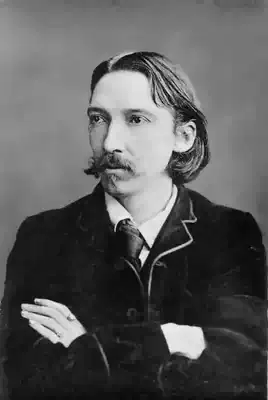
Robert Louis Stevenson
The Land of Story-Books
The Land of Story-Books
At evening when the lamp is lit,
Around the fire my parents sit;
They sit at home and talk and sing,
And do not play at anything.
Now, with my little gun, I crawl
All in the dark along the wall,
And follow round the forest track
Away behind the sofa back.
There, in the night, where none can spy,
All in my hunter's camp I lie,
And play at books that I have read
Till it is time to go to bed.
These are the hills, these are the woods,
These are my starry solitudes;
And there the river by whose brink
The roaring lions come to drink.
I see the others far away
As if in firelit camp they lay,
And I, like to an Indian scout,
Around their party prowled about.
So when my nurse comes in for me,
Home I return across the sea,
And go to bed with backward looks
At my dear land of Story-books.
At evening when the lamp is lit,
Around the fire my parents sit;
They sit at home and talk and sing,
And do not play at anything.
Now, with my little gun, I crawl
All in the dark along the wall,
And follow round the forest track
Away behind the sofa back.
There, in the night, where none can spy,
All in my hunter's camp I lie,
And play at books that I have read
Till it is time to go to bed.
These are the hills, these are the woods,
These are my starry solitudes;
And there the river by whose brink
The roaring lions come to drink.
I see the others far away
As if in firelit camp they lay,
And I, like to an Indian scout,
Around their party prowled about.
So when my nurse comes in for me,
Home I return across the sea,
And go to bed with backward looks
At my dear land of Story-books.
394
Robert Louis Stevenson
The Clock's Clear Voice Into The Clearer Air
The Clock's Clear Voice Into The Clearer Air
THE cock's clear voice into the clearer air
Where westward far I roam,
Mounts with a thrill of hope,
Falls with a sigh of home.
A rural sentry, he from farm and field
The coming morn descries,
And, mankind's bugler, wakes
The camp of enterprise.
He sings the morn upon the westward hills
Strange and remote and wild;
He sings it in the land
Where once I was a child.
He brings to me dear voices of the past,
The old land and the years:
My father calls for me,
My weeping spirit hears.
Fife, fife, into the golden air, O bird,
And sing the morning in;
For the old days are past
And new days begin.
THE cock's clear voice into the clearer air
Where westward far I roam,
Mounts with a thrill of hope,
Falls with a sigh of home.
A rural sentry, he from farm and field
The coming morn descries,
And, mankind's bugler, wakes
The camp of enterprise.
He sings the morn upon the westward hills
Strange and remote and wild;
He sings it in the land
Where once I was a child.
He brings to me dear voices of the past,
The old land and the years:
My father calls for me,
My weeping spirit hears.
Fife, fife, into the golden air, O bird,
And sing the morning in;
For the old days are past
And new days begin.
381
Robert Louis Stevenson
Soon Our Friends Perish
Soon Our Friends Perish
SOON our friends perish,
Soon all we cherish
Fades as days darken - goes as flowers go.
Soon in December
Over an ember,
Lonely we hearken, as loud winds blow.
SOON our friends perish,
Soon all we cherish
Fades as days darken - goes as flowers go.
Soon in December
Over an ember,
Lonely we hearken, as loud winds blow.
364
Robert Louis Stevenson
Farewell to the Farm
Farewell to the Farm
The coach is at the door at last;
The eager children, mounting fast
And kissing hands, in chorus sing:
Good-bye, good-bye, to everything!
To house and garden, field and lawn,
The meadow-gates we swang upon,
To pump and stable, tree and swing,
Good-bye, good-bye, to everything!
And fare you well for evermore,
O ladder at the hayloft door,
O hayloft where the cobwebs cling,
Good-bye, good-bye, to everything!
Crack goes the whip, and off we go;
The trees and houses smaller grow;
Last, round the woody turn we sing:
Good-bye, good-bye, to everything!
The coach is at the door at last;
The eager children, mounting fast
And kissing hands, in chorus sing:
Good-bye, good-bye, to everything!
To house and garden, field and lawn,
The meadow-gates we swang upon,
To pump and stable, tree and swing,
Good-bye, good-bye, to everything!
And fare you well for evermore,
O ladder at the hayloft door,
O hayloft where the cobwebs cling,
Good-bye, good-bye, to everything!
Crack goes the whip, and off we go;
The trees and houses smaller grow;
Last, round the woody turn we sing:
Good-bye, good-bye, to everything!
376
Robert Louis Stevenson
As In Their Flight The Birds Of Song
As In Their Flight The Birds Of Song
AS in their flight the birds of song
Halt here and there in sweet and sunny dales,
But halt not overlong;
The time one rural song to sing
They pause; then following bounteous gales
Steer forward on the wing:
Sun-servers they, from first to last,
Upon the sun they wait
To ride the sailing blast.
So he awhile in our contested state,
Awhile abode, not longer, for his Sun -
Mother we say, no tenderer name we know -
With whose diviner glow
His early days had shone,
Now to withdraw her radiance had begun.
Or lest a wrong I say, not she withdrew,
But the loud stream of men day after day
And great dust columns of the common way
Between them grew and grew:
And he and she for evermore might yearn,
But to the spring the rivulets not return
Nor to the bosom comes the child again.
And he (O may we fancy so!),
He, feeling time forever flow
And flowing bear him forth and far away
From that dear ingle where his life began
And all his treasure lay -
He, waxing into man,
And ever farther, ever closer wound
In this obstreperous world's ignoble round,
From that poor prospect turned his face away.
AS in their flight the birds of song
Halt here and there in sweet and sunny dales,
But halt not overlong;
The time one rural song to sing
They pause; then following bounteous gales
Steer forward on the wing:
Sun-servers they, from first to last,
Upon the sun they wait
To ride the sailing blast.
So he awhile in our contested state,
Awhile abode, not longer, for his Sun -
Mother we say, no tenderer name we know -
With whose diviner glow
His early days had shone,
Now to withdraw her radiance had begun.
Or lest a wrong I say, not she withdrew,
But the loud stream of men day after day
And great dust columns of the common way
Between them grew and grew:
And he and she for evermore might yearn,
But to the spring the rivulets not return
Nor to the bosom comes the child again.
And he (O may we fancy so!),
He, feeling time forever flow
And flowing bear him forth and far away
From that dear ingle where his life began
And all his treasure lay -
He, waxing into man,
And ever farther, ever closer wound
In this obstreperous world's ignoble round,
From that poor prospect turned his face away.
330
Robert Louis Stevenson
Air Of Diabelli's
Air Of Diabelli's
CALL it to mind, O my love.
Dear were your eyes as the day,
Bright as the day and the sky;
Like the stream of gold and the sky above,
Dear were your eyes in the grey.
We have lived, my love, O, we have lived, my love!
Now along the silent river, azure
Through the sky's inverted image,
Softly swam the boat that bore our love,
Swiftly ran the shallow of our love
Through the heaven's inverted image,
In the reedy mazes round the river.
See along the silent river,
See of old the lover's shallop steer.
Berried brake and reedy island,
Heaven below and only heaven above.
Through the sky's inverted image
Swiftly swam the boat that bore our love.
Berried brake and reedy island,
Mirrored flower and shallop gliding by.
All the earth and all the sky were ours,
Silent sat the wafted lovers,
Bound with grain and watched by all the sky,
Hand to hand and eye to . . . eye.
Days of April, airs of Eden,
Call to mind how bright the vanished angel hours,
Golden hours of evening,
When our boat drew homeward filled with flowers.
O darling, call them to mind; love the past, my love.
Days of April, airs of Eden.
How the glory died through golden hours,
And the shining moon arising;
How the boat drew homeward filled with flowers.
Age and winter close us slowly in.
Level river, cloudless heaven,
Islanded reed mazes, silver weirs;
How the silent boat with silver
Threads the inverted forest as she goes,
Broke the trembling green of mirrored trees.
O, remember, and remember
How the berries hung in garlands.
Still in the river see the shallop floats.
Hark! Chimes the falling oar.
Still in the mind
Hark to the song of the past!
Dream, and they pass in their dreams.
Those that loved of yore, O those that loved of yore!
Hark through the stillness, O darling, hark!
Through it all the ear of the mind
Knows the boat of love. Hark!
Chimes the falling oar.
O half in vain they grew old.
Now the halcyon days are over,
Age and winter close us slowly round,
And these sounds at fall of even
Dim the sight and muffle all the sound.
And at the married fireside, sleep of soul and sleep of fancy,
Joan and Darby.
Silence of the world without a sound;
And beside the winter faggot
Joan and Darby sit and dose and dream and wake -
Dream they hear the flowing, singing river,
See the berries in the island brake;
Dream they hear the weir,
See the gliding shallop mar the stream.
Hark! in your dreams do you hear?
Snow has filled the drifted forest;
Ice has bound the . . . stream.
Frost has bound our flowing river;
Snow has whitened all our island brake.
Berried brake and reedy island,
Heaven below and only heaven above azure
Through the sky's inverted image
Safely swam the boat that bore our love.
Dear were your eyes as the day,
Bright ran the stream, bright hung the sky above.
Days of April, airs of Eden.
How the glory died through golden hours,
And the shining moon arising,
How the boat drew homeward filled with flowers.
Bright were your eyes in the night:
We have lived, my love;
O, we have loved, my love.
Now the . . . days are over,
Age and winter close us slowly round.
Vainly time departs, and vainly
Age and winter come and close us round.
Hark the river's long continuous sound.
Hear the river ripples in the reeds.
Lo, in dreams they see their shallop
Run the lilies down and drown the weeds
Mid the sound of crackling faggots.
So in dreams the new created
Happy past returns, to-day recedes,
And they hear once more,
From the old years,
Yesterday returns, to-day recedes,
And they hear with aged hearing warbles
Love's own river ripple in the weeds.
And again the lover's shallop;
Lo, the shallop sheds the streaming weeds;
And afar in foreign countries
In the ears of aged lovers.
And again in winter evens
Starred with lilies . . . with stirring weeds.
In these ears of aged lovers
Love's own river ripples in the reeds.
CALL it to mind, O my love.
Dear were your eyes as the day,
Bright as the day and the sky;
Like the stream of gold and the sky above,
Dear were your eyes in the grey.
We have lived, my love, O, we have lived, my love!
Now along the silent river, azure
Through the sky's inverted image,
Softly swam the boat that bore our love,
Swiftly ran the shallow of our love
Through the heaven's inverted image,
In the reedy mazes round the river.
See along the silent river,
See of old the lover's shallop steer.
Berried brake and reedy island,
Heaven below and only heaven above.
Through the sky's inverted image
Swiftly swam the boat that bore our love.
Berried brake and reedy island,
Mirrored flower and shallop gliding by.
All the earth and all the sky were ours,
Silent sat the wafted lovers,
Bound with grain and watched by all the sky,
Hand to hand and eye to . . . eye.
Days of April, airs of Eden,
Call to mind how bright the vanished angel hours,
Golden hours of evening,
When our boat drew homeward filled with flowers.
O darling, call them to mind; love the past, my love.
Days of April, airs of Eden.
How the glory died through golden hours,
And the shining moon arising;
How the boat drew homeward filled with flowers.
Age and winter close us slowly in.
Level river, cloudless heaven,
Islanded reed mazes, silver weirs;
How the silent boat with silver
Threads the inverted forest as she goes,
Broke the trembling green of mirrored trees.
O, remember, and remember
How the berries hung in garlands.
Still in the river see the shallop floats.
Hark! Chimes the falling oar.
Still in the mind
Hark to the song of the past!
Dream, and they pass in their dreams.
Those that loved of yore, O those that loved of yore!
Hark through the stillness, O darling, hark!
Through it all the ear of the mind
Knows the boat of love. Hark!
Chimes the falling oar.
O half in vain they grew old.
Now the halcyon days are over,
Age and winter close us slowly round,
And these sounds at fall of even
Dim the sight and muffle all the sound.
And at the married fireside, sleep of soul and sleep of fancy,
Joan and Darby.
Silence of the world without a sound;
And beside the winter faggot
Joan and Darby sit and dose and dream and wake -
Dream they hear the flowing, singing river,
See the berries in the island brake;
Dream they hear the weir,
See the gliding shallop mar the stream.
Hark! in your dreams do you hear?
Snow has filled the drifted forest;
Ice has bound the . . . stream.
Frost has bound our flowing river;
Snow has whitened all our island brake.
Berried brake and reedy island,
Heaven below and only heaven above azure
Through the sky's inverted image
Safely swam the boat that bore our love.
Dear were your eyes as the day,
Bright ran the stream, bright hung the sky above.
Days of April, airs of Eden.
How the glory died through golden hours,
And the shining moon arising,
How the boat drew homeward filled with flowers.
Bright were your eyes in the night:
We have lived, my love;
O, we have loved, my love.
Now the . . . days are over,
Age and winter close us slowly round.
Vainly time departs, and vainly
Age and winter come and close us round.
Hark the river's long continuous sound.
Hear the river ripples in the reeds.
Lo, in dreams they see their shallop
Run the lilies down and drown the weeds
Mid the sound of crackling faggots.
So in dreams the new created
Happy past returns, to-day recedes,
And they hear once more,
From the old years,
Yesterday returns, to-day recedes,
And they hear with aged hearing warbles
Love's own river ripple in the weeds.
And again the lover's shallop;
Lo, the shallop sheds the streaming weeds;
And afar in foreign countries
In the ears of aged lovers.
And again in winter evens
Starred with lilies . . . with stirring weeds.
In these ears of aged lovers
Love's own river ripples in the reeds.
366
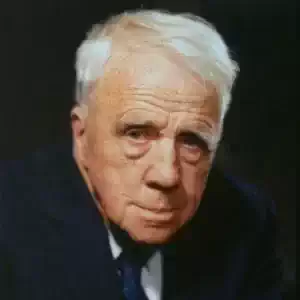
Robert Frost
My November Guest
My November Guest
My Sorrow, when she's here with me,
Thinks these dark days of autumn rain
Are beautiful as days can be;
She loves the bare, the withered tree;
She walks the sodden pasture lane.
Her pleasure will not let me stay.
She talks and I am fain to list:
She's glad the birds are gone away,
She's glad her simple worsted grey
Is silver now with clinging mist.
The desolate, deserted trees,
The faded earth, the heavy sky,
The beauties she so truly sees,
She thinks I have no eye for these,
And vexes me for reason why.
Not yesterday I learned to know
The love of bare November days
Before the coming of the snow,
But it were vain to tell her so,
And they are better for her praise
My Sorrow, when she's here with me,
Thinks these dark days of autumn rain
Are beautiful as days can be;
She loves the bare, the withered tree;
She walks the sodden pasture lane.
Her pleasure will not let me stay.
She talks and I am fain to list:
She's glad the birds are gone away,
She's glad her simple worsted grey
Is silver now with clinging mist.
The desolate, deserted trees,
The faded earth, the heavy sky,
The beauties she so truly sees,
She thinks I have no eye for these,
And vexes me for reason why.
Not yesterday I learned to know
The love of bare November days
Before the coming of the snow,
But it were vain to tell her so,
And they are better for her praise
535
Robert Frost
Meeting And Passing
Meeting And Passing
As I went down the hill along the wall
There was a gate I had leaned at for the view
And had just turned from when I first saw you
As you came up the hill. We met. But all
We did that day was mingle great and small
Footprints in summer dust as if we drew
The figure of our being less that two
But more than one as yet. Your parasol
Pointed the decimal off with one deep thrust.
And all the time we talked you seemed to see
Something down there to smile at in the dust.
(Oh, it was without prejudice to me!)
Afterward I went past what you had passed
Before we met and you what I had passed.
As I went down the hill along the wall
There was a gate I had leaned at for the view
And had just turned from when I first saw you
As you came up the hill. We met. But all
We did that day was mingle great and small
Footprints in summer dust as if we drew
The figure of our being less that two
But more than one as yet. Your parasol
Pointed the decimal off with one deep thrust.
And all the time we talked you seemed to see
Something down there to smile at in the dust.
(Oh, it was without prejudice to me!)
Afterward I went past what you had passed
Before we met and you what I had passed.
432
Robert Frost
Asking for Roses
Asking for Roses
A house that lacks, seemingly, mistress and master,
With doors that none but the wind ever closes,
Its floor all littered with glass and with plaster;
It stands in a garden of old-fashioned roses.
I pass by that way in the gloaming with Mary;
'I wonder,' I say, 'who the owner of those is.'
'Oh, no one you know,' she answers me airy,
'But one we must ask if we want any roses.'
So we must join hands in the dew coming coldly
There in the hush of the wood that reposes,
And turn and go up to the open door boldly,
And knock to the echoes as beggars for roses.
'Pray, are you within there, Mistress Who-were-you?'
'Tis Mary that speaks and our errand discloses.
'Pray, are you within there? Bestir you, bestir you!
'Tis summer again; there's two come for roses.
'A word with you, that of the singer recalling--
Old Herrick: a saying that every maid knows is
A flower unplucked is but left to the falling,
And nothing is gained by not gathering roses.'
We do not loosen our hands' intertwining
(Not caring so very much what she supposes),
There when she comes on us mistily shining
And grants us by silence the boon of her roses.
A house that lacks, seemingly, mistress and master,
With doors that none but the wind ever closes,
Its floor all littered with glass and with plaster;
It stands in a garden of old-fashioned roses.
I pass by that way in the gloaming with Mary;
'I wonder,' I say, 'who the owner of those is.'
'Oh, no one you know,' she answers me airy,
'But one we must ask if we want any roses.'
So we must join hands in the dew coming coldly
There in the hush of the wood that reposes,
And turn and go up to the open door boldly,
And knock to the echoes as beggars for roses.
'Pray, are you within there, Mistress Who-were-you?'
'Tis Mary that speaks and our errand discloses.
'Pray, are you within there? Bestir you, bestir you!
'Tis summer again; there's two come for roses.
'A word with you, that of the singer recalling--
Old Herrick: a saying that every maid knows is
A flower unplucked is but left to the falling,
And nothing is gained by not gathering roses.'
We do not loosen our hands' intertwining
(Not caring so very much what she supposes),
There when she comes on us mistily shining
And grants us by silence the boon of her roses.
465
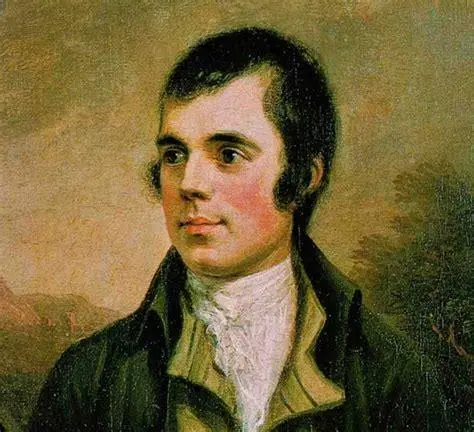
Robert Burns
John Anderson My Jo
John Anderson My Jo
John Anderson my jo, John,
When we were first acquent,
Your locks were like the raven,
Your bonny brow was brent;
But now your brow is bled, John,
Your locks are like the straw,
But blessings on your frosty pow,
John Anderson my jo!
John Anderson my jo, John,
We clamb the hill thegither
And monie a cantie day, John,
We've had wi' ane anither;
Now we maun totter down, John,
And hand in hand we'll go,
And sleep thegither at the foot,
John Anderson my jo!
John Anderson my jo, John,
When we were first acquent,
Your locks were like the raven,
Your bonny brow was brent;
But now your brow is bled, John,
Your locks are like the straw,
But blessings on your frosty pow,
John Anderson my jo!
John Anderson my jo, John,
We clamb the hill thegither
And monie a cantie day, John,
We've had wi' ane anither;
Now we maun totter down, John,
And hand in hand we'll go,
And sleep thegither at the foot,
John Anderson my jo!
265

Robert Browning
Waring
Waring
Mr. Alfred Domett, C.M.G., author of
Ranolf and Amohia, ``full of descriptions of
New Zealand scenery.]
I.
I.
What's become of Waring
Since he gave us all the slip,
Chose land-travel or seafaring,
Boots and chest or staff and scrip,
Rather than pace up and down
Any longer London town?
II.
Who'd have guessed it from his lip
Or his brow's accustomed bearing,
On the night he thus took ship
Or started landward?---little caring
For us, it seems, who supped together
(Friends of his too, I remember)
And walked home thro' the merry weather,
The snowiest in all December.
I left his arm that night myself
For what's-his-name's, the new prose-poet
Who wrote the book there, on the shelf---
How, forsooth, was I to know it
If Waring meant to glide away
Like a ghost at break of day?
Never looked he half so gay!
III.
He was prouder than the devil:
How he must have cursed our revel!
Ay and many other meetings,
Indoor visits, outdoor greetings,
As up and down he paced this London,
With no work done, but great works undone,
Where scarce twenty knew his name.
Why not, then, have earlier spoken,
Written, bustled? Who's to blame
If your silence kept unbroken?
``True, but there were sundry jottings,
``Stray-leaves, fragments, blurts and blottings,
``Certain fixst steps were achieved
``Already which''---(is that your meaning?)
``Had well borne out whoe'er believed
``In more to come!'' But who goes gleaning
Hedgeside chance-glades, while full-sheaved
Stand cornfields by him? Pride, o'erweening
Pride alone, puts forth such claims
O'er the day's distinguished names.
IV.
Meantime, how much I loved him,
I find out now I've lost him.
I who cared not if I moved him,
Who could so carelessly accost him,
Henceforth never shall get free
Of his ghostly company,
His eyes that just a little wink
As deep I go into the merit
Of this and that distinguished spirit---
His cheeks' raised colour, soon to sink,
As long I dwell on some stupendous
And tremendous (Heaven defend us!)
Monstr'-inform'-ingens-horrend-ous
Demoniaco-seraphic
Penman's latest piece of graphic.
Nay, my very wrist grows warm
With his dragging weight of arm.
E'en so, swimmingly appears,
Through one's after-supper musings,
Some lost lady of old years
With her beauteous vain endeavour
And goodness unrepaid as ever;
The face, accustomed to refusings,
We, puppies that we were ... Oh never
Surely, nice of conscience, scrupled
Being aught like false, forsooth, to?
Telling aught but honest truth to?
What a sin, had we centupled
Its possessor's grace and sweetness
No! she heard in its completeness
Truth, for truth's a weighty matter,
And truth, at issue, we can't flatter!
Well, 'tis done with; she's exempt
From damning us thro' such a sally;
And so she glides, as down a valley,
Taking up with her contempt,
Past our reach; and in, the flowers
Shut her unregarded hours.
V.
Oh, could I have him back once more,
This Waring, but one half-day more!
Back, with the quiet face of yore,
So hungry for acknowledgment
Like mine! I'd fool him to his bent.
Feed, should not he, to heart's content?
I'd say, ``to only have conceived,
``Planned your great works, apart from progress,
``Surpasses little works achieved!''
I'd lie so, I should be believed.
I'd make such havoc of the claims
Of the day's distinguished names
To feast him with, as feasts an ogress
Her feverish sharp-toothed gold-crowned child!
Or as one feasts a creature rarely
Captured here, unreconciled
To capture; and completely gives
its pettish humours license, barely
Requiring that it lives.
VI.
Ichabod, Ichabod,
The glory is departed!
Travels Waring East away?
Who, of knowledge, by hearsay,
Reports a man upstarted
Somewhere as a god,
Hordes grown European-hearted,
Millions of the wild made tame
On a sudden at his fame?
In Vishnu-land what Avatar?
Or who in Moscow, toward the Czar,
With the demurest of footfalls
Over the Kremlin's pavement bright
With serpentine and syenite,*
Steps, with five other Generals
That simultaneously take snuff,
For each to have pretext enough
And kerchiefwise unfold his sash
Which, softness' self, is yet the stuff
To hold fast where a steel chain snaps,
And leave the grand white neck no gash?
Waring in Moscow, to those rough
Cold northern natures born perhaps,
Like the lambwhite maiden dear
From the circle of mute kings
Unable to repress the tear,
Each as his sceptre down he flings,
To Dian's fane at Taurica,
Where now a captive priestess, she alway
Mingles her tender grave Hellenic speech
With theirs, tuned to the hailstone-beaten beach
As pours some pigeon, from the myrrhy lands
Rapt by the whirlblast to fierce Scythian strands
Where breed the swallows, her melodious cry
Amid their barbarous twitter!
In Russia? Never! Spain were fitter!
Ay, most likely 'tis in Spain
That we and Waring meet again
Now, while he turns down that cool narrow lane
Into the blackness, out of grave Madrid
All fire and shine, abrupt as when there's slid
Its stiff gold blazing pall
From some black coffin-lid.
Or, best of all,
I love to think
The leaving us was just a feint;
Back here to London did he slink,
And now works on without a wink
Of sleep, and we are on the brink
Of something great in fresco-pain:
Some garret's ceiling, walls and floor,
Up and down and o'er and o'er
He splashes, as none splashed before
Since great Caldera Polidore.*
Or Music means this land of ours
Some favour yet, to pity won
By Purcell from his Rosy Bowers,---
``Give me my so-long promised son,
``Let Waring end what I begun!''
Then down he creeps and out he steals
Only when the night conceals
His face; in Kent 'tis cherry-time,
Or hops are picking: or at prime
Of March he wanders as, too happy,
Years ago when he was young,
Some mild eve when woods grew sappy
And the early moths had sprung
To life from many a trembling sheath
Woven the warm boughs beneath;
While small birds said to themselves
What should soon be actual song,
And young gnats, by tens and twelves,
Made as if they were the throng
That crowd around and carry aloft
The sound they have nursed, so sweet and pure,
Out of a myriad noises soft,
Into a tone that can endure
Amid the noise of a July noon
When all God's creatures crave their boon,
All at once and all in tune,
And get it, happy as Waring then,
Having first within his ken
What a man might do with men:
And far too glad, in the even-glow,
To mix with the world he meant to take
Into his hand, he told you, so---
And out of it his world to make,
To contract and to expand
As he shut or oped his hand.
Oh Waring, what's to really be?
A clear stage and a crowd to see!
Some Garrick, say, out shall not he
The heart of Hamlet's mystery pluck?
Or, where most unclean beasts are rife,
Some Junius---am I right?---shall tuck
His sleeve, and forth with flaying-knife!
Some Chatterton shall have the luck
Of calling Rowley into life!
Some one shall somehow run a muck
With this old world for want of strife
Sound asleep. Contrive, contrive
To rouse us, Waring! Who's alive?
Our men scarce seem in earnest now.
Distinguished names!---but 'tis, somehow,
As if they played at being names
Still more distinguished, like the games
Of children. Turn our sport to earnest
With a visage of the sternest!
Bring the real times back, confessed
Still better than our very best!
II.
I.
``When I last saw Waring ...''
(How all turned to him who spoke!
You saw Waring? Truth or joke?
In land-travel or sea-faring?)
II.
``We were sailing by Triest
``Where a day or two we harboured:
``A sunset was in the West,
``When, looking over the vessel's side,
``One of our company espied
``A sudden speck to larboard.
``And as a sea-duck flies and swims
``At once, so came the light craft up,
``With its sole lateen sail that trims
``And turns (the water round its rims
``Dancing, as round a sinking cup)
``And by us like a fish it curled,
``And drew itself up close beside,
``Its great sail on the instant furled,
``And o'er its thwarts a shrill voice cried,
``(A neck as bronzed as a Lascar's)
`` `Buy wine of us, you English Brig?
`` `Or fruit, tobacco and cigars?
`` `A pilot for you to Triest?
`` `Without one, look you ne'er so big,
`` `They'll never let you up the bay!
`` `We natives should know best.'
``I turned, and `just those fellows' way,'
``Our captain said, `The 'long-shore thieves
`` `Are laughing at us in their sleeves.'
III.
``In truth, the boy leaned laughing back;
``And one, half-hidden by his side
``Under the furled sail, soon I spied,
``With great grass hat and kerchief black,
``Who looked up with his kingly throat,
``Said somewhat, while the other shook
``His hair back from his eyes to look
``Their longest at us; then the boat,
``I know not how, turned sharply round,
``Laying her whole side on the sea
``As a leaping fish does; from the lee
``Into the weather, cut somehow
``Her sparkling path beneath our bow
``And so went off, as with a bound,
``Into the rosy and golden half
``O' the sky, to overtake the sun
``And reach the shore, like the sea-calf
``Its singing cave; yet I caught one
``Glance ere away the boat quite passed,
``And neither time nor toil could mar
``Those features: so I saw the last
``Of Waring!''---You? Oh, never star
Was lost here but it rose afar!
Look East, where whole new thousands are!
In Vishnu-land what Avatar?
* Egyptian granite.
* Surnamed da Caravaggio. A pupil of Raphael.
Mr. Alfred Domett, C.M.G., author of
Ranolf and Amohia, ``full of descriptions of
New Zealand scenery.]
I.
I.
What's become of Waring
Since he gave us all the slip,
Chose land-travel or seafaring,
Boots and chest or staff and scrip,
Rather than pace up and down
Any longer London town?
II.
Who'd have guessed it from his lip
Or his brow's accustomed bearing,
On the night he thus took ship
Or started landward?---little caring
For us, it seems, who supped together
(Friends of his too, I remember)
And walked home thro' the merry weather,
The snowiest in all December.
I left his arm that night myself
For what's-his-name's, the new prose-poet
Who wrote the book there, on the shelf---
How, forsooth, was I to know it
If Waring meant to glide away
Like a ghost at break of day?
Never looked he half so gay!
III.
He was prouder than the devil:
How he must have cursed our revel!
Ay and many other meetings,
Indoor visits, outdoor greetings,
As up and down he paced this London,
With no work done, but great works undone,
Where scarce twenty knew his name.
Why not, then, have earlier spoken,
Written, bustled? Who's to blame
If your silence kept unbroken?
``True, but there were sundry jottings,
``Stray-leaves, fragments, blurts and blottings,
``Certain fixst steps were achieved
``Already which''---(is that your meaning?)
``Had well borne out whoe'er believed
``In more to come!'' But who goes gleaning
Hedgeside chance-glades, while full-sheaved
Stand cornfields by him? Pride, o'erweening
Pride alone, puts forth such claims
O'er the day's distinguished names.
IV.
Meantime, how much I loved him,
I find out now I've lost him.
I who cared not if I moved him,
Who could so carelessly accost him,
Henceforth never shall get free
Of his ghostly company,
His eyes that just a little wink
As deep I go into the merit
Of this and that distinguished spirit---
His cheeks' raised colour, soon to sink,
As long I dwell on some stupendous
And tremendous (Heaven defend us!)
Monstr'-inform'-ingens-horrend-ous
Demoniaco-seraphic
Penman's latest piece of graphic.
Nay, my very wrist grows warm
With his dragging weight of arm.
E'en so, swimmingly appears,
Through one's after-supper musings,
Some lost lady of old years
With her beauteous vain endeavour
And goodness unrepaid as ever;
The face, accustomed to refusings,
We, puppies that we were ... Oh never
Surely, nice of conscience, scrupled
Being aught like false, forsooth, to?
Telling aught but honest truth to?
What a sin, had we centupled
Its possessor's grace and sweetness
No! she heard in its completeness
Truth, for truth's a weighty matter,
And truth, at issue, we can't flatter!
Well, 'tis done with; she's exempt
From damning us thro' such a sally;
And so she glides, as down a valley,
Taking up with her contempt,
Past our reach; and in, the flowers
Shut her unregarded hours.
V.
Oh, could I have him back once more,
This Waring, but one half-day more!
Back, with the quiet face of yore,
So hungry for acknowledgment
Like mine! I'd fool him to his bent.
Feed, should not he, to heart's content?
I'd say, ``to only have conceived,
``Planned your great works, apart from progress,
``Surpasses little works achieved!''
I'd lie so, I should be believed.
I'd make such havoc of the claims
Of the day's distinguished names
To feast him with, as feasts an ogress
Her feverish sharp-toothed gold-crowned child!
Or as one feasts a creature rarely
Captured here, unreconciled
To capture; and completely gives
its pettish humours license, barely
Requiring that it lives.
VI.
Ichabod, Ichabod,
The glory is departed!
Travels Waring East away?
Who, of knowledge, by hearsay,
Reports a man upstarted
Somewhere as a god,
Hordes grown European-hearted,
Millions of the wild made tame
On a sudden at his fame?
In Vishnu-land what Avatar?
Or who in Moscow, toward the Czar,
With the demurest of footfalls
Over the Kremlin's pavement bright
With serpentine and syenite,*
Steps, with five other Generals
That simultaneously take snuff,
For each to have pretext enough
And kerchiefwise unfold his sash
Which, softness' self, is yet the stuff
To hold fast where a steel chain snaps,
And leave the grand white neck no gash?
Waring in Moscow, to those rough
Cold northern natures born perhaps,
Like the lambwhite maiden dear
From the circle of mute kings
Unable to repress the tear,
Each as his sceptre down he flings,
To Dian's fane at Taurica,
Where now a captive priestess, she alway
Mingles her tender grave Hellenic speech
With theirs, tuned to the hailstone-beaten beach
As pours some pigeon, from the myrrhy lands
Rapt by the whirlblast to fierce Scythian strands
Where breed the swallows, her melodious cry
Amid their barbarous twitter!
In Russia? Never! Spain were fitter!
Ay, most likely 'tis in Spain
That we and Waring meet again
Now, while he turns down that cool narrow lane
Into the blackness, out of grave Madrid
All fire and shine, abrupt as when there's slid
Its stiff gold blazing pall
From some black coffin-lid.
Or, best of all,
I love to think
The leaving us was just a feint;
Back here to London did he slink,
And now works on without a wink
Of sleep, and we are on the brink
Of something great in fresco-pain:
Some garret's ceiling, walls and floor,
Up and down and o'er and o'er
He splashes, as none splashed before
Since great Caldera Polidore.*
Or Music means this land of ours
Some favour yet, to pity won
By Purcell from his Rosy Bowers,---
``Give me my so-long promised son,
``Let Waring end what I begun!''
Then down he creeps and out he steals
Only when the night conceals
His face; in Kent 'tis cherry-time,
Or hops are picking: or at prime
Of March he wanders as, too happy,
Years ago when he was young,
Some mild eve when woods grew sappy
And the early moths had sprung
To life from many a trembling sheath
Woven the warm boughs beneath;
While small birds said to themselves
What should soon be actual song,
And young gnats, by tens and twelves,
Made as if they were the throng
That crowd around and carry aloft
The sound they have nursed, so sweet and pure,
Out of a myriad noises soft,
Into a tone that can endure
Amid the noise of a July noon
When all God's creatures crave their boon,
All at once and all in tune,
And get it, happy as Waring then,
Having first within his ken
What a man might do with men:
And far too glad, in the even-glow,
To mix with the world he meant to take
Into his hand, he told you, so---
And out of it his world to make,
To contract and to expand
As he shut or oped his hand.
Oh Waring, what's to really be?
A clear stage and a crowd to see!
Some Garrick, say, out shall not he
The heart of Hamlet's mystery pluck?
Or, where most unclean beasts are rife,
Some Junius---am I right?---shall tuck
His sleeve, and forth with flaying-knife!
Some Chatterton shall have the luck
Of calling Rowley into life!
Some one shall somehow run a muck
With this old world for want of strife
Sound asleep. Contrive, contrive
To rouse us, Waring! Who's alive?
Our men scarce seem in earnest now.
Distinguished names!---but 'tis, somehow,
As if they played at being names
Still more distinguished, like the games
Of children. Turn our sport to earnest
With a visage of the sternest!
Bring the real times back, confessed
Still better than our very best!
II.
I.
``When I last saw Waring ...''
(How all turned to him who spoke!
You saw Waring? Truth or joke?
In land-travel or sea-faring?)
II.
``We were sailing by Triest
``Where a day or two we harboured:
``A sunset was in the West,
``When, looking over the vessel's side,
``One of our company espied
``A sudden speck to larboard.
``And as a sea-duck flies and swims
``At once, so came the light craft up,
``With its sole lateen sail that trims
``And turns (the water round its rims
``Dancing, as round a sinking cup)
``And by us like a fish it curled,
``And drew itself up close beside,
``Its great sail on the instant furled,
``And o'er its thwarts a shrill voice cried,
``(A neck as bronzed as a Lascar's)
`` `Buy wine of us, you English Brig?
`` `Or fruit, tobacco and cigars?
`` `A pilot for you to Triest?
`` `Without one, look you ne'er so big,
`` `They'll never let you up the bay!
`` `We natives should know best.'
``I turned, and `just those fellows' way,'
``Our captain said, `The 'long-shore thieves
`` `Are laughing at us in their sleeves.'
III.
``In truth, the boy leaned laughing back;
``And one, half-hidden by his side
``Under the furled sail, soon I spied,
``With great grass hat and kerchief black,
``Who looked up with his kingly throat,
``Said somewhat, while the other shook
``His hair back from his eyes to look
``Their longest at us; then the boat,
``I know not how, turned sharply round,
``Laying her whole side on the sea
``As a leaping fish does; from the lee
``Into the weather, cut somehow
``Her sparkling path beneath our bow
``And so went off, as with a bound,
``Into the rosy and golden half
``O' the sky, to overtake the sun
``And reach the shore, like the sea-calf
``Its singing cave; yet I caught one
``Glance ere away the boat quite passed,
``And neither time nor toil could mar
``Those features: so I saw the last
``Of Waring!''---You? Oh, never star
Was lost here but it rose afar!
Look East, where whole new thousands are!
In Vishnu-land what Avatar?
* Egyptian granite.
* Surnamed da Caravaggio. A pupil of Raphael.
369
Robert Browning
Heap Cassia, Sandal-Buds and Stripes
Heap Cassia, Sandal-Buds and Stripes
Heap Cassia, sandal-buds and stripes
Of labdanum, and aloe-balls,
Smeared with dull nard an Indian wipes
From out her hair: such balsam falls
Down sea-side mountain pedestals,
From tree-tops where tired winds are fain,
Spent with the vast and howling main,
To treasure half their island-gain.
And strew faint sweetness from some old
Egyptian's fine worm-eaten shroud
Which breaks to dust when once unrolled;
Or shredded perfume, like a cloud
From closet long to quiet vowed,
With mothed and dropping arras hung,
Mouldering her lute and books among,
As when a queen, long dead, was young.
Heap Cassia, sandal-buds and stripes
Of labdanum, and aloe-balls,
Smeared with dull nard an Indian wipes
From out her hair: such balsam falls
Down sea-side mountain pedestals,
From tree-tops where tired winds are fain,
Spent with the vast and howling main,
To treasure half their island-gain.
And strew faint sweetness from some old
Egyptian's fine worm-eaten shroud
Which breaks to dust when once unrolled;
Or shredded perfume, like a cloud
From closet long to quiet vowed,
With mothed and dropping arras hung,
Mouldering her lute and books among,
As when a queen, long dead, was young.
242
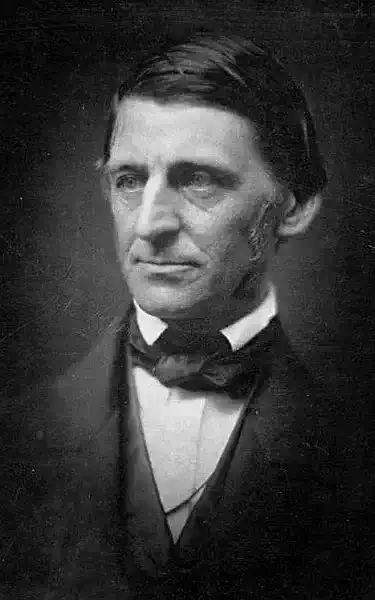
Ralph Waldo Emerson
The Forerunners
The Forerunners
Long I followed happy guides,—
I could never reach their sides.
Their step is forth, and, ere the day,
Breaks up their leaguer, and away.
Keen my sense, my heart was young,
Right goodwill my sinews strung,
But no speed of mine avails
To hunt upon their shining trails.
On and away, their hasting feet
Make the morning proud and sweet.
Flowers they strew, I catch the scent,
Or tone of silver instrument
Leaves on the wind melodious trace,
Yet I could never see their face.
On eastern hills I see their smokes
Mixed with mist by distant lochs.
I meet many travellers
Who the road had surely kept,—
They saw not my fine revellers,—
These had crossed them while they slept.
Some had heard their fair report
In the country or the court.
Fleetest couriers alive
Never yet could once arrive,
As they went or they returned,
At the house where these sojourned.
Sometimes their strong speed they slacken,
Though they are not overtaken:
In sleep, their jubilant troop is near,
I tuneful voices overhear,
It may be in wood or waste,—
At unawares 'tis come and passed.
Their near camp my spirit knows
By signs gracious as rainbows.
I thenceforward and long after
Listen for their harplike laughter,
And carry in my heart for days
Peace that hallows rudest ways.—
Long I followed happy guides,—
I could never reach their sides.
Their step is forth, and, ere the day,
Breaks up their leaguer, and away.
Keen my sense, my heart was young,
Right goodwill my sinews strung,
But no speed of mine avails
To hunt upon their shining trails.
On and away, their hasting feet
Make the morning proud and sweet.
Flowers they strew, I catch the scent,
Or tone of silver instrument
Leaves on the wind melodious trace,
Yet I could never see their face.
On eastern hills I see their smokes
Mixed with mist by distant lochs.
I meet many travellers
Who the road had surely kept,—
They saw not my fine revellers,—
These had crossed them while they slept.
Some had heard their fair report
In the country or the court.
Fleetest couriers alive
Never yet could once arrive,
As they went or they returned,
At the house where these sojourned.
Sometimes their strong speed they slacken,
Though they are not overtaken:
In sleep, their jubilant troop is near,
I tuneful voices overhear,
It may be in wood or waste,—
At unawares 'tis come and passed.
Their near camp my spirit knows
By signs gracious as rainbows.
I thenceforward and long after
Listen for their harplike laughter,
And carry in my heart for days
Peace that hallows rudest ways.—
289
Ralph Waldo Emerson
Dirge
Dirge
Knows he who tills this lonely field
To reap its scanty corn,
What mystic fruit his acres yield
At midnight and at morn?
In the long sunny afternoon,
The plain was full of ghosts,
I wandered up, I wandered down,
Beset by pensive hosts.
The winding Concord gleamed below,
Pouring as wide a flood
As when my brothers long ago,
Came with me to the wood.
But they are gone,— the holy ones,
Who trod with me this lonely vale,
The strong, star-bright companions
Are silent, low, and pale.
My good, my noble, in their prime,
Who made this world the feast it was,
Who learned with me the lore of time,
Who loved this dwelling-place.
They took this valley for their toy,
They played with it in every mood,
A cell for prayer, a hall for joy,
They treated nature as they would.
They colored the horizon round,
Stars flamed and faded as they bade,
All echoes hearkened for their sound,
They made the woodlands glad or mad.
I touch this flower of silken leaf
Which once our childhood knew
Its soft leaves wound me with a grief
Whose balsam never grew.
Hearken to yon pine warbler
Singing aloft in the tree;
Hearest thou, O traveller!
What he singeth to me?
Not unless God made sharp thine ear
With sorrow such as mine,
Out of that delicate lay couldst thou
The heavy dirge divine.
Go, lonely man, it saith,
They loved thee from their birth,
Their hands were pure, and pure their faith,
There are no such hearts on earth.
Ye drew one mother's milk,
One chamber held ye all;
A very tender history
Did in your childhood fall.
Ye cannot unlock your heart,
The key is gone with them;
The silent organ loudest chants
The master's requiem.
Knows he who tills this lonely field
To reap its scanty corn,
What mystic fruit his acres yield
At midnight and at morn?
In the long sunny afternoon,
The plain was full of ghosts,
I wandered up, I wandered down,
Beset by pensive hosts.
The winding Concord gleamed below,
Pouring as wide a flood
As when my brothers long ago,
Came with me to the wood.
But they are gone,— the holy ones,
Who trod with me this lonely vale,
The strong, star-bright companions
Are silent, low, and pale.
My good, my noble, in their prime,
Who made this world the feast it was,
Who learned with me the lore of time,
Who loved this dwelling-place.
They took this valley for their toy,
They played with it in every mood,
A cell for prayer, a hall for joy,
They treated nature as they would.
They colored the horizon round,
Stars flamed and faded as they bade,
All echoes hearkened for their sound,
They made the woodlands glad or mad.
I touch this flower of silken leaf
Which once our childhood knew
Its soft leaves wound me with a grief
Whose balsam never grew.
Hearken to yon pine warbler
Singing aloft in the tree;
Hearest thou, O traveller!
What he singeth to me?
Not unless God made sharp thine ear
With sorrow such as mine,
Out of that delicate lay couldst thou
The heavy dirge divine.
Go, lonely man, it saith,
They loved thee from their birth,
Their hands were pure, and pure their faith,
There are no such hearts on earth.
Ye drew one mother's milk,
One chamber held ye all;
A very tender history
Did in your childhood fall.
Ye cannot unlock your heart,
The key is gone with them;
The silent organ loudest chants
The master's requiem.
319
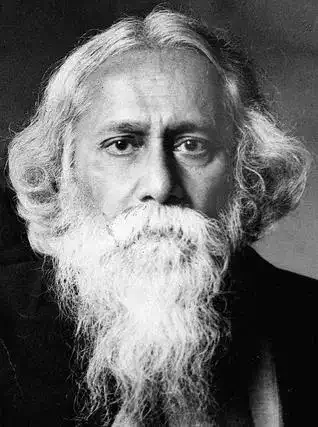
Rabindranath Tagore
The Lotus
The Lotus
On the day when the lotus bloomed, alas, my mind was straying,
and I knew it not. My basket was empty and the flower remained unheeded.
Only now and again a sadness fell upon me, and I started up from my
dream and felt a sweet trace of a strange fragrance in the south wind.
That vague sweetness made my heart ache with longing and it seemed to
me that is was the eager breath of the summer seeking for its completion.
I knew not then that it was so near, that it was mine, and that this
perfect sweetness had blossomed in the depth of my own heart.
On the day when the lotus bloomed, alas, my mind was straying,
and I knew it not. My basket was empty and the flower remained unheeded.
Only now and again a sadness fell upon me, and I started up from my
dream and felt a sweet trace of a strange fragrance in the south wind.
That vague sweetness made my heart ache with longing and it seemed to
me that is was the eager breath of the summer seeking for its completion.
I knew not then that it was so near, that it was mine, and that this
perfect sweetness had blossomed in the depth of my own heart.
566
Rabindranath Tagore
The Gift
The Gift
I want to give you something, my child, for we are drifting in the
stream of the world.
Our lives will be carried apart, and our love forgotten.
But I am not so foolish as to hope that I could buy your heart
with my gifts.
Young is your life, your path long, and you drink the love we
bring you at one draught and turn and run away from us.
You have your play and your playmates. What harm is there if
you have no time or thought for us!
We, indeed, have leisure enough in old age to count the days
that are past, to cherish in our hearts what our hands have lost
for ever.
The river runs swift with a song, breaking through all
barriers. But the mountain stays and remembers, and follows her
with his love.
I want to give you something, my child, for we are drifting in the
stream of the world.
Our lives will be carried apart, and our love forgotten.
But I am not so foolish as to hope that I could buy your heart
with my gifts.
Young is your life, your path long, and you drink the love we
bring you at one draught and turn and run away from us.
You have your play and your playmates. What harm is there if
you have no time or thought for us!
We, indeed, have leisure enough in old age to count the days
that are past, to cherish in our hearts what our hands have lost
for ever.
The river runs swift with a song, breaking through all
barriers. But the mountain stays and remembers, and follows her
with his love.
591
Rabindranath Tagore
The Gardener XLVI: You Left Me
The Gardener XLVI: You Left Me
You left me and went on your way.
I thought I should mourn for you
and set your solitary image in my
heart wrought in a golden song.
But ah, my evil fortune, time is
short.
Youth wanes year after year; the
spring days are fugitive; the frail
flowers die for nothing, and the wise
man warns me that life is but a
dewdrop on the lotus leaf.
Should I neglect all this to gaze after
one who has turned her back on me?
That would be rude and foolish,
for time is short.
Then, come, my rainy nights with
pattering feet; smile, my golden
autumn; come, careless April, scattering
your kisses abroad.
You come, and you, and you also!
My loves, you know we are mortals.
Is it wise to break one's heart for the
one who takes her heart away? For
time is short.
It is sweet to sit in a corner to muse
and write in rhymes that you are all
my world.
It is heroic to hug one's sorrow and
determine not to be consoled.
But a fresh face peeps across my
door and raise its eyes to my eyes.
I cannot but wipe away my tears
and change the tune of my song.
For time is short.
You left me and went on your way.
I thought I should mourn for you
and set your solitary image in my
heart wrought in a golden song.
But ah, my evil fortune, time is
short.
Youth wanes year after year; the
spring days are fugitive; the frail
flowers die for nothing, and the wise
man warns me that life is but a
dewdrop on the lotus leaf.
Should I neglect all this to gaze after
one who has turned her back on me?
That would be rude and foolish,
for time is short.
Then, come, my rainy nights with
pattering feet; smile, my golden
autumn; come, careless April, scattering
your kisses abroad.
You come, and you, and you also!
My loves, you know we are mortals.
Is it wise to break one's heart for the
one who takes her heart away? For
time is short.
It is sweet to sit in a corner to muse
and write in rhymes that you are all
my world.
It is heroic to hug one's sorrow and
determine not to be consoled.
But a fresh face peeps across my
door and raise its eyes to my eyes.
I cannot but wipe away my tears
and change the tune of my song.
For time is short.
495
Rabindranath Tagore
The Gardener LXI: Peace, My Heart
The Gardener LXI: Peace, My Heart
Peace, my heart, let the time for
the parting be sweet.
Let it not be a death but completeness.
Let love melt into memory and pain
into songs.
Let the flight through the sky end
in the folding of the wings over the
nest.
Let the last touch of your hands be
gentle like the flower of the night.
Stand still, O Beautiful End, for a
moment, and say your last words in
silence.
I bow to you and hold up my lamp
to light you on your way.
Peace, my heart, let the time for
the parting be sweet.
Let it not be a death but completeness.
Let love melt into memory and pain
into songs.
Let the flight through the sky end
in the folding of the wings over the
nest.
Let the last touch of your hands be
gentle like the flower of the night.
Stand still, O Beautiful End, for a
moment, and say your last words in
silence.
I bow to you and hold up my lamp
to light you on your way.
473
Rabindranath Tagore
Lover's Gifts XXII: I Shall Gladly Suffer
Lover's Gifts XXII: I Shall Gladly Suffer
I shall gladly suffer the pride of culture to die out in my house,
if only in some happy future I am born a herd-boy in the Brinda
forest.
The herd-boy who grazes his cattle sitting under the banyan
tree, and idly weaves gunja flowers into garlands, who loves to
splash and plunge in the Jamuna's cool deep stream.
He calls his companions to wake up when morning dawns, and all
the houses in the lane hum with the sound of the churn, clouds of
dust are raised by the cattle, the maidens come out in the
courtyard to milk the king.
As the shadows deepen under the tomal trees, and the dusk
gathers on the river-banks; when the milkmaids, while crossing the
turbulent water, tremble with fear; and loud peacocks, with tails
outspread, dance in the forest, he watchers the summer clouds.
When the April night is sweet as a fresh-blown flower, he
disappears in the forest with a peacock's plume in his hair; the
swing ropes are twined with flowers on the branches; the south wind
throbs with music, and the merry shepherd boys crowd on the banks
of the blue river.
No, I will never be the leader, brothers, of this new age of
new Bengal; I shall not trouble to light the lamp of culture for
the benighted. If only I could be born, under the shady asoka
groves, in some village of Brinda, where milk is churned by the
maidens!
I shall gladly suffer the pride of culture to die out in my house,
if only in some happy future I am born a herd-boy in the Brinda
forest.
The herd-boy who grazes his cattle sitting under the banyan
tree, and idly weaves gunja flowers into garlands, who loves to
splash and plunge in the Jamuna's cool deep stream.
He calls his companions to wake up when morning dawns, and all
the houses in the lane hum with the sound of the churn, clouds of
dust are raised by the cattle, the maidens come out in the
courtyard to milk the king.
As the shadows deepen under the tomal trees, and the dusk
gathers on the river-banks; when the milkmaids, while crossing the
turbulent water, tremble with fear; and loud peacocks, with tails
outspread, dance in the forest, he watchers the summer clouds.
When the April night is sweet as a fresh-blown flower, he
disappears in the forest with a peacock's plume in his hair; the
swing ropes are twined with flowers on the branches; the south wind
throbs with music, and the merry shepherd boys crowd on the banks
of the blue river.
No, I will never be the leader, brothers, of this new age of
new Bengal; I shall not trouble to light the lamp of culture for
the benighted. If only I could be born, under the shady asoka
groves, in some village of Brinda, where milk is churned by the
maidens!
477
Rabindranath Tagore
Lover's Gifts XVI: She Dwelt Here by the Pool
Lover's Gifts XVI: She Dwelt Here by the Pool
She dwelt here by the pool with its landing-stairs in ruins. Many
an evening she had watched the moon made dizzy by the shaking of
bamboo leaves, and on many a rainy day the smell of the wet earth
had come to her over the young shoots of rice.
Her pet name is known here among those date-palm groves and
in the courtyards where girls sit and talk while stitching their
winter quilts. The water in this pool keeps in its depth the memory
of her swimming limbs, and her wet feet had left their marks, day
after day, on the footpath leading to the village.
The women who come to-day with their vessels to the water have
all seen her smile over simple jests, and the old peasant, taking
his bullocks to their bath, used to stop at her door every day to
greet her.
Many a sailing-boat passes by this village; many a traveller
takes rest beneath that banyan tree; the ferry-boat crosses to
yonder ford carrying crowds to the market; but they never notice
this spot by the village road, near the pool with its ruined
landing-stairs,-where dwelt she whom I love.
She dwelt here by the pool with its landing-stairs in ruins. Many
an evening she had watched the moon made dizzy by the shaking of
bamboo leaves, and on many a rainy day the smell of the wet earth
had come to her over the young shoots of rice.
Her pet name is known here among those date-palm groves and
in the courtyards where girls sit and talk while stitching their
winter quilts. The water in this pool keeps in its depth the memory
of her swimming limbs, and her wet feet had left their marks, day
after day, on the footpath leading to the village.
The women who come to-day with their vessels to the water have
all seen her smile over simple jests, and the old peasant, taking
his bullocks to their bath, used to stop at her door every day to
greet her.
Many a sailing-boat passes by this village; many a traveller
takes rest beneath that banyan tree; the ferry-boat crosses to
yonder ford carrying crowds to the market; but they never notice
this spot by the village road, near the pool with its ruined
landing-stairs,-where dwelt she whom I love.
503
Rabindranath Tagore
Lotus
Lotus
On the day when the lotus bloomed, alas, my mind was straying,
and I knew it not. My basket was empty and the flower remained unheeded.
Only now and again a sadness fell upon me, and I started up from my
dream and felt a sweet trace of a strange fragrance in the south wind.
That vague sweetness made my heart ache with longing and it seemed to
me that is was the eager breath of the summer seeking for its completion.
I knew not then that it was so near, that it was mine, and that this
perfect sweetness had blossomed in the depth of my own heart.
On the day when the lotus bloomed, alas, my mind was straying,
and I knew it not. My basket was empty and the flower remained unheeded.
Only now and again a sadness fell upon me, and I started up from my
dream and felt a sweet trace of a strange fragrance in the south wind.
That vague sweetness made my heart ache with longing and it seemed to
me that is was the eager breath of the summer seeking for its completion.
I knew not then that it was so near, that it was mine, and that this
perfect sweetness had blossomed in the depth of my own heart.
662
Rabindranath Tagore
Broken Song
Broken Song
Kasinath the new young singer fills the hall with sound:
The seven notes dance in his throat like seven tame birds.
His voice is a sharp sword slicing and thrusting everywhere,
It darts like lightening - no knowing where it will go when.
He sets deadly traps for himself, then cuts them away:
The courtiers listen in amazement, give frequent gasps of praise.
Only the old king Pratap Ray sits like wood, unmoved.
Haraj Lal is the only singer he likes, all others leave him cold.
From childhood he has spent so long listening to him sing -
Rag Kafi during holi, cloud-songs during the rains,
Songs for Durga at dawn in autumn, songs to bid her farewell -
His heart swelled when he heard them and his eyes swam with tears.
And on days when friends gathered and filled the hall
There were cowherds' songs of Krsna, in raags Bhupali and Multan.
So many nights of wedding-festivity have passed in that royal house:
Servants dressed in red, hundreds of lamps alight:
The bridegroom sitting shyly in his finery and jewels,
Young friends teasing him and whispering in his ear:
Before him, singing raag Sahana, sits Baraj Lal.
The king's heart is full of all those days and songs.
When he hears some other singer, he feels no chord inside,
No sudden magical awakening of memories of the past.
When Pratap Ray watches Kasinath he just sees his wagging head:
Tune after tune after tune, bu none with any echo in the heart.
Kasinath asks for a rest and the singing stops for a space.
Pratap Ray smilingly turns his eyes to Baraj Lal.
He puts his mouth to his ear and says, 'Dear ustad,
Give us a song as songs ought to be, this is no song at all.
It's all tricks and games, like a cat hunting a bird.
We used to hear songs in the old days, today they have no idea.'
Old Baraj Lal, white-haired, white turban on his head,
Bows to the assembled courtiers and slowly takes his seat.
He takes the tanpura in his wasted, heavily veined hand
And with lowered head and closed eyes begins raag Yaman-kalyap.
His quavering voice is swallowed by the enormous hall,
Is like a tiny bird in a storm, unable to fly for all it tries.
Pratap Ray, sitting to the left, encourages him again and again:
'Superb, bravo!' he says in his ear, 'sing out loud.'
The courtiers are inattentive, some whisper amongst themselves,
Some of them yawn, some doze, some go off to their rooms;
Some of them call to servants, 'Bring the bookah, bring some pan.'
Some fan themselves furiously and complain of the heat.
They cannot keep still for a minute, they shuffle or walk about -
The hall was quiet before, but every sort of noise has grown.
The old man's singing is swamped, like a frail boat in a typhoon:
Only his shaky fingering of the tanpura shows it is there.
Music that should rise on its own joy from the depths of the heart
Is crushed by heedless clamour, like a fountain under a stone.
The song and Baraj Lal's feelings go separate ways,
But he sings for all he is worth, to keep up the honour of his king.
One of the verses of the song has somehow slipped from his mind.
He quickly goes back, tries to get it right this time.
Again he forgets, it is lost, he shakes his head at the shame;
He starts the song at the beginning - again he has to stop.
His hand trembles doubly as he prays to his teachers name.
His voice quakes with distress, like a lamp guttering in a breeze.
He abandons the words of the song and tries to salvage the tune,
But suddenly his wide-mouthed singing breaks into loud cries.
The intricate melody goes to the winds, the rhythm is swept away -
Tears snap the thread of the song, cascade like pearls.
In shame he rests his head on the old tanpura in his lap -
He has failed to remember a song: he weeps as he did as a child.
With brimming eyes king Pratap Ray tenderly touches his friend:
'Come, let us go from here,' he says with kindness and love.
They leave that festive hall with its hundreds of blinding lights.
The two old friends go outside, holding each other's hands.
Baraj says with hands clasped, 'Master, our days are gone.
New men have come now, new styles and customs in the world.
The court we kept is deserted - only the two of us are left.
Don't ask anyone to listen to me now, I beg you at your feet, my lord.
The singer along does not make a song, there has to be someone who hears:
One man opens his throat to sing, the other sings in his mind.
Only when waves fall on the shore do they make a harmonious sound;
Only when breezes shake the woods do we hear a rustling in the leaves.
Only from a marriage of two forces does music arise in the world.
Where there is no love, where listeners are dumb, there never can be song.'
Kasinath the new young singer fills the hall with sound:
The seven notes dance in his throat like seven tame birds.
His voice is a sharp sword slicing and thrusting everywhere,
It darts like lightening - no knowing where it will go when.
He sets deadly traps for himself, then cuts them away:
The courtiers listen in amazement, give frequent gasps of praise.
Only the old king Pratap Ray sits like wood, unmoved.
Haraj Lal is the only singer he likes, all others leave him cold.
From childhood he has spent so long listening to him sing -
Rag Kafi during holi, cloud-songs during the rains,
Songs for Durga at dawn in autumn, songs to bid her farewell -
His heart swelled when he heard them and his eyes swam with tears.
And on days when friends gathered and filled the hall
There were cowherds' songs of Krsna, in raags Bhupali and Multan.
So many nights of wedding-festivity have passed in that royal house:
Servants dressed in red, hundreds of lamps alight:
The bridegroom sitting shyly in his finery and jewels,
Young friends teasing him and whispering in his ear:
Before him, singing raag Sahana, sits Baraj Lal.
The king's heart is full of all those days and songs.
When he hears some other singer, he feels no chord inside,
No sudden magical awakening of memories of the past.
When Pratap Ray watches Kasinath he just sees his wagging head:
Tune after tune after tune, bu none with any echo in the heart.
Kasinath asks for a rest and the singing stops for a space.
Pratap Ray smilingly turns his eyes to Baraj Lal.
He puts his mouth to his ear and says, 'Dear ustad,
Give us a song as songs ought to be, this is no song at all.
It's all tricks and games, like a cat hunting a bird.
We used to hear songs in the old days, today they have no idea.'
Old Baraj Lal, white-haired, white turban on his head,
Bows to the assembled courtiers and slowly takes his seat.
He takes the tanpura in his wasted, heavily veined hand
And with lowered head and closed eyes begins raag Yaman-kalyap.
His quavering voice is swallowed by the enormous hall,
Is like a tiny bird in a storm, unable to fly for all it tries.
Pratap Ray, sitting to the left, encourages him again and again:
'Superb, bravo!' he says in his ear, 'sing out loud.'
The courtiers are inattentive, some whisper amongst themselves,
Some of them yawn, some doze, some go off to their rooms;
Some of them call to servants, 'Bring the bookah, bring some pan.'
Some fan themselves furiously and complain of the heat.
They cannot keep still for a minute, they shuffle or walk about -
The hall was quiet before, but every sort of noise has grown.
The old man's singing is swamped, like a frail boat in a typhoon:
Only his shaky fingering of the tanpura shows it is there.
Music that should rise on its own joy from the depths of the heart
Is crushed by heedless clamour, like a fountain under a stone.
The song and Baraj Lal's feelings go separate ways,
But he sings for all he is worth, to keep up the honour of his king.
One of the verses of the song has somehow slipped from his mind.
He quickly goes back, tries to get it right this time.
Again he forgets, it is lost, he shakes his head at the shame;
He starts the song at the beginning - again he has to stop.
His hand trembles doubly as he prays to his teachers name.
His voice quakes with distress, like a lamp guttering in a breeze.
He abandons the words of the song and tries to salvage the tune,
But suddenly his wide-mouthed singing breaks into loud cries.
The intricate melody goes to the winds, the rhythm is swept away -
Tears snap the thread of the song, cascade like pearls.
In shame he rests his head on the old tanpura in his lap -
He has failed to remember a song: he weeps as he did as a child.
With brimming eyes king Pratap Ray tenderly touches his friend:
'Come, let us go from here,' he says with kindness and love.
They leave that festive hall with its hundreds of blinding lights.
The two old friends go outside, holding each other's hands.
Baraj says with hands clasped, 'Master, our days are gone.
New men have come now, new styles and customs in the world.
The court we kept is deserted - only the two of us are left.
Don't ask anyone to listen to me now, I beg you at your feet, my lord.
The singer along does not make a song, there has to be someone who hears:
One man opens his throat to sing, the other sings in his mind.
Only when waves fall on the shore do they make a harmonious sound;
Only when breezes shake the woods do we hear a rustling in the leaves.
Only from a marriage of two forces does music arise in the world.
Where there is no love, where listeners are dumb, there never can be song.'
628
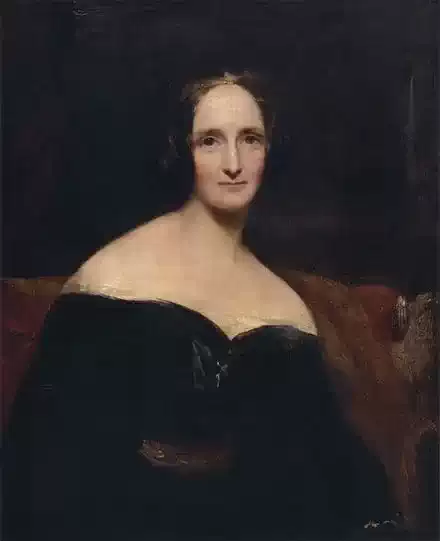
Percy Bysshe Shelley
To Wordsworth
To Wordsworth
Poet of Nature, thou hast wept to know
That things depart which never may return:
Childhood and youth, friendship and love's first glow,
Have fled like sweet dreams, leaving thee to mourn.
These common woes I feel. One loss is mine
Which thou too feel'st, yet I alone deplore.
Thou wert as a lone star, whose light did shine
On some frail bark in winter's midnight roar:
Thou hast like to a rock-built refuge stood
Above the blind and battling multitude:
In honoured poverty thy voice did weave
Songs consecrate to truth and liberty,--
Deserting these, thou leavest me to grieve,
Thus having been, that thou shouldst cease to be.
Poet of Nature, thou hast wept to know
That things depart which never may return:
Childhood and youth, friendship and love's first glow,
Have fled like sweet dreams, leaving thee to mourn.
These common woes I feel. One loss is mine
Which thou too feel'st, yet I alone deplore.
Thou wert as a lone star, whose light did shine
On some frail bark in winter's midnight roar:
Thou hast like to a rock-built refuge stood
Above the blind and battling multitude:
In honoured poverty thy voice did weave
Songs consecrate to truth and liberty,--
Deserting these, thou leavest me to grieve,
Thus having been, that thou shouldst cease to be.
488
Percy Bysshe Shelley
Time Long Past
Time Long Past
Like the ghost of a dear friend dead
Is Time long past.
A tone which is now forever fled,
A hope which is now forever past,
A love so sweet it could not last,
Was Time long past.
There were sweet dreams in the night
Of Time long past:
And, was it sadness or delight,
Each day a shadow onward cast
Which made us wish it yet might last--
That Time long past.
There is regret, almost remorse,
For Time long past.
'Tis like a child's belovèd corse
A father watches, till at last
Beauty is like remembrance, cast
From Time long past.
Like the ghost of a dear friend dead
Is Time long past.
A tone which is now forever fled,
A hope which is now forever past,
A love so sweet it could not last,
Was Time long past.
There were sweet dreams in the night
Of Time long past:
And, was it sadness or delight,
Each day a shadow onward cast
Which made us wish it yet might last--
That Time long past.
There is regret, almost remorse,
For Time long past.
'Tis like a child's belovèd corse
A father watches, till at last
Beauty is like remembrance, cast
From Time long past.
400