

Poems in this topic
Politics and Power
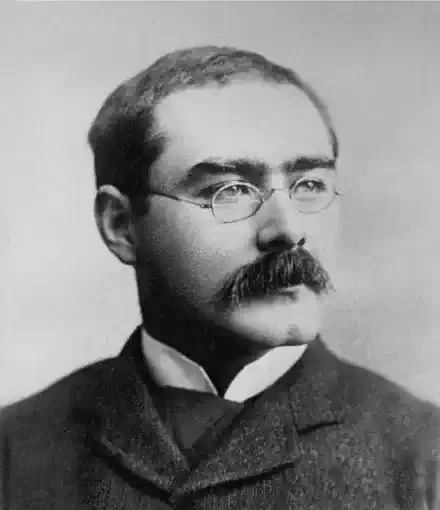
Rudyard Kipling
Delilah
Delilah
We have another viceroy now, -- those days are dead and done
Of Delilah Aberyswith and depraved Ulysses Gunne.
Delilah Aberyswith was a lady -- not too young --
With a perfect taste in dresses and a badly-bitted tongue,
With a thirst for information, and a greater thirst for praise,
And a little house in Simla in the Prehistoric Days.
By reason of her marriage to a gentleman in power,
Delilah was acquainted with the gossip of the hour;
And many little secrets, of the half-official kind,
Were whispered to Delilah, and she bore them all in mind.
She patronized extensively a man, Ulysses Gunne,
Whose mode of earning money was a low and shameful one.
He wrote for certain papers, which, as everybody knows,
Is worse than serving in a shop or scaring off the crows.
He praised her "queenly beauty" first; and, later on, he hinted
At the "vastness of her intellect" with compliment unstinted.
He went with her a-riding, and his love for her was such
That he lent her all his horses and -- she galled them very much.
One day, THEY brewed a secret of a fine financial sort;
It related to Appointments, to a Man and a Report.
'Twas almost wortth the keeping, -- only seven people knew it --
And Gunne rose up to seek the truth and patiently ensue it.
It was a Viceroy's Secret, but -- perhaps the wine was red --
Perhaps an Aged Concillor had lost his aged head --
Perhaps Delilah's eyes were bright -- Delilah's whispers sweet --
The Aged Member told her what 'twere treason to repeat.
Ulysses went a-riding, and they talked of love and flowers;
Ulysses went a-calling, and he called for several hours;
Ulysses went a-waltzing, and Delilah helped him dance --
Ulysses let the waltzes go, and waited for his chance.
The summer sun was setting, and the summer air was still,
The couple went a-walking in the shade of Summer Hill.
The wasteful sunset faded out in turkis-green and gold,
Ulysses pleaded softly, and . . . that bad Delilah told!
Next morn, a startled Empire learnt the all-important news;
Next week, the Aged Councillor was shaking in his shoes.
Next month, I met Delilah and she did not show the least
Hesitation in affirming that Ulysses was a "beast."
* * * * *
We have another Viceroy now, those days are dead and done --
Off, Delilah Aberyswith and most mean Ulysses Gunne!
We have another viceroy now, -- those days are dead and done
Of Delilah Aberyswith and depraved Ulysses Gunne.
Delilah Aberyswith was a lady -- not too young --
With a perfect taste in dresses and a badly-bitted tongue,
With a thirst for information, and a greater thirst for praise,
And a little house in Simla in the Prehistoric Days.
By reason of her marriage to a gentleman in power,
Delilah was acquainted with the gossip of the hour;
And many little secrets, of the half-official kind,
Were whispered to Delilah, and she bore them all in mind.
She patronized extensively a man, Ulysses Gunne,
Whose mode of earning money was a low and shameful one.
He wrote for certain papers, which, as everybody knows,
Is worse than serving in a shop or scaring off the crows.
He praised her "queenly beauty" first; and, later on, he hinted
At the "vastness of her intellect" with compliment unstinted.
He went with her a-riding, and his love for her was such
That he lent her all his horses and -- she galled them very much.
One day, THEY brewed a secret of a fine financial sort;
It related to Appointments, to a Man and a Report.
'Twas almost wortth the keeping, -- only seven people knew it --
And Gunne rose up to seek the truth and patiently ensue it.
It was a Viceroy's Secret, but -- perhaps the wine was red --
Perhaps an Aged Concillor had lost his aged head --
Perhaps Delilah's eyes were bright -- Delilah's whispers sweet --
The Aged Member told her what 'twere treason to repeat.
Ulysses went a-riding, and they talked of love and flowers;
Ulysses went a-calling, and he called for several hours;
Ulysses went a-waltzing, and Delilah helped him dance --
Ulysses let the waltzes go, and waited for his chance.
The summer sun was setting, and the summer air was still,
The couple went a-walking in the shade of Summer Hill.
The wasteful sunset faded out in turkis-green and gold,
Ulysses pleaded softly, and . . . that bad Delilah told!
Next morn, a startled Empire learnt the all-important news;
Next week, the Aged Councillor was shaking in his shoes.
Next month, I met Delilah and she did not show the least
Hesitation in affirming that Ulysses was a "beast."
* * * * *
We have another Viceroy now, those days are dead and done --
Off, Delilah Aberyswith and most mean Ulysses Gunne!
479
Rudyard Kipling
Dane-Geld
Dane-Geld
A.D. -
It is always a temptation to an armed and agile nation
To call upon a neighbour and to say:--
"We invaded you last night--we are quite prepared to fight,
Unless you pay us cash to go away."
And that is called asking for Dane-geld,
And the people who ask it explain
That you've only to pay 'em the Dane-geld
And then you'll get rid of the Dane!
It is always a temptation for a reach and lazy nation,
To puff and look important and to say:--
"Though we know we should defeat you, we have not the
time to meet you.
We will therefore pay you cash to go away."
And that is called paying the Dane-geld;
But we've proved it again and again,
That if once you have paid him the Dane-geld
You never get rid of the Dane.
It is wrong to put temptation in the path of any nation,
For fear they should succumb and go astray;
So when you are requested to pay up or be molested,
You will find it better policy to say:--
"We never pay any-one Dane-geld,
No matter how trifling the cost;
For the end of that game is oppression and shame,
And the nation that plays it is lost!"
A.D. -
It is always a temptation to an armed and agile nation
To call upon a neighbour and to say:--
"We invaded you last night--we are quite prepared to fight,
Unless you pay us cash to go away."
And that is called asking for Dane-geld,
And the people who ask it explain
That you've only to pay 'em the Dane-geld
And then you'll get rid of the Dane!
It is always a temptation for a reach and lazy nation,
To puff and look important and to say:--
"Though we know we should defeat you, we have not the
time to meet you.
We will therefore pay you cash to go away."
And that is called paying the Dane-geld;
But we've proved it again and again,
That if once you have paid him the Dane-geld
You never get rid of the Dane.
It is wrong to put temptation in the path of any nation,
For fear they should succumb and go astray;
So when you are requested to pay up or be molested,
You will find it better policy to say:--
"We never pay any-one Dane-geld,
No matter how trifling the cost;
For the end of that game is oppression and shame,
And the nation that plays it is lost!"
494
Rudyard Kipling
An Imperial Rescript
An Imperial Rescript
Now this is the tale of the Council the German Kaiser decreed,
To ease the strong of their burden, to help the weak in their need,
He sent a word to the peoples, who struggle, and pant, and sweat,
That the straw might be counted fairly and the tally of bricks be set.
The Lords of Their Hands assembled; from the East and the West they drew --
Baltimore, Lille, and Essen, Brummagem, Clyde, and Crewe.
And some were black from the furnace, and some were brown from the soil,
And some were blue from the dye-vat; but all were wearied of toil.
And the young King said: -- "I have found it, the road to the rest ye seek:
The strong shall wait for the weary, the hale shall halt for the weak;
With the even tramp of an army where no man breaks from the line,
Ye shall march to peace and plenty in the bond of brotherhood -- sign!"
The paper lay on the table, the strong heads bowed thereby,
And a wail went up from the peoples: -- "Ay, sign -- give rest, for we die!"
A hand was stretched to the goose-quill, a fist was cramped to scrawl,
When -- the laugh of a blue-eyed maiden ran clear through the council-hall.
And each one heard Her laughing as each one saw Her plain --
Saidie, Mimi, or Olga, Gretchen, or Mary Jane.
And the Spirit of Man that is in Him to the light of the vision woke;
And the men drew back from the paper, as a Yankee delegate spoke: --
"There's a girl in Jersey City who works on the telephone;
We're going to hitch our horses and dig for a house of our own,
With gas and water connections, and steam-heat through to the top;
And, W. Hohenzollern, I guess I shall work till I drop."
And an English delegate thundered: -- "The weak an' the lame be blowed!
I've a berth in the Sou'-West workshops, a home in the Wandsworth Road;
And till the 'sociation has footed my buryin' bill,
I work for the kids an' the missus. Pull up? I be damned if I will!"
And over the German benches the bearded whisper ran: --
"Lager, der girls und der dollars, dey makes or dey breaks a man.
If Schmitt haf collared der dollars, he collars der girl deremit;
But if Schmitt bust in der pizness, we collars der girl from Schmitt."
They passed one resolution: -- "Your sub-committee believe
You can lighten the curse of Adam when you've lightened the curse of Eve.
But till we are built like angels, with hammer and chisel and pen,
We will work for ourself and a woman, for ever and ever, amen."
Now this is the tale of the Council the German Kaiser held --
The day that they razored the Grindstone, the day that the Cat was belled,
The day of the Figs from Thistles, the day of the Twisted Sands,
The day that the laugh of a maiden made light of the Lords of Their Hands.
Now this is the tale of the Council the German Kaiser decreed,
To ease the strong of their burden, to help the weak in their need,
He sent a word to the peoples, who struggle, and pant, and sweat,
That the straw might be counted fairly and the tally of bricks be set.
The Lords of Their Hands assembled; from the East and the West they drew --
Baltimore, Lille, and Essen, Brummagem, Clyde, and Crewe.
And some were black from the furnace, and some were brown from the soil,
And some were blue from the dye-vat; but all were wearied of toil.
And the young King said: -- "I have found it, the road to the rest ye seek:
The strong shall wait for the weary, the hale shall halt for the weak;
With the even tramp of an army where no man breaks from the line,
Ye shall march to peace and plenty in the bond of brotherhood -- sign!"
The paper lay on the table, the strong heads bowed thereby,
And a wail went up from the peoples: -- "Ay, sign -- give rest, for we die!"
A hand was stretched to the goose-quill, a fist was cramped to scrawl,
When -- the laugh of a blue-eyed maiden ran clear through the council-hall.
And each one heard Her laughing as each one saw Her plain --
Saidie, Mimi, or Olga, Gretchen, or Mary Jane.
And the Spirit of Man that is in Him to the light of the vision woke;
And the men drew back from the paper, as a Yankee delegate spoke: --
"There's a girl in Jersey City who works on the telephone;
We're going to hitch our horses and dig for a house of our own,
With gas and water connections, and steam-heat through to the top;
And, W. Hohenzollern, I guess I shall work till I drop."
And an English delegate thundered: -- "The weak an' the lame be blowed!
I've a berth in the Sou'-West workshops, a home in the Wandsworth Road;
And till the 'sociation has footed my buryin' bill,
I work for the kids an' the missus. Pull up? I be damned if I will!"
And over the German benches the bearded whisper ran: --
"Lager, der girls und der dollars, dey makes or dey breaks a man.
If Schmitt haf collared der dollars, he collars der girl deremit;
But if Schmitt bust in der pizness, we collars der girl from Schmitt."
They passed one resolution: -- "Your sub-committee believe
You can lighten the curse of Adam when you've lightened the curse of Eve.
But till we are built like angels, with hammer and chisel and pen,
We will work for ourself and a woman, for ever and ever, amen."
Now this is the tale of the Council the German Kaiser held --
The day that they razored the Grindstone, the day that the Cat was belled,
The day of the Figs from Thistles, the day of the Twisted Sands,
The day that the laugh of a maiden made light of the Lords of Their Hands.
493
Rudyard Kipling
A General Summary
A General Summary
We are very slightly changed
From the semi-apes who ranged
India's Prehistoric clay;
He that drew the longest bow
Ran his brother down, you know,
As we run men down to-day.
"Dowb," the first of all his race,
Met the Mammoth face to face
On the lake or in the cave:
Stole the steadiest canoe,
Ate the quarry others slew,
Died -- and took the finest grave.
When they scratched the reindeer-bone,
Some one made the sketch his own,
Filched it from the artist -- then,
Even in those early days,
Won a simple Viceroy's praise
Through the toil of other men.
Ere they hewed the Sphinx's visage
Favouritism governed kissage,
Even as it does in this age.
Who shall doubt "the secret hid
Under Cheops' pyramid"
Was that the contractor did
Cheops out of several millions?
Or that Joseph's sudden rise
To comptroller of Supplies
Was a fraud of monstrous size
On King Pharaoh's swart Civilians?
Thus, the artless songs I sing
Do not deal with anything
New or never said before.
As it was in the beginning
Is to-day official sinning,
And shall be for evermore!
We are very slightly changed
From the semi-apes who ranged
India's Prehistoric clay;
He that drew the longest bow
Ran his brother down, you know,
As we run men down to-day.
"Dowb," the first of all his race,
Met the Mammoth face to face
On the lake or in the cave:
Stole the steadiest canoe,
Ate the quarry others slew,
Died -- and took the finest grave.
When they scratched the reindeer-bone,
Some one made the sketch his own,
Filched it from the artist -- then,
Even in those early days,
Won a simple Viceroy's praise
Through the toil of other men.
Ere they hewed the Sphinx's visage
Favouritism governed kissage,
Even as it does in this age.
Who shall doubt "the secret hid
Under Cheops' pyramid"
Was that the contractor did
Cheops out of several millions?
Or that Joseph's sudden rise
To comptroller of Supplies
Was a fraud of monstrous size
On King Pharaoh's swart Civilians?
Thus, the artless songs I sing
Do not deal with anything
New or never said before.
As it was in the beginning
Is to-day official sinning,
And shall be for evermore!
508
Rudyard Kipling
A Servant When He Reigneth
"A Servant When He Reigneth"
Three things make earth unquiet
And four she cannot brook
The godly Agur counted them
And put them in a book --
Those Four Tremendous Curses
With which mankind is cursed;
But a Servant when He Reigneth
Old Agur entered first.
An Handmaid that is Mistress
We need not call upon.
A Fool when he is full of Meat
Will fall asleep anon.
An Odious Woman Married
May bear a babe and mend;
But a Servant when He Reigneth
Is Confusion to the end.
His feet are swift to tumult,
His hands are slow to toil,
His ears are deaf to reason,
His lips are loud in broil.
He knows no use for power
Except to show his might.
He gives no heed to judgment
Unless it prove him right.
Because he served a master
Before his Kingship came,
And hid in all disaster
Behind his master's name,
So, when his Folly opens
The unnecessary hells,
A Servant when He Reigneth
Throws the blame on some one else.
His vows are lightly spoken,
His faith is hard to bind,
His trust is easy boken,
He fears his fellow-kind.
The nearest mob will move him
To break the pledge he gave --
Oh, a Servant when he Reigneth
Is more than ever slave!
Three things make earth unquiet
And four she cannot brook
The godly Agur counted them
And put them in a book --
Those Four Tremendous Curses
With which mankind is cursed;
But a Servant when He Reigneth
Old Agur entered first.
An Handmaid that is Mistress
We need not call upon.
A Fool when he is full of Meat
Will fall asleep anon.
An Odious Woman Married
May bear a babe and mend;
But a Servant when He Reigneth
Is Confusion to the end.
His feet are swift to tumult,
His hands are slow to toil,
His ears are deaf to reason,
His lips are loud in broil.
He knows no use for power
Except to show his might.
He gives no heed to judgment
Unless it prove him right.
Because he served a master
Before his Kingship came,
And hid in all disaster
Behind his master's name,
So, when his Folly opens
The unnecessary hells,
A Servant when He Reigneth
Throws the blame on some one else.
His vows are lightly spoken,
His faith is hard to bind,
His trust is easy boken,
He fears his fellow-kind.
The nearest mob will move him
To break the pledge he gave --
Oh, a Servant when he Reigneth
Is more than ever slave!
483

Robert W. Service
The Receptionist
The Receptionist
France is the fairest land on earth,
Lovely to heart's desire,
And twice a year I span its girth,
Its beauty to admire.
But when a pub I seek each night,
To my profound vexation
On form they hand me I've to write
My occupation.
So once in a derisive mood
My pen I nibbled;
And though I know I never should:
'Gangster' I scribbled.
But as the clerk with startled face
Looked stark suspicion,
I blurred it out and in its place
Put 'Politician.'
Then suddenly dissolved his frown;
His face fused to a grin,
As humorously he set down
The form I handed in.
His shrug was eloquent to view.
Quoth he: 'What's in a name?
In France, alas! the lousy two
Are just the same.'
France is the fairest land on earth,
Lovely to heart's desire,
And twice a year I span its girth,
Its beauty to admire.
But when a pub I seek each night,
To my profound vexation
On form they hand me I've to write
My occupation.
So once in a derisive mood
My pen I nibbled;
And though I know I never should:
'Gangster' I scribbled.
But as the clerk with startled face
Looked stark suspicion,
I blurred it out and in its place
Put 'Politician.'
Then suddenly dissolved his frown;
His face fused to a grin,
As humorously he set down
The form I handed in.
His shrug was eloquent to view.
Quoth he: 'What's in a name?
In France, alas! the lousy two
Are just the same.'
249
Robert W. Service
The Ghosts
The Ghosts
Said Lenin's ghost to Stalin's ghost:
"Mate with me in the Tomb;
Then day by day the rancid host
May gaze upon our doom.
A crystal casket we will share;
Come, crusty Comrade come,
And we will bear the public stare,
Ad nauseum."
Said Stalin's spook to Lenin's spook:
"Long have you held your place.
The masses must be bored to look
Upon your chemic face.
A change might be a good idear,
And though I pity you,
There is within the Tomb, I fear,
No room for two."
Said Lenin's wraith to Stalin's wraith:
"You're welcome to my job;
Let millions of our mighty faith
Gaze on your noble nob.
So when to goodly earth I've gone,
(And I'll be glad to go),
Your carrion can carry on
Our waxwork show."
Said Lenin's ghost to Stalin's ghost:
"Mate with me in the Tomb;
Then day by day the rancid host
May gaze upon our doom.
A crystal casket we will share;
Come, crusty Comrade come,
And we will bear the public stare,
Ad nauseum."
Said Stalin's spook to Lenin's spook:
"Long have you held your place.
The masses must be bored to look
Upon your chemic face.
A change might be a good idear,
And though I pity you,
There is within the Tomb, I fear,
No room for two."
Said Lenin's wraith to Stalin's wraith:
"You're welcome to my job;
Let millions of our mighty faith
Gaze on your noble nob.
So when to goodly earth I've gone,
(And I'll be glad to go),
Your carrion can carry on
Our waxwork show."
242
Robert W. Service
Stupidity
Stupidity
Stupidity, woe's anodyne,
Be kind and comfort me in mine;
Smooth out the furrows of my brow,
Make me as carefree as a cow,
Content to sleep and eat and drink
And never think
Stupidity, let me be blind
To all the ills of humankind;
Fill me with simple sentiment
To walk the way my father went;
School me to sweat with robot folk
Beneath the yoke.
Stupidity, keep in their place
The moiling masses of my race,
And bid the lowly multitude
Be humble as a people should;
Learn us with patient hearts, I pray,
Lords to obey.
Stupidity and Ignorance,
Be you our buffers 'mid mischance;
Endoctrine us to do your will,
And other stupid people kill;
Fool us with hope of Life to be,
Great god to whom we bow the knee,
--STUPIDITY.
Stupidity, woe's anodyne,
Be kind and comfort me in mine;
Smooth out the furrows of my brow,
Make me as carefree as a cow,
Content to sleep and eat and drink
And never think
Stupidity, let me be blind
To all the ills of humankind;
Fill me with simple sentiment
To walk the way my father went;
School me to sweat with robot folk
Beneath the yoke.
Stupidity, keep in their place
The moiling masses of my race,
And bid the lowly multitude
Be humble as a people should;
Learn us with patient hearts, I pray,
Lords to obey.
Stupidity and Ignorance,
Be you our buffers 'mid mischance;
Endoctrine us to do your will,
And other stupid people kill;
Fool us with hope of Life to be,
Great god to whom we bow the knee,
--STUPIDITY.
240
Robert W. Service
Spanish Peasant
Spanish Peasant
We have no aspiration vain
For paradise Utopian,
And here in our sun-happy Spain,
Though man exploit his fellow man,
To high constraint we humbly yield,
And turn from politics to toil,
Content to till a kindly field
And bring forth bounty from the soil.
They tell us wars will never cease;
They sy the world is out of joint.
How well we Know! But peace is peace
Even imposed at pistol point.
And we have learnt our lesson well,
By many a death, by many a tear;
So let us live a feudal spell, -
The cost of freedom is too dear.
Let us be the cattle kind,
Praying the goad be not a sword;
In servitude obeying blind
The tyrant ruling of our Lord.
His army can be swift to slay,
His Church teach us humility . . .
But never never will we pay
Again blood-price for Liberty.
We have no aspiration vain
For paradise Utopian,
And here in our sun-happy Spain,
Though man exploit his fellow man,
To high constraint we humbly yield,
And turn from politics to toil,
Content to till a kindly field
And bring forth bounty from the soil.
They tell us wars will never cease;
They sy the world is out of joint.
How well we Know! But peace is peace
Even imposed at pistol point.
And we have learnt our lesson well,
By many a death, by many a tear;
So let us live a feudal spell, -
The cost of freedom is too dear.
Let us be the cattle kind,
Praying the goad be not a sword;
In servitude obeying blind
The tyrant ruling of our Lord.
His army can be swift to slay,
His Church teach us humility . . .
But never never will we pay
Again blood-price for Liberty.
153
Robert W. Service
Raising The Flag
Raising The Flag
Behold! the Spanish flag they're raising
Before the Palace courtyard gate;
To watch its progress bold and blazing
Two hundred patient people wait.
Though bandsmen play the anthem bravely
The silken emblem seems to lag;
Two hundred people watch it gravely -
But only two salute the flag.
Fine-clad and arrogant of manner
The twain are like dark dons of old,
And to that high and haughty banner
Uplifted palms they proudly hold.
The others watch them glumly, grimly;
No sullen proletariat these,
but middle-class, well clad though dimly,
Who seem to live in decent ease.
Then sadly they look at each other,
And sigh ans shrug and turn away.
What is the feeling that they smother?
I wonder, but it's none too gay.
And as with puzzlement I bide me,
Beneath that rich, resplendent rag,
I hear a bitter voice beside me:
"It isn't ours - it's Franco's flag.
"I'm Right: I have no Left obsession.
I hate the Communists like hell,
But after ten years of oppression
I hate our Franco twice as well.
And hush! I keep (do not reprove me)
His portrait in a private place,
And every time my bowels move me
I - spit in El Caudillo's face."
These were the words I heard, I swear,
But when I turned around to stare,
Believe me - there was no one there.
Behold! the Spanish flag they're raising
Before the Palace courtyard gate;
To watch its progress bold and blazing
Two hundred patient people wait.
Though bandsmen play the anthem bravely
The silken emblem seems to lag;
Two hundred people watch it gravely -
But only two salute the flag.
Fine-clad and arrogant of manner
The twain are like dark dons of old,
And to that high and haughty banner
Uplifted palms they proudly hold.
The others watch them glumly, grimly;
No sullen proletariat these,
but middle-class, well clad though dimly,
Who seem to live in decent ease.
Then sadly they look at each other,
And sigh ans shrug and turn away.
What is the feeling that they smother?
I wonder, but it's none too gay.
And as with puzzlement I bide me,
Beneath that rich, resplendent rag,
I hear a bitter voice beside me:
"It isn't ours - it's Franco's flag.
"I'm Right: I have no Left obsession.
I hate the Communists like hell,
But after ten years of oppression
I hate our Franco twice as well.
And hush! I keep (do not reprove me)
His portrait in a private place,
And every time my bowels move me
I - spit in El Caudillo's face."
These were the words I heard, I swear,
But when I turned around to stare,
Believe me - there was no one there.
234
Robert W. Service
Marie Antoinette
Marie Antoinette
They told to Marie Antoinette:
"The beggers at your gate
Have eyes too sad for tears to wet,
And for your pity wait."
But Marie only laughed and said:
"My heart they will not ache:
If people starve for want of bread
Let them eat cake."
The Court re-echoed her bon mot;
It rang around the land,
Till masses wakened from their woe
With scyth and pick in hand.
It took a careless, callous phrase
To rouse the folk forlorn:
A million roared the Marseillaise:
Freedom was born.
And so to Marie Antoinette
Let's pay a tribute due;
Humanity owes her a debt,
(Ironical, it's true).
She sparked world revolution red,
And as with glee they bore
Upon a pike her lovely head
--Her curls dripped gore.
They told to Marie Antoinette:
"The beggers at your gate
Have eyes too sad for tears to wet,
And for your pity wait."
But Marie only laughed and said:
"My heart they will not ache:
If people starve for want of bread
Let them eat cake."
The Court re-echoed her bon mot;
It rang around the land,
Till masses wakened from their woe
With scyth and pick in hand.
It took a careless, callous phrase
To rouse the folk forlorn:
A million roared the Marseillaise:
Freedom was born.
And so to Marie Antoinette
Let's pay a tribute due;
Humanity owes her a debt,
(Ironical, it's true).
She sparked world revolution red,
And as with glee they bore
Upon a pike her lovely head
--Her curls dripped gore.
226
Robert W. Service
Freedom's Fool
Freedom's Fool
To hell with Government I say;
I'm sick of all the piddling pack.
I'd like to scram, get clean away,
And never, nevermore come back.
With heart of hope I long to go
To some lost island of the sea,
And there get drunk with joy to know
No one on earth is over me.
There will be none to say me nay,
So from my lexicon I can
Obliterate the word "obey",
And mock the meddling laws of man.
The laws of Nature and of God
Are good enough for guys like me,
Who scorn to kiss the scarlet rod
Of office and authority.
No Stars and Stripes nor Union Jack,
Nor tri-colour nor crimson rag
Shall claim my love, I'll turn my back
On every land, on every flag.
My banner shall be stainless white,
An emblem of the Golden Rule,
Yet for its freedom I will fight
And die - like any other fool.
Oh Government's a bitter pill!
No force or fear shall forge my fate;
I'll bow to no communal will,
For I myself shall be the State.
Uncurst by man-curb and control,
my Isle shall be emparadised,
And I will re-possess my soul . . .
Mad Anarchist! - Well, wasn't Christ?
To hell with Government I say;
I'm sick of all the piddling pack.
I'd like to scram, get clean away,
And never, nevermore come back.
With heart of hope I long to go
To some lost island of the sea,
And there get drunk with joy to know
No one on earth is over me.
There will be none to say me nay,
So from my lexicon I can
Obliterate the word "obey",
And mock the meddling laws of man.
The laws of Nature and of God
Are good enough for guys like me,
Who scorn to kiss the scarlet rod
Of office and authority.
No Stars and Stripes nor Union Jack,
Nor tri-colour nor crimson rag
Shall claim my love, I'll turn my back
On every land, on every flag.
My banner shall be stainless white,
An emblem of the Golden Rule,
Yet for its freedom I will fight
And die - like any other fool.
Oh Government's a bitter pill!
No force or fear shall forge my fate;
I'll bow to no communal will,
For I myself shall be the State.
Uncurst by man-curb and control,
my Isle shall be emparadised,
And I will re-possess my soul . . .
Mad Anarchist! - Well, wasn't Christ?
249
Robert W. Service
Equality
Equality
The Elders of the Tribe were grouped
And squatted in the Council Cave;
They seemed to be extremely pooped,
And some were grim, but all were grave:
The subject of their big To-do
Was axe-man Chow, the son of Choo.
Then up spoke Tribal Wiseman Waw:
"Brothers, today I talk to grieve:
As an upholder of the Law
You know how deeply we believe
In Liberty, Fraternity,
And likewise Equality.
"A chipper of the flint am I;
I make the weapons that you use,
And though to hunt I never try,
To bow to hunters I refuse:
But stalwart Chow, the son of Choo
Is equal to us any two.
"He is the warrior supreme,
The Super-caveman, one might say;
The pride of youth, the maiden's dream,
And in the chase the first to slay.
Where we are stunted he is tall:
In short, a menace to us all.
"He struts with throwing stone and spear;
And is he not the first to wear
Around his waist with bully leer
The pelt of wolf and baby bear!
Admitting that he made the kill
Why should he so exploit his skill?
"Comrades, grave counsel we must take,
And as he struts with jest and jibe,
Let us act swiftly lest he make
Himself Dictator of our Tribe:
The Gods have built him on their plan:
Let us reduce him to a man."
And so they seized him in the night,
And on the sacrificial stone
The axe-men of the Tribe did smite,
Until one limb he ceased to own.
There! They had equalized the odds,
Foiling unfairness of the Gods.
So Chow has lost his throwing arm,
And goes around like every one;
No longer does he threaten harm,
And tribal justice has been done.
For men are equal, let us seek
To grade the Strong down to the weak.
The Elders of the Tribe were grouped
And squatted in the Council Cave;
They seemed to be extremely pooped,
And some were grim, but all were grave:
The subject of their big To-do
Was axe-man Chow, the son of Choo.
Then up spoke Tribal Wiseman Waw:
"Brothers, today I talk to grieve:
As an upholder of the Law
You know how deeply we believe
In Liberty, Fraternity,
And likewise Equality.
"A chipper of the flint am I;
I make the weapons that you use,
And though to hunt I never try,
To bow to hunters I refuse:
But stalwart Chow, the son of Choo
Is equal to us any two.
"He is the warrior supreme,
The Super-caveman, one might say;
The pride of youth, the maiden's dream,
And in the chase the first to slay.
Where we are stunted he is tall:
In short, a menace to us all.
"He struts with throwing stone and spear;
And is he not the first to wear
Around his waist with bully leer
The pelt of wolf and baby bear!
Admitting that he made the kill
Why should he so exploit his skill?
"Comrades, grave counsel we must take,
And as he struts with jest and jibe,
Let us act swiftly lest he make
Himself Dictator of our Tribe:
The Gods have built him on their plan:
Let us reduce him to a man."
And so they seized him in the night,
And on the sacrificial stone
The axe-men of the Tribe did smite,
Until one limb he ceased to own.
There! They had equalized the odds,
Foiling unfairness of the Gods.
So Chow has lost his throwing arm,
And goes around like every one;
No longer does he threaten harm,
And tribal justice has been done.
For men are equal, let us seek
To grade the Strong down to the weak.
156
Robert W. Service
Barcelona
Barcelona
The night before I left Milan
A mob jammed the Cathedral Square,
And high the tide of passion ran
As politics befouled the air.
A seething hell of human strife,
I shrank back from its evil core,
Seeing in this convulsive life
The living seeds of war.
To Barcelona then I came,
And oh the heavenly release!
From conflict and consuming flame
I knew the preciousness of peace.
Such veneration for the law!
How decorous was every one!
And then (significant) I saw
Each copper packed a tommy gun.
Well, maybe it is best that way.
Peace can mean more than liberty:
These people, state-directed, may
Be happier than those more free.
When politics wield evil grip,
And warring factions rise and fall,
Benevolent dictatorship
May be the answer, after all.
The night before I left Milan
A mob jammed the Cathedral Square,
And high the tide of passion ran
As politics befouled the air.
A seething hell of human strife,
I shrank back from its evil core,
Seeing in this convulsive life
The living seeds of war.
To Barcelona then I came,
And oh the heavenly release!
From conflict and consuming flame
I knew the preciousness of peace.
Such veneration for the law!
How decorous was every one!
And then (significant) I saw
Each copper packed a tommy gun.
Well, maybe it is best that way.
Peace can mean more than liberty:
These people, state-directed, may
Be happier than those more free.
When politics wield evil grip,
And warring factions rise and fall,
Benevolent dictatorship
May be the answer, after all.
249
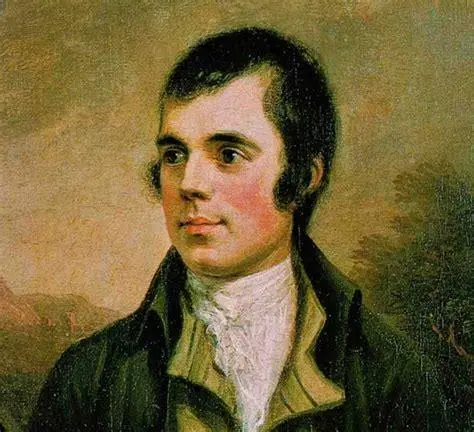
Robert Burns
A Dream
A Dream
Guid-Mornin' to our Majesty!
May Heaven augment your blisses
On ev'ry new birth-day ye see,
A humble poet wishes.
My bardship here, at your Levee
On sic a day as this is,
Is sure an uncouth sight to see,
Amang thae birth-day dresses
Sae fine this day.
I see ye're complimented thrang,
By mony a lord an' lady;
"God save the King" 's a cuckoo sang
That's unco easy said aye:
The poets, too, a venal gang,
Wi' rhymes weel-turn'd an' ready,
Wad gar you trow ye ne'er do wrang,
But aye unerring steady,
On sic a day.
For me! before a monarch's face
Ev'n there I winna flatter;
For neither pension, post, nor place,
Am I your humble debtor:
So, nae reflection on your Grace,
Your Kingship to bespatter;
There's mony waur been o' the race,
And aiblins ane been better
Than you this day.
'Tis very true, my sovereign King,
My skill may weel be doubted;
But facts are chiels that winna ding,
An' downa be disputed:
Your royal nest, beneath your wing,
Is e'en right reft and clouted,
And now the third part o' the string,
An' less, will gang aboot it
Than did ae day.^
Far be't frae me that I aspire
To blame your legislation,
Or say, ye wisdom want, or fire,
To rule this mighty nation:
But faith! I muckle doubt, my sire,
Ye've trusted ministration
To chaps wha in barn or byre
Wad better fill'd their station
Than courts yon day.
And now ye've gien auld Britain peace,
Her broken shins to plaister,
Your sair taxation does her fleece,
Till she has scarce a tester:
For me, thank God, my life's a lease,
Nae bargain wearin' faster,
Or, faith! I fear, that, wi' the geese,
I shortly boost to pasture
I' the craft some day.
I'm no mistrusting Willie Pitt,
When taxes he enlarges,
(An' Will's a true guid fallow's get,
A name not envy spairges),
That he intends to pay your debt,
An' lessen a' your charges;
But, God-sake! let nae saving fit
Abridge your bonie barges
An'boats this day.
Adieu, my Liege; may freedom geck
Beneath your high protection;
An' may ye rax Corruption's neck,
And gie her for dissection!
But since I'm here, I'll no neglect,
In loyal, true affection,
To pay your Queen, wi' due respect,
May fealty an' subjection
This great birth-day.
Hail, Majesty most Excellent!
While nobles strive to please ye,
Will ye accept a compliment,
A simple poet gies ye?
Thae bonie bairntime, Heav'n has lent,
Still higher may they heeze ye
In bliss, till fate some day is sent
For ever to release ye
Frae care that day.
For you, young Potentate o'Wales,
I tell your highness fairly,
Down Pleasure's stream, wi' swelling sails,
I'm tauld ye're driving rarely;
But some day ye may gnaw your nails,
An' curse your folly sairly,
That e'er ye brak Diana's pales,
Or rattl'd dice wi' Charlie
By night or day.
Yet aft a ragged cowt's been known,
To mak a noble aiver;
So, ye may doucely fill the throne,
For a'their clish-ma-claver:
There, him^ at Agincourt wha shone,
Few better were or braver:
And yet, wi' funny, queer Sir John,^
He was an unco shaver
For mony a day.
For you, right rev'rend Osnaburg,
Nane sets the lawn-sleeve sweeter,
Altho' a ribbon at your lug
Wad been a dress completer:
As ye disown yon paughty dog,
That bears the keys of Peter,
Then swith! an' get a wife to hug,
Or trowth, ye'll stain the mitre
Some luckless day!
Young, royal Tarry-breeks, I learn,
Ye've lately come athwart her-
A glorious galley,^ stem and stern,
Weel rigg'd for Venus' barter;
But first hang out, that she'll discern,
Your hymeneal charter;
Then heave aboard your grapple airn,
An' large upon her quarter,
Come full that day.
Ye, lastly, bonie blossoms a',
Ye royal lasses dainty,
Heav'n mak you guid as well as braw,
An' gie you lads a-plenty!
But sneer na British boys awa!
For kings are unco scant aye,
An' German gentles are but sma',
They're better just than want aye
On ony day.
Gad bless you a'! consider now,
Ye're unco muckle dautit;
But ere the course o' life be through,
It may be bitter sautit:
An' I hae seen their coggie fou,
That yet hae tarrow't at it.
But or the day was done, I trow,
The laggen they hae clautit
Fu' clean that day.
Guid-Mornin' to our Majesty!
May Heaven augment your blisses
On ev'ry new birth-day ye see,
A humble poet wishes.
My bardship here, at your Levee
On sic a day as this is,
Is sure an uncouth sight to see,
Amang thae birth-day dresses
Sae fine this day.
I see ye're complimented thrang,
By mony a lord an' lady;
"God save the King" 's a cuckoo sang
That's unco easy said aye:
The poets, too, a venal gang,
Wi' rhymes weel-turn'd an' ready,
Wad gar you trow ye ne'er do wrang,
But aye unerring steady,
On sic a day.
For me! before a monarch's face
Ev'n there I winna flatter;
For neither pension, post, nor place,
Am I your humble debtor:
So, nae reflection on your Grace,
Your Kingship to bespatter;
There's mony waur been o' the race,
And aiblins ane been better
Than you this day.
'Tis very true, my sovereign King,
My skill may weel be doubted;
But facts are chiels that winna ding,
An' downa be disputed:
Your royal nest, beneath your wing,
Is e'en right reft and clouted,
And now the third part o' the string,
An' less, will gang aboot it
Than did ae day.^
Far be't frae me that I aspire
To blame your legislation,
Or say, ye wisdom want, or fire,
To rule this mighty nation:
But faith! I muckle doubt, my sire,
Ye've trusted ministration
To chaps wha in barn or byre
Wad better fill'd their station
Than courts yon day.
And now ye've gien auld Britain peace,
Her broken shins to plaister,
Your sair taxation does her fleece,
Till she has scarce a tester:
For me, thank God, my life's a lease,
Nae bargain wearin' faster,
Or, faith! I fear, that, wi' the geese,
I shortly boost to pasture
I' the craft some day.
I'm no mistrusting Willie Pitt,
When taxes he enlarges,
(An' Will's a true guid fallow's get,
A name not envy spairges),
That he intends to pay your debt,
An' lessen a' your charges;
But, God-sake! let nae saving fit
Abridge your bonie barges
An'boats this day.
Adieu, my Liege; may freedom geck
Beneath your high protection;
An' may ye rax Corruption's neck,
And gie her for dissection!
But since I'm here, I'll no neglect,
In loyal, true affection,
To pay your Queen, wi' due respect,
May fealty an' subjection
This great birth-day.
Hail, Majesty most Excellent!
While nobles strive to please ye,
Will ye accept a compliment,
A simple poet gies ye?
Thae bonie bairntime, Heav'n has lent,
Still higher may they heeze ye
In bliss, till fate some day is sent
For ever to release ye
Frae care that day.
For you, young Potentate o'Wales,
I tell your highness fairly,
Down Pleasure's stream, wi' swelling sails,
I'm tauld ye're driving rarely;
But some day ye may gnaw your nails,
An' curse your folly sairly,
That e'er ye brak Diana's pales,
Or rattl'd dice wi' Charlie
By night or day.
Yet aft a ragged cowt's been known,
To mak a noble aiver;
So, ye may doucely fill the throne,
For a'their clish-ma-claver:
There, him^ at Agincourt wha shone,
Few better were or braver:
And yet, wi' funny, queer Sir John,^
He was an unco shaver
For mony a day.
For you, right rev'rend Osnaburg,
Nane sets the lawn-sleeve sweeter,
Altho' a ribbon at your lug
Wad been a dress completer:
As ye disown yon paughty dog,
That bears the keys of Peter,
Then swith! an' get a wife to hug,
Or trowth, ye'll stain the mitre
Some luckless day!
Young, royal Tarry-breeks, I learn,
Ye've lately come athwart her-
A glorious galley,^ stem and stern,
Weel rigg'd for Venus' barter;
But first hang out, that she'll discern,
Your hymeneal charter;
Then heave aboard your grapple airn,
An' large upon her quarter,
Come full that day.
Ye, lastly, bonie blossoms a',
Ye royal lasses dainty,
Heav'n mak you guid as well as braw,
An' gie you lads a-plenty!
But sneer na British boys awa!
For kings are unco scant aye,
An' German gentles are but sma',
They're better just than want aye
On ony day.
Gad bless you a'! consider now,
Ye're unco muckle dautit;
But ere the course o' life be through,
It may be bitter sautit:
An' I hae seen their coggie fou,
That yet hae tarrow't at it.
But or the day was done, I trow,
The laggen they hae clautit
Fu' clean that day.
317

Robert Browning
The Lost Leader
The Lost Leader
I.
Just for a handful of silver he left us,
Just for a riband to stick in his coat---
Found the one gift of which fortune bereft us,
Lost all the others she lets us devote;
They, with the gold to give, doled him out silver,
So much was theirs who so little allowed:
How all our copper had gone for his service!
Rags---were they purple, his heart had been proud!
We that had loved him so, followed him, honoured him,
Lived in his mild and magnificent eye,
Learned his great language, caught his clear accents,
Made him our pattern to live and to die!
Shakespeare was of us, Milton was for us,
Burns, Shelley, were with us,---they watch from their graves!
He alone breaks from the van and the free-men,
---He alone sinks to the rear and the slaves!
II.
We shall march prospering,---not thro' his presence;
Songs may inspirit us,---not from his lyre;
Deeds will be done,---while he boasts his quiescence,
Still bidding crouch whom the rest bade aspire:
Blot out his name, then, record one lost soul more,
One task more declined, one more foot-path untrod,
One more devils'-triumph and sorrow for angels,
One wrong more to man, one more insult to God!
Life's night begins: let him never come back to us!
There would be doubt, hesitation and pain,
Forced praise on our part---the glimmer of twilight,
Never glad confident morning again!
Best fight on well, for we taught him---strike gallantly,
Menace our heart ere we master his own;
Then let him receive the new knowledge and wait us,
Pardoned in heaven, the first by the throne!
I.
Just for a handful of silver he left us,
Just for a riband to stick in his coat---
Found the one gift of which fortune bereft us,
Lost all the others she lets us devote;
They, with the gold to give, doled him out silver,
So much was theirs who so little allowed:
How all our copper had gone for his service!
Rags---were they purple, his heart had been proud!
We that had loved him so, followed him, honoured him,
Lived in his mild and magnificent eye,
Learned his great language, caught his clear accents,
Made him our pattern to live and to die!
Shakespeare was of us, Milton was for us,
Burns, Shelley, were with us,---they watch from their graves!
He alone breaks from the van and the free-men,
---He alone sinks to the rear and the slaves!
II.
We shall march prospering,---not thro' his presence;
Songs may inspirit us,---not from his lyre;
Deeds will be done,---while he boasts his quiescence,
Still bidding crouch whom the rest bade aspire:
Blot out his name, then, record one lost soul more,
One task more declined, one more foot-path untrod,
One more devils'-triumph and sorrow for angels,
One wrong more to man, one more insult to God!
Life's night begins: let him never come back to us!
There would be doubt, hesitation and pain,
Forced praise on our part---the glimmer of twilight,
Never glad confident morning again!
Best fight on well, for we taught him---strike gallantly,
Menace our heart ere we master his own;
Then let him receive the new knowledge and wait us,
Pardoned in heaven, the first by the throne!
566
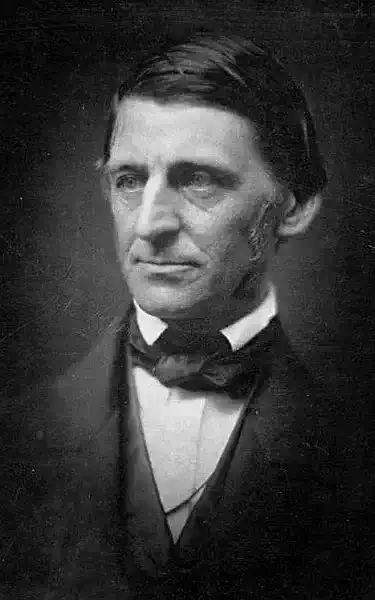
Ralph Waldo Emerson
Ode To William H. Channing
Ode To William H. Channing
Though loth to grieve
The evil time's sole patriot,
I cannot leave
My buried thought
For the priest's cant,
Or statesman's rant.
If I refuse
My study for their politique,
Which at the best is trick,
The angry muse
Puts confusion in my brain.
But who is he that prates
Of the culture of mankind,
Of better arts and life?
Go, blind worm, go,
Behold the famous States
Harrying Mexico
With rifle and with knife.
Or who, with accent bolder,
Dare praise the freedom-loving mountaineer,
I found by thee, O rushing Contoocook!
And in thy valleys, Agiochook!
The jackals of the negro-holder.
The God who made New Hampshire
Taunted the lofty land
With little men.
Small bat and wren
House in the oak.
If earth fire cleave
The upheaved land, and bury the folk,
The southern crocodile would grieve.
Virtue palters, right is hence,
Freedom praised but hid;
Funeral eloquence
Rattles the coffin-lid.
What boots thy zeal,
O glowing friend,
That would indignant rend
The northland from the south?
Wherefore? To what good end?
Boston Bay and Bunker Hill
Would serve things still:
Things are of the snake.
The horseman serves the horse,
The neat-herd serves the neat,
The merchant serves the purse,
The eater serves his meat;
'Tis the day of the chattel,
Web to weave, and corn to grind,
Things are in the saddle,
And ride mankind.
There are two laws discrete
Not reconciled,
Law for man, and law for thing;
The last builds town and fleet,
But it runs wild,
And doth the man unking.
'Tis fit the forest fall,
The steep be graded,
The mountain tunnelled,
The land shaded,
The orchard planted,
The globe tilled,
The prairie planted,
The steamer built.
Live for friendship, live for love,
For truth's and harmony's behoof;
The state may follow how it can,
As Olympus follows Jove.
Yet do not I implore
The wrinkled shopman to my sounding woods,
Nor bid the unwilling senator
Ask votes of thrushes in the solitudes.
Every one to his chosen work.
Foolish hands may mix and mar,
Wise and sure the issues are.
Round they roll, till dark is light,
Sex to sex, and even to odd;
The over-God,
Who marries Right to Might,
Who peoples, unpeoples,
He who exterminates
Races by stronger races,
Black by white faces,
Knows to bring honey
Out of the lion,
Grafts gentlest scion
On Pirate and Turk.
The Cossack eats Poland,
Like stolen fruit;
Her last noble is ruined,
Her last poet mute;
Straight into double band
The victors divide,
Half for freedom strike and stand,
The astonished muse finds thousands at her side.
Though loth to grieve
The evil time's sole patriot,
I cannot leave
My buried thought
For the priest's cant,
Or statesman's rant.
If I refuse
My study for their politique,
Which at the best is trick,
The angry muse
Puts confusion in my brain.
But who is he that prates
Of the culture of mankind,
Of better arts and life?
Go, blind worm, go,
Behold the famous States
Harrying Mexico
With rifle and with knife.
Or who, with accent bolder,
Dare praise the freedom-loving mountaineer,
I found by thee, O rushing Contoocook!
And in thy valleys, Agiochook!
The jackals of the negro-holder.
The God who made New Hampshire
Taunted the lofty land
With little men.
Small bat and wren
House in the oak.
If earth fire cleave
The upheaved land, and bury the folk,
The southern crocodile would grieve.
Virtue palters, right is hence,
Freedom praised but hid;
Funeral eloquence
Rattles the coffin-lid.
What boots thy zeal,
O glowing friend,
That would indignant rend
The northland from the south?
Wherefore? To what good end?
Boston Bay and Bunker Hill
Would serve things still:
Things are of the snake.
The horseman serves the horse,
The neat-herd serves the neat,
The merchant serves the purse,
The eater serves his meat;
'Tis the day of the chattel,
Web to weave, and corn to grind,
Things are in the saddle,
And ride mankind.
There are two laws discrete
Not reconciled,
Law for man, and law for thing;
The last builds town and fleet,
But it runs wild,
And doth the man unking.
'Tis fit the forest fall,
The steep be graded,
The mountain tunnelled,
The land shaded,
The orchard planted,
The globe tilled,
The prairie planted,
The steamer built.
Live for friendship, live for love,
For truth's and harmony's behoof;
The state may follow how it can,
As Olympus follows Jove.
Yet do not I implore
The wrinkled shopman to my sounding woods,
Nor bid the unwilling senator
Ask votes of thrushes in the solitudes.
Every one to his chosen work.
Foolish hands may mix and mar,
Wise and sure the issues are.
Round they roll, till dark is light,
Sex to sex, and even to odd;
The over-God,
Who marries Right to Might,
Who peoples, unpeoples,
He who exterminates
Races by stronger races,
Black by white faces,
Knows to bring honey
Out of the lion,
Grafts gentlest scion
On Pirate and Turk.
The Cossack eats Poland,
Like stolen fruit;
Her last noble is ruined,
Her last poet mute;
Straight into double band
The victors divide,
Half for freedom strike and stand,
The astonished muse finds thousands at her side.
341
Ralph Waldo Emerson
Ode
Ode
Inscribed to W.H. Channing
Though loath to grieve
The evil time's sole patriot,
I cannot leave
My honeyed thought
For the priest's cant,
Or statesman's rant.
If I refuse
My study for their politic,
Which at the best is trick,
The angry Muse
Puts confusion in my brain.
But who is he that prates
Of the culture of mankind,
Of better arts and life?
Go, blindworm, go,
Behold the famous States
Harrying Mexico
With rifle and with knife!
Or who, with accent bolder
Dare praise the freedom-loving mountaineer?
I found by thee, O rushing Contoocook!
And in thy valleys, Agiochook!
The jackals of the Negro-holder.
The God who made New Hampshire
Taunted the lofty land
With little men;--
Small bat and wren
House in the oak:--
If earth-fire cleave
The upheaved land, and bury the folk,
The southern crocodile would grieve.
Virtue palters; Right is hence;
Freedom praised, but hid;
Funeral eloquence
Rattles the coffin lid.
What boots thy zeal,
O glowing friend,
That would indignant rend
The northland from the south?
Wherefore? to what good end?
Boston Bay and Bunker Hill
Would serve things still;--
Things are of the snake.
The horseman serves the horse
The neatherd serves the neat,
The merchant serves the purse,
The eater serves his meat;
'Tis the day of the chattel,
Web to weave, and corn to grind;
Things are in the saddle,
And ride mankind.
There are two laws discrete,
Not reconciled,--
Law for man, and law for thing;
The last builds town and fleet,
But it runs wild,
And doth the man unking.
'Tis fit the forest fall,
The steep be graded,
The mountain tunneled,
The sand shaded,
The orchard planted,
The glebe tilled,
The prairie granted
The steamer built.
Let man serve law for man;
Live for friendship, live for love,
For truth's and harmony's behoof;
The state may follow how it can,
As Olympus follows Jove.
Yet do not I implore
The wrinkled shopman to my sounding woods,
Nor did the unwilling senator
Ask votes of thrushes in the solitudes.
Everyone to his chosen work--
Foolish hands may mix and mar;
Wise and sure the issues are.
Round they roll till dark is light,
Sex to sex, and even to odd;--
The overgod
Who marries Right to Might,
Who peoples, unpeoples,--
He who exterminates
Races by stronger races,
Black by white faces,--
Knows to bring honey
Out of the lion;
Grafts gentlest scion
On pirate and Turk.
The Cossack eats Poland,
Like stolen fruit;
Her last noble is ruined,
Her last poet mute;
Straight, into double band
The victors divide;
Half for freedom strike and stand;--
The astonished Muse finds thousands at her side.
Inscribed to W.H. Channing
Though loath to grieve
The evil time's sole patriot,
I cannot leave
My honeyed thought
For the priest's cant,
Or statesman's rant.
If I refuse
My study for their politic,
Which at the best is trick,
The angry Muse
Puts confusion in my brain.
But who is he that prates
Of the culture of mankind,
Of better arts and life?
Go, blindworm, go,
Behold the famous States
Harrying Mexico
With rifle and with knife!
Or who, with accent bolder
Dare praise the freedom-loving mountaineer?
I found by thee, O rushing Contoocook!
And in thy valleys, Agiochook!
The jackals of the Negro-holder.
The God who made New Hampshire
Taunted the lofty land
With little men;--
Small bat and wren
House in the oak:--
If earth-fire cleave
The upheaved land, and bury the folk,
The southern crocodile would grieve.
Virtue palters; Right is hence;
Freedom praised, but hid;
Funeral eloquence
Rattles the coffin lid.
What boots thy zeal,
O glowing friend,
That would indignant rend
The northland from the south?
Wherefore? to what good end?
Boston Bay and Bunker Hill
Would serve things still;--
Things are of the snake.
The horseman serves the horse
The neatherd serves the neat,
The merchant serves the purse,
The eater serves his meat;
'Tis the day of the chattel,
Web to weave, and corn to grind;
Things are in the saddle,
And ride mankind.
There are two laws discrete,
Not reconciled,--
Law for man, and law for thing;
The last builds town and fleet,
But it runs wild,
And doth the man unking.
'Tis fit the forest fall,
The steep be graded,
The mountain tunneled,
The sand shaded,
The orchard planted,
The glebe tilled,
The prairie granted
The steamer built.
Let man serve law for man;
Live for friendship, live for love,
For truth's and harmony's behoof;
The state may follow how it can,
As Olympus follows Jove.
Yet do not I implore
The wrinkled shopman to my sounding woods,
Nor did the unwilling senator
Ask votes of thrushes in the solitudes.
Everyone to his chosen work--
Foolish hands may mix and mar;
Wise and sure the issues are.
Round they roll till dark is light,
Sex to sex, and even to odd;--
The overgod
Who marries Right to Might,
Who peoples, unpeoples,--
He who exterminates
Races by stronger races,
Black by white faces,--
Knows to bring honey
Out of the lion;
Grafts gentlest scion
On pirate and Turk.
The Cossack eats Poland,
Like stolen fruit;
Her last noble is ruined,
Her last poet mute;
Straight, into double band
The victors divide;
Half for freedom strike and stand;--
The astonished Muse finds thousands at her side.
391
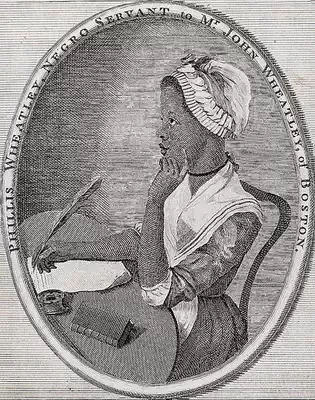
Phillis Wheatley
To the King's Most Excellent Majesty,
To the King's Most Excellent Majesty,
Your subjects hope, dread Sire--
The crown upon your brows may flourish long,
And that your arm may in your God be strong!
O may your sceptre num'rous nations sway,
And all with love and readiness obey!
But how shall we the British king reward!
Rule thou in peace, our father, and our lord!
Midst the remembrance of thy favours past,
The meanest peasants most admire the last
May George, beloved by all the nations round,
Live with heav'ns choicest constant blessings crown'd!
Great God, direct, and guard him from on high,
And from his head let ev'ry evil fly!
And may each clime with equal gladness see
A monarch's smile can set his subjects free!
Your subjects hope, dread Sire--
The crown upon your brows may flourish long,
And that your arm may in your God be strong!
O may your sceptre num'rous nations sway,
And all with love and readiness obey!
But how shall we the British king reward!
Rule thou in peace, our father, and our lord!
Midst the remembrance of thy favours past,
The meanest peasants most admire the last
May George, beloved by all the nations round,
Live with heav'ns choicest constant blessings crown'd!
Great God, direct, and guard him from on high,
And from his head let ev'ry evil fly!
And may each clime with equal gladness see
A monarch's smile can set his subjects free!
214
Phillis Wheatley
Isaiah Lxiii -------
Isaiah Lxiii -------
SAY, heav'nly muse, what king or mighty God,
That moves sublime from Idumea's road?
In Bosrah's dies, with martial glories join'd,
His purple vesture waves upon the wind.
Why thus enrob'd delights he to appear
In the dread image of the Pow'r of war?
Compres'd in wrath the swelling wine-press groan'd,
It bled, and pour'd the gushing purple round.
"Mine was the act," th' Almighty Saviour said,
And shook the dazzling glories of his head,
"When all forsook I trod the press alone,
"And conquer'd by omnipotence my own;
"For man's release sustain'd the pond'rous load,
"For man the wrath of an immortal God:
"To execute th' Eternal's dread command
"My soul I sacrific'd with willing hand;
"Sinless I stood before the avenging frown,
"Atoning thus for vices not my own."
His eye the ample field of battle round
Survey'd, but no created succours found;
His own omnipotence sustain'd the right,
His vengeance sunk the haughty foes in night;
Beneath his feet the prostrate troops were spread,
And round him lay the dying, and the dead.
Great God, what light'ning flashes from thine eyes?
What pow'r withstands if thou indignant rise?
Against thy Zion though her foes may rage,
And all their cunning, all their strength engage,
Yet she serenely on thy bosom lies,
Smiles at their arts, and all their force defies.
SAY, heav'nly muse, what king or mighty God,
That moves sublime from Idumea's road?
In Bosrah's dies, with martial glories join'd,
His purple vesture waves upon the wind.
Why thus enrob'd delights he to appear
In the dread image of the Pow'r of war?
Compres'd in wrath the swelling wine-press groan'd,
It bled, and pour'd the gushing purple round.
"Mine was the act," th' Almighty Saviour said,
And shook the dazzling glories of his head,
"When all forsook I trod the press alone,
"And conquer'd by omnipotence my own;
"For man's release sustain'd the pond'rous load,
"For man the wrath of an immortal God:
"To execute th' Eternal's dread command
"My soul I sacrific'd with willing hand;
"Sinless I stood before the avenging frown,
"Atoning thus for vices not my own."
His eye the ample field of battle round
Survey'd, but no created succours found;
His own omnipotence sustain'd the right,
His vengeance sunk the haughty foes in night;
Beneath his feet the prostrate troops were spread,
And round him lay the dying, and the dead.
Great God, what light'ning flashes from thine eyes?
What pow'r withstands if thou indignant rise?
Against thy Zion though her foes may rage,
And all their cunning, all their strength engage,
Yet she serenely on thy bosom lies,
Smiles at their arts, and all their force defies.
218
Percy Bysshe Shelley
To The Men Of England
To The Men Of England
Men of England, wherefore plough
For the lords who lay ye low?
Wherefore weave with toil and care
The rich robes your tyrants wear?
Wherefore feed and clothe and save,
From the cradle to the grave,
Those ungrateful drones who would
Drain your sweat -- nay, drink your blood?
Wherefore, Bees of England, forge
Many a weapon, chain, and scourge,
That these stingless drones may spoil
The forced produce of your toil?
Have ye leisure, comfort, calm,
Shelter, food, love's gentle balm?
Or what is it ye buy so dear
With your pain and with your fear?
The seed ye sow another reaps;
The wealth ye find another keeps;
The robes ye weave another wears;
The arms ye forge another bears.
Sow seed, -- but let no tyrant reap;
Find wealth, -- let no imposter heap;
Weave robes, -- let not the idle wear;
Forge arms, in your defence to bear.
Shrink to your cellars, holes, and cells;
In halls ye deck another dwells.
Why shake the chains ye wrought? Ye see
The steel ye tempered glance on ye.
With plough and spade and hoe and loom,
Trace your grave, and build your tomb,
And weave your winding-sheet, till fair
England be your sepulchre!
Men of England, wherefore plough
For the lords who lay ye low?
Wherefore weave with toil and care
The rich robes your tyrants wear?
Wherefore feed and clothe and save,
From the cradle to the grave,
Those ungrateful drones who would
Drain your sweat -- nay, drink your blood?
Wherefore, Bees of England, forge
Many a weapon, chain, and scourge,
That these stingless drones may spoil
The forced produce of your toil?
Have ye leisure, comfort, calm,
Shelter, food, love's gentle balm?
Or what is it ye buy so dear
With your pain and with your fear?
The seed ye sow another reaps;
The wealth ye find another keeps;
The robes ye weave another wears;
The arms ye forge another bears.
Sow seed, -- but let no tyrant reap;
Find wealth, -- let no imposter heap;
Weave robes, -- let not the idle wear;
Forge arms, in your defence to bear.
Shrink to your cellars, holes, and cells;
In halls ye deck another dwells.
Why shake the chains ye wrought? Ye see
The steel ye tempered glance on ye.
With plough and spade and hoe and loom,
Trace your grave, and build your tomb,
And weave your winding-sheet, till fair
England be your sepulchre!
437
Percy Bysshe Shelley
English In
English In
An old, mad, blind, despised, and dying king,--
Princes, the dregs of their dull race, who
Through public scorn,--mud from a muddy spring,--
Rulers who neither see, nor feel, nor know,
But leech-like to their fainting country cling,
Till they drop, blind in blood, without a blow,--
A people starved and stabbed in the untilled field,--
An army, which liberticide and prey
Makes as a two-edged sword to all who wield,--
Golden and sanguine laws which tempt and slay;
Religion Christless, Godless--a book sealed;
A Senate, Time's worst statute unrepealed,--
Are graves, from which a glorious Phantom may
Burst, to illumine our tempestuous day.
An old, mad, blind, despised, and dying king,--
Princes, the dregs of their dull race, who
Through public scorn,--mud from a muddy spring,--
Rulers who neither see, nor feel, nor know,
But leech-like to their fainting country cling,
Till they drop, blind in blood, without a blow,--
A people starved and stabbed in the untilled field,--
An army, which liberticide and prey
Makes as a two-edged sword to all who wield,--
Golden and sanguine laws which tempt and slay;
Religion Christless, Godless--a book sealed;
A Senate, Time's worst statute unrepealed,--
Are graves, from which a glorious Phantom may
Burst, to illumine our tempestuous day.
490
Percy Bysshe Shelley
Feelings Of A Republican On The Fall Of Bonaparte
Feelings Of A Republican On The Fall Of Bonaparte
I hated thee, fallen tyrant! I did groan
To think that a most unambitious slave,
Like thou, shouldst dance and revel on the grave
Of Liberty. Thou mightst have built thy throne
Where it had stood even now: thou didst prefer
A frail and bloody pomp which Time has swept
In fragments towards Oblivion. Massacre,
For this I prayed, would on thy sleep have crept,
Treason and Slavery, Rapine, Fear, and Lust,
And stifled thee, their minister. I know
Too late, since thou and France are in the dust,
That Virtue owns a more eternal foe
Than Force or Fraud: old Custom, legal Crime,
And bloody Faith the foulest birth of Time.
I hated thee, fallen tyrant! I did groan
To think that a most unambitious slave,
Like thou, shouldst dance and revel on the grave
Of Liberty. Thou mightst have built thy throne
Where it had stood even now: thou didst prefer
A frail and bloody pomp which Time has swept
In fragments towards Oblivion. Massacre,
For this I prayed, would on thy sleep have crept,
Treason and Slavery, Rapine, Fear, and Lust,
And stifled thee, their minister. I know
Too late, since thou and France are in the dust,
That Virtue owns a more eternal foe
Than Force or Fraud: old Custom, legal Crime,
And bloody Faith the foulest birth of Time.
502
Pablo Neruda
The Dictators
The Dictators
An odor has remained among the sugarcane:
a mixture of blood and body, a penetrating
petal that brings nausea.
Between the coconut palms the graves are full
of ruined bones, of speechless death-rattles.
The delicate dictator is talking
with top hats, gold braid, and collars.
The tiny palace gleams like a watch
and the rapid laughs with gloves on
cross the corridors at times
and join the dead voices
and the blue mouths freshly buried.
The weeping cannot be seen, like a plant
whose seeds fall endlessly on the earth,
whose large blind leaves grow even without light.
Hatred has grown scale on scale,
blow on blow, in the ghastly water of the swamp,
with a snout full of ooze and silence
An odor has remained among the sugarcane:
a mixture of blood and body, a penetrating
petal that brings nausea.
Between the coconut palms the graves are full
of ruined bones, of speechless death-rattles.
The delicate dictator is talking
with top hats, gold braid, and collars.
The tiny palace gleams like a watch
and the rapid laughs with gloves on
cross the corridors at times
and join the dead voices
and the blue mouths freshly buried.
The weeping cannot be seen, like a plant
whose seeds fall endlessly on the earth,
whose large blind leaves grow even without light.
Hatred has grown scale on scale,
blow on blow, in the ghastly water of the swamp,
with a snout full of ooze and silence
819