

Poems in this topic
Dreams and Imagination

Emily Jane Brontë
A Day Dream
A Day Dream
On a sunny brae, alone I lay
One summer afternoon;
It was the marriage-time of May
With her young lover, June.
From her mother's heart, seemed loath to part
That queen of bridal charms,
But her father smiled on the fairest child
He ever held in his arms.
The trees did wave their plumy crests,
The glad birds caroled clear;
And I, of all the wedding guests,
Was only sullen there!
There was not one, but wished to shun
My aspect void of cheer;
The very grey rocks, looking on,
Asked, "What do you here?"
And I could utter no reply;
In sooth, I did not know
Why I had brought a clouded eye
To greet the general glow.
So, resting on a heathy bank,
I took my heart to me;
And we together sadly sank
Into a reverie.
We thought, "When winter comes again,
Where will these bright things be?
All vanished, like a vision vain,
An unreal mockery!
The birds that now so blithely sing,
Through deserts, frozen dry,
Poor spectres of the perished spring,
In famished troops, will fly.
And why should we be glad at all?
The leaf is hardly green,
Before a token of its fall
Is on the surface seen!"
Now, whether it were really so,
I never could be sure;
But as in fit of peevish woe,
I stretched me on the moor.
A thousand thousand gleaming fires
Seemed kindling in the air;
A thousand thousand silvery lyres
Resounded far and near:
Methought, the very breath I breathed
Was full of sparks divine,
And all my heather-couch was wreathed
By that celestial shine!
And, while the wide earth echoing rung
To their strange minstrelsy,
The little glittering spirits sung,
Or seemed to sing, to me.
"O mortal! mortal! let them die;
Let time and tears destroy,
That we may overflow the sky
With universal joy!
Let grief distract the sufferer's breast,
And night obscure his way;
They hasten him to endless rest,
And everlasting day.
To thee the world is like a tomb,
A desert's naked shore;
To us, in unimagined bloom,
It brightens more and more!
And could we lift the veil, and give
One brief glimpse to thine eye,
Thou wouldst rejoice for those that live,
Because they live to die."
The music ceased; the noonday dream,
Like dream of night, withdrew;
But Fancy, still, will sometimes deem
Her fond creation true.
On a sunny brae, alone I lay
One summer afternoon;
It was the marriage-time of May
With her young lover, June.
From her mother's heart, seemed loath to part
That queen of bridal charms,
But her father smiled on the fairest child
He ever held in his arms.
The trees did wave their plumy crests,
The glad birds caroled clear;
And I, of all the wedding guests,
Was only sullen there!
There was not one, but wished to shun
My aspect void of cheer;
The very grey rocks, looking on,
Asked, "What do you here?"
And I could utter no reply;
In sooth, I did not know
Why I had brought a clouded eye
To greet the general glow.
So, resting on a heathy bank,
I took my heart to me;
And we together sadly sank
Into a reverie.
We thought, "When winter comes again,
Where will these bright things be?
All vanished, like a vision vain,
An unreal mockery!
The birds that now so blithely sing,
Through deserts, frozen dry,
Poor spectres of the perished spring,
In famished troops, will fly.
And why should we be glad at all?
The leaf is hardly green,
Before a token of its fall
Is on the surface seen!"
Now, whether it were really so,
I never could be sure;
But as in fit of peevish woe,
I stretched me on the moor.
A thousand thousand gleaming fires
Seemed kindling in the air;
A thousand thousand silvery lyres
Resounded far and near:
Methought, the very breath I breathed
Was full of sparks divine,
And all my heather-couch was wreathed
By that celestial shine!
And, while the wide earth echoing rung
To their strange minstrelsy,
The little glittering spirits sung,
Or seemed to sing, to me.
"O mortal! mortal! let them die;
Let time and tears destroy,
That we may overflow the sky
With universal joy!
Let grief distract the sufferer's breast,
And night obscure his way;
They hasten him to endless rest,
And everlasting day.
To thee the world is like a tomb,
A desert's naked shore;
To us, in unimagined bloom,
It brightens more and more!
And could we lift the veil, and give
One brief glimpse to thine eye,
Thou wouldst rejoice for those that live,
Because they live to die."
The music ceased; the noonday dream,
Like dream of night, withdrew;
But Fancy, still, will sometimes deem
Her fond creation true.
263
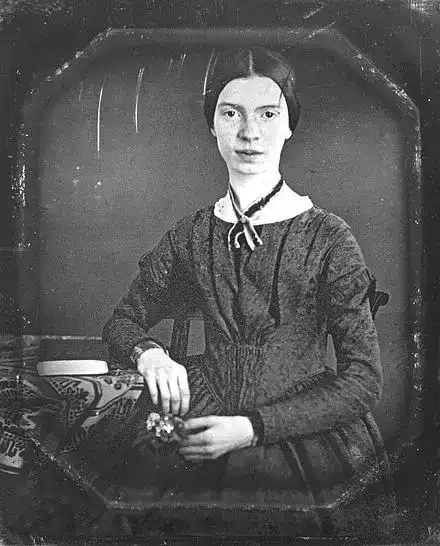
Emily Dickinson
We dream—it is good we are dreaming
We dream—it is good we are dreaming
531
We dream—it is good we are dreaming—
It would hurt us—were we awake—
But since it is playing—kill us,
And we are playing—shriek—
What harm? Men die—externally—
It is a truth—of Blood—
But we—are dying in Drama—
And Drama—is never dead—
Cautious—We jar each other—
And either—open the eyes—
Lest the Phantasm—prove the Mistake—
And the livid Surprise
Cool us to Shafts of Granite—
With just an Age—and Name—
And perhaps a phrase in Egyptian—
It's prudenter—to dream—
531
We dream—it is good we are dreaming—
It would hurt us—were we awake—
But since it is playing—kill us,
And we are playing—shriek—
What harm? Men die—externally—
It is a truth—of Blood—
But we—are dying in Drama—
And Drama—is never dead—
Cautious—We jar each other—
And either—open the eyes—
Lest the Phantasm—prove the Mistake—
And the livid Surprise
Cool us to Shafts of Granite—
With just an Age—and Name—
And perhaps a phrase in Egyptian—
It's prudenter—to dream—
160
Emily Dickinson
These tested Our Horizon
These tested Our Horizon
886
These tested Our Horizon-
Then disappeared
As Birds before achieving
A Latitude.
Our Retrospection of Them
A fixed Delight,
But our Anticipation
A Dice-a Doubt-
886
These tested Our Horizon-
Then disappeared
As Birds before achieving
A Latitude.
Our Retrospection of Them
A fixed Delight,
But our Anticipation
A Dice-a Doubt-
325
Emily Dickinson
The wind trapped like a tired man,
The wind trapped like a tired man,
The wind tapped like a tired man,
And like a host, 'Come in,'
I boldly answered; entered then
My residence within
A rapid, footless guest,
To offer whom a chair
Were as impossible as hand
A sofa to the air.
No bone had he to bind him,
His speech was like the push
Of numerous humming-birds at once
From a superior bush.
His countenance a billow,
His fingers, if he pass,
Let go a music, as of tunes
Blown tremulous in glass.
He visited, still flitting;
Then, like a timid man,
Again he tapped--'t was flurriedly--
And I became alone.
The wind tapped like a tired man,
And like a host, 'Come in,'
I boldly answered; entered then
My residence within
A rapid, footless guest,
To offer whom a chair
Were as impossible as hand
A sofa to the air.
No bone had he to bind him,
His speech was like the push
Of numerous humming-birds at once
From a superior bush.
His countenance a billow,
His fingers, if he pass,
Let go a music, as of tunes
Blown tremulous in glass.
He visited, still flitting;
Then, like a timid man,
Again he tapped--'t was flurriedly--
And I became alone.
329
Emily Dickinson
The Way I read a Letter's—this
The Way I read a Letter's—this
636
The Way I read a Letter's—this—
'Tis first—I lock the Door—
And push it with my fingers—next—
For transport it be sure—
And then I go the furthest off
To counteract a knock—
Then draw my little Letter forth
And slowly pick the lock—
Then—glancing narrow, at the Wall—
And narrow at the floor
For firm Conviction of a Mouse
Not exorcised before—
Peruse how infinite I am
To no one that You—know—
And sigh for lack of Heaven—but not
The Heaven God bestow—
636
The Way I read a Letter's—this—
'Tis first—I lock the Door—
And push it with my fingers—next—
For transport it be sure—
And then I go the furthest off
To counteract a knock—
Then draw my little Letter forth
And slowly pick the lock—
Then—glancing narrow, at the Wall—
And narrow at the floor
For firm Conviction of a Mouse
Not exorcised before—
Peruse how infinite I am
To no one that You—know—
And sigh for lack of Heaven—but not
The Heaven God bestow—
288
Emily Dickinson
The Soul has Bandaged moments
The Soul has Bandaged moments
512
The Soul has Bandaged moments-
When too appalled to stir-
She feels some ghastly Fright come up
And stop to look at her-
Salute her-with long fingers-
Caress her freezing hair-
Sip, Goblin, from the very lips
The Lover-hovered-o'er-
Unworthy, that a thought so mean
Accost a Theme-so-fair-
The soul has moments of Escape-
When bursting all the doors-
She dances like a Bomb, abroad,
And swings upon the Hours,
As do the Bee-delirious borne-
Long Dungeoned from his Rose-
Touch Liberty-then know no more,
But Noon, and Paradise-
The Soul's retaken moments-
When, Felon led along,
With shackles on the plumed feet,
And staples, in the Song,
The Horror welcomes her, again,
These, are not brayed of Tongue-
512
The Soul has Bandaged moments-
When too appalled to stir-
She feels some ghastly Fright come up
And stop to look at her-
Salute her-with long fingers-
Caress her freezing hair-
Sip, Goblin, from the very lips
The Lover-hovered-o'er-
Unworthy, that a thought so mean
Accost a Theme-so-fair-
The soul has moments of Escape-
When bursting all the doors-
She dances like a Bomb, abroad,
And swings upon the Hours,
As do the Bee-delirious borne-
Long Dungeoned from his Rose-
Touch Liberty-then know no more,
But Noon, and Paradise-
The Soul's retaken moments-
When, Felon led along,
With shackles on the plumed feet,
And staples, in the Song,
The Horror welcomes her, again,
These, are not brayed of Tongue-
302
Emily Dickinson
Snow flakes
Snow flakes
36
Snow flakes.
I counted till they danced so
Their slippers leaped the town,
And then I took a pencil
To note the rebels down.
And then they grew so jolly
I did resign the prig,
And ten of my once stately toes
Are marshalled for a jig!
36
Snow flakes.
I counted till they danced so
Their slippers leaped the town,
And then I took a pencil
To note the rebels down.
And then they grew so jolly
I did resign the prig,
And ten of my once stately toes
Are marshalled for a jig!
257
Emily Dickinson
So from the mould
So from the mould
66
So from the mould
Scarlet and Gold
Many a Bulb will rise-
Hidden away, cunningly, From sagacious eyes.
So from Cocoon
Many a Worm
Leap so Highland gay,
Peasants like me,
Peasants like Thee
Gaze perplexedly!
66
So from the mould
Scarlet and Gold
Many a Bulb will rise-
Hidden away, cunningly, From sagacious eyes.
So from Cocoon
Many a Worm
Leap so Highland gay,
Peasants like me,
Peasants like Thee
Gaze perplexedly!
392
Emily Dickinson
Perhaps I Asked Too Large
Perhaps I Asked Too Large
Perhaps I asked too large --
I take -- no less than skies --
For Earths, grow thick as
Berries, in my native town --
My Basked holds -- just -- Firmaments --
Those -- dangle easy -- on my arm,
But smaller bundles -- Cram.
Perhaps I asked too large --
I take -- no less than skies --
For Earths, grow thick as
Berries, in my native town --
My Basked holds -- just -- Firmaments --
Those -- dangle easy -- on my arm,
But smaller bundles -- Cram.
278
Emily Dickinson
In Winter in my Room
In Winter in my Room
1670
In Winter in my Room
I came upon a Worm-
Pink, lank and warm-
But as he was a worm
And worms presume
Not quite with him at home-
Secured him by a string
To something neighboring
And went along.
A Trifle afterward
A thing occurred
I'd not believe it if I heard
But state with creeping blood-
A snake with mottles rare
Surveyed my chamber floor
In feature as the worm before
But ringed with power-
The very string with which
I tied him-too
When he was mean and new
That string was there-
I shrank-"How fair you are"!
Propitiation's claw"
Afraid," he hissed
"Of me"?
"No cordiality"-
He fathomed me-
Then to a Rhythm Slim
Secreted in his Form
As Patterns swim
Projected him.
That time I flew
Both eyes his way
Lest he pursue
Nor ever ceased to run
Till in a distant Town
Towns on from mine
I set me down
This was a dream.
1670
In Winter in my Room
I came upon a Worm-
Pink, lank and warm-
But as he was a worm
And worms presume
Not quite with him at home-
Secured him by a string
To something neighboring
And went along.
A Trifle afterward
A thing occurred
I'd not believe it if I heard
But state with creeping blood-
A snake with mottles rare
Surveyed my chamber floor
In feature as the worm before
But ringed with power-
The very string with which
I tied him-too
When he was mean and new
That string was there-
I shrank-"How fair you are"!
Propitiation's claw"
Afraid," he hissed
"Of me"?
"No cordiality"-
He fathomed me-
Then to a Rhythm Slim
Secreted in his Form
As Patterns swim
Projected him.
That time I flew
Both eyes his way
Lest he pursue
Nor ever ceased to run
Till in a distant Town
Towns on from mine
I set me down
This was a dream.
409
Emily Dickinson
I started Early - Took my Dog
I started Early - Took my Dog
I started Early - Took my Dog -
And visited the Sea -
The Mermaids in the Basement
Came out to look at me -
And Frigates - in the Upper Floor
Extended Hempen Hands -
Presuming Me to be a Mouse -
Aground - upon the Sands -
But no Man moved Me - till the Tide
Went past my simple Shoe -
And past my Apron - and my Belt
And past my Bodice - too -
And made as He would eat me up -
As wholly as a Dew
Upon a Dandelion's Sleeve -
And then - I started - too -
And He - He followed - close behind -
I felt His Silver Heel
Upon my Ankle - Then my Shoes
Would overflow with Pearl -
Until We met the Solid Town -
No One He seemed to know -
And bowing - with a Mighty look -
At me - The Sea withdrew -
I started Early - Took my Dog -
And visited the Sea -
The Mermaids in the Basement
Came out to look at me -
And Frigates - in the Upper Floor
Extended Hempen Hands -
Presuming Me to be a Mouse -
Aground - upon the Sands -
But no Man moved Me - till the Tide
Went past my simple Shoe -
And past my Apron - and my Belt
And past my Bodice - too -
And made as He would eat me up -
As wholly as a Dew
Upon a Dandelion's Sleeve -
And then - I started - too -
And He - He followed - close behind -
I felt His Silver Heel
Upon my Ankle - Then my Shoes
Would overflow with Pearl -
Until We met the Solid Town -
No One He seemed to know -
And bowing - with a Mighty look -
At me - The Sea withdrew -
274
Emily Dickinson
I meant to have but modest needs
I meant to have but modest needs
476
I meant to have but modest needs-
Such as Content-and Heaven-
Within my income-these could lie
And Life and I-keep even-
But since the last-included both-
It would suffice my Prayer
But just for One-to stipulate-
And Grace would grant the Pair-
And so-upon this wise-I prayed-
Great Spirit-Give to me
A Heaven not so large as Yours,
But large enough-for me-
A Smile suffused Jehovah's face-
The Cherubim-withdrew-
Grave Saints stole out to look at me-
And showed their dimples-too-
I left the Place, with all my might-
I threw my Prayer away-
The Quiet Ages picked it up-
And Judgment-twinkled-too-
Tat one so honest-be extant-
It take the Tale for true-
That "Whatsoever Ye shall ask-
Itself be given You"-
But I, grown shrewder-scan the Skies
With a suspicious Air-
As Children-swindled for the first
All Swindlers-be-infer-
476
I meant to have but modest needs-
Such as Content-and Heaven-
Within my income-these could lie
And Life and I-keep even-
But since the last-included both-
It would suffice my Prayer
But just for One-to stipulate-
And Grace would grant the Pair-
And so-upon this wise-I prayed-
Great Spirit-Give to me
A Heaven not so large as Yours,
But large enough-for me-
A Smile suffused Jehovah's face-
The Cherubim-withdrew-
Grave Saints stole out to look at me-
And showed their dimples-too-
I left the Place, with all my might-
I threw my Prayer away-
The Quiet Ages picked it up-
And Judgment-twinkled-too-
Tat one so honest-be extant-
It take the Tale for true-
That "Whatsoever Ye shall ask-
Itself be given You"-
But I, grown shrewder-scan the Skies
With a suspicious Air-
As Children-swindled for the first
All Swindlers-be-infer-
288
Emily Dickinson
I have a King, who does not speak
I have a King, who does not speak
103
I have a King, who does not speakSo-
wondering-thro' the hours meek
I trudge the day away-
Half glad when it is night, and sleep,
If, haply, thro' a dream, to peep
In parlors, shut by day.
And if I do-when morning comes-
It is as if a hundred drums
Did round my pillow roll,
And shouts fill all my Childish sky,
And Bells keep saying "Victory"
From steeples in my soul!
And if I don't-the little Bird
Within the Orchard, is not heard,
And I omit to pray
"Father, thy will be done" today
For my will goes the other way,
And it were perjury!
103
I have a King, who does not speakSo-
wondering-thro' the hours meek
I trudge the day away-
Half glad when it is night, and sleep,
If, haply, thro' a dream, to peep
In parlors, shut by day.
And if I do-when morning comes-
It is as if a hundred drums
Did round my pillow roll,
And shouts fill all my Childish sky,
And Bells keep saying "Victory"
From steeples in my soul!
And if I don't-the little Bird
Within the Orchard, is not heard,
And I omit to pray
"Father, thy will be done" today
For my will goes the other way,
And it were perjury!
280
Emily Dickinson
Heaven is what I cannot reach!
Heaven is what I cannot reach!
Heaven is what I cannot reach!
The apple on the tree,
Provided it do hopelss hang,
That 'heaven' is, to me.
The color on the cruising cloud,
The interdicted ground
Behind the hill, the house behind, -There
Paradise is found!
Heaven is what I cannot reach!
The apple on the tree,
Provided it do hopelss hang,
That 'heaven' is, to me.
The color on the cruising cloud,
The interdicted ground
Behind the hill, the house behind, -There
Paradise is found!
270
Emily Dickinson
From Cocoon forth a Butterfly
From Cocoon forth a Butterfly
354
From Cocoon forth a Butterfly
As Lady from her Door
Emerged-a Summer Afternoon-
Repairing Everywhere-
Without Design-that I could trace
Except to stray abroad
On Miscellaneous Enterprise
The Clovers-understood-
Her pretty Parasol be seen
Contracting in a Field
Where Men made Hay-
Then struggling hard
With an opposing Cloud-
Where Parties-Phantom as Herself-
To Nowhere-seemed to go
In purposeless Circumference-
As 'twere a Tropic Show-
And notwithstanding Bee-that worked-
And Flower-that zealous blew-
This Audience of Idleness
Disdained them, from the Sky-
Till Sundown crept-a steady Tide-
And Men that made the Hay-
And Afternoon-and ButterflyExtinguished-
in the Sea-
354
From Cocoon forth a Butterfly
As Lady from her Door
Emerged-a Summer Afternoon-
Repairing Everywhere-
Without Design-that I could trace
Except to stray abroad
On Miscellaneous Enterprise
The Clovers-understood-
Her pretty Parasol be seen
Contracting in a Field
Where Men made Hay-
Then struggling hard
With an opposing Cloud-
Where Parties-Phantom as Herself-
To Nowhere-seemed to go
In purposeless Circumference-
As 'twere a Tropic Show-
And notwithstanding Bee-that worked-
And Flower-that zealous blew-
This Audience of Idleness
Disdained them, from the Sky-
Till Sundown crept-a steady Tide-
And Men that made the Hay-
And Afternoon-and ButterflyExtinguished-
in the Sea-
244
Emily Dickinson
A transport one cannot contain
A transport one cannot contain
184
A transport one cannot contain
May yet a transport be-
Though God forbid it lift the lid-
Unto its Ecstasy!
A Diagram-of Rapture!
A sixpence at a Show-
With Holy Ghosts in Cages!
The Universe would go!
184
A transport one cannot contain
May yet a transport be-
Though God forbid it lift the lid-
Unto its Ecstasy!
A Diagram-of Rapture!
A sixpence at a Show-
With Holy Ghosts in Cages!
The Universe would go!
259
Emily Dickinson
A Murmur in the Trees-to note
A Murmur in the Trees-to note
416
A Murmur in the Trees-to note-
Not loud enough-for Wind-
A Star-not far enough to seek-
Nor near enough-to find-
A long-long Yellow-on the Lawn-
A Hubbub-as of feet-
Not audible-as Ours-to Us-
But dapperer-More Sweet-
A Hurrying Home of little Men
To Houses unperceived-
All this-and more-if I should tell-
Would never be believed-
Of Robins in the Trundle bed
How many I espy
Whose Nightgowns could not hide the Wings-
Although I heard them try-
But then I promised ne'er to tell-
How could I break My Word?
So go your Way-and I'll go Mine-
No fear you'll miss the Road.
416
A Murmur in the Trees-to note-
Not loud enough-for Wind-
A Star-not far enough to seek-
Nor near enough-to find-
A long-long Yellow-on the Lawn-
A Hubbub-as of feet-
Not audible-as Ours-to Us-
But dapperer-More Sweet-
A Hurrying Home of little Men
To Houses unperceived-
All this-and more-if I should tell-
Would never be believed-
Of Robins in the Trundle bed
How many I espy
Whose Nightgowns could not hide the Wings-
Although I heard them try-
But then I promised ne'er to tell-
How could I break My Word?
So go your Way-and I'll go Mine-
No fear you'll miss the Road.
330
Emily Dickinson
A Book
A Book
There is no frigate like a book
To take us lands away,
Nor any coursers like a page
Of prancing poetry.
This traverse may the poorest take
Without oppress of toll;
How frugal is the chariot
That bears a human soul!
There is no frigate like a book
To take us lands away,
Nor any coursers like a page
Of prancing poetry.
This traverse may the poorest take
Without oppress of toll;
How frugal is the chariot
That bears a human soul!
316
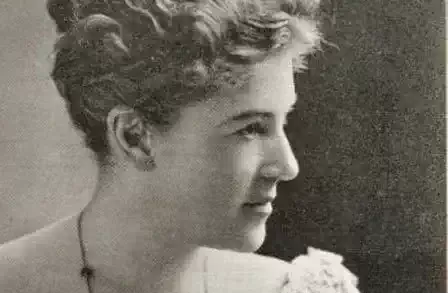
Ella Wheeler Wilcox
The River Of Sleep
The River Of Sleep
There are curious isles in the River of Sleep,
Curious isles without number.
We'll visit them all as we leisurely creep
Down the winding stream whose current is deep,
In our beautiful barge of Slumber.
The very first isle in this wonderful stream
Quite close to the shore is lying,
And after a supper of cakes and cream
We come to the Night-Mare-Isle with a scream,
And hurry away from it crying.
And next is the Island-of-Lullaby,
And every one there rejoices.
The winds are only a perfumed sigh,
And the birds that sing in the treetops try
To imitate Mothers' voices.
A little beyond is the Isle-of-Dreams;
Oh, that is the place to be straying.
Everything there is just as it seems;
Dolls are real and sunshine gleams,
And no one calls us from playing.
And then we come to the drollest isle,
And the funniest sounds come pouring
Down from its borderlands once in a while,
And we lean o'er our barge and listen and smile;
For that is the Isle-of-Snoring.
And the very last isle in the River of Sleep
Is the sunshiny Isle-of-Waking.
We see it first with our eyes a-peep,
And we give a yawn-then away we leap,
The barge of Slumber forsaking.
There are curious isles in the River of Sleep,
Curious isles without number.
We'll visit them all as we leisurely creep
Down the winding stream whose current is deep,
In our beautiful barge of Slumber.
The very first isle in this wonderful stream
Quite close to the shore is lying,
And after a supper of cakes and cream
We come to the Night-Mare-Isle with a scream,
And hurry away from it crying.
And next is the Island-of-Lullaby,
And every one there rejoices.
The winds are only a perfumed sigh,
And the birds that sing in the treetops try
To imitate Mothers' voices.
A little beyond is the Isle-of-Dreams;
Oh, that is the place to be straying.
Everything there is just as it seems;
Dolls are real and sunshine gleams,
And no one calls us from playing.
And then we come to the drollest isle,
And the funniest sounds come pouring
Down from its borderlands once in a while,
And we lean o'er our barge and listen and smile;
For that is the Isle-of-Snoring.
And the very last isle in the River of Sleep
Is the sunshiny Isle-of-Waking.
We see it first with our eyes a-peep,
And we give a yawn-then away we leap,
The barge of Slumber forsaking.
426
Ella Wheeler Wilcox
Dream Town
Dream Town
Now who is ready to go with me
Off and away to dream town?
Oh, such a journey as that will be,
All dressed in a snow white gown.
No shoe or stocking, they think it shocking
To wear such things in dream town street,
For it's paved with posies and leaves of roses,
So nothing can hurt your feet.
We leave our baggage and clothes behind
When we set out on this jaunt,
The folks who live there are very kind,
They give us whatever we want;
Sometimes a dolly we take, if she's jolly
And good all the day before.
But they've dolls without number in that land of slumber,
And of toys there's a wonderful store.
We shut up our eyes when we set out,
Though why I never have guessed,
There's some good reason I haven't a doubt,
Since every one says it is best.
I think we go faster and keep off disaster,
By folding our eyelids down;
By dropping that curtain I'm almost certain,
The sooner we get to dream town.
Just inside of the city gate,
Smiling and rosy and bright,
The boys and the girls of dream town wait
To play with us all the night.
So rocking and rocking, without shoe or stocking,
All dressed in a little white gown,
Singing and humming, we're coming, we're coming
Into the gates of dream town.
Now who is ready to go with me
Off and away to dream town?
Oh, such a journey as that will be,
All dressed in a snow white gown.
No shoe or stocking, they think it shocking
To wear such things in dream town street,
For it's paved with posies and leaves of roses,
So nothing can hurt your feet.
We leave our baggage and clothes behind
When we set out on this jaunt,
The folks who live there are very kind,
They give us whatever we want;
Sometimes a dolly we take, if she's jolly
And good all the day before.
But they've dolls without number in that land of slumber,
And of toys there's a wonderful store.
We shut up our eyes when we set out,
Though why I never have guessed,
There's some good reason I haven't a doubt,
Since every one says it is best.
I think we go faster and keep off disaster,
By folding our eyelids down;
By dropping that curtain I'm almost certain,
The sooner we get to dream town.
Just inside of the city gate,
Smiling and rosy and bright,
The boys and the girls of dream town wait
To play with us all the night.
So rocking and rocking, without shoe or stocking,
All dressed in a little white gown,
Singing and humming, we're coming, we're coming
Into the gates of dream town.
419
Ella Wheeler Wilcox
About May
About May
One night Nurse Sleep held out her hand
To tired little May.
'Come, go with me to Wonderland,'
She said, 'I know the way.
Just rock-a-by-hum-m-m,
And lo! we come
To the place where the dream-girls play.'
But naughty May, she wriggled away
From Sleep's soft arms, and said:
'I must stay awake till I eat my cake,
And then I will go to bed;
With a by-lo, away I will go.'
But the good nurse shook her head.
She shook her head and away she sped,
While May sat munching her crumb.
But after the cake there came an ache,
Though May cried: 'Come, Sleep, come,
And it's oh! my! let us by-lo-by'-
All save the echoes were dumb.
She ran after Sleep toward Wonderland,
Ran till the morning light;
And just as she caught her and grasped her hand,
A nightmare gave her a fright.
And it's by-lo, I hope she'll know
Better another night.
One night Nurse Sleep held out her hand
To tired little May.
'Come, go with me to Wonderland,'
She said, 'I know the way.
Just rock-a-by-hum-m-m,
And lo! we come
To the place where the dream-girls play.'
But naughty May, she wriggled away
From Sleep's soft arms, and said:
'I must stay awake till I eat my cake,
And then I will go to bed;
With a by-lo, away I will go.'
But the good nurse shook her head.
She shook her head and away she sped,
While May sat munching her crumb.
But after the cake there came an ache,
Though May cried: 'Come, Sleep, come,
And it's oh! my! let us by-lo-by'-
All save the echoes were dumb.
She ran after Sleep toward Wonderland,
Ran till the morning light;
And just as she caught her and grasped her hand,
A nightmare gave her a fright.
And it's by-lo, I hope she'll know
Better another night.
394
Ella Wheeler Wilcox
A Naughty Little Comet
A Naughty Little Comet
There was a little comet who lived near the Milky Way!
She loved to wander out at night and jump about and play.
The mother of the comet was a very good old star;
She used to scold her reckless child for venturing out too far.
She told her of the ogre, Sun, who loved on stars to sup,
And who asked no better pastime than in gobbling comets up.
But instead of growing cautious and of showing proper fear,
The foolish little comet edged up nearer, and more near.
She switched her saucy tail along right where the Sun could see,
And flirted with old Mars, and was as bold as bold could be.
She laughed to scorn the quiet stars who never frisked about;
She said there was no fun in life unless you ventured out.
She liked to make the planets stare, and wished no better mirth
Than just to see the telescopes aimed at her from the Earth.
She wondered how so many stars could mope through nights and days,
And let the sickly faced old Moon get all the love and praise.
And as she talked and tossed her head and switched her shining trail
The staid old mother star grew sad, her cheek grew wan and pale.
For she had lived there in the skies a million years or more,
And she had heard gay comets talk in just this way before.
And by and by there came an end to this gay comet's fun.
She went a tiny bit too far-and vanished in the Sun!
No more she swings her shining trail before the whole world's sight,
But quiet stars she laughed to scorn are twinkling every night.
There was a little comet who lived near the Milky Way!
She loved to wander out at night and jump about and play.
The mother of the comet was a very good old star;
She used to scold her reckless child for venturing out too far.
She told her of the ogre, Sun, who loved on stars to sup,
And who asked no better pastime than in gobbling comets up.
But instead of growing cautious and of showing proper fear,
The foolish little comet edged up nearer, and more near.
She switched her saucy tail along right where the Sun could see,
And flirted with old Mars, and was as bold as bold could be.
She laughed to scorn the quiet stars who never frisked about;
She said there was no fun in life unless you ventured out.
She liked to make the planets stare, and wished no better mirth
Than just to see the telescopes aimed at her from the Earth.
She wondered how so many stars could mope through nights and days,
And let the sickly faced old Moon get all the love and praise.
And as she talked and tossed her head and switched her shining trail
The staid old mother star grew sad, her cheek grew wan and pale.
For she had lived there in the skies a million years or more,
And she had heard gay comets talk in just this way before.
And by and by there came an end to this gay comet's fun.
She went a tiny bit too far-and vanished in the Sun!
No more she swings her shining trail before the whole world's sight,
But quiet stars she laughed to scorn are twinkling every night.
776
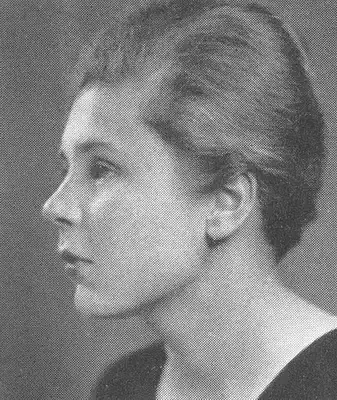
Elizabeth Bishop
The Man-moth
The Man-moth
Here, above,
cracks in the buldings are filled with battered moonlight.
The whole shadow of Man is only as big as his hat.
It lies at his feet like a circle for a doll to stand on,
and he makes an inverted pin, the point magnetized to the moon.
He does not see the moon; he observes only her vast properties,
feeling the queer light on his hands, neither warm nor cold,
of a temperature impossible to records in thermometers.
But when the Man-Moth
pays his rare, although occasional, visits to the surface,
the moon looks rather different to him. He emerges
from an opening under the edge of one of the sidewalks
and nervously begins to scale the faces of the buildings.
He thinks the moon is a small hole at the top of the sky,
proving the sky quite useless for protection.
He trembles, but must investigate as high as he can climb.
Up the façades,
his shadow dragging like a photographer's cloth behind him
he climbs fearfully, thinking that this time he will manage
to push his small head through that round clean opening
and be forced through, as from a tube, in black scrolls on the light.
(Man, standing below him, has no such illusions.)
But what the Man-Moth fears most he must do, although
he fails, of course, and falls back scared but quite unhurt.
Then he returns
to the pale subways of cement he calls his home. He flits,
he flutters, and cannot get aboard the silent trains
fast enough to suit him. The doors close swiftly.
The Man-Moth always seats himself facing the wrong way
and the train starts at once at its full, terrible speed,
without a shift in gears or a gradation of any sort.
He cannot tell the rate at which he travels backwards.
Each night he must
be carried through artificial tunnels and dream recurrent dreams.
Just as the ties recur beneath his train, these underlie
his rushing brain. He does not dare look out the window,
for the third rail, the unbroken draught of poison,
runs there beside him. He regards it as a disease
he has inherited the susceptibility to. He has to keep
his hands in his pockets, as others must wear mufflers.
If you catch him,
hold up a flashlight to his eye. It's all dark pupil,
an entire night itself, whose haired horizon tightens
as he stares back, and closes up the eye. Then from the lids
one tear, his only possession, like the bee's sting, slips.
Slyly he palms it, and if you're not paying attention
he'll swallow it. However, if you watch, he'll hand it over,
cool as from underground springs and pure enough to drink.
Here, above,
cracks in the buldings are filled with battered moonlight.
The whole shadow of Man is only as big as his hat.
It lies at his feet like a circle for a doll to stand on,
and he makes an inverted pin, the point magnetized to the moon.
He does not see the moon; he observes only her vast properties,
feeling the queer light on his hands, neither warm nor cold,
of a temperature impossible to records in thermometers.
But when the Man-Moth
pays his rare, although occasional, visits to the surface,
the moon looks rather different to him. He emerges
from an opening under the edge of one of the sidewalks
and nervously begins to scale the faces of the buildings.
He thinks the moon is a small hole at the top of the sky,
proving the sky quite useless for protection.
He trembles, but must investigate as high as he can climb.
Up the façades,
his shadow dragging like a photographer's cloth behind him
he climbs fearfully, thinking that this time he will manage
to push his small head through that round clean opening
and be forced through, as from a tube, in black scrolls on the light.
(Man, standing below him, has no such illusions.)
But what the Man-Moth fears most he must do, although
he fails, of course, and falls back scared but quite unhurt.
Then he returns
to the pale subways of cement he calls his home. He flits,
he flutters, and cannot get aboard the silent trains
fast enough to suit him. The doors close swiftly.
The Man-Moth always seats himself facing the wrong way
and the train starts at once at its full, terrible speed,
without a shift in gears or a gradation of any sort.
He cannot tell the rate at which he travels backwards.
Each night he must
be carried through artificial tunnels and dream recurrent dreams.
Just as the ties recur beneath his train, these underlie
his rushing brain. He does not dare look out the window,
for the third rail, the unbroken draught of poison,
runs there beside him. He regards it as a disease
he has inherited the susceptibility to. He has to keep
his hands in his pockets, as others must wear mufflers.
If you catch him,
hold up a flashlight to his eye. It's all dark pupil,
an entire night itself, whose haired horizon tightens
as he stares back, and closes up the eye. Then from the lids
one tear, his only possession, like the bee's sting, slips.
Slyly he palms it, and if you're not paying attention
he'll swallow it. However, if you watch, he'll hand it over,
cool as from underground springs and pure enough to drink.
753
Elizabeth Bishop
Sleeping on the Ceiling
Sleeping on the Ceiling
It is so peaceful on the ceiling!
It is the Place de la Concorde.
The little crystal chandelier
is off, the fountain is in the dark.
Not a soul is in the park.
Below, where the wallpaper is peeling,
the Jardin des Plantes has locked its gates.
Those photographs are animals.
The mighty flowers and foliage rustle;
under the leaves the insects tunnel.
We must go under the wallpaper
to meet the insect-gladiator,
to battle with a net and trident,
and leave the fountain and the square
But oh, that we could sleep up there...
It is so peaceful on the ceiling!
It is the Place de la Concorde.
The little crystal chandelier
is off, the fountain is in the dark.
Not a soul is in the park.
Below, where the wallpaper is peeling,
the Jardin des Plantes has locked its gates.
Those photographs are animals.
The mighty flowers and foliage rustle;
under the leaves the insects tunnel.
We must go under the wallpaper
to meet the insect-gladiator,
to battle with a net and trident,
and leave the fountain and the square
But oh, that we could sleep up there...
500