

Poems in this topic
Travel and Horizons

Robert W. Service
The Man From Eldorado
The Man From Eldorado
He's the man from Eldorado, and he's just arrived in town,
In moccasins and oily buckskin shirt.
He's gaunt as any Indian, and pretty nigh as brown;
He's greasy, and he smells of sweat and dirt.
He sports a crop of whiskers that would shame a healthy hog;
Hard work has racked his joints and stooped his back;
He slops along the sidewalk followed by his yellow dog,
But he's got a bunch of gold-dust in his sack.
He seems a little wistful as he blinks at all the lights,
And maybe he is thinking of his claim
And the dark and dwarfish cabin where he lay and dreamed at nights,
(Thank God, he'll never see the place again!)
Where he lived on tinned tomatoes, beef embalmed and sourdough bread,
On rusty beans and bacon furred with mould;
His stomach's out of kilter and his system full of lead,
But it's over, and his poke is full of gold.
He has panted at the windlass, he has loaded in the drift,
He has pounded at the face of oozy clay;
He has taxed himself to sickness, dark and damp and double shift,
He has labored like a demon night and day.
And now, praise God, it's over, and he seems to breathe again
Of new-mown hay, the warm, wet, friendly loam;
He sees a snowy orchard in a green and dimpling plain,
And a little vine-clad cottage, and it's--Home.
II
He's the man from Eldorado, and he's had a bite and sup,
And he's met in with a drouthy friend or two;
He's cached away his gold-dust, but he's sort of bucking up,
So he's kept enough to-night to see him through.
His eye is bright and genial, his tongue no longer lags;
`His heart is brimming o'er with joy and mirth;
He may be far from savory, he may be clad in rags,
`But to-night he feels as if he owns the earth.
Says he: "Boys, here is where the shaggy North and I will shake;
I thought I'd never manage to get free.
I kept on making misses; but at last I've got my stake;
There's no more thawing frozen muck for me.
I am going to God's Country, where I'll live the simple life;
I'll buy a bit of land and make a start;
I'll carve a little homestead, and I'll win a little wife,
And raise ten little kids to cheer my heart."
They signified their sympathy by crowding to the bar;
They bellied up three deep and drank his health.
He shed a radiant smile around and smoked a rank cigar;
They wished him honor, happiness and wealth.
They drank unto his wife to be--that unsuspecting maid;
They drank unto his children half a score;
And when they got through drinking very tenderly they laid
The man from Eldorado on the floor.
III
He's the man from Eldorado, and he's only starting in
To cultivate a thousand-dollar jag.
His poke is full of gold-dust and his heart is full of sin,
And he's dancing with a girl called Muckluck Mag.
She's as light as any fairy; she's as pretty as a peach;
She's mistress of the witchcraft to beguile;
There's sunshine in her manner, there is music in her speech,
And there's concentrated honey in her smile.
Oh, the fever of the dance-hall and the glitter and the shine,
The beauty, and the jewels, and the whirl,
The madness of the music, the rapture of the wine,
The languorous allurement of a girl!
She is like a lost madonna; he is gaunt, unkempt and grim;
But she fondles him and gazes in his eyes;
Her kisses seek his heavy lips, and soon it seems to him
He has staked a little claim in Paradise.
"Who's for a juicy two-step?" cries the master of the floor;
The music throbs with soft, seductive beat.
There's glitter, gilt and gladness; there are pretty girls galore;
There's a woolly man with moccasins on feet.
They know they've got him going; he is buying wine for all;
They crowd around as buzzards at a feast,
Then when his poke is empty they boost him from the hall,
And spurn him in the gutter like a beast.
He's the man from Eldorado, and he's painting red the town;
Behind he leaves a trail of yellow dust;
In a whirl of senseless riot he is ramping up and down;
There's nothing checks his madness and his lust.
And soon the word is passed around--it travels like a flame;
They fight to clutch his hand and call him friend,
The chevaliers of lost repute, the dames of sorry fame;
Then comes the grim awakening--the end.
IV
He's the man from Eldorado, and he gives a grand affair;
There's feasting, dancing, wine without restraint.
The smooth Beau Brummels of the bar, the faro men, are there;
The tinhorns and purveyors of red paint;
The sleek and painted women, their predacious eyes aglow-Sure
Klondike City never saw the like;
Then Muckluck Mag proposed the toast, "The giver of the show,
The livest sport that ever hit the pike."
The "live one" rises to his feet; he stammers to reply-And
then there comes before his muddled brain
A vision of green vastitudes beneath an April sky,
And clover pastures drenched with silver rain.
He knows that it can never be, that he is down and out;
Life leers at him with foul and fetid breath;
And then amid the revelry, the song and cheer and shout,
He suddenly grows grim and cold as death.
He grips the table tensely, and he says: "Dear friends of mine,
I've let you dip your fingers in my purse;
I've crammed you at my table, and I've drowned you in my wine,
And I've little left to give you but--my curse.
I've failed supremely in my plans; it's rather late to whine;
My poke is mighty weasened up and small.
I thank you each for coming here; the happiness is mine-And
now, you thieves and harlots, take it all."
He twists the thong from off his poke; he swings it o'er his head;
The nuggets fall around their feet like grain.
They rattle over roof and wall; they scatter, roll and spread;
The dust is like a shower of golden rain.
The guests a moment stand aghast, then grovel on the floor;
They fight, and snarl, and claw, like beasts of prey;
And then, as everybody grabbed and everybody swore,
The man from Eldorado slipped away.
V
He's the man from Eldorado, and they found him stiff and dead,
Half covered by the freezing ooze and dirt.
A clotted Colt was in his hand, a hole was in his head,
And he wore an old and oily buckskin shirt.
His eyes were fixed and horrible, as one who hails the end;
The frost had set him rigid as a log;
And there, half lying on his breast, his last and only friend,
There crouched and whined a mangy yellow dog.
He's the man from Eldorado, and he's just arrived in town,
In moccasins and oily buckskin shirt.
He's gaunt as any Indian, and pretty nigh as brown;
He's greasy, and he smells of sweat and dirt.
He sports a crop of whiskers that would shame a healthy hog;
Hard work has racked his joints and stooped his back;
He slops along the sidewalk followed by his yellow dog,
But he's got a bunch of gold-dust in his sack.
He seems a little wistful as he blinks at all the lights,
And maybe he is thinking of his claim
And the dark and dwarfish cabin where he lay and dreamed at nights,
(Thank God, he'll never see the place again!)
Where he lived on tinned tomatoes, beef embalmed and sourdough bread,
On rusty beans and bacon furred with mould;
His stomach's out of kilter and his system full of lead,
But it's over, and his poke is full of gold.
He has panted at the windlass, he has loaded in the drift,
He has pounded at the face of oozy clay;
He has taxed himself to sickness, dark and damp and double shift,
He has labored like a demon night and day.
And now, praise God, it's over, and he seems to breathe again
Of new-mown hay, the warm, wet, friendly loam;
He sees a snowy orchard in a green and dimpling plain,
And a little vine-clad cottage, and it's--Home.
II
He's the man from Eldorado, and he's had a bite and sup,
And he's met in with a drouthy friend or two;
He's cached away his gold-dust, but he's sort of bucking up,
So he's kept enough to-night to see him through.
His eye is bright and genial, his tongue no longer lags;
`His heart is brimming o'er with joy and mirth;
He may be far from savory, he may be clad in rags,
`But to-night he feels as if he owns the earth.
Says he: "Boys, here is where the shaggy North and I will shake;
I thought I'd never manage to get free.
I kept on making misses; but at last I've got my stake;
There's no more thawing frozen muck for me.
I am going to God's Country, where I'll live the simple life;
I'll buy a bit of land and make a start;
I'll carve a little homestead, and I'll win a little wife,
And raise ten little kids to cheer my heart."
They signified their sympathy by crowding to the bar;
They bellied up three deep and drank his health.
He shed a radiant smile around and smoked a rank cigar;
They wished him honor, happiness and wealth.
They drank unto his wife to be--that unsuspecting maid;
They drank unto his children half a score;
And when they got through drinking very tenderly they laid
The man from Eldorado on the floor.
III
He's the man from Eldorado, and he's only starting in
To cultivate a thousand-dollar jag.
His poke is full of gold-dust and his heart is full of sin,
And he's dancing with a girl called Muckluck Mag.
She's as light as any fairy; she's as pretty as a peach;
She's mistress of the witchcraft to beguile;
There's sunshine in her manner, there is music in her speech,
And there's concentrated honey in her smile.
Oh, the fever of the dance-hall and the glitter and the shine,
The beauty, and the jewels, and the whirl,
The madness of the music, the rapture of the wine,
The languorous allurement of a girl!
She is like a lost madonna; he is gaunt, unkempt and grim;
But she fondles him and gazes in his eyes;
Her kisses seek his heavy lips, and soon it seems to him
He has staked a little claim in Paradise.
"Who's for a juicy two-step?" cries the master of the floor;
The music throbs with soft, seductive beat.
There's glitter, gilt and gladness; there are pretty girls galore;
There's a woolly man with moccasins on feet.
They know they've got him going; he is buying wine for all;
They crowd around as buzzards at a feast,
Then when his poke is empty they boost him from the hall,
And spurn him in the gutter like a beast.
He's the man from Eldorado, and he's painting red the town;
Behind he leaves a trail of yellow dust;
In a whirl of senseless riot he is ramping up and down;
There's nothing checks his madness and his lust.
And soon the word is passed around--it travels like a flame;
They fight to clutch his hand and call him friend,
The chevaliers of lost repute, the dames of sorry fame;
Then comes the grim awakening--the end.
IV
He's the man from Eldorado, and he gives a grand affair;
There's feasting, dancing, wine without restraint.
The smooth Beau Brummels of the bar, the faro men, are there;
The tinhorns and purveyors of red paint;
The sleek and painted women, their predacious eyes aglow-Sure
Klondike City never saw the like;
Then Muckluck Mag proposed the toast, "The giver of the show,
The livest sport that ever hit the pike."
The "live one" rises to his feet; he stammers to reply-And
then there comes before his muddled brain
A vision of green vastitudes beneath an April sky,
And clover pastures drenched with silver rain.
He knows that it can never be, that he is down and out;
Life leers at him with foul and fetid breath;
And then amid the revelry, the song and cheer and shout,
He suddenly grows grim and cold as death.
He grips the table tensely, and he says: "Dear friends of mine,
I've let you dip your fingers in my purse;
I've crammed you at my table, and I've drowned you in my wine,
And I've little left to give you but--my curse.
I've failed supremely in my plans; it's rather late to whine;
My poke is mighty weasened up and small.
I thank you each for coming here; the happiness is mine-And
now, you thieves and harlots, take it all."
He twists the thong from off his poke; he swings it o'er his head;
The nuggets fall around their feet like grain.
They rattle over roof and wall; they scatter, roll and spread;
The dust is like a shower of golden rain.
The guests a moment stand aghast, then grovel on the floor;
They fight, and snarl, and claw, like beasts of prey;
And then, as everybody grabbed and everybody swore,
The man from Eldorado slipped away.
V
He's the man from Eldorado, and they found him stiff and dead,
Half covered by the freezing ooze and dirt.
A clotted Colt was in his hand, a hole was in his head,
And he wore an old and oily buckskin shirt.
His eyes were fixed and horrible, as one who hails the end;
The frost had set him rigid as a log;
And there, half lying on his breast, his last and only friend,
There crouched and whined a mangy yellow dog.
210
Robert W. Service
The Dream
The Dream
Said Will: "I'll stay and till the land."
Said Jack: "I'll sail the sea."
So one went forth kit-bag in hand,
The other ploughed the lea.
They met again at Christmas-tide,
And wistful were the two.
Said Jack: "you're lucky here to bide."
Said Will: "I envy you."
"For in your eyes a light I see
Of tropic shores agleam."
Said Jack: "You need not envy me,
For still you have the Dream.
"The Dream that lured me out to sea;
'Twas bright as paradise;
Far fairer than the memory
You see within my eyes.
So if my foolish urge you share
In foreign lands to roam,
Take up my kit-bag waiting there
And I will stay at home."
* * * * * * * *
Yet while the years have fated Will
To sow the sober loam,
The eyes of Jack are starry still,
High-riding hills of foam.
Said Will: "I'll stay and till the land."
Said Jack: "I'll sail the sea."
So one went forth kit-bag in hand,
The other ploughed the lea.
They met again at Christmas-tide,
And wistful were the two.
Said Jack: "you're lucky here to bide."
Said Will: "I envy you."
"For in your eyes a light I see
Of tropic shores agleam."
Said Jack: "You need not envy me,
For still you have the Dream.
"The Dream that lured me out to sea;
'Twas bright as paradise;
Far fairer than the memory
You see within my eyes.
So if my foolish urge you share
In foreign lands to roam,
Take up my kit-bag waiting there
And I will stay at home."
* * * * * * * *
Yet while the years have fated Will
To sow the sober loam,
The eyes of Jack are starry still,
High-riding hills of foam.
247
Robert W. Service
The Bohemian Dreams
The Bohemian Dreams
Because my overcoat's in pawn,
I choose to take my glass
Within a little bistro on
The rue du Montparnasse;
The dusty bins with bottles shine,
The counter's lined with zinc,
And there I sit and drink my wine,
And think and think and think.
I think of hoary old Stamboul,
Of Moslem and of Greek,
Of Persian in coat of wool,
Of Kurd and Arab sheikh;
Of all the types of weal and woe,
And as I raise my glass,
Across Galata bridge I know
They pass and pass and pass.
I think of citron-trees aglow,
Of fan-palms shading down,
Of sailors dancing heel and toe
With wenches black and brown;
And though it's all an ocean far
From Yucatan to France,
I'll bet beside the old bazaar
They dance and dance and dance.
I think of Monte Carlo, where
The pallid croupiers call,
And in the gorgeous, guilty air
The gamblers watch the ball;
And as I flick away the foam
With which my beer is crowned,
The wheels beneath the gilded dome
Go round and round and round.
I think of vast Niagara,
Those gulfs of foam a-shine,
Whose mighty roar would stagger a
More prosy bean than mine;
And as the hours I idly spend
Against a greasy wall,
I know that green the waters bend
And fall and fall and fall.
I think of Nijni Novgorod
And Jews who never rest;
And womenfolk with spade and hod
Who slave in Buda-Pest;
Of squat and sturdy Japanese
Who pound the paddy soil,
And as I loaf and smoke at ease
They toil and toil and toil.
I think of shrines in Hindustan,
Of cloistral glooms in Spain,
Of minarets in Ispahan,
Of St. Sophia's fane,
Of convent towers in Palestine,
Of temples in Cathay,
And as I stretch and sip my wine
They pray and pray and pray.
And so my dreams I dwell within,
And visions come and go,
And life is passing like a Cin-
Ematographic Show;
Till just as surely as my pipe
Is underneath my nose,
Amid my visions rich and ripe
I doze and doze and doze.
Because my overcoat's in pawn,
I choose to take my glass
Within a little bistro on
The rue du Montparnasse;
The dusty bins with bottles shine,
The counter's lined with zinc,
And there I sit and drink my wine,
And think and think and think.
I think of hoary old Stamboul,
Of Moslem and of Greek,
Of Persian in coat of wool,
Of Kurd and Arab sheikh;
Of all the types of weal and woe,
And as I raise my glass,
Across Galata bridge I know
They pass and pass and pass.
I think of citron-trees aglow,
Of fan-palms shading down,
Of sailors dancing heel and toe
With wenches black and brown;
And though it's all an ocean far
From Yucatan to France,
I'll bet beside the old bazaar
They dance and dance and dance.
I think of Monte Carlo, where
The pallid croupiers call,
And in the gorgeous, guilty air
The gamblers watch the ball;
And as I flick away the foam
With which my beer is crowned,
The wheels beneath the gilded dome
Go round and round and round.
I think of vast Niagara,
Those gulfs of foam a-shine,
Whose mighty roar would stagger a
More prosy bean than mine;
And as the hours I idly spend
Against a greasy wall,
I know that green the waters bend
And fall and fall and fall.
I think of Nijni Novgorod
And Jews who never rest;
And womenfolk with spade and hod
Who slave in Buda-Pest;
Of squat and sturdy Japanese
Who pound the paddy soil,
And as I loaf and smoke at ease
They toil and toil and toil.
I think of shrines in Hindustan,
Of cloistral glooms in Spain,
Of minarets in Ispahan,
Of St. Sophia's fane,
Of convent towers in Palestine,
Of temples in Cathay,
And as I stretch and sip my wine
They pray and pray and pray.
And so my dreams I dwell within,
And visions come and go,
And life is passing like a Cin-
Ematographic Show;
Till just as surely as my pipe
Is underneath my nose,
Amid my visions rich and ripe
I doze and doze and doze.
236
Robert W. Service
The Ballad Of The Ice-Worm Cocktail
The Ballad Of The Ice-Worm Cocktail
To Dawson Town came Percy Brown from London on the Thames.
A pane of glass was in his eye, and stockings on his stems.
Upon the shoulder of his coat a leather pad he wore,
To rest his deadly rifle when it wasn't seeking gore;
The which it must have often been, for Major Percy Brown,
According to his story was a hunter of renown,
Who in the Murrumbidgee wilds had stalked the kangaroo
And killed the cassowary on the plains of Timbuctoo.
And now the Arctic fox he meant to follow to its lair,
And it was also his intent to beard the Artic hare...
Which facts concerning Major Brown I merely tell because
I fain would have you know him for the Nimrod that he was.
Now Skipper Grey and Deacon White were sitting in the shack,
And sampling of the whisky that pertained to Sheriff Black.
Said Skipper Grey: "I want to say a word about this Brown:
The piker's sticking out his chest as if he owned the town."
Said Sheriff Black: "he has no lack of frigorated cheek;
He called himself a Sourdough when he'd just been here a week."
Said Deacon White: "Methinks you're right, and so I have a plan
By which I hope to prove to-night the mettle of the man.
Just meet me where the hooch-bird sings, and though our ways be rude
We'll make a proper Sourdough of this Piccadilly dude."
Within the Malamute Saloon were gathered all the gang;
The fun was fast and furious, and the loud hooch-bird sang.
In fact the night's hilarity had almost reached its crown,
When into its storm-centre breezed the gallant Major Brown.
And at the apparation, whith its glass eye and plus-fours,
From fifty alcoholic throats responded fifty roars.
With shouts of stark amazement and with whoops of sheer delight,
They surged around the stranger, but the first was Deacon White.
"We welcome you," he cried aloud, "to this the Great White Land.
The Artic Brotherhood is proud to grip you by the hand.
Yea, sportsman of the bull-dog breed, from trails of far away,
To Yukoners this is indeed a memorable day.
Our jubilation to express, vocabularies fail...
Boys, hail the Great Cheechako!" And the boys responded: "Hail!"
"And now," continued Deacon White to blushing Major Brown,
"Behold assembled the eelight and cream of Dawson Town,
And one ambition fills their hearts and makes their bosoms glow -
They want to make you, honoured sir, a bony feed Sourdough.
The same, some say, is one who's seen the Yukon ice go out,
But most profound authorities the definition doubt,
And to the genial notion of this meeting, Major Brown,
A Sourdough is a guy who drinks ... an ice-worm cocktail down."
"By Gad!" responded Major Brown, "that's ripping, don't you know.
I've always felt I'd like to be a certified Sourdough.
And though I haven't any doubt your Winter's awf'ly nice,
Mayfair, I fear, may miss me ere the break-up of your ice.
Yet (pray excuse my ignorance of matters such as these)
A cocktail I can understand - but what's an ice-worm, please?"
Said Deacon White: "It is not strange that you should fail to know,
Since ice-worms are peculiar to the Mountain of Blue Snow.
Within the Polar rim it rears, a solitary peak,
And in the smoke of early Spring (a spectacle unique)
Like flame it leaps upon the sight and thrills you through and through,
For though its cone is piercing white, its base is blazing blue.
Yet all is clear as you draw near - for coyley peering out
Are hosts and hosts of tiny worms, each indigo of snout.
And as no nourishment they find, to keep themselves alive
They masticate each other's tails, till just the Tough survive.
Yet on this stern and Spartan fare so-rapidly they grow,
That some attain six inches by the melting of the snow.
Then when the tundra glows to green and nigger heads appear,
They burrow down and are not seen until another year."
"A toughish yarn," laughed Major Brown, "as well you may admit.
I'd like to see this little beast before I swallow it."
"'Tis easy done," said Deacon White, "Ho! Barman, haste and bring
Us forth some pickled ice-worms of the vintage of last Spring."
But sadly still was Barman Bill, then sighed as one bereft:
"There's been a run on cocktails, Boss; there ain't an ice-worm left.
Yet wait . . . By gosh! it seems to me that some of extra size
Were picked and put away to show the scientific guys."
Then deeply in a drawer he sought, and there he found a jar,
The which with due and proper pride he put upon the bar;
And in it, wreathed in queasy rings, or rolled into a ball,
A score of grey and greasy things, were drowned in alcohol.
Their bellies were a bilious blue, their eyes a bulbous red;
Their back were grey, and gross were they, and hideous of head.
And when with gusto and a fork the barman speared one out,
It must have gone four inches from its tail-tip to its snout.
Cried Deacon White with deep delight: "Say, isn't that a beaut?"
"I think it is," sniffed Major Brown, "a most disgustin' brute.
Its very sight gives me the pip. I'll bet my bally hat,
You're only spoofin' me, old chap. You'll never swallow that."
"The hell I won't!" said Deacon White. "Hey! Bill, that fellows fine.
Fix up four ice-worm cocktails, and just put that wop in mine."
So Barman Bill got busy, and with sacerdotal air
His art's supreme achievement he proceeded to prepare.
His silver cups, like sickle moon, went waving to and fro,
And four celestial cocktails soon were shining in a row.
And in the starry depths of each, artistically piled,
A fat and juicy ice-worm raised its mottled mug and smiled.
Then closer pressed the peering crown, suspended was the fun,
As Skipper Grey in courteous way said: "Stranger, please take one."
But with a gesture of disgust the Major shook his head.
"You can't bluff me. You'll never drink that gastly thing," he said.
"You'll see all right," said Deacon White, and held his cocktail high,
Till its ice-worm seemed to wiggle, and to wink a wicked eye.
Then Skipper Grey and Sheriff Black each lifted up a glass,
While through the tense and quiet crown a tremor seemed to pass.
"Drink, Stranger, drink," boomed Deacon White. "proclaim you're of the best,
A doughty Sourdough who has passed the Ice-worm Cocktail Test."
And at these words, with all eyes fixed on gaping Major Brown,
Like a libation to the gods, each dashed his cocktail down.
The Major gasped with horror as the trio smacked their lips.
He twiddled at his eye-glass with unsteady finger-tips.
Into his starry cocktail with a look of woe he peered,
And its ice-worm, to his thinking, mosy incontinently leered.
Yet on him were a hundred eyes, though no one spoke aloud,
For hushed with expectation was the waiting, watching crowd.
The Major's fumbling hand went forth - the gang prepared to cheer;
The Major's falt'ring hand went back, the mob prepared to jeer,
The Major gripped his gleaming glass and laid it to his lips,
And as despairfully he took some nauseated sips,
From out its coil of crapulence the ice-worm raised its head,
Its muzzle was a murky blue, its eyes a ruby red.
And then a roughneck bellowed fourth: "This stiff comes here and struts,
As if he bought the blasted North - jest let him show his guts."
And with a roar the mob proclaimed: "Cheechako, Major Brown,
Reveal that you're of Sourdough stuff, and drink your cocktail down."
The Major took another look, then quickly closed his eyes,
For even as he raised his glass he felt his gorge arise.
Aye, even though his sight was sealed, in fancy he could see
That grey and greasy thing that reared and sneered in mockery.
Yet round him ringed the callous crowd - and how they seemed to gloat!
It must be done . . . He swallowed hard . . . The brute was at his throat.
He choked. . . he gulped . . . Thank God! at last he'd got the horror down.
Then from the crowd went up a roar: "Hooray for Sourdough Brown!"
With shouts they raised him shoulder high, and gave a rousing cheer,
But though they praised him to the sky the Major did not hear.
Amid their demonstrative glee delight he seemed to lack;
Indeed it almost seemed that he - was "keeping something back."
A clammy sweat was on his brow, and pallid as a sheet:
"I feel I must be going now," he'd plaintively repeat.
Aye, though with drinks and smokes galore, they tempted him to stay,
With sudden bolt he gained the door, and made his get-away.
And ere next night his story was the talk of Dawson Town,
But gone and reft of glory was the wrathful Major Brown;
For that ice-worm (so they told him) of such formidable size
Was - a stick of stained spaghetti with two red ink spots for eyes.
To Dawson Town came Percy Brown from London on the Thames.
A pane of glass was in his eye, and stockings on his stems.
Upon the shoulder of his coat a leather pad he wore,
To rest his deadly rifle when it wasn't seeking gore;
The which it must have often been, for Major Percy Brown,
According to his story was a hunter of renown,
Who in the Murrumbidgee wilds had stalked the kangaroo
And killed the cassowary on the plains of Timbuctoo.
And now the Arctic fox he meant to follow to its lair,
And it was also his intent to beard the Artic hare...
Which facts concerning Major Brown I merely tell because
I fain would have you know him for the Nimrod that he was.
Now Skipper Grey and Deacon White were sitting in the shack,
And sampling of the whisky that pertained to Sheriff Black.
Said Skipper Grey: "I want to say a word about this Brown:
The piker's sticking out his chest as if he owned the town."
Said Sheriff Black: "he has no lack of frigorated cheek;
He called himself a Sourdough when he'd just been here a week."
Said Deacon White: "Methinks you're right, and so I have a plan
By which I hope to prove to-night the mettle of the man.
Just meet me where the hooch-bird sings, and though our ways be rude
We'll make a proper Sourdough of this Piccadilly dude."
Within the Malamute Saloon were gathered all the gang;
The fun was fast and furious, and the loud hooch-bird sang.
In fact the night's hilarity had almost reached its crown,
When into its storm-centre breezed the gallant Major Brown.
And at the apparation, whith its glass eye and plus-fours,
From fifty alcoholic throats responded fifty roars.
With shouts of stark amazement and with whoops of sheer delight,
They surged around the stranger, but the first was Deacon White.
"We welcome you," he cried aloud, "to this the Great White Land.
The Artic Brotherhood is proud to grip you by the hand.
Yea, sportsman of the bull-dog breed, from trails of far away,
To Yukoners this is indeed a memorable day.
Our jubilation to express, vocabularies fail...
Boys, hail the Great Cheechako!" And the boys responded: "Hail!"
"And now," continued Deacon White to blushing Major Brown,
"Behold assembled the eelight and cream of Dawson Town,
And one ambition fills their hearts and makes their bosoms glow -
They want to make you, honoured sir, a bony feed Sourdough.
The same, some say, is one who's seen the Yukon ice go out,
But most profound authorities the definition doubt,
And to the genial notion of this meeting, Major Brown,
A Sourdough is a guy who drinks ... an ice-worm cocktail down."
"By Gad!" responded Major Brown, "that's ripping, don't you know.
I've always felt I'd like to be a certified Sourdough.
And though I haven't any doubt your Winter's awf'ly nice,
Mayfair, I fear, may miss me ere the break-up of your ice.
Yet (pray excuse my ignorance of matters such as these)
A cocktail I can understand - but what's an ice-worm, please?"
Said Deacon White: "It is not strange that you should fail to know,
Since ice-worms are peculiar to the Mountain of Blue Snow.
Within the Polar rim it rears, a solitary peak,
And in the smoke of early Spring (a spectacle unique)
Like flame it leaps upon the sight and thrills you through and through,
For though its cone is piercing white, its base is blazing blue.
Yet all is clear as you draw near - for coyley peering out
Are hosts and hosts of tiny worms, each indigo of snout.
And as no nourishment they find, to keep themselves alive
They masticate each other's tails, till just the Tough survive.
Yet on this stern and Spartan fare so-rapidly they grow,
That some attain six inches by the melting of the snow.
Then when the tundra glows to green and nigger heads appear,
They burrow down and are not seen until another year."
"A toughish yarn," laughed Major Brown, "as well you may admit.
I'd like to see this little beast before I swallow it."
"'Tis easy done," said Deacon White, "Ho! Barman, haste and bring
Us forth some pickled ice-worms of the vintage of last Spring."
But sadly still was Barman Bill, then sighed as one bereft:
"There's been a run on cocktails, Boss; there ain't an ice-worm left.
Yet wait . . . By gosh! it seems to me that some of extra size
Were picked and put away to show the scientific guys."
Then deeply in a drawer he sought, and there he found a jar,
The which with due and proper pride he put upon the bar;
And in it, wreathed in queasy rings, or rolled into a ball,
A score of grey and greasy things, were drowned in alcohol.
Their bellies were a bilious blue, their eyes a bulbous red;
Their back were grey, and gross were they, and hideous of head.
And when with gusto and a fork the barman speared one out,
It must have gone four inches from its tail-tip to its snout.
Cried Deacon White with deep delight: "Say, isn't that a beaut?"
"I think it is," sniffed Major Brown, "a most disgustin' brute.
Its very sight gives me the pip. I'll bet my bally hat,
You're only spoofin' me, old chap. You'll never swallow that."
"The hell I won't!" said Deacon White. "Hey! Bill, that fellows fine.
Fix up four ice-worm cocktails, and just put that wop in mine."
So Barman Bill got busy, and with sacerdotal air
His art's supreme achievement he proceeded to prepare.
His silver cups, like sickle moon, went waving to and fro,
And four celestial cocktails soon were shining in a row.
And in the starry depths of each, artistically piled,
A fat and juicy ice-worm raised its mottled mug and smiled.
Then closer pressed the peering crown, suspended was the fun,
As Skipper Grey in courteous way said: "Stranger, please take one."
But with a gesture of disgust the Major shook his head.
"You can't bluff me. You'll never drink that gastly thing," he said.
"You'll see all right," said Deacon White, and held his cocktail high,
Till its ice-worm seemed to wiggle, and to wink a wicked eye.
Then Skipper Grey and Sheriff Black each lifted up a glass,
While through the tense and quiet crown a tremor seemed to pass.
"Drink, Stranger, drink," boomed Deacon White. "proclaim you're of the best,
A doughty Sourdough who has passed the Ice-worm Cocktail Test."
And at these words, with all eyes fixed on gaping Major Brown,
Like a libation to the gods, each dashed his cocktail down.
The Major gasped with horror as the trio smacked their lips.
He twiddled at his eye-glass with unsteady finger-tips.
Into his starry cocktail with a look of woe he peered,
And its ice-worm, to his thinking, mosy incontinently leered.
Yet on him were a hundred eyes, though no one spoke aloud,
For hushed with expectation was the waiting, watching crowd.
The Major's fumbling hand went forth - the gang prepared to cheer;
The Major's falt'ring hand went back, the mob prepared to jeer,
The Major gripped his gleaming glass and laid it to his lips,
And as despairfully he took some nauseated sips,
From out its coil of crapulence the ice-worm raised its head,
Its muzzle was a murky blue, its eyes a ruby red.
And then a roughneck bellowed fourth: "This stiff comes here and struts,
As if he bought the blasted North - jest let him show his guts."
And with a roar the mob proclaimed: "Cheechako, Major Brown,
Reveal that you're of Sourdough stuff, and drink your cocktail down."
The Major took another look, then quickly closed his eyes,
For even as he raised his glass he felt his gorge arise.
Aye, even though his sight was sealed, in fancy he could see
That grey and greasy thing that reared and sneered in mockery.
Yet round him ringed the callous crowd - and how they seemed to gloat!
It must be done . . . He swallowed hard . . . The brute was at his throat.
He choked. . . he gulped . . . Thank God! at last he'd got the horror down.
Then from the crowd went up a roar: "Hooray for Sourdough Brown!"
With shouts they raised him shoulder high, and gave a rousing cheer,
But though they praised him to the sky the Major did not hear.
Amid their demonstrative glee delight he seemed to lack;
Indeed it almost seemed that he - was "keeping something back."
A clammy sweat was on his brow, and pallid as a sheet:
"I feel I must be going now," he'd plaintively repeat.
Aye, though with drinks and smokes galore, they tempted him to stay,
With sudden bolt he gained the door, and made his get-away.
And ere next night his story was the talk of Dawson Town,
But gone and reft of glory was the wrathful Major Brown;
For that ice-worm (so they told him) of such formidable size
Was - a stick of stained spaghetti with two red ink spots for eyes.
339
Robert W. Service
My Husky Team
My Husky Team
I met an ancient man who mushed
With Peary to the Pole.
Said I, "In all that land so hushed
What most inspired your soul?"
He looked at me with bleary eye,
He scratched a hoary head:
"You know that Sourdoughs jest cain't lie
So here's the dope," he said.
"That hike was like a devil's dream,
Just blizzards, gales and fogs,
But I was leadin' wi' my team
O' seven husky dogs.
Day after day I steered my sleigh,
Yet spry o' heart was I,
And every night the Northern Light
Danced ballys in the sky.
"Them dogs o' mine seemed to divine
Their mighty destiny.
They howled with joy, and like a boy
I jined them in their glee.
While like a spark from out the dark
Fame spurred us to our goal,
On, on we sped, the winnin' sled
To gain the Pole, the POLE.
"I saw it clear, I raised a cheer,
I knowed the prize was won:
The huskies too, like wind they flew -
Them critters sure could run.
The light was dim, the site was grim,
But sunshine swept my soul,
To see - each husky lift a limb
And...irrigate the Pole."
I met an ancient man who mushed
With Peary to the Pole.
Said I, "In all that land so hushed
What most inspired your soul?"
He looked at me with bleary eye,
He scratched a hoary head:
"You know that Sourdoughs jest cain't lie
So here's the dope," he said.
"That hike was like a devil's dream,
Just blizzards, gales and fogs,
But I was leadin' wi' my team
O' seven husky dogs.
Day after day I steered my sleigh,
Yet spry o' heart was I,
And every night the Northern Light
Danced ballys in the sky.
"Them dogs o' mine seemed to divine
Their mighty destiny.
They howled with joy, and like a boy
I jined them in their glee.
While like a spark from out the dark
Fame spurred us to our goal,
On, on we sped, the winnin' sled
To gain the Pole, the POLE.
"I saw it clear, I raised a cheer,
I knowed the prize was won:
The huskies too, like wind they flew -
Them critters sure could run.
The light was dim, the site was grim,
But sunshine swept my soul,
To see - each husky lift a limb
And...irrigate the Pole."
255
Robert W. Service
Men Of The High North
Men Of The High North
Men of the High North, the wild sky is blazing;
Islands of opal float on silver seas;
Swift splendors kindle, barbaric, amazing;
Pale ports of amber, golden argosies.
Ringed all around us the proud peaks are glowing;
Fierce chiefs in council, their wigwam the sky;
Far, far below us the big Yukon flowing,
Like threaded quicksilver, gleams to the eye.
Men of the High North, you who have known it;
You in whose hearts its splendors have abode;
Can you renounce it, can you disown it?
Can you forget it, its glory and its goad?
Where is the hardship, where is the pain of it?
Lost in the limbo of things you've forgot;
Only remain the guerdon and gain of it;
Zest of the foray, and God, how you fought!
You who have made good, you foreign faring;
You money magic to far lands has whirled;
Can you forget those days of vast daring,
There with your soul on the Top o' the World?
Nights when no peril could keep you awake on
Spruce boughs you spread for your couch in the snow;
Taste all your feasts like the beans and the bacon
Fried at the camp-fire at forty below?
Can you remember your huskies all going,
Barking with joy and their brushes in air;
You in your parka, glad-eyed and glowing,
Monarch, your subjects the wolf and the bear?
Monarch, your kingdom unravisht and gleaming;
Mountains your throne, and a river your car;
Crash of a bull moose to rouse you from dreaming;
Forest your couch, and your candle a star.
You who this faint day the High North is luring
Unto her vastness, taintlessly sweet;
You who are steel-braced, straight-lipped, enduring,
Dreadless in danger and dire in defeat:
Honor the High North ever and ever,
Whether she crown you, or whether she slay;
Suffer her fury, cherish and love her-He
who would rule he must learn to obey.
Men of the High North, fierce mountains love you;
Proud rivers leap when you ride on their breast.
See, the austere sky, pensive above you,
Dons all her jewels to smile on your rest.
Children of Freedom, scornful of frontiers,
We who are weaklings honor your worth.
Lords of the wilderness, Princes of Pioneers,
Let's have a rouse that will ring round the earth.
Men of the High North, the wild sky is blazing;
Islands of opal float on silver seas;
Swift splendors kindle, barbaric, amazing;
Pale ports of amber, golden argosies.
Ringed all around us the proud peaks are glowing;
Fierce chiefs in council, their wigwam the sky;
Far, far below us the big Yukon flowing,
Like threaded quicksilver, gleams to the eye.
Men of the High North, you who have known it;
You in whose hearts its splendors have abode;
Can you renounce it, can you disown it?
Can you forget it, its glory and its goad?
Where is the hardship, where is the pain of it?
Lost in the limbo of things you've forgot;
Only remain the guerdon and gain of it;
Zest of the foray, and God, how you fought!
You who have made good, you foreign faring;
You money magic to far lands has whirled;
Can you forget those days of vast daring,
There with your soul on the Top o' the World?
Nights when no peril could keep you awake on
Spruce boughs you spread for your couch in the snow;
Taste all your feasts like the beans and the bacon
Fried at the camp-fire at forty below?
Can you remember your huskies all going,
Barking with joy and their brushes in air;
You in your parka, glad-eyed and glowing,
Monarch, your subjects the wolf and the bear?
Monarch, your kingdom unravisht and gleaming;
Mountains your throne, and a river your car;
Crash of a bull moose to rouse you from dreaming;
Forest your couch, and your candle a star.
You who this faint day the High North is luring
Unto her vastness, taintlessly sweet;
You who are steel-braced, straight-lipped, enduring,
Dreadless in danger and dire in defeat:
Honor the High North ever and ever,
Whether she crown you, or whether she slay;
Suffer her fury, cherish and love her-He
who would rule he must learn to obey.
Men of the High North, fierce mountains love you;
Proud rivers leap when you ride on their breast.
See, the austere sky, pensive above you,
Dons all her jewels to smile on your rest.
Children of Freedom, scornful of frontiers,
We who are weaklings honor your worth.
Lords of the wilderness, Princes of Pioneers,
Let's have a rouse that will ring round the earth.
217
Robert W. Service
Lobster For Lunch
Lobster For Lunch
His face was like a lobster red,
His legs were white as mayonnaise:
"I've had a jolly lunch," he said,
That Englishman of pleasant ways.
"Thy do us well at our hotel:
In England food is dull these days."
"We had a big langouste for lunch.
I almost ate the whole of it.
And now I'll smoke and read my Punch,
And maybe siesta a bit;
And then I'll plunge into the sea
And get an appetite for tea."
We saw him plunge into the sea,
With jolly laugh, his wife and I.
"George does enjoy his food," said she;
"In Leeds lobsters are hard to buy.
How lucky we to have a chance
To spend our holiday in France!"
And so we watched him swim and swim
So far and far we scarce could see,
Until his balding head grew dim;
And then there came his children three,
And we all waited there for him, -
Ah yes, a little anxiously.
But George, alas! came never back.
Of him they failed to find a trace;
His wife and kids are wearing black,
And miss a lot his jolly face . . .
But oh how all the lobsters laugh,
And write in wrack his epitaph.
His face was like a lobster red,
His legs were white as mayonnaise:
"I've had a jolly lunch," he said,
That Englishman of pleasant ways.
"Thy do us well at our hotel:
In England food is dull these days."
"We had a big langouste for lunch.
I almost ate the whole of it.
And now I'll smoke and read my Punch,
And maybe siesta a bit;
And then I'll plunge into the sea
And get an appetite for tea."
We saw him plunge into the sea,
With jolly laugh, his wife and I.
"George does enjoy his food," said she;
"In Leeds lobsters are hard to buy.
How lucky we to have a chance
To spend our holiday in France!"
And so we watched him swim and swim
So far and far we scarce could see,
Until his balding head grew dim;
And then there came his children three,
And we all waited there for him, -
Ah yes, a little anxiously.
But George, alas! came never back.
Of him they failed to find a trace;
His wife and kids are wearing black,
And miss a lot his jolly face . . .
But oh how all the lobsters laugh,
And write in wrack his epitaph.
239
Robert W. Service
Going Home
Going Home
I'm goin' 'ome to Blighty -- ain't I glad to 'ave the chance!
I'm loaded up wiv fightin', and I've 'ad my fill o' France;
I'm feelin' so excited-like, I want to sing and dance,
For I'm goin' 'ome to Blighty in the mawnin'.
I'm goin' 'ome to Blighty: can you wonder as I'm gay?
I've got a wound I wouldn't sell for 'alf a year o' pay;
A harm that's mashed to jelly in the nicest sort o' way,
For it takes me 'ome to Blighty in the mawnin'.
'Ow everlastin' keen I was on gettin' to the front!
I'd ginger for a dozen, and I 'elped to bear the brunt;
But Cheese and Crust! I'm crazy, now I've done me little stunt,
To sniff the air of Blighty in the mawnin'.
I've looked upon the wine that's white, and on the wine that's red;
I've looked on cider flowin', till it fairly turned me 'ead;
But oh, the finest scoff will be, when all is done and said,
A pint o' Bass in Blighty in the mawnin'.
I'm goin' back to Blighty, which I left to strafe the 'Un;
I've fought in bloody battles, and I've 'ad a 'eap of fun;
But now me flipper's busted, and I think me dooty's done,
And I'll kiss me gel in Blighty in the mawnin'.
Oh, there be furrin' lands to see, and some of 'em be fine;
And there be furrin' gels to kiss, and scented furrin' wine;
But there's no land like England, and no other gel like mine:
Thank Gawd for dear old Blighty in the mawnin'.
I'm goin' 'ome to Blighty -- ain't I glad to 'ave the chance!
I'm loaded up wiv fightin', and I've 'ad my fill o' France;
I'm feelin' so excited-like, I want to sing and dance,
For I'm goin' 'ome to Blighty in the mawnin'.
I'm goin' 'ome to Blighty: can you wonder as I'm gay?
I've got a wound I wouldn't sell for 'alf a year o' pay;
A harm that's mashed to jelly in the nicest sort o' way,
For it takes me 'ome to Blighty in the mawnin'.
'Ow everlastin' keen I was on gettin' to the front!
I'd ginger for a dozen, and I 'elped to bear the brunt;
But Cheese and Crust! I'm crazy, now I've done me little stunt,
To sniff the air of Blighty in the mawnin'.
I've looked upon the wine that's white, and on the wine that's red;
I've looked on cider flowin', till it fairly turned me 'ead;
But oh, the finest scoff will be, when all is done and said,
A pint o' Bass in Blighty in the mawnin'.
I'm goin' back to Blighty, which I left to strafe the 'Un;
I've fought in bloody battles, and I've 'ad a 'eap of fun;
But now me flipper's busted, and I think me dooty's done,
And I'll kiss me gel in Blighty in the mawnin'.
Oh, there be furrin' lands to see, and some of 'em be fine;
And there be furrin' gels to kiss, and scented furrin' wine;
But there's no land like England, and no other gel like mine:
Thank Gawd for dear old Blighty in the mawnin'.
237
Robert W. Service
Finistere
Finistere
Hurrah! I'm off to Finistere, to Finistere, to Finistere;
My satchel's swinging on my back, my staff is in my hand;
I've twenty louis in my purse, I know the sun and sea are there,
And so I'm starting out to-day to tramp the golden land.
I'll go alone and glorying, with on my lips a song of joy;
I'll leave behind the city with its canker and its care;
I'll swing along so sturdily -- oh, won't I be the happy boy!
A-singing on the rocky roads, the roads of Finistere.
Oh, have you been to Finistere, and do you know a whin-gray town
That echoes to the clatter of a thousand wooden shoes?
And have you seen the fisher-girls go gallivantin' up and down,
And watched the tawny boats go out, and heard the roaring crews?
Oh, would you sit with pipe and bowl, and dream upon some sunny quay,
Or would you walk the windy heath and drink the cooler air;
Oh, would you seek a cradled cove and tussle with the topaz sea! --
Pack up your kit to-morrow, lad, and haste to Finistere.
Oh, I will go to Finistere, there's nothing that can hold me back.
I'll laugh with Yves and Le/on, and I'll chaff with Rose and Jeanne;
I'll seek the little, quaint buvette that's kept by Mother Merdrinac,
Who wears a cap of many frills, and swears just like a man.
I'll yarn with hearty, hairy chaps who dance and leap and crack their heels;
Who swallow cupfuls of cognac and never turn a hair;
I'll watch the nut-brown boats come in with mullet, plaice and conger eels,
The jeweled harvest of the sea they reap in Finistere.
Yes, I'll come back from Finistere with memories of shining days,
Of scaly nets and salty men in overalls of brown;
Of ancient women knitting as they watch the tethered cattle graze
By little nestling beaches where the gorse goes blazing down;
Of headlands silvering the sea, of Calvarys against the sky,
Of scorn of angry sunsets, and of Carnac grim and bare;
Oh, won't I have the leaping veins, and tawny cheek and sparkling eye,
When I come back to Montparnasse and dream of Finistere.
Hurrah! I'm off to Finistere, to Finistere, to Finistere;
My satchel's swinging on my back, my staff is in my hand;
I've twenty louis in my purse, I know the sun and sea are there,
And so I'm starting out to-day to tramp the golden land.
I'll go alone and glorying, with on my lips a song of joy;
I'll leave behind the city with its canker and its care;
I'll swing along so sturdily -- oh, won't I be the happy boy!
A-singing on the rocky roads, the roads of Finistere.
Oh, have you been to Finistere, and do you know a whin-gray town
That echoes to the clatter of a thousand wooden shoes?
And have you seen the fisher-girls go gallivantin' up and down,
And watched the tawny boats go out, and heard the roaring crews?
Oh, would you sit with pipe and bowl, and dream upon some sunny quay,
Or would you walk the windy heath and drink the cooler air;
Oh, would you seek a cradled cove and tussle with the topaz sea! --
Pack up your kit to-morrow, lad, and haste to Finistere.
Oh, I will go to Finistere, there's nothing that can hold me back.
I'll laugh with Yves and Le/on, and I'll chaff with Rose and Jeanne;
I'll seek the little, quaint buvette that's kept by Mother Merdrinac,
Who wears a cap of many frills, and swears just like a man.
I'll yarn with hearty, hairy chaps who dance and leap and crack their heels;
Who swallow cupfuls of cognac and never turn a hair;
I'll watch the nut-brown boats come in with mullet, plaice and conger eels,
The jeweled harvest of the sea they reap in Finistere.
Yes, I'll come back from Finistere with memories of shining days,
Of scaly nets and salty men in overalls of brown;
Of ancient women knitting as they watch the tethered cattle graze
By little nestling beaches where the gorse goes blazing down;
Of headlands silvering the sea, of Calvarys against the sky,
Of scorn of angry sunsets, and of Carnac grim and bare;
Oh, won't I have the leaping veins, and tawny cheek and sparkling eye,
When I come back to Montparnasse and dream of Finistere.
277
Robert W. Service
Bindle Stiff
Bindle Stiff
When I was brash and gallant-gay
Just fifty years ago,
I hit the ties and beat my way
From Maine to Mexico;
For though to Glasgow gutter bred
A hobo heart had I,
And followed where adventure led,
Beneath a brazen sky.
And as I tramped the railway track
I owned a single shirt;
Like canny Scot I bought it black
So's not to show the dirt;
A handkerchief held all my gear,
My razor and my comb;
I was a freckless lad, I fear,
With all the world for home.
Yet oh I thought the life was grand
And loved my liberty!
Romance was my bed-fellow and
The stars my company.
And I would think, each diamond dawn,
"How I have forged my fate!
Where are the Gorbals and the Tron,
And where the Gallowgate?"
Oh daft was I to wander wild,
And seek the Trouble Trail,
As weakly as a wayward child,
And darkly doomed to fail . . .
Aye, bindle-stiff I hit the track
Just fifty years ago . . .
Yet now . . . I drive my Cadillac
From Maine to Mexico.
When I was brash and gallant-gay
Just fifty years ago,
I hit the ties and beat my way
From Maine to Mexico;
For though to Glasgow gutter bred
A hobo heart had I,
And followed where adventure led,
Beneath a brazen sky.
And as I tramped the railway track
I owned a single shirt;
Like canny Scot I bought it black
So's not to show the dirt;
A handkerchief held all my gear,
My razor and my comb;
I was a freckless lad, I fear,
With all the world for home.
Yet oh I thought the life was grand
And loved my liberty!
Romance was my bed-fellow and
The stars my company.
And I would think, each diamond dawn,
"How I have forged my fate!
Where are the Gorbals and the Tron,
And where the Gallowgate?"
Oh daft was I to wander wild,
And seek the Trouble Trail,
As weakly as a wayward child,
And darkly doomed to fail . . .
Aye, bindle-stiff I hit the track
Just fifty years ago . . .
Yet now . . . I drive my Cadillac
From Maine to Mexico.
197
Robert W. Service
A Rolling Stone
A Rolling Stone
There's sunshine in the heart of me,
My blood sings in the breeze;
The mountains are a part of me,
I'm fellow to the trees.
My golden youth I'm squandering,
Sun-libertine am I;
A-wandering, a-wandering,
Until the day I die.
I was once, I declare, a Stone-Age man,
And I roomed in the cool of a cave;
I have known, I will swear, in a new life-span,
The fret and the sweat of a slave:
For far over all that folks hold worth,
There lives and there leaps in me
A love of the lowly things of earth,
And a passion to be free.
To pitch my tent with no prosy plan,
To range and to change at will;
To mock at the mastership of man,
To seek Adventure's thrill.
Carefree to be, as a bird that sings;
To go my own sweet way;
To reck not at all what may befall,
But to live and to love each day.
To make my body a temple pure
Wherein I dwell serene;
To care for the things that shall endure,
The simple, sweet and clean.
To oust out envy and hate and rage,
To breathe with no alarm;
For Nature shall be my anchorage,
And none shall do me harm.
To shun all lures that debauch the soul,
The orgied rites of the rich;
To eat my crust as a rover must
With the rough-neck down in the ditch.
To trudge by his side whate'er betide;
To share his fire at night;
To call him friend to the long trail-end,
And to read his heart aright.
To scorn all strife, and to view all life
With the curious eyes of a child;
From the plangent sea to the prairie,
From the slum to the heart of the Wild.
From the red-rimmed star to the speck of sand,
From the vast to the greatly small;
For I know that the whole for good is planned,
And I want to see it all.
To see it all, the wide world-way,
From the fig-leaf belt to the Pole;
With never a one to say me nay,
And none to cramp my soul.
In belly-pinch I will pay the price,
But God! let me be free;
For once I know in the long ago,
They made a slave of me.
In a flannel shirt from earth's clean dirt,
Here, pal, is my calloused hand!
Oh, I love each day as a rover may,
Nor seek to understand.
To enjoy is good enough for me;
The gipsy of God am I;
Then here's a hail to each flaring dawn!
And here's a cheer to the night that's gone!
And may I go a-roaming on
Until the day I die!
Then every star shall sing to me
Its song of liberty;
And every morn shall bring to me
Its mandate to be free.
In every throbbing vein of me
I'll feel the vast Earth-call;
O body, heart and brain of me
Praise Him who made it all!
There's sunshine in the heart of me,
My blood sings in the breeze;
The mountains are a part of me,
I'm fellow to the trees.
My golden youth I'm squandering,
Sun-libertine am I;
A-wandering, a-wandering,
Until the day I die.
I was once, I declare, a Stone-Age man,
And I roomed in the cool of a cave;
I have known, I will swear, in a new life-span,
The fret and the sweat of a slave:
For far over all that folks hold worth,
There lives and there leaps in me
A love of the lowly things of earth,
And a passion to be free.
To pitch my tent with no prosy plan,
To range and to change at will;
To mock at the mastership of man,
To seek Adventure's thrill.
Carefree to be, as a bird that sings;
To go my own sweet way;
To reck not at all what may befall,
But to live and to love each day.
To make my body a temple pure
Wherein I dwell serene;
To care for the things that shall endure,
The simple, sweet and clean.
To oust out envy and hate and rage,
To breathe with no alarm;
For Nature shall be my anchorage,
And none shall do me harm.
To shun all lures that debauch the soul,
The orgied rites of the rich;
To eat my crust as a rover must
With the rough-neck down in the ditch.
To trudge by his side whate'er betide;
To share his fire at night;
To call him friend to the long trail-end,
And to read his heart aright.
To scorn all strife, and to view all life
With the curious eyes of a child;
From the plangent sea to the prairie,
From the slum to the heart of the Wild.
From the red-rimmed star to the speck of sand,
From the vast to the greatly small;
For I know that the whole for good is planned,
And I want to see it all.
To see it all, the wide world-way,
From the fig-leaf belt to the Pole;
With never a one to say me nay,
And none to cramp my soul.
In belly-pinch I will pay the price,
But God! let me be free;
For once I know in the long ago,
They made a slave of me.
In a flannel shirt from earth's clean dirt,
Here, pal, is my calloused hand!
Oh, I love each day as a rover may,
Nor seek to understand.
To enjoy is good enough for me;
The gipsy of God am I;
Then here's a hail to each flaring dawn!
And here's a cheer to the night that's gone!
And may I go a-roaming on
Until the day I die!
Then every star shall sing to me
Its song of liberty;
And every morn shall bring to me
Its mandate to be free.
In every throbbing vein of me
I'll feel the vast Earth-call;
O body, heart and brain of me
Praise Him who made it all!
255
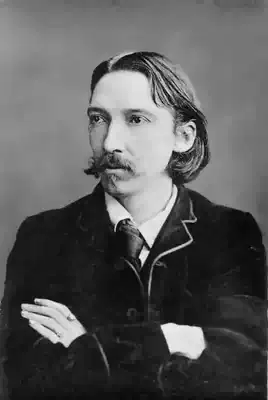
Robert Louis Stevenson
Where Go the Boats?
Where Go the Boats?
Dark brown is the river,
Golden is the sand.
It flows along for ever,
With trees on either hand.
Green leaves a-floating,
Castles of the foam,
Boats of mine a-boating -
Where will all come home?
On goes the river
And out past the mill,
Away down the valley,
Away down the hill.
Away down the river,
A hundred miles or more,
Other little children
Shall bring my boats ashore.
Dark brown is the river,
Golden is the sand.
It flows along for ever,
With trees on either hand.
Green leaves a-floating,
Castles of the foam,
Boats of mine a-boating -
Where will all come home?
On goes the river
And out past the mill,
Away down the valley,
Away down the hill.
Away down the river,
A hundred miles or more,
Other little children
Shall bring my boats ashore.
334
Robert Louis Stevenson
To Sydney
To Sydney
NOT thine where marble-still and white
Old statues share the tempered light
And mock the uneven modern flight,
But in the stream
Of daily sorrow and delight
To seek a theme.
I too, O friend, have steeled my heart
Boldly to choose the better part,
To leave the beaten ways of art,
And wholly free
To dare, beyond the scanty chart,
The deeper sea.
All vain restrictions left behind,
Frail bark! I loose my anchored mind
And large, before the prosperous wind
Desert the strand -
A new Columbus sworn to find
The morning land.
Nor too ambitious, friend. To thee
I own my weakness. Not for me
To sing the enfranchised nations' glee,
Or count the cost
Of warships foundered far at sea
And battles lost.
High on the far-seen, sunny hills,
Morning-content my bosom fills;
Well-pleased, I trace the wandering rills
And learn their birth.
Far off, the clash of sovereign wills
May shake the earth.
The nimble circuit of the wheel,
The uncertain poise of merchant weal,
Heaven of famine, fire and steel
When nations fall;
These, heedful, from afar I feel -
I mark them all.
But not, my friend, not these I sing,
My voice shall fill a narrower ring.
Tired souls, that flag upon the wing,
I seek to cheer:
Brave wines to strengthen hope I bring,
Life's cantineer!
Some song that shall be suppling oil
To weary muscles strained with toil,
Shall hearten for the daily moil,
Or widely read
Make sweet for him that tills the soil
His daily bread.
Such songs in my flushed hours I dream
(High thought) instead of armour gleam
Or warrior cantos ream by ream
To load the shelves -
Songs with a lilt of words, that seem
To sing themselves.
NOT thine where marble-still and white
Old statues share the tempered light
And mock the uneven modern flight,
But in the stream
Of daily sorrow and delight
To seek a theme.
I too, O friend, have steeled my heart
Boldly to choose the better part,
To leave the beaten ways of art,
And wholly free
To dare, beyond the scanty chart,
The deeper sea.
All vain restrictions left behind,
Frail bark! I loose my anchored mind
And large, before the prosperous wind
Desert the strand -
A new Columbus sworn to find
The morning land.
Nor too ambitious, friend. To thee
I own my weakness. Not for me
To sing the enfranchised nations' glee,
Or count the cost
Of warships foundered far at sea
And battles lost.
High on the far-seen, sunny hills,
Morning-content my bosom fills;
Well-pleased, I trace the wandering rills
And learn their birth.
Far off, the clash of sovereign wills
May shake the earth.
The nimble circuit of the wheel,
The uncertain poise of merchant weal,
Heaven of famine, fire and steel
When nations fall;
These, heedful, from afar I feel -
I mark them all.
But not, my friend, not these I sing,
My voice shall fill a narrower ring.
Tired souls, that flag upon the wing,
I seek to cheer:
Brave wines to strengthen hope I bring,
Life's cantineer!
Some song that shall be suppling oil
To weary muscles strained with toil,
Shall hearten for the daily moil,
Or widely read
Make sweet for him that tills the soil
His daily bread.
Such songs in my flushed hours I dream
(High thought) instead of armour gleam
Or warrior cantos ream by ream
To load the shelves -
Songs with a lilt of words, that seem
To sing themselves.
437
Robert Louis Stevenson
The Piper
The Piper
AGAIN I hear you piping, for I know the tune so well, -
You rouse the heart to wander and be free,
Tho' where you learned your music, not the God of song can tell,
For you pipe the open highway and the sea.
O piper, lightly footing, lightly piping on your way,
Tho' your music thrills and pierces far and near,
I tell you you had better pipe to someone else to-day,
For you cannot pipe my fancy from my dear.
You sound the note of travel through the hamlet and the town;
You would lure the holy angels from on high;
And not a man can hear you, but he throws the hammer down
And is off to see the countries ere he die.
But now no more I wander, now unchanging here I stay;
By my love, you find me safely sitting here:
And pipe you ne'er so sweetly, till you pipe the hills away,
You can never pipe my fancy from my dear.
AGAIN I hear you piping, for I know the tune so well, -
You rouse the heart to wander and be free,
Tho' where you learned your music, not the God of song can tell,
For you pipe the open highway and the sea.
O piper, lightly footing, lightly piping on your way,
Tho' your music thrills and pierces far and near,
I tell you you had better pipe to someone else to-day,
For you cannot pipe my fancy from my dear.
You sound the note of travel through the hamlet and the town;
You would lure the holy angels from on high;
And not a man can hear you, but he throws the hammer down
And is off to see the countries ere he die.
But now no more I wander, now unchanging here I stay;
By my love, you find me safely sitting here:
And pipe you ne'er so sweetly, till you pipe the hills away,
You can never pipe my fancy from my dear.
369
Robert Louis Stevenson
Swallows Travel To And Fro
Swallows Travel To And Fro
SWALLOWS travel to and fro,
And the great winds come and go,
And the steady breezes blow,
Bearing perfume, bearing love.
Breezes hasten, swallows fly,
Towered clouds forever ply,
And at noonday, you and I
See the same sunshine above.
Dew and rain fall everywhere,
Harvests ripen, flowers are fair,
And the whole round earth is bare
To the moonshine and the sun;
And the live air, fanned with wings,
Bright with breeze and sunshine, brings
Into contact distant things,
And makes all the countries one.
Let us wander where we will,
Something kindred greets us still;
Something seen on vale or hill
Falls familiar on the heart;
So, at scent or sound or sight,
Severed souls by day and night
Tremble with the same delight -
Tremble, half the world apart.
SWALLOWS travel to and fro,
And the great winds come and go,
And the steady breezes blow,
Bearing perfume, bearing love.
Breezes hasten, swallows fly,
Towered clouds forever ply,
And at noonday, you and I
See the same sunshine above.
Dew and rain fall everywhere,
Harvests ripen, flowers are fair,
And the whole round earth is bare
To the moonshine and the sun;
And the live air, fanned with wings,
Bright with breeze and sunshine, brings
Into contact distant things,
And makes all the countries one.
Let us wander where we will,
Something kindred greets us still;
Something seen on vale or hill
Falls familiar on the heart;
So, at scent or sound or sight,
Severed souls by day and night
Tremble with the same delight -
Tremble, half the world apart.
424
Robert Louis Stevenson
Singing
Singing
Of speckled eggs the birdie sings
And nests among the trees;
The sailor sings of ropes and things
In ships upon the seas.
The children sing in far Japan,
The children sing in Spain;
The organ with the organ man
Is singing in the rain.
Of speckled eggs the birdie sings
And nests among the trees;
The sailor sings of ropes and things
In ships upon the seas.
The children sing in far Japan,
The children sing in Spain;
The organ with the organ man
Is singing in the rain.
342
Robert Louis Stevenson
From a Railway Carriage
From a Railway Carriage
Faster than fairies, faster than witches,
Bridges and houses, hedges and ditches;
And charging along like troops in a battle
All through the meadows the horses and cattle:
All of the sights of the hill and the plain
Fly as thick as driving rain;
And ever again, in the wink of an eye,
Painted stations whistle by.
Here is a child who clambers and scrambles,
All by himself and gathering brambles;
Here is a tramp who stands and gazes;
And here is the green for stringing the daisies!
Here is a cart runaway in the road
Lumping along with man and load;
And here is a mill, and there is a river:
Each a glimpse and gone forever!
Faster than fairies, faster than witches,
Bridges and houses, hedges and ditches;
And charging along like troops in a battle
All through the meadows the horses and cattle:
All of the sights of the hill and the plain
Fly as thick as driving rain;
And ever again, in the wink of an eye,
Painted stations whistle by.
Here is a child who clambers and scrambles,
All by himself and gathering brambles;
Here is a tramp who stands and gazes;
And here is the green for stringing the daisies!
Here is a cart runaway in the road
Lumping along with man and load;
And here is a mill, and there is a river:
Each a glimpse and gone forever!
381
Robert Louis Stevenson
Foreign Lands
Foreign Lands
Up into the cherry tree
Who should climb but little me?
I held the trunk with both my hands
And looked abroad in foreign lands.
I saw the next door garden lie,
Adorned with flowers, before my eye,
And many pleasant places more
That I had never seen before.
I saw the dimpling river pass
And be the sky's blue looking-glass;
The dusty roads go up and down
With people tramping in to town.
If I could find a higher tree
Farther and farther I should see,
To where the grown-up river slips
Into the sea among the ships,
To where the road on either hand
Lead onward into fairy land,
Where all the children dine at five,
And all the playthings come alive.
Up into the cherry tree
Who should climb but little me?
I held the trunk with both my hands
And looked abroad in foreign lands.
I saw the next door garden lie,
Adorned with flowers, before my eye,
And many pleasant places more
That I had never seen before.
I saw the dimpling river pass
And be the sky's blue looking-glass;
The dusty roads go up and down
With people tramping in to town.
If I could find a higher tree
Farther and farther I should see,
To where the grown-up river slips
Into the sea among the ships,
To where the road on either hand
Lead onward into fairy land,
Where all the children dine at five,
And all the playthings come alive.
1,577

Robert Browning
Through The Metidja To Abd-El-Kadr
Through The Metidja To Abd-El-Kadr
Abd-el-Kadr was an Arab Chief of Algiers who resisted the French in .]
I.
As I ride, as I ride,
With a full heart for my guide,
So its tide rocks my side,
As I ride, as I ride,
That, as I were double-eyed,
He, in whom our Tribes confide,
Is descried, ways untried
As I ride, as I ride.
II.
As I ride, as I ride
To our Chief and his Allied,
Who dares chide my heart's pride
As I ride, as I ride?
Or are witnesses denied---
Through the desert waste and wide
Do I glide unespied
As I ride, as I ride?
III.
As I ride, as I ride,
When an inner voice has cried,
The sands slide, nor abide
(As I ride, as I ride)
O'er each visioned homicide
That came vaunting (has he lied?)
To reside---where he died,
As I ride, as I ride.
IV.
As I ride, as I ride,
Ne'er has spur my swift horse plied,
Yet his hide, streaked and pied,
As I ride, as I ride,
Shows where sweat has sprung and dried,
---Zebra-footed, ostrich-thighed---
How has vied stride with stride
As I ride, as I ride!
V.
As I ride, as I ride,
Could I loose what Fate has tied,
Ere I pried, she should hide
(As I ride, as I ride)
All that's meant me---satisfied
When the Prophet and the Bride
Stop veins I'd have subside
As I ride, as I ride!
Abd-el-Kadr was an Arab Chief of Algiers who resisted the French in .]
I.
As I ride, as I ride,
With a full heart for my guide,
So its tide rocks my side,
As I ride, as I ride,
That, as I were double-eyed,
He, in whom our Tribes confide,
Is descried, ways untried
As I ride, as I ride.
II.
As I ride, as I ride
To our Chief and his Allied,
Who dares chide my heart's pride
As I ride, as I ride?
Or are witnesses denied---
Through the desert waste and wide
Do I glide unespied
As I ride, as I ride?
III.
As I ride, as I ride,
When an inner voice has cried,
The sands slide, nor abide
(As I ride, as I ride)
O'er each visioned homicide
That came vaunting (has he lied?)
To reside---where he died,
As I ride, as I ride.
IV.
As I ride, as I ride,
Ne'er has spur my swift horse plied,
Yet his hide, streaked and pied,
As I ride, as I ride,
Shows where sweat has sprung and dried,
---Zebra-footed, ostrich-thighed---
How has vied stride with stride
As I ride, as I ride!
V.
As I ride, as I ride,
Could I loose what Fate has tied,
Ere I pried, she should hide
(As I ride, as I ride)
All that's meant me---satisfied
When the Prophet and the Bride
Stop veins I'd have subside
As I ride, as I ride!
323
Robert Browning
The Wanderers
The Wanderers
OVER the sea our galleys went,
With cleaving prows in order brave
To a speeding wind and a bounding wave--
A gallant armament:
Each bark built out of a forest-tree
Left leafy and rough as first it grew,
And nail'd all over the gaping sides,
Within and without, with black bull-hides,
Seethed in fat and suppled in flame,
To bear the playful billows' game;
So, each good ship was rude to see,
Rude and bare to the outward view.
But each upbore a stately tent
Where cedar pales in scented row
Kept out the flakes of the dancing brine,
And an awning droop'd the mast below,
In fold on fold of the purple fine,
That neither noontide nor star-shine
Nor moonlight cold which maketh mad,
Might pierce the regal tenement.
When the sun dawn'd, O, gay and glad
We set the sail and plied the oar;
But when the night-wind blew like breath,
For joy of one day's voyage more,
We sang together on the wide sea,
Like men at peace on a peaceful shore;
Each sail was loosed to the wind so free,
Each helm made sure by the twilight star,
And in a sleep as calm as death,
We, the voyagers from afar,
Lay stretch'd along, each weary crew
In a circle round its wondrous tent
Whence gleam'd soft light and curl'd rich scent,
And with light and perfume, music too:
So the stars wheel'd round, and the darkness past,
And at morn we started beside the mast,
And still each ship was sailing fast!
Now, one morn, land appear'd--a speck
Dim trembling betwixt sea and sky--
'Avoid it,' cried our pilot, 'check
The shout, restrain the eager eye!'
But the heaving sea was black behind
For many a night and many a day,
And land, though but a rock, drew nigh;
So we broke the cedar pales away,
Let the purple awning flap in the wind,
And a statue bright was on every deck!
We shouted, every man of us,
And steer'd right into the harbour thus,
With pomp and paean glorious.
A hundred shapes of lucid stone!
All day we built its shrine for each,
A shrine of rock for ever one,
Nor paused till in the westering sun
We sat together on the beach
To sing because our task was done;
When lo! what shouts and merry songs!
What laughter all the distance stirs!
A loaded raft with happy throngs
Of gentle islanders!
'Our isles are just at hand,' they cried,
'Like cloudlets faint in even sleeping;
Our temple-gates are open'd wide,
Our olive-groves thick shade are keeping
For these majestic forms'--they cried.
O, then we awoke with sudden start
From our deep dream, and knew, too late,
How bare the rock, how desolate,
Which had received our precious freight:
Yet we call'd out--'Depart!
Our gifts, once given, must here abide:
Our work is done; we have no heart
To mar our work,'--we cried.
OVER the sea our galleys went,
With cleaving prows in order brave
To a speeding wind and a bounding wave--
A gallant armament:
Each bark built out of a forest-tree
Left leafy and rough as first it grew,
And nail'd all over the gaping sides,
Within and without, with black bull-hides,
Seethed in fat and suppled in flame,
To bear the playful billows' game;
So, each good ship was rude to see,
Rude and bare to the outward view.
But each upbore a stately tent
Where cedar pales in scented row
Kept out the flakes of the dancing brine,
And an awning droop'd the mast below,
In fold on fold of the purple fine,
That neither noontide nor star-shine
Nor moonlight cold which maketh mad,
Might pierce the regal tenement.
When the sun dawn'd, O, gay and glad
We set the sail and plied the oar;
But when the night-wind blew like breath,
For joy of one day's voyage more,
We sang together on the wide sea,
Like men at peace on a peaceful shore;
Each sail was loosed to the wind so free,
Each helm made sure by the twilight star,
And in a sleep as calm as death,
We, the voyagers from afar,
Lay stretch'd along, each weary crew
In a circle round its wondrous tent
Whence gleam'd soft light and curl'd rich scent,
And with light and perfume, music too:
So the stars wheel'd round, and the darkness past,
And at morn we started beside the mast,
And still each ship was sailing fast!
Now, one morn, land appear'd--a speck
Dim trembling betwixt sea and sky--
'Avoid it,' cried our pilot, 'check
The shout, restrain the eager eye!'
But the heaving sea was black behind
For many a night and many a day,
And land, though but a rock, drew nigh;
So we broke the cedar pales away,
Let the purple awning flap in the wind,
And a statue bright was on every deck!
We shouted, every man of us,
And steer'd right into the harbour thus,
With pomp and paean glorious.
A hundred shapes of lucid stone!
All day we built its shrine for each,
A shrine of rock for ever one,
Nor paused till in the westering sun
We sat together on the beach
To sing because our task was done;
When lo! what shouts and merry songs!
What laughter all the distance stirs!
A loaded raft with happy throngs
Of gentle islanders!
'Our isles are just at hand,' they cried,
'Like cloudlets faint in even sleeping;
Our temple-gates are open'd wide,
Our olive-groves thick shade are keeping
For these majestic forms'--they cried.
O, then we awoke with sudden start
From our deep dream, and knew, too late,
How bare the rock, how desolate,
Which had received our precious freight:
Yet we call'd out--'Depart!
Our gifts, once given, must here abide:
Our work is done; we have no heart
To mar our work,'--we cried.
347
Robert Browning
Nationality In Drinks
Nationality In Drinks
I.
My heart sank with our Claret-flask,
Just now, beneath the heavy sedges
That serve this Pond's black face for mask
And still at yonder broken edges
O' the hole, where up the bubbles glisten,
After my heart I look and listen.
II.
Our laughing little flask, compelled
Thro' depth to depth more bleak and shady;
As when, both arms beside her held,
Feet straightened out, some gay French lady
Is caught up from life's light and motion,
And dropped into death's silent ocean!
---
Up jumped Tokay on our table,
Like a pygmy castle-warder,
Dwarfish to see, but stout and able,
Arms and accoutrements all in order;
And fierce he looked North, then, wheeling South,
Blew with his bugle a challenge to Drouth,
Cocked his flap-hat with the tosspot-feather,
Twisted his thumb in his red moustache,
Jingled his huge brass spurs together,
Tightened his waist with its Buda sash,
And then, with an impudence nought could abash,
Shrugged his hump-shoulder, to tell the beholder,
For twenty such knaves he should laugh but the bolder:
And so, with his sword-hilt gallantly jutting,
And dexter-hand on his haunch abutting,
Went the little man, Sir Ausbruch, strutting!
---
Here's to Nelson's memory!
'Tis the second time that I, at sea,
Right off Cape Trafalgar here,
Have drunk it deep in British Beer.
Nelson for ever---any time
Am I his to command in prose or rhyme!
Give me of Nelson only a touch,
And I save it, be it little or much:
Here's one our Captain gives, and so
Down at the word, by George, shall it go!
He says that at Greenwich they point the beholder
To Nelson's coat, ``still with tar on the shoulder:
``For he used to lean with one shoulder digging,
``Jigging, as it were, and zig-zag-zigging
``Up against the mizen-rigging!''
I.
My heart sank with our Claret-flask,
Just now, beneath the heavy sedges
That serve this Pond's black face for mask
And still at yonder broken edges
O' the hole, where up the bubbles glisten,
After my heart I look and listen.
II.
Our laughing little flask, compelled
Thro' depth to depth more bleak and shady;
As when, both arms beside her held,
Feet straightened out, some gay French lady
Is caught up from life's light and motion,
And dropped into death's silent ocean!
---
Up jumped Tokay on our table,
Like a pygmy castle-warder,
Dwarfish to see, but stout and able,
Arms and accoutrements all in order;
And fierce he looked North, then, wheeling South,
Blew with his bugle a challenge to Drouth,
Cocked his flap-hat with the tosspot-feather,
Twisted his thumb in his red moustache,
Jingled his huge brass spurs together,
Tightened his waist with its Buda sash,
And then, with an impudence nought could abash,
Shrugged his hump-shoulder, to tell the beholder,
For twenty such knaves he should laugh but the bolder:
And so, with his sword-hilt gallantly jutting,
And dexter-hand on his haunch abutting,
Went the little man, Sir Ausbruch, strutting!
---
Here's to Nelson's memory!
'Tis the second time that I, at sea,
Right off Cape Trafalgar here,
Have drunk it deep in British Beer.
Nelson for ever---any time
Am I his to command in prose or rhyme!
Give me of Nelson only a touch,
And I save it, be it little or much:
Here's one our Captain gives, and so
Down at the word, by George, shall it go!
He says that at Greenwich they point the beholder
To Nelson's coat, ``still with tar on the shoulder:
``For he used to lean with one shoulder digging,
``Jigging, as it were, and zig-zag-zigging
``Up against the mizen-rigging!''
299
Robert Browning
Meeting At Night
Meeting At Night
I.
The grey sea and the long black land;
And the yellow half-moon large and low;
And the startled little waves that leap
In fiery ringlets from their sleep,
As I gain the cove with pushing prow,
And quench its speed i' the slushy sand.
II.
Then a mile of warm sea-scented beach;
Three fields to cross till a farm appears;
A tap at the pane, the quick sharp scratch
And blue spurt of a lighted match,
And a voice less loud, thro' its joys and fears,
Than the two hearts beating each to each!
I.
The grey sea and the long black land;
And the yellow half-moon large and low;
And the startled little waves that leap
In fiery ringlets from their sleep,
As I gain the cove with pushing prow,
And quench its speed i' the slushy sand.
II.
Then a mile of warm sea-scented beach;
Three fields to cross till a farm appears;
A tap at the pane, the quick sharp scratch
And blue spurt of a lighted match,
And a voice less loud, thro' its joys and fears,
Than the two hearts beating each to each!
561
Robert Browning
Home Thoughts, from the Sea
Home Thoughts, from the Sea
Nobly, nobly Cape Saint Vincent to the North-west died away;
Sunset ran, one glorious blood-red, reeking into Cadiz Bay;
Bluish 'mid the burning water, full in face Trafalgar lay;
In the dimmest North-east distance dawned Gibraltar grand and grey;
"Here and here did England help me: how can I help England?" -say,
Whoso turns as I, this evening, turn to God to praise and pray,
While Jove's planet rises yonder, silent over Africa.
Nobly, nobly Cape Saint Vincent to the North-west died away;
Sunset ran, one glorious blood-red, reeking into Cadiz Bay;
Bluish 'mid the burning water, full in face Trafalgar lay;
In the dimmest North-east distance dawned Gibraltar grand and grey;
"Here and here did England help me: how can I help England?" -say,
Whoso turns as I, this evening, turn to God to praise and pray,
While Jove's planet rises yonder, silent over Africa.
279
Robert Browning
Childe Roland To The Dark Tower Came
Childe Roland To The Dark Tower Came
I.
My first thought was, he lied in every word,
That hoary cripple, with malicious eye
Askance to watch the working of his lie
On mine, and mouth scarce able to afford
Suppression of the glee, that pursed and scored
Its edge, at one more victim gained thereby.
II.
What else should he be set for, with his staff?
What, save to waylay with his lies, ensnare
All travellers who might find him posted there,
And ask the road? I guessed what skull-like laugh
Would break, what crutch 'gin write my epitaph
For pastime in the dusty thoroughfare,
III.
If at his counsel I should turn aside
Into that ominous tract which, all agree,
Hides the Dark Tower. Yet acquiescingly
I did turn as he pointed: neither pride
Nor hope rekindling at the end descried,
So much as gladness that some end might be.
IV.
For, what with my whole world-wide wandering,
What with my search drawn out thro' years, my hope
Dwindled into a ghost not fit to cope
With that obstreperous joy success would bring,
I hardly tried now to rebuke the spring
My heart made, finding failure in its scope.
V.
As when a sick man very near to death
Seems dead indeed, and feels begin and end
The tears and takes the farewell of each friend,
And hears one bid the other go, draw breath
Freelier outside, (``since all is o'er,'' he saith,
``And the blow falIen no grieving can amend;'')
VI.
While some discuss if near the other graves
Be room enough for this, and when a day
Suits best for carrying the corpse away,
With care about the banners, scarves and staves:
And still the man hears all, and only craves
He may not shame such tender love and stay.
VII.
Thus, I had so long suffered in this quest,
Heard failure prophesied so oft, been writ
So many times among ``The Band''---to wit,
The knights who to the Dark Tower's search addressed
Their steps---that just to fail as they, seemed best,
And all the doubt was now---should I be fit?
VIII.
So, quiet as despair, I turned from him,
That hateful cripple, out of his highway
Into the path he pointed. All the day
Had been a dreary one at best, and dim
Was settling to its close, yet shot one grim
Red leer to see the plain catch its estray.
IX.
For mark! no sooner was I fairly found
Pledged to the plain, after a pace or two,
Than, pausing to throw backward a last view
O'er the safe road, 'twas gone; grey plain all round:
Nothing but plain to the horizon's bound.
I might go on; nought else remained to do.
X.
So, on I went. I think I never saw
Such starved ignoble nature; nothing throve:
For flowers---as well expect a cedar grove!
But cockle, spurge, according to their law
Might propagate their kind, with none to awe,
You'd think; a burr had been a treasure-trove.
XI.
No! penury, inertness and grimace,
In some strange sort, were the land's portion. ``See
``Or shut your eyes,'' said nature peevishly,
``It nothing skills: I cannot help my case:
``'Tis the Last judgment's fire must cure this place,
``Calcine its clods and set my prisoners free.''
XII.
If there pushed any ragged thistle-stalk
Above its mates, the head was chopped; the bents
Were jealous else. What made those holes and rents
In the dock's harsh swarth leaves, bruised as to baulk
All hope of greenness?'tis a brute must walk
Pashing their life out, with a brute's intents.
XIII.
As for the grass, it grew as scant as hair
In leprosy; thin dry blades pricked the mud
Which underneath looked kneaded up with blood.
One stiff blind horse, his every bone a-stare,
Stood stupefied, however he came there:
Thrust out past service from the devil's stud!
XIV.
Alive? he might be dead for aught I know,
With that red gaunt and colloped neck a-strain,
And shut eyes underneath the rusty mane;
Seldom went such grotesqueness with such woe;
I never saw a brute I hated so;
He must be wicked to deserve such pain.
XV.
I shut my eyes and turned them on my heart.
As a man calls for wine before he fights,
I asked one draught of earlier, happier sights,
Ere fitly I could hope to play my part.
Think first, fight afterwards---the soldier's art:
One taste of the old time sets all to rights.
XVI.
Not it! I fancied Cuthbert's reddening face
Beneath its garniture of curly gold,
Dear fellow, till I almost felt him fold
An arm in mine to fix me to the place,
That way he used. Alas, one night's disgrace!
Out went my heart's new fire and left it cold.
XVII.
Giles then, the soul of honour---there he stands
Frank as ten years ago when knighted first.
What honest man should dare (he said) he durst.
Good---but the scene shifts---faugh! what hangman hands
Pin to his breast a parchment? His own bands
Read it. Poor traitor, spit upon and curst!
XVIII.
Better this present than a past like that;
Back therefore to my darkening path again!
No sound, no sight as far as eye could strain.
Will the night send a howlet or a bat?
I asked: when something on the dismal flat
Came to arrest my thoughts and change their train.
XIX.
A sudden little river crossed my path
As unexpected as a serpent comes.
No sluggish tide congenial to the glooms;
This, as it frothed by, might have been a bath
For the fiend's glowing hoof---to see the wrath
Of its black eddy bespate with flakes and spumes.
XX.
So petty yet so spiteful! All along,
Low scrubby alders kneeled down over it;
Drenched willows flung them headlong in a fit
Of route despair, a suicidal throng:
The river which had done them all the wrong,
Whate'er that was, rolled by, deterred no whit.
XXI.
Which, while I forded,---good saints, how I feared
To set my foot upon a dead man's cheek,
Each step, or feel the spear I thrust to seek
For hollows, tangled in his hair or beard!
---It may have been a water-rat I speared,
But, ugh! it sounded like a baby's shriek.
XXII.
Glad was I when I reached the other bank.
Now for a better country. Vain presage!
Who were the strugglers, what war did they wage,
Whose savage trample thus could pad the dank
Soil to a plash? Toads in a poisoned tank,
Or wild cats in a red-hot iron cage---
XXIII.
The fight must so have seemed in that fell cirque.
What penned them there, with all the plain to choose?
No foot-print leading to that horrid mews,
None out of it. Mad brewage set to work
Their brains, no doubt, like galley-slaves the Turk
Pits for his pastime, Christians against Jews.
XXIV.
And more than that---a furlong on---why, there!
What bad use was that engine for, that wheel,
Or brake, not wheel---that harrow fit to reel
Men's bodies out like silk? with all the air
Of Tophet's tool, on earth left unaware,
Or brought to sharpen its rusty teeth of steel.
XXV.
Then came a bit of stubbed ground, once a wood,
Next a marsh, it would seem, and now mere earth
Desperate and done with; (so a fool finds mirth,
Makes a thing and then mars it, till his mood
Changes and off he goes!) within a rood---
Bog, clay and rubble, sand and stark black dearth.
XXVI.
Now blotches rankling, coloured gay and grim,
Now patches where some leanness of the soil's
Broke into moss or substances like boils;
Then came some palsied oak, a cleft in him
Like a distorted mouth that splits its rim
Gaping at death, and dies while it recoils.
XXVII.
And just as far as ever from the end!
Nought in the distance but the evening, nought
To point my footstep further! At the thought,
great black bird, Apollyon's bosom-friend,
Sailed past, nor beat his wide wing dragon-penned
That brushed my cap---perchance the guide I sought.
XXVIII.
For, looking up, aware I somehow grew,
'Spite of the dusk, the plain had given place
All round to mountains---with such name to grace
Mere ugly heights and heaps now stolen in view.
How thus they had surprised me,---solve it, you!
How to get from them was no clearer case.
XXIX.
Yet half I seemed to recognize some trick
Of mischief happened to me, God knows when---
In a bad dream perhaps. Here ended, then,
Progress this way. When, in the very nick
Of giving up, one time more, came a click
As when a trap shuts---you're inside the den!
XXX.
Burningly it came on me all at once,
This was the place! those two hills on the right,
Crouched like two bulls locked horn in horn in fight;
While to the left, a tall scalped mountain ... Dunce,
Dotard, a-dozing at the very nonce,
After a life spent training for the sight!
XXXI.
What in the midst lay but the Tower itself?
The round squat turret, blind as the fool's heart,
Built of brown stone, without a counter-part
In the whole world. The tempest's mocking elf
Points to the shipman thus the unseen shelf
He strikes on, only when the timbers start.
XXXII.
Not see? because of night perhaps?---why, day
Came back again for that! before it left,
The dying sunset kindled through a cleft:
The hills, like giants at a hunting, lay,
Chin upon hand, to see the game at bay,---
``Now stab and end the creature---to the heft!''
XXXIII.
Not hear? when noise was everywhere! it tolled
Increasing like a bell. Names in my ears
Of all the lost adventurers my peers,---
How such a one was strong, and such was bold,
And such was fortunate, yet, each of old
Lost, lost! one moment knelled the woe of years.
XXXIV.
There they stood, ranged along the hill-sides, met
To view the last of me, a living frame
For one more picture! in a sheet of flame
I saw them and I knew them all. And yet
Dauntless the slug-horn to my lips I set,
And blew. ``_Childe Roland to the Dark Tower came._''
I.
My first thought was, he lied in every word,
That hoary cripple, with malicious eye
Askance to watch the working of his lie
On mine, and mouth scarce able to afford
Suppression of the glee, that pursed and scored
Its edge, at one more victim gained thereby.
II.
What else should he be set for, with his staff?
What, save to waylay with his lies, ensnare
All travellers who might find him posted there,
And ask the road? I guessed what skull-like laugh
Would break, what crutch 'gin write my epitaph
For pastime in the dusty thoroughfare,
III.
If at his counsel I should turn aside
Into that ominous tract which, all agree,
Hides the Dark Tower. Yet acquiescingly
I did turn as he pointed: neither pride
Nor hope rekindling at the end descried,
So much as gladness that some end might be.
IV.
For, what with my whole world-wide wandering,
What with my search drawn out thro' years, my hope
Dwindled into a ghost not fit to cope
With that obstreperous joy success would bring,
I hardly tried now to rebuke the spring
My heart made, finding failure in its scope.
V.
As when a sick man very near to death
Seems dead indeed, and feels begin and end
The tears and takes the farewell of each friend,
And hears one bid the other go, draw breath
Freelier outside, (``since all is o'er,'' he saith,
``And the blow falIen no grieving can amend;'')
VI.
While some discuss if near the other graves
Be room enough for this, and when a day
Suits best for carrying the corpse away,
With care about the banners, scarves and staves:
And still the man hears all, and only craves
He may not shame such tender love and stay.
VII.
Thus, I had so long suffered in this quest,
Heard failure prophesied so oft, been writ
So many times among ``The Band''---to wit,
The knights who to the Dark Tower's search addressed
Their steps---that just to fail as they, seemed best,
And all the doubt was now---should I be fit?
VIII.
So, quiet as despair, I turned from him,
That hateful cripple, out of his highway
Into the path he pointed. All the day
Had been a dreary one at best, and dim
Was settling to its close, yet shot one grim
Red leer to see the plain catch its estray.
IX.
For mark! no sooner was I fairly found
Pledged to the plain, after a pace or two,
Than, pausing to throw backward a last view
O'er the safe road, 'twas gone; grey plain all round:
Nothing but plain to the horizon's bound.
I might go on; nought else remained to do.
X.
So, on I went. I think I never saw
Such starved ignoble nature; nothing throve:
For flowers---as well expect a cedar grove!
But cockle, spurge, according to their law
Might propagate their kind, with none to awe,
You'd think; a burr had been a treasure-trove.
XI.
No! penury, inertness and grimace,
In some strange sort, were the land's portion. ``See
``Or shut your eyes,'' said nature peevishly,
``It nothing skills: I cannot help my case:
``'Tis the Last judgment's fire must cure this place,
``Calcine its clods and set my prisoners free.''
XII.
If there pushed any ragged thistle-stalk
Above its mates, the head was chopped; the bents
Were jealous else. What made those holes and rents
In the dock's harsh swarth leaves, bruised as to baulk
All hope of greenness?'tis a brute must walk
Pashing their life out, with a brute's intents.
XIII.
As for the grass, it grew as scant as hair
In leprosy; thin dry blades pricked the mud
Which underneath looked kneaded up with blood.
One stiff blind horse, his every bone a-stare,
Stood stupefied, however he came there:
Thrust out past service from the devil's stud!
XIV.
Alive? he might be dead for aught I know,
With that red gaunt and colloped neck a-strain,
And shut eyes underneath the rusty mane;
Seldom went such grotesqueness with such woe;
I never saw a brute I hated so;
He must be wicked to deserve such pain.
XV.
I shut my eyes and turned them on my heart.
As a man calls for wine before he fights,
I asked one draught of earlier, happier sights,
Ere fitly I could hope to play my part.
Think first, fight afterwards---the soldier's art:
One taste of the old time sets all to rights.
XVI.
Not it! I fancied Cuthbert's reddening face
Beneath its garniture of curly gold,
Dear fellow, till I almost felt him fold
An arm in mine to fix me to the place,
That way he used. Alas, one night's disgrace!
Out went my heart's new fire and left it cold.
XVII.
Giles then, the soul of honour---there he stands
Frank as ten years ago when knighted first.
What honest man should dare (he said) he durst.
Good---but the scene shifts---faugh! what hangman hands
Pin to his breast a parchment? His own bands
Read it. Poor traitor, spit upon and curst!
XVIII.
Better this present than a past like that;
Back therefore to my darkening path again!
No sound, no sight as far as eye could strain.
Will the night send a howlet or a bat?
I asked: when something on the dismal flat
Came to arrest my thoughts and change their train.
XIX.
A sudden little river crossed my path
As unexpected as a serpent comes.
No sluggish tide congenial to the glooms;
This, as it frothed by, might have been a bath
For the fiend's glowing hoof---to see the wrath
Of its black eddy bespate with flakes and spumes.
XX.
So petty yet so spiteful! All along,
Low scrubby alders kneeled down over it;
Drenched willows flung them headlong in a fit
Of route despair, a suicidal throng:
The river which had done them all the wrong,
Whate'er that was, rolled by, deterred no whit.
XXI.
Which, while I forded,---good saints, how I feared
To set my foot upon a dead man's cheek,
Each step, or feel the spear I thrust to seek
For hollows, tangled in his hair or beard!
---It may have been a water-rat I speared,
But, ugh! it sounded like a baby's shriek.
XXII.
Glad was I when I reached the other bank.
Now for a better country. Vain presage!
Who were the strugglers, what war did they wage,
Whose savage trample thus could pad the dank
Soil to a plash? Toads in a poisoned tank,
Or wild cats in a red-hot iron cage---
XXIII.
The fight must so have seemed in that fell cirque.
What penned them there, with all the plain to choose?
No foot-print leading to that horrid mews,
None out of it. Mad brewage set to work
Their brains, no doubt, like galley-slaves the Turk
Pits for his pastime, Christians against Jews.
XXIV.
And more than that---a furlong on---why, there!
What bad use was that engine for, that wheel,
Or brake, not wheel---that harrow fit to reel
Men's bodies out like silk? with all the air
Of Tophet's tool, on earth left unaware,
Or brought to sharpen its rusty teeth of steel.
XXV.
Then came a bit of stubbed ground, once a wood,
Next a marsh, it would seem, and now mere earth
Desperate and done with; (so a fool finds mirth,
Makes a thing and then mars it, till his mood
Changes and off he goes!) within a rood---
Bog, clay and rubble, sand and stark black dearth.
XXVI.
Now blotches rankling, coloured gay and grim,
Now patches where some leanness of the soil's
Broke into moss or substances like boils;
Then came some palsied oak, a cleft in him
Like a distorted mouth that splits its rim
Gaping at death, and dies while it recoils.
XXVII.
And just as far as ever from the end!
Nought in the distance but the evening, nought
To point my footstep further! At the thought,
great black bird, Apollyon's bosom-friend,
Sailed past, nor beat his wide wing dragon-penned
That brushed my cap---perchance the guide I sought.
XXVIII.
For, looking up, aware I somehow grew,
'Spite of the dusk, the plain had given place
All round to mountains---with such name to grace
Mere ugly heights and heaps now stolen in view.
How thus they had surprised me,---solve it, you!
How to get from them was no clearer case.
XXIX.
Yet half I seemed to recognize some trick
Of mischief happened to me, God knows when---
In a bad dream perhaps. Here ended, then,
Progress this way. When, in the very nick
Of giving up, one time more, came a click
As when a trap shuts---you're inside the den!
XXX.
Burningly it came on me all at once,
This was the place! those two hills on the right,
Crouched like two bulls locked horn in horn in fight;
While to the left, a tall scalped mountain ... Dunce,
Dotard, a-dozing at the very nonce,
After a life spent training for the sight!
XXXI.
What in the midst lay but the Tower itself?
The round squat turret, blind as the fool's heart,
Built of brown stone, without a counter-part
In the whole world. The tempest's mocking elf
Points to the shipman thus the unseen shelf
He strikes on, only when the timbers start.
XXXII.
Not see? because of night perhaps?---why, day
Came back again for that! before it left,
The dying sunset kindled through a cleft:
The hills, like giants at a hunting, lay,
Chin upon hand, to see the game at bay,---
``Now stab and end the creature---to the heft!''
XXXIII.
Not hear? when noise was everywhere! it tolled
Increasing like a bell. Names in my ears
Of all the lost adventurers my peers,---
How such a one was strong, and such was bold,
And such was fortunate, yet, each of old
Lost, lost! one moment knelled the woe of years.
XXXIV.
There they stood, ranged along the hill-sides, met
To view the last of me, a living frame
For one more picture! in a sheet of flame
I saw them and I knew them all. And yet
Dauntless the slug-horn to my lips I set,
And blew. ``_Childe Roland to the Dark Tower came._''
434