

Poems in this topic
Soul
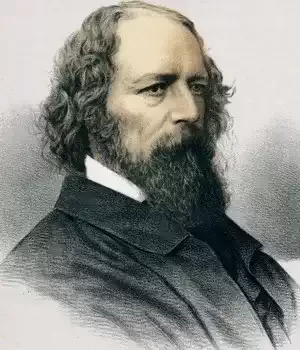
Alfred Lord Tennyson
Claribel
Claribel
Where Claribel low-lieth
The breezes pause and die,
Letting the rose-leaves fall:
But the solemn oak-tree sigheth,
Thick-leaved, ambrosial,
With an ancient melody
Of an inward agony,
Where Claribel low-lieth.
At eve the beetle boometh
Athwart the thicket lone:
At noon the wild bee hummeth
About the moss'd headstone:
At midnight the moon cometh,
And looketh down alone.
Her song the lintwhite swelleth,
The clear-voiced mavis dwelleth,
The callow throstle lispeth,
The slumbrous wave outwelleth,
The babbling runnel crispeth,
The hollow grot replieth
Where Claribel low-lieth.
Where Claribel low-lieth
The breezes pause and die,
Letting the rose-leaves fall:
But the solemn oak-tree sigheth,
Thick-leaved, ambrosial,
With an ancient melody
Of an inward agony,
Where Claribel low-lieth.
At eve the beetle boometh
Athwart the thicket lone:
At noon the wild bee hummeth
About the moss'd headstone:
At midnight the moon cometh,
And looketh down alone.
Her song the lintwhite swelleth,
The clear-voiced mavis dwelleth,
The callow throstle lispeth,
The slumbrous wave outwelleth,
The babbling runnel crispeth,
The hollow grot replieth
Where Claribel low-lieth.
431
Alfred Lord Tennyson
By an Evolutionist
By an Evolutionist
By an Evolutionist
The Lord let the house of a brute to the soul of a man,
And the man said, ‘Am I your debtor?’
And the Lord–‘Not yet; but make it as clean as you can,
And then I will let you a better.’
I.
If my body come from brutes, my soul uncertain or a fable,
Why not bask amid the senses while the sun of morning shines,
I, the finer brute rejoicing in my hounds, and in my stable,
Youth and health, and birth and wealth, and choice of women and of wines?
II.
What hast thou done for me, grim Old Age, save breaking my bones on the rack?
Would I had past in the morning that looks so bright from afar!
OLD AGE
Done for thee? starved the wild beast that was linkt with thee eighty years back.
Less weight now for the ladder-of-heaven that hangs on a star.
I.
If my body come from brutes, tho’ somewhat finer than their own,
I am heir, and this my kingdom. Shall the royal voice be mute?
No, but if the rebel subject seek to drag me from the throne,
Hold the sceptre, Human Soul, and rule thy province of the brute.
II.
I have climb’d to the snows of Age, and I gaze at a field in the Past.
Where I sank with the body at times in the sloughs of a low desire,
But I hear no yelp of the beast, and the Man is quiet at last,
As he stands on the heights of his life with a glimpse of a height that is higher.
By an Evolutionist
The Lord let the house of a brute to the soul of a man,
And the man said, ‘Am I your debtor?’
And the Lord–‘Not yet; but make it as clean as you can,
And then I will let you a better.’
I.
If my body come from brutes, my soul uncertain or a fable,
Why not bask amid the senses while the sun of morning shines,
I, the finer brute rejoicing in my hounds, and in my stable,
Youth and health, and birth and wealth, and choice of women and of wines?
II.
What hast thou done for me, grim Old Age, save breaking my bones on the rack?
Would I had past in the morning that looks so bright from afar!
OLD AGE
Done for thee? starved the wild beast that was linkt with thee eighty years back.
Less weight now for the ladder-of-heaven that hangs on a star.
I.
If my body come from brutes, tho’ somewhat finer than their own,
I am heir, and this my kingdom. Shall the royal voice be mute?
No, but if the rebel subject seek to drag me from the throne,
Hold the sceptre, Human Soul, and rule thy province of the brute.
II.
I have climb’d to the snows of Age, and I gaze at a field in the Past.
Where I sank with the body at times in the sloughs of a low desire,
But I hear no yelp of the beast, and the Man is quiet at last,
As he stands on the heights of his life with a glimpse of a height that is higher.
470
Alfred Lord Tennyson
Ask Me No More
Ask Me No More
Ask me no more: the moon may draw the sea;
The cloud may stoop from heaven and take the shape,
With fold to fold, of mountain or of cape;
But O too fond, when have I answer'd thee?
Ask me no more.
Ask me no more: what answer should I give?
I love not hollow cheek or faded eye:
Yet, O my friend, I will not have thee die!
Ask me no more, lest I should bid thee live;
Ask me no more.
Ask me no more: thy fate and mine are seal'd:
I strove against the stream and all in vain:
Let the great river take me to the main:
No more, dear love, for at a touch I yield;
Ask me no more.
Ask me no more: the moon may draw the sea;
The cloud may stoop from heaven and take the shape,
With fold to fold, of mountain or of cape;
But O too fond, when have I answer'd thee?
Ask me no more.
Ask me no more: what answer should I give?
I love not hollow cheek or faded eye:
Yet, O my friend, I will not have thee die!
Ask me no more, lest I should bid thee live;
Ask me no more.
Ask me no more: thy fate and mine are seal'd:
I strove against the stream and all in vain:
Let the great river take me to the main:
No more, dear love, for at a touch I yield;
Ask me no more.
343
Alfred Lord Tennyson
A Farewell
A Farewell
Flow down, cold rivulet, to the sea,
Thy tribute wave deliver:
No more by thee my steps shall be,
For ever and for ever.
Flow, softly flow, by lawn and lea,
A rivulet then a river:
Nowhere by thee my steps shall be
For ever and for ever.
But here will sigh thine alder tree
And here thine aspen shiver;
And here by thee will hum the bee,
For ever and for ever.
A thousand suns will stream on thee,
A thousand moons will quiver;
But not by thee my steps shall be,
For ever and for ever.
Flow down, cold rivulet, to the sea,
Thy tribute wave deliver:
No more by thee my steps shall be,
For ever and for ever.
Flow, softly flow, by lawn and lea,
A rivulet then a river:
Nowhere by thee my steps shall be
For ever and for ever.
But here will sigh thine alder tree
And here thine aspen shiver;
And here by thee will hum the bee,
For ever and for ever.
A thousand suns will stream on thee,
A thousand moons will quiver;
But not by thee my steps shall be,
For ever and for ever.
440
Alfred Lord Tennyson
All Things will Die
All Things will Die
All Things will Die
Clearly the blue river chimes in its flowing
Under my eye;
Warmly and broadly the south winds are blowing
Over the sky.
One after another the white clouds are fleeting;
Every heart this May morning in joyance is beating
Full merrily;
Yet all things must die.
The stream will cease to flow;
The wind will cease to blow;
The clouds will cease to fleet;
The heart will cease to beat;
For all things must die.
All things must die.
Spring will come never more.
O, vanity!
Death waits at the door.
See! our friends are all forsaking
The wine and the merrymaking.
We are call’d–we must go.
Laid low, very low,
In the dark we must lie.
The merry glees are still;
The voice of the bird
Shall no more be heard,
Nor the wind on the hill.
O, misery!
Hark! death is calling
While I speak to ye,
The jaw is falling,
The red cheek paling,
The strong limbs failing;
Ice with the warm blood mixing;
The eyeballs fixing.
Nine times goes the passing bell:
Ye merry souls, farewell.
The old earth
Had a birth,
As all men know,
Long ago.
And the old earth must die.
So let the warm winds range,
And the blue wave beat the shore;
For even and morn
Ye will never see
Thro’ eternity.
All things were born.
Ye will come never more,
For all things must die.
All Things will Die
Clearly the blue river chimes in its flowing
Under my eye;
Warmly and broadly the south winds are blowing
Over the sky.
One after another the white clouds are fleeting;
Every heart this May morning in joyance is beating
Full merrily;
Yet all things must die.
The stream will cease to flow;
The wind will cease to blow;
The clouds will cease to fleet;
The heart will cease to beat;
For all things must die.
All things must die.
Spring will come never more.
O, vanity!
Death waits at the door.
See! our friends are all forsaking
The wine and the merrymaking.
We are call’d–we must go.
Laid low, very low,
In the dark we must lie.
The merry glees are still;
The voice of the bird
Shall no more be heard,
Nor the wind on the hill.
O, misery!
Hark! death is calling
While I speak to ye,
The jaw is falling,
The red cheek paling,
The strong limbs failing;
Ice with the warm blood mixing;
The eyeballs fixing.
Nine times goes the passing bell:
Ye merry souls, farewell.
The old earth
Had a birth,
As all men know,
Long ago.
And the old earth must die.
So let the warm winds range,
And the blue wave beat the shore;
For even and morn
Ye will never see
Thro’ eternity.
All things were born.
Ye will come never more,
For all things must die.
470
Alfred Lord Tennyson
Sir Launcelot and Queen Guinevere
Sir Launcelot and Queen Guinevere
LIKE souls that balance joy and pain,
With tears and smiles from heaven again
The maiden Spring upon the plain
Came in a sun-lit fall of rain.
In crystal vapour everywhere
Blue isles of heaven laugh'd between,
And far, in forest-deeps unseen,
The topmost elm-tree gather'd green
From draughts of balmy air.
Sometimes the linnet piped his song:
Sometimes the throstle whistled strong:
Sometimes the sparhawk, wheel'd along,
Hush'd all the groves from fear of wrong:
By grassy capes with fuller sound
In curves the yellowing river ran,
And drooping chestnut-buds began
To spread into the perfect fan,
Above the teeming ground.
Then, in the boyhood of the year,
Sir Launcelot and Queen Guinevere
Rode thro' the coverts of the deer,
With blissful treble ringing clear.
She seem'd a part of joyous Spring:
A gown of grass-green silk she wore,
Buckled with golden clasps before;
A light-green tuft of plumes she bore
Closed in a golden ring.
Now on some twisted ivy-net,
Now by some tinkling rivulet,
In mosses mixt with violet
Her cream-white mule his pastern set:
And fleeter now she skimm'd the plains
Than she whose elfin prancer springs
By night to eery warblings,
When all the glimmering moorland rings
With jingling bridle-reins.
As she fled fast thro' sun and shade,
The happy winds upon her play'd,
Blowing the ringlet from the braid:
She look'd so lovely, as she sway'd
The rein with dainty finger-tips,
A man had given all other bliss,
And all his worldly worth for this,
To waste his whole heart in one kiss
Upon her perfect lips.
LIKE souls that balance joy and pain,
With tears and smiles from heaven again
The maiden Spring upon the plain
Came in a sun-lit fall of rain.
In crystal vapour everywhere
Blue isles of heaven laugh'd between,
And far, in forest-deeps unseen,
The topmost elm-tree gather'd green
From draughts of balmy air.
Sometimes the linnet piped his song:
Sometimes the throstle whistled strong:
Sometimes the sparhawk, wheel'd along,
Hush'd all the groves from fear of wrong:
By grassy capes with fuller sound
In curves the yellowing river ran,
And drooping chestnut-buds began
To spread into the perfect fan,
Above the teeming ground.
Then, in the boyhood of the year,
Sir Launcelot and Queen Guinevere
Rode thro' the coverts of the deer,
With blissful treble ringing clear.
She seem'd a part of joyous Spring:
A gown of grass-green silk she wore,
Buckled with golden clasps before;
A light-green tuft of plumes she bore
Closed in a golden ring.
Now on some twisted ivy-net,
Now by some tinkling rivulet,
In mosses mixt with violet
Her cream-white mule his pastern set:
And fleeter now she skimm'd the plains
Than she whose elfin prancer springs
By night to eery warblings,
When all the glimmering moorland rings
With jingling bridle-reins.
As she fled fast thro' sun and shade,
The happy winds upon her play'd,
Blowing the ringlet from the braid:
She look'd so lovely, as she sway'd
The rein with dainty finger-tips,
A man had given all other bliss,
And all his worldly worth for this,
To waste his whole heart in one kiss
Upon her perfect lips.
444
Alfred Lord Tennyson
Œnone
Œnone
There lies a vale in Ida, lovelier
Than all the valleys of Ionian hills.
The swimming vapour slopes athwart the glen,
Puts forth an arm, and creeps from pine to pine,
And loiters, slowly drawn. On either hand
The lawns and meadow-ledges midway down
Hang rich in flowers, and far below them roars
The long brook falling thro' the clov'n ravine
In cataract after cataract to the sea.
Behind the valley topmost Gargarus
Stands up and takes the morning: but in front
The gorges, opening wide apart, reveal
Troas and Ilion's column'd citadel,
The crown of Troas. Hither came at noon
Mournful Œnone, wandering forlorn
Of Paris, once her playmate on the hills.
Her cheek had lost the rose, and round her neck
Floated her hair or seem'd to float in rest.
She, leaning on a fragment twined with vine,
Sang to the stillness, till the mountain-shade
Sloped downward to her seat from the upper cliff.
"O mother Ida, many-fountain'd Ida,
Dear mother Ida, harken ere I die.
For now the noonday quiet holds the hill:
The grasshopper is silent in the grass:
The lizard, with his shadow on the stone,
Rests like a shadow, and the winds are dead.
The purple flower droops: the golden bee
Is lily-cradled: I alone awake.
My eyes are full of tears, my heart of love,
My heart is breaking, and my eyes are dim,
And I am all aweary of my life.
"O mother Ida, many-fountain'd Ida,
Dear mother Ida, harken ere I die.
Hear me, O Earth, hear me, O Hills, O Caves
That house the cold crown'd snake! O mountain brooks,
I am the daughter of a River-God,
Hear me, for I will speak, and build up all
My sorrow with my song, as yonder walls
Rose slowly to a music slowly breathed,
A cloud that gather'd shape: for it may be
That, while I speak of it, a little while
My heart may wander from its deeper woe.
"O mother Ida, many-fountain'd Ida,
Dear mother Ida, harken ere I die.
I waited underneath the dawning hills,
Aloft the mountain lawn was dewy-dark,
And dewy-dark aloft the mountain pine:
Beautiful Paris, evil-hearted Paris,
Leading a jet-black goat white-horn'd, white-hooved,
Came up from reedy Simois all alone.
"O mother Ida, harken ere I die.
Far-off the torrent call'd me from the cleft:
Far up the solitary morning smote
The streaks of virgin snow. With down-dropt eyes
I sat alone: white-breasted like a star
Fronting the dawn he moved; a leopard skin
Droop'd from his shoulder, but his sunny hair
Cluster'd about his temples like a God's:
And his cheek brighten'd as the foam-bow brightens
When the wind blows the foam, and all my heart
Went forth to embrace him coming ere he came.
"Dear mother Ida, harken ere I die.
He smiled, and opening out his milk-white palm
Disclosed a fruit of pure Hesperian gold,
That smelt ambrosially, and while I look'd
And listen'd, the full-flowing river of speech
Came down upon my heart. `My own Œnone,
Beautiful-brow'd Œnone, my own soul,
Behold this fruit, whose gleaming rind ingrav'n
"For the most fair," would seem to award it thine,
As lovelier than whatever Oread haunt
The knolls of Ida, loveliest in all grace
Of movement, and the charm of married brows.'
"Dear mother Ida, harken ere I die.
He prest the blossom of his lips to mine,
And added 'This was cast upon the board,
When all the full-faced presence of the Gods
Ranged in the halls of Peleus; whereupon
Rose feud, with question unto whom 'twere due:
But light-foot Iris brought it yester-eve,
Delivering that to me, by common voice
Elected umpire, Herè comes to-day,
Pallas and Aphroditè, claiming each
This meed of fairest. Thou, within the cave
Behind yon whispering tuft of oldest pine,
Mayst well behold them unbeheld, unheard
Hear all, and see thy Paris judge of Gods.'
"Dear mother Ida, harken ere I die.
It was the deep midnoon: one silvery cloud
Had lost his way between the piney sides
Of this long glen. Then to the bower they came,
Naked they came to that smooth-swarded bower,
And at their feet the crocus brake like fire,
Violet, amaracus, and asphodel,
Lotos and lilies: and a wind arose,
And overhead the wandering ivy and vine,
This way and that, in many a wild festoon
Ran riot, garlanding the gnarled boughs
With bunch and berry and flower thro' and thro'.
"O mother Ida, harken ere I die.
On the tree-tops a crested peacock lit,
And o'er him flow'd a golden cloud, and lean'd
Upon him, slowly dropping fragrant dew.
Then first I heard the voice of her, to whom
Coming thro' Heaven, like a light that grows
Larger and clearer, with one mind the Gods
Rise up for reverence. She to Paris made
Proffer of royal power, ample rule
Unquestion'd, overflowing revenue
Wherewith to embellish state, 'from many a vale
And river-sunder'd champaign clothed with corn,
Or labour'd mine undrainable of ore.
Honour,' she said, 'and homage, tax and toll,
From many an inland town and haven large,
Mast-throng'd beneath her shadowing citadel
In glassy bays among her tallest towers.'
"O mother Ida, harken ere I die.
Still she spake on and still she spake of power,
'Which in all action is the end of all;
Power fitted to the season; wisdom-bred
And throned of wisdom--from all neighbour crowns
Alliance and allegiance, till thy hand
Fail from the sceptre-staff. Such boon from me,
From me, Heaven's Queen, Paris, to thee king-born,
A shepherd all thy life but yet king-born,
Should come most welcome, seeing men, in power
Only, are likest Gods, who have attain'd
Rest in a happy place and quiet seats
Above the thunder, with undying bliss
In knowledge of their own supremacy.'
"Dear mother Ida, harken ere I die.
She ceased, and Paris held the costly fruit
Out at arm's-length, so much the thought of power
Flatter'd his spirit; but Pallas where she stood
Somewhat apart, her clear and bared limbs
O'erthwarted with the brazen-headed spear
Upon her pearly shoulder leaning cold,
The while, above, her full and earnest eye
Over her snow-cold breast and angry cheek
Kept watch, waiting decision, made reply.
"`Self-reverence, self-knowledge, self-control,
These three alone lead life to sovereign power.
Yet not for power (power of herself
Would come uncall'd for) but to live by law,
Acting the law we live by without fear;
And, because right is right, to follow right
Were wisdom in the scorn of consequence.'
"Dear mother Ida, harken ere I die.
Again she said: 'I woo thee not with gifts.
Sequel of guerdon could not alter me
To fairer. Judge thou me by what I am,
So shalt thou find me fairest. Yet, indeed,
If gazing on divinity disrobed
Thy mortal eyes are frail to judge of fair,
Unbias'd by self-profit, oh! rest thee sure
That I shall love thee well and cleave to thee,
So that my vigour, wedded to thy blood,
Shall strike within thy pulses, like a God's,
To push thee forward thro' a life of shocks,
Dangers, and deeds, until endurance grow
Sinew'd with action, and the full-grown will,
Circled thro' all experiences, pure law,
Commeasure perfect freedom.' Here she ceas'd
And Paris ponder'd, and I cried, 'O Paris,
Give it to Pallas!' but he heard me not,
Or hearing would not hear me, woe is me!
"O mother Ida, many-fountain'd Ida,
Dear mother Ida, harken ere I die.
Italian Aphroditè beautiful,
Fresh as the foam, new-bathed in Paphian wells,
With rosy slender fingers backward drew
From her warm brows and bosom her deep hair
Ambrosial, golden round her lucid throat
And shoulder: from the violets her light foot
Shone rosy-white, and o'er her rounded form
Between the shadows of the vine-bunches
Floated the glowing sunlights, as she moved.
"Dear mother Ida, harken ere I die.
She with a subtle smile in her mild eyes,
The herald of her triumph, drawing nigh
Half-whisper'd in his ear, 'I promise thee
The fairest and most loving wife in Greece.'
She spoke and laugh'd: I shut my sight for fear:
But when I look'd, Paris had raised his arm,
And I beheld great Herè's angry eyes,
As she withdrew into the golden cloud,
And I was left alone within the bower;
And from that time to this I am alone,
And I shall be alone until I die.
"Yet, mother Ida, harken ere I die.
Fairest--why fairest wife? am I not fair?
My love hath told me so a thousand times.
Methinks I must be fair, for yesterday,
When I past by, a wild and wanton pard,
Eyed like the evening star, with playful tail
Crouch'd fawning in the weed. Most loving is she?
Ah me, my mountain shepherd, that my arms
Were wound about thee, and my hot lips prest
Close, close to thine in that quick-falling dew
Of fruitful kisses, thick as Autumn rains
Flash in the pools of whirling Simois!
"O mother, hear me yet before I die.
They came, they cut away my tallest pines,
My tall dark pines, that plumed the craggy ledge
High over the blue gorge, and all between
The snowy peak and snow-white cataract
Foster'd the callow eaglet--from beneath
Whose thick mysterious boughs in the dark morn
The panther's roar came muffled, while I sat
Low in the valley. Never, never more
Shall lone Œnone see the morning mist
Sweep thro' them; never see them overlaid
With narrow moon-lit slips of silver cloud,
Between the loud stream and the trembling stars.
"O mother, hear me yet before I die.
I wish that somewhere in the ruin'd folds,
Among the fragments tumbled from the glens,
Or the dry thickets, I could meet with her
The Abominable, that uninvited came
Into the fair Pele{:i}an banquet-hall,
And cast the golden fruit upon the board,
And bred this change; that I might speak my mind,
And tell her to her face how much I hate
Her presence, hated both of Gods and men.
"O mother, hear me yet before I die.
Hath he not sworn his love a thousand times,
In this green valley, under this green hill,
Ev'n on this hand, and sitting on this stone?
Seal'd it with kisses? water'd it with tears?
O happy tears, and how unlike to these!
O happy Heaven, how canst thou see my face?
O happy earth, how canst thou bear my weight?
O death, death, death, thou ever-floating cloud,
There are enough unhappy on this earth,
Pass by the happy souls, that love to live:
I pray thee, pass before my light of life,
And shadow all my soul, that I may die.
Thou weighest heavy on the heart within,
Weigh heavy on my eyelids: let me die.
"O mother, hear me yet before I die.
I will not die alone, for fiery thoughts
Do shape themselves within me, more and more,
Whereof I catch the issue, as I hear
Dead sounds at night come from the inmost hills,
Like footsteps upon wool. I dimly see
My far-off doubtful purpose, as a mother
Conjectures of the features of her child
Ere it is born: her child!--a shudder comes
Across me: never child be born of me,
Unblest, to vex me with his father's eyes!
"O mother, hear me yet before I die.
Hear me, O earth. I will not die alone,
Lest their shrill happy laughter come to me
Walking the cold and starless road of death
Uncomforted, leaving my ancient love
With the Greek woman. I will rise and go
Down into Troy, and ere the stars come forth
Talk with the wild Cassandra, for she says
A fire dances before her, and a sound
Rings ever in her ears of armed men.
What this may be I know not, but I know
That, wheresoe'er I am by night and day,
All earth and air seem only burning fire."
There lies a vale in Ida, lovelier
Than all the valleys of Ionian hills.
The swimming vapour slopes athwart the glen,
Puts forth an arm, and creeps from pine to pine,
And loiters, slowly drawn. On either hand
The lawns and meadow-ledges midway down
Hang rich in flowers, and far below them roars
The long brook falling thro' the clov'n ravine
In cataract after cataract to the sea.
Behind the valley topmost Gargarus
Stands up and takes the morning: but in front
The gorges, opening wide apart, reveal
Troas and Ilion's column'd citadel,
The crown of Troas. Hither came at noon
Mournful Œnone, wandering forlorn
Of Paris, once her playmate on the hills.
Her cheek had lost the rose, and round her neck
Floated her hair or seem'd to float in rest.
She, leaning on a fragment twined with vine,
Sang to the stillness, till the mountain-shade
Sloped downward to her seat from the upper cliff.
"O mother Ida, many-fountain'd Ida,
Dear mother Ida, harken ere I die.
For now the noonday quiet holds the hill:
The grasshopper is silent in the grass:
The lizard, with his shadow on the stone,
Rests like a shadow, and the winds are dead.
The purple flower droops: the golden bee
Is lily-cradled: I alone awake.
My eyes are full of tears, my heart of love,
My heart is breaking, and my eyes are dim,
And I am all aweary of my life.
"O mother Ida, many-fountain'd Ida,
Dear mother Ida, harken ere I die.
Hear me, O Earth, hear me, O Hills, O Caves
That house the cold crown'd snake! O mountain brooks,
I am the daughter of a River-God,
Hear me, for I will speak, and build up all
My sorrow with my song, as yonder walls
Rose slowly to a music slowly breathed,
A cloud that gather'd shape: for it may be
That, while I speak of it, a little while
My heart may wander from its deeper woe.
"O mother Ida, many-fountain'd Ida,
Dear mother Ida, harken ere I die.
I waited underneath the dawning hills,
Aloft the mountain lawn was dewy-dark,
And dewy-dark aloft the mountain pine:
Beautiful Paris, evil-hearted Paris,
Leading a jet-black goat white-horn'd, white-hooved,
Came up from reedy Simois all alone.
"O mother Ida, harken ere I die.
Far-off the torrent call'd me from the cleft:
Far up the solitary morning smote
The streaks of virgin snow. With down-dropt eyes
I sat alone: white-breasted like a star
Fronting the dawn he moved; a leopard skin
Droop'd from his shoulder, but his sunny hair
Cluster'd about his temples like a God's:
And his cheek brighten'd as the foam-bow brightens
When the wind blows the foam, and all my heart
Went forth to embrace him coming ere he came.
"Dear mother Ida, harken ere I die.
He smiled, and opening out his milk-white palm
Disclosed a fruit of pure Hesperian gold,
That smelt ambrosially, and while I look'd
And listen'd, the full-flowing river of speech
Came down upon my heart. `My own Œnone,
Beautiful-brow'd Œnone, my own soul,
Behold this fruit, whose gleaming rind ingrav'n
"For the most fair," would seem to award it thine,
As lovelier than whatever Oread haunt
The knolls of Ida, loveliest in all grace
Of movement, and the charm of married brows.'
"Dear mother Ida, harken ere I die.
He prest the blossom of his lips to mine,
And added 'This was cast upon the board,
When all the full-faced presence of the Gods
Ranged in the halls of Peleus; whereupon
Rose feud, with question unto whom 'twere due:
But light-foot Iris brought it yester-eve,
Delivering that to me, by common voice
Elected umpire, Herè comes to-day,
Pallas and Aphroditè, claiming each
This meed of fairest. Thou, within the cave
Behind yon whispering tuft of oldest pine,
Mayst well behold them unbeheld, unheard
Hear all, and see thy Paris judge of Gods.'
"Dear mother Ida, harken ere I die.
It was the deep midnoon: one silvery cloud
Had lost his way between the piney sides
Of this long glen. Then to the bower they came,
Naked they came to that smooth-swarded bower,
And at their feet the crocus brake like fire,
Violet, amaracus, and asphodel,
Lotos and lilies: and a wind arose,
And overhead the wandering ivy and vine,
This way and that, in many a wild festoon
Ran riot, garlanding the gnarled boughs
With bunch and berry and flower thro' and thro'.
"O mother Ida, harken ere I die.
On the tree-tops a crested peacock lit,
And o'er him flow'd a golden cloud, and lean'd
Upon him, slowly dropping fragrant dew.
Then first I heard the voice of her, to whom
Coming thro' Heaven, like a light that grows
Larger and clearer, with one mind the Gods
Rise up for reverence. She to Paris made
Proffer of royal power, ample rule
Unquestion'd, overflowing revenue
Wherewith to embellish state, 'from many a vale
And river-sunder'd champaign clothed with corn,
Or labour'd mine undrainable of ore.
Honour,' she said, 'and homage, tax and toll,
From many an inland town and haven large,
Mast-throng'd beneath her shadowing citadel
In glassy bays among her tallest towers.'
"O mother Ida, harken ere I die.
Still she spake on and still she spake of power,
'Which in all action is the end of all;
Power fitted to the season; wisdom-bred
And throned of wisdom--from all neighbour crowns
Alliance and allegiance, till thy hand
Fail from the sceptre-staff. Such boon from me,
From me, Heaven's Queen, Paris, to thee king-born,
A shepherd all thy life but yet king-born,
Should come most welcome, seeing men, in power
Only, are likest Gods, who have attain'd
Rest in a happy place and quiet seats
Above the thunder, with undying bliss
In knowledge of their own supremacy.'
"Dear mother Ida, harken ere I die.
She ceased, and Paris held the costly fruit
Out at arm's-length, so much the thought of power
Flatter'd his spirit; but Pallas where she stood
Somewhat apart, her clear and bared limbs
O'erthwarted with the brazen-headed spear
Upon her pearly shoulder leaning cold,
The while, above, her full and earnest eye
Over her snow-cold breast and angry cheek
Kept watch, waiting decision, made reply.
"`Self-reverence, self-knowledge, self-control,
These three alone lead life to sovereign power.
Yet not for power (power of herself
Would come uncall'd for) but to live by law,
Acting the law we live by without fear;
And, because right is right, to follow right
Were wisdom in the scorn of consequence.'
"Dear mother Ida, harken ere I die.
Again she said: 'I woo thee not with gifts.
Sequel of guerdon could not alter me
To fairer. Judge thou me by what I am,
So shalt thou find me fairest. Yet, indeed,
If gazing on divinity disrobed
Thy mortal eyes are frail to judge of fair,
Unbias'd by self-profit, oh! rest thee sure
That I shall love thee well and cleave to thee,
So that my vigour, wedded to thy blood,
Shall strike within thy pulses, like a God's,
To push thee forward thro' a life of shocks,
Dangers, and deeds, until endurance grow
Sinew'd with action, and the full-grown will,
Circled thro' all experiences, pure law,
Commeasure perfect freedom.' Here she ceas'd
And Paris ponder'd, and I cried, 'O Paris,
Give it to Pallas!' but he heard me not,
Or hearing would not hear me, woe is me!
"O mother Ida, many-fountain'd Ida,
Dear mother Ida, harken ere I die.
Italian Aphroditè beautiful,
Fresh as the foam, new-bathed in Paphian wells,
With rosy slender fingers backward drew
From her warm brows and bosom her deep hair
Ambrosial, golden round her lucid throat
And shoulder: from the violets her light foot
Shone rosy-white, and o'er her rounded form
Between the shadows of the vine-bunches
Floated the glowing sunlights, as she moved.
"Dear mother Ida, harken ere I die.
She with a subtle smile in her mild eyes,
The herald of her triumph, drawing nigh
Half-whisper'd in his ear, 'I promise thee
The fairest and most loving wife in Greece.'
She spoke and laugh'd: I shut my sight for fear:
But when I look'd, Paris had raised his arm,
And I beheld great Herè's angry eyes,
As she withdrew into the golden cloud,
And I was left alone within the bower;
And from that time to this I am alone,
And I shall be alone until I die.
"Yet, mother Ida, harken ere I die.
Fairest--why fairest wife? am I not fair?
My love hath told me so a thousand times.
Methinks I must be fair, for yesterday,
When I past by, a wild and wanton pard,
Eyed like the evening star, with playful tail
Crouch'd fawning in the weed. Most loving is she?
Ah me, my mountain shepherd, that my arms
Were wound about thee, and my hot lips prest
Close, close to thine in that quick-falling dew
Of fruitful kisses, thick as Autumn rains
Flash in the pools of whirling Simois!
"O mother, hear me yet before I die.
They came, they cut away my tallest pines,
My tall dark pines, that plumed the craggy ledge
High over the blue gorge, and all between
The snowy peak and snow-white cataract
Foster'd the callow eaglet--from beneath
Whose thick mysterious boughs in the dark morn
The panther's roar came muffled, while I sat
Low in the valley. Never, never more
Shall lone Œnone see the morning mist
Sweep thro' them; never see them overlaid
With narrow moon-lit slips of silver cloud,
Between the loud stream and the trembling stars.
"O mother, hear me yet before I die.
I wish that somewhere in the ruin'd folds,
Among the fragments tumbled from the glens,
Or the dry thickets, I could meet with her
The Abominable, that uninvited came
Into the fair Pele{:i}an banquet-hall,
And cast the golden fruit upon the board,
And bred this change; that I might speak my mind,
And tell her to her face how much I hate
Her presence, hated both of Gods and men.
"O mother, hear me yet before I die.
Hath he not sworn his love a thousand times,
In this green valley, under this green hill,
Ev'n on this hand, and sitting on this stone?
Seal'd it with kisses? water'd it with tears?
O happy tears, and how unlike to these!
O happy Heaven, how canst thou see my face?
O happy earth, how canst thou bear my weight?
O death, death, death, thou ever-floating cloud,
There are enough unhappy on this earth,
Pass by the happy souls, that love to live:
I pray thee, pass before my light of life,
And shadow all my soul, that I may die.
Thou weighest heavy on the heart within,
Weigh heavy on my eyelids: let me die.
"O mother, hear me yet before I die.
I will not die alone, for fiery thoughts
Do shape themselves within me, more and more,
Whereof I catch the issue, as I hear
Dead sounds at night come from the inmost hills,
Like footsteps upon wool. I dimly see
My far-off doubtful purpose, as a mother
Conjectures of the features of her child
Ere it is born: her child!--a shudder comes
Across me: never child be born of me,
Unblest, to vex me with his father's eyes!
"O mother, hear me yet before I die.
Hear me, O earth. I will not die alone,
Lest their shrill happy laughter come to me
Walking the cold and starless road of death
Uncomforted, leaving my ancient love
With the Greek woman. I will rise and go
Down into Troy, and ere the stars come forth
Talk with the wild Cassandra, for she says
A fire dances before her, and a sound
Rings ever in her ears of armed men.
What this may be I know not, but I know
That, wheresoe'er I am by night and day,
All earth and air seem only burning fire."
14
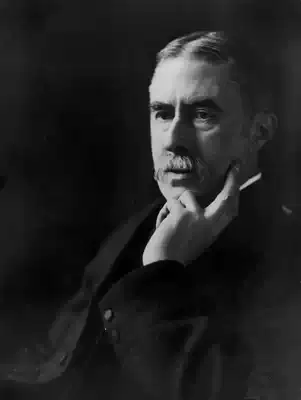
Alfred Edward Housman
You Smile Upon Your Friend To-Day
You Smile Upon Your Friend To-Day
You smile upon your friend to-day,
To-day his ills are over;
You hearken to the lover's say,
And happy is the lover.
'Tis late to hearken, late to smile,
But better late than never;
I shall have lived a little while
Before I die for ever.
You smile upon your friend to-day,
To-day his ills are over;
You hearken to the lover's say,
And happy is the lover.
'Tis late to hearken, late to smile,
But better late than never;
I shall have lived a little while
Before I die for ever.
335
Alfred Edward Housman
White in the Moon the Long Road Lies
White in the Moon the Long Road Lies
White in the moon the long road lies,
The moon stands blank above;
White in the moon the long road lies
That leads me from my love.
Still hangs the hedge without a gust,
Still, still the shadows stay:
My feet upon the moonlit dust
Pursue the ceaseless way.
The world is round, so travellers tell,
And straight though reach the track,
Trudge on, trudge on, 'twill all be well,
The way will guide one back.
But ere the circle homeward hies
Far, far must it remove:
White in the moon the long road lies
That leads me from my love.
White in the moon the long road lies,
The moon stands blank above;
White in the moon the long road lies
That leads me from my love.
Still hangs the hedge without a gust,
Still, still the shadows stay:
My feet upon the moonlit dust
Pursue the ceaseless way.
The world is round, so travellers tell,
And straight though reach the track,
Trudge on, trudge on, 'twill all be well,
The way will guide one back.
But ere the circle homeward hies
Far, far must it remove:
White in the moon the long road lies
That leads me from my love.
467
Alfred Edward Housman
When I Was One-and-Twenty
When I Was One-and-Twenty
When I was one-and-twenty
I heard a wise man say,
"Give crowns and pounds and guineas
But not your heart away;
Give pearls away and rubies
But keep your fancy free."
But I was one-and-twenty,
No use to talk to me.
When I was one-and-twenty
I heard him say again,
"The heart out of the bosom
Was never given in vain;
'Tis paid with sighs a plenty
And sold for endless rue."
And I am two-and-twenty,
And oh, 'tis true, 'tis true.
When I was one-and-twenty
I heard a wise man say,
"Give crowns and pounds and guineas
But not your heart away;
Give pearls away and rubies
But keep your fancy free."
But I was one-and-twenty,
No use to talk to me.
When I was one-and-twenty
I heard him say again,
"The heart out of the bosom
Was never given in vain;
'Tis paid with sighs a plenty
And sold for endless rue."
And I am two-and-twenty,
And oh, 'tis true, 'tis true.
803
Alfred Edward Housman
When Smoke Stood Up From Ludlow
When Smoke Stood Up From Ludlow
When smoke stood up from Ludlow,
And mist blew off from Teme,
And blithe afield to ploughing
Against the morning beam
I strode beside my team,
The blackbird in the coppice
Looked out to see me stride,
And hearkened as I whistled
The trampling team beside,
And fluted and replied:
"Lie down, lie down, young yeoman;
What use to rise and rise?
Rise man a thousand mornings
Yet down at last he lies,
And then the man is wise."
I heard the tune he sang me,
And spied his yellow bill;
I picked a stone and aimed it
And threw it with a will:
Then the bird was still.
Then my soul within me
Took up the blackbird's strain,
And still beside the horses
Along the dewy lane
It sang the song again:
"Lie down, lie down, young yeoman;
The sun moves always west;
The road one treads to labour
Will lead one home to rest,
And that will be the best."
When smoke stood up from Ludlow,
And mist blew off from Teme,
And blithe afield to ploughing
Against the morning beam
I strode beside my team,
The blackbird in the coppice
Looked out to see me stride,
And hearkened as I whistled
The trampling team beside,
And fluted and replied:
"Lie down, lie down, young yeoman;
What use to rise and rise?
Rise man a thousand mornings
Yet down at last he lies,
And then the man is wise."
I heard the tune he sang me,
And spied his yellow bill;
I picked a stone and aimed it
And threw it with a will:
Then the bird was still.
Then my soul within me
Took up the blackbird's strain,
And still beside the horses
Along the dewy lane
It sang the song again:
"Lie down, lie down, young yeoman;
The sun moves always west;
The road one treads to labour
Will lead one home to rest,
And that will be the best."
437
Alfred Edward Housman
Twice a Week the Winter Thorough
Twice a Week the Winter Thorough
Twice a week the winter thorough
Here stood I to keep the goal:
Football then was fighting sorrow
For the young man's soul.
Now in Maytime to the wicket
Out I march with bat and pad:
See the son of grief at cricket
Trying to be glad.
Try I will; no harm in trying:
Wonder 'tis how little mirth
Keeps the bones of man from lying
On the bed of earth.
Twice a week the winter thorough
Here stood I to keep the goal:
Football then was fighting sorrow
For the young man's soul.
Now in Maytime to the wicket
Out I march with bat and pad:
See the son of grief at cricket
Trying to be glad.
Try I will; no harm in trying:
Wonder 'tis how little mirth
Keeps the bones of man from lying
On the bed of earth.
425
Alfred Edward Housman
Westward on the High-Hilled Plains
Westward on the High-Hilled Plains
Westward on the high-hilled plains
Where for me the world began,
Still, I think, in newer veins
Frets the changeless blood of man.
Now that other lads than I
Strip to bathe on Severn shore,
They, no help, for all they try,
Tread the mill I trod before.
There, when hueless is the west
And the darkness hushes wide,
Where the lad lies down to rest
Stands the troubled dream beside.
There, on thoughts that once were mine,
Day looks down the eastern steep,
And the youth at morning shine
Makes the vow he will not keep.
Westward on the high-hilled plains
Where for me the world began,
Still, I think, in newer veins
Frets the changeless blood of man.
Now that other lads than I
Strip to bathe on Severn shore,
They, no help, for all they try,
Tread the mill I trod before.
There, when hueless is the west
And the darkness hushes wide,
Where the lad lies down to rest
Stands the troubled dream beside.
There, on thoughts that once were mine,
Day looks down the eastern steep,
And the youth at morning shine
Makes the vow he will not keep.
463
Alfred Edward Housman
The rainy Pleiads wester
The rainy Pleiads wester
The rainy Pleiads wester,
Orion plunges prone,
The stroke of midnight ceases
And I lie down alone.
The rainy Pleiads wester,
And seek beyond the sea
The head that I shall dream of
That will not dream of me.
The rainy Pleiads wester,
Orion plunges prone,
The stroke of midnight ceases
And I lie down alone.
The rainy Pleiads wester,
And seek beyond the sea
The head that I shall dream of
That will not dream of me.
455
Alfred Edward Housman
The Merry Guide
The Merry Guide
Once in the wind of morning
I ranged the thymy wold;
The world-wide air was azure
And all the brooks ran gold.
There through the dews beside me
Behold a youth that trod,
With feathered cap on forehead,
And poised a golden rod.
With mien to match the morning
And gay delightful guise
And friendly brows and laughter
He looked me in the eyes.
Oh whence, I asked, and whither?
He smiled and would not say.
And looked at me and beckoned,
And laughed and led the way.
And with kind looks and laughter
And nought to say beside,
We two went on together,
I and my happy guide.
Across the glittering pastures
And empty upland still
And solitude of shepherds
High in the folded hill,
By hanging woods and hamlets
That gaze through orchards down
On many a windmill turning
And far-discovered town,
With gay regards of promise
And sure unslackened stride
And smiles and nothing spoken
Led on my merry guide.
By blowing realms of woodland
With sunstruck vanes afield
And cloud-led shadows sailing
About the windy weald,
By valley-guarded granges
And silver waters wide,
Content at heart I followed
With my delightful guide.
And like the cloudy shadows
Across the country blown
We two fare on for ever,
But not we two alone.
With the great gale we journey
That breathes from gardens thinned,
Borne in the drift of blossoms
Whose petals throng the wind;
Buoyed on the heaven-ward whisper
Of dancing leaflets whirled
From all the woods that autumn
Bereaves in all the world.
And midst the fluttering legion
Of all that ever died
I follow, and before us
Goes the delightful guide,
With lips that brim with laughter
But never once respond,
And feet that fly on feathers,
And serpent-circled wand.
Once in the wind of morning
I ranged the thymy wold;
The world-wide air was azure
And all the brooks ran gold.
There through the dews beside me
Behold a youth that trod,
With feathered cap on forehead,
And poised a golden rod.
With mien to match the morning
And gay delightful guise
And friendly brows and laughter
He looked me in the eyes.
Oh whence, I asked, and whither?
He smiled and would not say.
And looked at me and beckoned,
And laughed and led the way.
And with kind looks and laughter
And nought to say beside,
We two went on together,
I and my happy guide.
Across the glittering pastures
And empty upland still
And solitude of shepherds
High in the folded hill,
By hanging woods and hamlets
That gaze through orchards down
On many a windmill turning
And far-discovered town,
With gay regards of promise
And sure unslackened stride
And smiles and nothing spoken
Led on my merry guide.
By blowing realms of woodland
With sunstruck vanes afield
And cloud-led shadows sailing
About the windy weald,
By valley-guarded granges
And silver waters wide,
Content at heart I followed
With my delightful guide.
And like the cloudy shadows
Across the country blown
We two fare on for ever,
But not we two alone.
With the great gale we journey
That breathes from gardens thinned,
Borne in the drift of blossoms
Whose petals throng the wind;
Buoyed on the heaven-ward whisper
Of dancing leaflets whirled
From all the woods that autumn
Bereaves in all the world.
And midst the fluttering legion
Of all that ever died
I follow, and before us
Goes the delightful guide,
With lips that brim with laughter
But never once respond,
And feet that fly on feathers,
And serpent-circled wand.
519
Alfred Edward Housman
The Laws of God, The Laws of Man
The Laws of God, The Laws of Man
The laws of God, the laws of man,
He may keep that will and can;
Not I: let God and man decree
Laws for themselves and not for me;
And if my ways are not as theirs
Let them mind their own affairs.
Their deeds I judge and much condemn,
Yet when did I make laws for them?
Please yourselves, say I, and they
Need only look the other way.
But no, they will not; they must still
Wrest their neighbor to their will,
And make me dance as they desire
With jail and gallows and hell-fire.
And how am I to face the odds
Of man's bedevilment and God's?
I, a stranger and afraid
In a world I never made.
They will be master, right or wrong;
Though both are foolish, both are strong.
And since, my soul, we cannot fly
To Saturn nor to Mercury,
Keep we must, if keep we can,
These foreign laws of God and man.
The laws of God, the laws of man,
He may keep that will and can;
Not I: let God and man decree
Laws for themselves and not for me;
And if my ways are not as theirs
Let them mind their own affairs.
Their deeds I judge and much condemn,
Yet when did I make laws for them?
Please yourselves, say I, and they
Need only look the other way.
But no, they will not; they must still
Wrest their neighbor to their will,
And make me dance as they desire
With jail and gallows and hell-fire.
And how am I to face the odds
Of man's bedevilment and God's?
I, a stranger and afraid
In a world I never made.
They will be master, right or wrong;
Though both are foolish, both are strong.
And since, my soul, we cannot fly
To Saturn nor to Mercury,
Keep we must, if keep we can,
These foreign laws of God and man.
441
Alfred Edward Housman
Shot? So Quick, So Clean an Ending?
Shot? So Quick, So Clean an Ending?
Shot? so quick, so clean an ending?
Oh that was right, lad, that was brave:
Yours was not an ill for mending,
'Twas best to take it to the grave.
Oh you had forethought, you could reason,
And saw your road and where it led,
And early wise and brave in season
Put the pistol to your head.
Oh soon, and better so than later
After long disgrace and scorn,
You shot dead the household traitor,
The soul that should not have been born.
Right you guessed the rising morrow
And scorned to tread the mire you must:
Dust's your wages, son of sorrow,
But men may come to worse than dust.
Souls undone, undoing others,--
Long time since the tale began.
You would not live to wrong your brothers:
Oh lad, you died as fits a man.
Now to your grave shall friend and stranger
With ruth and some with envy come:
Undishonoured, clear of danger,
Clean of guilt, pass hence and home.
Turn safe to rest, no dreams, no waking;
And here, man, here's the wreath I've made:
'Tis not a gift that's worth the taking,
But wear it and it will not fade.
Shot? so quick, so clean an ending?
Oh that was right, lad, that was brave:
Yours was not an ill for mending,
'Twas best to take it to the grave.
Oh you had forethought, you could reason,
And saw your road and where it led,
And early wise and brave in season
Put the pistol to your head.
Oh soon, and better so than later
After long disgrace and scorn,
You shot dead the household traitor,
The soul that should not have been born.
Right you guessed the rising morrow
And scorned to tread the mire you must:
Dust's your wages, son of sorrow,
But men may come to worse than dust.
Souls undone, undoing others,--
Long time since the tale began.
You would not live to wrong your brothers:
Oh lad, you died as fits a man.
Now to your grave shall friend and stranger
With ruth and some with envy come:
Undishonoured, clear of danger,
Clean of guilt, pass hence and home.
Turn safe to rest, no dreams, no waking;
And here, man, here's the wreath I've made:
'Tis not a gift that's worth the taking,
But wear it and it will not fade.
452
Alfred Edward Housman
Tell me not here, it needs not saying
Tell me not here, it needs not saying
Tell me not here, it needs not saying,
What tune the enchantress plays
In aftermaths of soft September
Or under blanching mays,
For she and I were long acquainted
And I knew all her ways.
On russet floors, by waters idle,
The pine lets fall its cone;
The cuckoo shouts all day at nothing
In leafy dells alone;
And traveller’s joy beguiles in autumn
Hearts that have lost their own.
On acres of the seeded grasses
The changing burnish heaves;
Or marshalled under moons of harvest
Stand still all night the sheaves;
Or beeches strip in storms for winter
And stain the wind with leaves.
Posses, as I possessed a season,
The countries I resign,
Where over elmy plains the highway
Would mount the hills and shine,
And full of shade the pillared forest
Would murmur and be mine.
For nature, heartless, witless nature,
Will neither care nor know
What stranger’s feet may find the meadow
And trespass there and go,
Nor ask amid the dews of morning
If they are mine or no.
Tell me not here, it needs not saying,
What tune the enchantress plays
In aftermaths of soft September
Or under blanching mays,
For she and I were long acquainted
And I knew all her ways.
On russet floors, by waters idle,
The pine lets fall its cone;
The cuckoo shouts all day at nothing
In leafy dells alone;
And traveller’s joy beguiles in autumn
Hearts that have lost their own.
On acres of the seeded grasses
The changing burnish heaves;
Or marshalled under moons of harvest
Stand still all night the sheaves;
Or beeches strip in storms for winter
And stain the wind with leaves.
Posses, as I possessed a season,
The countries I resign,
Where over elmy plains the highway
Would mount the hills and shine,
And full of shade the pillared forest
Would murmur and be mine.
For nature, heartless, witless nature,
Will neither care nor know
What stranger’s feet may find the meadow
And trespass there and go,
Nor ask amid the dews of morning
If they are mine or no.
543
Alfred Edward Housman
On Your Midnight Pallet Lying
On Your Midnight Pallet Lying
On your midnight pallet lying,
Listen, and undo the door:
Lads that waste the light in sighing
In the dark should sigh no more;
Night should ease a lover's sorrow;
Therefore, since I go to-morrow,
Pity me before.
In the land to which I travel,
The far dwelling, let me say--
Once, if here the couch is gravel,
In a kinder bed I lay,
And the breast the darnel smothers
Rested once upon another's
When it was not clay.
On your midnight pallet lying,
Listen, and undo the door:
Lads that waste the light in sighing
In the dark should sigh no more;
Night should ease a lover's sorrow;
Therefore, since I go to-morrow,
Pity me before.
In the land to which I travel,
The far dwelling, let me say--
Once, if here the couch is gravel,
In a kinder bed I lay,
And the breast the darnel smothers
Rested once upon another's
When it was not clay.
481
Alfred Edward Housman
Oh, when I was in love with you
Oh, when I was in love with you
Oh, when I was in love with you,
Then I was clean and brave,
And miles around the wonder grew
How well did I behave.
And now the fancy passes by,
And nothing will remain,
And miles around they'll say that I
Am quite myself again.
Oh, when I was in love with you,
Then I was clean and brave,
And miles around the wonder grew
How well did I behave.
And now the fancy passes by,
And nothing will remain,
And miles around they'll say that I
Am quite myself again.
510
Alfred Edward Housman
Oh fair enough are sky and plain
Oh fair enough are sky and plain
Oh fair enough are sky and plain,
But I know fairer far:
Those are as beautiful again
That in the water are;
The pools and rivers wash so clean
The trees and clouds and air,
The like on earth was never seen,
And oh that I were there.
These are the thoughts I often think
As I stand gazing down
In act upon the cressy brink
To strip and dive and drown;
But in the golden-sanded brooks
And azure meres I spy
A silly lad that longs and looks
And wishes he were I.
Oh fair enough are sky and plain,
But I know fairer far:
Those are as beautiful again
That in the water are;
The pools and rivers wash so clean
The trees and clouds and air,
The like on earth was never seen,
And oh that I were there.
These are the thoughts I often think
As I stand gazing down
In act upon the cressy brink
To strip and dive and drown;
But in the golden-sanded brooks
And azure meres I spy
A silly lad that longs and looks
And wishes he were I.
469
Alfred Edward Housman
Loitering with a Vacant Eye
Loitering with a Vacant Eye
Loitering with a vacant eye
Along the Grecian gallery,
And brooding on my heavy ill,
I met a statue standing still.
Still in marble stone stood he,
And stedfastly he looked at me.
"Well met," I thought the look would say,
"We both were fashioned far away;
We neither knew, when we were young,
These Londoners we live among."
Still he stood and eyed me hard,
An earnest and a grave regard:
"What, lad, drooping with your lot?
I too would be where I am not.
I too survey that endless line
Of men whose thoughts are not as mine.
Years, ere you stood up from rest,
On my neck the collar prest;
Years, when you lay down your ill,
I shall stand and bear it still.
Courage, lad, 'tis not for long:
Stand, quit you like stone, be strong."
So I thought his look would say;
And light on me my trouble lay,
And I stept out in flesh and bone
Manful like the man of stone.
Loitering with a vacant eye
Along the Grecian gallery,
And brooding on my heavy ill,
I met a statue standing still.
Still in marble stone stood he,
And stedfastly he looked at me.
"Well met," I thought the look would say,
"We both were fashioned far away;
We neither knew, when we were young,
These Londoners we live among."
Still he stood and eyed me hard,
An earnest and a grave regard:
"What, lad, drooping with your lot?
I too would be where I am not.
I too survey that endless line
Of men whose thoughts are not as mine.
Years, ere you stood up from rest,
On my neck the collar prest;
Years, when you lay down your ill,
I shall stand and bear it still.
Courage, lad, 'tis not for long:
Stand, quit you like stone, be strong."
So I thought his look would say;
And light on me my trouble lay,
And I stept out in flesh and bone
Manful like the man of stone.
459
Alfred Edward Housman
Is My Team Ploughing
Is My Team Ploughing
"Is my team ploughing,
That I was used to drive
And hear the harness jingle
When I was man alive?"
Ay, the horses trample,
The harness jingles now;
No change though you lie under
The land you used to plough.
"Is football playing
Along the river shore,
With lads to chase the leather,
Now I stand up no more?"
Ay, the ball is flying,
The lads play heart and soul;
The goal stands up, the keeper
Stands up to keep the goal.
"Is my girl happy,
That I thought hard to leave,
And has she tired of weeping
As she lies down at eve?"
Ay, she lies down lightly,
She lies not down to weep,
Your girl is well contented.
Be still, my lad, and sleep.
"Is my friend hearty,
Now I am thin and pine,
And has he found to sleep in
A better bed than mine?"
Yes, lad, I lie easy,
I lie as lads would choose;
I cheer a dead man's sweetheart,
Never ask me whose.
"Is my team ploughing,
That I was used to drive
And hear the harness jingle
When I was man alive?"
Ay, the horses trample,
The harness jingles now;
No change though you lie under
The land you used to plough.
"Is football playing
Along the river shore,
With lads to chase the leather,
Now I stand up no more?"
Ay, the ball is flying,
The lads play heart and soul;
The goal stands up, the keeper
Stands up to keep the goal.
"Is my girl happy,
That I thought hard to leave,
And has she tired of weeping
As she lies down at eve?"
Ay, she lies down lightly,
She lies not down to weep,
Your girl is well contented.
Be still, my lad, and sleep.
"Is my friend hearty,
Now I am thin and pine,
And has he found to sleep in
A better bed than mine?"
Yes, lad, I lie easy,
I lie as lads would choose;
I cheer a dead man's sweetheart,
Never ask me whose.
630
Alfred Edward Housman
In Valleys of Springs and Rivers
In Valleys of Springs and Rivers
"Clunton and Clunbury,
Clungunford and Clun,
Are the quietest places
Under the sun."
In valleys of springs and rivers,
By Ony and Teme and Clun,
The country for easy livers,
The quietest under the sun,
We still had sorrows to lighten,
One could not be always glad,
And lads knew trouble at Knighton
When I was a Knighton lad.
By bridges that Thames runs under,
In London, the town built ill,
'Tis sure small matter for wonder
If sorrow is with one still.
And if as a lad grows older
The troubles he bears are more,
He carries his griefs on a shoulder
That handselled them long before.
Where shall one halt to deliver
This luggage I'd lief set down?
Not Thames, not Teme is the river,
Nor London nor Knighton the town:
'Tis a long way further than Knighton,
A quieter place than Clun,
Where doomsday may thunder and lighten
And little 'twill matter to one.
"Clunton and Clunbury,
Clungunford and Clun,
Are the quietest places
Under the sun."
In valleys of springs and rivers,
By Ony and Teme and Clun,
The country for easy livers,
The quietest under the sun,
We still had sorrows to lighten,
One could not be always glad,
And lads knew trouble at Knighton
When I was a Knighton lad.
By bridges that Thames runs under,
In London, the town built ill,
'Tis sure small matter for wonder
If sorrow is with one still.
And if as a lad grows older
The troubles he bears are more,
He carries his griefs on a shoulder
That handselled them long before.
Where shall one halt to deliver
This luggage I'd lief set down?
Not Thames, not Teme is the river,
Nor London nor Knighton the town:
'Tis a long way further than Knighton,
A quieter place than Clun,
Where doomsday may thunder and lighten
And little 'twill matter to one.
560