

City and Everyday Life
Poems in this topic
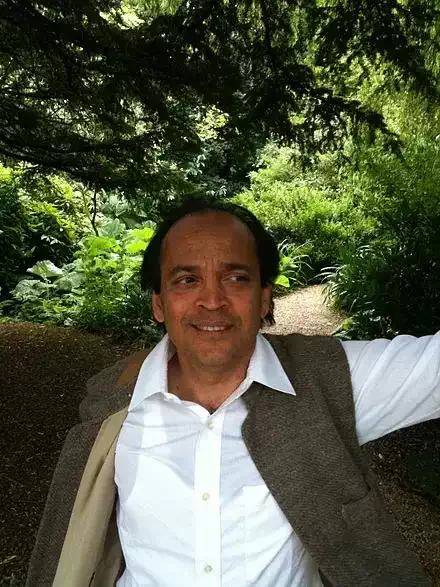
Vikram Seth
The Golden Gate - I (A novel in verse)
The Golden Gate - I (A novel in verse)
1.1.
To make a start more swift and weighty,
Hail Muse. Dear Reader, once upon
A time, say, circa 1980,
There lived a man. His name was John.
Successful in his field though only
Twenty-six, respected, lonely,
One evening as he walked across
Golden Gate Park, the ill-judged toss
Of a red frisbee almost brained him.
He thought, "Who'd gloat? Who would be glad?
Would anybody? " As it pained him,
He turned from this dispiriting theme
To ruminations less extreme.
1.2.
He tuned his thoughts to electronic
Circuitry. This soothed his mind.
He left irregular (moronic)
Sentimentality behind.
He thought of or-gates and of and-gates,
Of ROMs, of nor-gates, and of nand-gates,
Of nanoseconds, megabytes,
And bits and nibbles… but as flights
Of silhouetted birds move cawing
Across the pine-serrated sky,
Dragged from his cove, not knowing why,
He feels an urgent riptide drawing
Him far out, where, caught in the kelp
Of loneliness, he cries for help.
1.3.
John's looks are good. His dress is formal.
His voice is low. His mind is sound.
His appetite for work's abnormal.
A plastic name tag hangs around
His collar like a votive necklace.
Though well-paid, he is far from reckless,
Pays his rent promptly, jogs, does not
Smoke cigarettes, and rarely pot,
Eschews both church and heavy drinking,
Enjoys his garden, like to read
Eclectically from Mann to Bede.
(A surrogate, some say, for thinking.)
friends claim he's grown aloof and prim.
(His boss, though, is well-pleased with him.)
1.4.
Grey-eyed, blond-haired, aristocratic
In height, impatience, views, and face,
Discriminating though dogmatic,
Tender beneath a carapace
Of well-groomed tastes and tasteful grooming,
John, though his corporate stock is booming,
For all his mohair, serge, and tweed,
Senses his life has run to seed.
A passionate man, with equal parts of
Irritability and charm,
Without as such intending harm,
His flaring temper singed the hearts of
Several woman in the days
Before his chaste, ambitious phase.
1.5.
John notes the late September showers
Have tinged the blond hills round the bay
With a new green. He notes the flowers
In their pre-winter bloom. The way
That, when he was a child, the mystery
Of San Francisco's restless spark,
It strikes him now as, through the park,
Wrested from old dunes by the westward
Thrust of the greenbelt to the slow
Pacific swell, his footsteps go.
But it is late. The birds fly nestward
Towards the sunset, and the arc
Of darkness drifts across the park.
1.6.
It's Friday night. The unfettered city
Resounds with hedonistic glee.
John feels a cold cast of self-pity
Envelop him. No family
Cushions his solitude, or rather,
His mother's dead, his English father,
Retired in his native Kent,
Rarely responds to letters sent
(If rarely) by his transatlantic
Offspring. In letters to The Times
He rails against the nameless crimes
Of the post office. Waxing frantic
About delays from coast to coast,
He hones his wit and damns the post.
1.7.
A linkless node, no spouse or sibling,
No children - John wanders alone
Into an ice cream parlor. Nibbling
The edges of a sugar cone
By turns, a pair of high school lovers
Stand giggling. John, uncharmed, discovers
His favorite flavors, Pumpkin Pie
And Bubble Gum, decides to buy
A double scoop; sits down; but whether
His eyes fall on a knot of three
Schoolgirls, a clamorous family,
Or, munching cheerfully together,
A hippie and a Castro clone,
It hurts that only he's alone.
1.8.
He goes home, seeking consolation
Among old Beatles and Pink Floyd —
But "Girl" elicits mere frustration,
While "Money" leaves him more annoyed.
Alas, he hungers less for money
Than for a fleeting Taste of Honey.
Murmuring, "Money — it's a gas! …
The lunatic is on the grass,"
He pours himself a beer. Desires
And reminiscences intrude
Upon his unpropitious mood
Until he feels that he requires
A one-way Ticket to Ride — and soon —
Across the Dark Side of the Moon.
1.9.
He thinks back to his day at college,
To Phil, to Berkeley friends, to nights
When the pursuit of grades and knowledge
Foundered in beery jokes and fights.
Eheu fugaces… Silicon Valley
Lures to ambition's ulcer alley
Young graduates with siren screams
Of power and wealth beyond their dreams,
Ejects the lax, and drives the driven,
Burning their candles at both ends.
Thus files take precedence over friends,
Labor is lauded, leisure riven.
John kneels bareheaded and unshod
Before the Chip, a jealous God.
1.1.
To make a start more swift and weighty,
Hail Muse. Dear Reader, once upon
A time, say, circa 1980,
There lived a man. His name was John.
Successful in his field though only
Twenty-six, respected, lonely,
One evening as he walked across
Golden Gate Park, the ill-judged toss
Of a red frisbee almost brained him.
He thought, "Who'd gloat? Who would be glad?
Would anybody? " As it pained him,
He turned from this dispiriting theme
To ruminations less extreme.
1.2.
He tuned his thoughts to electronic
Circuitry. This soothed his mind.
He left irregular (moronic)
Sentimentality behind.
He thought of or-gates and of and-gates,
Of ROMs, of nor-gates, and of nand-gates,
Of nanoseconds, megabytes,
And bits and nibbles… but as flights
Of silhouetted birds move cawing
Across the pine-serrated sky,
Dragged from his cove, not knowing why,
He feels an urgent riptide drawing
Him far out, where, caught in the kelp
Of loneliness, he cries for help.
1.3.
John's looks are good. His dress is formal.
His voice is low. His mind is sound.
His appetite for work's abnormal.
A plastic name tag hangs around
His collar like a votive necklace.
Though well-paid, he is far from reckless,
Pays his rent promptly, jogs, does not
Smoke cigarettes, and rarely pot,
Eschews both church and heavy drinking,
Enjoys his garden, like to read
Eclectically from Mann to Bede.
(A surrogate, some say, for thinking.)
friends claim he's grown aloof and prim.
(His boss, though, is well-pleased with him.)
1.4.
Grey-eyed, blond-haired, aristocratic
In height, impatience, views, and face,
Discriminating though dogmatic,
Tender beneath a carapace
Of well-groomed tastes and tasteful grooming,
John, though his corporate stock is booming,
For all his mohair, serge, and tweed,
Senses his life has run to seed.
A passionate man, with equal parts of
Irritability and charm,
Without as such intending harm,
His flaring temper singed the hearts of
Several woman in the days
Before his chaste, ambitious phase.
1.5.
John notes the late September showers
Have tinged the blond hills round the bay
With a new green. He notes the flowers
In their pre-winter bloom. The way
That, when he was a child, the mystery
Of San Francisco's restless spark,
It strikes him now as, through the park,
Wrested from old dunes by the westward
Thrust of the greenbelt to the slow
Pacific swell, his footsteps go.
But it is late. The birds fly nestward
Towards the sunset, and the arc
Of darkness drifts across the park.
1.6.
It's Friday night. The unfettered city
Resounds with hedonistic glee.
John feels a cold cast of self-pity
Envelop him. No family
Cushions his solitude, or rather,
His mother's dead, his English father,
Retired in his native Kent,
Rarely responds to letters sent
(If rarely) by his transatlantic
Offspring. In letters to The Times
He rails against the nameless crimes
Of the post office. Waxing frantic
About delays from coast to coast,
He hones his wit and damns the post.
1.7.
A linkless node, no spouse or sibling,
No children - John wanders alone
Into an ice cream parlor. Nibbling
The edges of a sugar cone
By turns, a pair of high school lovers
Stand giggling. John, uncharmed, discovers
His favorite flavors, Pumpkin Pie
And Bubble Gum, decides to buy
A double scoop; sits down; but whether
His eyes fall on a knot of three
Schoolgirls, a clamorous family,
Or, munching cheerfully together,
A hippie and a Castro clone,
It hurts that only he's alone.
1.8.
He goes home, seeking consolation
Among old Beatles and Pink Floyd —
But "Girl" elicits mere frustration,
While "Money" leaves him more annoyed.
Alas, he hungers less for money
Than for a fleeting Taste of Honey.
Murmuring, "Money — it's a gas! …
The lunatic is on the grass,"
He pours himself a beer. Desires
And reminiscences intrude
Upon his unpropitious mood
Until he feels that he requires
A one-way Ticket to Ride — and soon —
Across the Dark Side of the Moon.
1.9.
He thinks back to his day at college,
To Phil, to Berkeley friends, to nights
When the pursuit of grades and knowledge
Foundered in beery jokes and fights.
Eheu fugaces… Silicon Valley
Lures to ambition's ulcer alley
Young graduates with siren screams
Of power and wealth beyond their dreams,
Ejects the lax, and drives the driven,
Burning their candles at both ends.
Thus files take precedence over friends,
Labor is lauded, leisure riven.
John kneels bareheaded and unshod
Before the Chip, a jealous God.
2,183
1
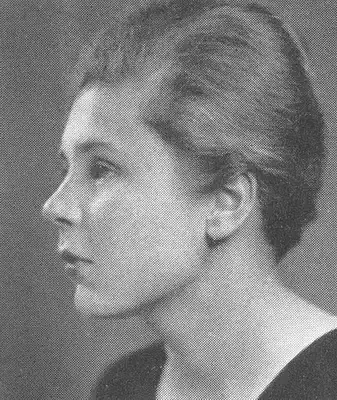
Elizabeth Bishop
Love Lies Sleeping
Love Lies Sleeping
Earliest morning, switching all the tracks
that cross the sky from cinder star to star,
coupling the ends of streets
to trains of light.
now draw us into daylight in our beds;
and clear away what presses on the brain:
put out the neon shapes
that float and swell and glare
down the gray avenue between the eyes
in pinks and yellows, letters and twitching signs.
Hang-over moons, wane, wane!
From the window I see
an immense city, carefully revealed,
made delicate by over-workmanship,
detail upon detail,
cornice upon facade,
reaching up so languidly up into
a weak white sky, it seems to waver there.
(Where it has slowly grown
in skies of water-glass
from fused beads of iron and copper crystals,
the little chemical "garden" in a jar
trembles and stands again,
pale blue, blue-green, and brick.)
The sparrows hurriedly begin their play.
Then, in the West, "Boom!" and a cloud of smoke.
"Boom!" and the exploding ball
of blossom blooms again.
(And all the employees who work in a plants
where such a sound says "Danger," or once said "Death,"
turn in their sleep and feel
the short hairs bristling
on backs of necks.) The cloud of smoke moves off.
A shirt is taken of a threadlike clothes-line.
Along the street below
the water-wagon comes
throwing its hissing, snowy fan across
peelings and newspapers. The water dries
light-dry, dark-wet, the pattern
of the cool watermelon.
I hear the day-springs of the morning strike
from stony walls and halls and iron beds,
scattered or grouped cascades,
alarms for the expected:
queer cupids of all persons getting up,
whose evening meal they will prepare all day,
you will dine well
on his heart, on his, and his,
so send them about your business affectionately,
dragging in the streets their unique loves.
Scourge them with roses only,
be light as helium,
for always to one, or several, morning comes
whose head has fallen over the edge of his bed,
whose face is turned
so that the image of
the city grows down into his open eyes
inverted and distorted. No. I mean
distorted and revealed,
if he sees it at all.
Earliest morning, switching all the tracks
that cross the sky from cinder star to star,
coupling the ends of streets
to trains of light.
now draw us into daylight in our beds;
and clear away what presses on the brain:
put out the neon shapes
that float and swell and glare
down the gray avenue between the eyes
in pinks and yellows, letters and twitching signs.
Hang-over moons, wane, wane!
From the window I see
an immense city, carefully revealed,
made delicate by over-workmanship,
detail upon detail,
cornice upon facade,
reaching up so languidly up into
a weak white sky, it seems to waver there.
(Where it has slowly grown
in skies of water-glass
from fused beads of iron and copper crystals,
the little chemical "garden" in a jar
trembles and stands again,
pale blue, blue-green, and brick.)
The sparrows hurriedly begin their play.
Then, in the West, "Boom!" and a cloud of smoke.
"Boom!" and the exploding ball
of blossom blooms again.
(And all the employees who work in a plants
where such a sound says "Danger," or once said "Death,"
turn in their sleep and feel
the short hairs bristling
on backs of necks.) The cloud of smoke moves off.
A shirt is taken of a threadlike clothes-line.
Along the street below
the water-wagon comes
throwing its hissing, snowy fan across
peelings and newspapers. The water dries
light-dry, dark-wet, the pattern
of the cool watermelon.
I hear the day-springs of the morning strike
from stony walls and halls and iron beds,
scattered or grouped cascades,
alarms for the expected:
queer cupids of all persons getting up,
whose evening meal they will prepare all day,
you will dine well
on his heart, on his, and his,
so send them about your business affectionately,
dragging in the streets their unique loves.
Scourge them with roses only,
be light as helium,
for always to one, or several, morning comes
whose head has fallen over the edge of his bed,
whose face is turned
so that the image of
the city grows down into his open eyes
inverted and distorted. No. I mean
distorted and revealed,
if he sees it at all.
1,067
1
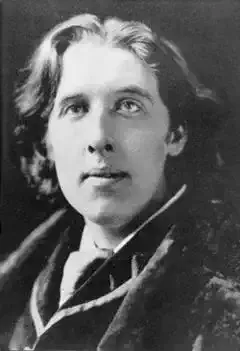
Oscar Wilde
Symphony in Yellow
An omnibus across the bridge
Crawls like a yellow butterfly
And, here and there, a passer-by
Shows like a little restless midge.
Big barges full of yellow hay
Are moored against the shadowy wharf,
And, like a yellow silken scarf,
The thick fog hangs along the quay.
The yellow leaves begin to fade
And flutter from the Temple elms,
And at my feet the pale green Thames
Lies like a rod of rippled jade.
Crawls like a yellow butterfly
And, here and there, a passer-by
Shows like a little restless midge.
Big barges full of yellow hay
Are moored against the shadowy wharf,
And, like a yellow silken scarf,
The thick fog hangs along the quay.
The yellow leaves begin to fade
And flutter from the Temple elms,
And at my feet the pale green Thames
Lies like a rod of rippled jade.
730
Oscar Wilde
Les Silhouettes
The sea is flecked with bars of grey,
The dull dead wind is out of tune,
And like a withered leaf the moon
Is blown across the stormy bay.
Etched clear upon the pallid sand
Lies the black boat: a sailor boy
Clambers aboard in careless joy
With laughing face and gleaming hand.
And overhead the curlews cry,
Where through the dusky upland grass
The young brown-throated reapers pass,
Like silhouettes against the sky.
The dull dead wind is out of tune,
And like a withered leaf the moon
Is blown across the stormy bay.
Etched clear upon the pallid sand
Lies the black boat: a sailor boy
Clambers aboard in careless joy
With laughing face and gleaming hand.
And overhead the curlews cry,
Where through the dusky upland grass
The young brown-throated reapers pass,
Like silhouettes against the sky.
630
Oscar Wilde
Impression Du Matin
The Thames nocturne of blue and gold
Changed to a Harmony in grey:
A barge with ochre-coloured hay
Dropt from the wharf: and chill and cold
The yellow fog came creeping down
The bridges, till the houses' walls
Seemed changed to shadows and St. Paul's
Loomed like a bubble o'er the town.
Then suddenly arose the clang
Of waking life; the streets were stirred
With country waggons: and a bird
Flew to the glistening roofs and sang.
But one pale woman all alone,
The daylight kissing her wan hair,
Loitered beneath the gas lamps' flare,
With lips of flame and heart of stone.
Changed to a Harmony in grey:
A barge with ochre-coloured hay
Dropt from the wharf: and chill and cold
The yellow fog came creeping down
The bridges, till the houses' walls
Seemed changed to shadows and St. Paul's
Loomed like a bubble o'er the town.
Then suddenly arose the clang
Of waking life; the streets were stirred
With country waggons: and a bird
Flew to the glistening roofs and sang.
But one pale woman all alone,
The daylight kissing her wan hair,
Loitered beneath the gas lamps' flare,
With lips of flame and heart of stone.
613
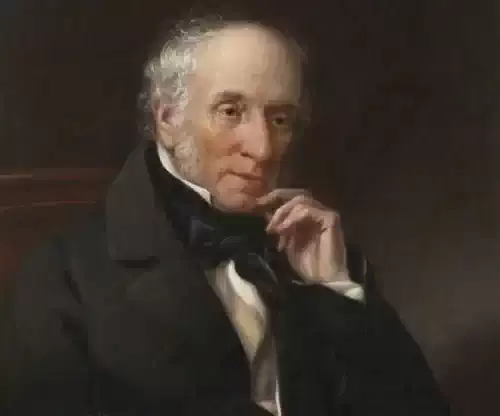
William Wordsworth
Upon Westminster Bridge
Upon Westminster Bridge
EARTH has not anything to show more fair:
Dull would he be of soul who could pass by
A sight so touching in its majesty:
This City now doth like a garment wear
The beauty of the morning; silent, bare,
Ships, towers, domes, theatres, and temples lie
Open unto the fields, and to the sky;
All bright and glittering in the smokeless air.
Never did sun more beautifully steep
In his first splendour valley, rock, or hill;
Ne'er saw I, never felt, a calm so deep!
The river glideth at his own sweet will:
Dear God! the very houses seem asleep;
And all that mighty heart is lying still!
EARTH has not anything to show more fair:
Dull would he be of soul who could pass by
A sight so touching in its majesty:
This City now doth like a garment wear
The beauty of the morning; silent, bare,
Ships, towers, domes, theatres, and temples lie
Open unto the fields, and to the sky;
All bright and glittering in the smokeless air.
Never did sun more beautifully steep
In his first splendour valley, rock, or hill;
Ne'er saw I, never felt, a calm so deep!
The river glideth at his own sweet will:
Dear God! the very houses seem asleep;
And all that mighty heart is lying still!
229
William Wordsworth
Composed Upon Westminster Bridge
Composed Upon Westminster Bridge
September ,
Earth has not anything to show more fair:
Dull would he be of soul who could pass by
A sight so touching in its majesty:
This City now doth like a garment wear
The beauty of the morning: silent, bare,
Ships, towers, domes, theatres, and temples lie
Open unto the fields, and to the sky,-
All bright and glittering in the smokeless air.
Never did sun more beautifully steep
In his first splendour valley, rock or hill;
Ne'er saw I, never felt, a calm so deep!
The river glideth at his own sweet will:
Dear God! the very houses seem asleep;
And all that mighty heart is lying still!
September ,
Earth has not anything to show more fair:
Dull would he be of soul who could pass by
A sight so touching in its majesty:
This City now doth like a garment wear
The beauty of the morning: silent, bare,
Ships, towers, domes, theatres, and temples lie
Open unto the fields, and to the sky,-
All bright and glittering in the smokeless air.
Never did sun more beautifully steep
In his first splendour valley, rock or hill;
Ne'er saw I, never felt, a calm so deep!
The river glideth at his own sweet will:
Dear God! the very houses seem asleep;
And all that mighty heart is lying still!
253

William Ernest Henley
Barmaid
Barmaid
Though, if you ask her name, she says Elise,
Being plain Elizabeth, e'en let it pass,
And own that, if her aspirates take their ease,
She ever makes a point, in washing glass,
Handling the engine, turning taps for tots,
And countering change, and scorning what men say,
Of posing as a dove among the pots,
Nor often gives her dignity away.
Her head's a work of art, and, if her eyes
Be tired and ignorant, she has a waist;
Cheaply the Mode she shadows; and she tries
From penny novels to amend her taste;
And, having mopped the zinc for certain years,
And faced the gas, she fades and disappears.
Though, if you ask her name, she says Elise,
Being plain Elizabeth, e'en let it pass,
And own that, if her aspirates take their ease,
She ever makes a point, in washing glass,
Handling the engine, turning taps for tots,
And countering change, and scorning what men say,
Of posing as a dove among the pots,
Nor often gives her dignity away.
Her head's a work of art, and, if her eyes
Be tired and ignorant, she has a waist;
Cheaply the Mode she shadows; and she tries
From penny novels to amend her taste;
And, having mopped the zinc for certain years,
And faced the gas, she fades and disappears.
141
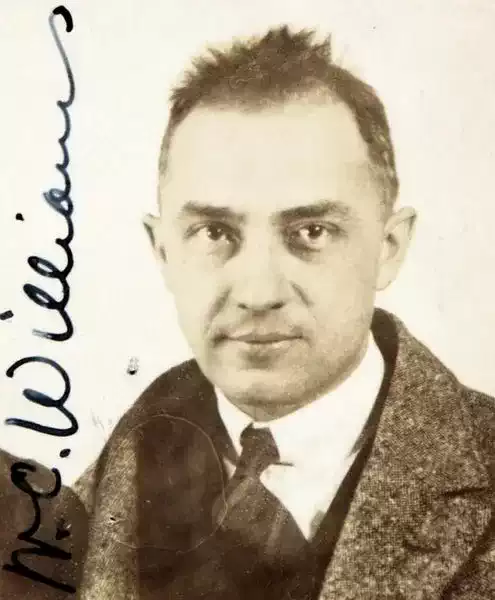
William Carlos Williams
The Lonely Street
The Lonely Street
School is over. It is too hot
to walk at ease. At ease
in light frocks they walk the streets
to while the time away.
They have grown tall. They hold
pink flames in their right hands.
In white from head to foot,
with sidelong, idle look--
in yellow, floating stuff,
black sash and stockings--
touching their avid mouths
with pink sugar on a stick--
like a carnation each holds in her hand--
they mount the lonely street.
School is over. It is too hot
to walk at ease. At ease
in light frocks they walk the streets
to while the time away.
They have grown tall. They hold
pink flames in their right hands.
In white from head to foot,
with sidelong, idle look--
in yellow, floating stuff,
black sash and stockings--
touching their avid mouths
with pink sugar on a stick--
like a carnation each holds in her hand--
they mount the lonely street.
382
William Carlos Williams
The Great Figure
The Great Figure
Among the rain
and lights
I saw the figure
in gold
on a red
firetruck
moving
tense
unheeded
to gong clangs
siren howls
and wheels rumbling
through the dark city.
Among the rain
and lights
I saw the figure
in gold
on a red
firetruck
moving
tense
unheeded
to gong clangs
siren howls
and wheels rumbling
through the dark city.
267
William Carlos Williams
The Disputants
The Disputants
Upon the table in their bowl
in violent disarray
of yellow sprays, green spikes
of leaves, red pointed petals
and curled heads of blue
and white among the litter
of the forks and crumbs and plates
the flowers remain composed.
Coolly their colloquy continues
above the coffee and loud talk
grown frail as vaudeville.
Upon the table in their bowl
in violent disarray
of yellow sprays, green spikes
of leaves, red pointed petals
and curled heads of blue
and white among the litter
of the forks and crumbs and plates
the flowers remain composed.
Coolly their colloquy continues
above the coffee and loud talk
grown frail as vaudeville.
356
William Carlos Williams
Overture to a Dance of Locomotives
Overture to a Dance of Locomotives
Men with picked voices chant the names
of cities in a huge gallery: promises
that pull through descending stairways
to a deep rumbling.
The rubbing feet
of those coming to be carried quicken a
grey pavement into soft light that rocks
to and fro, under the domed ceiling,
across and across from pale
earthcolored walls of bare limestone.
Covertly the hands of a great clock
go round and round! Were they to
move quickly and at once the whole
secret would be out and the shuffling
of all ants be done forever.
A leaning pyramid of sunlight, narrowing
out at a high window, moves by the clock:
disaccordant hands straining out from
a center: inevitable postures infinitely
repeated--
two--twofour--twoeight!
Porters in red hats run on narrow platforms.
This way ma'am!
--important not to take
the wrong train!
Lights from the concrete
ceiling hang crooked but--
Poised horizontal
on glittering parallels the dingy cylinders
packed with a warm glow--inviting entry--
pull against the hour. But brakes can
hold a fixed posture till--
The whistle!
Not twoeight. Not twofour. Two!
Gliding windows. Colored cooks sweating
in a small kitchen. Taillights--
In time: twofour!
In time: twoeight!
--rivers are tunneled: trestles
cross oozy swampland: wheels repeating
the same gesture remain relatively
stationary: rails forever parallel
return on themselves infinitely.
The dance is sure.
Men with picked voices chant the names
of cities in a huge gallery: promises
that pull through descending stairways
to a deep rumbling.
The rubbing feet
of those coming to be carried quicken a
grey pavement into soft light that rocks
to and fro, under the domed ceiling,
across and across from pale
earthcolored walls of bare limestone.
Covertly the hands of a great clock
go round and round! Were they to
move quickly and at once the whole
secret would be out and the shuffling
of all ants be done forever.
A leaning pyramid of sunlight, narrowing
out at a high window, moves by the clock:
disaccordant hands straining out from
a center: inevitable postures infinitely
repeated--
two--twofour--twoeight!
Porters in red hats run on narrow platforms.
This way ma'am!
--important not to take
the wrong train!
Lights from the concrete
ceiling hang crooked but--
Poised horizontal
on glittering parallels the dingy cylinders
packed with a warm glow--inviting entry--
pull against the hour. But brakes can
hold a fixed posture till--
The whistle!
Not twoeight. Not twofour. Two!
Gliding windows. Colored cooks sweating
in a small kitchen. Taillights--
In time: twofour!
In time: twoeight!
--rivers are tunneled: trestles
cross oozy swampland: wheels repeating
the same gesture remain relatively
stationary: rails forever parallel
return on themselves infinitely.
The dance is sure.
516
William Carlos Williams
January Morning
January Morning
I
I have discovered that most of
the beauties of travel are due to
the strange hours we keep to see them:
the domes of the Church of
the Paulist Fathers in Weehawken
against a smoky dawn -- the heart stirred --
are beautiful as Saint Peters
approached after years of anticipation.
II
Though the operation was postponed
I saw the tall probationers
in their tan uniforms
hurrying to breakfast!
III
-- and from basement entries
neatly coiffed, middle aged gentlemen
with orderly moustaches and
well-brushed coats
IV
-- and the sun, dipping into the avenues
streaking the tops of
the irregular red houselets,
and
the gay shadows drooping and drooping.
V
-- and a young horse with a green bed-quilt
on his withers shaking his head:
bared teeth and nozzle high in the air!
VI
--and a semicircle of dirt-colored men
about a fire bursting from an old
ash can,
VII
-- and the worn,
blue car rails (like the sky!)
gleaming among the cobbles!
VIII
-- and the rickety ferry-boat "Arden"!
What an object to be called "Arden"
among the great piers, -- on the
ever new river!
"Put me a Touchstone
at the wheel, white gulls, and we'll
follow the ghost of the Half Moon
to the North West Passage -- and through!
(at Albany!) for all that!"
IX
Exquisite brown waves -- long
circlets of silver moving over you!
enough with crumbling ice crusts among you!
The sky has come down to you,
lighter than tiny bubbles, face to
face with you!
His spirit is
a white gull with delicate pink feet
and a snowy breast for you to
hold to your lips delicately!
X
The young doctor is dancing with happiness
in the sparkling wind, alone
at the prow of the ferry! He notices
the curdy barnacles and broken ice crusts
left at the slip's base by the low tide
and thinks of summer and green
shell-crusted ledges among
the emerald eel-grass!
XI
Who knows the Palisades as I do
knows the river breaks east from them
above the city -- but they continue south
-- under the sky -- to bear a crest of
little peering houses that brighten
with dawn behind the moody
water-loving giants of Manhattan.
XII
Long yellow rushes bending
above the white snow patches;
purple and gold ribbon
of the distant wood:
what an angle
you make with each other as
you lie there in contemplation.
XIII
Work hard all your young days
and they'll find you too, some morning
staring up under
your chiffonier at its warped
bass-wood bottom and your soul --
out!
-- among the little sparrows
behind the shutter.
XIV
-- and the flapping flags are at
half-mast for the dead admiral.
XV
All this --
was for you, old woman.
I wanted to write a poem
that you would understand.
For what good is it to me
if you can't understand it?
But you got to try hard --
But --
Well, you know how
the young girls run giggling
on Park Avenue after dark
when they ought to be home in bed?
Well,
that's the way it is with me somehow.
I
I have discovered that most of
the beauties of travel are due to
the strange hours we keep to see them:
the domes of the Church of
the Paulist Fathers in Weehawken
against a smoky dawn -- the heart stirred --
are beautiful as Saint Peters
approached after years of anticipation.
II
Though the operation was postponed
I saw the tall probationers
in their tan uniforms
hurrying to breakfast!
III
-- and from basement entries
neatly coiffed, middle aged gentlemen
with orderly moustaches and
well-brushed coats
IV
-- and the sun, dipping into the avenues
streaking the tops of
the irregular red houselets,
and
the gay shadows drooping and drooping.
V
-- and a young horse with a green bed-quilt
on his withers shaking his head:
bared teeth and nozzle high in the air!
VI
--and a semicircle of dirt-colored men
about a fire bursting from an old
ash can,
VII
-- and the worn,
blue car rails (like the sky!)
gleaming among the cobbles!
VIII
-- and the rickety ferry-boat "Arden"!
What an object to be called "Arden"
among the great piers, -- on the
ever new river!
"Put me a Touchstone
at the wheel, white gulls, and we'll
follow the ghost of the Half Moon
to the North West Passage -- and through!
(at Albany!) for all that!"
IX
Exquisite brown waves -- long
circlets of silver moving over you!
enough with crumbling ice crusts among you!
The sky has come down to you,
lighter than tiny bubbles, face to
face with you!
His spirit is
a white gull with delicate pink feet
and a snowy breast for you to
hold to your lips delicately!
X
The young doctor is dancing with happiness
in the sparkling wind, alone
at the prow of the ferry! He notices
the curdy barnacles and broken ice crusts
left at the slip's base by the low tide
and thinks of summer and green
shell-crusted ledges among
the emerald eel-grass!
XI
Who knows the Palisades as I do
knows the river breaks east from them
above the city -- but they continue south
-- under the sky -- to bear a crest of
little peering houses that brighten
with dawn behind the moody
water-loving giants of Manhattan.
XII
Long yellow rushes bending
above the white snow patches;
purple and gold ribbon
of the distant wood:
what an angle
you make with each other as
you lie there in contemplation.
XIII
Work hard all your young days
and they'll find you too, some morning
staring up under
your chiffonier at its warped
bass-wood bottom and your soul --
out!
-- among the little sparrows
behind the shutter.
XIV
-- and the flapping flags are at
half-mast for the dead admiral.
XV
All this --
was for you, old woman.
I wanted to write a poem
that you would understand.
For what good is it to me
if you can't understand it?
But you got to try hard --
But --
Well, you know how
the young girls run giggling
on Park Avenue after dark
when they ought to be home in bed?
Well,
that's the way it is with me somehow.
457
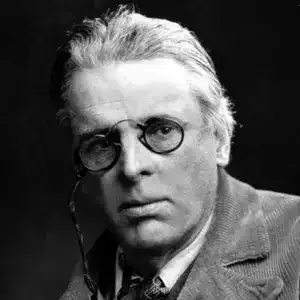
William Butler Yeats
The Statesman's Holiday
The Statesman's Holiday
I LIVED among great houses,
Riches drove out rank,
Base drove out the better blood,
And mind and body shrank.
No Oscar ruled the table,
But I'd a troop of friends
That knowing better talk had gone
Talked of odds and ends.
Some knew what ailed the world
But never said a thing,
So I have picked a better trade
And night and morning sing:
Tall dames go walking in grass-green Avalon.
Am I a great Lord Chancellor
That slept upon the Sack?
Commanding officer that tore
The khaki from his back?
Or am I de Valera,
Or the King of Greece,
Or the man that made the motors?
Ach, call me what you please!
Here's a Montenegrin lute,
And its old sole string
Makes me sweet music
And I delight to sing:
Tall dames go walking in grass-green Avalon.
With boys and girls about him.
With any sort of clothes,
With a hat out of fashion,
With Old patched shoes,
With a ragged bandit cloak,
With an eye like a hawk,
With a stiff straight back,
With a strutting turkey walk.
With a bag full of pennies,
With a monkey on a chain,
With a great cock's feather,
With an old foul tune.
Tall dames go walking in grass-green Avalon.
I LIVED among great houses,
Riches drove out rank,
Base drove out the better blood,
And mind and body shrank.
No Oscar ruled the table,
But I'd a troop of friends
That knowing better talk had gone
Talked of odds and ends.
Some knew what ailed the world
But never said a thing,
So I have picked a better trade
And night and morning sing:
Tall dames go walking in grass-green Avalon.
Am I a great Lord Chancellor
That slept upon the Sack?
Commanding officer that tore
The khaki from his back?
Or am I de Valera,
Or the King of Greece,
Or the man that made the motors?
Ach, call me what you please!
Here's a Montenegrin lute,
And its old sole string
Makes me sweet music
And I delight to sing:
Tall dames go walking in grass-green Avalon.
With boys and girls about him.
With any sort of clothes,
With a hat out of fashion,
With Old patched shoes,
With a ragged bandit cloak,
With an eye like a hawk,
With a stiff straight back,
With a strutting turkey walk.
With a bag full of pennies,
With a monkey on a chain,
With a great cock's feather,
With an old foul tune.
Tall dames go walking in grass-green Avalon.
451
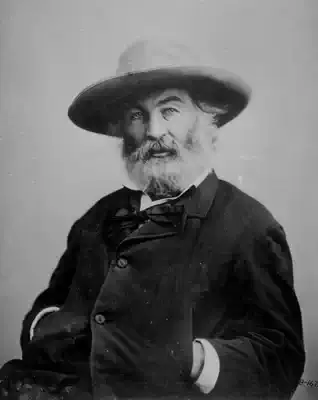
Walt Whitman
Vicouac On A Mountain Side
Vicouac On A Mountain Side
I SEE before me now, a traveling army halting;
Below, a fertile valley spread, with barns, and the orchards of
summer;
Behind, the terraced sides of a mountain, abrupt in places, rising
high;
Broken, with rocks, with clinging cedars, with tall shapes, dingily
seen;
The numerous camp-fires scatter'd near and far, some away up on the
mountain;
The shadowy forms of men and horses, looming, large-sized flickering;
And over all, the sky--the sky! far, far out of reach, studded,
breaking out, the eternal stars.
I SEE before me now, a traveling army halting;
Below, a fertile valley spread, with barns, and the orchards of
summer;
Behind, the terraced sides of a mountain, abrupt in places, rising
high;
Broken, with rocks, with clinging cedars, with tall shapes, dingily
seen;
The numerous camp-fires scatter'd near and far, some away up on the
mountain;
The shadowy forms of men and horses, looming, large-sized flickering;
And over all, the sky--the sky! far, far out of reach, studded,
breaking out, the eternal stars.
386
Walt Whitman
Sparkles From The Wheel
Sparkles From The Wheel
WHERE the city's ceaseless crowd moves on, the live-long day,
Withdrawn, I join a group of children watching--I pause aside with
them.
By the curb, toward the edge of the flagging,
A knife-grinder works at his wheel, sharpening a great knife;
Bending over, he carefully holds it to the stone--by foot and knee,
With measur'd tread, he turns rapidly--As he presses with light but
firm hand,
Forth issue, then, in copious golden jets,
Sparkles from the wheel.
The scene, and all its belongings--how they seize and affect me!
The sad, sharp-chinn'd old man, with worn clothes, and broad
shoulder-band of leather; 10
Myself, effusing and fluid--a phantom curiously floating--now here
absorb'd and arrested;
The group, (an unminded point, set in a vast surrounding;)
The attentive, quiet children--the loud, proud, restive base of the
streets;
The low, hoarse purr of the whirling stone--the light-press'd blade,
Diffusing, dropping, sideways-darting, in tiny showers of gold,
Sparkles from the wheel.
WHERE the city's ceaseless crowd moves on, the live-long day,
Withdrawn, I join a group of children watching--I pause aside with
them.
By the curb, toward the edge of the flagging,
A knife-grinder works at his wheel, sharpening a great knife;
Bending over, he carefully holds it to the stone--by foot and knee,
With measur'd tread, he turns rapidly--As he presses with light but
firm hand,
Forth issue, then, in copious golden jets,
Sparkles from the wheel.
The scene, and all its belongings--how they seize and affect me!
The sad, sharp-chinn'd old man, with worn clothes, and broad
shoulder-band of leather; 10
Myself, effusing and fluid--a phantom curiously floating--now here
absorb'd and arrested;
The group, (an unminded point, set in a vast surrounding;)
The attentive, quiet children--the loud, proud, restive base of the
streets;
The low, hoarse purr of the whirling stone--the light-press'd blade,
Diffusing, dropping, sideways-darting, in tiny showers of gold,
Sparkles from the wheel.
469
Walt Whitman
Rise, O Days
Rise, O Days
RISE, O days, from your fathomless deeps, till you loftier, fiercer
sweep!
Long for my soul, hungering gymnastic, I devour'd what the earth gave
me;
Long I roam'd the woods of the north--long I watch'd Niagara pouring;
I travel'd the prairies over, and slept on their breast--I cross'd
the Nevadas, I cross'd the plateaus;
I ascended the towering rocks along the Pacific, I sail'd out to sea;
I sail'd through the storm, I was refresh'd by the storm;
I watch'd with joy the threatening maws of the waves;
I mark'd the white combs where they career'd so high, curling over;
I heard the wind piping, I saw the black clouds;
Saw from below what arose and mounted, (O superb! O wild as my heart,
and powerful!) 10
Heard the continuous thunder, as it bellow'd after the lightning;
Noted the slender and jagged threads of lightning, as sudden and fast
amid the din they chased each other across the sky;
--These, and such as these, I, elate, saw--saw with wonder, yet
pensive and masterful;
All the menacing might of the globe uprisen around me;
Yet there with my soul I fed--I fed content, supercilious.
'Twas well, O soul! 'twas a good preparation you gave me!
Now we advance our latent and ampler hunger to fill;
Now we go forth to receive what the earth and the sea never gave us;
Not through the mighty woods we go, but through the mightier cities;
Something for us is pouring now, more than Niagara pouring; 20
Torrents of men, (sources and rills of the Northwest, are you indeed
inexhaustible?)
What, to pavements and homesteads here--what were those storms of the
mountains and sea?
What, to passions I witness around me to-day? Was the sea risen?
Was the wind piping the pipe of death under the black clouds?
Lo! from deeps more unfathomable, something more deadly and savage;
Manhattan, rising, advancing with menacing front--Cincinnati,
Chicago, unchain'd;
--What was that swell I saw on the ocean? behold what comes here!
How it climbs with daring feet and hands! how it dashes!
How the true thunder bellows after the lightning! how bright the
flashes of lightning!
How DEMOCRACY, with desperate vengeful port strides on, shown through
the dark by those flashes of lightning! 30
(Yet a mournful wail and low sob I fancied I heard through the dark,
In a lull of the deafening confusion.)
Thunder on! stride on, Democracy! strike with vengeful stroke!
And do you rise higher than ever yet, O days, O cities!
Crash heavier, heavier yet, O storms! you have done me good;
My soul, prepared in the mountains, absorbs your immortal strong
nutriment;
--Long had I walk'd my cities, my country roads, through farms, only
half-satisfied;
One doubt, nauseous, undulating like a snake, crawl'd on the ground
before me,
Continually preceding my steps, turning upon me oft, ironically
hissing low;
--The cities I loved so well, I abandon'd and left--I sped to the
certainties suitable to me; 40
Hungering, hungering, hungering, for primal energies, and Nature's
dauntlessness,
I refresh'd myself with it only, I could relish it only;
I waited the bursting forth of the pent fire--on the water and air I
waited long;
--But now I no longer wait--I am fully satisfied--I am glutted;
I have witness'd the true lightning--I have witness'd my cities
electric;
I have lived to behold man burst forth, and warlike America rise;
Hence I will seek no more the food of the northern solitary wilds,
No more on the mountains roam, or sail the stormy sea.
RISE, O days, from your fathomless deeps, till you loftier, fiercer
sweep!
Long for my soul, hungering gymnastic, I devour'd what the earth gave
me;
Long I roam'd the woods of the north--long I watch'd Niagara pouring;
I travel'd the prairies over, and slept on their breast--I cross'd
the Nevadas, I cross'd the plateaus;
I ascended the towering rocks along the Pacific, I sail'd out to sea;
I sail'd through the storm, I was refresh'd by the storm;
I watch'd with joy the threatening maws of the waves;
I mark'd the white combs where they career'd so high, curling over;
I heard the wind piping, I saw the black clouds;
Saw from below what arose and mounted, (O superb! O wild as my heart,
and powerful!) 10
Heard the continuous thunder, as it bellow'd after the lightning;
Noted the slender and jagged threads of lightning, as sudden and fast
amid the din they chased each other across the sky;
--These, and such as these, I, elate, saw--saw with wonder, yet
pensive and masterful;
All the menacing might of the globe uprisen around me;
Yet there with my soul I fed--I fed content, supercilious.
'Twas well, O soul! 'twas a good preparation you gave me!
Now we advance our latent and ampler hunger to fill;
Now we go forth to receive what the earth and the sea never gave us;
Not through the mighty woods we go, but through the mightier cities;
Something for us is pouring now, more than Niagara pouring; 20
Torrents of men, (sources and rills of the Northwest, are you indeed
inexhaustible?)
What, to pavements and homesteads here--what were those storms of the
mountains and sea?
What, to passions I witness around me to-day? Was the sea risen?
Was the wind piping the pipe of death under the black clouds?
Lo! from deeps more unfathomable, something more deadly and savage;
Manhattan, rising, advancing with menacing front--Cincinnati,
Chicago, unchain'd;
--What was that swell I saw on the ocean? behold what comes here!
How it climbs with daring feet and hands! how it dashes!
How the true thunder bellows after the lightning! how bright the
flashes of lightning!
How DEMOCRACY, with desperate vengeful port strides on, shown through
the dark by those flashes of lightning! 30
(Yet a mournful wail and low sob I fancied I heard through the dark,
In a lull of the deafening confusion.)
Thunder on! stride on, Democracy! strike with vengeful stroke!
And do you rise higher than ever yet, O days, O cities!
Crash heavier, heavier yet, O storms! you have done me good;
My soul, prepared in the mountains, absorbs your immortal strong
nutriment;
--Long had I walk'd my cities, my country roads, through farms, only
half-satisfied;
One doubt, nauseous, undulating like a snake, crawl'd on the ground
before me,
Continually preceding my steps, turning upon me oft, ironically
hissing low;
--The cities I loved so well, I abandon'd and left--I sped to the
certainties suitable to me; 40
Hungering, hungering, hungering, for primal energies, and Nature's
dauntlessness,
I refresh'd myself with it only, I could relish it only;
I waited the bursting forth of the pent fire--on the water and air I
waited long;
--But now I no longer wait--I am fully satisfied--I am glutted;
I have witness'd the true lightning--I have witness'd my cities
electric;
I have lived to behold man burst forth, and warlike America rise;
Hence I will seek no more the food of the northern solitary wilds,
No more on the mountains roam, or sail the stormy sea.
432
Walt Whitman
I Was Looking A Long While
I Was Looking A Long While
I WAS looking a long while for a clue to the history of the past for
myself, and for these chants--and now I have found it;
It is not in those paged fables in the libraries, (them I neither
accept nor reject;)
It is no more in the legends than in all else;
It is in the present--it is this earth to-day;
It is in Democracy--(the purport and aim of all the past;)
It is the life of one man or one woman to-day--the average man of
to-day;
It is in languages, social customs, literatures, arts;
It is in the broad show of artificial things, ships, machinery,
politics, creeds, modern improvements, and the interchange of
nations,
All for the average man of to-day.
I WAS looking a long while for a clue to the history of the past for
myself, and for these chants--and now I have found it;
It is not in those paged fables in the libraries, (them I neither
accept nor reject;)
It is no more in the legends than in all else;
It is in the present--it is this earth to-day;
It is in Democracy--(the purport and aim of all the past;)
It is the life of one man or one woman to-day--the average man of
to-day;
It is in languages, social customs, literatures, arts;
It is in the broad show of artificial things, ships, machinery,
politics, creeds, modern improvements, and the interchange of
nations,
All for the average man of to-day.
425
Walt Whitman
I Hear America Singing
I Hear America Singing
I Hear America singing, the varied carols I hear;
Those of mechanics--each one singing his, as it should be, blithe and strong;
The carpenter singing his, as he measures his plank or beam,
The mason singing his, as he makes ready for work, or leaves off work;
The boatman singing what belongs to him in his boat--the deckhand singing on the
steamboat deck;
The shoemaker singing as he sits on his bench--the hatter singing as he stands;
The wood-cutter's song--the ploughboy's, on his way in the morning, or at the noon
intermission, or at sundown;
The delicious singing of the mother--or of the young wife at work--or of the girl
sewing or washing--Each singing what belongs to her, and to none else;
The day what belongs to the day--At night, the party of young fellows, robust,
friendly,
Singing, with open mouths, their strong melodious songs.
I Hear America singing, the varied carols I hear;
Those of mechanics--each one singing his, as it should be, blithe and strong;
The carpenter singing his, as he measures his plank or beam,
The mason singing his, as he makes ready for work, or leaves off work;
The boatman singing what belongs to him in his boat--the deckhand singing on the
steamboat deck;
The shoemaker singing as he sits on his bench--the hatter singing as he stands;
The wood-cutter's song--the ploughboy's, on his way in the morning, or at the noon
intermission, or at sundown;
The delicious singing of the mother--or of the young wife at work--or of the girl
sewing or washing--Each singing what belongs to her, and to none else;
The day what belongs to the day--At night, the party of young fellows, robust,
friendly,
Singing, with open mouths, their strong melodious songs.
536
Walt Whitman
Give Me The Splendid, Silent Sun
Give Me The Splendid, Silent Sun
GIVE me the splendid silent sun, with all his beams full-dazzling;
Give me juicy autumnal fruit, ripe and red from the orchard;
Give me a field where the unmow'd grass grows;
Give me an arbor, give me the trellis'd grape;
Give me fresh corn and wheat--give me serene-moving animals, teaching
content;
Give me nights perfectly quiet, as on high plateaus west of the
Mississippi, and I looking up at the stars;
Give me odorous at sunrise a garden of beautiful flowers, where I can
walk undisturb'd;
Give me for marriage a sweet-breath'd woman, of whom I should never
tire;
Give me a perfect child--give me, away, aside from the noise of the
world, a rural, domestic life;
Give me to warble spontaneous songs, reliev'd, recluse by myself, for
my own ears only; 10
Give me solitude--give me Nature--give me again, O Nature, your
primal sanities!
--These, demanding to have them, (tired with ceaseless excitement,
and rack'd by the war-strife;)
These to procure, incessantly asking, rising in cries from my heart,
While yet incessantly asking, still I adhere to my city;
Day upon day, and year upon year, O city, walking your streets,
Where you hold me enchain'd a certain time, refusing to give me up;
Yet giving to make me glutted, enrich'd of soul--you give me forever
faces;
(O I see what I sought to escape, confronting, reversing my cries;
I see my own soul trampling down what it ask'd for.)
Keep your splendid, silent sun; 20
Keep your woods, O Nature, and the quiet places by the woods;
Keep your fields of clover and timothy, and your corn-fields and
orchards;
Keep the blossoming buckwheat fields, where the Ninth-month bees hum;
Give me faces and streets! give me these phantoms incessant and
endless along the trottoirs!
Give me interminable eyes! give me women! give me comrades and lovers
by the thousand!
Let me see new ones every day! let me hold new ones by the hand every
day!
Give me such shows! give me the streets of Manhattan!
Give me Broadway, with the soldiers marching--give me the sound of
the trumpets and drums!
(The soldiers in companies or regiments--some, starting away, flush'd
and reckless;
Some, their time up, returning, with thinn'd ranks--young, yet very
old, worn, marching, noticing nothing;) 30
--Give me the shores and the wharves heavy-fringed with the black
ships!
O such for me! O an intense life! O full to repletion, and varied!
The life of the theatre, bar-room, huge hotel, for me!
The saloon of the steamer! the crowded excursion for me! the torchlight
procession!
The dense brigade, bound for the war, with high piled military wagons
following;
People, endless, streaming, with strong voices, passions, pageants;
Manhattan streets, with their powerful throbs, with the beating
drums, as now;
The endless and noisy chorus, the rustle and clank of muskets, (even
the sight of the wounded;)
Manhattan crowds, with their turbulent musical chorus--with varied
chorus, and light of the sparkling eyes;
Manhattan faces and eyes forever for me. 40
GIVE me the splendid silent sun, with all his beams full-dazzling;
Give me juicy autumnal fruit, ripe and red from the orchard;
Give me a field where the unmow'd grass grows;
Give me an arbor, give me the trellis'd grape;
Give me fresh corn and wheat--give me serene-moving animals, teaching
content;
Give me nights perfectly quiet, as on high plateaus west of the
Mississippi, and I looking up at the stars;
Give me odorous at sunrise a garden of beautiful flowers, where I can
walk undisturb'd;
Give me for marriage a sweet-breath'd woman, of whom I should never
tire;
Give me a perfect child--give me, away, aside from the noise of the
world, a rural, domestic life;
Give me to warble spontaneous songs, reliev'd, recluse by myself, for
my own ears only; 10
Give me solitude--give me Nature--give me again, O Nature, your
primal sanities!
--These, demanding to have them, (tired with ceaseless excitement,
and rack'd by the war-strife;)
These to procure, incessantly asking, rising in cries from my heart,
While yet incessantly asking, still I adhere to my city;
Day upon day, and year upon year, O city, walking your streets,
Where you hold me enchain'd a certain time, refusing to give me up;
Yet giving to make me glutted, enrich'd of soul--you give me forever
faces;
(O I see what I sought to escape, confronting, reversing my cries;
I see my own soul trampling down what it ask'd for.)
Keep your splendid, silent sun; 20
Keep your woods, O Nature, and the quiet places by the woods;
Keep your fields of clover and timothy, and your corn-fields and
orchards;
Keep the blossoming buckwheat fields, where the Ninth-month bees hum;
Give me faces and streets! give me these phantoms incessant and
endless along the trottoirs!
Give me interminable eyes! give me women! give me comrades and lovers
by the thousand!
Let me see new ones every day! let me hold new ones by the hand every
day!
Give me such shows! give me the streets of Manhattan!
Give me Broadway, with the soldiers marching--give me the sound of
the trumpets and drums!
(The soldiers in companies or regiments--some, starting away, flush'd
and reckless;
Some, their time up, returning, with thinn'd ranks--young, yet very
old, worn, marching, noticing nothing;) 30
--Give me the shores and the wharves heavy-fringed with the black
ships!
O such for me! O an intense life! O full to repletion, and varied!
The life of the theatre, bar-room, huge hotel, for me!
The saloon of the steamer! the crowded excursion for me! the torchlight
procession!
The dense brigade, bound for the war, with high piled military wagons
following;
People, endless, streaming, with strong voices, passions, pageants;
Manhattan streets, with their powerful throbs, with the beating
drums, as now;
The endless and noisy chorus, the rustle and clank of muskets, (even
the sight of the wounded;)
Manhattan crowds, with their turbulent musical chorus--with varied
chorus, and light of the sparkling eyes;
Manhattan faces and eyes forever for me. 40
393
Walt Whitman
Drum-Taps
Drum-Taps
Aroused and angry,
I thought to beat the alarum, and urge relentless war;
But soon my fingers fail'd me, my face droop'd, and I resign'd
myself,
To sit by the wounded and soothe them, or silently watch the dead.
Drum-Taps
FIRST, O songs, for a prelude,
Lightly strike on the stretch'd tympanum, pride and joy in my city,
How she led the rest to arms--how she gave the cue,
How at once with lithe limbs, unwaiting a moment, she sprang;
(O superb! O Manhattan, my own, my peerless!
O strongest you in the hour of danger, in crisis! O truer than
steel!)
How you sprang! how you threw off the costumes of peace with
indifferent hand;
How your soft opera-music changed, and the drum and fife were heard
in their stead;
How you led to the war, (that shall serve for our prelude, songs of
soldiers,)
How Manhattan drum-taps led. 10
Forty years had I in my city seen soldiers parading;
Forty years as a pageant--till unawares, the Lady of this teeming and
turbulent city,
Sleepless amid her ships, her houses, her incalculable wealth,
With her million children around her--suddenly,
At dead of night, at news from the south,
Incens'd, struck with clench'd hand the pavement.
A shock electric--the night sustain'd it;
Till with ominous hum, our hive at day-break pour'd out its myriads.
From the houses then, and the workshops, and through all the
doorways,
Leapt they tumultuous--and lo! Manhattan arming. 20
To the drum-taps prompt,
The young men falling in and arming;
The mechanics arming, (the trowel, the jack-plane, the blacksmith's
hammer, tost aside with precipitation;)
The lawyer leaving his office, and arming--the judge leaving the
court;
The driver deserting his wagon in the street, jumping down, throwing
the reins abruptly down on the horses' backs;
The salesman leaving the store--the boss, book-keeper, porter, all
leaving;
Squads gather everywhere by common consent, and arm;
The new recruits, even boys--the old men show them how to wear their
accoutrements--they buckle the straps carefully;
Outdoors arming--indoors arming--the flash of the musket-barrels;
The white tents cluster in camps--the arm'd sentries around--the
sunrise cannon, and again at sunset; 30
Arm'd regiments arrive every day, pass through the city, and embark
from the wharves;
(How good they look, as they tramp down to the river, sweaty, with
their guns on their shoulders!
How I love them! how I could hug them, with their brown faces, and
their clothes and knapsacks cover'd with dust!)
The blood of the city up--arm'd! arm'd! the cry everywhere;
The flags flung out from the steeples of churches, and from all the
public buildings and stores;
The tearful parting--the mother kisses her son--the son kisses his
mother;
(Loth is the mother to part--yet not a word does she speak to detain
him;)
The tumultuous escort--the ranks of policemen preceding, clearing the
way;
The unpent enthusiasm--the wild cheers of the crowd for their
favorites;
The artillery--the silent cannons, bright as gold, drawn along,
rumble lightly over the stones; 40
(Silent cannons--soon to cease your silence!
Soon, unlimber'd, to begin the red business;)
All the mutter of preparation--all the determin'd arming;
The hospital service--the lint, bandages, and medicines;
The women volunteering for nurses--the work begun for, in earnest--no
mere parade now;
War! an arm'd race is advancing!--the welcome for battle--no turning
away;
War! be it weeks, months, or years--an arm'd race is advancing to
welcome it.
Mannahatta a-march!--and it's O to sing it well!
It's O for a manly life in the camp!
And the sturdy artillery! 50
The guns, bright as gold--the work for giants--to serve well the
guns:
Unlimber them! no more, as the past forty years, for salutes for
courtesies merely;
Put in something else now besides powder and wadding.
And you, Lady of Ships! you Mannahatta!
Old matron of this proud, friendly, turbulent city!
Often in peace and wealth you were pensive, or covertly frown'd amid
all your children;
But now you smile with joy, exulting old Mannahatta!
Aroused and angry,
I thought to beat the alarum, and urge relentless war;
But soon my fingers fail'd me, my face droop'd, and I resign'd
myself,
To sit by the wounded and soothe them, or silently watch the dead.
Drum-Taps
FIRST, O songs, for a prelude,
Lightly strike on the stretch'd tympanum, pride and joy in my city,
How she led the rest to arms--how she gave the cue,
How at once with lithe limbs, unwaiting a moment, she sprang;
(O superb! O Manhattan, my own, my peerless!
O strongest you in the hour of danger, in crisis! O truer than
steel!)
How you sprang! how you threw off the costumes of peace with
indifferent hand;
How your soft opera-music changed, and the drum and fife were heard
in their stead;
How you led to the war, (that shall serve for our prelude, songs of
soldiers,)
How Manhattan drum-taps led. 10
Forty years had I in my city seen soldiers parading;
Forty years as a pageant--till unawares, the Lady of this teeming and
turbulent city,
Sleepless amid her ships, her houses, her incalculable wealth,
With her million children around her--suddenly,
At dead of night, at news from the south,
Incens'd, struck with clench'd hand the pavement.
A shock electric--the night sustain'd it;
Till with ominous hum, our hive at day-break pour'd out its myriads.
From the houses then, and the workshops, and through all the
doorways,
Leapt they tumultuous--and lo! Manhattan arming. 20
To the drum-taps prompt,
The young men falling in and arming;
The mechanics arming, (the trowel, the jack-plane, the blacksmith's
hammer, tost aside with precipitation;)
The lawyer leaving his office, and arming--the judge leaving the
court;
The driver deserting his wagon in the street, jumping down, throwing
the reins abruptly down on the horses' backs;
The salesman leaving the store--the boss, book-keeper, porter, all
leaving;
Squads gather everywhere by common consent, and arm;
The new recruits, even boys--the old men show them how to wear their
accoutrements--they buckle the straps carefully;
Outdoors arming--indoors arming--the flash of the musket-barrels;
The white tents cluster in camps--the arm'd sentries around--the
sunrise cannon, and again at sunset; 30
Arm'd regiments arrive every day, pass through the city, and embark
from the wharves;
(How good they look, as they tramp down to the river, sweaty, with
their guns on their shoulders!
How I love them! how I could hug them, with their brown faces, and
their clothes and knapsacks cover'd with dust!)
The blood of the city up--arm'd! arm'd! the cry everywhere;
The flags flung out from the steeples of churches, and from all the
public buildings and stores;
The tearful parting--the mother kisses her son--the son kisses his
mother;
(Loth is the mother to part--yet not a word does she speak to detain
him;)
The tumultuous escort--the ranks of policemen preceding, clearing the
way;
The unpent enthusiasm--the wild cheers of the crowd for their
favorites;
The artillery--the silent cannons, bright as gold, drawn along,
rumble lightly over the stones; 40
(Silent cannons--soon to cease your silence!
Soon, unlimber'd, to begin the red business;)
All the mutter of preparation--all the determin'd arming;
The hospital service--the lint, bandages, and medicines;
The women volunteering for nurses--the work begun for, in earnest--no
mere parade now;
War! an arm'd race is advancing!--the welcome for battle--no turning
away;
War! be it weeks, months, or years--an arm'd race is advancing to
welcome it.
Mannahatta a-march!--and it's O to sing it well!
It's O for a manly life in the camp!
And the sturdy artillery! 50
The guns, bright as gold--the work for giants--to serve well the
guns:
Unlimber them! no more, as the past forty years, for salutes for
courtesies merely;
Put in something else now besides powder and wadding.
And you, Lady of Ships! you Mannahatta!
Old matron of this proud, friendly, turbulent city!
Often in peace and wealth you were pensive, or covertly frown'd amid
all your children;
But now you smile with joy, exulting old Mannahatta!
438
Walt Whitman
Debris
Debris
HE is wisest who has the most caution,
He only wins who goes far enough.
Any thing is as good as established, when that is established that
will produce it and continue it.
HE is wisest who has the most caution,
He only wins who goes far enough.
Any thing is as good as established, when that is established that
will produce it and continue it.
483
Walt Whitman
Crossing Brooklyn Ferry
Crossing Brooklyn Ferry
FLOOD-TIDE below me! I watch you face to face;
Clouds of the west! sun there half an hour high! I see you also face
to face.
Crowds of men and women attired in the usual costumes! how curious
you are to me!
On the ferry-boats, the hundreds and hundreds that cross, returning
home, are more curious to me than you suppose;
And you that shall cross from shore to shore years hence, are more to
me, and more in my meditations, than you might suppose.
The impalpable sustenance of me from all things, at all hours of the
day;
The simple, compact, well-join'd scheme--myself disintegrated, every
one disintegrated, yet part of the scheme:
The similitudes of the past, and those of the future;
The glories strung like beads on my smallest sights and hearings--on
the walk in the street, and the passage over the river;
The current rushing so swiftly, and swimming with me far away; 10
The others that are to follow me, the ties between me and them;
The certainty of others--the life, love, sight, hearing of others.
Others will enter the gates of the ferry, and cross from shore to
shore;
Others will watch the run of the flood-tide;
Others will see the shipping of Manhattan north and west, and the
heights of Brooklyn to the south and east;
Others will see the islands large and small;
Fifty years hence, others will see them as they cross, the sun half
an hour high;
A hundred years hence, or ever so many hundred years hence, others
will see them,
Will enjoy the sunset, the pouring in of the flood-tide, the falling
back to the sea of the ebb-tide.
It avails not, neither time or place--distance avails not; 20
I am with you, you men and women of a generation, or ever so many
generations hence;
I project myself--also I return--I am with you, and know how it is.
Just as you feel when you look on the river and sky, so I felt;
Just as any of you is one of a living crowd, I was one of a crowd;
Just as you are refresh'd by the gladness of the river and the bright
flow, I was refresh'd;
Just as you stand and lean on the rail, yet hurry with the swift
current, I stood, yet was hurried;
Just as you look on the numberless masts of ships, and the thickstem'd
pipes of steamboats, I look'd.
I too many and many a time cross'd the river, the sun half an hour
high;
I watched the Twelfth-month sea-gulls--I saw them high in the air,
floating with motionless wings, oscillating their bodies,
I saw how the glistening yellow lit up parts of their bodies, and
left the rest in strong shadow, 30
I saw the slow-wheeling circles, and the gradual edging toward the
south.
I too saw the reflection of the summer sky in the water,
Had my eyes dazzled by the shimmering track of beams,
Look'd at the fine centrifugal spokes of light around the shape of my
head in the sun-lit water,
Look'd on the haze on the hills southward and southwestward,
Look'd on the vapor as it flew in fleeces tinged with violet,
Look'd toward the lower bay to notice the arriving ships,
Saw their approach, saw aboard those that were near me,
Saw the white sails of schooners and sloops--saw the ships at anchor,
The sailors at work in the rigging, or out astride the spars, 40
The round masts, the swinging motion of the hulls, the slender
serpentine pennants,
The large and small steamers in motion, the pilots in their pilothouses,
The white wake left by the passage, the quick tremulous whirl of the
wheels,
The flags of all nations, the falling of them at sun-set,
The scallop-edged waves in the twilight, the ladled cups, the
frolicsome crests and glistening,
The stretch afar growing dimmer and dimmer, the gray walls of the
granite store-houses by the docks,
On the river the shadowy group, the big steam-tug closely flank'd on
each side by the barges--the hay-boat, the belated lighter,
On the neighboring shore, the fires from the foundry chimneys burning
high and glaringly into the night,
Casting their flicker of black, contrasted with wild red and yellow
light, over the tops of houses, and down into the clefts of
streets.
These, and all else, were to me the same as they are to you; 50
I project myself a moment to tell you--also I return.
I loved well those cities;
I loved well the stately and rapid river;
The men and women I saw were all near to me;
Others the same--others who look back on me, because I look'd forward
to them;
(The time will come, though I stop here to-day and to-night.)
What is it, then, between us?
What is the count of the scores or hundreds of years between us?
Whatever it is, it avails not--distance avails not, and place avails
not.
I too lived--Brooklyn, of ample hills, was mine; 60
I too walk'd the streets of Manhattan Island, and bathed in the
waters around it;
I too felt the curious abrupt questionings stir within me,
In the day, among crowds of people, sometimes they came upon me,
In my walks home late at night, or as I lay in my bed, they came upon
me.
I too had been struck from the float forever held in solution;
I too had receiv'd identity by my Body;
That I was, I knew was of my body--and what I should be, I knew I
should be of my body.
It is not upon you alone the dark patches fall,
The dark threw patches down upon me also;
The best I had done seem'd to me blank and suspicious; 70
My great thoughts, as I supposed them, were they not in reality
meagre? would not people laugh at me?
It is not you alone who know what it is to be evil;
I am he who knew what it was to be evil;
I too knitted the old knot of contrariety,
Blabb'd, blush'd, resented, lied, stole, grudg'd,
Had guile, anger, lust, hot wishes I dared not speak,
Was wayward, vain, greedy, shallow, sly, cowardly, malignant;
The wolf, the snake, the hog, not wanting in me,
The cheating look, the frivolous word, the adulterous wish, not
wanting,
Refusals, hates, postponements, meanness, laziness, none of these
wanting. 80
But I was Manhattanese, friendly and proud!
I was call'd by my nighest name by clear loud voices of young men as
they saw me approaching or passing,
Felt their arms on my neck as I stood, or the negligent leaning of
their flesh against me as I sat,
Saw many I loved in the street, or ferry-boat, or public assembly,
yet never told them a word,
Lived the same life with the rest, the same old laughing, gnawing,
sleeping,
Play'd the part that still looks back on the actor or actress,
The same old role, the role that is what we make it, as great as we
like,
Or as small as we like, or both great and small.
Closer yet I approach you;
What thought you have of me, I had as much of you--I laid in my
stores in advance; 90
I consider'd long and seriously of you before you were born.
Who was to know what should come home to me?
Who knows but I am enjoying this?
Who knows but I am as good as looking at you now, for all you cannot
see me?
It is not you alone, nor I alone;
Not a few races, nor a few generations, nor a few centuries;
It is that each came, or comes, or shall come, from its due emission,
From the general centre of all, and forming a part of all:
Everything indicates--the smallest does, and the largest does;
A necessary film envelopes all, and envelopes the Soul for a proper
time. 100
Now I am curious what sight can ever be more stately and admirable to
me than my mast-hemm'd Manhattan,
My river and sun-set, and my scallop-edg'd waves of flood-tide,
The sea-gulls oscillating their bodies, the hay-boat in the twilight,
and the belated lighter;
Curious what Gods can exceed these that clasp me by the hand, and
with voices I love call me promptly and loudly by my nighest
name as I approach;
Curious what is more subtle than this which ties me to the woman or
man that looks in my face,
Which fuses me into you now, and pours my meaning into you.
We understand, then, do we not?
What I promis'd without mentioning it, have you not accepted?
What the study could not teach--what the preaching could not
accomplish, is accomplish'd, is it not?
What the push of reading could not start, is started by me
personally, is it not? 110
Flow on, river! flow with the flood-tide, and ebb with the ebb-tide!
Frolic on, crested and scallop-edg'd waves!
Gorgeous clouds of the sun-set! drench with your splendor me, or the
men and women generations after me;
Cross from shore to shore, countless crowds of passengers!
Stand up, tall masts of Mannahatta!--stand up, beautiful hills of
Brooklyn!
Throb, baffled and curious brain! throw out questions and answers!
Suspend here and everywhere, eternal float of solution!
Gaze, loving and thirsting eyes, in the house, or street, or public
assembly!
Sound out, voices of young men! loudly and musically call me by my
nighest name!
Live, old life! play the part that looks back on the actor or
actress! 120
Play the old role, the role that is great or small, according as one
makes it!
Consider, you who peruse me, whether I may not in unknown ways be
looking upon you;
Be firm, rail over the river, to support those who lean idly, yet
haste with the hasting current;
Fly on, sea-birds! fly sideways, or wheel in large circles high in
the air;
Receive the summer sky, you water! and faithfully hold it, till all
downcast eyes have time to take it from you;
Diverge, fine spokes of light, from the shape of my head, or any
one's head, in the sun-lit water;
Come on, ships from the lower bay! pass up or down, white-sail'd
schooners, sloops, lighters!
Flaunt away, flags of all nations! be duly lower'd at sunset;
Burn high your fires, foundry chimneys! cast black shadows at
nightfall! cast red and yellow light over the tops of the
houses;
Appearances, now or henceforth, indicate what you are; 130
You necessary film, continue to envelop the soul;
About my body for me, and your body for you, be hung our divinest
aromas;
Thrive, cities! bring your freight, bring your shows, ample and
sufficient rivers;
Expand, being than which none else is perhaps more spiritual;
Keep your places, objects than which none else is more lasting.
We descend upon you and all things--we arrest you all;
We realize the soul only by you, you faithful solids and fluids;
Through you color, form, location, sublimity, ideality;
Through you every proof, comparison, and all the suggestions and
determinations of ourselves.
You have waited, you always wait, you dumb, beautiful ministers! you
novices! 140
We receive you with free sense at last, and are insatiate
henceforward;
Not you any more shall be able to foil us, or withhold yourselves
from us;
We use you, and do not cast you aside--we plant you permanently
within us;
We fathom you not--we love you--there is perfection in you also;
You furnish your parts toward eternity;
Great or small, you furnish your parts toward the soul.
FLOOD-TIDE below me! I watch you face to face;
Clouds of the west! sun there half an hour high! I see you also face
to face.
Crowds of men and women attired in the usual costumes! how curious
you are to me!
On the ferry-boats, the hundreds and hundreds that cross, returning
home, are more curious to me than you suppose;
And you that shall cross from shore to shore years hence, are more to
me, and more in my meditations, than you might suppose.
The impalpable sustenance of me from all things, at all hours of the
day;
The simple, compact, well-join'd scheme--myself disintegrated, every
one disintegrated, yet part of the scheme:
The similitudes of the past, and those of the future;
The glories strung like beads on my smallest sights and hearings--on
the walk in the street, and the passage over the river;
The current rushing so swiftly, and swimming with me far away; 10
The others that are to follow me, the ties between me and them;
The certainty of others--the life, love, sight, hearing of others.
Others will enter the gates of the ferry, and cross from shore to
shore;
Others will watch the run of the flood-tide;
Others will see the shipping of Manhattan north and west, and the
heights of Brooklyn to the south and east;
Others will see the islands large and small;
Fifty years hence, others will see them as they cross, the sun half
an hour high;
A hundred years hence, or ever so many hundred years hence, others
will see them,
Will enjoy the sunset, the pouring in of the flood-tide, the falling
back to the sea of the ebb-tide.
It avails not, neither time or place--distance avails not; 20
I am with you, you men and women of a generation, or ever so many
generations hence;
I project myself--also I return--I am with you, and know how it is.
Just as you feel when you look on the river and sky, so I felt;
Just as any of you is one of a living crowd, I was one of a crowd;
Just as you are refresh'd by the gladness of the river and the bright
flow, I was refresh'd;
Just as you stand and lean on the rail, yet hurry with the swift
current, I stood, yet was hurried;
Just as you look on the numberless masts of ships, and the thickstem'd
pipes of steamboats, I look'd.
I too many and many a time cross'd the river, the sun half an hour
high;
I watched the Twelfth-month sea-gulls--I saw them high in the air,
floating with motionless wings, oscillating their bodies,
I saw how the glistening yellow lit up parts of their bodies, and
left the rest in strong shadow, 30
I saw the slow-wheeling circles, and the gradual edging toward the
south.
I too saw the reflection of the summer sky in the water,
Had my eyes dazzled by the shimmering track of beams,
Look'd at the fine centrifugal spokes of light around the shape of my
head in the sun-lit water,
Look'd on the haze on the hills southward and southwestward,
Look'd on the vapor as it flew in fleeces tinged with violet,
Look'd toward the lower bay to notice the arriving ships,
Saw their approach, saw aboard those that were near me,
Saw the white sails of schooners and sloops--saw the ships at anchor,
The sailors at work in the rigging, or out astride the spars, 40
The round masts, the swinging motion of the hulls, the slender
serpentine pennants,
The large and small steamers in motion, the pilots in their pilothouses,
The white wake left by the passage, the quick tremulous whirl of the
wheels,
The flags of all nations, the falling of them at sun-set,
The scallop-edged waves in the twilight, the ladled cups, the
frolicsome crests and glistening,
The stretch afar growing dimmer and dimmer, the gray walls of the
granite store-houses by the docks,
On the river the shadowy group, the big steam-tug closely flank'd on
each side by the barges--the hay-boat, the belated lighter,
On the neighboring shore, the fires from the foundry chimneys burning
high and glaringly into the night,
Casting their flicker of black, contrasted with wild red and yellow
light, over the tops of houses, and down into the clefts of
streets.
These, and all else, were to me the same as they are to you; 50
I project myself a moment to tell you--also I return.
I loved well those cities;
I loved well the stately and rapid river;
The men and women I saw were all near to me;
Others the same--others who look back on me, because I look'd forward
to them;
(The time will come, though I stop here to-day and to-night.)
What is it, then, between us?
What is the count of the scores or hundreds of years between us?
Whatever it is, it avails not--distance avails not, and place avails
not.
I too lived--Brooklyn, of ample hills, was mine; 60
I too walk'd the streets of Manhattan Island, and bathed in the
waters around it;
I too felt the curious abrupt questionings stir within me,
In the day, among crowds of people, sometimes they came upon me,
In my walks home late at night, or as I lay in my bed, they came upon
me.
I too had been struck from the float forever held in solution;
I too had receiv'd identity by my Body;
That I was, I knew was of my body--and what I should be, I knew I
should be of my body.
It is not upon you alone the dark patches fall,
The dark threw patches down upon me also;
The best I had done seem'd to me blank and suspicious; 70
My great thoughts, as I supposed them, were they not in reality
meagre? would not people laugh at me?
It is not you alone who know what it is to be evil;
I am he who knew what it was to be evil;
I too knitted the old knot of contrariety,
Blabb'd, blush'd, resented, lied, stole, grudg'd,
Had guile, anger, lust, hot wishes I dared not speak,
Was wayward, vain, greedy, shallow, sly, cowardly, malignant;
The wolf, the snake, the hog, not wanting in me,
The cheating look, the frivolous word, the adulterous wish, not
wanting,
Refusals, hates, postponements, meanness, laziness, none of these
wanting. 80
But I was Manhattanese, friendly and proud!
I was call'd by my nighest name by clear loud voices of young men as
they saw me approaching or passing,
Felt their arms on my neck as I stood, or the negligent leaning of
their flesh against me as I sat,
Saw many I loved in the street, or ferry-boat, or public assembly,
yet never told them a word,
Lived the same life with the rest, the same old laughing, gnawing,
sleeping,
Play'd the part that still looks back on the actor or actress,
The same old role, the role that is what we make it, as great as we
like,
Or as small as we like, or both great and small.
Closer yet I approach you;
What thought you have of me, I had as much of you--I laid in my
stores in advance; 90
I consider'd long and seriously of you before you were born.
Who was to know what should come home to me?
Who knows but I am enjoying this?
Who knows but I am as good as looking at you now, for all you cannot
see me?
It is not you alone, nor I alone;
Not a few races, nor a few generations, nor a few centuries;
It is that each came, or comes, or shall come, from its due emission,
From the general centre of all, and forming a part of all:
Everything indicates--the smallest does, and the largest does;
A necessary film envelopes all, and envelopes the Soul for a proper
time. 100
Now I am curious what sight can ever be more stately and admirable to
me than my mast-hemm'd Manhattan,
My river and sun-set, and my scallop-edg'd waves of flood-tide,
The sea-gulls oscillating their bodies, the hay-boat in the twilight,
and the belated lighter;
Curious what Gods can exceed these that clasp me by the hand, and
with voices I love call me promptly and loudly by my nighest
name as I approach;
Curious what is more subtle than this which ties me to the woman or
man that looks in my face,
Which fuses me into you now, and pours my meaning into you.
We understand, then, do we not?
What I promis'd without mentioning it, have you not accepted?
What the study could not teach--what the preaching could not
accomplish, is accomplish'd, is it not?
What the push of reading could not start, is started by me
personally, is it not? 110
Flow on, river! flow with the flood-tide, and ebb with the ebb-tide!
Frolic on, crested and scallop-edg'd waves!
Gorgeous clouds of the sun-set! drench with your splendor me, or the
men and women generations after me;
Cross from shore to shore, countless crowds of passengers!
Stand up, tall masts of Mannahatta!--stand up, beautiful hills of
Brooklyn!
Throb, baffled and curious brain! throw out questions and answers!
Suspend here and everywhere, eternal float of solution!
Gaze, loving and thirsting eyes, in the house, or street, or public
assembly!
Sound out, voices of young men! loudly and musically call me by my
nighest name!
Live, old life! play the part that looks back on the actor or
actress! 120
Play the old role, the role that is great or small, according as one
makes it!
Consider, you who peruse me, whether I may not in unknown ways be
looking upon you;
Be firm, rail over the river, to support those who lean idly, yet
haste with the hasting current;
Fly on, sea-birds! fly sideways, or wheel in large circles high in
the air;
Receive the summer sky, you water! and faithfully hold it, till all
downcast eyes have time to take it from you;
Diverge, fine spokes of light, from the shape of my head, or any
one's head, in the sun-lit water;
Come on, ships from the lower bay! pass up or down, white-sail'd
schooners, sloops, lighters!
Flaunt away, flags of all nations! be duly lower'd at sunset;
Burn high your fires, foundry chimneys! cast black shadows at
nightfall! cast red and yellow light over the tops of the
houses;
Appearances, now or henceforth, indicate what you are; 130
You necessary film, continue to envelop the soul;
About my body for me, and your body for you, be hung our divinest
aromas;
Thrive, cities! bring your freight, bring your shows, ample and
sufficient rivers;
Expand, being than which none else is perhaps more spiritual;
Keep your places, objects than which none else is more lasting.
We descend upon you and all things--we arrest you all;
We realize the soul only by you, you faithful solids and fluids;
Through you color, form, location, sublimity, ideality;
Through you every proof, comparison, and all the suggestions and
determinations of ourselves.
You have waited, you always wait, you dumb, beautiful ministers! you
novices! 140
We receive you with free sense at last, and are insatiate
henceforward;
Not you any more shall be able to foil us, or withhold yourselves
from us;
We use you, and do not cast you aside--we plant you permanently
within us;
We fathom you not--we love you--there is perfection in you also;
You furnish your parts toward eternity;
Great or small, you furnish your parts toward the soul.
572
Walt Whitman
City Of Orgies
City Of Orgies
CITY of orgies, walks and joys!
City whom that I have lived and sung in your midst will one day make
you illustrious,
Not the pageants of you--not your shifting tableaux, your spectacles,
repay me;
Not the interminable rows of your houses--nor the ships at the
wharves,
Nor the processions in the streets, nor the bright windows, with
goods in them;
Nor to converse with learn'd persons, or bear my share in the soiree
or feast;
Not those--but, as I pass, O Manhattan! your frequent and swift flash
of eyes offering me love,
Offering response to my own--these repay me;
Lovers, continual lovers, only repay me.
CITY of orgies, walks and joys!
City whom that I have lived and sung in your midst will one day make
you illustrious,
Not the pageants of you--not your shifting tableaux, your spectacles,
repay me;
Not the interminable rows of your houses--nor the ships at the
wharves,
Nor the processions in the streets, nor the bright windows, with
goods in them;
Nor to converse with learn'd persons, or bear my share in the soiree
or feast;
Not those--but, as I pass, O Manhattan! your frequent and swift flash
of eyes offering me love,
Offering response to my own--these repay me;
Lovers, continual lovers, only repay me.
387
Page 1
Next