

Home and Household
Poems in this topic
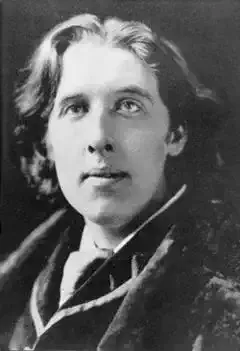
Oscar Wilde
The Grave Of Shelley
Like burnt-out torches by a sick man's bed
Gaunt cypress-trees stand round the sun-bleached stone;
Here doth the little night-owl make her throne,
And the slight lizard show his jewelled head.
And, where the chaliced poppies flame to red,
In the still chamber of yon pyramid
Surely some Old-World Sphinx lurks darkly hid,
Grim warder of this pleasaunce of the dead.
Ah! sweet indeed to rest within the womb
Of Earth, great mother of eternal sleep,
But sweeter far for thee a restless tomb
In the blue cavern of an echoing deep,
Or where the tall ships founder in the gloom
Against the rocks of some wave-shattered steep.
ROME.
Gaunt cypress-trees stand round the sun-bleached stone;
Here doth the little night-owl make her throne,
And the slight lizard show his jewelled head.
And, where the chaliced poppies flame to red,
In the still chamber of yon pyramid
Surely some Old-World Sphinx lurks darkly hid,
Grim warder of this pleasaunce of the dead.
Ah! sweet indeed to rest within the womb
Of Earth, great mother of eternal sleep,
But sweeter far for thee a restless tomb
In the blue cavern of an echoing deep,
Or where the tall ships founder in the gloom
Against the rocks of some wave-shattered steep.
ROME.
805
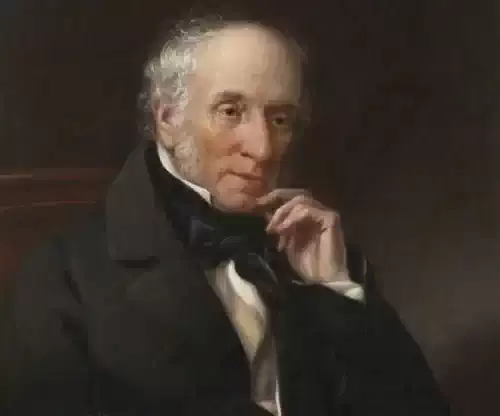
William Wordsworth
Written With a Pencil Upon a Stone In The Wall of The House, On The Island
Written With a Pencil Upon a Stone In The Wall of The House, On The Island
at Grasmere
Rude is this Edifice, and Thou hast seen
Buildings, albeit rude, that have maintained
Proportions more harmonious, and approached
To closer fellowship with ideal grace.
But take it in good part:--alas! the poor
Vitruvius of our village had no help
From the great City; never, upon leaves
Of red Morocco folio, saw displayed,
In long succession, pre-existing ghosts
Of Beauties yet unborn--the rustic Lodge
Antique, and Cottage with verandah graced,
Nor lacking, for fit company, alcove,
Green-house, shell-grot, and moss-lined hermitage.
Thou see'st a homely Pile, yet to these walls
The heifer comes in the snow-storm, and here
The new-dropped lamb finds shelter from the wind.
And hither does one Poet sometimes row
His pinnace, a small vagrant barge, up-piled
With plenteous store of heath and withered fern,
(A lading which he with his sickle cuts,
Among the mountains) and beneath this roof
He makes his summer couch, and here at noon
Spreads out his limbs, while, yet unshorn, the Sheep,
Panting beneath the burthen of their wool,
Lie round him, even as if they were a part
Of his own Household: nor, while from his bed
He looks, through the open door-place, toward the lake
And to the stirring breezes, does he want
Creations lovely as the work of sleep--
Fair sights, and visions of romantic joy!
at Grasmere
Rude is this Edifice, and Thou hast seen
Buildings, albeit rude, that have maintained
Proportions more harmonious, and approached
To closer fellowship with ideal grace.
But take it in good part:--alas! the poor
Vitruvius of our village had no help
From the great City; never, upon leaves
Of red Morocco folio, saw displayed,
In long succession, pre-existing ghosts
Of Beauties yet unborn--the rustic Lodge
Antique, and Cottage with verandah graced,
Nor lacking, for fit company, alcove,
Green-house, shell-grot, and moss-lined hermitage.
Thou see'st a homely Pile, yet to these walls
The heifer comes in the snow-storm, and here
The new-dropped lamb finds shelter from the wind.
And hither does one Poet sometimes row
His pinnace, a small vagrant barge, up-piled
With plenteous store of heath and withered fern,
(A lading which he with his sickle cuts,
Among the mountains) and beneath this roof
He makes his summer couch, and here at noon
Spreads out his limbs, while, yet unshorn, the Sheep,
Panting beneath the burthen of their wool,
Lie round him, even as if they were a part
Of his own Household: nor, while from his bed
He looks, through the open door-place, toward the lake
And to the stirring breezes, does he want
Creations lovely as the work of sleep--
Fair sights, and visions of romantic joy!
186
William Wordsworth
To M.H.
To M.H.
Our walk was far among the ancient trees:
There was no road, nor any woodman's path;
But a thick umbrage--checking the wild growth
Of weed and sapling, along soft green turf
Beneath the branches--of itself had made
A track, that brought us to a slip of lawn,
And a small bed of water in the woods.
All round this pool both flocks and herds might drink
On its firm margin, even as from a well,
Or some stone-basin which the herdsman's hand
Had shaped for their refreshment; nor did sun,
Or wind from any quarter, ever come,
But as a blessing to this calm recess,
This glade of water and this one green field.
The spot was made by Nature for herself;
The travellers know it not, and 'twill remain
Unknown to them; but it is beautiful;
And if a man should plant his cottage near,
Should sleep beneath the shelter of its trees,
And blend its waters with his daily meal,
He would so love it, that in his death-hour
Its image would survive among his thoughts:
And therefore, my sweet MARY, this still Nook,
With all its beeches, we have named from You!
Our walk was far among the ancient trees:
There was no road, nor any woodman's path;
But a thick umbrage--checking the wild growth
Of weed and sapling, along soft green turf
Beneath the branches--of itself had made
A track, that brought us to a slip of lawn,
And a small bed of water in the woods.
All round this pool both flocks and herds might drink
On its firm margin, even as from a well,
Or some stone-basin which the herdsman's hand
Had shaped for their refreshment; nor did sun,
Or wind from any quarter, ever come,
But as a blessing to this calm recess,
This glade of water and this one green field.
The spot was made by Nature for herself;
The travellers know it not, and 'twill remain
Unknown to them; but it is beautiful;
And if a man should plant his cottage near,
Should sleep beneath the shelter of its trees,
And blend its waters with his daily meal,
He would so love it, that in his death-hour
Its image would survive among his thoughts:
And therefore, my sweet MARY, this still Nook,
With all its beeches, we have named from You!
182
William Wordsworth
Peter Bell, A Tale
Peter Bell, A Tale
PROLOGUE
There's something in a flying horse,
There's something in a huge balloon;
But through the clouds I'll never float
Until I have a little Boat,
Shaped like the crescent-moon.
And now I 'have' a little Boat,
In shape a very crescent-moon
Fast through the clouds my boat can sail;
But if perchance your faith should fail,
Look up--and you shall see me soon!
The woods, my Friends, are round you roaring,
Rocking and roaring like a sea;
The noise of danger's in your ears,
And ye have all a thousand fears
Both for my little Boat and me!
Meanwhile untroubled I admire
The pointed horns of my canoe;
And, did not pity touch my breast,
To see how ye are all distrest,
Till my ribs ached, I'd laugh at you!
Away we go, my Boat and I--
Frail man ne'er sate in such another;
Whether among the winds we strive,
Or deep into the clouds we dive,
Each is contented with the other.
Away we go--and what care we
For treasons, tumults, and for wars?
We are as calm in our delight
As is the crescent-moon so bright
Among the scattered stars.
Up goes my Boat among the stars
Through many a breathless field of light,
Through many a long blue field of ether,
Leaving ten thousand stars beneath her:
Up goes my little Boat so bright!
The Crab, the Scorpion, and the Bull--
We pry among them all; have shot
High o'er the red-haired race of Mars,
Covered from top to toe with scars;
Such company I like it not!
The towns in Saturn are decayed,
And melancholy Spectres throng them;--
The Pleiads, that appear to kiss
Each other in the vast abyss,
With joy I sail among them.
Swift Mercury resounds with mirth,
Great Jove is full of stately bowers;
But these, and all that they contain,
What are they to that tiny grain,
That little Earth of ours?
Then back to Earth, the dear green Earth:--
Whole ages if I here should roam,
The world for my remarks and me
Would not a whit the better be;
I've left my heart at home.
See! there she is, the matchless Earth!
There spreads the famed Pacific Ocean!
Old Andes thrusts yon craggy spear
Through the grey clouds; the Alps are here,
Like waters in commotion!
Yon tawny slip is Libya's sands;
That silver thread the river Dnieper!
And look, where clothed in brightest green
Is a sweet Isle, of isles the Queen;
Ye fairies, from all evil keep her!
And see the town where I was born!
Around those happy fields we span
In boyish gambols;--I was lost
Where I have been, but on this coast
I feel I am a man.
Never did fifty things at once
Appear so lovely, never, never;--
How tunefully the forests ring!
To hear the earth's soft murmuring
Thus could I hang for ever!
"Shame on you!" cried my little Boat,
"Was ever such a homesick Loon,
Within a living Boat to sit,
And make no better use of it;
A Boat twin-sister of the crescent-moon!
"Ne'er in the breast of full-grown Poet
Fluttered so faint a heart before;--
Was it the music of the spheres
That overpowered your mortal ears?
--Such din shall trouble them no more.
"These nether precincts do not lack
Charms of their own;--then come with me;
I want a comrade, and for you
There's nothing that I would not do;
Nought is there that you shall not see.
"Haste! and above Siberian snows
We'll sport amid the boreal morning;
Will mingle with her lustres gliding
Among the stars, the stars now hiding,
And now the stars adorning.
"I know the secrets of a land
Where human foot did never stray;
Fair is that land as evening skies,
And cool, though in the depth it lies
Of burning Africa.
"Or we'll into the realm of Faery,
Among the lovely shades of things;
The shadowy forms of mountains bare,
And streams, and bowers, and ladies fair,
The shades of palaces and kings!
"Or, if you thirst with hardy zeal
Less quiet regions to explore,
Prompt voyage shall to you reveal
How earth and heaven are taught to feel
The might of magic lore!"
"My little vagrant Form of light,
My gay and beautiful Canoe,
Well have you played your friendly part;
As kindly take what from my heart
Experience forces--then adieu!
"Temptation lurks among your words;
But, while these pleasures you're pursuing
Without impediment or let,
No wonder if you quite forget
What on the earth is doing.
"There was a time when all mankind
Did listen with a faith sincere
To tuneful tongues in mystery versed;
'Then' Poets fearlessly rehearsed
The wonders of a wild career.
"Go--(but the world's a sleepy world,
And 'tis, I fear, an age too late)
Take with you some ambitious Youth!
For, restless Wanderer! I, in truth,
Am all unfit to be your mate.
"Long have I loved what I behold,
The night that calms, the day that cheers;
The common growth of mother-earth
Suffices me--her tears, her mirth,
Her humblest mirth and tears.
"The dragon's wing, the magic ring,
I shall not covet for my dower,
If I along that lowly way
With sympathetic heart may stray,
And with a soul of power.
"These given, what more need I desire
To stir, to soothe, or elevate?
What nobler marvels than the mind
May in life's daily prospect find,
May find or there create?
"A potent wand doth Sorrow wield;
What spell so strong as guilty Fear!
Repentance is a tender Sprite;
If aught on earth have heavenly might,
'Tis lodged within her silent tear.
"But grant my wishes,--let us now
Descend from this ethereal height;
Then take thy way, adventurous Skiff,
More daring far than Hippogriff,
And be thy own delight!
"To the stone-table in my garden,
Loved haunt of many a summer hour,
The Squire is come: his daughter Bess
Beside him in the cool recess
Sits blooming like a flower.
"With these are many more convened;
They know not I have been so far;--
I see them there, in number nine,
Beneath the spreading Weymouth-pine!
I see them--there they are!
"There sits the Vicar and his Dame;
And there my good friend, Stephen Otter;
And, ere the light of evening fail,
To them I must relate the Tale
Of Peter Bell the Potter."
Off flew the Boat--away she flees,
Spurning her freight with indignation!
And I, as well as I was able,
On two poor legs, toward my stone-table
Limped on with sore vexation.
"O, here he is!" cried little Bess--
She saw me at the garden-door;
"We've waited anxiously and long,"
They cried, and all around me throng,
Full nine of them or more!
"Reproach me not--your fears be still--
Be thankful we again have met;--
Resume, my Friends! within the shade
Your seats, and quickly shall be paid
The well-remembered debt."
I spake with faltering voice, like one
Not wholly rescued from the pale
Of a wild dream, or worse illusion;
But, straight, to cover my confusion,
Began the promised Tale.
PART FIRST
ALL by the moonlight river side
Groaned the poor Beast--alas! in vain;
The staff was raised to loftier height,
And the blows fell with heavier weight
As Peter struck--and struck again.
"Hold!" cried the Squire, "against the rules
Of common sense you're surely sinning;
This leap is for us all too bold;
Who Peter was, let that be told,
And start from the beginning."
----"A Potter, Sir, he was by trade,"
Said I, becoming quite collected;
"And wheresoever he appeared,
Full twenty times was Peter feared
For once that Peter was respected.
"He, two-and-thirty years or more,
Had been a wild and woodland rover;
Had heard the Atlantic surges roar
On farthest Cornwall's rocky shore,
And trod the cliffs of Dover.
"And he had seen Caernarvon's towers,
And well he knew the spire of Sarum;
And he had been where Lincoln bell
Flings o'er the fen that ponderous knell--
A far-renowned alarum!
"At Doncaster, at York, and Leeds,
And merry Carlisle had be been;
And all along the Lowlands fair,
All through the bonny shire of Ayr
And far as Aberdeen.
"And he had been at Inverness;
And Peter, by the mountain-rills,
Had danced his round with Highland lasses;
And he had lain beside his asses
On lofty Cheviot Hills:
"And he had trudged through Yorkshire dales,
Among the rocks and winding 'scars',
Where deep and low the hamlets lie
Beneath their little patch of sky
And little lot of stars:
"And all along the indented coast,
Bespattered with the salt-sea foam;
Where'er a knot of houses lay
On headland, or in hollow bay;--
Sure never man like him did roam!
"As well might Peter, in the Fleet,
Have been fast bound, a begging debtor;--
He travelled here, he travelled there,--
But not the value of a hair
Was heart or head the better.
"He roved among the vales and streams,
In the green wood and hollow dell;
They were his dwellings night and day,--
But nature ne'er could find the way
Into the heart of Peter Bell.
"In vain, through every changeful year,
Did Nature lead him as before;
A primrose by a river's brim
A yellow primrose was to him,
And it was nothing more.
"Small change it made on Peter's heart
To see his gentle panniered train
With more than vernal pleasure feeding,
Where'er the tender grass was leading
Its earliest green along the lane.
"In vain, through water, earth, and air,
The soul of happy sound was spread,
When Peter on some April morn,
Beneath the broom or budding thorn,
Made the warm earth his lazy bed.
"At noon, when, by the forest's edge
He lay beneath the branches high,
The soft blue shy did never melt
Into his heart; he never felt
The witchery of the soft blue sky!
"On a fair prospect some have looked
And felt, as I have heard them say,
As if the moving time had been
A thing as steadfast as the scene
On which they gazed themselves away.
"Within the breast of Peter Bell
These silent raptures found no place;
He was a Carl as wild and rude
As ever hue-and-cry pursued,
As ever ran a felon's race.
"Of all that lead a lawless life,
Of all that love their lawless lives,
In city or in village small,
He was the wildest far of all;--
He had a dozen wedded wives.
"Nay, start not!--wedded wives--and twelve!
But how one wife could e'er come near him,
In simple truth I cannot tell;
For, be it said of Peter Bell
To see him was to fear him.
"Though Nature could not touch his heart
By lovely forms, and silent weather,
And tender sounds, yet you might see
At once, that Peter Bell and she
Had often been together.
"A savage wildness round him hung
As of a dweller out of doors;
In his whole figure and his mien
A savage character was seen
Of mountains and of dreary moors.
"To all the unshaped half-human thoughts
Which solitary Nature feeds
'Mid summer storms or winter's ice,
Had Peter joined whatever vice
The cruel city breeds.
"His face was keen as is the wind
That cuts along the hawthorn-fence;--
Of courage you saw little there,
But, in its stead, a medley air
Of cunning and of impudence.
"He had a dark and sidelong walk,
And long and slouching was his gait;
Beneath his looks so bare and bold,
You might perceive, his spirit cold
Was playing with some inward bait.
"His forehead wrinkled was and furred;
A work, one half of which was done
By thinking of his 'whens' and 'hows;'
And half, by knitting of his brows
Beneath the glaring sun.
"There was a hardness in his cheek,
There was a hardness in his eye,
As if the man had fixed his face,
In many a solitary place,
Against the wind and open sky!"
ONE NIGHT, (and now my little Bess!
We've reached at last the promised Tale:)
One beautiful November night,
When the full moon was shining bright
Upon the rapid river Swale,
Along the river's winding banks
Peter was travelling all alone;--
Whether to buy or sell, or led
By pleasure running in his head,
To me was never known.
He trudged along through copse and brake,
He trudged along o'er hill and dale;
Nor for the moon cared he a tittle,
And for the stars he cared as little,
And for the murmuring river Swale.
But, chancing to espy a path
That promised to cut short the way
As many a wiser man hath done,
He left a trusty guide for one
That might his steps betray.
To a thick wood he soon is brought
Where cheerily his course he weaves,
And whistling loud may yet be heard,
Though often buried, like a bird
Darkling, among the boughs and leaves.
But quickly Peter's mood is changed,
And on he drives with cheeks that burn
In downright fury and in wrath;--
There's little sign the treacherous path
Will to the road return!
The path grows dim, and dimmer still;
Now up, now down, the Rover wends,
With all the sail that he can carry,
Till brought to a deserted quarry--
And there the pathway ends.
He paused--for shadows of strange shape,
Massy and black, before him lay;
But through the dark, and through the cold,
And through the yawning fissures old,
Did Peter boldly press his way
Right through the quarry;--and behold
A scene of soft and lovely hue!
Where blue and grey, and tender green,
Together make as sweet a scene
As ever human eye did view.
Beneath the clear blue sky he saw
A little field of meadow ground;
But field or meadow name it not;
Call it of earth a small green plot,
With rocks encompassed round,
The Swale flowed under the grey rocks,
But he flowed quiet and unseen;--
You need a strong and stormy gale
To bring the noises of the Swale
To that green spot, so calm and green!
And is there no one dwelling here,
No hermit with his beads and glass?
And does no little cottage look
Upon this soft and fertile nook?
Does no one live near this green grass?
Across the deep and quiet spot
Is Peter driving through the grass--
And now has reached the skirting trees;
When, turning round his head, he sees
A solitary Ass.
"A Prize!" cries Peter--but he first
Must spy about him far and near:
There's not a single house in sight,
No woodman's hut, no cottage light--
Peter, you need not fear!
There's nothing to be seen but woods,
And rocks that spread a hoary gleam,
And this one Beast, that from the bed
Of the green meadow hangs his head
Over the silent stream.
His head is with a halter bound;
The halter seizing, Peter leapt
Upon the Creature's back, and plied
With ready heels his shaggy side;
But still the Ass his station kept.
Then Peter gave a sudden jerk,
A jerk that from a dungeon-floor
Would have pulled up an iron ring;
But still the heavy-headed Thing
Stood just as he had stood before!
Quoth Peter, leaping from his seat,
"There is some plot against me laid;"
Once more the little meadow-ground
And all the hoary cliffs around
He cautiously surveyed,
All, all is silent--rocks and woods,
All still and silent--far and near!
Only the Ass, with motion dull,
Upon the pivot of his skull
Turns round his long left ear.
Thought Peter, What can mean all this?
Some ugly witchcraft must be here!
--Once more the Ass, with motion dull,
Upon the pivot of his skull
Turned round his long left ear.
Suspicion ripened into dread;
Yet with deliberate action slow,
His staff high-raising, in the pride
Of skill, upon the sounding hide,
He dealt a sturdy blow.
The poor Ass staggered with the shock;
And then, as if to take his ease,
In quiet uncomplaining mood,
Upon the spot where he had stood,
Dropped gently down upon his knees:
As gently on his side he fell;
And by the river's brink did lie;
And, while he lay like one that mourned,
The patient Beast on Peter turned
His shining hazel eye.
'Twas but one mild, reproachful look,
A look more tender than severe;
And straight in sorrow, not in dread,
He turned the eye-ball in his head
Towards the smooth river deep and clear.
Upon the Beast the sapling rings;
His lank sides heaved, his limbs they stirred;
He gave a groan, and then another,
Of that which went before the brother,
And then he gave a third.
All by the moonlight river side
He gave three miserable groans;
And not till now hath Peter seen
How gaunt the Creature is,--how lean
And sharp his staring bones!
With legs stretched out and stiff he lay:--
No word of kind commiseration
Fell at the sight from Peter's tongue;
With hard contempt his heart was wrung,
With hatred and vexation.
The meagre beast lay still as death;
And Peter's lips with fury quiver;
Quoth he, "You little mulish dog,
I'll fling your carcase like a log
Head-foremost down the river!"
An impious oath confirmed the threat--
Whereat from the earth on which he lay
To all the echoes, south and north,
And east and west, the Ass sent forth
A long and clamorous bray!
This outcry, on the heart of Peter,
Seems like a note of joy to strike,--
Joy at the heart of Peter knocks;
But in the echo of the rocks
Was something Peter did not like.
Whether to cheer his coward breast,
Or that he could not break the chain,
In this serene and solemn hour,
Twined round him by demoniac power,
To the blind work he turned again.
Among the rocks and winding crags;
Among the mountains far away;
Once more the ass did lengthen out
More ruefully a deep-drawn shout,
The hard dry see-saw of his horrible bray!
What is there now in Peter's heart!
Or whence the might of this strange sound?
The moon uneasy looked and dimmer,
The broad blue heavens appeared to glimmer,
And the rocks staggered all around--
From Peter's hand the sapling dropped!
Threat has he none to execute;
"If any one should come and see
That I am here, they'll think," quoth he,
"I'm helping this poor dying brute."
He scans the Ass from limb to limb,
And ventures now to uplift his eyes;
More steady looks the moon, and clear
More like themselves the rocks appear
And touch more quiet skies.
His scorn returns--his hate revives;
He stoops the Ass's neck to seize
With malice--that again takes flight;
For in the pool a startling sight
Meets him, among the inverted trees.
Is it the moon's distorted face?
The ghost-like image of a cloud?
Is it a gallows there portrayed?
Is Peter of himself afraid?
Is it a coffin,--or a shroud?
A grisly idol hewn in stone?
Or imp from witch's lap let fall?
Perhaps a ring of shining fairies?
Such as pursue their feared vagaries
In sylvan bower, or haunted hall?
Is it a fiend that to a stake
Of fire his desperate self is tethering?
Or stubborn spirit doomed to yell
In solitary ward or cell,
Ten thousand miles from all his brethren?
Never did pulse so quickly throb,
And never heart so loudly panted;
He looks, he cannot choose but look;
Like some one reading in a book--
A book that is enchanted.
Ah, well-a-day for Peter Bell!
He will be turned to iron soon,
Meet Statue for the court of Fear!
His hat is up--and every hair
Bristles, and whitens in the moon!
He looks, he ponders, looks again;
He sees a motion--hears a groan;
His eyes will burst--his heart will break--
He gives a loud and frightful shriek,
And back he falls, as if his life were flown!
PART SECOND
WE left our Hero in a trance,
Beneath the alders, near the river;
The Ass is by the river-side,
And, where the feeble breezes glide,
Upon the stream the moonbeams quiver.
A happy respite! but at length
He feels the glimmering of the moon;
Wakes with glazed eve. and feebly signing--
To sink, perhaps, where he is lying,
Into a second swoon!
He lifts his head, he sees his staff;
He touches--'tis to him a treasure!
Faint recollection seems to tell
That he is yet where mortals dwell--
A thought received with languid pleasure!
His head upon his elbow propped,
Becoming less and less perplexed,
Sky-ward he looks--to rock and wood--
And then--upon the glassy flood
His wandering eye is fixed.
Thought he, that is the face of one
In his last sleep securely bound!
So toward the stream his head he bent,
And downward thrust his staff, intent
The river's depth to sound.
'Now'--like a tempest-shattered bark,
That overwhelmed and prostrate lies,
And in a moment to the verge
Is lifted of a foaming surge--
Full suddenly the Ass doth rise!
His staring bones all shake with joy,
And close by Peter's side he stands:
While Peter o'er the river bends,
The little Ass his neck extends,
And fondly licks his hands.
Such life is in the Ass's eyes,
Such life is in his limbs and ears;
That Peter Bell, if he had been
The veriest coward ever seen,
Must now have thrown aside his fears.
The Ass looks on--and to his work
Is Peter quietly resigned;
He touches here--he touches there--
And now among the dead man's hair
His sapling Peter has entwined.
He pulls--and looks--and pulls again;
And he whom the poor Ass had lost,
The man who had been four days dead,
Head-foremost from the river's bed
Uprises like a ghost!
And Peter draws him to dry land;
And through the brain of Peter pass
Some poignant twitches, fast and faster,
"No doubt," quoth he, "he is the Master
Of this poor miserable Ass!"
The meagre Shadow that looks on--
What would he now? what is he doing?
His sudden fit of joy is flown,--
He on his knees hath laid him down,
As if he were his grief renewing;
But no--that Peter on his back
Must mount, he shows well as he can:
Thought Peter then, come weal or woe,
I'll do what he would have me do,
In pity to this poor drowned man.
With that resolve he boldly mounts
Upon the pleased and thankful Ass;
And then, without a moment's stay,
That earnest Creature turned away
Leaving the body on the grass.
Intent upon his faithful watch,
The Beast four days and nights had past;
A sweeter meadow ne'er was seen,
And there the Ass four days had been,
Nor ever once did break his fast:
Yet firm his step, and stout his heart;
The mead is crossed--the quarry's mouth
Is reached; but there the trusty guide
Into a thicket turns aside,
And deftly ambles towards the south.
When hark a burst of doleful sound!
And Peter honestly might say,
The like came never to his ears,
Though he has been, full thirty years,
A rover--night and day!
'Tis not a plover of the moors,
'Tis not a bittern of the fen;
Nor can it be a barking fox,
Nor night-bird chambered in the rocks,
Nor wild-cat in a woody glen!
The Ass is startled--and stops short
Right in the middle of the thicket;
And Peter, wont to whistle loud
Whether alone or in a crowd,
Is silent as a silent cricket.
What ails you now, my little Bess?
Well may you tremble and look grave!
This cry--that rings along the wood,
This cry--that floats adown the flood,
Comes from the entrance of a cave:
I see a blooming Wood-boy there,
And if I had the power to say
How sorrowful the wanderer is,
Your heart would be as sad as his
Till you had kissed his tears away!
Grasping a hawthorn branch in hand,
All bright with berries ripe and red,
Into the cavern's mouth he peeps;
Thence back into the moonlight creeps;
Whom seeks he--whom?--the silent dead:
His father!--Him doth he require--
Him hath he sought with fruitless pains,
Among the rocks, behind the trees;
Now creeping on his hands and knees,
Now running o'er the open plains.
And hither is he come at last,
When he through such a day has gone,
By this dark cave to be distrest
Like a poor bird--her plundered nest
Hovering around with dolorous moan!
Of that intense and piercing cry
The listening Ass conjectures well;
Wild as it is, he there can read
Some intermingled notes that plead
With touches irresistible.
But Peter--when he saw the Ass
Not only stop but turn, and change
The cherished tenor of his pace
That lamentable cry to chase--
It wrought in him conviction strange;
A faith that, for the dead man's sake
And this poor slave who loved him well,
Vengeance upon his head will fall,
Some visitation worse than all
Which ever till this night befell.
Meanwhile the Ass to reach his home,
Is striving stoutly as he may;
But, while he climbs the woody hill,
The cry grows weak--and weaker still;
And now at last it dies away.
So with his freight the Creature turns
Into a gloomy grove of beech,
Along the shade with footsteps true
Descending slowly, till the two
The open moonlight reach.
And there, along the narrow dell,
A fair smooth pathway you discern,
A length of green and open road--
As if it from a fountain flowed--
Winding away between the fern.
The rocks that tower on either side
Build up a wild fantastic scene;
Temples like those among the Hindoos,
And mosques, and spires, and abbey windows,
And castles all with ivy green!
And, while the Ass pursues his way,
Along this solitary dell,
As pensively his steps advance,
The mosques and spires change countenance
And look at Peter Bell!
That unintelligible cry
Hath left him high in preparation,--
Convinced that he, or soon or late,
This very night will meet his fate--
And so he sits in expectation!
The strenuous Animal hath clomb
With the green path; and now he wends
Where, shining like the smoothest sea,
In undisturbed immensity
A level plain extends.
But whence this faintly-rustling sound
By which the journeying pair are chased?
--A withered leaf is close behind,
Light plaything for the sportive wind
Upon that solitary waste.
When Peter spied the moving thing,
It only doubled his distress;
"Where there is not a bush or tree,
The very leaves they follow me--
So huge hath been my wickedness!"
To a close lane they now are come,
Where, as before, the enduring Ass
Moves on without a moment's stop,
Nor once turns round his head to crop
A bramble-leaf or blade of grass.
Between the hedges as they go,
The white dust sleeps upon the lane;
And Peter, ever and anon
Back-looking, sees, upon a stone,
Or in the dust, a crimson stain.
A stain--as of a drop of blood
By moonlight made more faint and wan;
Ha! why these sinkings of despair?
He knows not how the blood comes there--
And Peter is a wicked man.
At length he spies a bleeding wound,
Where he had struck the Ass's head;
He sees the blood, knows what it is,--
A glimpse of sudden joy was his,
But then it quickly fled;
Of him whom sudden death had seized
He thought,--of thee, O faithful Ass!
And once again those ghastly pains,
Shoot to and fro through heart and reins,
And through his brain like lightning pass.
PART THIRD
I'VE heard of one, a gentle Soul,
Though given to sadness and to gloom,
And for the fact will vouch,--one night
It chanced that by a taper's light
This man was reading in his room;
Bending, as you or I might bend
At night o'er any pious book,
When sudden blackness overspread
The snow-white page on which he read,
And made the good man round him look.
The chamber walls were dark all round,--
And to his book he turned again;
--The light had left the lonely taper,
And formed itself upon the paper
Into large letters--bright and plain!
The godly book was in his hand--
And, on the page, more black than coal,
Appeared, set forth in strange array,
A 'word'--which to his dying day
Perplexed the good man's gentle soul.
The ghostly word, thus plainly seen,
Did never from his lips depart;
But he hath said, poor gentle wight!
It brought full many a sin to light
Out of the bottom of his heart.
Dread Spirits! to confound the meek
Why wander from your course so far,
Disordering colour, form, and stature!
--Let good men feel the soul of nature,
And see things as they are.
Yet, potent Spirits! well I know,
How ye, that play with soul and sense,
Are not unused to trouble friends
Of goodness, for most gracious ends--
And this I speak in reverence!
But might I give advice to you,
Whom in my fear I love so well;
From men of pensive virtue go,
Dread Beings! and your empire show
On hearts like that of Peter Bell.
Your presence often have I felt
In darkness and the stormy night;
And, with like force, if need there be,
Ye can put forth your agency
When earth is calm, and heaven is bright.
Then, coming from the wayward world,
That powerful world in which ye dwell,
Come, Spirits of the Mind! and try
To-night, beneath the moonlight sky,
What may be done with Peter Bell!
--O, would that some more skilful voice
My further labour might prevent!
Kind Listeners, that around me sit,
I feel that I am all unfit
For such high argument.
I've played, I've danced, with my narration;
I loitered long ere I began:
Ye waited then on my good pleasure;
Pour out indulgence still, in measure
As liberal as ye can!
Our Travellers, ye remember well,
Are thridding a sequestered lane;
And Peter many tricks is trying,
And many anodynes applying,
To ease his conscience of its pain.
By this his heart is lighter far;
And, finding that he can account
So snugly for that crimson stain,
His evil spirit up again
Does like an empty bucket mount.
And Peter is a deep logician
Who hath no lack of wit mercurial;
"Blood drops--leaves rustle--yet," quoth he,
"This poor man never, but for me,
Could have had Christian burial.
"And, say the best you can, 'tis plain,
That here has been some wicked dealing;
No doubt the devil in me wrought;
I'm not the man who could have thought
An Ass like this was worth the stealing!"
So from his pocket Peter takes
His shining horn tobacco-box;
And, in a light and careless way,
As men who with their purpose play,
Upon the lid he knocks.
Let them whose voice can stop the clouds,
Whose cunning eye can see the wind,
Tell to a curious world the cause
Why, making here a sudden pause,
The Ass turned round his head, and 'grinned'.
Appalling process! I have marked
The like on heath, in lonely wood;
And, verily, have seldom met
A spectacle more hideous--yet
It suited Peter's present mood.
And, grinning in his turn, his teeth
He in jocose defiance showed--
When, to upset his spiteful mirth,
A murmur, pent within the earth,
In the dead earth beneath the road
Rolled audibly! it swept along,
A muffled noise--a rumbling sound!--
'Twas by a troop of miners made,
Plying with gunpowder their trade,
Some twenty fathoms under ground.
Small cause of dire effect! for, surely,
If ever mortal, King or Cotter,
Believed that earth was charged to quake
And yawn for his unworthy sake,
'Twas Peter Bell the Potter.
But, as an oak in breathless air
Will stand though to the centre hewn;
Or as the weakest things, if frost
Have stiffened them, maintain their post;
So he, beneath the gazing moon!--
The Beast bestriding thus, he reached
A spot where, in a sheltering cove,
A little chapel stands alone,
With greenest ivy overgrown,
And tufted with an ivy grove;
Dying insensibly away
From human thoughts and purposes,
It seemed--wall, window, roof and tower--
To bow to some transforming power,
And blend with the surrounding trees.
As ruinous a place it was,
Thought Peter, in the shire of Fife
That served my turn, when following still
From land to land a reckless will
I married my sixth wife!
The unheeding Ass moves slowly on,
And now is passing by an inn
Brim-full of a carousing crew,
That make, with curses not a few,
An uproar and a drunken din.
I cannot well express the thoughts
Which Peter in those noises found;--
A stifling power compressed his frame,
While-as a swimming darkness came
Over that dull and dreary sound.
For well did Peter know the sound;
The language of those drunken joys
To him, a jovial soul, I ween,
But a few hours ago, had been
A gladsome and a welcome noise.
'Now', turned adrift into the past,
He finds no solace in his course;
Like planet-stricken men of yore,
He trembles, smitten to the core
By strong compunction and remorse.
But, more than all, his heart is stung
To think of one, almost a child;
A sweet and playful Highland girl,
As light and beauteous as a squirrel,
As beauteous and as wild!
Her dwelling was a lonely house,
A cottage in a heathy dell;
And she put on her gown of green,
And left her mother at sixteen,
And followed Peter Bell.
But many good and pious thoughts
Had she; and, in the kirk to pray,
Two long Scotch miles, through rain or snow
To kirk she had been used to go,
Twice every Sabbath-day.
And, when she followed Peter Bell,
It was to lead an honest life;
For he, with tongue not used to falter,
Had pledged his troth before the altar
To love her as his wedded wife.
A mother's hope is hers;--but soon
She drooped and pined like one forlorn;
From Scripture she a name did borrow;
Benoni, or the child of sorrow,
She called her babe unborn.
For she had learned how Peter lived,
And took it in most grievous part;
She to the very bone was worn,
And, ere that little child was born,
Died of a broken heart.
And now the Spirits of the Mind
Are busy with poor Peter Bell;
Upon the rights of visual sense
Usurping, with a prevalence
More terrible than magic spell.
Close by a brake of flowering furze
(Above it shivering aspens play)
He sees an unsubstantial creature,
His very self in form and feature,
Not four yards from the broad highway:
And stretched beneath the furze he sees
The Highland girl--it is no other;
And hears her crying as she cried,
The very moment that she died,
"My mother! oh my mother!"
The sweat pours down from Peter's face,
So grievous is his heart's contrition;
With agony his eye-balls ache
While he beholds by the furze-brake
This miserable vision!
Calm is the well-deserving brute,
'His' peace hath no offence betrayed;
But now, while down that slope he wends,
A voice to Peter's ear ascends,
Resounding from the woody glade:
The voice, though clamorous as a horn
Re-echoed by a naked rock,
Comes from that tabernacle--List!
Within, a fervent Methodist
Is preaching to no heedless flock!
"Repent! repent!" he cries aloud,
"While yet ye may find mercy;--strive
To love the Lord with all your might;
Turn to him, seek him day and night,
And save your souls alive!
"Repent! repent! though ye have gone,
Through paths of wickedness and woe,
After the Babylonian harlot;
And, though your sins be red as scarlet,
They shall be white as snow!"
Even as he passed the door, these words
Did plainly come to Peter's ears;
And they such joyful tidings were,
The joy was more than he could bear!--
He melted into tears.
Sweet tears of hope and tenderness!
And fast they fell, a plenteous shower!
His nerves, his sinews seemed to melt;
Through all his iron frame was felt
A gentle, a relaxing, power!
Each fibre of his frame was weak;
Weak all the animal within;
But, in its helplessness, grew mild
And gentle as an infant child,
An infant that has known no sin.
'Tis said, meek Beast! that, through Heaven's grace,
He not unmoved did notice now
The cross upon thy shoulder scored,
For lasting impress, by the Lord
To whom all human-kind shall bow;
Memorial of his touch--that day
When Jesus humbly deigned to ride,
Entering the proud Jerusalem,
By an immeasurable stream
Of shouting people deified!
Meanwhile the persevering Ass,
Turned towards a gate that hung in view
Across a shady lane; his chest
Against the yielding gate he pressed
And quietly passed through.
And up the stony lane he goes;
No ghost more softly ever trod;
Among the stones and pebbles, he
Sets down his hoofs inaudibly,
As if with felt his hoofs were shod.
Along the lane the trusty Ass
Went twice two hundred yards or more,
And no one could have guessed his aim,--
Till to a lonely house he came,
And stopped beside the door.
Thought Peter, 'tis the poor man's home!
He listens--not a sound is heard
Save from the trickling household rill;
But, stepping o'er the cottage-sill,
Forthwith a little Girl appeared.
She to the Meeting-house was bound
In hopes some tidings there to gather:
No glimpse it is, no doubtful gleam;
She saw--and uttered with a scream,
"My father! here's my father!"
The very word was plainly heard,
Heard plainly by the wretched Mother--
Her joy was like a deep affright:
And forth she rushed into the light,
And saw it was another!
And, instantly, upon the earth,
Beneath the full moon shining bright,
Close to the Ass's feet she fell;
At the same moment Peter Bell
Dismounts in most unhappy plight.
As he beheld the Woman lie
Breathless and motionless, the mind
Of Peter sadly was confused;
But, though to such demands unused,
And helpless almost as the blind,
He raised her up; and, while he held
Her body propped against his knee,
The Woman waked--and when she spied
The poor Ass standing by her side,
She moaned most bitterly.
"Oh! God be praised--my heart's at ease--
For he is dead--I know it well!"
--At this she wept a bitter flood;
And, in the best way that he could,
His tale did Peter tell.
He trembles--he is pale as death;
His voice is weak with perturbation;
He turns aside his head, he pauses;
Poor Peter, from a thousand causes,
Is crippled sore in his narration.
At length she learned how he espied
The Ass in that small meadow-ground;
And that her Husband now lay dead,
Beside that luckless river's bed
In which he had been drowned.
A piercing look the Widow cast
Upon the Beast that near her stands;
She sees 'tis he, that 'tis the same;
She calls the poor Ass by his name,
And wrings, and wrings her hands.
"O wretched loss--untimely stroke!
If he had died upon his bed!
He knew not one forewarning pain;
He never will come home again--
Is dead, for ever dead!"
Beside the woman Peter stands;
His heart is opening more and more;
A holy sense pervades his mind;
He feels what he for human kind
Had never felt before.
At length, by Peter's arm sustained,
The Woman rises from the ground--
"Oh, mercy! something must be done,
My little Rachel, you must run,--
Some willing neighbour must be found.
"Make haste--my little Rachel--do,
The first you meet with--bid him come,
Ask him to lend his horse to-night,
And this good Man, whom Heaven requite,
Will help to bring the body home."
Away goes Rachel weeping loud;--
An Infant, waked by her distress,
Makes in the house a piteous cry;
And Peter hears the Mother sigh,
"Seven are they, and all fatherless!"
And now is Peter taught to feel
That man's heart is a holy thing;
And Nature, through a world of death,
Breathes into him a second breath,
More searching than the breath of spring.
Upon a stone the Woman sits
In agony of silent grief--
From his own thoughts did Peter start;
He longs to press her to his heart,
From love that cannot find relief.
But roused, as if through every limb
Had past a sudden shock of dread,
The Mother o'er the threshold flies,
And up the cottage stairs she hies,
And on the pillow lays her burning head.
And Peter turns his steps aside
Into a shade of darksome trees,
Where he sits down, he knows not how,
With his hands pressed against his brow,
His elbows on his tremulous knees.
There, self-involved, does Peter sit
Until no sign of life he makes,
As if his mind were sinking deep
Through years that have been long asleep
The trance is passed away--he wakes;
He lifts his head--and sees the Ass
Yet standing in the clear moonshine;
"When shall I be as good as thou?
Oh! would, poor beast, that I had now
A heart but half as good as thine!"
But 'He'--who deviously hath sought
His Father through the lonesome woods,
Hath sought, proclaiming to the ear
Of night his grief and sorrowful fear--
He comes, escaped from fields and floods;--
With weary pace is drawing nigh;
He sees the Ass--and nothing living
Had ever such a fit of joy
As hath this little orphan Boy,
For he has no misgiving!
Forth to the gentle Ass he springs,
And up about his neck he climbs;
In loving words he talks to him,
He kisses, kisses face and limb,--
He kisses him a thousand times!
This Peter sees, while in the shade
He stood beside the cottage-door;
And Peter Bell, the ruffian wild,
Sobs loud, he sobs even like a child,
"O God! I can endure no more!"
--Here ends my Tale: for in a trice
Arrived a neighbour with his horse;
Peter went forth with him straightway;
And, with due care, ere break of day,
Together they brought back the Corse.
And many years did this poor Ass,
Whom once it was my luck to see
Cropping the shrubs of Leming-Lane,
Help by his labour to maintain
The Widow and her family.
And Peter Bell, who, till that night,
Had been the wildest of his clan,
Forsook his crimes, renounced his folly,
And, after ten months' melancholy,
Became a good and honest man.
PROLOGUE
There's something in a flying horse,
There's something in a huge balloon;
But through the clouds I'll never float
Until I have a little Boat,
Shaped like the crescent-moon.
And now I 'have' a little Boat,
In shape a very crescent-moon
Fast through the clouds my boat can sail;
But if perchance your faith should fail,
Look up--and you shall see me soon!
The woods, my Friends, are round you roaring,
Rocking and roaring like a sea;
The noise of danger's in your ears,
And ye have all a thousand fears
Both for my little Boat and me!
Meanwhile untroubled I admire
The pointed horns of my canoe;
And, did not pity touch my breast,
To see how ye are all distrest,
Till my ribs ached, I'd laugh at you!
Away we go, my Boat and I--
Frail man ne'er sate in such another;
Whether among the winds we strive,
Or deep into the clouds we dive,
Each is contented with the other.
Away we go--and what care we
For treasons, tumults, and for wars?
We are as calm in our delight
As is the crescent-moon so bright
Among the scattered stars.
Up goes my Boat among the stars
Through many a breathless field of light,
Through many a long blue field of ether,
Leaving ten thousand stars beneath her:
Up goes my little Boat so bright!
The Crab, the Scorpion, and the Bull--
We pry among them all; have shot
High o'er the red-haired race of Mars,
Covered from top to toe with scars;
Such company I like it not!
The towns in Saturn are decayed,
And melancholy Spectres throng them;--
The Pleiads, that appear to kiss
Each other in the vast abyss,
With joy I sail among them.
Swift Mercury resounds with mirth,
Great Jove is full of stately bowers;
But these, and all that they contain,
What are they to that tiny grain,
That little Earth of ours?
Then back to Earth, the dear green Earth:--
Whole ages if I here should roam,
The world for my remarks and me
Would not a whit the better be;
I've left my heart at home.
See! there she is, the matchless Earth!
There spreads the famed Pacific Ocean!
Old Andes thrusts yon craggy spear
Through the grey clouds; the Alps are here,
Like waters in commotion!
Yon tawny slip is Libya's sands;
That silver thread the river Dnieper!
And look, where clothed in brightest green
Is a sweet Isle, of isles the Queen;
Ye fairies, from all evil keep her!
And see the town where I was born!
Around those happy fields we span
In boyish gambols;--I was lost
Where I have been, but on this coast
I feel I am a man.
Never did fifty things at once
Appear so lovely, never, never;--
How tunefully the forests ring!
To hear the earth's soft murmuring
Thus could I hang for ever!
"Shame on you!" cried my little Boat,
"Was ever such a homesick Loon,
Within a living Boat to sit,
And make no better use of it;
A Boat twin-sister of the crescent-moon!
"Ne'er in the breast of full-grown Poet
Fluttered so faint a heart before;--
Was it the music of the spheres
That overpowered your mortal ears?
--Such din shall trouble them no more.
"These nether precincts do not lack
Charms of their own;--then come with me;
I want a comrade, and for you
There's nothing that I would not do;
Nought is there that you shall not see.
"Haste! and above Siberian snows
We'll sport amid the boreal morning;
Will mingle with her lustres gliding
Among the stars, the stars now hiding,
And now the stars adorning.
"I know the secrets of a land
Where human foot did never stray;
Fair is that land as evening skies,
And cool, though in the depth it lies
Of burning Africa.
"Or we'll into the realm of Faery,
Among the lovely shades of things;
The shadowy forms of mountains bare,
And streams, and bowers, and ladies fair,
The shades of palaces and kings!
"Or, if you thirst with hardy zeal
Less quiet regions to explore,
Prompt voyage shall to you reveal
How earth and heaven are taught to feel
The might of magic lore!"
"My little vagrant Form of light,
My gay and beautiful Canoe,
Well have you played your friendly part;
As kindly take what from my heart
Experience forces--then adieu!
"Temptation lurks among your words;
But, while these pleasures you're pursuing
Without impediment or let,
No wonder if you quite forget
What on the earth is doing.
"There was a time when all mankind
Did listen with a faith sincere
To tuneful tongues in mystery versed;
'Then' Poets fearlessly rehearsed
The wonders of a wild career.
"Go--(but the world's a sleepy world,
And 'tis, I fear, an age too late)
Take with you some ambitious Youth!
For, restless Wanderer! I, in truth,
Am all unfit to be your mate.
"Long have I loved what I behold,
The night that calms, the day that cheers;
The common growth of mother-earth
Suffices me--her tears, her mirth,
Her humblest mirth and tears.
"The dragon's wing, the magic ring,
I shall not covet for my dower,
If I along that lowly way
With sympathetic heart may stray,
And with a soul of power.
"These given, what more need I desire
To stir, to soothe, or elevate?
What nobler marvels than the mind
May in life's daily prospect find,
May find or there create?
"A potent wand doth Sorrow wield;
What spell so strong as guilty Fear!
Repentance is a tender Sprite;
If aught on earth have heavenly might,
'Tis lodged within her silent tear.
"But grant my wishes,--let us now
Descend from this ethereal height;
Then take thy way, adventurous Skiff,
More daring far than Hippogriff,
And be thy own delight!
"To the stone-table in my garden,
Loved haunt of many a summer hour,
The Squire is come: his daughter Bess
Beside him in the cool recess
Sits blooming like a flower.
"With these are many more convened;
They know not I have been so far;--
I see them there, in number nine,
Beneath the spreading Weymouth-pine!
I see them--there they are!
"There sits the Vicar and his Dame;
And there my good friend, Stephen Otter;
And, ere the light of evening fail,
To them I must relate the Tale
Of Peter Bell the Potter."
Off flew the Boat--away she flees,
Spurning her freight with indignation!
And I, as well as I was able,
On two poor legs, toward my stone-table
Limped on with sore vexation.
"O, here he is!" cried little Bess--
She saw me at the garden-door;
"We've waited anxiously and long,"
They cried, and all around me throng,
Full nine of them or more!
"Reproach me not--your fears be still--
Be thankful we again have met;--
Resume, my Friends! within the shade
Your seats, and quickly shall be paid
The well-remembered debt."
I spake with faltering voice, like one
Not wholly rescued from the pale
Of a wild dream, or worse illusion;
But, straight, to cover my confusion,
Began the promised Tale.
PART FIRST
ALL by the moonlight river side
Groaned the poor Beast--alas! in vain;
The staff was raised to loftier height,
And the blows fell with heavier weight
As Peter struck--and struck again.
"Hold!" cried the Squire, "against the rules
Of common sense you're surely sinning;
This leap is for us all too bold;
Who Peter was, let that be told,
And start from the beginning."
----"A Potter, Sir, he was by trade,"
Said I, becoming quite collected;
"And wheresoever he appeared,
Full twenty times was Peter feared
For once that Peter was respected.
"He, two-and-thirty years or more,
Had been a wild and woodland rover;
Had heard the Atlantic surges roar
On farthest Cornwall's rocky shore,
And trod the cliffs of Dover.
"And he had seen Caernarvon's towers,
And well he knew the spire of Sarum;
And he had been where Lincoln bell
Flings o'er the fen that ponderous knell--
A far-renowned alarum!
"At Doncaster, at York, and Leeds,
And merry Carlisle had be been;
And all along the Lowlands fair,
All through the bonny shire of Ayr
And far as Aberdeen.
"And he had been at Inverness;
And Peter, by the mountain-rills,
Had danced his round with Highland lasses;
And he had lain beside his asses
On lofty Cheviot Hills:
"And he had trudged through Yorkshire dales,
Among the rocks and winding 'scars',
Where deep and low the hamlets lie
Beneath their little patch of sky
And little lot of stars:
"And all along the indented coast,
Bespattered with the salt-sea foam;
Where'er a knot of houses lay
On headland, or in hollow bay;--
Sure never man like him did roam!
"As well might Peter, in the Fleet,
Have been fast bound, a begging debtor;--
He travelled here, he travelled there,--
But not the value of a hair
Was heart or head the better.
"He roved among the vales and streams,
In the green wood and hollow dell;
They were his dwellings night and day,--
But nature ne'er could find the way
Into the heart of Peter Bell.
"In vain, through every changeful year,
Did Nature lead him as before;
A primrose by a river's brim
A yellow primrose was to him,
And it was nothing more.
"Small change it made on Peter's heart
To see his gentle panniered train
With more than vernal pleasure feeding,
Where'er the tender grass was leading
Its earliest green along the lane.
"In vain, through water, earth, and air,
The soul of happy sound was spread,
When Peter on some April morn,
Beneath the broom or budding thorn,
Made the warm earth his lazy bed.
"At noon, when, by the forest's edge
He lay beneath the branches high,
The soft blue shy did never melt
Into his heart; he never felt
The witchery of the soft blue sky!
"On a fair prospect some have looked
And felt, as I have heard them say,
As if the moving time had been
A thing as steadfast as the scene
On which they gazed themselves away.
"Within the breast of Peter Bell
These silent raptures found no place;
He was a Carl as wild and rude
As ever hue-and-cry pursued,
As ever ran a felon's race.
"Of all that lead a lawless life,
Of all that love their lawless lives,
In city or in village small,
He was the wildest far of all;--
He had a dozen wedded wives.
"Nay, start not!--wedded wives--and twelve!
But how one wife could e'er come near him,
In simple truth I cannot tell;
For, be it said of Peter Bell
To see him was to fear him.
"Though Nature could not touch his heart
By lovely forms, and silent weather,
And tender sounds, yet you might see
At once, that Peter Bell and she
Had often been together.
"A savage wildness round him hung
As of a dweller out of doors;
In his whole figure and his mien
A savage character was seen
Of mountains and of dreary moors.
"To all the unshaped half-human thoughts
Which solitary Nature feeds
'Mid summer storms or winter's ice,
Had Peter joined whatever vice
The cruel city breeds.
"His face was keen as is the wind
That cuts along the hawthorn-fence;--
Of courage you saw little there,
But, in its stead, a medley air
Of cunning and of impudence.
"He had a dark and sidelong walk,
And long and slouching was his gait;
Beneath his looks so bare and bold,
You might perceive, his spirit cold
Was playing with some inward bait.
"His forehead wrinkled was and furred;
A work, one half of which was done
By thinking of his 'whens' and 'hows;'
And half, by knitting of his brows
Beneath the glaring sun.
"There was a hardness in his cheek,
There was a hardness in his eye,
As if the man had fixed his face,
In many a solitary place,
Against the wind and open sky!"
ONE NIGHT, (and now my little Bess!
We've reached at last the promised Tale:)
One beautiful November night,
When the full moon was shining bright
Upon the rapid river Swale,
Along the river's winding banks
Peter was travelling all alone;--
Whether to buy or sell, or led
By pleasure running in his head,
To me was never known.
He trudged along through copse and brake,
He trudged along o'er hill and dale;
Nor for the moon cared he a tittle,
And for the stars he cared as little,
And for the murmuring river Swale.
But, chancing to espy a path
That promised to cut short the way
As many a wiser man hath done,
He left a trusty guide for one
That might his steps betray.
To a thick wood he soon is brought
Where cheerily his course he weaves,
And whistling loud may yet be heard,
Though often buried, like a bird
Darkling, among the boughs and leaves.
But quickly Peter's mood is changed,
And on he drives with cheeks that burn
In downright fury and in wrath;--
There's little sign the treacherous path
Will to the road return!
The path grows dim, and dimmer still;
Now up, now down, the Rover wends,
With all the sail that he can carry,
Till brought to a deserted quarry--
And there the pathway ends.
He paused--for shadows of strange shape,
Massy and black, before him lay;
But through the dark, and through the cold,
And through the yawning fissures old,
Did Peter boldly press his way
Right through the quarry;--and behold
A scene of soft and lovely hue!
Where blue and grey, and tender green,
Together make as sweet a scene
As ever human eye did view.
Beneath the clear blue sky he saw
A little field of meadow ground;
But field or meadow name it not;
Call it of earth a small green plot,
With rocks encompassed round,
The Swale flowed under the grey rocks,
But he flowed quiet and unseen;--
You need a strong and stormy gale
To bring the noises of the Swale
To that green spot, so calm and green!
And is there no one dwelling here,
No hermit with his beads and glass?
And does no little cottage look
Upon this soft and fertile nook?
Does no one live near this green grass?
Across the deep and quiet spot
Is Peter driving through the grass--
And now has reached the skirting trees;
When, turning round his head, he sees
A solitary Ass.
"A Prize!" cries Peter--but he first
Must spy about him far and near:
There's not a single house in sight,
No woodman's hut, no cottage light--
Peter, you need not fear!
There's nothing to be seen but woods,
And rocks that spread a hoary gleam,
And this one Beast, that from the bed
Of the green meadow hangs his head
Over the silent stream.
His head is with a halter bound;
The halter seizing, Peter leapt
Upon the Creature's back, and plied
With ready heels his shaggy side;
But still the Ass his station kept.
Then Peter gave a sudden jerk,
A jerk that from a dungeon-floor
Would have pulled up an iron ring;
But still the heavy-headed Thing
Stood just as he had stood before!
Quoth Peter, leaping from his seat,
"There is some plot against me laid;"
Once more the little meadow-ground
And all the hoary cliffs around
He cautiously surveyed,
All, all is silent--rocks and woods,
All still and silent--far and near!
Only the Ass, with motion dull,
Upon the pivot of his skull
Turns round his long left ear.
Thought Peter, What can mean all this?
Some ugly witchcraft must be here!
--Once more the Ass, with motion dull,
Upon the pivot of his skull
Turned round his long left ear.
Suspicion ripened into dread;
Yet with deliberate action slow,
His staff high-raising, in the pride
Of skill, upon the sounding hide,
He dealt a sturdy blow.
The poor Ass staggered with the shock;
And then, as if to take his ease,
In quiet uncomplaining mood,
Upon the spot where he had stood,
Dropped gently down upon his knees:
As gently on his side he fell;
And by the river's brink did lie;
And, while he lay like one that mourned,
The patient Beast on Peter turned
His shining hazel eye.
'Twas but one mild, reproachful look,
A look more tender than severe;
And straight in sorrow, not in dread,
He turned the eye-ball in his head
Towards the smooth river deep and clear.
Upon the Beast the sapling rings;
His lank sides heaved, his limbs they stirred;
He gave a groan, and then another,
Of that which went before the brother,
And then he gave a third.
All by the moonlight river side
He gave three miserable groans;
And not till now hath Peter seen
How gaunt the Creature is,--how lean
And sharp his staring bones!
With legs stretched out and stiff he lay:--
No word of kind commiseration
Fell at the sight from Peter's tongue;
With hard contempt his heart was wrung,
With hatred and vexation.
The meagre beast lay still as death;
And Peter's lips with fury quiver;
Quoth he, "You little mulish dog,
I'll fling your carcase like a log
Head-foremost down the river!"
An impious oath confirmed the threat--
Whereat from the earth on which he lay
To all the echoes, south and north,
And east and west, the Ass sent forth
A long and clamorous bray!
This outcry, on the heart of Peter,
Seems like a note of joy to strike,--
Joy at the heart of Peter knocks;
But in the echo of the rocks
Was something Peter did not like.
Whether to cheer his coward breast,
Or that he could not break the chain,
In this serene and solemn hour,
Twined round him by demoniac power,
To the blind work he turned again.
Among the rocks and winding crags;
Among the mountains far away;
Once more the ass did lengthen out
More ruefully a deep-drawn shout,
The hard dry see-saw of his horrible bray!
What is there now in Peter's heart!
Or whence the might of this strange sound?
The moon uneasy looked and dimmer,
The broad blue heavens appeared to glimmer,
And the rocks staggered all around--
From Peter's hand the sapling dropped!
Threat has he none to execute;
"If any one should come and see
That I am here, they'll think," quoth he,
"I'm helping this poor dying brute."
He scans the Ass from limb to limb,
And ventures now to uplift his eyes;
More steady looks the moon, and clear
More like themselves the rocks appear
And touch more quiet skies.
His scorn returns--his hate revives;
He stoops the Ass's neck to seize
With malice--that again takes flight;
For in the pool a startling sight
Meets him, among the inverted trees.
Is it the moon's distorted face?
The ghost-like image of a cloud?
Is it a gallows there portrayed?
Is Peter of himself afraid?
Is it a coffin,--or a shroud?
A grisly idol hewn in stone?
Or imp from witch's lap let fall?
Perhaps a ring of shining fairies?
Such as pursue their feared vagaries
In sylvan bower, or haunted hall?
Is it a fiend that to a stake
Of fire his desperate self is tethering?
Or stubborn spirit doomed to yell
In solitary ward or cell,
Ten thousand miles from all his brethren?
Never did pulse so quickly throb,
And never heart so loudly panted;
He looks, he cannot choose but look;
Like some one reading in a book--
A book that is enchanted.
Ah, well-a-day for Peter Bell!
He will be turned to iron soon,
Meet Statue for the court of Fear!
His hat is up--and every hair
Bristles, and whitens in the moon!
He looks, he ponders, looks again;
He sees a motion--hears a groan;
His eyes will burst--his heart will break--
He gives a loud and frightful shriek,
And back he falls, as if his life were flown!
PART SECOND
WE left our Hero in a trance,
Beneath the alders, near the river;
The Ass is by the river-side,
And, where the feeble breezes glide,
Upon the stream the moonbeams quiver.
A happy respite! but at length
He feels the glimmering of the moon;
Wakes with glazed eve. and feebly signing--
To sink, perhaps, where he is lying,
Into a second swoon!
He lifts his head, he sees his staff;
He touches--'tis to him a treasure!
Faint recollection seems to tell
That he is yet where mortals dwell--
A thought received with languid pleasure!
His head upon his elbow propped,
Becoming less and less perplexed,
Sky-ward he looks--to rock and wood--
And then--upon the glassy flood
His wandering eye is fixed.
Thought he, that is the face of one
In his last sleep securely bound!
So toward the stream his head he bent,
And downward thrust his staff, intent
The river's depth to sound.
'Now'--like a tempest-shattered bark,
That overwhelmed and prostrate lies,
And in a moment to the verge
Is lifted of a foaming surge--
Full suddenly the Ass doth rise!
His staring bones all shake with joy,
And close by Peter's side he stands:
While Peter o'er the river bends,
The little Ass his neck extends,
And fondly licks his hands.
Such life is in the Ass's eyes,
Such life is in his limbs and ears;
That Peter Bell, if he had been
The veriest coward ever seen,
Must now have thrown aside his fears.
The Ass looks on--and to his work
Is Peter quietly resigned;
He touches here--he touches there--
And now among the dead man's hair
His sapling Peter has entwined.
He pulls--and looks--and pulls again;
And he whom the poor Ass had lost,
The man who had been four days dead,
Head-foremost from the river's bed
Uprises like a ghost!
And Peter draws him to dry land;
And through the brain of Peter pass
Some poignant twitches, fast and faster,
"No doubt," quoth he, "he is the Master
Of this poor miserable Ass!"
The meagre Shadow that looks on--
What would he now? what is he doing?
His sudden fit of joy is flown,--
He on his knees hath laid him down,
As if he were his grief renewing;
But no--that Peter on his back
Must mount, he shows well as he can:
Thought Peter then, come weal or woe,
I'll do what he would have me do,
In pity to this poor drowned man.
With that resolve he boldly mounts
Upon the pleased and thankful Ass;
And then, without a moment's stay,
That earnest Creature turned away
Leaving the body on the grass.
Intent upon his faithful watch,
The Beast four days and nights had past;
A sweeter meadow ne'er was seen,
And there the Ass four days had been,
Nor ever once did break his fast:
Yet firm his step, and stout his heart;
The mead is crossed--the quarry's mouth
Is reached; but there the trusty guide
Into a thicket turns aside,
And deftly ambles towards the south.
When hark a burst of doleful sound!
And Peter honestly might say,
The like came never to his ears,
Though he has been, full thirty years,
A rover--night and day!
'Tis not a plover of the moors,
'Tis not a bittern of the fen;
Nor can it be a barking fox,
Nor night-bird chambered in the rocks,
Nor wild-cat in a woody glen!
The Ass is startled--and stops short
Right in the middle of the thicket;
And Peter, wont to whistle loud
Whether alone or in a crowd,
Is silent as a silent cricket.
What ails you now, my little Bess?
Well may you tremble and look grave!
This cry--that rings along the wood,
This cry--that floats adown the flood,
Comes from the entrance of a cave:
I see a blooming Wood-boy there,
And if I had the power to say
How sorrowful the wanderer is,
Your heart would be as sad as his
Till you had kissed his tears away!
Grasping a hawthorn branch in hand,
All bright with berries ripe and red,
Into the cavern's mouth he peeps;
Thence back into the moonlight creeps;
Whom seeks he--whom?--the silent dead:
His father!--Him doth he require--
Him hath he sought with fruitless pains,
Among the rocks, behind the trees;
Now creeping on his hands and knees,
Now running o'er the open plains.
And hither is he come at last,
When he through such a day has gone,
By this dark cave to be distrest
Like a poor bird--her plundered nest
Hovering around with dolorous moan!
Of that intense and piercing cry
The listening Ass conjectures well;
Wild as it is, he there can read
Some intermingled notes that plead
With touches irresistible.
But Peter--when he saw the Ass
Not only stop but turn, and change
The cherished tenor of his pace
That lamentable cry to chase--
It wrought in him conviction strange;
A faith that, for the dead man's sake
And this poor slave who loved him well,
Vengeance upon his head will fall,
Some visitation worse than all
Which ever till this night befell.
Meanwhile the Ass to reach his home,
Is striving stoutly as he may;
But, while he climbs the woody hill,
The cry grows weak--and weaker still;
And now at last it dies away.
So with his freight the Creature turns
Into a gloomy grove of beech,
Along the shade with footsteps true
Descending slowly, till the two
The open moonlight reach.
And there, along the narrow dell,
A fair smooth pathway you discern,
A length of green and open road--
As if it from a fountain flowed--
Winding away between the fern.
The rocks that tower on either side
Build up a wild fantastic scene;
Temples like those among the Hindoos,
And mosques, and spires, and abbey windows,
And castles all with ivy green!
And, while the Ass pursues his way,
Along this solitary dell,
As pensively his steps advance,
The mosques and spires change countenance
And look at Peter Bell!
That unintelligible cry
Hath left him high in preparation,--
Convinced that he, or soon or late,
This very night will meet his fate--
And so he sits in expectation!
The strenuous Animal hath clomb
With the green path; and now he wends
Where, shining like the smoothest sea,
In undisturbed immensity
A level plain extends.
But whence this faintly-rustling sound
By which the journeying pair are chased?
--A withered leaf is close behind,
Light plaything for the sportive wind
Upon that solitary waste.
When Peter spied the moving thing,
It only doubled his distress;
"Where there is not a bush or tree,
The very leaves they follow me--
So huge hath been my wickedness!"
To a close lane they now are come,
Where, as before, the enduring Ass
Moves on without a moment's stop,
Nor once turns round his head to crop
A bramble-leaf or blade of grass.
Between the hedges as they go,
The white dust sleeps upon the lane;
And Peter, ever and anon
Back-looking, sees, upon a stone,
Or in the dust, a crimson stain.
A stain--as of a drop of blood
By moonlight made more faint and wan;
Ha! why these sinkings of despair?
He knows not how the blood comes there--
And Peter is a wicked man.
At length he spies a bleeding wound,
Where he had struck the Ass's head;
He sees the blood, knows what it is,--
A glimpse of sudden joy was his,
But then it quickly fled;
Of him whom sudden death had seized
He thought,--of thee, O faithful Ass!
And once again those ghastly pains,
Shoot to and fro through heart and reins,
And through his brain like lightning pass.
PART THIRD
I'VE heard of one, a gentle Soul,
Though given to sadness and to gloom,
And for the fact will vouch,--one night
It chanced that by a taper's light
This man was reading in his room;
Bending, as you or I might bend
At night o'er any pious book,
When sudden blackness overspread
The snow-white page on which he read,
And made the good man round him look.
The chamber walls were dark all round,--
And to his book he turned again;
--The light had left the lonely taper,
And formed itself upon the paper
Into large letters--bright and plain!
The godly book was in his hand--
And, on the page, more black than coal,
Appeared, set forth in strange array,
A 'word'--which to his dying day
Perplexed the good man's gentle soul.
The ghostly word, thus plainly seen,
Did never from his lips depart;
But he hath said, poor gentle wight!
It brought full many a sin to light
Out of the bottom of his heart.
Dread Spirits! to confound the meek
Why wander from your course so far,
Disordering colour, form, and stature!
--Let good men feel the soul of nature,
And see things as they are.
Yet, potent Spirits! well I know,
How ye, that play with soul and sense,
Are not unused to trouble friends
Of goodness, for most gracious ends--
And this I speak in reverence!
But might I give advice to you,
Whom in my fear I love so well;
From men of pensive virtue go,
Dread Beings! and your empire show
On hearts like that of Peter Bell.
Your presence often have I felt
In darkness and the stormy night;
And, with like force, if need there be,
Ye can put forth your agency
When earth is calm, and heaven is bright.
Then, coming from the wayward world,
That powerful world in which ye dwell,
Come, Spirits of the Mind! and try
To-night, beneath the moonlight sky,
What may be done with Peter Bell!
--O, would that some more skilful voice
My further labour might prevent!
Kind Listeners, that around me sit,
I feel that I am all unfit
For such high argument.
I've played, I've danced, with my narration;
I loitered long ere I began:
Ye waited then on my good pleasure;
Pour out indulgence still, in measure
As liberal as ye can!
Our Travellers, ye remember well,
Are thridding a sequestered lane;
And Peter many tricks is trying,
And many anodynes applying,
To ease his conscience of its pain.
By this his heart is lighter far;
And, finding that he can account
So snugly for that crimson stain,
His evil spirit up again
Does like an empty bucket mount.
And Peter is a deep logician
Who hath no lack of wit mercurial;
"Blood drops--leaves rustle--yet," quoth he,
"This poor man never, but for me,
Could have had Christian burial.
"And, say the best you can, 'tis plain,
That here has been some wicked dealing;
No doubt the devil in me wrought;
I'm not the man who could have thought
An Ass like this was worth the stealing!"
So from his pocket Peter takes
His shining horn tobacco-box;
And, in a light and careless way,
As men who with their purpose play,
Upon the lid he knocks.
Let them whose voice can stop the clouds,
Whose cunning eye can see the wind,
Tell to a curious world the cause
Why, making here a sudden pause,
The Ass turned round his head, and 'grinned'.
Appalling process! I have marked
The like on heath, in lonely wood;
And, verily, have seldom met
A spectacle more hideous--yet
It suited Peter's present mood.
And, grinning in his turn, his teeth
He in jocose defiance showed--
When, to upset his spiteful mirth,
A murmur, pent within the earth,
In the dead earth beneath the road
Rolled audibly! it swept along,
A muffled noise--a rumbling sound!--
'Twas by a troop of miners made,
Plying with gunpowder their trade,
Some twenty fathoms under ground.
Small cause of dire effect! for, surely,
If ever mortal, King or Cotter,
Believed that earth was charged to quake
And yawn for his unworthy sake,
'Twas Peter Bell the Potter.
But, as an oak in breathless air
Will stand though to the centre hewn;
Or as the weakest things, if frost
Have stiffened them, maintain their post;
So he, beneath the gazing moon!--
The Beast bestriding thus, he reached
A spot where, in a sheltering cove,
A little chapel stands alone,
With greenest ivy overgrown,
And tufted with an ivy grove;
Dying insensibly away
From human thoughts and purposes,
It seemed--wall, window, roof and tower--
To bow to some transforming power,
And blend with the surrounding trees.
As ruinous a place it was,
Thought Peter, in the shire of Fife
That served my turn, when following still
From land to land a reckless will
I married my sixth wife!
The unheeding Ass moves slowly on,
And now is passing by an inn
Brim-full of a carousing crew,
That make, with curses not a few,
An uproar and a drunken din.
I cannot well express the thoughts
Which Peter in those noises found;--
A stifling power compressed his frame,
While-as a swimming darkness came
Over that dull and dreary sound.
For well did Peter know the sound;
The language of those drunken joys
To him, a jovial soul, I ween,
But a few hours ago, had been
A gladsome and a welcome noise.
'Now', turned adrift into the past,
He finds no solace in his course;
Like planet-stricken men of yore,
He trembles, smitten to the core
By strong compunction and remorse.
But, more than all, his heart is stung
To think of one, almost a child;
A sweet and playful Highland girl,
As light and beauteous as a squirrel,
As beauteous and as wild!
Her dwelling was a lonely house,
A cottage in a heathy dell;
And she put on her gown of green,
And left her mother at sixteen,
And followed Peter Bell.
But many good and pious thoughts
Had she; and, in the kirk to pray,
Two long Scotch miles, through rain or snow
To kirk she had been used to go,
Twice every Sabbath-day.
And, when she followed Peter Bell,
It was to lead an honest life;
For he, with tongue not used to falter,
Had pledged his troth before the altar
To love her as his wedded wife.
A mother's hope is hers;--but soon
She drooped and pined like one forlorn;
From Scripture she a name did borrow;
Benoni, or the child of sorrow,
She called her babe unborn.
For she had learned how Peter lived,
And took it in most grievous part;
She to the very bone was worn,
And, ere that little child was born,
Died of a broken heart.
And now the Spirits of the Mind
Are busy with poor Peter Bell;
Upon the rights of visual sense
Usurping, with a prevalence
More terrible than magic spell.
Close by a brake of flowering furze
(Above it shivering aspens play)
He sees an unsubstantial creature,
His very self in form and feature,
Not four yards from the broad highway:
And stretched beneath the furze he sees
The Highland girl--it is no other;
And hears her crying as she cried,
The very moment that she died,
"My mother! oh my mother!"
The sweat pours down from Peter's face,
So grievous is his heart's contrition;
With agony his eye-balls ache
While he beholds by the furze-brake
This miserable vision!
Calm is the well-deserving brute,
'His' peace hath no offence betrayed;
But now, while down that slope he wends,
A voice to Peter's ear ascends,
Resounding from the woody glade:
The voice, though clamorous as a horn
Re-echoed by a naked rock,
Comes from that tabernacle--List!
Within, a fervent Methodist
Is preaching to no heedless flock!
"Repent! repent!" he cries aloud,
"While yet ye may find mercy;--strive
To love the Lord with all your might;
Turn to him, seek him day and night,
And save your souls alive!
"Repent! repent! though ye have gone,
Through paths of wickedness and woe,
After the Babylonian harlot;
And, though your sins be red as scarlet,
They shall be white as snow!"
Even as he passed the door, these words
Did plainly come to Peter's ears;
And they such joyful tidings were,
The joy was more than he could bear!--
He melted into tears.
Sweet tears of hope and tenderness!
And fast they fell, a plenteous shower!
His nerves, his sinews seemed to melt;
Through all his iron frame was felt
A gentle, a relaxing, power!
Each fibre of his frame was weak;
Weak all the animal within;
But, in its helplessness, grew mild
And gentle as an infant child,
An infant that has known no sin.
'Tis said, meek Beast! that, through Heaven's grace,
He not unmoved did notice now
The cross upon thy shoulder scored,
For lasting impress, by the Lord
To whom all human-kind shall bow;
Memorial of his touch--that day
When Jesus humbly deigned to ride,
Entering the proud Jerusalem,
By an immeasurable stream
Of shouting people deified!
Meanwhile the persevering Ass,
Turned towards a gate that hung in view
Across a shady lane; his chest
Against the yielding gate he pressed
And quietly passed through.
And up the stony lane he goes;
No ghost more softly ever trod;
Among the stones and pebbles, he
Sets down his hoofs inaudibly,
As if with felt his hoofs were shod.
Along the lane the trusty Ass
Went twice two hundred yards or more,
And no one could have guessed his aim,--
Till to a lonely house he came,
And stopped beside the door.
Thought Peter, 'tis the poor man's home!
He listens--not a sound is heard
Save from the trickling household rill;
But, stepping o'er the cottage-sill,
Forthwith a little Girl appeared.
She to the Meeting-house was bound
In hopes some tidings there to gather:
No glimpse it is, no doubtful gleam;
She saw--and uttered with a scream,
"My father! here's my father!"
The very word was plainly heard,
Heard plainly by the wretched Mother--
Her joy was like a deep affright:
And forth she rushed into the light,
And saw it was another!
And, instantly, upon the earth,
Beneath the full moon shining bright,
Close to the Ass's feet she fell;
At the same moment Peter Bell
Dismounts in most unhappy plight.
As he beheld the Woman lie
Breathless and motionless, the mind
Of Peter sadly was confused;
But, though to such demands unused,
And helpless almost as the blind,
He raised her up; and, while he held
Her body propped against his knee,
The Woman waked--and when she spied
The poor Ass standing by her side,
She moaned most bitterly.
"Oh! God be praised--my heart's at ease--
For he is dead--I know it well!"
--At this she wept a bitter flood;
And, in the best way that he could,
His tale did Peter tell.
He trembles--he is pale as death;
His voice is weak with perturbation;
He turns aside his head, he pauses;
Poor Peter, from a thousand causes,
Is crippled sore in his narration.
At length she learned how he espied
The Ass in that small meadow-ground;
And that her Husband now lay dead,
Beside that luckless river's bed
In which he had been drowned.
A piercing look the Widow cast
Upon the Beast that near her stands;
She sees 'tis he, that 'tis the same;
She calls the poor Ass by his name,
And wrings, and wrings her hands.
"O wretched loss--untimely stroke!
If he had died upon his bed!
He knew not one forewarning pain;
He never will come home again--
Is dead, for ever dead!"
Beside the woman Peter stands;
His heart is opening more and more;
A holy sense pervades his mind;
He feels what he for human kind
Had never felt before.
At length, by Peter's arm sustained,
The Woman rises from the ground--
"Oh, mercy! something must be done,
My little Rachel, you must run,--
Some willing neighbour must be found.
"Make haste--my little Rachel--do,
The first you meet with--bid him come,
Ask him to lend his horse to-night,
And this good Man, whom Heaven requite,
Will help to bring the body home."
Away goes Rachel weeping loud;--
An Infant, waked by her distress,
Makes in the house a piteous cry;
And Peter hears the Mother sigh,
"Seven are they, and all fatherless!"
And now is Peter taught to feel
That man's heart is a holy thing;
And Nature, through a world of death,
Breathes into him a second breath,
More searching than the breath of spring.
Upon a stone the Woman sits
In agony of silent grief--
From his own thoughts did Peter start;
He longs to press her to his heart,
From love that cannot find relief.
But roused, as if through every limb
Had past a sudden shock of dread,
The Mother o'er the threshold flies,
And up the cottage stairs she hies,
And on the pillow lays her burning head.
And Peter turns his steps aside
Into a shade of darksome trees,
Where he sits down, he knows not how,
With his hands pressed against his brow,
His elbows on his tremulous knees.
There, self-involved, does Peter sit
Until no sign of life he makes,
As if his mind were sinking deep
Through years that have been long asleep
The trance is passed away--he wakes;
He lifts his head--and sees the Ass
Yet standing in the clear moonshine;
"When shall I be as good as thou?
Oh! would, poor beast, that I had now
A heart but half as good as thine!"
But 'He'--who deviously hath sought
His Father through the lonesome woods,
Hath sought, proclaiming to the ear
Of night his grief and sorrowful fear--
He comes, escaped from fields and floods;--
With weary pace is drawing nigh;
He sees the Ass--and nothing living
Had ever such a fit of joy
As hath this little orphan Boy,
For he has no misgiving!
Forth to the gentle Ass he springs,
And up about his neck he climbs;
In loving words he talks to him,
He kisses, kisses face and limb,--
He kisses him a thousand times!
This Peter sees, while in the shade
He stood beside the cottage-door;
And Peter Bell, the ruffian wild,
Sobs loud, he sobs even like a child,
"O God! I can endure no more!"
--Here ends my Tale: for in a trice
Arrived a neighbour with his horse;
Peter went forth with him straightway;
And, with due care, ere break of day,
Together they brought back the Corse.
And many years did this poor Ass,
Whom once it was my luck to see
Cropping the shrubs of Leming-Lane,
Help by his labour to maintain
The Widow and her family.
And Peter Bell, who, till that night,
Had been the wildest of his clan,
Forsook his crimes, renounced his folly,
And, after ten months' melancholy,
Became a good and honest man.
229
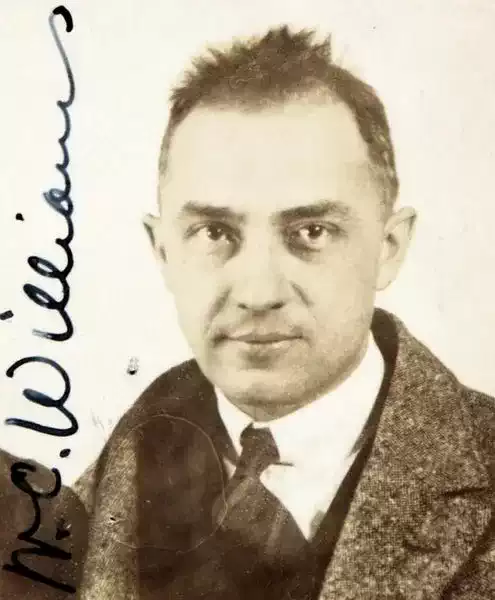
William Carlos Williams
The Thinker
The Thinker
My wife's new pink slippers
have gay pompons.
There is not a spot or a stain
on their satin toes or their sides.
All night they lie together
under her bed's edge.
Shivering I catch sight of them
and smile, in the morning.
Later I watch them
descending the stair,
hurrying through the doors
and round the table,
moving stiffly
with a shake of their gay pompons!
And I talk to them
in my secret mind
out of pure happiness.
My wife's new pink slippers
have gay pompons.
There is not a spot or a stain
on their satin toes or their sides.
All night they lie together
under her bed's edge.
Shivering I catch sight of them
and smile, in the morning.
Later I watch them
descending the stair,
hurrying through the doors
and round the table,
moving stiffly
with a shake of their gay pompons!
And I talk to them
in my secret mind
out of pure happiness.
341
William Carlos Williams
Nantucket
Nantucket
Flowers through the window
lavender and yellow
changed by white curtains –
Smell of cleanliness –
Sunshine of late afternoon –
On the glass tray
a glass pitcher, the tumbler
turned down, by which
a key is lying – And the
immaculate white bed
Flowers through the window
lavender and yellow
changed by white curtains –
Smell of cleanliness –
Sunshine of late afternoon –
On the glass tray
a glass pitcher, the tumbler
turned down, by which
a key is lying – And the
immaculate white bed
348
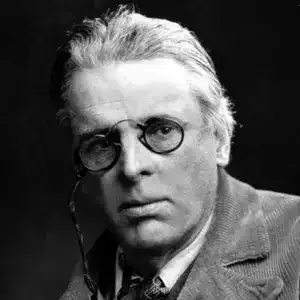
William Butler Yeats
To be Carved On A Stone At Thoor Ballylee
To be Carved On A Stone At Thoor Ballylee
I, THE poet William Yeats,
With old mill boards and sea-green slates,
And smithy work from the Gort forge,
Restored this tower for my wife George;
And may these characters remain
When all is ruin once again.
I, THE poet William Yeats,
With old mill boards and sea-green slates,
And smithy work from the Gort forge,
Restored this tower for my wife George;
And may these characters remain
When all is ruin once again.
245
William Butler Yeats
The Heart Of The Woman
The Heart Of The Woman
O WHAT to me the little room
That was brimmed up with prayer and rest;
He bade me out into the gloom,
And my breast lies upon his breast.
O what to me my mother's care,
The house where I was safe and warm;
The shadowy blossom of my hair
Will hide us from the bitter storm.
O hiding hair and dewy eyes,
I am no more with life and death,
My heart upon his warm heart lies,
My breath is mixed into his breath.
O WHAT to me the little room
That was brimmed up with prayer and rest;
He bade me out into the gloom,
And my breast lies upon his breast.
O what to me my mother's care,
The house where I was safe and warm;
The shadowy blossom of my hair
Will hide us from the bitter storm.
O hiding hair and dewy eyes,
I am no more with life and death,
My heart upon his warm heart lies,
My breath is mixed into his breath.
370
William Butler Yeats
Meditations In Time Of Civil War
Meditations In Time Of Civil War
I
Ancestral Houses
SURELY among a rich man s flowering lawns,
Amid the rustle of his planted hills,
Life overflows without ambitious pains;
And rains down life until the basin spills,
And mounts more dizzy high the more it rains
As though to choose whatever shape it wills
And never stoop to a mechanical
Or servile shape, at others' beck and call.
Mere dreams, mere dreams! Yet Homer had not Sung
Had he not found it certain beyond dreams
That out of life's own self-delight had sprung
The abounding glittering jet; though now it seems
As if some marvellous empty sea-shell flung
Out of the obscure dark of the rich streams,
And not a fountain, were the symbol which
Shadows the inherited glory of the rich.
Some violent bitter man, some powerful man
Called architect and artist in, that they,
Bitter and violent men, might rear in stone
The sweetness that all longed for night and day,
The gentleness none there had ever known;
But when the master's buried mice can play.
And maybe the great-grandson of that house,
For all its bronze and marble, 's but a mouse.
O what if gardens where the peacock strays
With delicate feet upon old terraces,
Or else all Juno from an urn displays
Before the indifferent garden deities;
O what if levelled lawns and gravelled ways
Where slippered Contemplation finds his ease
And Childhood a delight for every sense,
But take our greatness with our violence?
What if the glory of escutcheoned doors,
And buildings that a haughtier age designed,
The pacing to and fro on polished floors
Amid great chambers and long galleries, lined
With famous portraits of our ancestors;
What if those things the greatest of mankind
Consider most to magnify, or to bless,
But take our greatness with our bitterness?
II
My House
An ancient bridge, and a more ancient tower,
A farmhouse that is sheltered by its wall,
An acre of stony ground,
Where the symbolic rose can break in flower,
Old ragged elms, old thorns innumerable,
The sound of the rain or sound
Of every wind that blows;
The stilted water-hen
Crossing Stream again
Scared by the splashing of a dozen cows;
A winding stair, a chamber arched with stone,
A grey stone fireplace with an open hearth,
A candle and written page.
Il Penseroso's Platonist toiled on
In some like chamber, shadowing forth
How the daemonic rage
Imagined everything.
Benighted travellers
From markets and from fairs
Have seen his midnight candle glimmering.
Two men have founded here. A man-at-arms
Gathered a score of horse and spent his days
In this tumultuous spot,
Where through long wars and sudden night alarms
His dwinding score and he seemed castaways
Forgetting and forgot;
And I, that after me
My bodily heirs may find,
To exalt a lonely mind,
Befitting emblems of adversity.
III
My Table
Two heavy trestles, and a board
Where Sato's gift, a changeless sword,
By pen and paper lies,
That it may moralise
My days out of their aimlessness.
A bit of an embroidered dress
Covers its wooden sheath.
Chaucer had not drawn breath
When it was forged. In Sato's house,
Curved like new moon, moon-luminous
It lay five hundred years.
Yet if no change appears
No moon; only an aching heart
Conceives a changeless work of art.
Our learned men have urged
That when and where 'twas forged
A marvellous accomplishment,
In painting or in pottery, went
From father unto son
And through the centuries ran
And seemed unchanging like the sword.
Soul's beauty being most adored,
Men and their business took
Me soul's unchanging look;
For the most rich inheritor,
Knowing that none could pass Heaven's door,
That loved inferior art,
Had such an aching heart
That he, although a country's talk
For silken clothes and stately walk.
Had waking wits; it seemed
Juno's peacock screamed.
IV
My Descendants
Having inherited a vigorous mind
From my old fathers, I must nourish dreams
And leave a woman and a man behind
As vigorous of mind, and yet it seems
Life scarce can cast a fragrance on the wind,
Scarce spread a glory to the morning beams,
But the torn petals strew the garden plot;
And there's but common greenness after that.
And what if my descendants lose the flower
Through natural declension of the soul,
Through too much business with the passing hour,
Through too much play, or marriage with a fool?
May this laborious stair and this stark tower
Become a roofless min that the owl
May build in the cracked masonry and cry
Her desolation to the desolate sky.
The primum Mobile that fashioned us
Has made the very owls in circles move;
And I, that count myself most prosperous,
Seeing that love and friendship are enough,
For an old neighbour's friendship chose the house
And decked and altered it for a girl's love,
And know whatever flourish and decline
These stones remain their monument and mine.
V
The Road at My Door
An affable Irregular,
A heavily-built Falstaffian man,
Comes cracking jokes of civil war
As though to die by gunshot were
The finest play under the sun.
A brown Lieutenant and his men,
Half dressed in national uniform,
Stand at my door, and I complain
Of the foul weather, hail and rain,
A pear-tree broken by the storm.
I count those feathered balls of soot
The moor-hen guides upon the stream.
To silence the envy in my thought;
And turn towards my chamber, caught
In the cold snows of a dream.
VI
The Stare's Nest by My Window
The bees build in the crevices
Of loosening masonry, and there
The mother birds bring grubs and flies.
My wall is loosening; honey-bees,
Come build in the empty house of the state.
We are closed in, and the key is turned
On our uncertainty; somewhere
A man is killed, or a house burned,
Yet no cleat fact to be discerned:
Come build in he empty house of the stare.
A barricade of stone or of wood;
Some fourteen days of civil war;
Last night they trundled down the road
That dead young soldier in his blood:
Come build in the empty house of the stare.
We had fed the heart on fantasies,
The heart's grown brutal from the fare;
More Substance in our enmities
Than in our love; O honey-bees,
Come build in the empty house of the stare.
VII
I see Phantoms of Hatred and of the Heart's
Fullness and of the Coming Emptiness
I climb to the tower-top and lean upon broken stone,
A mist that is like blown snow is sweeping over all,
Valley, river, and elms, under the light of a moon
That seems unlike itself, that seems unchangeable,
A glittering sword out of the east. A puff of wind
And those white glimmering fragments of the mist sweep by.
Frenzies bewilder, reveries perturb the mind;
Monstrous familiar images swim to the mind's eye.
'Vengeance upon the murderers,' the cry goes up,
'Vengeance for Jacques Molay.' In cloud-pale rags, or in lace,
The rage-driven, rage-tormented, and rage-hungry troop,
Trooper belabouring trooper, biting at arm or at face,
Plunges towards nothing, arms and fingers spreading wide
For the embrace of nothing; and I, my wits astray
Because of all that senseless tumult, all but cried
For vengeance on the murderers of Jacques Molay.
Their legs long, delicate and slender, aquamarine their eyes,
Magical unicorns bear ladies on their backs.
The ladies close their musing eyes. No prophecies,
Remembered out of Babylonian almanacs,
Have closed the ladies' eyes, their minds are but a pool
Where even longing drowns under its own excess;
Nothing but stillness can remain when hearts are full
Of their own sweetness, bodies of their loveliness.
The cloud-pale unicorns, the eyes of aquamarine,
The quivering half-closed eyelids, the rags of cloud or of lace,
Or eyes that rage has brightened, arms it has made lean,
Give place to an indifferent multitude, give place
To brazen hawks. Nor self-delighting reverie,
Nor hate of what's to come, nor pity for what's gone,
Nothing but grip of claw, and the eye's complacency,
The innumerable clanging wings that have put out the moon.
I turn away and shut the door, and on the stair
Wonder how many times I could have proved my worth
In something that all others understand or share;
But O! ambitious heart, had such a proof drawn forth
A company of friends, a conscience set at ease,
It had but made us pine the more. The abstract joy,
The half-read wisdom of daemonic images,
Suffice the ageing man as once the growing boy.
I
Ancestral Houses
SURELY among a rich man s flowering lawns,
Amid the rustle of his planted hills,
Life overflows without ambitious pains;
And rains down life until the basin spills,
And mounts more dizzy high the more it rains
As though to choose whatever shape it wills
And never stoop to a mechanical
Or servile shape, at others' beck and call.
Mere dreams, mere dreams! Yet Homer had not Sung
Had he not found it certain beyond dreams
That out of life's own self-delight had sprung
The abounding glittering jet; though now it seems
As if some marvellous empty sea-shell flung
Out of the obscure dark of the rich streams,
And not a fountain, were the symbol which
Shadows the inherited glory of the rich.
Some violent bitter man, some powerful man
Called architect and artist in, that they,
Bitter and violent men, might rear in stone
The sweetness that all longed for night and day,
The gentleness none there had ever known;
But when the master's buried mice can play.
And maybe the great-grandson of that house,
For all its bronze and marble, 's but a mouse.
O what if gardens where the peacock strays
With delicate feet upon old terraces,
Or else all Juno from an urn displays
Before the indifferent garden deities;
O what if levelled lawns and gravelled ways
Where slippered Contemplation finds his ease
And Childhood a delight for every sense,
But take our greatness with our violence?
What if the glory of escutcheoned doors,
And buildings that a haughtier age designed,
The pacing to and fro on polished floors
Amid great chambers and long galleries, lined
With famous portraits of our ancestors;
What if those things the greatest of mankind
Consider most to magnify, or to bless,
But take our greatness with our bitterness?
II
My House
An ancient bridge, and a more ancient tower,
A farmhouse that is sheltered by its wall,
An acre of stony ground,
Where the symbolic rose can break in flower,
Old ragged elms, old thorns innumerable,
The sound of the rain or sound
Of every wind that blows;
The stilted water-hen
Crossing Stream again
Scared by the splashing of a dozen cows;
A winding stair, a chamber arched with stone,
A grey stone fireplace with an open hearth,
A candle and written page.
Il Penseroso's Platonist toiled on
In some like chamber, shadowing forth
How the daemonic rage
Imagined everything.
Benighted travellers
From markets and from fairs
Have seen his midnight candle glimmering.
Two men have founded here. A man-at-arms
Gathered a score of horse and spent his days
In this tumultuous spot,
Where through long wars and sudden night alarms
His dwinding score and he seemed castaways
Forgetting and forgot;
And I, that after me
My bodily heirs may find,
To exalt a lonely mind,
Befitting emblems of adversity.
III
My Table
Two heavy trestles, and a board
Where Sato's gift, a changeless sword,
By pen and paper lies,
That it may moralise
My days out of their aimlessness.
A bit of an embroidered dress
Covers its wooden sheath.
Chaucer had not drawn breath
When it was forged. In Sato's house,
Curved like new moon, moon-luminous
It lay five hundred years.
Yet if no change appears
No moon; only an aching heart
Conceives a changeless work of art.
Our learned men have urged
That when and where 'twas forged
A marvellous accomplishment,
In painting or in pottery, went
From father unto son
And through the centuries ran
And seemed unchanging like the sword.
Soul's beauty being most adored,
Men and their business took
Me soul's unchanging look;
For the most rich inheritor,
Knowing that none could pass Heaven's door,
That loved inferior art,
Had such an aching heart
That he, although a country's talk
For silken clothes and stately walk.
Had waking wits; it seemed
Juno's peacock screamed.
IV
My Descendants
Having inherited a vigorous mind
From my old fathers, I must nourish dreams
And leave a woman and a man behind
As vigorous of mind, and yet it seems
Life scarce can cast a fragrance on the wind,
Scarce spread a glory to the morning beams,
But the torn petals strew the garden plot;
And there's but common greenness after that.
And what if my descendants lose the flower
Through natural declension of the soul,
Through too much business with the passing hour,
Through too much play, or marriage with a fool?
May this laborious stair and this stark tower
Become a roofless min that the owl
May build in the cracked masonry and cry
Her desolation to the desolate sky.
The primum Mobile that fashioned us
Has made the very owls in circles move;
And I, that count myself most prosperous,
Seeing that love and friendship are enough,
For an old neighbour's friendship chose the house
And decked and altered it for a girl's love,
And know whatever flourish and decline
These stones remain their monument and mine.
V
The Road at My Door
An affable Irregular,
A heavily-built Falstaffian man,
Comes cracking jokes of civil war
As though to die by gunshot were
The finest play under the sun.
A brown Lieutenant and his men,
Half dressed in national uniform,
Stand at my door, and I complain
Of the foul weather, hail and rain,
A pear-tree broken by the storm.
I count those feathered balls of soot
The moor-hen guides upon the stream.
To silence the envy in my thought;
And turn towards my chamber, caught
In the cold snows of a dream.
VI
The Stare's Nest by My Window
The bees build in the crevices
Of loosening masonry, and there
The mother birds bring grubs and flies.
My wall is loosening; honey-bees,
Come build in the empty house of the state.
We are closed in, and the key is turned
On our uncertainty; somewhere
A man is killed, or a house burned,
Yet no cleat fact to be discerned:
Come build in he empty house of the stare.
A barricade of stone or of wood;
Some fourteen days of civil war;
Last night they trundled down the road
That dead young soldier in his blood:
Come build in the empty house of the stare.
We had fed the heart on fantasies,
The heart's grown brutal from the fare;
More Substance in our enmities
Than in our love; O honey-bees,
Come build in the empty house of the stare.
VII
I see Phantoms of Hatred and of the Heart's
Fullness and of the Coming Emptiness
I climb to the tower-top and lean upon broken stone,
A mist that is like blown snow is sweeping over all,
Valley, river, and elms, under the light of a moon
That seems unlike itself, that seems unchangeable,
A glittering sword out of the east. A puff of wind
And those white glimmering fragments of the mist sweep by.
Frenzies bewilder, reveries perturb the mind;
Monstrous familiar images swim to the mind's eye.
'Vengeance upon the murderers,' the cry goes up,
'Vengeance for Jacques Molay.' In cloud-pale rags, or in lace,
The rage-driven, rage-tormented, and rage-hungry troop,
Trooper belabouring trooper, biting at arm or at face,
Plunges towards nothing, arms and fingers spreading wide
For the embrace of nothing; and I, my wits astray
Because of all that senseless tumult, all but cried
For vengeance on the murderers of Jacques Molay.
Their legs long, delicate and slender, aquamarine their eyes,
Magical unicorns bear ladies on their backs.
The ladies close their musing eyes. No prophecies,
Remembered out of Babylonian almanacs,
Have closed the ladies' eyes, their minds are but a pool
Where even longing drowns under its own excess;
Nothing but stillness can remain when hearts are full
Of their own sweetness, bodies of their loveliness.
The cloud-pale unicorns, the eyes of aquamarine,
The quivering half-closed eyelids, the rags of cloud or of lace,
Or eyes that rage has brightened, arms it has made lean,
Give place to an indifferent multitude, give place
To brazen hawks. Nor self-delighting reverie,
Nor hate of what's to come, nor pity for what's gone,
Nothing but grip of claw, and the eye's complacency,
The innumerable clanging wings that have put out the moon.
I turn away and shut the door, and on the stair
Wonder how many times I could have proved my worth
In something that all others understand or share;
But O! ambitious heart, had such a proof drawn forth
A company of friends, a conscience set at ease,
It had but made us pine the more. The abstract joy,
The half-read wisdom of daemonic images,
Suffice the ageing man as once the growing boy.
386
William Butler Yeats
A Prayer On Going Into My House
A Prayer On Going Into My House
GOD grant a blessing on this tower and cottage
And on my heirs, if all remain unspoiled,
No table or chair or stool not simple enough
For shepherd lads in Galilee; and grant
That I myself for portions of the year
May handle nothing and set eyes on nothing
But what the great and passionate have used
Throughout so many varying centuries
We take it for the norm; yet should I dream
Sinbad the sailor's brought a painted chest,
Or image, from beyond the Loadstone Mountain,
That dream is a norm; and should some limb of the Devil
Destroy the view by cutting down an ash
That shades the road, or setting up a cottage
Planned in a government office, shorten his life,
Manacle his soul upon the Red Sea bottom.
GOD grant a blessing on this tower and cottage
And on my heirs, if all remain unspoiled,
No table or chair or stool not simple enough
For shepherd lads in Galilee; and grant
That I myself for portions of the year
May handle nothing and set eyes on nothing
But what the great and passionate have used
Throughout so many varying centuries
We take it for the norm; yet should I dream
Sinbad the sailor's brought a painted chest,
Or image, from beyond the Loadstone Mountain,
That dream is a norm; and should some limb of the Devil
Destroy the view by cutting down an ash
That shades the road, or setting up a cottage
Planned in a government office, shorten his life,
Manacle his soul upon the Red Sea bottom.
541
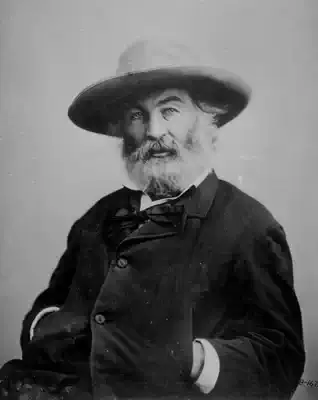
Walt Whitman
A Farm-Picture
A Farm-Picture
THROUGH the ample open door of the peaceful country barn,
A sun-lit pasture field, with cattle and horses feeding;
And haze, and vista, and the far horizon, fading away.
THROUGH the ample open door of the peaceful country barn,
A sun-lit pasture field, with cattle and horses feeding;
And haze, and vista, and the far horizon, fading away.
514
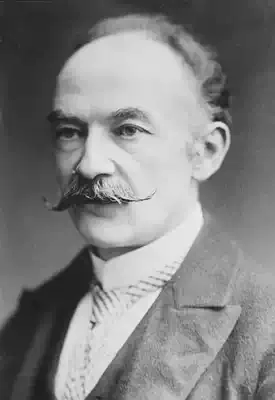
Thomas Hardy
She Hears the Storm
She Hears the Storm
There was a time in former years--
While my roof-tree was his--
When I should have been distressed by fears
At such a night as this!
I should have murmured anxiously,
'The prickling rain strikes cold;
His road is bare of hedge or tree,
And he is getting old.'
But now the fitful chimney-roar,
The drone of Thorncombe trees,
The Froom in flood upon the moor,
The mud of Mellstock Leaze,
The candle slanting sooty-wick'd,
The thuds upon the thatch,
The eaves drops on the window flicked,
The clanking garden-hatch,
And what they mean to wayfarers,
I scarcely heed or mind;
He has won that storm-tight roof of hers
Which Earth grants all her kind.
There was a time in former years--
While my roof-tree was his--
When I should have been distressed by fears
At such a night as this!
I should have murmured anxiously,
'The prickling rain strikes cold;
His road is bare of hedge or tree,
And he is getting old.'
But now the fitful chimney-roar,
The drone of Thorncombe trees,
The Froom in flood upon the moor,
The mud of Mellstock Leaze,
The candle slanting sooty-wick'd,
The thuds upon the thatch,
The eaves drops on the window flicked,
The clanking garden-hatch,
And what they mean to wayfarers,
I scarcely heed or mind;
He has won that storm-tight roof of hers
Which Earth grants all her kind.
237

Sheldon Allan Silverstein
Crowded Tub
Crowded Tub
There are too many kids in this tub
There are too many elbows to scrub
I just washed a behind that I'm sure wasn't mine
There are too many kids in this tub.
There are too many kids in this tub
There are too many elbows to scrub
I just washed a behind that I'm sure wasn't mine
There are too many kids in this tub.
604
Sheldon Allan Silverstein
Enter This Deserted House
Enter This Deserted House
But please walk softly as you do.
Frogs dwell here and crickets too.
Ain't no ceiling, only blue.
Jays dwell here and sunbeams too.
Floors are flowers - take a few
Ferns grow here and daisies too.
Swoosh, whoosh - too-whit, too-woo
Bats dwell here and hoot owls too.
Ha-ha-ha, hee-hee, hoo-hoooo,
Gnomes dwell here and goblins too.
And my child, I thought you knew
I dwell here... and so do you
But please walk softly as you do.
Frogs dwell here and crickets too.
Ain't no ceiling, only blue.
Jays dwell here and sunbeams too.
Floors are flowers - take a few
Ferns grow here and daisies too.
Swoosh, whoosh - too-whit, too-woo
Bats dwell here and hoot owls too.
Ha-ha-ha, hee-hee, hoo-hoooo,
Gnomes dwell here and goblins too.
And my child, I thought you knew
I dwell here... and so do you
534

Sarah Teasdale
Lights
Lights
When we come home at night and close the door,
Standing together in the shadowy room,
Safe in our own love and the gentle gloom,
Glad of familiar wall and chair and floor,
Glad to leave far below the clanging city;
Looking far downward to the glaring street
Gaudy with light, yet tired with many feet,
In both of us wells up a wordless pity;
Men have tried hard to put away the dark;
A million lighted windows brilliantly
Inlay with squares of gold the winter night,
But to us standing here there comes the stark
Sense of the lives behind each yellow light,
And not one wholly joyous, proud, or free.
When we come home at night and close the door,
Standing together in the shadowy room,
Safe in our own love and the gentle gloom,
Glad of familiar wall and chair and floor,
Glad to leave far below the clanging city;
Looking far downward to the glaring street
Gaudy with light, yet tired with many feet,
In both of us wells up a wordless pity;
Men have tried hard to put away the dark;
A million lighted windows brilliantly
Inlay with squares of gold the winter night,
But to us standing here there comes the stark
Sense of the lives behind each yellow light,
And not one wholly joyous, proud, or free.
444
Safo
To Evening
To Evening
O HESPERUS! Thou bringest all things home;
All that the garish day hath scattered wide;
The sheep, the goat, back to the welcome fold;
Thou bring'st the child, too, to his mother's side
O HESPERUS! Thou bringest all things home;
All that the garish day hath scattered wide;
The sheep, the goat, back to the welcome fold;
Thou bring'st the child, too, to his mother's side
484
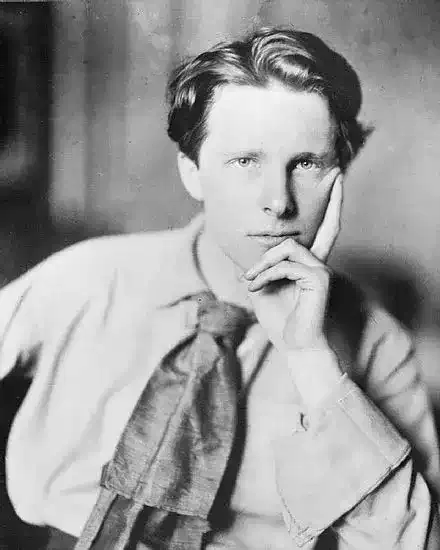
Rupert Brooke
The Song of the Pilgrims
The Song of the Pilgrims
(Halted around the fire by night, after moon-set, they sing this beneath the
trees.)
What light of unremembered skies
Hast thou relumed within our eyes,
Thou whom we seek, whom we shall find?…
A certain odour on the wind,
Thy hidden face beyond the west,
These things have called us; on a quest
Older than any road we trod,
More endless than desire.…
Far God,
Sigh with thy cruel voice, that fills
The soul with longing for dim hills
And faint horizons! For there come
Grey moments of the antient dumb
Sickness of travel, when no song
Can cheer us; but the way seems long;
And one remembers.…
Ah! the beat
Of weary unreturning feet,
And songs of pilgrims unreturning!…
The fires we left are always burning
On the old shrines of home. Our kin
Have built them temples, and therein
Pray to the Gods we know; and dwell
In little houses lovable,
Being happy (we remember how!)
And peaceful even to death...
O Thou,
God of all long desirous roaming,
Our hearts are sick of fruitless homing,
And crying after lost desire.
Hearten us onward! as with fire
Consuming dreams of other bliss.
The best Thou givest, giving this
Sufficient thing—to travel still
Over the plain, beyond the hill,
Unhesitating through the shade,
Amid the silence unafraid,
Till, at some sudden turn, one sees
Against the black and muttering trees
Thine altar, wonderfully white,
Among the Forests of the Night.
(Halted around the fire by night, after moon-set, they sing this beneath the
trees.)
What light of unremembered skies
Hast thou relumed within our eyes,
Thou whom we seek, whom we shall find?…
A certain odour on the wind,
Thy hidden face beyond the west,
These things have called us; on a quest
Older than any road we trod,
More endless than desire.…
Far God,
Sigh with thy cruel voice, that fills
The soul with longing for dim hills
And faint horizons! For there come
Grey moments of the antient dumb
Sickness of travel, when no song
Can cheer us; but the way seems long;
And one remembers.…
Ah! the beat
Of weary unreturning feet,
And songs of pilgrims unreturning!…
The fires we left are always burning
On the old shrines of home. Our kin
Have built them temples, and therein
Pray to the Gods we know; and dwell
In little houses lovable,
Being happy (we remember how!)
And peaceful even to death...
O Thou,
God of all long desirous roaming,
Our hearts are sick of fruitless homing,
And crying after lost desire.
Hearten us onward! as with fire
Consuming dreams of other bliss.
The best Thou givest, giving this
Sufficient thing—to travel still
Over the plain, beyond the hill,
Unhesitating through the shade,
Amid the silence unafraid,
Till, at some sudden turn, one sees
Against the black and muttering trees
Thine altar, wonderfully white,
Among the Forests of the Night.
194
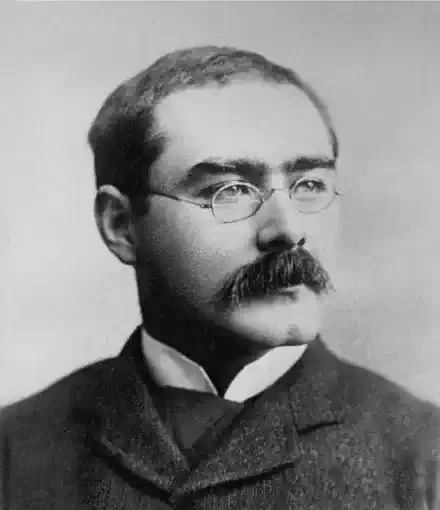
Rudyard Kipling
The Native-Born
The Native-Born
We've drunk to the Queen -- God bless her! --
We've drunk to our mothers' land;
We've drunk to our English brother
(But he does not understand);
We've drunk to the wide creation,
And the Cross swings low for the morn;
Last toast, and of obligation,
A health to the Native-born!
They change their skies above them,
But not their hearts that roam!
We learned from our wistful mothers
To call old England "home";
We read of the English skylark,
Of the spring in the English lanes,
But we screamed with the painted lories
As we rode on the dusty plains!
They passed with their old-world legends --
Their tales of wrong and dearth --
Our fathers held by purchase,
But we by the right of birth;
Our heart's where they rocked our cradle,
Our love where we spent our toil,
And our faith and our hope and our honour
We pledge to our native soil!
I charge you charge your glasses --
I charge you drink with me
To the men of the Four New Nations,
And the Islands of the Sea --
To the last least lump of coral
That none may stand outside,
And our own good pride shall teach us
To praise our comrade's pride!
To the hush of the breathless morning
On the thin, tin, crackling roofs,
To the haze of the burned back-ranges
And the dust of the shoeless hoofs --
To the risk of a death by drowning,
To the risk of a death by drouth --
To the men of a million acres,
To the Sons of the Golden South!
To the Sons of the Golden South (Stand up!),
And the life we live and know,
Let a fellow sing o' the little things he cares about,
If a fellow fights for the little things he cares about
With the weight of a single blow!
To the smoke of a hundred coasters,
To the sheep on a thousand hills,
To the sun that never blisters,
To the rain that never chills --
To the land of the waiting spring-time,
To our five-meal, meat-fed men,
To the tall, deep-bosomed women,
And the children nine and ten!
And the children nine and ten (Stand up!),
And the life we live and know,
Let a fellow sing o' the little things he cares about,
If a fellow fights for the little things he cares about
With the weight of a two-fold blow!
To the far-flung fenceless prairie
Where the quick cloud-shadows trail,
To our neighbour's barn in the offing
And the line of the new-cut rail;
To the plough in her league-long furrow
With the gray Lake gulls behind --
To the weight of a half-year's winter
And the warm wet western wind!
To the home of the floods and thunder,
To her pale dry healing blue --
To the lift of the great Cape combers,
And the smell of the baked Karroo.
To the growl of the sluicing stamp-head --
To the reef and the water-gold,
To the last and the largest Empire,
To the map that is half unrolled!
To our dear dark foster-mothers,
To the heathen songs they sung --
To the heathen speech we babbled
Ere we came to the white man's tongue.
To the cool of our deep verandas --
To the blaze of our jewelled main,
To the night, to the palms in the moonlight,
And the fire-fly in the cane!
To the hearth of our people's people --
To her well-ploughed windy sea,
To the hush of our dread high-altar
Where The Abbey makes us We;
To the grist of the slow-ground ages,
To the gain that is yours and mine --
To the Bank of the Open Credit,
To the Power-house of the Line!
We've drunk to the Queen -- God bless her! --
We've drunk to our mothers' land;
We've drunk to our English brother
(And we hope he'll understand).
We've drunk as much as we're able,
And the Cross swings low for the morn;
Last toast -- and your foot on the table! --
A health to the Native-born!
A health to the Native-born (Stand up!),
We're six white men arow,
All bound to sing o' the little things we care about,
All bound to fight for the little things we care about
With the weight of a six-fold blow!
By the might of our cable-tow (Take hands!),
From the Orkneys to the Horn,
All round the world (and a little loop to pull it by),
All round the world (and a little strap to buckle it),
A health to the Native-born!
We've drunk to the Queen -- God bless her! --
We've drunk to our mothers' land;
We've drunk to our English brother
(But he does not understand);
We've drunk to the wide creation,
And the Cross swings low for the morn;
Last toast, and of obligation,
A health to the Native-born!
They change their skies above them,
But not their hearts that roam!
We learned from our wistful mothers
To call old England "home";
We read of the English skylark,
Of the spring in the English lanes,
But we screamed with the painted lories
As we rode on the dusty plains!
They passed with their old-world legends --
Their tales of wrong and dearth --
Our fathers held by purchase,
But we by the right of birth;
Our heart's where they rocked our cradle,
Our love where we spent our toil,
And our faith and our hope and our honour
We pledge to our native soil!
I charge you charge your glasses --
I charge you drink with me
To the men of the Four New Nations,
And the Islands of the Sea --
To the last least lump of coral
That none may stand outside,
And our own good pride shall teach us
To praise our comrade's pride!
To the hush of the breathless morning
On the thin, tin, crackling roofs,
To the haze of the burned back-ranges
And the dust of the shoeless hoofs --
To the risk of a death by drowning,
To the risk of a death by drouth --
To the men of a million acres,
To the Sons of the Golden South!
To the Sons of the Golden South (Stand up!),
And the life we live and know,
Let a fellow sing o' the little things he cares about,
If a fellow fights for the little things he cares about
With the weight of a single blow!
To the smoke of a hundred coasters,
To the sheep on a thousand hills,
To the sun that never blisters,
To the rain that never chills --
To the land of the waiting spring-time,
To our five-meal, meat-fed men,
To the tall, deep-bosomed women,
And the children nine and ten!
And the children nine and ten (Stand up!),
And the life we live and know,
Let a fellow sing o' the little things he cares about,
If a fellow fights for the little things he cares about
With the weight of a two-fold blow!
To the far-flung fenceless prairie
Where the quick cloud-shadows trail,
To our neighbour's barn in the offing
And the line of the new-cut rail;
To the plough in her league-long furrow
With the gray Lake gulls behind --
To the weight of a half-year's winter
And the warm wet western wind!
To the home of the floods and thunder,
To her pale dry healing blue --
To the lift of the great Cape combers,
And the smell of the baked Karroo.
To the growl of the sluicing stamp-head --
To the reef and the water-gold,
To the last and the largest Empire,
To the map that is half unrolled!
To our dear dark foster-mothers,
To the heathen songs they sung --
To the heathen speech we babbled
Ere we came to the white man's tongue.
To the cool of our deep verandas --
To the blaze of our jewelled main,
To the night, to the palms in the moonlight,
And the fire-fly in the cane!
To the hearth of our people's people --
To her well-ploughed windy sea,
To the hush of our dread high-altar
Where The Abbey makes us We;
To the grist of the slow-ground ages,
To the gain that is yours and mine --
To the Bank of the Open Credit,
To the Power-house of the Line!
We've drunk to the Queen -- God bless her! --
We've drunk to our mothers' land;
We've drunk to our English brother
(And we hope he'll understand).
We've drunk as much as we're able,
And the Cross swings low for the morn;
Last toast -- and your foot on the table! --
A health to the Native-born!
A health to the Native-born (Stand up!),
We're six white men arow,
All bound to sing o' the little things we care about,
All bound to fight for the little things we care about
With the weight of a six-fold blow!
By the might of our cable-tow (Take hands!),
From the Orkneys to the Horn,
All round the world (and a little loop to pull it by),
All round the world (and a little strap to buckle it),
A health to the Native-born!
480
Rudyard Kipling
In Springtime
In Springtime
My garden blazes brightly with the rose-bush and the peach,
And the koil sings above it, in the siris by the well,
From the creeper-covered trellis comes the squirrel's chattering speech,
And the blue jay screams and flutters where the cheery sat-bhai dwell.
But the rose has lost its fragrance, and the koil's note is strange;
I am sick of endless sunshine, sick of blossom-burdened bough.
Give me back the leafless woodlands where the winds of Springtime range --
Give me back one day in England, for it's Spring in England now!
Through the pines the gusts are booming, o'er the brown fields blowing chill,
From the furrow of the ploughshare streams the fragrance of the loam,
And the hawk nests on the cliffside and the jackdaw in the hill,
And my heart is back in England 'mid the sights and sounds of Home.
But the garland of the sacrifice this wealth of rose and peach is,
Ah! koil, little koil, singing on the siris bough,
In my ears the knell of exile your ceaseless bell like speech is --
Can you tell me aught of England or of Spring in England now?
My garden blazes brightly with the rose-bush and the peach,
And the koil sings above it, in the siris by the well,
From the creeper-covered trellis comes the squirrel's chattering speech,
And the blue jay screams and flutters where the cheery sat-bhai dwell.
But the rose has lost its fragrance, and the koil's note is strange;
I am sick of endless sunshine, sick of blossom-burdened bough.
Give me back the leafless woodlands where the winds of Springtime range --
Give me back one day in England, for it's Spring in England now!
Through the pines the gusts are booming, o'er the brown fields blowing chill,
From the furrow of the ploughshare streams the fragrance of the loam,
And the hawk nests on the cliffside and the jackdaw in the hill,
And my heart is back in England 'mid the sights and sounds of Home.
But the garland of the sacrifice this wealth of rose and peach is,
Ah! koil, little koil, singing on the siris bough,
In my ears the knell of exile your ceaseless bell like speech is --
Can you tell me aught of England or of Spring in England now?
440

Robert W. Service
The Three Bares
The Three Bares
Ma tried to wash her garden slacks but couldn't get 'em clean
And so she thought she'd soak 'em in a bucket o' benzine.
It worked all right. She wrung 'em out then wondered what she'd do
With all that bucket load of high explosive residue.
She knew that it was dangerous to scatter it around,
For Grandpa liked to throw his lighted matches on the ground.
Somehow she didn't dare to pour it down the kitchen sink,
And what the heck to do with it, poor Ma jest couldn't think.
Then Nature seemed to give the clue, as down the garden lot
She spied the edifice that graced a solitary spot,
Their Palace of Necessity, the family joy and pride,
Enshrined in morning-glory vine, with graded seats inside;
Jest like that cabin Goldylocks found occupied by three,
But in this case B-E-A-R was spelt B-A-R-E----
A tiny seat for Baby Bare, a medium for Ma,
A full-sized section sacred to the Bare of Grandpapa.
Well, Ma was mighty glad to get that worry off her mind,
And hefting up the bucket so combustibly inclined,
She hurried down the garden to that refuge so discreet,
And dumped the liquid menace safely through the centre seat.
Next morning old Grandpa arose; he made a hearty meal,
And sniffed the air and said: 'By Gosh! how full of beans I feel.
Darned if I ain't as fresh as paint; my joy will be complete
With jest a quiet session on the usual morning seat;
To smoke me pipe an' meditate, an' maybe write a pome,
For that's the time when bits o' rhyme gits jiggin' in me dome.'
He sat down on that special seat slicked shiny by his age,
And looking like Walt Whitman, jest a silver-whiskered sage,
He filled his corn-cob to the brim and tapped it snugly down,
And chuckled: 'Of a perfect day I reckon this the crown.'
He lit the weed, it soothed his need, it was so soft and sweet:
And then he dropped the lighted match clean through the middle seat.
His little grand-child Rosyleen cried from the kichen door:
'Oh, Ma, come quick; there's sompin wrong; I heared a dreffel roar;
Oh, Ma, I see a sheet of flame; it's rising high and higher...
Oh, Mummy dear, I sadly fear our comfort-cot's caught fire.'
Poor Ma was thrilled with horror at them words o' Rosyleen.
She thought of Grandpa's matches and that bucket of benzine;
So down the garden geared on high, she ran with all her power,
For regular was Grandpa, and she knew it was his hour.
Then graspin' gaspin' Rosyleen she peered into the fire,
A roarin' soarin' furnace now, perchance old Grandpa's pyre....
But as them twain expressed their pain they heard a hearty cheer----
Behold the old rapscallion squattinn' in the duck pond near,
His silver whiskers singed away, a gosh-almighty wreck,
Wi' half a yard o' toilet seat entwined about his neck....
He cried: 'Say, folks, oh, did ye hear the big blow-out I made?
It scared me stiff - I hope you-uns was not too much afraid?
But now I best be crawlin' out o' this dog-gasted wet....
For what I aim to figger out is----WHAT THE HECK I ET?'
Ma tried to wash her garden slacks but couldn't get 'em clean
And so she thought she'd soak 'em in a bucket o' benzine.
It worked all right. She wrung 'em out then wondered what she'd do
With all that bucket load of high explosive residue.
She knew that it was dangerous to scatter it around,
For Grandpa liked to throw his lighted matches on the ground.
Somehow she didn't dare to pour it down the kitchen sink,
And what the heck to do with it, poor Ma jest couldn't think.
Then Nature seemed to give the clue, as down the garden lot
She spied the edifice that graced a solitary spot,
Their Palace of Necessity, the family joy and pride,
Enshrined in morning-glory vine, with graded seats inside;
Jest like that cabin Goldylocks found occupied by three,
But in this case B-E-A-R was spelt B-A-R-E----
A tiny seat for Baby Bare, a medium for Ma,
A full-sized section sacred to the Bare of Grandpapa.
Well, Ma was mighty glad to get that worry off her mind,
And hefting up the bucket so combustibly inclined,
She hurried down the garden to that refuge so discreet,
And dumped the liquid menace safely through the centre seat.
Next morning old Grandpa arose; he made a hearty meal,
And sniffed the air and said: 'By Gosh! how full of beans I feel.
Darned if I ain't as fresh as paint; my joy will be complete
With jest a quiet session on the usual morning seat;
To smoke me pipe an' meditate, an' maybe write a pome,
For that's the time when bits o' rhyme gits jiggin' in me dome.'
He sat down on that special seat slicked shiny by his age,
And looking like Walt Whitman, jest a silver-whiskered sage,
He filled his corn-cob to the brim and tapped it snugly down,
And chuckled: 'Of a perfect day I reckon this the crown.'
He lit the weed, it soothed his need, it was so soft and sweet:
And then he dropped the lighted match clean through the middle seat.
His little grand-child Rosyleen cried from the kichen door:
'Oh, Ma, come quick; there's sompin wrong; I heared a dreffel roar;
Oh, Ma, I see a sheet of flame; it's rising high and higher...
Oh, Mummy dear, I sadly fear our comfort-cot's caught fire.'
Poor Ma was thrilled with horror at them words o' Rosyleen.
She thought of Grandpa's matches and that bucket of benzine;
So down the garden geared on high, she ran with all her power,
For regular was Grandpa, and she knew it was his hour.
Then graspin' gaspin' Rosyleen she peered into the fire,
A roarin' soarin' furnace now, perchance old Grandpa's pyre....
But as them twain expressed their pain they heard a hearty cheer----
Behold the old rapscallion squattinn' in the duck pond near,
His silver whiskers singed away, a gosh-almighty wreck,
Wi' half a yard o' toilet seat entwined about his neck....
He cried: 'Say, folks, oh, did ye hear the big blow-out I made?
It scared me stiff - I hope you-uns was not too much afraid?
But now I best be crawlin' out o' this dog-gasted wet....
For what I aim to figger out is----WHAT THE HECK I ET?'
211
Robert W. Service
The Rover
The Rover
Oh, how good it is to be
Foot-loose and heart-free!
Just my dog and pipe and I, underneath the vast sky;
Trail to try and goal to win, white road and cool inn;
Fields to lure a lad afar, clear spring and still star;
Lilting feet that never tire, green dingle, fagot fire;
None to hurry, none to hold, heather hill and hushed fold;
Nature like a picture book, laughing leaf and bright brook;
Every day a jewel bright, set serenely in the night;
Every night a holy shrine, radiant for a day divine.
Weathered cheek and kindly eye, let the wanderer go by.
Woman-love and wistful heart, let the gipsy one depart.
For the farness and the road are his glory and his goad.
Oh, the lilt of youth and Spring! Eyes laugh and lips sing.
Yea, but it is good to be
Foot-loose and heart-free!
II
Yet how good it is to come
Home at last, home, home!
On the clover swings the bee, overhead's the hale tree;
Sky of turquoise gleams through, yonder glints the lake's blue.
In a hammock let's swing, weary of wandering;
Tired of wild, uncertain lands, strange faces, faint hands.
Has the wondrous world gone cold? Am I growing old, old?
Grey and weary . . . let me dream, glide on the tranquil stream.
Oh, what joyous days I've had, full, fervid, gay, glad!
Yet there comes a subtile change, let the stripling rove, range.
From sweet roving comes sweet rest, after all, home's best.
And if there's a little bit of woman-love with it,
I will count my life content, God-blest and well spent. . . .
Oh but it is good to be
Foot-loose and heart-free!
Yet how good it is to come
Home at last, home, home!
Oh, how good it is to be
Foot-loose and heart-free!
Just my dog and pipe and I, underneath the vast sky;
Trail to try and goal to win, white road and cool inn;
Fields to lure a lad afar, clear spring and still star;
Lilting feet that never tire, green dingle, fagot fire;
None to hurry, none to hold, heather hill and hushed fold;
Nature like a picture book, laughing leaf and bright brook;
Every day a jewel bright, set serenely in the night;
Every night a holy shrine, radiant for a day divine.
Weathered cheek and kindly eye, let the wanderer go by.
Woman-love and wistful heart, let the gipsy one depart.
For the farness and the road are his glory and his goad.
Oh, the lilt of youth and Spring! Eyes laugh and lips sing.
Yea, but it is good to be
Foot-loose and heart-free!
II
Yet how good it is to come
Home at last, home, home!
On the clover swings the bee, overhead's the hale tree;
Sky of turquoise gleams through, yonder glints the lake's blue.
In a hammock let's swing, weary of wandering;
Tired of wild, uncertain lands, strange faces, faint hands.
Has the wondrous world gone cold? Am I growing old, old?
Grey and weary . . . let me dream, glide on the tranquil stream.
Oh, what joyous days I've had, full, fervid, gay, glad!
Yet there comes a subtile change, let the stripling rove, range.
From sweet roving comes sweet rest, after all, home's best.
And if there's a little bit of woman-love with it,
I will count my life content, God-blest and well spent. . . .
Oh but it is good to be
Foot-loose and heart-free!
Yet how good it is to come
Home at last, home, home!
231
Robert W. Service
The Man From Eldorado
The Man From Eldorado
He's the man from Eldorado, and he's just arrived in town,
In moccasins and oily buckskin shirt.
He's gaunt as any Indian, and pretty nigh as brown;
He's greasy, and he smells of sweat and dirt.
He sports a crop of whiskers that would shame a healthy hog;
Hard work has racked his joints and stooped his back;
He slops along the sidewalk followed by his yellow dog,
But he's got a bunch of gold-dust in his sack.
He seems a little wistful as he blinks at all the lights,
And maybe he is thinking of his claim
And the dark and dwarfish cabin where he lay and dreamed at nights,
(Thank God, he'll never see the place again!)
Where he lived on tinned tomatoes, beef embalmed and sourdough bread,
On rusty beans and bacon furred with mould;
His stomach's out of kilter and his system full of lead,
But it's over, and his poke is full of gold.
He has panted at the windlass, he has loaded in the drift,
He has pounded at the face of oozy clay;
He has taxed himself to sickness, dark and damp and double shift,
He has labored like a demon night and day.
And now, praise God, it's over, and he seems to breathe again
Of new-mown hay, the warm, wet, friendly loam;
He sees a snowy orchard in a green and dimpling plain,
And a little vine-clad cottage, and it's--Home.
II
He's the man from Eldorado, and he's had a bite and sup,
And he's met in with a drouthy friend or two;
He's cached away his gold-dust, but he's sort of bucking up,
So he's kept enough to-night to see him through.
His eye is bright and genial, his tongue no longer lags;
`His heart is brimming o'er with joy and mirth;
He may be far from savory, he may be clad in rags,
`But to-night he feels as if he owns the earth.
Says he: "Boys, here is where the shaggy North and I will shake;
I thought I'd never manage to get free.
I kept on making misses; but at last I've got my stake;
There's no more thawing frozen muck for me.
I am going to God's Country, where I'll live the simple life;
I'll buy a bit of land and make a start;
I'll carve a little homestead, and I'll win a little wife,
And raise ten little kids to cheer my heart."
They signified their sympathy by crowding to the bar;
They bellied up three deep and drank his health.
He shed a radiant smile around and smoked a rank cigar;
They wished him honor, happiness and wealth.
They drank unto his wife to be--that unsuspecting maid;
They drank unto his children half a score;
And when they got through drinking very tenderly they laid
The man from Eldorado on the floor.
III
He's the man from Eldorado, and he's only starting in
To cultivate a thousand-dollar jag.
His poke is full of gold-dust and his heart is full of sin,
And he's dancing with a girl called Muckluck Mag.
She's as light as any fairy; she's as pretty as a peach;
She's mistress of the witchcraft to beguile;
There's sunshine in her manner, there is music in her speech,
And there's concentrated honey in her smile.
Oh, the fever of the dance-hall and the glitter and the shine,
The beauty, and the jewels, and the whirl,
The madness of the music, the rapture of the wine,
The languorous allurement of a girl!
She is like a lost madonna; he is gaunt, unkempt and grim;
But she fondles him and gazes in his eyes;
Her kisses seek his heavy lips, and soon it seems to him
He has staked a little claim in Paradise.
"Who's for a juicy two-step?" cries the master of the floor;
The music throbs with soft, seductive beat.
There's glitter, gilt and gladness; there are pretty girls galore;
There's a woolly man with moccasins on feet.
They know they've got him going; he is buying wine for all;
They crowd around as buzzards at a feast,
Then when his poke is empty they boost him from the hall,
And spurn him in the gutter like a beast.
He's the man from Eldorado, and he's painting red the town;
Behind he leaves a trail of yellow dust;
In a whirl of senseless riot he is ramping up and down;
There's nothing checks his madness and his lust.
And soon the word is passed around--it travels like a flame;
They fight to clutch his hand and call him friend,
The chevaliers of lost repute, the dames of sorry fame;
Then comes the grim awakening--the end.
IV
He's the man from Eldorado, and he gives a grand affair;
There's feasting, dancing, wine without restraint.
The smooth Beau Brummels of the bar, the faro men, are there;
The tinhorns and purveyors of red paint;
The sleek and painted women, their predacious eyes aglow-Sure
Klondike City never saw the like;
Then Muckluck Mag proposed the toast, "The giver of the show,
The livest sport that ever hit the pike."
The "live one" rises to his feet; he stammers to reply-And
then there comes before his muddled brain
A vision of green vastitudes beneath an April sky,
And clover pastures drenched with silver rain.
He knows that it can never be, that he is down and out;
Life leers at him with foul and fetid breath;
And then amid the revelry, the song and cheer and shout,
He suddenly grows grim and cold as death.
He grips the table tensely, and he says: "Dear friends of mine,
I've let you dip your fingers in my purse;
I've crammed you at my table, and I've drowned you in my wine,
And I've little left to give you but--my curse.
I've failed supremely in my plans; it's rather late to whine;
My poke is mighty weasened up and small.
I thank you each for coming here; the happiness is mine-And
now, you thieves and harlots, take it all."
He twists the thong from off his poke; he swings it o'er his head;
The nuggets fall around their feet like grain.
They rattle over roof and wall; they scatter, roll and spread;
The dust is like a shower of golden rain.
The guests a moment stand aghast, then grovel on the floor;
They fight, and snarl, and claw, like beasts of prey;
And then, as everybody grabbed and everybody swore,
The man from Eldorado slipped away.
V
He's the man from Eldorado, and they found him stiff and dead,
Half covered by the freezing ooze and dirt.
A clotted Colt was in his hand, a hole was in his head,
And he wore an old and oily buckskin shirt.
His eyes were fixed and horrible, as one who hails the end;
The frost had set him rigid as a log;
And there, half lying on his breast, his last and only friend,
There crouched and whined a mangy yellow dog.
He's the man from Eldorado, and he's just arrived in town,
In moccasins and oily buckskin shirt.
He's gaunt as any Indian, and pretty nigh as brown;
He's greasy, and he smells of sweat and dirt.
He sports a crop of whiskers that would shame a healthy hog;
Hard work has racked his joints and stooped his back;
He slops along the sidewalk followed by his yellow dog,
But he's got a bunch of gold-dust in his sack.
He seems a little wistful as he blinks at all the lights,
And maybe he is thinking of his claim
And the dark and dwarfish cabin where he lay and dreamed at nights,
(Thank God, he'll never see the place again!)
Where he lived on tinned tomatoes, beef embalmed and sourdough bread,
On rusty beans and bacon furred with mould;
His stomach's out of kilter and his system full of lead,
But it's over, and his poke is full of gold.
He has panted at the windlass, he has loaded in the drift,
He has pounded at the face of oozy clay;
He has taxed himself to sickness, dark and damp and double shift,
He has labored like a demon night and day.
And now, praise God, it's over, and he seems to breathe again
Of new-mown hay, the warm, wet, friendly loam;
He sees a snowy orchard in a green and dimpling plain,
And a little vine-clad cottage, and it's--Home.
II
He's the man from Eldorado, and he's had a bite and sup,
And he's met in with a drouthy friend or two;
He's cached away his gold-dust, but he's sort of bucking up,
So he's kept enough to-night to see him through.
His eye is bright and genial, his tongue no longer lags;
`His heart is brimming o'er with joy and mirth;
He may be far from savory, he may be clad in rags,
`But to-night he feels as if he owns the earth.
Says he: "Boys, here is where the shaggy North and I will shake;
I thought I'd never manage to get free.
I kept on making misses; but at last I've got my stake;
There's no more thawing frozen muck for me.
I am going to God's Country, where I'll live the simple life;
I'll buy a bit of land and make a start;
I'll carve a little homestead, and I'll win a little wife,
And raise ten little kids to cheer my heart."
They signified their sympathy by crowding to the bar;
They bellied up three deep and drank his health.
He shed a radiant smile around and smoked a rank cigar;
They wished him honor, happiness and wealth.
They drank unto his wife to be--that unsuspecting maid;
They drank unto his children half a score;
And when they got through drinking very tenderly they laid
The man from Eldorado on the floor.
III
He's the man from Eldorado, and he's only starting in
To cultivate a thousand-dollar jag.
His poke is full of gold-dust and his heart is full of sin,
And he's dancing with a girl called Muckluck Mag.
She's as light as any fairy; she's as pretty as a peach;
She's mistress of the witchcraft to beguile;
There's sunshine in her manner, there is music in her speech,
And there's concentrated honey in her smile.
Oh, the fever of the dance-hall and the glitter and the shine,
The beauty, and the jewels, and the whirl,
The madness of the music, the rapture of the wine,
The languorous allurement of a girl!
She is like a lost madonna; he is gaunt, unkempt and grim;
But she fondles him and gazes in his eyes;
Her kisses seek his heavy lips, and soon it seems to him
He has staked a little claim in Paradise.
"Who's for a juicy two-step?" cries the master of the floor;
The music throbs with soft, seductive beat.
There's glitter, gilt and gladness; there are pretty girls galore;
There's a woolly man with moccasins on feet.
They know they've got him going; he is buying wine for all;
They crowd around as buzzards at a feast,
Then when his poke is empty they boost him from the hall,
And spurn him in the gutter like a beast.
He's the man from Eldorado, and he's painting red the town;
Behind he leaves a trail of yellow dust;
In a whirl of senseless riot he is ramping up and down;
There's nothing checks his madness and his lust.
And soon the word is passed around--it travels like a flame;
They fight to clutch his hand and call him friend,
The chevaliers of lost repute, the dames of sorry fame;
Then comes the grim awakening--the end.
IV
He's the man from Eldorado, and he gives a grand affair;
There's feasting, dancing, wine without restraint.
The smooth Beau Brummels of the bar, the faro men, are there;
The tinhorns and purveyors of red paint;
The sleek and painted women, their predacious eyes aglow-Sure
Klondike City never saw the like;
Then Muckluck Mag proposed the toast, "The giver of the show,
The livest sport that ever hit the pike."
The "live one" rises to his feet; he stammers to reply-And
then there comes before his muddled brain
A vision of green vastitudes beneath an April sky,
And clover pastures drenched with silver rain.
He knows that it can never be, that he is down and out;
Life leers at him with foul and fetid breath;
And then amid the revelry, the song and cheer and shout,
He suddenly grows grim and cold as death.
He grips the table tensely, and he says: "Dear friends of mine,
I've let you dip your fingers in my purse;
I've crammed you at my table, and I've drowned you in my wine,
And I've little left to give you but--my curse.
I've failed supremely in my plans; it's rather late to whine;
My poke is mighty weasened up and small.
I thank you each for coming here; the happiness is mine-And
now, you thieves and harlots, take it all."
He twists the thong from off his poke; he swings it o'er his head;
The nuggets fall around their feet like grain.
They rattle over roof and wall; they scatter, roll and spread;
The dust is like a shower of golden rain.
The guests a moment stand aghast, then grovel on the floor;
They fight, and snarl, and claw, like beasts of prey;
And then, as everybody grabbed and everybody swore,
The man from Eldorado slipped away.
V
He's the man from Eldorado, and they found him stiff and dead,
Half covered by the freezing ooze and dirt.
A clotted Colt was in his hand, a hole was in his head,
And he wore an old and oily buckskin shirt.
His eyes were fixed and horrible, as one who hails the end;
The frost had set him rigid as a log;
And there, half lying on his breast, his last and only friend,
There crouched and whined a mangy yellow dog.
187
Robert W. Service
The Little Old Log Cabin
The Little Old Log Cabin
When a man gits on his uppers in a hard-pan sort of town,
An' he ain't got nothin' comin' an' he can't afford ter eat,
An' he's in a fix for lodgin' an' he wanders up an' down,
An' you'd fancy he'd been boozin', he's so locoed 'bout the feet;
When he's feelin' sneakin' sorry an' his belt is hangin' slack,
An' his face is peaked an' gray-like an' his heart gits down an' whines,
Then he's apt ter git a-thinkin' an' a-wishin' he was back
In the little ol' log cabin in the shadder of the pines.
When he's on the blazin' desert an' his canteen's sprung a leak,
An' he's all alone an' crazy an' he's crawlin' like a snail,
An' his tongue's so black an' swollen that it hurts him fer to speak,
An' he gouges down fer water an' the raven's on his trail;
When he's done with care and cursin' an' he feels more like to cry,
An' he sees ol' Death a-grinnin' an' he thinks upon his crimes,
Then he's like ter hev' a vision, as he settles down ter die,
Of the little ol' log cabin an' the roses an' the vines.
Oh, the little ol' log cabin, it's a solemn shinin' mark,
When a feller gits ter sinnin' an' a-goin' ter the wall,
An' folks don't understand him an' he's gropin' in the dark,
An' he's sick of bein' cursed at an' he's longin' fer his call!
When the sun of life's a-sinkin' you can see it 'way above,
On the hill from out the shadder in a glory 'gin the sky,
An' your mother's voice is callin', an' her arms are stretched in love,
An' somehow you're glad you're goin', an' you ain't a-scared to die;
When you'll be like a kid again an' nestle to her breast,
An' never leave its shelter, an' forget, an' love, an' rest.
When a man gits on his uppers in a hard-pan sort of town,
An' he ain't got nothin' comin' an' he can't afford ter eat,
An' he's in a fix for lodgin' an' he wanders up an' down,
An' you'd fancy he'd been boozin', he's so locoed 'bout the feet;
When he's feelin' sneakin' sorry an' his belt is hangin' slack,
An' his face is peaked an' gray-like an' his heart gits down an' whines,
Then he's apt ter git a-thinkin' an' a-wishin' he was back
In the little ol' log cabin in the shadder of the pines.
When he's on the blazin' desert an' his canteen's sprung a leak,
An' he's all alone an' crazy an' he's crawlin' like a snail,
An' his tongue's so black an' swollen that it hurts him fer to speak,
An' he gouges down fer water an' the raven's on his trail;
When he's done with care and cursin' an' he feels more like to cry,
An' he sees ol' Death a-grinnin' an' he thinks upon his crimes,
Then he's like ter hev' a vision, as he settles down ter die,
Of the little ol' log cabin an' the roses an' the vines.
Oh, the little ol' log cabin, it's a solemn shinin' mark,
When a feller gits ter sinnin' an' a-goin' ter the wall,
An' folks don't understand him an' he's gropin' in the dark,
An' he's sick of bein' cursed at an' he's longin' fer his call!
When the sun of life's a-sinkin' you can see it 'way above,
On the hill from out the shadder in a glory 'gin the sky,
An' your mother's voice is callin', an' her arms are stretched in love,
An' somehow you're glad you're goin', an' you ain't a-scared to die;
When you'll be like a kid again an' nestle to her breast,
An' never leave its shelter, an' forget, an' love, an' rest.
187
Robert W. Service
The Learner
The Learner
I've learned--Of all the friends I've won
Dame Nature is the best,
And to her like a child I run
Craving her mother breast
To comfort me in soul distress,
And in green glade to find
Far from the world's unloveliness
Pure peace of mind.
I've learned--the worth of simple ways,
And though I've loved to roam,
I know the glow of hearth ablaze,
The bliss of coming home.
I'd rather wear old clothes than new,
I'd rather walk than drive,
And as my wants are oh so few
I joy to be alive.
I've learned--that happiness is all,
A sweetness of the mind;
And would you purge your heart of gall,-Try
being kind.
Then when some weaker one you aid,
Believe it true
'Tis God Himself will make the grade
Less hard for you.
I've learned--Of all the friends I've won
Dame Nature is the best,
And to her like a child I run
Craving her mother breast
To comfort me in soul distress,
And in green glade to find
Far from the world's unloveliness
Pure peace of mind.
I've learned--the worth of simple ways,
And though I've loved to roam,
I know the glow of hearth ablaze,
The bliss of coming home.
I'd rather wear old clothes than new,
I'd rather walk than drive,
And as my wants are oh so few
I joy to be alive.
I've learned--that happiness is all,
A sweetness of the mind;
And would you purge your heart of gall,-Try
being kind.
Then when some weaker one you aid,
Believe it true
'Tis God Himself will make the grade
Less hard for you.
239
Page 1
Next