

Marriage
Poems in this topic

William Shakespeare
Spring
Spring
When daisies pied, and violets blue,
And lady-smocks all silver-white,
And cuckoo-buds of yellow hue
Do paint the meadows with delight,
The cuckoo then, on every tree,
Mocks married men, for thus sings he:
'Cuckoo!
Cuckoo, cuckoo!' O word of fear,
Unpleasing to a married ear.
When shepherds pipe on oaten straws,
And merry larks are ploughmen's clocks,
When turtles tread, and rooks, and daws,
And maidens bleach their summer smocks,
The cuckoo then, on every tree,
Mocks married men, for thus sings he:
'Cuckoo!
Cuckoo, cuckoo!' O word of fear,
Unpleasing to a married ear.
When daisies pied, and violets blue,
And lady-smocks all silver-white,
And cuckoo-buds of yellow hue
Do paint the meadows with delight,
The cuckoo then, on every tree,
Mocks married men, for thus sings he:
'Cuckoo!
Cuckoo, cuckoo!' O word of fear,
Unpleasing to a married ear.
When shepherds pipe on oaten straws,
And merry larks are ploughmen's clocks,
When turtles tread, and rooks, and daws,
And maidens bleach their summer smocks,
The cuckoo then, on every tree,
Mocks married men, for thus sings he:
'Cuckoo!
Cuckoo, cuckoo!' O word of fear,
Unpleasing to a married ear.
325
William Shakespeare
Sonnet CXVI
Sonnet CXVI
Let me not to the marriage of true minds
Admit impediments. Love is not love
Which alters when it alteration finds,
Or bends with the remover to remove:
O no! it is an ever-fixed mark
That looks on tempests and is never shaken;
It is the star to every wandering bark,
Whose worth's unknown, although his height be taken.
Love's not Time's fool, though rosy lips and cheeks
Within his bending sickle's compass come:
Love alters not with his brief hours and weeks,
But bears it out even to the edge of doom.
If this be error and upon me proved,
I never writ, nor no man ever loved.
Let me not to the marriage of true minds
Admit impediments. Love is not love
Which alters when it alteration finds,
Or bends with the remover to remove:
O no! it is an ever-fixed mark
That looks on tempests and is never shaken;
It is the star to every wandering bark,
Whose worth's unknown, although his height be taken.
Love's not Time's fool, though rosy lips and cheeks
Within his bending sickle's compass come:
Love alters not with his brief hours and weeks,
But bears it out even to the edge of doom.
If this be error and upon me proved,
I never writ, nor no man ever loved.
347
William Shakespeare
Sonnet 9: Is it for fear to wet a widow's eye
Sonnet 9: Is it for fear to wet a widow's eye
Is it for fear to wet a widow's eye,
That thou consum'st thy self in single life?
Ah, if thou issueless shalt hap to die,
The world will wail thee like a makeless wife.
The world will be thy widow and still weep,
That thou no form of thee hast left behind,
When every private widow well may keep,
By children's eyes, her husband's shape in mind.
Look what an unthrift in the world doth spend
Shifts but his place, for still the world enjoys it;
But beauty's waste hath in the world an end,
And kept unused the user so destroys it.
No love toward others in that bosom sits
That on himself such murd'rous shame commits.
Is it for fear to wet a widow's eye,
That thou consum'st thy self in single life?
Ah, if thou issueless shalt hap to die,
The world will wail thee like a makeless wife.
The world will be thy widow and still weep,
That thou no form of thee hast left behind,
When every private widow well may keep,
By children's eyes, her husband's shape in mind.
Look what an unthrift in the world doth spend
Shifts but his place, for still the world enjoys it;
But beauty's waste hath in the world an end,
And kept unused the user so destroys it.
No love toward others in that bosom sits
That on himself such murd'rous shame commits.
309
William Shakespeare
Sonnet 20: A woman's face with Nature's own hand painted
Sonnet 20: A woman's face with Nature's own hand painted
A woman's face with Nature's own hand painted
Hast thou, the master-mistress of my passion;
A woman's gentle heart, but not acquainted
With shifting change, as is false women's fashion;
An eye more bright than theirs, less false in rolling,
Gilding the object whereupon it gazeth;
A man in hue, all hues in his controlling,
Which steals men's eyes and women's souls amazeth.
And for a woman wert thou first created,
Till Nature, as she wrought thee, fell a-doting,
And by addition me of thee defeated,
By adding one thing to my purpose nothing.
But since she pricked thee out for women's pleasure,
Mine be thy love and thy love's use their treasure.
A woman's face with Nature's own hand painted
Hast thou, the master-mistress of my passion;
A woman's gentle heart, but not acquainted
With shifting change, as is false women's fashion;
An eye more bright than theirs, less false in rolling,
Gilding the object whereupon it gazeth;
A man in hue, all hues in his controlling,
Which steals men's eyes and women's souls amazeth.
And for a woman wert thou first created,
Till Nature, as she wrought thee, fell a-doting,
And by addition me of thee defeated,
By adding one thing to my purpose nothing.
But since she pricked thee out for women's pleasure,
Mine be thy love and thy love's use their treasure.
309
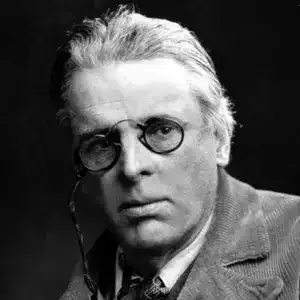
William Butler Yeats
To be Carved On A Stone At Thoor Ballylee
To be Carved On A Stone At Thoor Ballylee
I, THE poet William Yeats,
With old mill boards and sea-green slates,
And smithy work from the Gort forge,
Restored this tower for my wife George;
And may these characters remain
When all is ruin once again.
I, THE poet William Yeats,
With old mill boards and sea-green slates,
And smithy work from the Gort forge,
Restored this tower for my wife George;
And may these characters remain
When all is ruin once again.
245
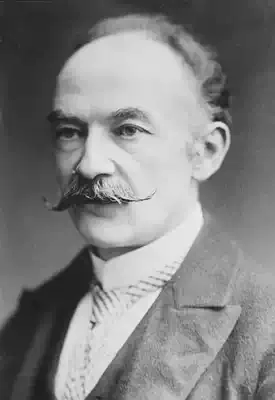
Thomas Hardy
The Dame of Athelhall
The Dame of Athelhall
I
"Soul! Shall I see thy face," she said,
"In one brief hour?
And away with thee from a loveless bed
To a far-off sun, to a vine-wrapt bower,
And be thine own unseparated,
And challenge the world's white glower?
II
She quickened her feet, and met him where
They had predesigned:
And they clasped, and mounted, and cleft the air
Upon whirling wheels; till the will to bind
Her life with his made the moments there
Efface the years behind.
III
Miles slid, and the sight of the port upgrew
As they sped on;
When slipping its bond the bracelet flew
From her fondled arm. Replaced anon,
Its cameo of the abjured one drew
Her musings thereupon.
IV
The gaud with his image once had been
A gift from him:
And so it was that its carving keen
Refurbished memories wearing dim,
Which set in her soul a throe of teen,
And a tear on her lashes' brim.
V
"I may not go!" she at length upspake,
"Thoughts call me back -
I would still lose all for your dear, dear sake;
My heart is thine, friend! But my track
I home to Athelhall must take
To hinder household wrack!"
VI
He appealed. But they parted, weak and wan:
And he left the shore;
His ship diminished, was low, was gone;
And she heard in the waves as the daytide wore,
And read in the leer of the sun that shone,
That they parted for evermore.
VII
She homed as she came, at the dip of eve
On Athel Coomb
Regaining the Hall she had sworn to leave . . .
The house was soundless as a tomb,
And she entered her chamber, there to grieve
Lone, kneeling, in the gloom.
VIII
From the lawn without rose her husband's voice
To one his friend:
"Another her Love, another my choice,
Her going is good. Our conditions mend;
In a change of mates we shall both rejoice;
I hoped that it thus might end!
IX
"A quick divorce; she will make him hers,
And I wed mine.
So Time rights all things in long, long years -
Or rather she, by her bold design!
I admire a woman no balk deters:
She has blessed my life, in fine.
X
"I shall build new rooms for my new true bride,
Let the bygone be:
By now, no doubt, she has crossed the tide
With the man to her mind. Far happier she
In some warm vineland by his side
Than ever she was with me."
I
"Soul! Shall I see thy face," she said,
"In one brief hour?
And away with thee from a loveless bed
To a far-off sun, to a vine-wrapt bower,
And be thine own unseparated,
And challenge the world's white glower?
II
She quickened her feet, and met him where
They had predesigned:
And they clasped, and mounted, and cleft the air
Upon whirling wheels; till the will to bind
Her life with his made the moments there
Efface the years behind.
III
Miles slid, and the sight of the port upgrew
As they sped on;
When slipping its bond the bracelet flew
From her fondled arm. Replaced anon,
Its cameo of the abjured one drew
Her musings thereupon.
IV
The gaud with his image once had been
A gift from him:
And so it was that its carving keen
Refurbished memories wearing dim,
Which set in her soul a throe of teen,
And a tear on her lashes' brim.
V
"I may not go!" she at length upspake,
"Thoughts call me back -
I would still lose all for your dear, dear sake;
My heart is thine, friend! But my track
I home to Athelhall must take
To hinder household wrack!"
VI
He appealed. But they parted, weak and wan:
And he left the shore;
His ship diminished, was low, was gone;
And she heard in the waves as the daytide wore,
And read in the leer of the sun that shone,
That they parted for evermore.
VII
She homed as she came, at the dip of eve
On Athel Coomb
Regaining the Hall she had sworn to leave . . .
The house was soundless as a tomb,
And she entered her chamber, there to grieve
Lone, kneeling, in the gloom.
VIII
From the lawn without rose her husband's voice
To one his friend:
"Another her Love, another my choice,
Her going is good. Our conditions mend;
In a change of mates we shall both rejoice;
I hoped that it thus might end!
IX
"A quick divorce; she will make him hers,
And I wed mine.
So Time rights all things in long, long years -
Or rather she, by her bold design!
I admire a woman no balk deters:
She has blessed my life, in fine.
X
"I shall build new rooms for my new true bride,
Let the bygone be:
By now, no doubt, she has crossed the tide
With the man to her mind. Far happier she
In some warm vineland by his side
Than ever she was with me."
230
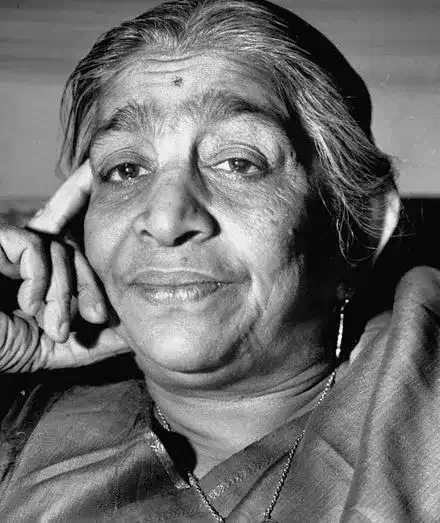
Sarojini Naidu
The Bangle Sellers
The Bangle Sellers
Bangle sellers are we who bear
Our shining loads to the temple fair...
Who will buy these delicate, bright
Rainbow-tinted circles of light?
Lustrous tokens of radiant lives,
For happy daughters and happy wives.
Some are meet for a maiden's wrist,
Silver and blue as the mountain mist,
Some are flushed like the buds that dream
On the tranquil brow of a woodland stream,
Some are aglow wth the bloom that cleaves
To the limpid glory of new born leaves
Some are like fields of sunlit corn,
Meet for a bride on her bridal morn,
Some, like the flame of her marriage fire,
Or, rich with the hue of her heart's desire,
Tinkling, luminous, tender, and clear,
Like her bridal laughter and bridal tear.
Some are purple and gold flecked grey
For she who has journeyed through life midway,
Whose hands have cherished, whose love has blest,
And cradled fair sons on her faithful breast,
And serves her household in fruitful pride,
And worships the gods at her husband's side.
Bangle sellers are we who bear
Our shining loads to the temple fair...
Who will buy these delicate, bright
Rainbow-tinted circles of light?
Lustrous tokens of radiant lives,
For happy daughters and happy wives.
Some are meet for a maiden's wrist,
Silver and blue as the mountain mist,
Some are flushed like the buds that dream
On the tranquil brow of a woodland stream,
Some are aglow wth the bloom that cleaves
To the limpid glory of new born leaves
Some are like fields of sunlit corn,
Meet for a bride on her bridal morn,
Some, like the flame of her marriage fire,
Or, rich with the hue of her heart's desire,
Tinkling, luminous, tender, and clear,
Like her bridal laughter and bridal tear.
Some are purple and gold flecked grey
For she who has journeyed through life midway,
Whose hands have cherished, whose love has blest,
And cradled fair sons on her faithful breast,
And serves her household in fruitful pride,
And worships the gods at her husband's side.
415
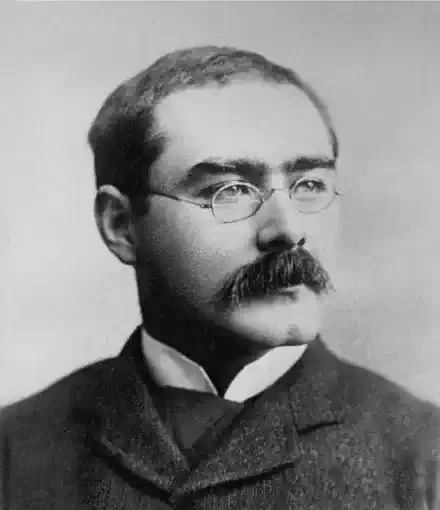
Rudyard Kipling
The Bee-Boy's Song
The Bee-Boy's Song
Bees! Bees! Hark to your bees!
"Hide from your neigbours as much as you please,
But all that has happened, to us you must tell,
Or else we will give you no honey to sell!"
A maiden in her glory,
Upon her wedding - day,
Must tell her Bees the story,
Or else they'll fly away.
Fly away -- die away --
Dwindle down and leave you!
But if you don't deceive your Bees,
Your Bees will not deceive you.
Marriage, birth or buryin',
News across the seas,
All you're sad or merry in,
You must tell the Bees.
Tell 'em coming in an' out,
Where the Fanners fan,
'Cause the Bees are just about
As curious as a man!
Don't you wait where the trees are,
When the lightnings play,
Nor don't you hate where Bees are,
Or else they'll pine away.
Pine away -- dwine away --
Anything to leave you!
But if you never grieve your Bees,
Your Bees'll never grieve you.
Bees! Bees! Hark to your bees!
"Hide from your neigbours as much as you please,
But all that has happened, to us you must tell,
Or else we will give you no honey to sell!"
A maiden in her glory,
Upon her wedding - day,
Must tell her Bees the story,
Or else they'll fly away.
Fly away -- die away --
Dwindle down and leave you!
But if you don't deceive your Bees,
Your Bees will not deceive you.
Marriage, birth or buryin',
News across the seas,
All you're sad or merry in,
You must tell the Bees.
Tell 'em coming in an' out,
Where the Fanners fan,
'Cause the Bees are just about
As curious as a man!
Don't you wait where the trees are,
When the lightnings play,
Nor don't you hate where Bees are,
Or else they'll pine away.
Pine away -- dwine away --
Anything to leave you!
But if you never grieve your Bees,
Your Bees'll never grieve you.
466

Robert W. Service
Two Husbands
Two Husbands
Unpenitent, I grieve to state,
Two good men stood by heaven's gate,
Saint Peter coming to await.
The stopped the Keeper of the Keys,
Saying: "What suppliants are these,
Who wait me not on bended knees?
"To get my heavenly Okay
A man should have been used to pray,
Or suffered in some grievous way."
"Oh I have suffered," cried the first.
"Of wives I had the wicked worst,
Who made my life a plague accurst.
"Such martyrdom no tongue can tell;
In mercy's name it is not well
To doom me to another hell."
Saint Peter said: "I comprehend;
But tribulations have their end.
The gate is open, - go my friend."
Then said the second: "What of me?
More I deserve to pass than he,
For I've been wedded twice, you see."
Saint Peter looked at him a while,
And then he answered with a smile:
"Your application I will file.
"Yet twice in double yoke you've driven . . .
Though sinners with our Saints we leaven,
We don't take IMBECILES in heaven."
Unpenitent, I grieve to state,
Two good men stood by heaven's gate,
Saint Peter coming to await.
The stopped the Keeper of the Keys,
Saying: "What suppliants are these,
Who wait me not on bended knees?
"To get my heavenly Okay
A man should have been used to pray,
Or suffered in some grievous way."
"Oh I have suffered," cried the first.
"Of wives I had the wicked worst,
Who made my life a plague accurst.
"Such martyrdom no tongue can tell;
In mercy's name it is not well
To doom me to another hell."
Saint Peter said: "I comprehend;
But tribulations have their end.
The gate is open, - go my friend."
Then said the second: "What of me?
More I deserve to pass than he,
For I've been wedded twice, you see."
Saint Peter looked at him a while,
And then he answered with a smile:
"Your application I will file.
"Yet twice in double yoke you've driven . . .
Though sinners with our Saints we leaven,
We don't take IMBECILES in heaven."
262
Robert W. Service
Three Wives
Three Wives
Said Jones: "I'm glad my wife's not clever;
Her intellect is second-rate.
If she was witty she would never
Give me a chance to scintillate;
But cap my humorous endeavour
And make me seem as addle-pate."
Said Smith: "I'm glad my wife's no beauty,
For if a siren's charm she had,
And stinted her domestic duty,
I fear that she would drive me mad:
For I am one of those sad fellows
Who are unreasonably jealous."
Said Brown: ""I know my wife's not witty,
Nor is she very long on looks;
She's neither humorous nor pretty,
But oh how she divinely cooks!
You guys must come some night to dinner You'll
see my little girl's a winner."
So it's important in our lives,
(Exaggerating more or less),
To be content with our wives,
And prize the virtues they possess;
And with dispraise to turn one's back
On all the qualities they lack.
Said Jones: "I'm glad my wife's not clever;
Her intellect is second-rate.
If she was witty she would never
Give me a chance to scintillate;
But cap my humorous endeavour
And make me seem as addle-pate."
Said Smith: "I'm glad my wife's no beauty,
For if a siren's charm she had,
And stinted her domestic duty,
I fear that she would drive me mad:
For I am one of those sad fellows
Who are unreasonably jealous."
Said Brown: ""I know my wife's not witty,
Nor is she very long on looks;
She's neither humorous nor pretty,
But oh how she divinely cooks!
You guys must come some night to dinner You'll
see my little girl's a winner."
So it's important in our lives,
(Exaggerating more or less),
To be content with our wives,
And prize the virtues they possess;
And with dispraise to turn one's back
On all the qualities they lack.
230
Robert W. Service
The Widower
The Widower
Oh I have worn my mourning out,
And on her grave the green grass grows;
So I will hang each sorry clout
High in the corn to scare the crows.
And I will buy a peacock tie,
And coat of cloth of Donegal;
Then to the Farmer's Fair I'll hie
And peek in at the Barley Ball.
But though the fiddlers saw a jig
I used to foot when I was wed,
I'll walk me home and feed the pig,
And go a lonesome man to bed.
So I will wait another year,
As any decent chap would do,
Till I can think without a tear
Of her whose eyes were cornflower blue.
Then to the Harvest Ball I'll hie,
And I will wear a flower-sprigged vest;
For Maggie has a nut-brown eyes,
And we will foot it with the best.
And if kind-minded she should be
To wife me - 'tis the will if God . . .
But Oh the broken heart f me
For her who lies below the sod!
Oh I have worn my mourning out,
And on her grave the green grass grows;
So I will hang each sorry clout
High in the corn to scare the crows.
And I will buy a peacock tie,
And coat of cloth of Donegal;
Then to the Farmer's Fair I'll hie
And peek in at the Barley Ball.
But though the fiddlers saw a jig
I used to foot when I was wed,
I'll walk me home and feed the pig,
And go a lonesome man to bed.
So I will wait another year,
As any decent chap would do,
Till I can think without a tear
Of her whose eyes were cornflower blue.
Then to the Harvest Ball I'll hie,
And I will wear a flower-sprigged vest;
For Maggie has a nut-brown eyes,
And we will foot it with the best.
And if kind-minded she should be
To wife me - 'tis the will if God . . .
But Oh the broken heart f me
For her who lies below the sod!
210
Robert W. Service
The Wedding Ring
The Wedding Ring
I pawned my sick wife's wedding ring,
To drink and make myself a beast.
I got the most that it would bring,
Of golden coins the very least.
With stealth into her room I crept
And stole it from her as she slept.
I do not think that she will know,
As in its place I left a band
Of brass that has a brighter glow
And gleamed upon her withered hand.
I do not think that she can tell
The change - she does not see too well.
Pray God, she doesn't find me out.
I'd rather far I would be dead.
Yet yesterday she seemed to doubt,
And looking at me long she said:
"My finger must have shrunk, because
My ring seems bigger than it was."
She gazed at it so wistfully,
And one big tear rolled down her cheek.
Said she: "You'll bury it with me . . ."
I was so moved I could not speak.
Oh wretched me! How whisky can
Bring out the devil in a man!"
And yet I know she loves me still,
As on the morn that we were wed;
And darkly guess I also will
Be doomed the day that she is dead.
And yet I swear, before she's gone,
I will retrieve her ring from pawn.
I'll get it though I have to steal,
Then when to ease her bitter pain
They give her sleep oh I will feel
Her hand and slip it on again;
Through tears her wasted face I'll see,
And pray to God: "Oh pity me!"
I pawned my sick wife's wedding ring,
To drink and make myself a beast.
I got the most that it would bring,
Of golden coins the very least.
With stealth into her room I crept
And stole it from her as she slept.
I do not think that she will know,
As in its place I left a band
Of brass that has a brighter glow
And gleamed upon her withered hand.
I do not think that she can tell
The change - she does not see too well.
Pray God, she doesn't find me out.
I'd rather far I would be dead.
Yet yesterday she seemed to doubt,
And looking at me long she said:
"My finger must have shrunk, because
My ring seems bigger than it was."
She gazed at it so wistfully,
And one big tear rolled down her cheek.
Said she: "You'll bury it with me . . ."
I was so moved I could not speak.
Oh wretched me! How whisky can
Bring out the devil in a man!"
And yet I know she loves me still,
As on the morn that we were wed;
And darkly guess I also will
Be doomed the day that she is dead.
And yet I swear, before she's gone,
I will retrieve her ring from pawn.
I'll get it though I have to steal,
Then when to ease her bitter pain
They give her sleep oh I will feel
Her hand and slip it on again;
Through tears her wasted face I'll see,
And pray to God: "Oh pity me!"
253
Robert W. Service
The Boola-Boola Maid
The Boola-Boola Maid
In the wilds of Madagascar, Dwelt a Boola-boola maid;
For her hand young men would ask her, But she always was afraid.
Oh that Boola-boola maid She was living in the shade Of a spreading Yum-yum tree;
And - when the day was done At the setting of the sun, She would make this melodee:
As this ditty she was cooing, Came a Boola-boola man;
And he lost no time in wooing; For he punched her on the pan.
Oh that Boola-boola maid She was terribly afraid So he punched her on the eye;
And - then he laugh'd with glee As beneath the Yum-yum tree He - heard that maiden
cry:
Then with shrieks of ribald laughter, Said the Boola-boola man;
"If it's only socks you're after, I will do the best I can.
I have handed you a pair, And I've plenty more to spare," So he socked her on the
nose;
And a woeful maid was she, As beneath the Yum-yum tree, This - lamentation 'rose:
Now the wedding tom-tom's over, for this Boola-boola maid;
And when ev'ning shadows hover, She no longer is afraid.
For she weasrs a palm-leaf pinny And she rocks a pickaninny In the shade of the
Yum-yum tree,
And she's happy with her he-man, Though she still dreams of a She-man, As she sings
this song with glee:
Chorus:
Oh - I don't want my cave-man to caress me,
Oh I don't want no coal-black heads to press me.
All I want is a fellow who wears suspenders,
That'll be the coon to whom this babe surenders.
For the man I wed must have a proper trouseau.
On none of your fig-leaf dudes will make me do so.
For it's funny how I feel, But I'm crazy for socks appeal
And my dream is to marry a man with a pair of socks.
In the wilds of Madagascar, Dwelt a Boola-boola maid;
For her hand young men would ask her, But she always was afraid.
Oh that Boola-boola maid She was living in the shade Of a spreading Yum-yum tree;
And - when the day was done At the setting of the sun, She would make this melodee:
As this ditty she was cooing, Came a Boola-boola man;
And he lost no time in wooing; For he punched her on the pan.
Oh that Boola-boola maid She was terribly afraid So he punched her on the eye;
And - then he laugh'd with glee As beneath the Yum-yum tree He - heard that maiden
cry:
Then with shrieks of ribald laughter, Said the Boola-boola man;
"If it's only socks you're after, I will do the best I can.
I have handed you a pair, And I've plenty more to spare," So he socked her on the
nose;
And a woeful maid was she, As beneath the Yum-yum tree, This - lamentation 'rose:
Now the wedding tom-tom's over, for this Boola-boola maid;
And when ev'ning shadows hover, She no longer is afraid.
For she weasrs a palm-leaf pinny And she rocks a pickaninny In the shade of the
Yum-yum tree,
And she's happy with her he-man, Though she still dreams of a She-man, As she sings
this song with glee:
Chorus:
Oh - I don't want my cave-man to caress me,
Oh I don't want no coal-black heads to press me.
All I want is a fellow who wears suspenders,
That'll be the coon to whom this babe surenders.
For the man I wed must have a proper trouseau.
On none of your fig-leaf dudes will make me do so.
For it's funny how I feel, But I'm crazy for socks appeal
And my dream is to marry a man with a pair of socks.
233
Robert W. Service
Fidelity
Fidelity
Being a shorty, as you see,
A bare five footer,
The why my wife is true to me
Is my six-shooter.
For every time a guy goes by
Who looks like a lover,
I polish it to catch his eye,
And spin it over.
He notes its notches as I say:
'Believe me, Brother,
If Junie ever goes astray,
They'll be another.'
A husband has to have a gun
And guts to pull it:
Few fellows think a bit of fun
Is worth a bullet.
For June would sit on any knee
If it wore pants,
Yet she is faithful unto me,
As gossip grants.
And though I know some six-foot guy
Would better suit her,
Her virtue triumphs, thanks to my
Six shooter.
Being a shorty, as you see,
A bare five footer,
The why my wife is true to me
Is my six-shooter.
For every time a guy goes by
Who looks like a lover,
I polish it to catch his eye,
And spin it over.
He notes its notches as I say:
'Believe me, Brother,
If Junie ever goes astray,
They'll be another.'
A husband has to have a gun
And guts to pull it:
Few fellows think a bit of fun
Is worth a bullet.
For June would sit on any knee
If it wore pants,
Yet she is faithful unto me,
As gossip grants.
And though I know some six-foot guy
Would better suit her,
Her virtue triumphs, thanks to my
Six shooter.
246
Robert W. Service
Careers
Careers
I knew three sisters,--all were sweet;
Wishful to wed was I,
And wondered which would mostly meet
The matrimonial tie.
I asked the first what fate would she
Wish joy of life to bring to her.
She answered: 'I would like to be
A concert singer.'
I asked the second, for my mind
Was set on nuptial noosing,
Unto what lot was she inclined
If she could have the choosing?
Said she: 'For woman I can see
No fortune finer,
Than to go in for Art and be
A dress designer.'
With heavy heart I asked the third
What was her life ambition;
A maiden she in look and word
Of modest disposition.
'Alas, I dearly wish,' said she,
'My aims were deeper:
My highest hope it is to be
A good house-keeper.'
Which did I choose? Look at my home,-The
answer's there;
As neat and sweet as honeycomb,
With children fair.
And so it humbly seems to me,
In common life,
A woman's glory is to be
A good house-wife.
I knew three sisters,--all were sweet;
Wishful to wed was I,
And wondered which would mostly meet
The matrimonial tie.
I asked the first what fate would she
Wish joy of life to bring to her.
She answered: 'I would like to be
A concert singer.'
I asked the second, for my mind
Was set on nuptial noosing,
Unto what lot was she inclined
If she could have the choosing?
Said she: 'For woman I can see
No fortune finer,
Than to go in for Art and be
A dress designer.'
With heavy heart I asked the third
What was her life ambition;
A maiden she in look and word
Of modest disposition.
'Alas, I dearly wish,' said she,
'My aims were deeper:
My highest hope it is to be
A good house-keeper.'
Which did I choose? Look at my home,-The
answer's there;
As neat and sweet as honeycomb,
With children fair.
And so it humbly seems to me,
In common life,
A woman's glory is to be
A good house-wife.
207
Robert W. Service
Bed Sitter
Bed Sitter
He stared at me with sad, hurt eyes,
That drab, untidy man;
And though my clients I despise
I do the best I can
To comfort them with cheerful chat;
(Quite comme il faut, of course)
And furnish evidence so that
Their wives may claim divorce.
But as this chap sobbed out his woes
I thought: How it's a shame!
His wife's a bitch and so he goes
And takes himself the blame.
And me behaving like a heel
To earn a filthy fee . . .
Said I: "You've had a dirty deal."
"What of yourself? said he.
And so I told him how I was
A widow of the war,
And doing what I did because
Two sons I struggled for.
As I sat knitting through the night
He eyed me from the bed,
And in the rosy morning light
Impulsively he said:
"Through in this sordid game we play,
To cheat the law we plan,
i do believe you when you say
You hold aloof from man;
Unto the dead you have been true,
And on the day I'm free,
To prove how I have faith in you -
Please, will you marry me?"
That's how it was. Now we are wed,
And life's a list of joys.
The old unhappy past is dead;
He's father to my boys.
And I have told him just to-day,
(Though forty, I confess,)
A little sister's on the way
To crown our happiness.
He stared at me with sad, hurt eyes,
That drab, untidy man;
And though my clients I despise
I do the best I can
To comfort them with cheerful chat;
(Quite comme il faut, of course)
And furnish evidence so that
Their wives may claim divorce.
But as this chap sobbed out his woes
I thought: How it's a shame!
His wife's a bitch and so he goes
And takes himself the blame.
And me behaving like a heel
To earn a filthy fee . . .
Said I: "You've had a dirty deal."
"What of yourself? said he.
And so I told him how I was
A widow of the war,
And doing what I did because
Two sons I struggled for.
As I sat knitting through the night
He eyed me from the bed,
And in the rosy morning light
Impulsively he said:
"Through in this sordid game we play,
To cheat the law we plan,
i do believe you when you say
You hold aloof from man;
Unto the dead you have been true,
And on the day I'm free,
To prove how I have faith in you -
Please, will you marry me?"
That's how it was. Now we are wed,
And life's a list of joys.
The old unhappy past is dead;
He's father to my boys.
And I have told him just to-day,
(Though forty, I confess,)
A little sister's on the way
To crown our happiness.
211
Robert W. Service
At The Golden Pig
At The Golden Pig
Where once with lads I scoffed my beer
The landlord's lass I've wed.
Now I am lord and master here;-Thank
God! the old man's dead.
I stand behind a blooming bar
With belly like a tub,
And pals say, seeing my cigar:
'Bill's wed a pub.'
I wonder now if I did well,
My freedom for to lose;
Knowing my wife is fly as hell
I mind my 'Ps' and 'Qs'.
Oh what a fuss she made because
I tweaked the barmaid's bub:
Alas! a sorry day it was
I wed a pub.
Fat landlord of the Golden Pig,
They call me 'mister' now;
And many a mug of beer I swig,
Yet don't get gay, somehow.
So farmer fellows, lean and clean
Who sweat to earn your grub,
Although you haven't got a bean:
Don't wed a pub.
Where once with lads I scoffed my beer
The landlord's lass I've wed.
Now I am lord and master here;-Thank
God! the old man's dead.
I stand behind a blooming bar
With belly like a tub,
And pals say, seeing my cigar:
'Bill's wed a pub.'
I wonder now if I did well,
My freedom for to lose;
Knowing my wife is fly as hell
I mind my 'Ps' and 'Qs'.
Oh what a fuss she made because
I tweaked the barmaid's bub:
Alas! a sorry day it was
I wed a pub.
Fat landlord of the Golden Pig,
They call me 'mister' now;
And many a mug of beer I swig,
Yet don't get gay, somehow.
So farmer fellows, lean and clean
Who sweat to earn your grub,
Although you haven't got a bean:
Don't wed a pub.
219
Robert W. Service
A Bachelor
A Bachelor
'Why keep a cow when I can buy,'
Said he, 'the milk I need,'
I wanted to spit in his eye
Of selfishness and greed;
But did not, for the reason he
Was stronger than I be.
I told him: ''Tis our human fate,
For better or for worse,
That man and maid should love and mate,
And little children nurse.
Of course, if you are less than man
You can't do what we can.
'So many loving maids would wed,
And wondrous mothers be.'
'I'll buy the love I want,' he said,
'No squally brats for me.'
. . . I hope the devil stoketh well
For him a special hell.
'Why keep a cow when I can buy,'
Said he, 'the milk I need,'
I wanted to spit in his eye
Of selfishness and greed;
But did not, for the reason he
Was stronger than I be.
I told him: ''Tis our human fate,
For better or for worse,
That man and maid should love and mate,
And little children nurse.
Of course, if you are less than man
You can't do what we can.
'So many loving maids would wed,
And wondrous mothers be.'
'I'll buy the love I want,' he said,
'No squally brats for me.'
. . . I hope the devil stoketh well
For him a special hell.
209
Robert W. Service
?
"?"
If you had the choice of two women to wed,
(Though of course the idea is quite absurd)
And the first from her heels to her dainty head
Was charming in every sense of the word:
And yet in the past (I grieve to state),
She never had been exactly "straight".
And the second -- she was beyond all cavil,
A model of virtue, I must confess;
And yet, alas! she was dull as the devil,
And rather a dowd in the way of dress;
Though what she was lacking in wit and beauty,
She more than made up for in "sense of duty".
Now, suppose you must wed, and make no blunder,
And either would love you, and let you win her --
Which of the two would you choose, I wonder,
The stolid saint or the sparkling sinner?
If you had the choice of two women to wed,
(Though of course the idea is quite absurd)
And the first from her heels to her dainty head
Was charming in every sense of the word:
And yet in the past (I grieve to state),
She never had been exactly "straight".
And the second -- she was beyond all cavil,
A model of virtue, I must confess;
And yet, alas! she was dull as the devil,
And rather a dowd in the way of dress;
Though what she was lacking in wit and beauty,
She more than made up for in "sense of duty".
Now, suppose you must wed, and make no blunder,
And either would love you, and let you win her --
Which of the two would you choose, I wonder,
The stolid saint or the sparkling sinner?
28
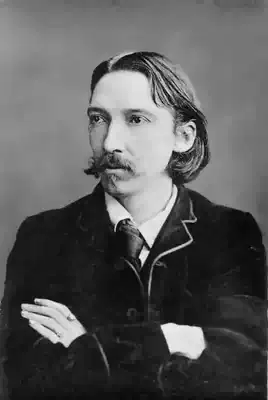
Robert Louis Stevenson
Men Are Heaven's Piers
Men Are Heaven's Piers
MEN are Heaven's piers; they evermore
Unwearying bear the skyey floor;
Man's theatre they bear with ease,
Unfrowning cariatides!
I, for my wife, the sun uphold,
Or, dozing, strike the seasons cold.
She, on her side, in fairy-wise
Deals in diviner mysteries,
By spells to make the fuel burn
And keep the parlour warm, to turn
Water to wine, and stones to bread,
By her unconquered hero-head.
A naked Adam, naked Eve,
Alone the primal bower we weave;
Sequestered in the seas of life,
A Crusoe couple, man and wife,
With all our good, with all our will,
Our unfrequented isle we fill;
And victor in day's petty wars,
Each for the other lights the stars.
Come then, my Eve, and to and fro
Let us about our garden go;
And, grateful-hearted, hand in hand
Revisit all our tillage land,
And marvel at our strange estate,
For hooded ruin at the gate
Sits watchful, and the angels fear
To see us tread so boldly here.
Meanwhile, my Eve, with flower and grass
Our perishable days we pass;
Far more the thorn observe - and see
How our enormous sins go free -
Nor less admire, beside the rose,
How far a little virtue goes.
MEN are Heaven's piers; they evermore
Unwearying bear the skyey floor;
Man's theatre they bear with ease,
Unfrowning cariatides!
I, for my wife, the sun uphold,
Or, dozing, strike the seasons cold.
She, on her side, in fairy-wise
Deals in diviner mysteries,
By spells to make the fuel burn
And keep the parlour warm, to turn
Water to wine, and stones to bread,
By her unconquered hero-head.
A naked Adam, naked Eve,
Alone the primal bower we weave;
Sequestered in the seas of life,
A Crusoe couple, man and wife,
With all our good, with all our will,
Our unfrequented isle we fill;
And victor in day's petty wars,
Each for the other lights the stars.
Come then, my Eve, and to and fro
Let us about our garden go;
And, grateful-hearted, hand in hand
Revisit all our tillage land,
And marvel at our strange estate,
For hooded ruin at the gate
Sits watchful, and the angels fear
To see us tread so boldly here.
Meanwhile, my Eve, with flower and grass
Our perishable days we pass;
Far more the thorn observe - and see
How our enormous sins go free -
Nor less admire, beside the rose,
How far a little virtue goes.
348
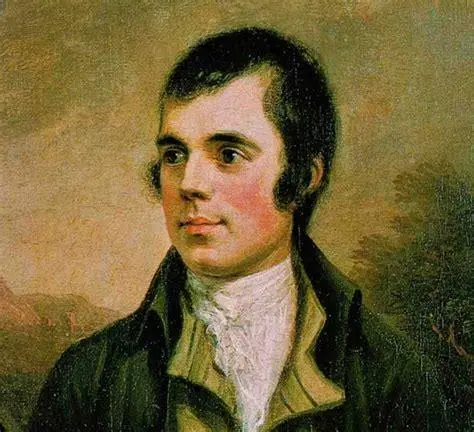
Robert Burns
John Anderson My Jo
John Anderson My Jo
John Anderson my jo, John,
When we were first acquent,
Your locks were like the raven,
Your bonny brow was brent;
But now your brow is bled, John,
Your locks are like the straw,
But blessings on your frosty pow,
John Anderson my jo!
John Anderson my jo, John,
We clamb the hill thegither
And monie a cantie day, John,
We've had wi' ane anither;
Now we maun totter down, John,
And hand in hand we'll go,
And sleep thegither at the foot,
John Anderson my jo!
John Anderson my jo, John,
When we were first acquent,
Your locks were like the raven,
Your bonny brow was brent;
But now your brow is bled, John,
Your locks are like the straw,
But blessings on your frosty pow,
John Anderson my jo!
John Anderson my jo, John,
We clamb the hill thegither
And monie a cantie day, John,
We've had wi' ane anither;
Now we maun totter down, John,
And hand in hand we'll go,
And sleep thegither at the foot,
John Anderson my jo!
245

Robert Browning
Andrea del Sarto
Andrea del Sarto
But do not let us quarrel any more,
No, my Lucrezia; bear with me for once:
Sit down and all shall happen as you wish.
You turn your face, but does it bring your heart?
I'll work then for your friend's friend, never fear,
Treat his own subject after his own way,
Fix his own time, accept too his own price,
And shut the money into this small hand
When next it takes mine. Will it? tenderly?
Oh, I'll content him,--but to-morrow, Love!
I often am much wearier than you think,
This evening more than usual, and it seems
As if--forgive now--should you let me sit
Here by the window with your hand in mine
And look a half-hour forth on Fiesole,
Both of one mind, as married people use,
Quietly, quietly the evening through,
I might get up to-morrow to my work
Cheerful and fresh as ever. Let us try.
To-morrow, how you shall be glad for this!
Your soft hand is a woman of itself,
And mine the man's bared breast she curls inside.
Don't count the time lost, neither; you must serve
For each of the five pictures we require:
It saves a model. So! keep looking so--
My serpentining beauty, rounds on rounds!
--How could you ever prick those perfect ears,
Even to put the pearl there! oh, so sweet--
My face, my moon, my everybody's moon,
Which everybody looks on and calls his,
And, I suppose, is looked on by in turn,
While she looks--no one's: very dear, no less.
You smile? why, there's my picture ready made,
There's what we painters call our harmony!
A common greyness silvers everything,--
All in a twilight, you and I alike
--You, at the point of your first pride in me
(That's gone you know),--but I, at every point;
My youth, my hope, my art, being all toned down
To yonder sober pleasant Fiesole.
There's the bell clinking from the chapel-top;
That length of convent-wall across the way
Holds the trees safer, huddled more inside;
The last monk leaves the garden; days decrease,
And autumn grows, autumn in everything.
Eh? the whole seems to fall into a shape
As if I saw alike my work and self
And all that I was born to be and do,
A twilight-piece. Love, we are in God's hand.
How strange now, looks the life he makes us lead;
So free we seem, so fettered fast we are!
I feel he laid the fetter: let it lie!
This chamber for example--turn your head--
All that's behind us! You don't understand
Nor care to understand about my art,
But you can hear at least when people speak:
And that cartoon, the second from the door
--It is the thing, Love! so such things should be--
Behold Madonna!--I am bold to say.
I can do with my pencil what I know,
What I see, what at bottom of my heart
I wish for, if I ever wish so deep--
Do easily, too--when I say, perfectly,
I do not boast, perhaps: yourself are judge,
Who listened to the Legate's talk last week,
And just as much they used to say in France.
At any rate 'tis easy, all of it!
No sketches first, no studies, that's long past:
I do what many dream of, all their lives,
--Dream? strive to do, and agonize to do,
And fail in doing. I could count twenty such
On twice your fingers, and not leave this town,
Who strive--you don't know how the others strive
To paint a little thing like that you smeared
Carelessly passing with your robes afloat,--
Yet do much less, so much less, Someone says,
(I know his name, no matter)--so much less!
Well, less is more, Lucrezia: I am judged.
There burns a truer light of God in them,
In their vexed beating stuffed and stopped-up brain,
Heart, or whate'er else, than goes on to prompt
This low-pulsed forthright craftsman's hand of mine.
Their works drop groundward, but themselves, I know,
Reach many a time a heaven that's shut to me,
Enter and take their place there sure enough,
Though they come back and cannot tell the world.
My works are nearer heaven, but I sit here.
The sudden blood of these men! at a word--
Praise them, it boils, or blame them, it boils too.
I, painting from myself and to myself,
Know what I do, am unmoved by men's blame
Or their praise either. Somebody remarks
Morello's outline there is wrongly traced,
His hue mistaken; what of that? or else,
Rightly traced and well ordered; what of that?
Speak as they please, what does the mountain care?
Ah, but a man's reach should exceed his grasp,
Or what's a heaven for? All is silver-grey,
Placid and perfect with my art: the worse!
I know both what I want and what might gain,
And yet how profitless to know, to sigh
"Had I been two, another and myself,
"Our head would have o'erlooked the world!" No doubt.
Yonder's a work now, of that famous youth
The Urbinate who died five years ago.
('Tis copied, George Vasari sent it me.)
Well, I can fancy how he did it all,
Pouring his soul, with kings and popes to see,
Reaching, that heaven might so replenish him,
Above and through his art--for it gives way;
That arm is wrongly put--and there again--
A fault to pardon in the drawing's lines,
Its body, so to speak: its soul is right,
He means right--that, a child may understand.
Still, what an arm! and I could alter it:
But all the play, the insight and the stretch--
(Out of me, out of me! And wherefore out?
Had you enjoined them on me, given me soul,
We might have risen to Rafael, I and you!
Nay, Love, you did give all I asked, I think--
More than I merit, yes, by many times.
But had you--oh, with the same perfect brow,
And perfect eyes, and more than perfect mouth,
And the low voice my soul hears, as a bird
The fowler's pipe, and follows to the snare --
Had you, with these the same, but brought a mind!
Some women do so. Had the mouth there urged
"God and the glory! never care for gain.
"The present by the future, what is that?
"Live for fame, side by side with Agnolo!
"Rafael is waiting: up to God, all three!"
I might have done it for you. So it seems:
Perhaps not. All is as God over-rules.
Beside, incentives come from the soul's self;
The rest avail not. Why do I need you?
What wife had Rafael, or has Agnolo?
In this world, who can do a thing, will not;
And who would do it, cannot, I perceive:
Yet the will's somewhat--somewhat, too, the power--
And thus we half-men struggle. At the end,
God, I conclude, compensates, punishes.
'Tis safer for me, if the award be strict,
That I am something underrated here,
Poor this long while, despised, to speak the truth.
I dared not, do you know, leave home all day,
For fear of chancing on the Paris lords.
The best is when they pass and look aside;
But they speak sometimes; I must bear it all.
Well may they speak! That Francis, that first time,
And that long festal year at Fontainebleau!
I surely then could sometimes leave the ground,
Put on the glory, Rafael's daily wear,
In that humane great monarch's golden look,--
One finger in his beard or twisted curl
Over his mouth's good mark that made the smile,
One arm about my shoulder, round my neck,
The jingle of his gold chain in my ear,
I painting proudly with his breath on me,
All his court round him, seeing with his eyes,
Such frank French eyes, and such a fire of souls
Profuse, my hand kept plying by those hearts,--
And, best of all, this, this, this face beyond,
This in the background, waiting on my work,
To crown the issue with a last reward!
A good time, was it not, my kingly days?
And had you not grown restless... but I know--
'Tis done and past: 'twas right, my instinct said:
Too live the life grew, golden and not grey,
And I'm the weak-eyed bat no sun should tempt
Out of the grange whose four walls make his world.
How could it end in any other way?
You called me, and I came home to your heart.
The triumph was--to reach and stay there; since
I reached it ere the triumph, what is lost?
Let my hands frame your face in your hair's gold,
You beautiful Lucrezia that are mine!
"Rafael did this, Andrea painted that;
"The Roman's is the better when you pray,
"But still the other's Virgin was his wife--"
Men will excuse me. I am glad to judge
Both pictures in your presence; clearer grows
My better fortune, I resolve to think.
For, do you know, Lucrezia, as God lives,
Said one day Agnolo, his very self,
To Rafael . . . I have known it all these years . . .
(When the young man was flaming out his thoughts
Upon a palace-wall for Rome to see,
Too lifted up in heart because of it)
"Friend, there's a certain sorry little scrub
"Goes up and down our Florence, none cares how,
"Who, were he set to plan and execute
"As you are, pricked on by your popes and kings,
"Would bring the sweat into that brow of yours!"
To Rafael's!--And indeed the arm is wrong.
I hardly dare . . . yet, only you to see,
Give the chalk here--quick, thus, the line should go!
Ay, but the soul! he's Rafael! rub it out!
Still, all I care for, if he spoke the truth,
(What he? why, who but Michel Agnolo?
Do you forget already words like those?)
If really there was such a chance, so lost,--
Is, whether you're--not grateful--but more pleased.
Well, let me think so. And you smile indeed!
This hour has been an hour! Another smile?
If you would sit thus by me every night
I should work better, do you comprehend?
I mean that I should earn more, give you more.
See, it is settled dusk now; there's a star;
Morello's gone, the watch-lights show the wall,
The cue-owls speak the name we call them by.
Come from the window, love,--come in, at last,
Inside the melancholy little house
We built to be so gay with. God is just.
King Francis may forgive me: oft at nights
When I look up from painting, eyes tired out,
The walls become illumined, brick from brick
Distinct, instead of mortar, fierce bright gold,
That gold of his I did cement them with!
Let us but love each other. Must you go?
That Cousin here again? he waits outside?
Must see you--you, and not with me? Those loans?
More gaming debts to pay? you smiled for that?
Well, let smiles buy me! have you more to spend?
While hand and eye and something of a heart
Are left me, work's my ware, and what's it worth?
I'll pay my fancy. Only let me sit
The grey remainder of the evening out,
Idle, you call it, and muse perfectly
How I could paint, were I but back in France,
One picture, just one more--the Virgin's face,
Not yours this time! I want you at my side
To hear them--that is, Michel Agnolo--
Judge all I do and tell you of its worth.
Will you? To-morrow, satisfy your friend.
I take the subjects for his corridor,
Finish the portrait out of hand--there, there,
And throw him in another thing or two
If he demurs; the whole should prove enough
To pay for this same Cousin's freak. Beside,
What's better and what's all I care about,
Get you the thirteen scudi for the ruff!
Love, does that please you? Ah, but what does he,
The Cousin! what does he to please you more?
I am grown peaceful as old age to-night.
I regret little, I would change still less.
Since there my past life lies, why alter it?
The very wrong to Francis!--it is true
I took his coin, was tempted and complied,
And built this house and sinned, and all is said.
My father and my mother died of want.
Well, had I riches of my own? you see
How one gets rich! Let each one bear his lot.
They were born poor, lived poor, and poor they died:
And I have laboured somewhat in my time
And not been paid profusely. Some good son
Paint my two hundred pictures--let him try!
No doubt, there's something strikes a balance. Yes,
You loved me quite enough. it seems to-night.
This must suffice me here. What would one have?
In heaven, perhaps, new chances, one more chance--
Four great walls in the New Jerusalem,
Meted on each side by the angel's reed,
For Leonard, Rafael, Agnolo and me
To cover--the three first without a wife,
While I have mine! So--still they overcome
Because there's still Lucrezia,--as I choose.
Again the Cousin's whistle! Go, my Love.
But do not let us quarrel any more,
No, my Lucrezia; bear with me for once:
Sit down and all shall happen as you wish.
You turn your face, but does it bring your heart?
I'll work then for your friend's friend, never fear,
Treat his own subject after his own way,
Fix his own time, accept too his own price,
And shut the money into this small hand
When next it takes mine. Will it? tenderly?
Oh, I'll content him,--but to-morrow, Love!
I often am much wearier than you think,
This evening more than usual, and it seems
As if--forgive now--should you let me sit
Here by the window with your hand in mine
And look a half-hour forth on Fiesole,
Both of one mind, as married people use,
Quietly, quietly the evening through,
I might get up to-morrow to my work
Cheerful and fresh as ever. Let us try.
To-morrow, how you shall be glad for this!
Your soft hand is a woman of itself,
And mine the man's bared breast she curls inside.
Don't count the time lost, neither; you must serve
For each of the five pictures we require:
It saves a model. So! keep looking so--
My serpentining beauty, rounds on rounds!
--How could you ever prick those perfect ears,
Even to put the pearl there! oh, so sweet--
My face, my moon, my everybody's moon,
Which everybody looks on and calls his,
And, I suppose, is looked on by in turn,
While she looks--no one's: very dear, no less.
You smile? why, there's my picture ready made,
There's what we painters call our harmony!
A common greyness silvers everything,--
All in a twilight, you and I alike
--You, at the point of your first pride in me
(That's gone you know),--but I, at every point;
My youth, my hope, my art, being all toned down
To yonder sober pleasant Fiesole.
There's the bell clinking from the chapel-top;
That length of convent-wall across the way
Holds the trees safer, huddled more inside;
The last monk leaves the garden; days decrease,
And autumn grows, autumn in everything.
Eh? the whole seems to fall into a shape
As if I saw alike my work and self
And all that I was born to be and do,
A twilight-piece. Love, we are in God's hand.
How strange now, looks the life he makes us lead;
So free we seem, so fettered fast we are!
I feel he laid the fetter: let it lie!
This chamber for example--turn your head--
All that's behind us! You don't understand
Nor care to understand about my art,
But you can hear at least when people speak:
And that cartoon, the second from the door
--It is the thing, Love! so such things should be--
Behold Madonna!--I am bold to say.
I can do with my pencil what I know,
What I see, what at bottom of my heart
I wish for, if I ever wish so deep--
Do easily, too--when I say, perfectly,
I do not boast, perhaps: yourself are judge,
Who listened to the Legate's talk last week,
And just as much they used to say in France.
At any rate 'tis easy, all of it!
No sketches first, no studies, that's long past:
I do what many dream of, all their lives,
--Dream? strive to do, and agonize to do,
And fail in doing. I could count twenty such
On twice your fingers, and not leave this town,
Who strive--you don't know how the others strive
To paint a little thing like that you smeared
Carelessly passing with your robes afloat,--
Yet do much less, so much less, Someone says,
(I know his name, no matter)--so much less!
Well, less is more, Lucrezia: I am judged.
There burns a truer light of God in them,
In their vexed beating stuffed and stopped-up brain,
Heart, or whate'er else, than goes on to prompt
This low-pulsed forthright craftsman's hand of mine.
Their works drop groundward, but themselves, I know,
Reach many a time a heaven that's shut to me,
Enter and take their place there sure enough,
Though they come back and cannot tell the world.
My works are nearer heaven, but I sit here.
The sudden blood of these men! at a word--
Praise them, it boils, or blame them, it boils too.
I, painting from myself and to myself,
Know what I do, am unmoved by men's blame
Or their praise either. Somebody remarks
Morello's outline there is wrongly traced,
His hue mistaken; what of that? or else,
Rightly traced and well ordered; what of that?
Speak as they please, what does the mountain care?
Ah, but a man's reach should exceed his grasp,
Or what's a heaven for? All is silver-grey,
Placid and perfect with my art: the worse!
I know both what I want and what might gain,
And yet how profitless to know, to sigh
"Had I been two, another and myself,
"Our head would have o'erlooked the world!" No doubt.
Yonder's a work now, of that famous youth
The Urbinate who died five years ago.
('Tis copied, George Vasari sent it me.)
Well, I can fancy how he did it all,
Pouring his soul, with kings and popes to see,
Reaching, that heaven might so replenish him,
Above and through his art--for it gives way;
That arm is wrongly put--and there again--
A fault to pardon in the drawing's lines,
Its body, so to speak: its soul is right,
He means right--that, a child may understand.
Still, what an arm! and I could alter it:
But all the play, the insight and the stretch--
(Out of me, out of me! And wherefore out?
Had you enjoined them on me, given me soul,
We might have risen to Rafael, I and you!
Nay, Love, you did give all I asked, I think--
More than I merit, yes, by many times.
But had you--oh, with the same perfect brow,
And perfect eyes, and more than perfect mouth,
And the low voice my soul hears, as a bird
The fowler's pipe, and follows to the snare --
Had you, with these the same, but brought a mind!
Some women do so. Had the mouth there urged
"God and the glory! never care for gain.
"The present by the future, what is that?
"Live for fame, side by side with Agnolo!
"Rafael is waiting: up to God, all three!"
I might have done it for you. So it seems:
Perhaps not. All is as God over-rules.
Beside, incentives come from the soul's self;
The rest avail not. Why do I need you?
What wife had Rafael, or has Agnolo?
In this world, who can do a thing, will not;
And who would do it, cannot, I perceive:
Yet the will's somewhat--somewhat, too, the power--
And thus we half-men struggle. At the end,
God, I conclude, compensates, punishes.
'Tis safer for me, if the award be strict,
That I am something underrated here,
Poor this long while, despised, to speak the truth.
I dared not, do you know, leave home all day,
For fear of chancing on the Paris lords.
The best is when they pass and look aside;
But they speak sometimes; I must bear it all.
Well may they speak! That Francis, that first time,
And that long festal year at Fontainebleau!
I surely then could sometimes leave the ground,
Put on the glory, Rafael's daily wear,
In that humane great monarch's golden look,--
One finger in his beard or twisted curl
Over his mouth's good mark that made the smile,
One arm about my shoulder, round my neck,
The jingle of his gold chain in my ear,
I painting proudly with his breath on me,
All his court round him, seeing with his eyes,
Such frank French eyes, and such a fire of souls
Profuse, my hand kept plying by those hearts,--
And, best of all, this, this, this face beyond,
This in the background, waiting on my work,
To crown the issue with a last reward!
A good time, was it not, my kingly days?
And had you not grown restless... but I know--
'Tis done and past: 'twas right, my instinct said:
Too live the life grew, golden and not grey,
And I'm the weak-eyed bat no sun should tempt
Out of the grange whose four walls make his world.
How could it end in any other way?
You called me, and I came home to your heart.
The triumph was--to reach and stay there; since
I reached it ere the triumph, what is lost?
Let my hands frame your face in your hair's gold,
You beautiful Lucrezia that are mine!
"Rafael did this, Andrea painted that;
"The Roman's is the better when you pray,
"But still the other's Virgin was his wife--"
Men will excuse me. I am glad to judge
Both pictures in your presence; clearer grows
My better fortune, I resolve to think.
For, do you know, Lucrezia, as God lives,
Said one day Agnolo, his very self,
To Rafael . . . I have known it all these years . . .
(When the young man was flaming out his thoughts
Upon a palace-wall for Rome to see,
Too lifted up in heart because of it)
"Friend, there's a certain sorry little scrub
"Goes up and down our Florence, none cares how,
"Who, were he set to plan and execute
"As you are, pricked on by your popes and kings,
"Would bring the sweat into that brow of yours!"
To Rafael's!--And indeed the arm is wrong.
I hardly dare . . . yet, only you to see,
Give the chalk here--quick, thus, the line should go!
Ay, but the soul! he's Rafael! rub it out!
Still, all I care for, if he spoke the truth,
(What he? why, who but Michel Agnolo?
Do you forget already words like those?)
If really there was such a chance, so lost,--
Is, whether you're--not grateful--but more pleased.
Well, let me think so. And you smile indeed!
This hour has been an hour! Another smile?
If you would sit thus by me every night
I should work better, do you comprehend?
I mean that I should earn more, give you more.
See, it is settled dusk now; there's a star;
Morello's gone, the watch-lights show the wall,
The cue-owls speak the name we call them by.
Come from the window, love,--come in, at last,
Inside the melancholy little house
We built to be so gay with. God is just.
King Francis may forgive me: oft at nights
When I look up from painting, eyes tired out,
The walls become illumined, brick from brick
Distinct, instead of mortar, fierce bright gold,
That gold of his I did cement them with!
Let us but love each other. Must you go?
That Cousin here again? he waits outside?
Must see you--you, and not with me? Those loans?
More gaming debts to pay? you smiled for that?
Well, let smiles buy me! have you more to spend?
While hand and eye and something of a heart
Are left me, work's my ware, and what's it worth?
I'll pay my fancy. Only let me sit
The grey remainder of the evening out,
Idle, you call it, and muse perfectly
How I could paint, were I but back in France,
One picture, just one more--the Virgin's face,
Not yours this time! I want you at my side
To hear them--that is, Michel Agnolo--
Judge all I do and tell you of its worth.
Will you? To-morrow, satisfy your friend.
I take the subjects for his corridor,
Finish the portrait out of hand--there, there,
And throw him in another thing or two
If he demurs; the whole should prove enough
To pay for this same Cousin's freak. Beside,
What's better and what's all I care about,
Get you the thirteen scudi for the ruff!
Love, does that please you? Ah, but what does he,
The Cousin! what does he to please you more?
I am grown peaceful as old age to-night.
I regret little, I would change still less.
Since there my past life lies, why alter it?
The very wrong to Francis!--it is true
I took his coin, was tempted and complied,
And built this house and sinned, and all is said.
My father and my mother died of want.
Well, had I riches of my own? you see
How one gets rich! Let each one bear his lot.
They were born poor, lived poor, and poor they died:
And I have laboured somewhat in my time
And not been paid profusely. Some good son
Paint my two hundred pictures--let him try!
No doubt, there's something strikes a balance. Yes,
You loved me quite enough. it seems to-night.
This must suffice me here. What would one have?
In heaven, perhaps, new chances, one more chance--
Four great walls in the New Jerusalem,
Meted on each side by the angel's reed,
For Leonard, Rafael, Agnolo and me
To cover--the three first without a wife,
While I have mine! So--still they overcome
Because there's still Lucrezia,--as I choose.
Again the Cousin's whistle! Go, my Love.
436
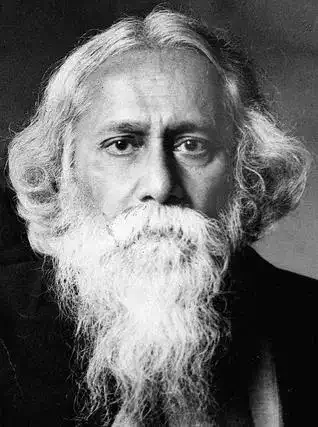
Rabindranath Tagore
Lover's Gifts XLIII: Dying, You Have Left Behind
Lover's Gifts XLIII: Dying, You Have Left Behind
Dying, you have left behind you the great sadness of the Eternal
in my life. You have painted my thought's horizon with the sunset
colours of your departure, leaving a track of tears across the
earth to love's heaven. Clasped in your dear arms, life and death
united in me in a marriage bond.
I think I can see you watching there in the balcony with your
lamp lighted, where the end and the beginning of all things meet.
My world went hence through the doors that you opened-you holding
the cup of death to my lips, filling it with life from your own.
Dying, you have left behind you the great sadness of the Eternal
in my life. You have painted my thought's horizon with the sunset
colours of your departure, leaving a track of tears across the
earth to love's heaven. Clasped in your dear arms, life and death
united in me in a marriage bond.
I think I can see you watching there in the balcony with your
lamp lighted, where the end and the beginning of all things meet.
My world went hence through the doors that you opened-you holding
the cup of death to my lips, filling it with life from your own.
332

Ogden Nash
The Cuckoo
The Cuckoo
Cuckoos lead Bohemian lives,
They fail as husbands and as wives,
Therefore they cynically disparage
Everybody else's marriage.
Cuckoos lead Bohemian lives,
They fail as husbands and as wives,
Therefore they cynically disparage
Everybody else's marriage.
199
Page 1
Next