

New Beginnings and Rebirth
Poems in this topic
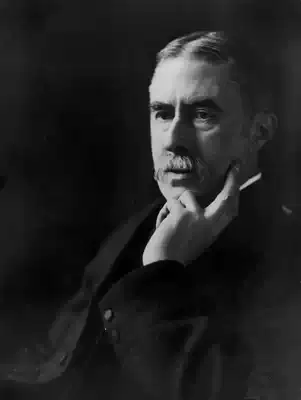
Alfred Edward Housman
Reveille
Reveille
Wake: the silver dusk returning
Up the beach of darkness brims,
And the ship of sunrise burning
Strands upon the eastern rims.
Wake: the vaulted shadow shatters,
Trampled to the floor it spanned,
And the tent of night in tatters
Straws the sky-pavilioned land.
Up, lad, up, 'tis late for lying:
Hear the drums of morning play;
Hark, the empty highways crying
"Who'll beyond the hills away?"
Towns and countries woo together,
Forelands beacon, belfries call;
Never lad that trod on leather
Lived to feast his heart with all.
Up, lad: thews that lie and cumber
Sunlit pallets never thrive;
Morns abed and daylight slumber
Were not meant for man alive.
Clay lies still, but blood's a rover;
Breath's a ware that will not keep.
Up, lad: when the journey's over
There'll be time enough to sleep.
Wake: the silver dusk returning
Up the beach of darkness brims,
And the ship of sunrise burning
Strands upon the eastern rims.
Wake: the vaulted shadow shatters,
Trampled to the floor it spanned,
And the tent of night in tatters
Straws the sky-pavilioned land.
Up, lad, up, 'tis late for lying:
Hear the drums of morning play;
Hark, the empty highways crying
"Who'll beyond the hills away?"
Towns and countries woo together,
Forelands beacon, belfries call;
Never lad that trod on leather
Lived to feast his heart with all.
Up, lad: thews that lie and cumber
Sunlit pallets never thrive;
Morns abed and daylight slumber
Were not meant for man alive.
Clay lies still, but blood's a rover;
Breath's a ware that will not keep.
Up, lad: when the journey's over
There'll be time enough to sleep.
1,114
1
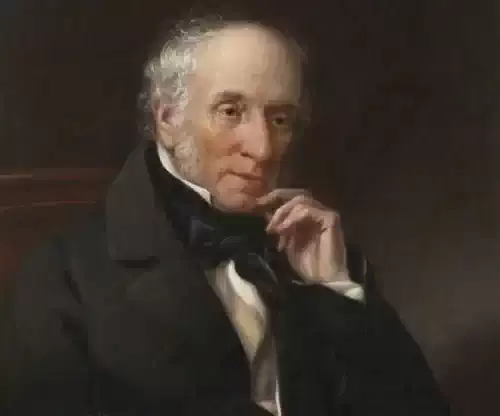
William Wordsworth
Influence of Natural Objects
Influence of Natural Objects
Wisdom and Spirit of the universe!
Thou Soul, that art the Eternity of thought!
And giv'st to forms and images a breath
And everlasting motion! not in vain,
By day or star-light, thus from my first dawn
Of childhood didst thou intertwine for me
The passions that build up our human soul;
Not with the mean and vulgar works of Man;
But with high objects, with enduring things,
With life and nature; purifying thus
The elements of feeling and of thought,
And sanctifying by such discipline
Both pain and fear,--until we recognise
A grandeur in the beatings of the heart.
Nor was this fellowship vouchsafed to me
With stinted kindness. In November days,
When vapours rolling down the valleys made
A lonely scene more lonesome; among woods
At noon; and 'mid the calm of summer nights,
When, by the margin of the trembling lake,
Beneath the gloomy hills, homeward I went
In solitude, such intercourse was mine:
Mine was it in the fields both day and night,
And by the waters, all the summer long.
And in the frosty season, when the sun
Was set, and, visible for many a mile,
The cottage-windows through the twilight blazed,
I heeded not the summons: happy time
It was indeed for all of us; for me
It was a time of rapture! Clear and loud
The village-clock tolled six--I wheeled about,
Proud and exulting like an untired horse
That cares not for his home.--All shod with steel
We hissed along the polished ice, in games
Confederate, imitative of the chase
And woodland pleasures,--the resounding horn,
The pack loud-chiming, and the hunted hare.
So through the darkness and the cold we flew,
And not a voice was idle: with the din
Smitten, the precipices rang aloud;
The leafless trees and every icy crag
Tinkled like iron; while far-distant hills
Into the tumult sent an alien sound
Of melancholy, not unnoticed while the stars,
Eastward, were sparkling clear, and in the west
The orange sky of evening died away.
Not seldom from the uproar I retired
Into a silent bay, or sportively
Glanced sideway, leaving the tumultuous throng,
To cut across the reflex of a star;
Image, that, flying still before me, gleamed
Upon the glassy plain: and oftentimes,
When we had given our bodies to the wind,
And all the shadowy banks on either side
Came sweeping through the darkness, spinning still
The rapid line of motion, then at once
Have I, reclining back upon my heels,
Stopped short; yet still the solitary cliffs
Wheeled by me--even as if the earth had rolled
With visible motion her diurnal round!
Behind me did they stretch in solemn train,
Feebler and feebler, and I stood and watched
Till all was tranquil as a summer sea.
Wisdom and Spirit of the universe!
Thou Soul, that art the Eternity of thought!
And giv'st to forms and images a breath
And everlasting motion! not in vain,
By day or star-light, thus from my first dawn
Of childhood didst thou intertwine for me
The passions that build up our human soul;
Not with the mean and vulgar works of Man;
But with high objects, with enduring things,
With life and nature; purifying thus
The elements of feeling and of thought,
And sanctifying by such discipline
Both pain and fear,--until we recognise
A grandeur in the beatings of the heart.
Nor was this fellowship vouchsafed to me
With stinted kindness. In November days,
When vapours rolling down the valleys made
A lonely scene more lonesome; among woods
At noon; and 'mid the calm of summer nights,
When, by the margin of the trembling lake,
Beneath the gloomy hills, homeward I went
In solitude, such intercourse was mine:
Mine was it in the fields both day and night,
And by the waters, all the summer long.
And in the frosty season, when the sun
Was set, and, visible for many a mile,
The cottage-windows through the twilight blazed,
I heeded not the summons: happy time
It was indeed for all of us; for me
It was a time of rapture! Clear and loud
The village-clock tolled six--I wheeled about,
Proud and exulting like an untired horse
That cares not for his home.--All shod with steel
We hissed along the polished ice, in games
Confederate, imitative of the chase
And woodland pleasures,--the resounding horn,
The pack loud-chiming, and the hunted hare.
So through the darkness and the cold we flew,
And not a voice was idle: with the din
Smitten, the precipices rang aloud;
The leafless trees and every icy crag
Tinkled like iron; while far-distant hills
Into the tumult sent an alien sound
Of melancholy, not unnoticed while the stars,
Eastward, were sparkling clear, and in the west
The orange sky of evening died away.
Not seldom from the uproar I retired
Into a silent bay, or sportively
Glanced sideway, leaving the tumultuous throng,
To cut across the reflex of a star;
Image, that, flying still before me, gleamed
Upon the glassy plain: and oftentimes,
When we had given our bodies to the wind,
And all the shadowy banks on either side
Came sweeping through the darkness, spinning still
The rapid line of motion, then at once
Have I, reclining back upon my heels,
Stopped short; yet still the solitary cliffs
Wheeled by me--even as if the earth had rolled
With visible motion her diurnal round!
Behind me did they stretch in solemn train,
Feebler and feebler, and I stood and watched
Till all was tranquil as a summer sea.
280

William Shakespeare
The Procreation Sonnets (1 - 17)
The Procreation Sonnets (1 - 17)
I
From fairest creatures we desire increase,
That thereby beauty's rose might never die,
But as the riper should by time decease,
His tender heir might bear his memory:
But thou contracted to thine own bright eyes,
Feed'st thy light's flame with self-substantial fuel,
Making a famine where abundance lies,
Thy self thy foe, to thy sweet self too cruel:
Thou that art now the world's fresh ornament,
And only herald to the gaudy spring,
Within thine own bud buriest thy content,
And, tender churl, mak'st waste in niggarding:
Pity the world, or else this glutton be,
To eat the world's due, by the grave and thee.
II
When forty winters shall besiege thy brow,
And dig deep trenches in thy beauty's field,
Thy youth's proud livery so gazed on now,
Will be a totter'd weed of small worth held:
Then being asked, where all thy beauty lies,
Where all the treasure of thy lusty days;
To say, within thine own deep sunken eyes,
Were an all-eating shame, and thriftless praise.
How much more praise deserv'd thy beauty's use,
If thou couldst answer 'This fair child of mine
Shall sum my count, and make my old excuse,'
Proving his beauty by succession thine!
This were to be new made when thou art old,
And see thy blood warm when thou feel'st it cold.
III
Look in thy glass and tell the face thou viewest
Now is the time that face should form another;
Whose fresh repair if now thou not renewest,
Thou dost beguile the world, unbless some mother.
For where is she so fair whose unear'd womb
Disdains the tillage of thy husbandry?
Or who is he so fond will be the tomb
Of his self-love, to stop posterity?
Thou art thy mother's glass and she in thee
Calls back the lovely April of her prime;
So thou through windows of thine age shalt see,
Despite of wrinkles this thy golden time.
But if thou live, remember'd not to be,
Die single and thine image dies with thee.
IV
Unthrifty loveliness, why dost thou spend
Upon thy self thy beauty's legacy?
Nature's bequest gives nothing, but doth lend,
And being frank she lends to those are free:
Then, beauteous niggard, why dost thou abuse
The bounteous largess given thee to give?
Profitless usurer, why dost thou use
So great a sum of sums, yet canst not live?
For having traffic with thy self alone,
Thou of thy self thy sweet self dost deceive:
Then how when nature calls thee to be gone,
What acceptable audit canst thou leave?
Thy unused beauty must be tombed with thee,
Which, used, lives th' executor to be.
V
Those hours, that with gentle work did frame
The lovely gaze where every eye doth dwell,
Will play the tyrants to the very same
And that unfair which fairly doth excel;
For never-resting time leads summer on
To hideous winter, and confounds him there;
Sap checked with frost, and lusty leaves quite gone,
Beauty o'er-snowed and bareness every where:
Then were not summer's distillation left,
A liquid prisoner pent in walls of glass,
Beauty's effect with beauty were bereft,
Nor it, nor no remembrance what it was:
But flowers distill'd, though they with winter meet,
Leese but their show; their substance still lives sweet.
VI
Then let not winter's ragged hand deface,
In thee thy summer, ere thou be distilled:
Make sweet some vial; treasure thou some place
With beauty's treasure ere it be self-killed.
That use is not forbidden usury,
Which happies those that pay the willing loan;
That's for thy self to breed another thee,
Or ten times happier, be it ten for one;
Ten times thy self were happier than thou art,
If ten of thine ten times refigured thee:
Then what could death do if thou shouldst depart,
Leaving thee living in posterity?
Be not self-willed, for thou art much too fair
To be death's conquest and make worms thine heir.
VII
Lo! in the orient when the gracious light
Lifts up his burning head, each under eye
Doth homage to his new-appearing sight,
Serving with looks his sacred majesty;
And having climbed the steep-up heavenly hill,
Resembling strong youth in his middle age,
Yet mortal looks adore his beauty still,
Attending on his golden pilgrimage:
But when from highmost pitch, with weary car,
Like feeble age, he reeleth from the day,
The eyes, 'fore duteous, now converted are
From his low tract, and look another way:
So thou, thyself outgoing in thy noon
Unlooked on diest unless thou get a son.
VIII
Music to hear, why hear'st thou music sadly?
Sweets with sweets war not, joy delights in joy:
Why lov'st thou that which thou receiv'st not gladly,
Or else receiv'st with pleasure thine annoy?
If the true concord of well-tuned sounds,
By unions married, do offend thine ear,
They do but sweetly chide thee, who confounds
In singleness the parts that thou shouldst bear.
Mark how one string, sweet husband to another,
Strikes each in each by mutual ordering;
Resembling sire and child and happy mother,
Who, all in one, one pleasing note do sing:
Whose speechless song being many, seeming one,
Sings this to thee: 'Thou single wilt prove none.'
IX
Is it for fear to wet a widow's eye,
That thou consum'st thy self in single life?
Ah! if thou issueless shalt hap to die,
The world will wail thee like a makeless wife;
The world will be thy widow and still weep
That thou no form of thee hast left behind,
When every private widow well may keep
By children's eyes, her husband's shape in mind:
Look what an unthrift in the world doth spend
Shifts but his place, for still the world enjoys it;
But beauty's waste hath in the world an end,
And kept unused the user so destroys it.
No love toward others in that bosom sits
That on himself such murd'rous shame commits.
X
For shame deny that thou bear'st love to any,
Who for thy self art so unprovident.
Grant, if thou wilt, thou art beloved of many,
But that thou none lov'st is most evident:
For thou art so possessed with murderous hate,
That 'gainst thy self thou stick'st not to conspire,
Seeking that beauteous roof to ruinate
Which to repair should be thy chief desire.
O! change thy thought, that I may change my mind:
Shall hate be fairer lodged than gentle love?
Be, as thy presence is, gracious and kind,
Or to thyself at least kind-hearted prove:
Make thee another self for love of me,
That beauty still may live in thine or thee.
XI
As fast as thou shalt wane, so fast thou grow'st
In one of thine, from that which thou departest;
And that fresh blood which youngly thou bestow'st,
Thou mayst call thine when thou from youth convertest.
Herein lives wisdom, beauty, and increase;
Without this folly, age, and cold decay:
If all were minded so, the times should cease
And threescore year would make the world away.
Let those whom nature hath not made for store,
Harsh, featureless, and rude, barrenly perish:
Look whom she best endow'd, she gave the more;
Which bounteous gift thou shouldst in bounty cherish:
She carv'd thee for her seal, and meant thereby,
Thou shouldst print more, not let that copy die.
XII
When I do count the clock that tells the time,
And see the brave day sunk in hideous night;
When I behold the violet past prime,
And sable curls, all silvered o'er with white;
When lofty trees I see barren of leaves,
Which erst from heat did canopy the herd,
And summer's green all girded up in sheaves,
Borne on the bier with white and bristly beard,
Then of thy beauty do I question make,
That thou among the wastes of time must go,
Since sweets and beauties do themselves forsake
And die as fast as they see others grow;
And nothing 'gainst Time's scythe can make defence
Save breed, to brave him when he takes thee hence.
XIII
O! that you were your self; but, love, you are
No longer yours, than you your self here live:
Against this coming end you should prepare,
And your sweet semblance to some other give:
So should that beauty which you hold in lease
Find no determination; then you were
Yourself again, after yourself's decease,
When your sweet issue your sweet form should bear.
Who lets so fair a house fall to decay,
Which husbandry in honour might uphold,
Against the stormy gusts of winter's day
And barren rage of death's eternal cold?
O! none but unthrifts. Dear my love, you know,
You had a father: let your son say so.
XIV
Not from the stars do I my judgement pluck;
And yet methinks I have Astronomy,
But not to tell of good or evil luck,
Of plagues, of dearths, or seasons' quality;
Nor can I fortune to brief minutes tell,
Pointing to each his thunder, rain and wind,
Or say with princes if it shall go well
By oft predict that I in heaven find:
But from thine eyes my knowledge I derive,
And, constant stars, in them I read such art
As truth and beauty shall together thrive,
If from thyself, to store thou wouldst convert;
Or else of thee this I prognosticate:
Thy end is truth's and beauty's doom and date.
XV
When I consider every thing that grows
Holds in perfection but a little moment,
That this huge stage presenteth nought but shows
Whereon the stars in secret influence comment;
When I perceive that men as plants increase,
Cheered and checked even by the self-same sky,
Vaunt in their youthful sap, at height decrease,
And wear their brave state out of memory;
Then the conceit of this inconstant stay
Sets you most rich in youth before my sight,
Where wasteful Time debateth with decay
To change your day of youth to sullied night,
And all in war with Time for love of you,
As he takes from you, I engraft you new.
XVI
But wherefore do not you a mightier way
Make war upon this bloody tyrant, Time?
And fortify your self in your decay
With means more blessed than my barren rhyme?
Now stand you on the top of happy hours,
And many maiden gardens, yet unset,
With virtuous wish would bear you living flowers,
Much liker than your painted counterfeit:
So should the lines of life that life repair,
Which this, Time's pencil, or my pupil pen,
Neither in inward worth nor outward fair,
Can make you live your self in eyes of men.
To give away yourself, keeps yourself still,
And you must live, drawn by your own sweet skill.
XVII
Who will believe my verse in time to come,
If it were fill'd with your most high deserts?
Though yet heaven knows it is but as a tomb
Which hides your life, and shows not half your parts.
If I could write the beauty of your eyes,
And in fresh numbers number all your graces,
The age to come would say 'This poet lies;
Such heavenly touches ne'er touch'd earthly faces.'
So should my papers, yellow'd with their age,
Be scorn'd, like old men of less truth than tongue,
And your true rights be term'd a poet's rage
And stretched metre of an antique song:
But were some child of yours alive that time,
You should live twice, in it, and in my rhyme.
I
From fairest creatures we desire increase,
That thereby beauty's rose might never die,
But as the riper should by time decease,
His tender heir might bear his memory:
But thou contracted to thine own bright eyes,
Feed'st thy light's flame with self-substantial fuel,
Making a famine where abundance lies,
Thy self thy foe, to thy sweet self too cruel:
Thou that art now the world's fresh ornament,
And only herald to the gaudy spring,
Within thine own bud buriest thy content,
And, tender churl, mak'st waste in niggarding:
Pity the world, or else this glutton be,
To eat the world's due, by the grave and thee.
II
When forty winters shall besiege thy brow,
And dig deep trenches in thy beauty's field,
Thy youth's proud livery so gazed on now,
Will be a totter'd weed of small worth held:
Then being asked, where all thy beauty lies,
Where all the treasure of thy lusty days;
To say, within thine own deep sunken eyes,
Were an all-eating shame, and thriftless praise.
How much more praise deserv'd thy beauty's use,
If thou couldst answer 'This fair child of mine
Shall sum my count, and make my old excuse,'
Proving his beauty by succession thine!
This were to be new made when thou art old,
And see thy blood warm when thou feel'st it cold.
III
Look in thy glass and tell the face thou viewest
Now is the time that face should form another;
Whose fresh repair if now thou not renewest,
Thou dost beguile the world, unbless some mother.
For where is she so fair whose unear'd womb
Disdains the tillage of thy husbandry?
Or who is he so fond will be the tomb
Of his self-love, to stop posterity?
Thou art thy mother's glass and she in thee
Calls back the lovely April of her prime;
So thou through windows of thine age shalt see,
Despite of wrinkles this thy golden time.
But if thou live, remember'd not to be,
Die single and thine image dies with thee.
IV
Unthrifty loveliness, why dost thou spend
Upon thy self thy beauty's legacy?
Nature's bequest gives nothing, but doth lend,
And being frank she lends to those are free:
Then, beauteous niggard, why dost thou abuse
The bounteous largess given thee to give?
Profitless usurer, why dost thou use
So great a sum of sums, yet canst not live?
For having traffic with thy self alone,
Thou of thy self thy sweet self dost deceive:
Then how when nature calls thee to be gone,
What acceptable audit canst thou leave?
Thy unused beauty must be tombed with thee,
Which, used, lives th' executor to be.
V
Those hours, that with gentle work did frame
The lovely gaze where every eye doth dwell,
Will play the tyrants to the very same
And that unfair which fairly doth excel;
For never-resting time leads summer on
To hideous winter, and confounds him there;
Sap checked with frost, and lusty leaves quite gone,
Beauty o'er-snowed and bareness every where:
Then were not summer's distillation left,
A liquid prisoner pent in walls of glass,
Beauty's effect with beauty were bereft,
Nor it, nor no remembrance what it was:
But flowers distill'd, though they with winter meet,
Leese but their show; their substance still lives sweet.
VI
Then let not winter's ragged hand deface,
In thee thy summer, ere thou be distilled:
Make sweet some vial; treasure thou some place
With beauty's treasure ere it be self-killed.
That use is not forbidden usury,
Which happies those that pay the willing loan;
That's for thy self to breed another thee,
Or ten times happier, be it ten for one;
Ten times thy self were happier than thou art,
If ten of thine ten times refigured thee:
Then what could death do if thou shouldst depart,
Leaving thee living in posterity?
Be not self-willed, for thou art much too fair
To be death's conquest and make worms thine heir.
VII
Lo! in the orient when the gracious light
Lifts up his burning head, each under eye
Doth homage to his new-appearing sight,
Serving with looks his sacred majesty;
And having climbed the steep-up heavenly hill,
Resembling strong youth in his middle age,
Yet mortal looks adore his beauty still,
Attending on his golden pilgrimage:
But when from highmost pitch, with weary car,
Like feeble age, he reeleth from the day,
The eyes, 'fore duteous, now converted are
From his low tract, and look another way:
So thou, thyself outgoing in thy noon
Unlooked on diest unless thou get a son.
VIII
Music to hear, why hear'st thou music sadly?
Sweets with sweets war not, joy delights in joy:
Why lov'st thou that which thou receiv'st not gladly,
Or else receiv'st with pleasure thine annoy?
If the true concord of well-tuned sounds,
By unions married, do offend thine ear,
They do but sweetly chide thee, who confounds
In singleness the parts that thou shouldst bear.
Mark how one string, sweet husband to another,
Strikes each in each by mutual ordering;
Resembling sire and child and happy mother,
Who, all in one, one pleasing note do sing:
Whose speechless song being many, seeming one,
Sings this to thee: 'Thou single wilt prove none.'
IX
Is it for fear to wet a widow's eye,
That thou consum'st thy self in single life?
Ah! if thou issueless shalt hap to die,
The world will wail thee like a makeless wife;
The world will be thy widow and still weep
That thou no form of thee hast left behind,
When every private widow well may keep
By children's eyes, her husband's shape in mind:
Look what an unthrift in the world doth spend
Shifts but his place, for still the world enjoys it;
But beauty's waste hath in the world an end,
And kept unused the user so destroys it.
No love toward others in that bosom sits
That on himself such murd'rous shame commits.
X
For shame deny that thou bear'st love to any,
Who for thy self art so unprovident.
Grant, if thou wilt, thou art beloved of many,
But that thou none lov'st is most evident:
For thou art so possessed with murderous hate,
That 'gainst thy self thou stick'st not to conspire,
Seeking that beauteous roof to ruinate
Which to repair should be thy chief desire.
O! change thy thought, that I may change my mind:
Shall hate be fairer lodged than gentle love?
Be, as thy presence is, gracious and kind,
Or to thyself at least kind-hearted prove:
Make thee another self for love of me,
That beauty still may live in thine or thee.
XI
As fast as thou shalt wane, so fast thou grow'st
In one of thine, from that which thou departest;
And that fresh blood which youngly thou bestow'st,
Thou mayst call thine when thou from youth convertest.
Herein lives wisdom, beauty, and increase;
Without this folly, age, and cold decay:
If all were minded so, the times should cease
And threescore year would make the world away.
Let those whom nature hath not made for store,
Harsh, featureless, and rude, barrenly perish:
Look whom she best endow'd, she gave the more;
Which bounteous gift thou shouldst in bounty cherish:
She carv'd thee for her seal, and meant thereby,
Thou shouldst print more, not let that copy die.
XII
When I do count the clock that tells the time,
And see the brave day sunk in hideous night;
When I behold the violet past prime,
And sable curls, all silvered o'er with white;
When lofty trees I see barren of leaves,
Which erst from heat did canopy the herd,
And summer's green all girded up in sheaves,
Borne on the bier with white and bristly beard,
Then of thy beauty do I question make,
That thou among the wastes of time must go,
Since sweets and beauties do themselves forsake
And die as fast as they see others grow;
And nothing 'gainst Time's scythe can make defence
Save breed, to brave him when he takes thee hence.
XIII
O! that you were your self; but, love, you are
No longer yours, than you your self here live:
Against this coming end you should prepare,
And your sweet semblance to some other give:
So should that beauty which you hold in lease
Find no determination; then you were
Yourself again, after yourself's decease,
When your sweet issue your sweet form should bear.
Who lets so fair a house fall to decay,
Which husbandry in honour might uphold,
Against the stormy gusts of winter's day
And barren rage of death's eternal cold?
O! none but unthrifts. Dear my love, you know,
You had a father: let your son say so.
XIV
Not from the stars do I my judgement pluck;
And yet methinks I have Astronomy,
But not to tell of good or evil luck,
Of plagues, of dearths, or seasons' quality;
Nor can I fortune to brief minutes tell,
Pointing to each his thunder, rain and wind,
Or say with princes if it shall go well
By oft predict that I in heaven find:
But from thine eyes my knowledge I derive,
And, constant stars, in them I read such art
As truth and beauty shall together thrive,
If from thyself, to store thou wouldst convert;
Or else of thee this I prognosticate:
Thy end is truth's and beauty's doom and date.
XV
When I consider every thing that grows
Holds in perfection but a little moment,
That this huge stage presenteth nought but shows
Whereon the stars in secret influence comment;
When I perceive that men as plants increase,
Cheered and checked even by the self-same sky,
Vaunt in their youthful sap, at height decrease,
And wear their brave state out of memory;
Then the conceit of this inconstant stay
Sets you most rich in youth before my sight,
Where wasteful Time debateth with decay
To change your day of youth to sullied night,
And all in war with Time for love of you,
As he takes from you, I engraft you new.
XVI
But wherefore do not you a mightier way
Make war upon this bloody tyrant, Time?
And fortify your self in your decay
With means more blessed than my barren rhyme?
Now stand you on the top of happy hours,
And many maiden gardens, yet unset,
With virtuous wish would bear you living flowers,
Much liker than your painted counterfeit:
So should the lines of life that life repair,
Which this, Time's pencil, or my pupil pen,
Neither in inward worth nor outward fair,
Can make you live your self in eyes of men.
To give away yourself, keeps yourself still,
And you must live, drawn by your own sweet skill.
XVII
Who will believe my verse in time to come,
If it were fill'd with your most high deserts?
Though yet heaven knows it is but as a tomb
Which hides your life, and shows not half your parts.
If I could write the beauty of your eyes,
And in fresh numbers number all your graces,
The age to come would say 'This poet lies;
Such heavenly touches ne'er touch'd earthly faces.'
So should my papers, yellow'd with their age,
Be scorn'd, like old men of less truth than tongue,
And your true rights be term'd a poet's rage
And stretched metre of an antique song:
But were some child of yours alive that time,
You should live twice, in it, and in my rhyme.
275
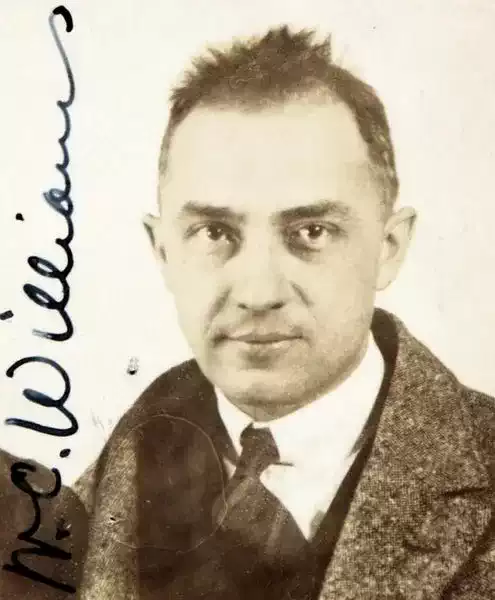
William Carlos Williams
Heel & Toe To The End
Heel & Toe To The End
Gagarin says, in ecstasy,
he could have
gone on forever
he floated
at and sang
and when he emerged from that
one hundred eight minutes off
the surface of
the earth he was smiling.
Then he returned
to take his place
among the rest of us
from all that division and
subtraction a measure
to and heel
heel and toe he felt
as if he had
been dancing
Gagarin says, in ecstasy,
he could have
gone on forever
he floated
at and sang
and when he emerged from that
one hundred eight minutes off
the surface of
the earth he was smiling.
Then he returned
to take his place
among the rest of us
from all that division and
subtraction a measure
to and heel
heel and toe he felt
as if he had
been dancing
284
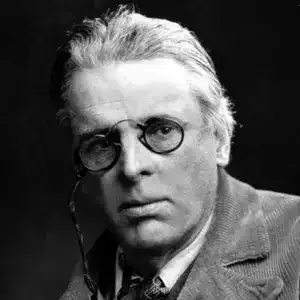
William Butler Yeats
The Gyres
The Gyres
THE GYRES! the gyres! Old Rocky Face, look forth;
Things thought too long can be no longer thought,
For beauty dies of beauty, worth of worth,
And ancient lineaments are blotted out.
Irrational streams of blood are staining earth;
Empedocles has thrown all things about;
Hector is dead and there's a light in Troy;
We that look on but laugh in tragic joy.
What matter though numb nightmare ride on top,
And blood and mire the sensitive body stain?
What matter? Heave no sigh, let no tear drop,
A-greater, a more gracious time has gone;
For painted forms or boxes of make-up
In ancient tombs I sighed, but not again;
What matter? Out of cavern comes a voice,
And all it knows is that one word 'Rejoice!'
Conduct and work grow coarse, and coarse the soul,
What matter? Those that Rocky Face holds dear,
Lovers of horses and of women, shall,
From marble of a broken sepulchre,
Or dark betwixt the polecat and the owl,
Or any rich, dark nothing disinter
The workman, noble and saint, and all things run
On that unfashionable gyre again.
THE GYRES! the gyres! Old Rocky Face, look forth;
Things thought too long can be no longer thought,
For beauty dies of beauty, worth of worth,
And ancient lineaments are blotted out.
Irrational streams of blood are staining earth;
Empedocles has thrown all things about;
Hector is dead and there's a light in Troy;
We that look on but laugh in tragic joy.
What matter though numb nightmare ride on top,
And blood and mire the sensitive body stain?
What matter? Heave no sigh, let no tear drop,
A-greater, a more gracious time has gone;
For painted forms or boxes of make-up
In ancient tombs I sighed, but not again;
What matter? Out of cavern comes a voice,
And all it knows is that one word 'Rejoice!'
Conduct and work grow coarse, and coarse the soul,
What matter? Those that Rocky Face holds dear,
Lovers of horses and of women, shall,
From marble of a broken sepulchre,
Or dark betwixt the polecat and the owl,
Or any rich, dark nothing disinter
The workman, noble and saint, and all things run
On that unfashionable gyre again.
367
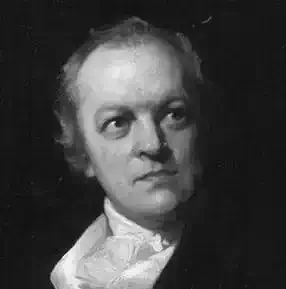
William Blake
Proverbs of Hell (Excerpt from The Marriage of Heaven and H
Proverbs of Hell (Excerpt from The Marriage of Heaven and H
In seed time learn, in harvest teach, in winter enjoy.
Drive your cart and your plow over the bones of the dead.
The road of excess leads to the palace of wisdom.
Prudence is a rich, ugly old maid courted by Incapacity.
He who desires but acts not, breeds pestilence.
The cut worm forgives the plow.
Dip him in the river who loves water.
A fool sees not the same tree that a wise man sees.
He whose face gives no light, shall never become a star.
Eternity is in love with the productions of time.
The busy bee has no time for sorrow.
The hours of folly are measur'd by the clock; but of wisdom, no clock can measure.
All wholesome food is caught without a net or a trap.
Bring out number, weight and measure in a year of dearth.
No bird soars too high, if he soars with his own wings.
A dead body revenges not injuries.
The most sublime act is to set another before you.
If the fool would persist in his folly he would become wise.
Folly is the cloak of knavery.
Shame is Pride's cloke.
Prisons are built with stones of law, brothels with bricks of religion.
The pride of the peacock is the glory of God.
The lust of the goat is the bounty of God.
The wrath of the lion is the wisdom of God.
The nakedness of woman is the work of God.
Excess of sorrow laughs. Excess of joy weeps.
The roaring of lions, the howling of wolves, the raging of the stormy sea, and the
destructive sword, are portions of eternity, too great for the eye of man.
The fox condemns the trap, not himself.
Joys impregnate. Sorrows bring forth.
Let man wear the fell of the lion, woman the fleece of the sheep.
The bird a nest, the spider a web, man friendship.
The selfish, smiling fool, and the sullen, frowning fool shall be both thought wise, that
they may be a rod.
What is now proved was once only imagin'd.
The rat, the mouse, the fox, the rabbit watch the roots; the lion, the tyger, the horse,
the elephant watch the fruits.
The cistern contains: the fountain overflows.
One thought fills immensity.
Always be ready to speak your mind, and a base man will avoid you.
Every thing possible to be believ'd is an image of truth.
The eagle never lost so much time as when he submitted to learn of the crow.
The fox provides for himself, but God provides for the lion.
Think in the morning. Act in the noon. Eat in the evening. Sleep in the night.
He who has suffer'd you to impose on him, knows you.
As the plow follows words, so God rewards prayers.
The tygers of wrath are wiser than the horses of instruction.
Expect poison from the standing water.
You never know what is enough unless you know what is more than enough.
Listen to the fool's reproach! it is a kingly title!
The eyes of fire, the nostrils of air, the mouth of water, the beard of earth.
The weak in courage is strong in cunning.
The apple tree never asks the beech how he shall grow; nor the lion, the horse, how
he shall take his prey.
The thankful receiver bears a plentiful harvest.
If others had not been foolish, we should be so.
The soul of sweet delight can never be defil'd.
When thou seest an eagle, thou seest a portion of genius; lift up thy head!
As the caterpiller chooses the fairest leaves to lay her eggs on, so the priest lays his
curse on the fairest joys.
To create a little flower is the labour of ages.
Damn braces. Bless relaxes.
The best wine is the oldest, the best water the newest.
Prayers plow not! Praises reap not!
Joys laugh not! Sorrows weep not!
The head Sublime, the heart Pathos, the genitals Beauty, the hands and feet
Proportion.
As the air to a bird or the sea to a fish, so is contempt to the contemptible.
The crow wish'd every thing was black, the owl that every thing was white.
Exuberance is Beauty.
If the lion was advised by the fox, he would be cunning.
Improvement makes strait roads; but the crooked roads without improvement are
roads of genius.
Sooner murder an infant in its cradle than nurse unacted desires.
Where man is not, nature is barren.
Truth can never be told so as to be understood, and not be believ'd.
Enough! or too much.
In seed time learn, in harvest teach, in winter enjoy.
Drive your cart and your plow over the bones of the dead.
The road of excess leads to the palace of wisdom.
Prudence is a rich, ugly old maid courted by Incapacity.
He who desires but acts not, breeds pestilence.
The cut worm forgives the plow.
Dip him in the river who loves water.
A fool sees not the same tree that a wise man sees.
He whose face gives no light, shall never become a star.
Eternity is in love with the productions of time.
The busy bee has no time for sorrow.
The hours of folly are measur'd by the clock; but of wisdom, no clock can measure.
All wholesome food is caught without a net or a trap.
Bring out number, weight and measure in a year of dearth.
No bird soars too high, if he soars with his own wings.
A dead body revenges not injuries.
The most sublime act is to set another before you.
If the fool would persist in his folly he would become wise.
Folly is the cloak of knavery.
Shame is Pride's cloke.
Prisons are built with stones of law, brothels with bricks of religion.
The pride of the peacock is the glory of God.
The lust of the goat is the bounty of God.
The wrath of the lion is the wisdom of God.
The nakedness of woman is the work of God.
Excess of sorrow laughs. Excess of joy weeps.
The roaring of lions, the howling of wolves, the raging of the stormy sea, and the
destructive sword, are portions of eternity, too great for the eye of man.
The fox condemns the trap, not himself.
Joys impregnate. Sorrows bring forth.
Let man wear the fell of the lion, woman the fleece of the sheep.
The bird a nest, the spider a web, man friendship.
The selfish, smiling fool, and the sullen, frowning fool shall be both thought wise, that
they may be a rod.
What is now proved was once only imagin'd.
The rat, the mouse, the fox, the rabbit watch the roots; the lion, the tyger, the horse,
the elephant watch the fruits.
The cistern contains: the fountain overflows.
One thought fills immensity.
Always be ready to speak your mind, and a base man will avoid you.
Every thing possible to be believ'd is an image of truth.
The eagle never lost so much time as when he submitted to learn of the crow.
The fox provides for himself, but God provides for the lion.
Think in the morning. Act in the noon. Eat in the evening. Sleep in the night.
He who has suffer'd you to impose on him, knows you.
As the plow follows words, so God rewards prayers.
The tygers of wrath are wiser than the horses of instruction.
Expect poison from the standing water.
You never know what is enough unless you know what is more than enough.
Listen to the fool's reproach! it is a kingly title!
The eyes of fire, the nostrils of air, the mouth of water, the beard of earth.
The weak in courage is strong in cunning.
The apple tree never asks the beech how he shall grow; nor the lion, the horse, how
he shall take his prey.
The thankful receiver bears a plentiful harvest.
If others had not been foolish, we should be so.
The soul of sweet delight can never be defil'd.
When thou seest an eagle, thou seest a portion of genius; lift up thy head!
As the caterpiller chooses the fairest leaves to lay her eggs on, so the priest lays his
curse on the fairest joys.
To create a little flower is the labour of ages.
Damn braces. Bless relaxes.
The best wine is the oldest, the best water the newest.
Prayers plow not! Praises reap not!
Joys laugh not! Sorrows weep not!
The head Sublime, the heart Pathos, the genitals Beauty, the hands and feet
Proportion.
As the air to a bird or the sea to a fish, so is contempt to the contemptible.
The crow wish'd every thing was black, the owl that every thing was white.
Exuberance is Beauty.
If the lion was advised by the fox, he would be cunning.
Improvement makes strait roads; but the crooked roads without improvement are
roads of genius.
Sooner murder an infant in its cradle than nurse unacted desires.
Where man is not, nature is barren.
Truth can never be told so as to be understood, and not be believ'd.
Enough! or too much.
654
William Blake
Milton: And did those feet in ancient time
Milton: And did those feet in ancient time
And did those feet in ancient time
Walk upon England's mountains green?
And was the holy Lamb of God
On England's pleasant pastures seen?
And did the Countenance Divine
Shine forth upon our clouded hills?
And was Jerusalem builded here
Among these dark Satanic mills?
Bring me my bow of burning gold:
Bring me my arrows of desire:
Bring me my spear: O clouds unfold!
Bring me my chariot of fire.
I will not cease from mental fight,
Nor shall my sword sleep in my hand
Till we have built Jerusalem
In England's green and pleasant land.
And did those feet in ancient time
Walk upon England's mountains green?
And was the holy Lamb of God
On England's pleasant pastures seen?
And did the Countenance Divine
Shine forth upon our clouded hills?
And was Jerusalem builded here
Among these dark Satanic mills?
Bring me my bow of burning gold:
Bring me my arrows of desire:
Bring me my spear: O clouds unfold!
Bring me my chariot of fire.
I will not cease from mental fight,
Nor shall my sword sleep in my hand
Till we have built Jerusalem
In England's green and pleasant land.
313
William Blake
Introduction to Songs of Experience
Introduction to Songs of Experience
Hear the voice of the Bard,
Who present, past, and future, sees;
Whose ears have heard
The Holy Word
That walk'd among the ancient trees;
Calling the lapsèd soul,
And weeping in the evening dew;
That might control
The starry pole,
And fallen, fallen light renew!
'O Earth, O Earth, return!
Arise from out the dewy grass!
Night is worn,
And the morn
Rises from the slumbrous mass.
'Turn away no more;
Why wilt thou turn away?
The starry floor,
The watery shore,
Is given thee till the break of day.'
Hear the voice of the Bard,
Who present, past, and future, sees;
Whose ears have heard
The Holy Word
That walk'd among the ancient trees;
Calling the lapsèd soul,
And weeping in the evening dew;
That might control
The starry pole,
And fallen, fallen light renew!
'O Earth, O Earth, return!
Arise from out the dewy grass!
Night is worn,
And the morn
Rises from the slumbrous mass.
'Turn away no more;
Why wilt thou turn away?
The starry floor,
The watery shore,
Is given thee till the break of day.'
375
William Blake
From Milton: And did those feet
From Milton: And did those feet
And did those feet in ancient time
Walk upon England's mountains green?
And was the holy Lamb of God
On England's pleasant pastures seen?
And did the Countenance Divine
Shine forth upon our clouded hills?
And was Jerusalem builded here,
Among these dark Satanic Mills?
Bring me my Bow of burning gold:
Bring me my Arrows of desire:
Bring me my Spear:O clouds unfold!
Bring me my Chariot of fire!
I will not cease from Mental Fight,
Nor shall my Sword sleep in my hand,
Till we have built Jerusalem
In England's green & pleasant Land.
And did those feet in ancient time
Walk upon England's mountains green?
And was the holy Lamb of God
On England's pleasant pastures seen?
And did the Countenance Divine
Shine forth upon our clouded hills?
And was Jerusalem builded here,
Among these dark Satanic Mills?
Bring me my Bow of burning gold:
Bring me my Arrows of desire:
Bring me my Spear:O clouds unfold!
Bring me my Chariot of fire!
I will not cease from Mental Fight,
Nor shall my Sword sleep in my hand,
Till we have built Jerusalem
In England's green & pleasant Land.
390
William Blake
England! awake! awake! awake!
England! awake! awake! awake!
England! awake! awake! awake!
Jerusalem thy Sister calls!
Why wilt thou sleep the sleep of death
And close her from thy ancient walls?
Thy hills and valleys felt her feet
Gently upon their bosoms move:
Thy gates beheld sweet Zion's ways:
Then was a time of joy and love.
And now the time returns again:
Our souls exult, and London's towers
Receive the Lamb of God to dwell
In England's green and pleasant bowers.
England! awake! awake! awake!
Jerusalem thy Sister calls!
Why wilt thou sleep the sleep of death
And close her from thy ancient walls?
Thy hills and valleys felt her feet
Gently upon their bosoms move:
Thy gates beheld sweet Zion's ways:
Then was a time of joy and love.
And now the time returns again:
Our souls exult, and London's towers
Receive the Lamb of God to dwell
In England's green and pleasant bowers.
403

Wilfred Owen
War broke: and now the Winter of the world
War broke: and now the Winter of the world
With perishing great darkness closes in.
The foul tornado, centred at Berlin,
Is over all the width of Europe whirled,
Rending the sails of progress. Rent or furled
Are all Art's ensigns. Verse wails. Now begin
Famines of thought and feeling. Love's wine's thin.
The grain of human Autumn rots, down-hurled.
For after Spring had bloomed in early Greece,
And Summer blazed her glory out with Rome,
An Autumn softly fell, a harvest home,
A slow grand age, and rich with all increase.
But now, for us, wild Winter, and the need
Of sowings for new Spring, and blood for seed.
With perishing great darkness closes in.
The foul tornado, centred at Berlin,
Is over all the width of Europe whirled,
Rending the sails of progress. Rent or furled
Are all Art's ensigns. Verse wails. Now begin
Famines of thought and feeling. Love's wine's thin.
The grain of human Autumn rots, down-hurled.
For after Spring had bloomed in early Greece,
And Summer blazed her glory out with Rome,
An Autumn softly fell, a harvest home,
A slow grand age, and rich with all increase.
But now, for us, wild Winter, and the need
Of sowings for new Spring, and blood for seed.
159
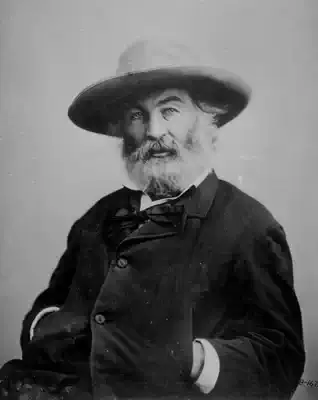
Walt Whitman
Year Of Meteors, 1859 '60
Year Of Meteors, 1859 '60
YEAR of meteors! brooding year!
I would bind in words retrospective, some of your deeds and signs;
I would sing your contest for the 19th Presidentiad;
I would sing how an old man, tall, with white hair, mounted the
scaffold in Virginia;
(I was at hand--silent I stood, with teeth shut close--I watch'd;
I stood very near you, old man, when cool and indifferent, but
trembling with age and your unheal'd wounds, you mounted the
scaffold;)
--I would sing in my copious song your census returns of The States,
The tables of population and products--I would sing of your ships and
their cargoes,
The proud black ships of Manhattan, arriving, some fill'd with
immigrants, some from the isthmus with cargoes of gold;
Songs thereof would I sing--to all that hitherward comes would I
welcome give; 10
And you would I sing, fair stripling! welcome to you from me, sweet
boy of England!
Remember you surging Manhattan's crowds, as you pass'd with your
cortege of nobles?
There in the crowds stood I, and singled you out with attachment;
I know not why, but I loved you... (and so go forth little song,
Far over sea speed like an arrow, carrying my love all folded,
And find in his palace the youth I love, and drop these lines at his
feet;)
--Nor forget I to sing of the wonder, the ship as she swam up my bay,
Well-shaped and stately the Great Eastern swam up my bay, she was 600
feet long,
Her, moving swiftly, surrounded by myriads of small craft, I forget
not to sing;
--Nor the comet that came unannounced out of the north, flaring in
heaven; 20
Nor the strange huge meteor procession, dazzling and clear, shooting
over our heads,
(A moment, a moment long, it sail'd its balls of unearthly light over
our heads,
Then departed, dropt in the night, and was gone;)
--Of such, and fitful as they, I sing--with gleams from them would I
gleam and patch these chants;
Your chants, O year all mottled with evil and good! year of
forebodings! year of the youth I love!
Year of comets and meteors transient and strange!--lo! even here, one
equally transient and strange!
As I flit through you hastily, soon to fall and be gone, what is this
book,
What am I myself but one of your meteors?
YEAR of meteors! brooding year!
I would bind in words retrospective, some of your deeds and signs;
I would sing your contest for the 19th Presidentiad;
I would sing how an old man, tall, with white hair, mounted the
scaffold in Virginia;
(I was at hand--silent I stood, with teeth shut close--I watch'd;
I stood very near you, old man, when cool and indifferent, but
trembling with age and your unheal'd wounds, you mounted the
scaffold;)
--I would sing in my copious song your census returns of The States,
The tables of population and products--I would sing of your ships and
their cargoes,
The proud black ships of Manhattan, arriving, some fill'd with
immigrants, some from the isthmus with cargoes of gold;
Songs thereof would I sing--to all that hitherward comes would I
welcome give; 10
And you would I sing, fair stripling! welcome to you from me, sweet
boy of England!
Remember you surging Manhattan's crowds, as you pass'd with your
cortege of nobles?
There in the crowds stood I, and singled you out with attachment;
I know not why, but I loved you... (and so go forth little song,
Far over sea speed like an arrow, carrying my love all folded,
And find in his palace the youth I love, and drop these lines at his
feet;)
--Nor forget I to sing of the wonder, the ship as she swam up my bay,
Well-shaped and stately the Great Eastern swam up my bay, she was 600
feet long,
Her, moving swiftly, surrounded by myriads of small craft, I forget
not to sing;
--Nor the comet that came unannounced out of the north, flaring in
heaven; 20
Nor the strange huge meteor procession, dazzling and clear, shooting
over our heads,
(A moment, a moment long, it sail'd its balls of unearthly light over
our heads,
Then departed, dropt in the night, and was gone;)
--Of such, and fitful as they, I sing--with gleams from them would I
gleam and patch these chants;
Your chants, O year all mottled with evil and good! year of
forebodings! year of the youth I love!
Year of comets and meteors transient and strange!--lo! even here, one
equally transient and strange!
As I flit through you hastily, soon to fall and be gone, what is this
book,
What am I myself but one of your meteors?
432
Walt Whitman
Turn, O Libertad
Turn, O Libertad
TURN, O Libertad, for the war is over,
(From it and all henceforth expanding, doubting no more, resolute,
sweeping the world,)
Turn from lands retrospective, recording proofs of the past;
From the singers that sing the trailing glories of the past;
From the chants of the feudal world--the triumphs of kings, slavery,
caste;
Turn to the world, the triumphs reserv'd and to come--give up that
backward world;
Leave to the singers of hitherto--give them the trailing past;
But what remains, remains for singers for you--wars to come are for
you;
(Lo! how the wars of the past have duly inured to you--and the wars
of the present also inure:)
--Then turn, and be not alarm'd, O Libertad--turn your undying
face, 10
To where the future, greater than all the past,
Is swiftly, surely preparing for you.
TURN, O Libertad, for the war is over,
(From it and all henceforth expanding, doubting no more, resolute,
sweeping the world,)
Turn from lands retrospective, recording proofs of the past;
From the singers that sing the trailing glories of the past;
From the chants of the feudal world--the triumphs of kings, slavery,
caste;
Turn to the world, the triumphs reserv'd and to come--give up that
backward world;
Leave to the singers of hitherto--give them the trailing past;
But what remains, remains for singers for you--wars to come are for
you;
(Lo! how the wars of the past have duly inured to you--and the wars
of the present also inure:)
--Then turn, and be not alarm'd, O Libertad--turn your undying
face, 10
To where the future, greater than all the past,
Is swiftly, surely preparing for you.
473
Walt Whitman
To A Historian
To A Historian
YOU who celebrate bygones!
Who have explored the outward, the surfaces of the races--the life
that has exhibited itself;
Who have treated of man as the creature of politics, aggregates,
rulers and priests;
I, habitan of the Alleghanies, treating of him as he is in himself,
in his own rights,
Pressing the pulse of the life that has seldom exhibited itself, (the
great pride of man in himself;)
Chanter of Personality, outlining what is yet to be,
I project the history of the future.
YOU who celebrate bygones!
Who have explored the outward, the surfaces of the races--the life
that has exhibited itself;
Who have treated of man as the creature of politics, aggregates,
rulers and priests;
I, habitan of the Alleghanies, treating of him as he is in himself,
in his own rights,
Pressing the pulse of the life that has seldom exhibited itself, (the
great pride of man in himself;)
Chanter of Personality, outlining what is yet to be,
I project the history of the future.
416
Walt Whitman
Starting From Paumanok
Starting From Paumanok
STARTING from fish-shape Paumanok, where I was born,
Well-begotten, and rais'd by a perfect mother;
After roaming many lands--lover of populous pavements;
Dweller in Mannahatta, my city--or on
southern savannas;
Or a soldier camp'd, or carrying my knapsack and gun--or a miner in
California;
Or rude in my home in Dakota's woods, my diet meat, my drink from the
spring;
Or withdrawn to muse and meditate in some deep recess,
Far from the clank of crowds, intervals passing, rapt and happy;
Aware of the fresh free giver, the flowing Missouri--aware of mighty
Niagara;
Aware of the buffalo herds, grazing the plains--the hirsute and
strong-breasted bull; 10
Of earth, rocks, Fifth-month flowers, experienced--stars, rain, snow,
my amaze;
Having studied the mocking-bird's tones, and the mountainhawk's,
And heard at dusk the unrival'd one, the hermit thrush from the
swamp-cedars,
Solitary, singing in the West, I strike up for a New World.
Victory, union, faith, identity, time,
The indissoluble compacts, riches, mystery,
Eternal progress, the kosmos, and the modern reports.
This, then, is life;
Here is what has come to the surface after so many throes and
convulsions.
How curious! how real! 20
Underfoot the divine soil--overhead the sun.
See, revolving, the globe;
The ancestor-continents, away, group'd together;
The present and future continents, north and south, with the isthmus
between.
See, vast, trackless spaces;
As in a dream, they change, they swiftly fill;
Countless masses debouch upon them;
They are now cover'd with the foremost people, arts, institutions,
known.
See, projected, through time,
For me, an audience interminable. 30
With firm and regular step they wend--they never stop,
Successions of men, Americanos, a hundred millions;
One generation playing its part, and passing on;
Another generation playing its part, and passing on in its turn,
With faces turn'd sideways or backward towards me, to listen,
With eyes retrospective towards me,
Americanos! conquerors! marches humanitarian;
Foremost! century marches! Libertad! masses!
For you a programme of chants.
Chants of the prairies; 40
Chants of the long-running Mississippi, and down to the Mexican sea;
Chants of Ohio, Indiana, Illinois, Iowa, Wisconsin and Minnesota;
Chants going forth from the centre, from Kansas, and thence, equi
distant,
Shooting in pulses of fire, ceaseless, to vivify all.
In the Year 80 of The States,
My tongue, every atom of my blood, form'd from this soil, this air,
Born here of parents born here, from parents the same, and their
parents the same,
I, now thirty-six years old, in perfect health, begin,
Hoping to cease not till death.
Creeds and schools in abeyance, 50
(Retiring back a while, sufficed at what they are, but never
forgotten,)
I harbor, for good or bad--I permit to speak, at every hazard,
Nature now without check, with original energy.
Take my leaves, America! take them, South, and take them, North!
Make welcome for them everywhere, for they are your own offspring;
Surround them, East and West! for they would surround you;
And you precedents! connect lovingly with them, for they connect
lovingly with you.
I conn'd old times;
I sat studying at the feet of the great masters:
Now, if eligible, O that the great masters might return and study
me! 60
In the name of These States, shall I scorn the antique?
Why These are the children of the antique, to justify it.
Dead poets, philosophs, priests,
Martyrs, artists, inventors, governments long since,
Language-shapers, on other shores,
Nations once powerful, now reduced, withdrawn, or desolate,
I dare not proceed till I respectfully credit what you have left,
wafted hither:
I have perused it--own it is admirable,
(moving awhile among it;)
Think nothing can ever be greater--nothing can ever deserve more than
it deserves;
Regarding it all intently a long while--then dismissing it, 70
I stand in my place, with my own day, here.
Here lands female and male;
Here the heir-ship and heiress-ship of the world--here the flame of
materials;
Here Spirituality, the translatress, the openly-avow'd,
The ever-tending, the finale of visible forms;
The satisfier, after due long-waiting, now advancing,
Yes, here comes my mistress, the Soul.
The SOUL:
Forever and forever--longer than soil is brown and solid--longer than
water ebbs and flows.
I will make the poems of materials, for I think they are to be the
most spiritual poems; 80
And I will make the poems of my body and of mortality,
For I think I shall then supply myself with the poems of my Soul, and
of immortality.
I will make a song for These States, that no-one State may under any
circumstances be subjected to another State;
And I will make a song that there shall be comity by day and by night
between all The States, and between any two of them:
And I will make a song for the ears of the President, full of weapons
with menacing points,
And behind the weapons countless dissatisfied faces:
--And a song make I, of the One form'd out of all;
The fang'd and glittering One whose head is over all;
Resolute, warlike One, including and over all;
(However high the head of any else, that head is over all.) 90
I will acknowledge contemporary lands;
I will trail the whole geography of the globe, and salute courteously
every city large and small;
And employments! I will put in my poems, that with you is heroism,
upon land and sea;
And I will report all heroism from an American point of view.
I will sing the song of companionship;
I will show what alone must finally compact These;
I believe These are to found their own ideal of manly love,
indicating it in me;
I will therefore let flame from me the burning fires that were
threatening to consume me;
I will lift what has too long kept down those smouldering fires;
I will give them complete abandonment; 100
I will write the evangel-poem of comrades, and of love;
(For who but I should understand love, with all its sorrow and joy?
And who but I should be the poet of comrades?)
I am the credulous man of qualities, ages, races;
I advance from the people in their own spirit;
Here is what sings unrestricted faith.
Omnes! Omnes! let others ignore what they may;
I make the poem of evil also--I commemorate that part also;
I am myself just as much evil as good, and my nation is--And I say
there is in fact no evil;
(Or if there is, I say it is just as important to you, to the land,
or to me, as anything else.) 110
I too, following many, and follow'd by many, inaugurate a Religion--I
descend into the arena;
(It may be I am destin'd to utter the loudest cries there, the
winner's pealing shouts;
Who knows? they may rise from me yet, and soar above every thing.)
Each is not for its own sake;
I say the whole earth, and all the stars in the sky, are for
Religion's sake.
I say no man has ever yet been half devout enough;
None has ever yet adored or worship'd half enough;
None has begun to think how divine he himself is, and how certain the
future is.
I say that the real and permanent grandeur of These States must be
their Religion;
Otherwise there is no real and permanent grandeur: 120
(Nor character, nor life worthy the name, without Religion;
Nor land, nor man or woman, without Religion.)
What are you doing, young man?
Are you so earnest--so given up to literature, science, art, amours?
These ostensible realities, politics, points?
Your ambition or business, whatever it may be?
It is well--Against such I say not a word--I am their poet also;
But behold! such swiftly subside--burnt up for Religion's sake;
For not all matter is fuel to heat, impalpable flame, the essential
life of the earth,
Any more than such are to Religion. 130
What do you seek, so pensive and silent?
What do you need, Camerado?
Dear son! do you think it is love?
Listen, dear son--listen, America, daughter or son!
It is a painful thing to love a man or woman to excess--and yet it
satisfies--it is great;
But there is something else very great--it makes the whole coincide;
It, magnificent, beyond materials, with continuous hands, sweeps and
provides for all.
Know you! solely to drop in the earth the germs of a greater
Religion,
The following chants, each for its kind, I sing.
My comrade! 140
For you, to share with me, two greatnesses--and a third one, rising
inclusive and more resplendent,
The greatness of Love and Democracy--and the greatness of Religion.
Melange mine own! the unseen and the seen;
Mysterious ocean where the streams empty;
Prophetic spirit of materials shifting and flickering around me;
Living beings, identities, now doubtless near us, in the air, that we
know not of;
Contact daily and hourly that will not release me;
These selecting--these, in hints, demanded of me.
Not he, with a daily kiss, onward from childhood kissing me,
Has winded and twisted around me that which holds me to him, 150
Any more than I am held to the heavens, to the spiritual world,
And to the identities of the Gods, my lovers, faithful and true,
After what they have done to me, suggesting themes.
O such themes! Equalities!
O amazement of things! O divine average!
O warblings under the sun--usher'd, as now, or at noon, or setting!
O strain, musical, flowing through ages--now reaching hither!
I take to your reckless and composite chords--I add to them, and
cheerfully pass them forward.
As I have walk'd in Alabama my morning walk,
I have seen where the she-bird, the mocking-bird, sat on her nest in
the briers, hatching her brood. 160
I have seen the he-bird also;
I have paused to hear him, near at hand, inflating his throat, and
joyfully singing.
And while I paused, it came to me that what he really sang for was
not there only,
Nor for his mate, nor himself only, nor all sent back by the echoes;
But subtle, clandestine, away beyond,
A charge transmitted, and gift occult, for those being born.
Democracy!
Near at hand to you a throat is now inflating itself and joyfully
singing.
Ma femme!
For the brood beyond us and of us, 170
For those who belong here, and those to come,
I, exultant, to be ready for them, will now shake out carols stronger
and haughtier than have ever yet been heard upon earth.
I will make the songs of passion, to give them their way,
And your songs, outlaw'd offenders--for I scan you with kindred eyes,
and carry you with me the same as any.
I will make the true poem of riches,
To earn for the body and the mind whatever adheres, and goes forward,
and is not dropt by death.
I will effuse egotism, and show it underlying all--and I will be the
bard of personality;
And I will show of male and female that either is but the equal of
the other;
And sexual organs and acts! do you concentrate in me--for I am
determin'd to tell you with courageous clear voice, to prove
you illustrious;
And I will show that there is no imperfection in the present--and can
be none in the future; 180
And I will show that whatever happens to anybody, it may be turn'd to
beautiful results--and I will show that nothing can happen more
beautiful than death;
And I will thread a thread through my poems that time and events are
compact,
And that all the things of the universe are perfect miracles, each as
profound as any.
I will not make poems with reference to parts;
But I will make leaves, poems, poemets, songs, says, thoughts with
reference to ensemble:
And I will not sing with reference to a day, but with reference to
all days;
And I will not make a poem, nor the least part of a poem, but has
reference to the Soul;
(Because, having look'd at the objects of the universe, I find there
is no one, nor any particle of one, but has reference to the
Soul.)
Was somebody asking to see the Soul? 190
See! your own shape and countenance--persons, substances, beasts, the
trees, the running rivers, the rocks and sands.
All hold spiritual joys, and afterwards loosen them:
How can the real body ever die, and be buried?
Of your real body, and any man's or woman's real body,
Item for item, it will elude the hands of the corpse-cleaners, and
pass to fitting spheres,
Carrying what has accrued to it from the moment of birth to the
moment of death.
Not the types set up by the printer return their impression, the
meaning, the main concern,
Any more than a man's substance and life, or a woman's substance and
life, return in the body and the Soul,
Indifferently before death and after death.
Behold! the body includes and is the meaning, the main concern--and
includes and is the Soul; 200
Whoever you are! how superb and how divine is your body, or any part
of it.
Whoever you are! to you endless announcements.
Daughter of the lands, did you wait for your poet?
Did you wait for one with a flowing mouth and indicative hand?
Toward the male of The States, and toward the female of The States,
Live words--words to the lands.
O the lands! interlink'd, food-yielding lands!
Land of coal and iron! Land of gold! Lands of cotton, sugar, rice!
Land of wheat, beef, pork! Land of wool and hemp! Land of the apple
and grape!
Land of the pastoral plains, the grass-fields of the world! Land of
those sweet-air'd interminable plateaus! 210
Land of the herd, the garden, the healthy house of adobie!
Lands where the northwest Columbia winds, and where the southwest
Colorado winds!
Land of the eastern Chesapeake! Land of the Delaware!
Land of Ontario, Erie, Huron, Michigan!
Land of the Old Thirteen! Massachusetts land! Land of Vermont and
Connecticut!
Land of the ocean shores! Land of sierras and peaks!
Land of boatmen and sailors! Fishermen's land!
Inextricable lands! the clutch'd together! the passionate ones!
The side by side! the elder and younger brothers! the bony-limb'd!
The great women's land! the feminine! the experienced sisters and the
inexperienced sisters! 220
Far breath'd land! Arctic braced! Mexican breez'd! the diverse! the
compact!
The Pennsylvanian! the Virginian! the double Carolinian!
O all and each well-loved by me! my intrepid nations! O I at any rate
include you all with perfect love!
I cannot be discharged from you! not from one, any sooner than
another!
O Death! O for all that, I am yet of you, unseen, this hour, with
irrepressible love,
Walking New England, a friend, a traveler,
Splashing my bare feet in the edge of the summer ripples, on
Paumanok's sands,
Crossing the prairies--dwelling again in Chicago--dwelling in every
town,
Observing shows, births, improvements, structures, arts,
Listening to the orators and the oratresses in public halls, 230
Of and through The States, as during life--each man and woman my
neighbor,
The Louisianian, the Georgian, as near to me, and I as near to him
and her,
The Mississippian and Arkansian yet with me--and I yet with any of
them;
Yet upon the plains west of the spinal river--yet in my house of
adobie,
Yet returning eastward--yet in the Sea-Side State, or in Maryland,
Yet Kanadian, cheerily braving the winter--the snow and ice welcome
to me,
Yet a true son either of Maine, or of the Granite State, or of the
Narragansett Bay State, or of the Empire State;
Yet sailing to other shores to annex the same--yet welcoming every
new brother;
Hereby applying these leaves to the new ones, from the hour they
unite with the old ones;
Coming among the new ones myself, to be their companion and equal-coming
personally to you now; 240
Enjoining you to acts, characters, spectacles, with me.
With me, with firm holding--yet haste, haste on.
For your life, adhere to me!
Of all the men of the earth, I only can unloose you and toughen you;
I may have to be persuaded many times before I consent to give myself
really to you--but what of that?
Must not Nature be persuaded many times?
No dainty dolce affettuoso I;
Bearded, sun-burnt, gray-neck'd, forbidding, I have arrived,
To be wrestled with as I pass, for the solid prizes of the universe;
For such I afford whoever can persevere to win them. 250
On my way a moment I pause;
Here for you! and here for America!
Still the Present I raise aloft--Still the Future of The States I
harbinge, glad and sublime;
And for the Past, I pronounce what the air holds of the red
aborigines.
The red aborigines!
Leaving natural breaths, sounds of rain and winds, calls as of birds
and animals in the woods, syllabled to us for names;
Okonee, Koosa, Ottawa, Monongahela, Sauk, Natchez, Chattahoochee,
Kaqueta, Oronoco,
Wabash, Miami, Saginaw, Chippewa, Oshkosh, Walla-Walla;
Leaving such to The States, they melt, they depart, charging the
water and the land with names.
O expanding and swift! O henceforth, 260
Elements, breeds, adjustments, turbulent, quick, and audacious;
A world primal again--Vistas of glory, incessant and branching;
A new race, dominating previous ones, and grander far--with new
contests,
New politics, new literatures and religions, new inventions and arts.
These! my voice announcing--I will sleep no more, but arise;
You oceans that have been calm within me! how I feel you, fathomless,
stirring, preparing unprecedented waves and storms.
See! steamers steaming through my poems!
See, in my poems immigrants continually coming and landing;
See, in arriere, the wigwam, the trail, the hunter's hut, the
flatboat, the maize-leaf, the claim, the rude fence, and the
backwoods village;
See, on the one side the Western Sea, and on the other the Eastern
Sea, how they advance and retreat upon my poems, as upon their
own shores. 270
See, pastures and forests in my poems--See, animals, wild and tame-See,
beyond the Kanzas, countless herds of buffalo, feeding on
short curly grass;
See, in my poems, cities, solid, vast, inland, with paved streets,
with iron and stone edifices, ceaseless vehicles, and commerce;
See, the many-cylinder'd steam printing-press--See, the electric
telegraph, stretching across the Continent, from the Western
Sea to Manhattan;
See, through Atlantica's depths, pulses American, Europe reaching-pulses
of Europe, duly return'd;
See, the strong and quick locomotive, as it departs, panting, blowing
the steam-whistle;
See, ploughmen, ploughing farms--See, miners, digging mines--See, the
numberless factories;
See, mechanics, busy at their benches, with tools--See from among
them, superior judges, philosophs, Presidents, emerge, drest in
working dresses;
See, lounging through the shops and fields of The States, me, wellbelov'd,
close-held by day and night;
Hear the loud echoes of my songs there! Read the hints come at last.
O Camerado close! 280
O you and me at last--and us two only.
O a word to clear one's path ahead endlessly!
O something extatic and undemonstrable! O music wild!
O now I triumph--and you shall also;
O hand in hand--O wholesome pleasure--O one more desirer and lover!
O to haste, firm holding--to haste, haste on with me.
STARTING from fish-shape Paumanok, where I was born,
Well-begotten, and rais'd by a perfect mother;
After roaming many lands--lover of populous pavements;
Dweller in Mannahatta, my city--or on
southern savannas;
Or a soldier camp'd, or carrying my knapsack and gun--or a miner in
California;
Or rude in my home in Dakota's woods, my diet meat, my drink from the
spring;
Or withdrawn to muse and meditate in some deep recess,
Far from the clank of crowds, intervals passing, rapt and happy;
Aware of the fresh free giver, the flowing Missouri--aware of mighty
Niagara;
Aware of the buffalo herds, grazing the plains--the hirsute and
strong-breasted bull; 10
Of earth, rocks, Fifth-month flowers, experienced--stars, rain, snow,
my amaze;
Having studied the mocking-bird's tones, and the mountainhawk's,
And heard at dusk the unrival'd one, the hermit thrush from the
swamp-cedars,
Solitary, singing in the West, I strike up for a New World.
Victory, union, faith, identity, time,
The indissoluble compacts, riches, mystery,
Eternal progress, the kosmos, and the modern reports.
This, then, is life;
Here is what has come to the surface after so many throes and
convulsions.
How curious! how real! 20
Underfoot the divine soil--overhead the sun.
See, revolving, the globe;
The ancestor-continents, away, group'd together;
The present and future continents, north and south, with the isthmus
between.
See, vast, trackless spaces;
As in a dream, they change, they swiftly fill;
Countless masses debouch upon them;
They are now cover'd with the foremost people, arts, institutions,
known.
See, projected, through time,
For me, an audience interminable. 30
With firm and regular step they wend--they never stop,
Successions of men, Americanos, a hundred millions;
One generation playing its part, and passing on;
Another generation playing its part, and passing on in its turn,
With faces turn'd sideways or backward towards me, to listen,
With eyes retrospective towards me,
Americanos! conquerors! marches humanitarian;
Foremost! century marches! Libertad! masses!
For you a programme of chants.
Chants of the prairies; 40
Chants of the long-running Mississippi, and down to the Mexican sea;
Chants of Ohio, Indiana, Illinois, Iowa, Wisconsin and Minnesota;
Chants going forth from the centre, from Kansas, and thence, equi
distant,
Shooting in pulses of fire, ceaseless, to vivify all.
In the Year 80 of The States,
My tongue, every atom of my blood, form'd from this soil, this air,
Born here of parents born here, from parents the same, and their
parents the same,
I, now thirty-six years old, in perfect health, begin,
Hoping to cease not till death.
Creeds and schools in abeyance, 50
(Retiring back a while, sufficed at what they are, but never
forgotten,)
I harbor, for good or bad--I permit to speak, at every hazard,
Nature now without check, with original energy.
Take my leaves, America! take them, South, and take them, North!
Make welcome for them everywhere, for they are your own offspring;
Surround them, East and West! for they would surround you;
And you precedents! connect lovingly with them, for they connect
lovingly with you.
I conn'd old times;
I sat studying at the feet of the great masters:
Now, if eligible, O that the great masters might return and study
me! 60
In the name of These States, shall I scorn the antique?
Why These are the children of the antique, to justify it.
Dead poets, philosophs, priests,
Martyrs, artists, inventors, governments long since,
Language-shapers, on other shores,
Nations once powerful, now reduced, withdrawn, or desolate,
I dare not proceed till I respectfully credit what you have left,
wafted hither:
I have perused it--own it is admirable,
(moving awhile among it;)
Think nothing can ever be greater--nothing can ever deserve more than
it deserves;
Regarding it all intently a long while--then dismissing it, 70
I stand in my place, with my own day, here.
Here lands female and male;
Here the heir-ship and heiress-ship of the world--here the flame of
materials;
Here Spirituality, the translatress, the openly-avow'd,
The ever-tending, the finale of visible forms;
The satisfier, after due long-waiting, now advancing,
Yes, here comes my mistress, the Soul.
The SOUL:
Forever and forever--longer than soil is brown and solid--longer than
water ebbs and flows.
I will make the poems of materials, for I think they are to be the
most spiritual poems; 80
And I will make the poems of my body and of mortality,
For I think I shall then supply myself with the poems of my Soul, and
of immortality.
I will make a song for These States, that no-one State may under any
circumstances be subjected to another State;
And I will make a song that there shall be comity by day and by night
between all The States, and between any two of them:
And I will make a song for the ears of the President, full of weapons
with menacing points,
And behind the weapons countless dissatisfied faces:
--And a song make I, of the One form'd out of all;
The fang'd and glittering One whose head is over all;
Resolute, warlike One, including and over all;
(However high the head of any else, that head is over all.) 90
I will acknowledge contemporary lands;
I will trail the whole geography of the globe, and salute courteously
every city large and small;
And employments! I will put in my poems, that with you is heroism,
upon land and sea;
And I will report all heroism from an American point of view.
I will sing the song of companionship;
I will show what alone must finally compact These;
I believe These are to found their own ideal of manly love,
indicating it in me;
I will therefore let flame from me the burning fires that were
threatening to consume me;
I will lift what has too long kept down those smouldering fires;
I will give them complete abandonment; 100
I will write the evangel-poem of comrades, and of love;
(For who but I should understand love, with all its sorrow and joy?
And who but I should be the poet of comrades?)
I am the credulous man of qualities, ages, races;
I advance from the people in their own spirit;
Here is what sings unrestricted faith.
Omnes! Omnes! let others ignore what they may;
I make the poem of evil also--I commemorate that part also;
I am myself just as much evil as good, and my nation is--And I say
there is in fact no evil;
(Or if there is, I say it is just as important to you, to the land,
or to me, as anything else.) 110
I too, following many, and follow'd by many, inaugurate a Religion--I
descend into the arena;
(It may be I am destin'd to utter the loudest cries there, the
winner's pealing shouts;
Who knows? they may rise from me yet, and soar above every thing.)
Each is not for its own sake;
I say the whole earth, and all the stars in the sky, are for
Religion's sake.
I say no man has ever yet been half devout enough;
None has ever yet adored or worship'd half enough;
None has begun to think how divine he himself is, and how certain the
future is.
I say that the real and permanent grandeur of These States must be
their Religion;
Otherwise there is no real and permanent grandeur: 120
(Nor character, nor life worthy the name, without Religion;
Nor land, nor man or woman, without Religion.)
What are you doing, young man?
Are you so earnest--so given up to literature, science, art, amours?
These ostensible realities, politics, points?
Your ambition or business, whatever it may be?
It is well--Against such I say not a word--I am their poet also;
But behold! such swiftly subside--burnt up for Religion's sake;
For not all matter is fuel to heat, impalpable flame, the essential
life of the earth,
Any more than such are to Religion. 130
What do you seek, so pensive and silent?
What do you need, Camerado?
Dear son! do you think it is love?
Listen, dear son--listen, America, daughter or son!
It is a painful thing to love a man or woman to excess--and yet it
satisfies--it is great;
But there is something else very great--it makes the whole coincide;
It, magnificent, beyond materials, with continuous hands, sweeps and
provides for all.
Know you! solely to drop in the earth the germs of a greater
Religion,
The following chants, each for its kind, I sing.
My comrade! 140
For you, to share with me, two greatnesses--and a third one, rising
inclusive and more resplendent,
The greatness of Love and Democracy--and the greatness of Religion.
Melange mine own! the unseen and the seen;
Mysterious ocean where the streams empty;
Prophetic spirit of materials shifting and flickering around me;
Living beings, identities, now doubtless near us, in the air, that we
know not of;
Contact daily and hourly that will not release me;
These selecting--these, in hints, demanded of me.
Not he, with a daily kiss, onward from childhood kissing me,
Has winded and twisted around me that which holds me to him, 150
Any more than I am held to the heavens, to the spiritual world,
And to the identities of the Gods, my lovers, faithful and true,
After what they have done to me, suggesting themes.
O such themes! Equalities!
O amazement of things! O divine average!
O warblings under the sun--usher'd, as now, or at noon, or setting!
O strain, musical, flowing through ages--now reaching hither!
I take to your reckless and composite chords--I add to them, and
cheerfully pass them forward.
As I have walk'd in Alabama my morning walk,
I have seen where the she-bird, the mocking-bird, sat on her nest in
the briers, hatching her brood. 160
I have seen the he-bird also;
I have paused to hear him, near at hand, inflating his throat, and
joyfully singing.
And while I paused, it came to me that what he really sang for was
not there only,
Nor for his mate, nor himself only, nor all sent back by the echoes;
But subtle, clandestine, away beyond,
A charge transmitted, and gift occult, for those being born.
Democracy!
Near at hand to you a throat is now inflating itself and joyfully
singing.
Ma femme!
For the brood beyond us and of us, 170
For those who belong here, and those to come,
I, exultant, to be ready for them, will now shake out carols stronger
and haughtier than have ever yet been heard upon earth.
I will make the songs of passion, to give them their way,
And your songs, outlaw'd offenders--for I scan you with kindred eyes,
and carry you with me the same as any.
I will make the true poem of riches,
To earn for the body and the mind whatever adheres, and goes forward,
and is not dropt by death.
I will effuse egotism, and show it underlying all--and I will be the
bard of personality;
And I will show of male and female that either is but the equal of
the other;
And sexual organs and acts! do you concentrate in me--for I am
determin'd to tell you with courageous clear voice, to prove
you illustrious;
And I will show that there is no imperfection in the present--and can
be none in the future; 180
And I will show that whatever happens to anybody, it may be turn'd to
beautiful results--and I will show that nothing can happen more
beautiful than death;
And I will thread a thread through my poems that time and events are
compact,
And that all the things of the universe are perfect miracles, each as
profound as any.
I will not make poems with reference to parts;
But I will make leaves, poems, poemets, songs, says, thoughts with
reference to ensemble:
And I will not sing with reference to a day, but with reference to
all days;
And I will not make a poem, nor the least part of a poem, but has
reference to the Soul;
(Because, having look'd at the objects of the universe, I find there
is no one, nor any particle of one, but has reference to the
Soul.)
Was somebody asking to see the Soul? 190
See! your own shape and countenance--persons, substances, beasts, the
trees, the running rivers, the rocks and sands.
All hold spiritual joys, and afterwards loosen them:
How can the real body ever die, and be buried?
Of your real body, and any man's or woman's real body,
Item for item, it will elude the hands of the corpse-cleaners, and
pass to fitting spheres,
Carrying what has accrued to it from the moment of birth to the
moment of death.
Not the types set up by the printer return their impression, the
meaning, the main concern,
Any more than a man's substance and life, or a woman's substance and
life, return in the body and the Soul,
Indifferently before death and after death.
Behold! the body includes and is the meaning, the main concern--and
includes and is the Soul; 200
Whoever you are! how superb and how divine is your body, or any part
of it.
Whoever you are! to you endless announcements.
Daughter of the lands, did you wait for your poet?
Did you wait for one with a flowing mouth and indicative hand?
Toward the male of The States, and toward the female of The States,
Live words--words to the lands.
O the lands! interlink'd, food-yielding lands!
Land of coal and iron! Land of gold! Lands of cotton, sugar, rice!
Land of wheat, beef, pork! Land of wool and hemp! Land of the apple
and grape!
Land of the pastoral plains, the grass-fields of the world! Land of
those sweet-air'd interminable plateaus! 210
Land of the herd, the garden, the healthy house of adobie!
Lands where the northwest Columbia winds, and where the southwest
Colorado winds!
Land of the eastern Chesapeake! Land of the Delaware!
Land of Ontario, Erie, Huron, Michigan!
Land of the Old Thirteen! Massachusetts land! Land of Vermont and
Connecticut!
Land of the ocean shores! Land of sierras and peaks!
Land of boatmen and sailors! Fishermen's land!
Inextricable lands! the clutch'd together! the passionate ones!
The side by side! the elder and younger brothers! the bony-limb'd!
The great women's land! the feminine! the experienced sisters and the
inexperienced sisters! 220
Far breath'd land! Arctic braced! Mexican breez'd! the diverse! the
compact!
The Pennsylvanian! the Virginian! the double Carolinian!
O all and each well-loved by me! my intrepid nations! O I at any rate
include you all with perfect love!
I cannot be discharged from you! not from one, any sooner than
another!
O Death! O for all that, I am yet of you, unseen, this hour, with
irrepressible love,
Walking New England, a friend, a traveler,
Splashing my bare feet in the edge of the summer ripples, on
Paumanok's sands,
Crossing the prairies--dwelling again in Chicago--dwelling in every
town,
Observing shows, births, improvements, structures, arts,
Listening to the orators and the oratresses in public halls, 230
Of and through The States, as during life--each man and woman my
neighbor,
The Louisianian, the Georgian, as near to me, and I as near to him
and her,
The Mississippian and Arkansian yet with me--and I yet with any of
them;
Yet upon the plains west of the spinal river--yet in my house of
adobie,
Yet returning eastward--yet in the Sea-Side State, or in Maryland,
Yet Kanadian, cheerily braving the winter--the snow and ice welcome
to me,
Yet a true son either of Maine, or of the Granite State, or of the
Narragansett Bay State, or of the Empire State;
Yet sailing to other shores to annex the same--yet welcoming every
new brother;
Hereby applying these leaves to the new ones, from the hour they
unite with the old ones;
Coming among the new ones myself, to be their companion and equal-coming
personally to you now; 240
Enjoining you to acts, characters, spectacles, with me.
With me, with firm holding--yet haste, haste on.
For your life, adhere to me!
Of all the men of the earth, I only can unloose you and toughen you;
I may have to be persuaded many times before I consent to give myself
really to you--but what of that?
Must not Nature be persuaded many times?
No dainty dolce affettuoso I;
Bearded, sun-burnt, gray-neck'd, forbidding, I have arrived,
To be wrestled with as I pass, for the solid prizes of the universe;
For such I afford whoever can persevere to win them. 250
On my way a moment I pause;
Here for you! and here for America!
Still the Present I raise aloft--Still the Future of The States I
harbinge, glad and sublime;
And for the Past, I pronounce what the air holds of the red
aborigines.
The red aborigines!
Leaving natural breaths, sounds of rain and winds, calls as of birds
and animals in the woods, syllabled to us for names;
Okonee, Koosa, Ottawa, Monongahela, Sauk, Natchez, Chattahoochee,
Kaqueta, Oronoco,
Wabash, Miami, Saginaw, Chippewa, Oshkosh, Walla-Walla;
Leaving such to The States, they melt, they depart, charging the
water and the land with names.
O expanding and swift! O henceforth, 260
Elements, breeds, adjustments, turbulent, quick, and audacious;
A world primal again--Vistas of glory, incessant and branching;
A new race, dominating previous ones, and grander far--with new
contests,
New politics, new literatures and religions, new inventions and arts.
These! my voice announcing--I will sleep no more, but arise;
You oceans that have been calm within me! how I feel you, fathomless,
stirring, preparing unprecedented waves and storms.
See! steamers steaming through my poems!
See, in my poems immigrants continually coming and landing;
See, in arriere, the wigwam, the trail, the hunter's hut, the
flatboat, the maize-leaf, the claim, the rude fence, and the
backwoods village;
See, on the one side the Western Sea, and on the other the Eastern
Sea, how they advance and retreat upon my poems, as upon their
own shores. 270
See, pastures and forests in my poems--See, animals, wild and tame-See,
beyond the Kanzas, countless herds of buffalo, feeding on
short curly grass;
See, in my poems, cities, solid, vast, inland, with paved streets,
with iron and stone edifices, ceaseless vehicles, and commerce;
See, the many-cylinder'd steam printing-press--See, the electric
telegraph, stretching across the Continent, from the Western
Sea to Manhattan;
See, through Atlantica's depths, pulses American, Europe reaching-pulses
of Europe, duly return'd;
See, the strong and quick locomotive, as it departs, panting, blowing
the steam-whistle;
See, ploughmen, ploughing farms--See, miners, digging mines--See, the
numberless factories;
See, mechanics, busy at their benches, with tools--See from among
them, superior judges, philosophs, Presidents, emerge, drest in
working dresses;
See, lounging through the shops and fields of The States, me, wellbelov'd,
close-held by day and night;
Hear the loud echoes of my songs there! Read the hints come at last.
O Camerado close! 280
O you and me at last--and us two only.
O a word to clear one's path ahead endlessly!
O something extatic and undemonstrable! O music wild!
O now I triumph--and you shall also;
O hand in hand--O wholesome pleasure--O one more desirer and lover!
O to haste, firm holding--to haste, haste on with me.
486
Walt Whitman
Song Of The Exposition
Song Of The Exposition
AFTER all, not to create only, or found only,
But to bring, perhaps from afar, what is already founded,
To give it our own identity, average, limitless, free;
To fill the gross, the torpid bulk with vital religious fire;
Not to repel or destroy, so much as accept, fuse, rehabilitate;
To obey, as well as command--to follow, more than to lead;
These also are the lessons of our New World;
--While how little the New, after all--how much the Old, Old World!
Long, long, long, has the grass been growing,
Long and long has the rain been falling, 10
Long has the globe been rolling round.
Come, Muse, migrate from Greece and Ionia;
Cross out, please, those immensely overpaid accounts,
That matter of Troy, and Achilles' wrath, and Eneas', Odysseus'
wanderings;
Placard "Removed" and "To Let" on the rocks of your snowy Parnassus;
Repeat at Jerusalem--place the notice high on Jaffa's gate, and on
Mount Moriah;
The same on the walls of your Gothic European Cathedrals, and German,
French and Spanish Castles;
For know a better, fresher, busier sphere--a wide, untried domain
awaits, demands you.
Responsive to our summons,
Or rather to her long-nurs'd inclination, 20
Join'd with an irresistible, natural gravitation,
She comes! this famous Female--as was indeed to be expected;
(For who, so-ever youthful, 'cute and handsome, would wish to stay in
mansions such as those,
When offer'd quarters with all the modern improvements,
With all the fun that 's going--and all the best society?)
She comes! I hear the rustling of her gown;
I scent the odor of her breath's delicious fragrance;
I mark her step divine--her curious eyes a-turning, rolling,
Upon this very scene.
The Dame of Dames! can I believe, then, 30
Those ancient temples classic, and castles strong and feudalistic,
could none of them restrain her?
Nor shades of Virgil and Dante--nor myriad memories, poems, old
associations, magnetize and hold on to her?
But that she 's left them all--and here?
Yes, if you will allow me to say so,
I, my friends, if you do not, can plainly see Her,
The same Undying Soul of Earth's, activity's, beauty's, heroism's
Expression,
Out from her evolutions hither come--submerged the strata of her
former themes,
Hidden and cover'd by to-day's--foundation of to-day's;
Ended, deceas'd, through time, her voice by Castaly's fountain;
Silent through time the broken-lipp'd Sphynx in Egypt--silent those
century-baffling tombs; 40
Closed for aye the epics of Asia's, Europe's helmeted warriors;
Calliope's call for ever closed--Clio, Melpomene, Thalia closed and
dead;
Seal'd the stately rhythmus of Una and Oriana--ended the quest of the
Holy Graal;
Jerusalem a handful of ashes blown by the wind--extinct;
The Crusaders' streams of shadowy, midnight troops, sped with the
sunrise;
Amadis, Tancred, utterly gone--Charlemagne, Roland, Oliver gone,
Palmerin, ogre, departed--vanish'd the turrets that Usk reflected,
Arthur vanish'd with all his knights--Merlin and Lancelot and
Galahad--all gone--dissolv'd utterly, like an exhalation;
Pass'd! pass'd! for us, for ever pass'd! that once so mighty World-now
void, inanimate, phantom World!
Embroider'd, dazzling World! with all its gorgeous legends, myths, 50
Its kings and barons proud--its priests, and warlike lords, and
courtly dames;
Pass'd to its charnel vault--laid on the shelf--coffin'd, with Crown
and Armor on,
Blazon'd with Shakspeare's purple page,
And dirged by Tennyson's sweet sad rhyme.
I say I see, my friends, if you do not, the Animus of all that World,
Escaped, bequeath'd, vital, fugacious as ever, leaving those dead
remains, and now this spot approaching, filling;
--And I can hear what maybe you do not--a terrible aesthetical
commotion,
With howling, desperate gulp of "flower" and "bower,"
With "Sonnet to Matilda's Eyebrow" quite, quite frantic;
With gushing, sentimental reading circles turn'd to ice or stone; 60
With many a squeak, (in metre choice,) from Boston, New York,
Philadelphia, London;
As she, the illustrious Emigré, (having, it is true, in her day,
although the same, changed, journey'd considerable,)
Making directly for this rendezvous--vigorously clearing a path for
herself--striding through the confusion,
By thud of machinery and shrill steam-whistle undismay'd,
Bluff'd not a bit by drain-pipe, gasometers, artificial fertilizers,
Smiling and pleased, with palpable intent to stay,
She 's here, install'd amid the kitchen ware!
But hold--don't I forget my manners?
To introduce the Stranger (what else indeed have I come for?) to
thee, Columbia:
In Liberty's name, welcome, Immortal! clasp hands, 70
And ever henceforth Sisters dear be both.
Fear not, O Muse! truly new ways and days receive, surround you,
(I candidly confess, a queer, queer race, of novel fashion,)
And yet the same old human race--the same within, without,
Faces and hearts the same--feelings the same--yearnings the same,
The same old love--beauty and use the same.
We do not blame thee, Elder World--nor separate ourselves from thee:
(Would the Son separate himself from the Father?)
Looking back on thee--seeing thee to thy duties, grandeurs, through
past ages bending, building,
We build to ours to-day. 80
Mightier than Egypt's tombs,
Fairer than Grecia's, Roma's temples,
Prouder than Milan's statued, spired Cathedral,
More picturesque than Rhenish castle-keeps,
We plan, even now, to raise, beyond them all,
Thy great Cathedral, sacred Industry--no tomb,
A Keep for life for practical Invention.
As in a waking vision,
E'en while I chant, I see it rise--I scan and prophesy outside and
in,
Its manifold ensemble. 90
Around a Palace,
Loftier, fairer, ampler than any yet,
Earth's modern Wonder, History's Seven outstripping,
High rising tier on tier, with glass and iron façades.
Gladdening the sun and sky--enhued in cheerfulest hues,
Bronze, lilac, robin's-egg, marine and crimson,
Over whose golden roof shall flaunt, beneath thy banner, Freedom,
The banners of The States, the flags of every land,
A brood of lofty, fair, but lesser Palaces shall cluster.
Somewhere within the walls of all, 100
Shall all that forwards perfect human life be started,
Tried, taught, advanced, visibly exhibited.
Here shall you trace in flowing operation,
In every state of practical, busy movement,
The rills of Civilization.
Materials here, under your eye, shall change their shape, as if by
magic;
The cotton shall be pick'd almost in the very field,
Shall be dried, clean'd, ginn'd, baled, spun into thread and cloth,
before you:
You shall see hands at work at all the old processes, and all the new
ones;
You shall see the various grains, and how flour is made, and then
bread baked by the bakers; 110
You shall see the crude ores of California and Nevada passing on and
on till they become bullion;
You shall watch how the printer sets type, and learn what a composing
stick is;
You shall mark, in amazement, the Hoe press whirling its cylinders,
shedding the printed leaves steady and fast:
The photograph, model, watch, pin, nail, shall be created before you.
In large calm halls, a stately Museum shall teach you the infinite,
solemn lessons of Minerals;
In another, woods, plants, Vegetation shall be illustrated--in
another Animals, animal life and development.
One stately house shall be the Music House;
Others for other Arts--Learning, the Sciences, shall all be here;
None shall be slighted--none but shall here be honor'd, help'd,
exampled.
This, this and these, America, shall be your Pyramids and
Obelisks, 120
Your Alexandrian Pharos, gardens of Babylon,
Your temple at Olympia.
The male and female many laboring not,
Shall ever here confront the laboring many,
With precious benefits to both--glory to all,
To thee, America--and thee, Eternal Muse.
And here shall ye inhabit, Powerful Matrons!
In your vast state, vaster than all the old;
Echoed through long, long centuries to come,
To sound of different, prouder songs, with stronger themes, 130
Practical, peaceful life--the people's life--the People themselves,
Lifted, illumin'd, bathed in peace--elate, secure in peace.
Away with themes of war! away with War itself!
Hence from my shuddering sight, to never more return, that show of
blacken'd, mutilated corpses!
That hell unpent, and raid of blood--fit for wild tigers, or for lop
tongued wolves--not reasoning men!
And in its stead speed Industry's campaigns!
With thy undaunted armies, Engineering!
Thy pennants, Labor, loosen'd to the breeze!
Thy bugles sounding loud and clear!
Away with old romance! 140
Away with novels, plots, and plays of foreign courts!
Away with love-verses, sugar'd in rhyme--the intrigues, amours of
idlers,
Fitted for only banquets of the night, where dancers to late music
slide;
The unhealthy pleasures, extravagant dissipations of the few,
With perfumes, heat and wine, beneath the dazzling chandeliers.
To you, ye Reverent, sane Sisters,
To this resplendent day, the present scene,
These eyes and ears that like some broad parterre bloom up around,
before me,
I raise a voice for far superber themes for poets and for Art,
To exalt the present and the real, 150
To teach the average man the glory of his daily walk and trade,
To sing, in songs, how exercise and chemical life are never to be
baffled;
Boldly to thee, America, to-day! and thee, Immortal Muse!
To practical, manual work, for each and all--to plough, hoe, dig,
To plant and tend the tree, the berry, the vegetables, flowers,
For every man to see to it that he really do something--for every
woman too;
To use the hammer, and the saw, (rip or cross-cut,)
To cultivate a turn for carpentering, plastering, painting,
To work as tailor, tailoress, nurse, hostler, porter,
To invent a little--something ingenious--to aid the washing, cooking,
cleaning, 160
And hold it no disgrace to take a hand at them themselves.
I say I bring thee, Muse, to-day and here,
All occupations, duties broad and close,
Toil, healthy toil and sweat, endless, without cessation,
The old, old general burdens, interests, joys,
The family, parentage, childhood, husband and wife,
The house-comforts--the house itself, and all its belongings,
Food and its preservations--chemistry applied to it;
Whatever forms the average, strong, complete, sweet-blooded Man or
Woman--the perfect, longeve Personality,
And helps its present life to health and happiness--and shapes its
Soul, 170
For the eternal Real Life to come.
With latest materials, works,
Steam-power, the great Express lines, gas, petroleum,
These triumphs of our time, the Atlantic's delicate cable,
The Pacific Railroad, the Suez canal, the Mont Cenis tunnel;
Science advanced, in grandeur and reality, analyzing every thing,
This world all spann'd with iron rails--with lines of steamships
threading every sea,
Our own Rondure, the current globe I bring.
And thou, high-towering One--America!
Thy swarm of offspring towering high--yet higher thee, above all
towering, 180
With Victory on thy left, and at thy right hand Law;
Thou Union, holding all--fusing, absorbing, tolerating all,
Thee, ever thee, I bring.
Thou--also thou, a world!
With all thy wide geographies, manifold, different, distant,
Rounding by thee in One--one common orbic language,
One common indivisible destiny and Union.
And by the spells which ye vouchsafe,
To those, your ministers in earnest,
I here personify and call my themes, 190
To make them pass before ye.
Behold, America! (And thou, ineffable Guest and Sister!)
For thee come trooping up thy waters and thy lands:
Behold! thy fields and farms, thy far-off woods and mountains,
As in procession coming.
Behold! the sea itself!
And on its limitless, heaving breast, thy ships:
See! where their white sails, bellying in the wind, speckle the green
and blue!
See! thy steamers coming and going, steaming in or out of port!
See! dusky and undulating, their long pennants of smoke! 200
Behold, in Oregon, far in the north and west,
Or in Maine, far in the north and east, thy cheerful axemen,
Wielding all day their axes!
Behold, on the lakes, thy pilots at their wheels--thy oarsmen!
Behold how the ash writhes under those muscular arms!
There by the furnace, and there by the anvil,
Behold thy sturdy blacksmiths, swinging their sledges;
Overhand so steady--overhand they turn and fall, with joyous clank,
Like a tumult of laughter.
Behold! (for still the procession moves,) 210
Behold, Mother of All, thy countless sailors, boatmen, coasters!
The myriads of thy young and old mechanics!
Mark--mark the spirit of invention everywhere--thy rapid patents,
Thy continual workshops, foundries, risen or rising;
See, from their chimneys, how the tall flame-fires stream!
Mark, thy interminable farms, North, South,
Thy wealthy Daughter-States, Eastern, and Western,
The varied products of Ohio, Pennsylvania, Missouri, Georgia, Texas,
and the rest;
Thy limitless crops--grass, wheat, sugar, corn, rice, hemp, hops,
Thy barns all fill'd--thy endless freight-trains, and thy bulging
store-houses, 220
The grapes that ripen on thy vines--the apples in thy orchards,
Thy incalculable lumber, beef, pork, potatoes--thy coal--thy gold and
silver,
The inexhaustible iron in thy mines.
All thine, O sacred Union!
Ship, farm, shop, barns, factories, mines,
City and State--North, South, item and aggregate,
We dedicate, dread Mother, all to thee!
Protectress absolute, thou! Bulwark of all!
For well we know that while thou givest each and all, (generous as
God,)
Without thee, neither all nor each, nor land, home, 230
Ship, nor mine--nor any here, this day, secure,
Nor aught, nor any day secure.
And thou, thy Emblem, waving over all!
Delicate beauty! a word to thee, (it may be salutary;)
Remember, thou hast not always been, as here to-day, so comfortably
ensovereign'd;
In other scenes than these have I observ'd thee, flag;
Not quite so trim and whole, and freshly blooming, in folds of
stainless silk;
But I have seen thee, bunting, to tatters torn, upon thy splinter'd
staff,
Or clutch'd to some young color-bearer's breast, with desperate
hands,
Savagely struggled for, for life or death--fought over long, 240
'Mid cannon's thunder-crash, and many a curse, and groan and yell-and
rifle-volleys cracking sharp,
And moving masses, as wild demons surging--and lives as nothing
risk'd,
For thy mere remnant, grimed with dirt and smoke, and sopp'd in
blood;
For sake of that, my beauty--and that thou might'st dally, as now,
secure up there,
Many a good man have I seen go under.
Now here, and these, and hence, in peace all thine, O Flag!
And here, and hence, for thee, O universal Muse! and thou for them!
And here and hence, O Union, all the work and workmen thine!
The poets, women, sailors, soldiers, farmers, miners, students thine!
None separate from Thee--henceforth one only, we and Thou; 250
(For the blood of the children--what is it only the blood Maternal?
And lives and works--what are they all at last except the roads to
Faith and Death?)
While we rehearse our measureless wealth, it is for thee, dear
Mother!
We own it all and several to-day indissoluble in Thee;
--Think not our chant, our show, merely for products gross, or
lucre--it is for Thee, the Soul, electric, spiritual!
Our farms, inventions, crops, we own in Thee! Cities and States in
Thee!
Our freedom all in Thee! our very lives in Thee!
AFTER all, not to create only, or found only,
But to bring, perhaps from afar, what is already founded,
To give it our own identity, average, limitless, free;
To fill the gross, the torpid bulk with vital religious fire;
Not to repel or destroy, so much as accept, fuse, rehabilitate;
To obey, as well as command--to follow, more than to lead;
These also are the lessons of our New World;
--While how little the New, after all--how much the Old, Old World!
Long, long, long, has the grass been growing,
Long and long has the rain been falling, 10
Long has the globe been rolling round.
Come, Muse, migrate from Greece and Ionia;
Cross out, please, those immensely overpaid accounts,
That matter of Troy, and Achilles' wrath, and Eneas', Odysseus'
wanderings;
Placard "Removed" and "To Let" on the rocks of your snowy Parnassus;
Repeat at Jerusalem--place the notice high on Jaffa's gate, and on
Mount Moriah;
The same on the walls of your Gothic European Cathedrals, and German,
French and Spanish Castles;
For know a better, fresher, busier sphere--a wide, untried domain
awaits, demands you.
Responsive to our summons,
Or rather to her long-nurs'd inclination, 20
Join'd with an irresistible, natural gravitation,
She comes! this famous Female--as was indeed to be expected;
(For who, so-ever youthful, 'cute and handsome, would wish to stay in
mansions such as those,
When offer'd quarters with all the modern improvements,
With all the fun that 's going--and all the best society?)
She comes! I hear the rustling of her gown;
I scent the odor of her breath's delicious fragrance;
I mark her step divine--her curious eyes a-turning, rolling,
Upon this very scene.
The Dame of Dames! can I believe, then, 30
Those ancient temples classic, and castles strong and feudalistic,
could none of them restrain her?
Nor shades of Virgil and Dante--nor myriad memories, poems, old
associations, magnetize and hold on to her?
But that she 's left them all--and here?
Yes, if you will allow me to say so,
I, my friends, if you do not, can plainly see Her,
The same Undying Soul of Earth's, activity's, beauty's, heroism's
Expression,
Out from her evolutions hither come--submerged the strata of her
former themes,
Hidden and cover'd by to-day's--foundation of to-day's;
Ended, deceas'd, through time, her voice by Castaly's fountain;
Silent through time the broken-lipp'd Sphynx in Egypt--silent those
century-baffling tombs; 40
Closed for aye the epics of Asia's, Europe's helmeted warriors;
Calliope's call for ever closed--Clio, Melpomene, Thalia closed and
dead;
Seal'd the stately rhythmus of Una and Oriana--ended the quest of the
Holy Graal;
Jerusalem a handful of ashes blown by the wind--extinct;
The Crusaders' streams of shadowy, midnight troops, sped with the
sunrise;
Amadis, Tancred, utterly gone--Charlemagne, Roland, Oliver gone,
Palmerin, ogre, departed--vanish'd the turrets that Usk reflected,
Arthur vanish'd with all his knights--Merlin and Lancelot and
Galahad--all gone--dissolv'd utterly, like an exhalation;
Pass'd! pass'd! for us, for ever pass'd! that once so mighty World-now
void, inanimate, phantom World!
Embroider'd, dazzling World! with all its gorgeous legends, myths, 50
Its kings and barons proud--its priests, and warlike lords, and
courtly dames;
Pass'd to its charnel vault--laid on the shelf--coffin'd, with Crown
and Armor on,
Blazon'd with Shakspeare's purple page,
And dirged by Tennyson's sweet sad rhyme.
I say I see, my friends, if you do not, the Animus of all that World,
Escaped, bequeath'd, vital, fugacious as ever, leaving those dead
remains, and now this spot approaching, filling;
--And I can hear what maybe you do not--a terrible aesthetical
commotion,
With howling, desperate gulp of "flower" and "bower,"
With "Sonnet to Matilda's Eyebrow" quite, quite frantic;
With gushing, sentimental reading circles turn'd to ice or stone; 60
With many a squeak, (in metre choice,) from Boston, New York,
Philadelphia, London;
As she, the illustrious Emigré, (having, it is true, in her day,
although the same, changed, journey'd considerable,)
Making directly for this rendezvous--vigorously clearing a path for
herself--striding through the confusion,
By thud of machinery and shrill steam-whistle undismay'd,
Bluff'd not a bit by drain-pipe, gasometers, artificial fertilizers,
Smiling and pleased, with palpable intent to stay,
She 's here, install'd amid the kitchen ware!
But hold--don't I forget my manners?
To introduce the Stranger (what else indeed have I come for?) to
thee, Columbia:
In Liberty's name, welcome, Immortal! clasp hands, 70
And ever henceforth Sisters dear be both.
Fear not, O Muse! truly new ways and days receive, surround you,
(I candidly confess, a queer, queer race, of novel fashion,)
And yet the same old human race--the same within, without,
Faces and hearts the same--feelings the same--yearnings the same,
The same old love--beauty and use the same.
We do not blame thee, Elder World--nor separate ourselves from thee:
(Would the Son separate himself from the Father?)
Looking back on thee--seeing thee to thy duties, grandeurs, through
past ages bending, building,
We build to ours to-day. 80
Mightier than Egypt's tombs,
Fairer than Grecia's, Roma's temples,
Prouder than Milan's statued, spired Cathedral,
More picturesque than Rhenish castle-keeps,
We plan, even now, to raise, beyond them all,
Thy great Cathedral, sacred Industry--no tomb,
A Keep for life for practical Invention.
As in a waking vision,
E'en while I chant, I see it rise--I scan and prophesy outside and
in,
Its manifold ensemble. 90
Around a Palace,
Loftier, fairer, ampler than any yet,
Earth's modern Wonder, History's Seven outstripping,
High rising tier on tier, with glass and iron façades.
Gladdening the sun and sky--enhued in cheerfulest hues,
Bronze, lilac, robin's-egg, marine and crimson,
Over whose golden roof shall flaunt, beneath thy banner, Freedom,
The banners of The States, the flags of every land,
A brood of lofty, fair, but lesser Palaces shall cluster.
Somewhere within the walls of all, 100
Shall all that forwards perfect human life be started,
Tried, taught, advanced, visibly exhibited.
Here shall you trace in flowing operation,
In every state of practical, busy movement,
The rills of Civilization.
Materials here, under your eye, shall change their shape, as if by
magic;
The cotton shall be pick'd almost in the very field,
Shall be dried, clean'd, ginn'd, baled, spun into thread and cloth,
before you:
You shall see hands at work at all the old processes, and all the new
ones;
You shall see the various grains, and how flour is made, and then
bread baked by the bakers; 110
You shall see the crude ores of California and Nevada passing on and
on till they become bullion;
You shall watch how the printer sets type, and learn what a composing
stick is;
You shall mark, in amazement, the Hoe press whirling its cylinders,
shedding the printed leaves steady and fast:
The photograph, model, watch, pin, nail, shall be created before you.
In large calm halls, a stately Museum shall teach you the infinite,
solemn lessons of Minerals;
In another, woods, plants, Vegetation shall be illustrated--in
another Animals, animal life and development.
One stately house shall be the Music House;
Others for other Arts--Learning, the Sciences, shall all be here;
None shall be slighted--none but shall here be honor'd, help'd,
exampled.
This, this and these, America, shall be your Pyramids and
Obelisks, 120
Your Alexandrian Pharos, gardens of Babylon,
Your temple at Olympia.
The male and female many laboring not,
Shall ever here confront the laboring many,
With precious benefits to both--glory to all,
To thee, America--and thee, Eternal Muse.
And here shall ye inhabit, Powerful Matrons!
In your vast state, vaster than all the old;
Echoed through long, long centuries to come,
To sound of different, prouder songs, with stronger themes, 130
Practical, peaceful life--the people's life--the People themselves,
Lifted, illumin'd, bathed in peace--elate, secure in peace.
Away with themes of war! away with War itself!
Hence from my shuddering sight, to never more return, that show of
blacken'd, mutilated corpses!
That hell unpent, and raid of blood--fit for wild tigers, or for lop
tongued wolves--not reasoning men!
And in its stead speed Industry's campaigns!
With thy undaunted armies, Engineering!
Thy pennants, Labor, loosen'd to the breeze!
Thy bugles sounding loud and clear!
Away with old romance! 140
Away with novels, plots, and plays of foreign courts!
Away with love-verses, sugar'd in rhyme--the intrigues, amours of
idlers,
Fitted for only banquets of the night, where dancers to late music
slide;
The unhealthy pleasures, extravagant dissipations of the few,
With perfumes, heat and wine, beneath the dazzling chandeliers.
To you, ye Reverent, sane Sisters,
To this resplendent day, the present scene,
These eyes and ears that like some broad parterre bloom up around,
before me,
I raise a voice for far superber themes for poets and for Art,
To exalt the present and the real, 150
To teach the average man the glory of his daily walk and trade,
To sing, in songs, how exercise and chemical life are never to be
baffled;
Boldly to thee, America, to-day! and thee, Immortal Muse!
To practical, manual work, for each and all--to plough, hoe, dig,
To plant and tend the tree, the berry, the vegetables, flowers,
For every man to see to it that he really do something--for every
woman too;
To use the hammer, and the saw, (rip or cross-cut,)
To cultivate a turn for carpentering, plastering, painting,
To work as tailor, tailoress, nurse, hostler, porter,
To invent a little--something ingenious--to aid the washing, cooking,
cleaning, 160
And hold it no disgrace to take a hand at them themselves.
I say I bring thee, Muse, to-day and here,
All occupations, duties broad and close,
Toil, healthy toil and sweat, endless, without cessation,
The old, old general burdens, interests, joys,
The family, parentage, childhood, husband and wife,
The house-comforts--the house itself, and all its belongings,
Food and its preservations--chemistry applied to it;
Whatever forms the average, strong, complete, sweet-blooded Man or
Woman--the perfect, longeve Personality,
And helps its present life to health and happiness--and shapes its
Soul, 170
For the eternal Real Life to come.
With latest materials, works,
Steam-power, the great Express lines, gas, petroleum,
These triumphs of our time, the Atlantic's delicate cable,
The Pacific Railroad, the Suez canal, the Mont Cenis tunnel;
Science advanced, in grandeur and reality, analyzing every thing,
This world all spann'd with iron rails--with lines of steamships
threading every sea,
Our own Rondure, the current globe I bring.
And thou, high-towering One--America!
Thy swarm of offspring towering high--yet higher thee, above all
towering, 180
With Victory on thy left, and at thy right hand Law;
Thou Union, holding all--fusing, absorbing, tolerating all,
Thee, ever thee, I bring.
Thou--also thou, a world!
With all thy wide geographies, manifold, different, distant,
Rounding by thee in One--one common orbic language,
One common indivisible destiny and Union.
And by the spells which ye vouchsafe,
To those, your ministers in earnest,
I here personify and call my themes, 190
To make them pass before ye.
Behold, America! (And thou, ineffable Guest and Sister!)
For thee come trooping up thy waters and thy lands:
Behold! thy fields and farms, thy far-off woods and mountains,
As in procession coming.
Behold! the sea itself!
And on its limitless, heaving breast, thy ships:
See! where their white sails, bellying in the wind, speckle the green
and blue!
See! thy steamers coming and going, steaming in or out of port!
See! dusky and undulating, their long pennants of smoke! 200
Behold, in Oregon, far in the north and west,
Or in Maine, far in the north and east, thy cheerful axemen,
Wielding all day their axes!
Behold, on the lakes, thy pilots at their wheels--thy oarsmen!
Behold how the ash writhes under those muscular arms!
There by the furnace, and there by the anvil,
Behold thy sturdy blacksmiths, swinging their sledges;
Overhand so steady--overhand they turn and fall, with joyous clank,
Like a tumult of laughter.
Behold! (for still the procession moves,) 210
Behold, Mother of All, thy countless sailors, boatmen, coasters!
The myriads of thy young and old mechanics!
Mark--mark the spirit of invention everywhere--thy rapid patents,
Thy continual workshops, foundries, risen or rising;
See, from their chimneys, how the tall flame-fires stream!
Mark, thy interminable farms, North, South,
Thy wealthy Daughter-States, Eastern, and Western,
The varied products of Ohio, Pennsylvania, Missouri, Georgia, Texas,
and the rest;
Thy limitless crops--grass, wheat, sugar, corn, rice, hemp, hops,
Thy barns all fill'd--thy endless freight-trains, and thy bulging
store-houses, 220
The grapes that ripen on thy vines--the apples in thy orchards,
Thy incalculable lumber, beef, pork, potatoes--thy coal--thy gold and
silver,
The inexhaustible iron in thy mines.
All thine, O sacred Union!
Ship, farm, shop, barns, factories, mines,
City and State--North, South, item and aggregate,
We dedicate, dread Mother, all to thee!
Protectress absolute, thou! Bulwark of all!
For well we know that while thou givest each and all, (generous as
God,)
Without thee, neither all nor each, nor land, home, 230
Ship, nor mine--nor any here, this day, secure,
Nor aught, nor any day secure.
And thou, thy Emblem, waving over all!
Delicate beauty! a word to thee, (it may be salutary;)
Remember, thou hast not always been, as here to-day, so comfortably
ensovereign'd;
In other scenes than these have I observ'd thee, flag;
Not quite so trim and whole, and freshly blooming, in folds of
stainless silk;
But I have seen thee, bunting, to tatters torn, upon thy splinter'd
staff,
Or clutch'd to some young color-bearer's breast, with desperate
hands,
Savagely struggled for, for life or death--fought over long, 240
'Mid cannon's thunder-crash, and many a curse, and groan and yell-and
rifle-volleys cracking sharp,
And moving masses, as wild demons surging--and lives as nothing
risk'd,
For thy mere remnant, grimed with dirt and smoke, and sopp'd in
blood;
For sake of that, my beauty--and that thou might'st dally, as now,
secure up there,
Many a good man have I seen go under.
Now here, and these, and hence, in peace all thine, O Flag!
And here, and hence, for thee, O universal Muse! and thou for them!
And here and hence, O Union, all the work and workmen thine!
The poets, women, sailors, soldiers, farmers, miners, students thine!
None separate from Thee--henceforth one only, we and Thou; 250
(For the blood of the children--what is it only the blood Maternal?
And lives and works--what are they all at last except the roads to
Faith and Death?)
While we rehearse our measureless wealth, it is for thee, dear
Mother!
We own it all and several to-day indissoluble in Thee;
--Think not our chant, our show, merely for products gross, or
lucre--it is for Thee, the Soul, electric, spiritual!
Our farms, inventions, crops, we own in Thee! Cities and States in
Thee!
Our freedom all in Thee! our very lives in Thee!
430
Walt Whitman
Scented Herbage Of My Breast
Scented Herbage Of My Breast
SCENTED herbage of my breast,
Leaves from you I yield, I write, to be perused best afterwards,
Tomb-leaves, body-leaves, growing up above me, above death,
Perennial roots, tall leaves--O the winter shall not freeze you,
delicate leaves,
Every year shall you bloom again--out from where you retired, you
shall emerge again;
O I do not know whether many, passing by, will discover you, or
inhale your faint odor--but I believe a few will;
O slender leaves! O blossoms of my blood! I permit you to tell, in
your own way, of the heart that is under you;
O burning and throbbing--surely all will one day be accomplish'd;
O I do not know what you mean, there underneath yourselves--you are
not happiness,
You are often more bitter than I can bear--you burn and sting me, 10
Yet you are very beautiful to me, you faint-tinged roots--you make me
think of Death,
Death is beautiful from you--(what indeed is finally beautiful,
except Death and Love?)
--O I think it is not for life I am chanting here my chant of
lovers--I think it must be for Death,
For how calm, how solemn it grows, to ascend to the atmosphere of
lovers,
Death or life I am then indifferent--my Soul declines to prefer,
I am not sure but the high Soul of lovers welcomes death most;
Indeed, O Death, I think now these leaves mean precisely the same as
you mean;
Grow up taller, sweet leaves, that I may see! grow up out of my
breast!
Spring away from the conceal'd heart there!
Do not fold yourself so in your pink-tinged roots, timid leaves! 20
Do not remain down there so ashamed, herbage of my breast!
Come, I am determin'd to unbare this broad breast of mine--I have
long enough stifled and choked:
--Emblematic and capricious blade, I leave you--now you serve me not;
Away! I will say what I have to say, by itself,
I will escape from the sham that was proposed to me,
I will sound myself and comrades only--I will never again utter a
call, only their call,
I will raise, with it, immortal reverberations through The States,
I will give an example to lovers, to take permanent shape and will
through The States;
Through me shall the words be said to make death exhilarating;
Give me your tone therefore, O Death, that I may accord with it, 30
Give me yourself--for I see that you belong to me now above all, and
are folded inseparably together--you Love and Death are;
Nor will I allow you to balk me any more with what I was calling
life,
For now it is convey'd to me that you are the purports essential,
That you hide in these shifting forms of life, for reasons--and that
they are mainly for you,
That you, beyond them, come forth, to remain, the real reality,
That behind the mask of materials you patiently wait, no matter how
long,
That you will one day, perhaps, take control of all,
That you will perhaps dissipate this entire show of appearance,
That may-be you are what it is all for--but it does not last so very
long;
But you will last very long. 40
SCENTED herbage of my breast,
Leaves from you I yield, I write, to be perused best afterwards,
Tomb-leaves, body-leaves, growing up above me, above death,
Perennial roots, tall leaves--O the winter shall not freeze you,
delicate leaves,
Every year shall you bloom again--out from where you retired, you
shall emerge again;
O I do not know whether many, passing by, will discover you, or
inhale your faint odor--but I believe a few will;
O slender leaves! O blossoms of my blood! I permit you to tell, in
your own way, of the heart that is under you;
O burning and throbbing--surely all will one day be accomplish'd;
O I do not know what you mean, there underneath yourselves--you are
not happiness,
You are often more bitter than I can bear--you burn and sting me, 10
Yet you are very beautiful to me, you faint-tinged roots--you make me
think of Death,
Death is beautiful from you--(what indeed is finally beautiful,
except Death and Love?)
--O I think it is not for life I am chanting here my chant of
lovers--I think it must be for Death,
For how calm, how solemn it grows, to ascend to the atmosphere of
lovers,
Death or life I am then indifferent--my Soul declines to prefer,
I am not sure but the high Soul of lovers welcomes death most;
Indeed, O Death, I think now these leaves mean precisely the same as
you mean;
Grow up taller, sweet leaves, that I may see! grow up out of my
breast!
Spring away from the conceal'd heart there!
Do not fold yourself so in your pink-tinged roots, timid leaves! 20
Do not remain down there so ashamed, herbage of my breast!
Come, I am determin'd to unbare this broad breast of mine--I have
long enough stifled and choked:
--Emblematic and capricious blade, I leave you--now you serve me not;
Away! I will say what I have to say, by itself,
I will escape from the sham that was proposed to me,
I will sound myself and comrades only--I will never again utter a
call, only their call,
I will raise, with it, immortal reverberations through The States,
I will give an example to lovers, to take permanent shape and will
through The States;
Through me shall the words be said to make death exhilarating;
Give me your tone therefore, O Death, that I may accord with it, 30
Give me yourself--for I see that you belong to me now above all, and
are folded inseparably together--you Love and Death are;
Nor will I allow you to balk me any more with what I was calling
life,
For now it is convey'd to me that you are the purports essential,
That you hide in these shifting forms of life, for reasons--and that
they are mainly for you,
That you, beyond them, come forth, to remain, the real reality,
That behind the mask of materials you patiently wait, no matter how
long,
That you will one day, perhaps, take control of all,
That you will perhaps dissipate this entire show of appearance,
That may-be you are what it is all for--but it does not last so very
long;
But you will last very long. 40
359
Walt Whitman
Roots And Leaves Themselves Alone
Roots And Leaves Themselves Alone
ROOTS and leaves themselves alone are these;
Scents brought to men and women from the wild woods, and from the
pond-side,
Breast-sorrel and pinks of love--fingers that wind around tighter
than vines,
Gushes from the throats of birds, hid in the foliage of trees, as the
sun is risen;
Breezes of land and love--breezes set from living shores out to you
on the living sea--to you, O sailors!
Frost-mellow'd berries, and Third-month twigs, offer'd fresh to young
persons wandering out in the fields when the winter breaks up,
Love-buds, put before you and within you, whoever you are,
Buds to be unfolded on the old terms;
If you bring the warmth of the sun to them, they will open, and bring
form, color, perfume, to you;
If you become the aliment and the wet, they will become flowers,
fruits, tall blanches and trees. 10
ROOTS and leaves themselves alone are these;
Scents brought to men and women from the wild woods, and from the
pond-side,
Breast-sorrel and pinks of love--fingers that wind around tighter
than vines,
Gushes from the throats of birds, hid in the foliage of trees, as the
sun is risen;
Breezes of land and love--breezes set from living shores out to you
on the living sea--to you, O sailors!
Frost-mellow'd berries, and Third-month twigs, offer'd fresh to young
persons wandering out in the fields when the winter breaks up,
Love-buds, put before you and within you, whoever you are,
Buds to be unfolded on the old terms;
If you bring the warmth of the sun to them, they will open, and bring
form, color, perfume, to you;
If you become the aliment and the wet, they will become flowers,
fruits, tall blanches and trees. 10
370
Walt Whitman
Rise, O Days
Rise, O Days
RISE, O days, from your fathomless deeps, till you loftier, fiercer
sweep!
Long for my soul, hungering gymnastic, I devour'd what the earth gave
me;
Long I roam'd the woods of the north--long I watch'd Niagara pouring;
I travel'd the prairies over, and slept on their breast--I cross'd
the Nevadas, I cross'd the plateaus;
I ascended the towering rocks along the Pacific, I sail'd out to sea;
I sail'd through the storm, I was refresh'd by the storm;
I watch'd with joy the threatening maws of the waves;
I mark'd the white combs where they career'd so high, curling over;
I heard the wind piping, I saw the black clouds;
Saw from below what arose and mounted, (O superb! O wild as my heart,
and powerful!) 10
Heard the continuous thunder, as it bellow'd after the lightning;
Noted the slender and jagged threads of lightning, as sudden and fast
amid the din they chased each other across the sky;
--These, and such as these, I, elate, saw--saw with wonder, yet
pensive and masterful;
All the menacing might of the globe uprisen around me;
Yet there with my soul I fed--I fed content, supercilious.
'Twas well, O soul! 'twas a good preparation you gave me!
Now we advance our latent and ampler hunger to fill;
Now we go forth to receive what the earth and the sea never gave us;
Not through the mighty woods we go, but through the mightier cities;
Something for us is pouring now, more than Niagara pouring; 20
Torrents of men, (sources and rills of the Northwest, are you indeed
inexhaustible?)
What, to pavements and homesteads here--what were those storms of the
mountains and sea?
What, to passions I witness around me to-day? Was the sea risen?
Was the wind piping the pipe of death under the black clouds?
Lo! from deeps more unfathomable, something more deadly and savage;
Manhattan, rising, advancing with menacing front--Cincinnati,
Chicago, unchain'd;
--What was that swell I saw on the ocean? behold what comes here!
How it climbs with daring feet and hands! how it dashes!
How the true thunder bellows after the lightning! how bright the
flashes of lightning!
How DEMOCRACY, with desperate vengeful port strides on, shown through
the dark by those flashes of lightning! 30
(Yet a mournful wail and low sob I fancied I heard through the dark,
In a lull of the deafening confusion.)
Thunder on! stride on, Democracy! strike with vengeful stroke!
And do you rise higher than ever yet, O days, O cities!
Crash heavier, heavier yet, O storms! you have done me good;
My soul, prepared in the mountains, absorbs your immortal strong
nutriment;
--Long had I walk'd my cities, my country roads, through farms, only
half-satisfied;
One doubt, nauseous, undulating like a snake, crawl'd on the ground
before me,
Continually preceding my steps, turning upon me oft, ironically
hissing low;
--The cities I loved so well, I abandon'd and left--I sped to the
certainties suitable to me; 40
Hungering, hungering, hungering, for primal energies, and Nature's
dauntlessness,
I refresh'd myself with it only, I could relish it only;
I waited the bursting forth of the pent fire--on the water and air I
waited long;
--But now I no longer wait--I am fully satisfied--I am glutted;
I have witness'd the true lightning--I have witness'd my cities
electric;
I have lived to behold man burst forth, and warlike America rise;
Hence I will seek no more the food of the northern solitary wilds,
No more on the mountains roam, or sail the stormy sea.
RISE, O days, from your fathomless deeps, till you loftier, fiercer
sweep!
Long for my soul, hungering gymnastic, I devour'd what the earth gave
me;
Long I roam'd the woods of the north--long I watch'd Niagara pouring;
I travel'd the prairies over, and slept on their breast--I cross'd
the Nevadas, I cross'd the plateaus;
I ascended the towering rocks along the Pacific, I sail'd out to sea;
I sail'd through the storm, I was refresh'd by the storm;
I watch'd with joy the threatening maws of the waves;
I mark'd the white combs where they career'd so high, curling over;
I heard the wind piping, I saw the black clouds;
Saw from below what arose and mounted, (O superb! O wild as my heart,
and powerful!) 10
Heard the continuous thunder, as it bellow'd after the lightning;
Noted the slender and jagged threads of lightning, as sudden and fast
amid the din they chased each other across the sky;
--These, and such as these, I, elate, saw--saw with wonder, yet
pensive and masterful;
All the menacing might of the globe uprisen around me;
Yet there with my soul I fed--I fed content, supercilious.
'Twas well, O soul! 'twas a good preparation you gave me!
Now we advance our latent and ampler hunger to fill;
Now we go forth to receive what the earth and the sea never gave us;
Not through the mighty woods we go, but through the mightier cities;
Something for us is pouring now, more than Niagara pouring; 20
Torrents of men, (sources and rills of the Northwest, are you indeed
inexhaustible?)
What, to pavements and homesteads here--what were those storms of the
mountains and sea?
What, to passions I witness around me to-day? Was the sea risen?
Was the wind piping the pipe of death under the black clouds?
Lo! from deeps more unfathomable, something more deadly and savage;
Manhattan, rising, advancing with menacing front--Cincinnati,
Chicago, unchain'd;
--What was that swell I saw on the ocean? behold what comes here!
How it climbs with daring feet and hands! how it dashes!
How the true thunder bellows after the lightning! how bright the
flashes of lightning!
How DEMOCRACY, with desperate vengeful port strides on, shown through
the dark by those flashes of lightning! 30
(Yet a mournful wail and low sob I fancied I heard through the dark,
In a lull of the deafening confusion.)
Thunder on! stride on, Democracy! strike with vengeful stroke!
And do you rise higher than ever yet, O days, O cities!
Crash heavier, heavier yet, O storms! you have done me good;
My soul, prepared in the mountains, absorbs your immortal strong
nutriment;
--Long had I walk'd my cities, my country roads, through farms, only
half-satisfied;
One doubt, nauseous, undulating like a snake, crawl'd on the ground
before me,
Continually preceding my steps, turning upon me oft, ironically
hissing low;
--The cities I loved so well, I abandon'd and left--I sped to the
certainties suitable to me; 40
Hungering, hungering, hungering, for primal energies, and Nature's
dauntlessness,
I refresh'd myself with it only, I could relish it only;
I waited the bursting forth of the pent fire--on the water and air I
waited long;
--But now I no longer wait--I am fully satisfied--I am glutted;
I have witness'd the true lightning--I have witness'd my cities
electric;
I have lived to behold man burst forth, and warlike America rise;
Hence I will seek no more the food of the northern solitary wilds,
No more on the mountains roam, or sail the stormy sea.
433
Walt Whitman
Proud Music Of The Storm
Proud Music Of The Storm
PROUD music of the storm!
Blast that careers so free, whistling across the prairies!
Strong hum of forest tree-tops! Wind of the mountains!
Personified dim shapes! you hidden orchestras!
You serenades of phantoms, with instruments alert,
Blending, with Nature's rhythmus, all the tongues of nations;
You chords left us by vast composers! you choruses!
You formless, free, religious dances! you from the Orient!
You undertone of rivers, roar of pouring cataracts;
You sounds from distant guns, with galloping cavalry! 10
Echoes of camps, with all the different bugle-calls!
Trooping tumultuous, filling the midnight late, bending me powerless,
Entering my lonesome slumber-chamber--Why have you seiz'd me?
Come forward, O my Soul, and let the rest retire;
Listen--lose not--it is toward thee they tend;
Parting the midnight, entering my slumber-chamber,
For thee they sing and dance, O Soul.
A festival song!
The duet of the bridegroom and the bride--a marriage-march,
With lips of love, and hearts of lovers, fill'd to the brim with
love; 20
The red-flush'd cheeks, and perfumes--the cortege swarming, full of
friendly faces, young and old,
To flutes' clear notes, and sounding harps' cantabile.
Now loud approaching drums!
Victoria! see'st thou in powder-smoke the banners torn but flying?
the rout of the baffled?
Hearest those shouts of a conquering army?
(Ah, Soul, the sobs of women--the wounded groaning in agony,
The hiss and crackle of flames--the blacken'd ruins--the embers of
cities,
The dirge and desolation of mankind.)
Now airs antique and medieval fill me!
I see and hear old harpers with their harps, at Welsh festivals: 30
I hear the minnesingers, singing their lays of love,
I hear the minstrels, gleemen, troubadours, of the feudal ages.
Now the great organ sounds,
Tremulous--while underneath, (as the hid footholds of the earth,
On which arising, rest, and leaping forth, depend,
All shapes of beauty, grace and strength--all hues we know,
Green blades of grass, and warbling birds--children that gambol and
play--the clouds of heaven above,)
The strong base stands, and its pulsations intermits not,
Bathing, supporting, merging all the rest--maternity of all the rest;
And with it every instrument in multitudes, 40
The players playing--all the world's musicians,
The solemn hymns and masses, rousing adoration,
All passionate heart-chants, sorrowful appeals,
The measureless sweet vocalists of ages,
And for their solvent setting, Earth's own diapason,
Of winds and woods and mighty ocean waves;
A new composite orchestra--binder of years and climes--ten-fold
renewer,
As of the far-back days the poets tell--the Paradiso,
The straying thence, the separation long, but now the wandering done,
The journey done, the Journeyman come home, 50
And Man and Art, with Nature fused again.
Tutti! for Earth and Heaven!
The Almighty Leader now for me, for once has signal'd with his wand.
The manly strophe of the husbands of the world,
And all the wives responding.
The tongues of violins!
(I think, O tongues, ye tell this heart, that cannot tell itself;
This brooding, yearning heart, that cannot tell itself.)
Ah, from a little child,
Thou knowest, Soul, how to me all sounds became music; 60
My mother's voice, in lullaby or hymn;
(The voice--O tender voices--memory's loving voices!
Last miracle of all--O dearest mother's, sister's, voices;)
The rain, the growing corn, the breeze among the long-leav'd corn,
The measur'd sea-surf, beating on the sand,
The twittering bird, the hawk's sharp scream,
The wild-fowl's notes at night, as flying low, migrating north or
south,
The psalm in the country church, or mid the clustering trees, the
open air camp-meeting,
The fiddler in the tavern--the glee, the long-strung sailor-song,
The lowing cattle, bleating sheep--the crowing cock at dawn. 70
All songs of current lands come sounding 'round me,
The German airs of friendship, wine and love,
Irish ballads, merry jigs and dances--English warbles,
Chansons of France, Scotch tunes--and o'er the rest,
Italia's peerless compositions.
Across the stage, with pallor on her face, yet lurid passion,
Stalks Norma, brandishing the dagger in her hand.
I see poor crazed Lucia's eyes' unnatural gleam;
Her hair down her back falls loose and dishevell'd.
I see where Ernani, walking the bridal garden, 80
Amid the scent of night-roses, radiant, holding his bride by the
hand,
Hears the infernal call, the death-pledge of the horn.
To crossing swords, and grey hairs bared to heaven,
The clear, electric base and baritone of the world,
The trombone duo--Libertad forever!
From Spanish chestnut trees' dense shade,
By old and heavy convent walls, a wailing song,
Song of lost love--the torch of youth and life quench'd in despair,
Song of the dying swan--Fernando's heart is breaking.
Awaking from her woes at last, retriev'd Amina sings; 90
Copious as stars, and glad as morning light, the torrents of her joy.
(The teeming lady comes!
The lustrious orb--Venus contralto--the blooming mother,
Sister of loftiest gods--Alboni's self I hear.)
I hear those odes, symphonies, operas;
I hear in the William Tell, the music of an arous'd and angry people;
I hear Meyerbeer's Huguenots, the Prophet, or Robert;
Gounod's Faust, or Mozart's Don Juan.
I hear the dance-music of all nations,
The waltz, (some delicious measure, lapsing, bathing me in
bliss;) 100
The bolero, to tinkling guitars and clattering castanets.
I see religious dances old and new,
I hear the sound of the Hebrew lyre,
I see the Crusaders marching, bearing the cross on high, to the
martial clang of cymbals;
I hear dervishes monotonously chanting, interspers'd with frantic
shouts, as they spin around, turning always towards Mecca;
I see the rapt religious dances of the Persians and the Arabs;
Again, at Eleusis, home of Ceres, I see the modern Greeks dancing,
I hear them clapping their hands, as they bend their bodies,
I hear the metrical shuffling of their feet.
I see again the wild old Corybantian dance, the performers wounding
each other; 110
I see the Roman youth, to the shrill sound of flageolets, throwing
and catching their weapons,
As they fall on their knees, and rise again.
I hear from the Mussulman mosque the muezzin calling;
I see the worshippers within, (nor form, nor sermon, argument, nor
word,
But silent, strange, devout--rais'd, glowing heads--extatic faces.)
I hear the Egyptian harp of many strings,
The primitive chants of the Nile boatmen;
The sacred imperial hymns of China,
To the delicate sounds of the king, (the stricken wood and stone;)
Or to Hindu flutes, and the fretting twang of the vina, 120
A band of bayaderes.
Now Asia, Africa leave me--Europe, seizing, inflates me;
To organs huge, and bands, I hear as from vast concourses of voices,
Luther's strong hymn, Eine feste Burg ist unser Gott;
Rossini's Stabat Mater dolorosa;
Or, floating in some high cathedral dim, with gorgeous color'd
windows,
The passionate Agnus Dei, or Gloria in Excelsis.
Composers! mighty maestros!
And you, sweet singers of old lands--Soprani! Tenori! Bassi!
To you a new bard, carolling free in the west,
Obeisant, sends his love. 130
(Such led to thee, O Soul!
All senses, shows and objects, lead to thee,
But now, it seems to me, sound leads o'er all the rest.)
I hear the annual singing of the children in St. Paul's Cathedral;
Or, under the high roof of some colossal hall, the symphonies,
oratorios of Beethoven, Handel, or Haydn;
The Creation, in billows of godhood laves me.
Give me to hold all sounds, (I, madly struggling, cry,)
Fill me with all the voices of the universe,
Endow me with their throbbings--Nature's also,
The tempests, waters, winds--operas and chants--marches and
dances, 140
Utter--pour in--for I would take them all.
Then I woke softly,
And pausing, questioning awhile the music of my dream,
And questioning all those reminiscences--the tempest in its fury,
And all the songs of sopranos and tenors,
And those rapt oriental dances, of religious fervor,
And the sweet varied instruments, and the diapason of organs,
And all the artless plaints of love, and grief and death,
I said to my silent, curious Soul, out of the bed of the slumber
chamber,
Come, for I have found the clue I sought so long, 150
Let us go forth refresh'd amid the day,
Cheerfully tallying life, walking the world, the real,
Nourish'd henceforth by our celestial dream.
And I said, moreover,
Haply, what thou hast heard, O Soul, was not the sound of winds,
Nor dream of raging storm, nor sea-hawk's flapping wings, nor harsh
scream,
Nor vocalism of sun-bright Italy,
Nor German organ majestic--nor vast concourse of voices--nor layers
of harmonies;
Nor strophes of husbands and wives--nor sound of marching soldiers,
Nor flutes, nor harps, nor the bugle-calls of camps; 160
But, to a new rhythmus fitted for thee,
Poems, bridging the way from Life to Death, vaguely wafted in night
air, uncaught, unwritten,
Which, let us go forth in the bold day, and write.
PROUD music of the storm!
Blast that careers so free, whistling across the prairies!
Strong hum of forest tree-tops! Wind of the mountains!
Personified dim shapes! you hidden orchestras!
You serenades of phantoms, with instruments alert,
Blending, with Nature's rhythmus, all the tongues of nations;
You chords left us by vast composers! you choruses!
You formless, free, religious dances! you from the Orient!
You undertone of rivers, roar of pouring cataracts;
You sounds from distant guns, with galloping cavalry! 10
Echoes of camps, with all the different bugle-calls!
Trooping tumultuous, filling the midnight late, bending me powerless,
Entering my lonesome slumber-chamber--Why have you seiz'd me?
Come forward, O my Soul, and let the rest retire;
Listen--lose not--it is toward thee they tend;
Parting the midnight, entering my slumber-chamber,
For thee they sing and dance, O Soul.
A festival song!
The duet of the bridegroom and the bride--a marriage-march,
With lips of love, and hearts of lovers, fill'd to the brim with
love; 20
The red-flush'd cheeks, and perfumes--the cortege swarming, full of
friendly faces, young and old,
To flutes' clear notes, and sounding harps' cantabile.
Now loud approaching drums!
Victoria! see'st thou in powder-smoke the banners torn but flying?
the rout of the baffled?
Hearest those shouts of a conquering army?
(Ah, Soul, the sobs of women--the wounded groaning in agony,
The hiss and crackle of flames--the blacken'd ruins--the embers of
cities,
The dirge and desolation of mankind.)
Now airs antique and medieval fill me!
I see and hear old harpers with their harps, at Welsh festivals: 30
I hear the minnesingers, singing their lays of love,
I hear the minstrels, gleemen, troubadours, of the feudal ages.
Now the great organ sounds,
Tremulous--while underneath, (as the hid footholds of the earth,
On which arising, rest, and leaping forth, depend,
All shapes of beauty, grace and strength--all hues we know,
Green blades of grass, and warbling birds--children that gambol and
play--the clouds of heaven above,)
The strong base stands, and its pulsations intermits not,
Bathing, supporting, merging all the rest--maternity of all the rest;
And with it every instrument in multitudes, 40
The players playing--all the world's musicians,
The solemn hymns and masses, rousing adoration,
All passionate heart-chants, sorrowful appeals,
The measureless sweet vocalists of ages,
And for their solvent setting, Earth's own diapason,
Of winds and woods and mighty ocean waves;
A new composite orchestra--binder of years and climes--ten-fold
renewer,
As of the far-back days the poets tell--the Paradiso,
The straying thence, the separation long, but now the wandering done,
The journey done, the Journeyman come home, 50
And Man and Art, with Nature fused again.
Tutti! for Earth and Heaven!
The Almighty Leader now for me, for once has signal'd with his wand.
The manly strophe of the husbands of the world,
And all the wives responding.
The tongues of violins!
(I think, O tongues, ye tell this heart, that cannot tell itself;
This brooding, yearning heart, that cannot tell itself.)
Ah, from a little child,
Thou knowest, Soul, how to me all sounds became music; 60
My mother's voice, in lullaby or hymn;
(The voice--O tender voices--memory's loving voices!
Last miracle of all--O dearest mother's, sister's, voices;)
The rain, the growing corn, the breeze among the long-leav'd corn,
The measur'd sea-surf, beating on the sand,
The twittering bird, the hawk's sharp scream,
The wild-fowl's notes at night, as flying low, migrating north or
south,
The psalm in the country church, or mid the clustering trees, the
open air camp-meeting,
The fiddler in the tavern--the glee, the long-strung sailor-song,
The lowing cattle, bleating sheep--the crowing cock at dawn. 70
All songs of current lands come sounding 'round me,
The German airs of friendship, wine and love,
Irish ballads, merry jigs and dances--English warbles,
Chansons of France, Scotch tunes--and o'er the rest,
Italia's peerless compositions.
Across the stage, with pallor on her face, yet lurid passion,
Stalks Norma, brandishing the dagger in her hand.
I see poor crazed Lucia's eyes' unnatural gleam;
Her hair down her back falls loose and dishevell'd.
I see where Ernani, walking the bridal garden, 80
Amid the scent of night-roses, radiant, holding his bride by the
hand,
Hears the infernal call, the death-pledge of the horn.
To crossing swords, and grey hairs bared to heaven,
The clear, electric base and baritone of the world,
The trombone duo--Libertad forever!
From Spanish chestnut trees' dense shade,
By old and heavy convent walls, a wailing song,
Song of lost love--the torch of youth and life quench'd in despair,
Song of the dying swan--Fernando's heart is breaking.
Awaking from her woes at last, retriev'd Amina sings; 90
Copious as stars, and glad as morning light, the torrents of her joy.
(The teeming lady comes!
The lustrious orb--Venus contralto--the blooming mother,
Sister of loftiest gods--Alboni's self I hear.)
I hear those odes, symphonies, operas;
I hear in the William Tell, the music of an arous'd and angry people;
I hear Meyerbeer's Huguenots, the Prophet, or Robert;
Gounod's Faust, or Mozart's Don Juan.
I hear the dance-music of all nations,
The waltz, (some delicious measure, lapsing, bathing me in
bliss;) 100
The bolero, to tinkling guitars and clattering castanets.
I see religious dances old and new,
I hear the sound of the Hebrew lyre,
I see the Crusaders marching, bearing the cross on high, to the
martial clang of cymbals;
I hear dervishes monotonously chanting, interspers'd with frantic
shouts, as they spin around, turning always towards Mecca;
I see the rapt religious dances of the Persians and the Arabs;
Again, at Eleusis, home of Ceres, I see the modern Greeks dancing,
I hear them clapping their hands, as they bend their bodies,
I hear the metrical shuffling of their feet.
I see again the wild old Corybantian dance, the performers wounding
each other; 110
I see the Roman youth, to the shrill sound of flageolets, throwing
and catching their weapons,
As they fall on their knees, and rise again.
I hear from the Mussulman mosque the muezzin calling;
I see the worshippers within, (nor form, nor sermon, argument, nor
word,
But silent, strange, devout--rais'd, glowing heads--extatic faces.)
I hear the Egyptian harp of many strings,
The primitive chants of the Nile boatmen;
The sacred imperial hymns of China,
To the delicate sounds of the king, (the stricken wood and stone;)
Or to Hindu flutes, and the fretting twang of the vina, 120
A band of bayaderes.
Now Asia, Africa leave me--Europe, seizing, inflates me;
To organs huge, and bands, I hear as from vast concourses of voices,
Luther's strong hymn, Eine feste Burg ist unser Gott;
Rossini's Stabat Mater dolorosa;
Or, floating in some high cathedral dim, with gorgeous color'd
windows,
The passionate Agnus Dei, or Gloria in Excelsis.
Composers! mighty maestros!
And you, sweet singers of old lands--Soprani! Tenori! Bassi!
To you a new bard, carolling free in the west,
Obeisant, sends his love. 130
(Such led to thee, O Soul!
All senses, shows and objects, lead to thee,
But now, it seems to me, sound leads o'er all the rest.)
I hear the annual singing of the children in St. Paul's Cathedral;
Or, under the high roof of some colossal hall, the symphonies,
oratorios of Beethoven, Handel, or Haydn;
The Creation, in billows of godhood laves me.
Give me to hold all sounds, (I, madly struggling, cry,)
Fill me with all the voices of the universe,
Endow me with their throbbings--Nature's also,
The tempests, waters, winds--operas and chants--marches and
dances, 140
Utter--pour in--for I would take them all.
Then I woke softly,
And pausing, questioning awhile the music of my dream,
And questioning all those reminiscences--the tempest in its fury,
And all the songs of sopranos and tenors,
And those rapt oriental dances, of religious fervor,
And the sweet varied instruments, and the diapason of organs,
And all the artless plaints of love, and grief and death,
I said to my silent, curious Soul, out of the bed of the slumber
chamber,
Come, for I have found the clue I sought so long, 150
Let us go forth refresh'd amid the day,
Cheerfully tallying life, walking the world, the real,
Nourish'd henceforth by our celestial dream.
And I said, moreover,
Haply, what thou hast heard, O Soul, was not the sound of winds,
Nor dream of raging storm, nor sea-hawk's flapping wings, nor harsh
scream,
Nor vocalism of sun-bright Italy,
Nor German organ majestic--nor vast concourse of voices--nor layers
of harmonies;
Nor strophes of husbands and wives--nor sound of marching soldiers,
Nor flutes, nor harps, nor the bugle-calls of camps; 160
But, to a new rhythmus fitted for thee,
Poems, bridging the way from Life to Death, vaguely wafted in night
air, uncaught, unwritten,
Which, let us go forth in the bold day, and write.
497
Walt Whitman
One Song, America, Before I Go
One Song, America, Before I Go
ONE song, America, before I go,
I'd sing, o'er all the rest, with trumpet sound,
For thee--the Future.
I'd sow a seed for thee of endless Nationality;
I'd fashion thy Ensemble, including Body and Soul;
I'd show, away ahead, thy real Union, and how it may be accomplish'd.
(The paths to the House I seek to make,
But leave to those to come, the House itself.)
Belief I sing--and Preparation;
As Life and Nature are not great with reference to the Present
only, 10
But greater still from what is yet to come,
Out of that formula for Thee I sing.
ONE song, America, before I go,
I'd sing, o'er all the rest, with trumpet sound,
For thee--the Future.
I'd sow a seed for thee of endless Nationality;
I'd fashion thy Ensemble, including Body and Soul;
I'd show, away ahead, thy real Union, and how it may be accomplish'd.
(The paths to the House I seek to make,
But leave to those to come, the House itself.)
Belief I sing--and Preparation;
As Life and Nature are not great with reference to the Present
only, 10
But greater still from what is yet to come,
Out of that formula for Thee I sing.
467
Walt Whitman
O Sun Of Real Peace
O Sun Of Real Peace
O SUN of real peace! O hastening light!
O free and extatic! O what I here, preparing, warble for!
O the sun of the world will ascend, dazzling, and take his height-
and you too, O my Ideal, will surely ascend!
O so amazing and broad--up there resplendent, darting and burning!
O vision prophetic, stagger'd with weight of light! with pouring
glories!
O lips of my soul, already becoming powerless!
O ample and grand Presidentiads! Now the war, the war is over!
New history! new heroes! I project you!
Visions of poets! only you really last! sweep on! sweep on!
O heights too swift and dizzy yet! 10
O purged and luminous! you threaten me more than I can stand!
(I must not venture--the ground under my feet menaces me--it will not
support me:
O future too immense,)--O present, I return, while yet I may, to you.
O SUN of real peace! O hastening light!
O free and extatic! O what I here, preparing, warble for!
O the sun of the world will ascend, dazzling, and take his height-
and you too, O my Ideal, will surely ascend!
O so amazing and broad--up there resplendent, darting and burning!
O vision prophetic, stagger'd with weight of light! with pouring
glories!
O lips of my soul, already becoming powerless!
O ample and grand Presidentiads! Now the war, the war is over!
New history! new heroes! I project you!
Visions of poets! only you really last! sweep on! sweep on!
O heights too swift and dizzy yet! 10
O purged and luminous! you threaten me more than I can stand!
(I must not venture--the ground under my feet menaces me--it will not
support me:
O future too immense,)--O present, I return, while yet I may, to you.
499
Walt Whitman
Leaves Of Grass. A Carol Of Harvest For 1867
Leaves Of Grass. A Carol Of Harvest For 1867
A SONG of the good green grass!
A song no more of the city streets;
A song of farms--a song of the soil of fields.
A song with the smell of sun-dried hay, where the nimble pitchers
handle the pitch-fork;
A song tasting of new wheat, and of fresh-husk'd maize.
For the lands, and for these passionate days, and for myself,
Now I awhile return to thee, O soil of Autumn fields,
Reclining on thy breast, giving myself to thee,
Answering the pulses of thy sane and equable heart,
Tuning a verse for thee. 10
O Earth, that hast no voice, confide to me a voice!
O harvest of my lands! O boundless summer growths!
O lavish, brown, parturient earth! O infinite, teeming womb!
A verse to seek, to see, to narrate thee.
Ever upon this stage,
Is acted God's calm, annual drama,
Gorgeous processions, songs of birds,
Sunrise, that fullest feeds and freshens most the soul,
The heaving sea, the waves upon the shore, the musical, strong waves,
The woods, the stalwart trees, the slender, tapering trees, 20
The flowers, the grass, the lilliput, countless armies of the grass,
The heat, the showers, the measureless pasturages,
The scenery of the snows, the winds' free orchestra,
The stretching, light-hung roof of clouds--the clear cerulean, and
the bulging, silvery fringes,
The high dilating stars, the placid, beckoning stars,
The moving flocks and herds, the plains and emerald meadows,
The shows of all the varied lands, and all the growths and products.
Fecund America! To-day,
Thou art all over set in births and joys!
Thou groan'st with riches! thy wealth clothes thee as with a swathing
garment! 30
Thou laughest loud with ache of great possessions!
A myriad-twining life, like interlacing vines, binds all thy vast
demesne!
As some huge ship, freighted to water's edge, thou ridest into port!
As rain falls from the heaven, and vapors rise from earth, so have
the precious values fallen upon thee, and risen out of thee!
Thou envy of the globe! thou miracle!
Thou, bathed, choked, swimming in plenty!
Thou lucky Mistress of the tranquil barns!
Thou Prairie Dame that sittest in the middle, and lookest out upon
thy world, and lookest East, and lookest West!
Dispensatress, that by a word givest a thousand miles--that giv'st a
million farms, and missest nothing!
Thou All-Acceptress--thou Hospitable--(thou only art hospitable, as
God is hospitable.) 40
When late I sang, sad was my voice;
Sad were the shows around me, with deafening noises of hatred, and
smoke of conflict;
In the midst of the armies, the Heroes, I stood,
Or pass'd with slow step through the wounded and dying.
But now I sing not War,
Nor the measur'd march of soldiers, nor the tents of camps,
Nor the regiments hastily coming up, deploying in line of battle.
No more the dead and wounded;
No more the sad, unnatural shows of War.
Ask'd room those flush'd immortal ranks? the first forth-stepping
armies? 50
Ask room, alas, the ghastly ranks--the armies dread that follow'd.
(Pass--pass, ye proud brigades!
So handsome, dress'd in blue--with your tramping, sinewy legs;
With your shoulders young and strong--with your knapsacks and your
muskets;
--How elate I stood and watch'd you, where, starting off, you
march'd!
Pass;--then rattle, drums, again!
Scream, you steamers on the river, out of whistles loud and shrill,
your salutes!
For an army heaves in sight--O another gathering army!
Swarming, trailing on the rear--O you dread, accruing army!
O you regiments so piteous, with your mortal diarrhoea! with your
fever! 60
O my land's maimed darlings! with the plenteous bloody bandage and
the crutch!
Lo! your pallid army follow'd!)
But on these days of brightness,
On the far-stretching beauteous landscape, the roads and lanes, the
high-piled farm-wagons, and the fruits and barns,
Shall the dead intrude?
Ah, the dead to me mar not--they fit well in Nature;
They fit very well in the landscape, under the trees and grass,
And along the edge of the sky, in the horizon's far margin.
Nor do I forget you, departed;
Nor in winter or summer, my lost ones; 70
But most, in the open air, as now, when my soul is rapt and at
peace--like pleasing phantoms,
Your dear memories, rising, glide silently by me.
I saw the day, the return of the Heroes;
(Yet the Heroes never surpass'd, shall never return;
Them, that day, I saw not.)
I saw the interminable Corps--I saw the processions of armies,
I saw them approaching, defiling by, with divisions,
Streaming northward, their work done, camping awhile in clusters of
mighty camps.
No holiday soldiers!--youthful, yet veterans;
Worn, swart, handsome, strong, of the stock of homestead and
workshop,
Harden'd of many a long campaign and sweaty march,
Inured on many a hard-fought, bloody field.
80
A pause--the armies wait;
A million flush'd, embattled conquerors wait;
The world, too, waits--then, soft as breaking night, and sure as
dawn,
They melt--they disappear.
Exult, indeed, O lands! victorious lands!
Not there your victory, on those red, shuddering fields;
But here and hence your victory.
Melt, melt away, ye armies! disperse, ye blue-clad soldiers!
Resolve ye back again--give up, for good, your deadly arms; 90
Other the arms, the fields henceforth for you, or South or North, or
East or West,
With saner wars--sweet wars--life-giving wars.
Loud, O my throat, and clear, O soul!
The season of thanks, and the voice of full-yielding;
The chant of joy and power for boundless fertility.
All till'd and untill'd fields expand before me;
I see the true arenas of my race--or first, or last,
Man's innocent and strong arenas.
I see the Heroes at other toils;
I see, well-wielded in their hands, the better weapons. 100
I see where America, Mother of All,
Well-pleased, with full-spanning eye, gazes forth, dwells long,
And counts the varied gathering of the products.
Busy the far, the sunlit panorama;
Prairie, orchard, and yellow grain of the North,
Cotton and rice of the South, and Louisianian cane;
Open, unseeded fallows, rich fields of clover and timothy,
Kine and horses feeding, and droves of sheep and swine,
And many a stately river flowing, and many a jocund brook,
And healthy uplands with their herby-perfumed breezes, 110
And the good green grass--that delicate miracle, the ever-recurring
grass.
Toil on, Heroes! harvest the products!
Not alone on those warlike fields, the Mother of All,
With dilated form and lambent eyes, watch'd you.
Toil on, Heroes! toil well! Handle the weapons well!
The Mother of All--yet here, as ever, she watches you.
Well-pleased, America, thou beholdest,
Over the fields of the West, those crawling monsters,
The human-divine inventions, the labor-saving implements:
Beholdest, moving in every direction, imbued as with life, the
revolving hay-rakes, 120
The steam-power reaping-machines, and the horse-power machines,
The engines, thrashers of grain, and cleaners of grain, well
separating the straw--the nimble work of the patent pitch-fork;
Beholdest the newer saw-mill, the southern cotton-gin, and the ricecleanser.
Beneath thy look, O Maternal,
With these, and else, and with their own strong hands, the Heroes
harvest.
All gather, and all harvest;
(Yet but for thee, O Powerful! not a scythe might swing, as now, in
security;
Not a maize-stalk dangle, as now, its silken tassels in peace.)
Under Thee only they harvest--even but a wisp of hay, under thy great
face, only;
Harvest the wheat of Ohio, Illinois, Wisconsin--every barbed spear,
under thee; 130
Harvest the maize of Missouri, Kentucky, Tennessee--each ear in its
light-green sheath,
Gather the hay to its myriad mows, in the odorous, tranquil barns,
Oats to their bins--the white potato, the buckwheat of Michigan, to
theirs;
Gather the cotton in Mississippi or Alabama--dig and hoard the
golden, the sweet potato of Georgia and the Carolinas,
Clip the wool of California or Pennsylvania,
Cut the flax in the Middle States, or hemp, or tobacco in the
Borders,
Pick the pea and the bean, or pull apples from the trees, or bunches
of grapes from the vines,
Or aught that ripens in all These States, or North or South,
Under the beaming sun, and under Thee.
A SONG of the good green grass!
A song no more of the city streets;
A song of farms--a song of the soil of fields.
A song with the smell of sun-dried hay, where the nimble pitchers
handle the pitch-fork;
A song tasting of new wheat, and of fresh-husk'd maize.
For the lands, and for these passionate days, and for myself,
Now I awhile return to thee, O soil of Autumn fields,
Reclining on thy breast, giving myself to thee,
Answering the pulses of thy sane and equable heart,
Tuning a verse for thee. 10
O Earth, that hast no voice, confide to me a voice!
O harvest of my lands! O boundless summer growths!
O lavish, brown, parturient earth! O infinite, teeming womb!
A verse to seek, to see, to narrate thee.
Ever upon this stage,
Is acted God's calm, annual drama,
Gorgeous processions, songs of birds,
Sunrise, that fullest feeds and freshens most the soul,
The heaving sea, the waves upon the shore, the musical, strong waves,
The woods, the stalwart trees, the slender, tapering trees, 20
The flowers, the grass, the lilliput, countless armies of the grass,
The heat, the showers, the measureless pasturages,
The scenery of the snows, the winds' free orchestra,
The stretching, light-hung roof of clouds--the clear cerulean, and
the bulging, silvery fringes,
The high dilating stars, the placid, beckoning stars,
The moving flocks and herds, the plains and emerald meadows,
The shows of all the varied lands, and all the growths and products.
Fecund America! To-day,
Thou art all over set in births and joys!
Thou groan'st with riches! thy wealth clothes thee as with a swathing
garment! 30
Thou laughest loud with ache of great possessions!
A myriad-twining life, like interlacing vines, binds all thy vast
demesne!
As some huge ship, freighted to water's edge, thou ridest into port!
As rain falls from the heaven, and vapors rise from earth, so have
the precious values fallen upon thee, and risen out of thee!
Thou envy of the globe! thou miracle!
Thou, bathed, choked, swimming in plenty!
Thou lucky Mistress of the tranquil barns!
Thou Prairie Dame that sittest in the middle, and lookest out upon
thy world, and lookest East, and lookest West!
Dispensatress, that by a word givest a thousand miles--that giv'st a
million farms, and missest nothing!
Thou All-Acceptress--thou Hospitable--(thou only art hospitable, as
God is hospitable.) 40
When late I sang, sad was my voice;
Sad were the shows around me, with deafening noises of hatred, and
smoke of conflict;
In the midst of the armies, the Heroes, I stood,
Or pass'd with slow step through the wounded and dying.
But now I sing not War,
Nor the measur'd march of soldiers, nor the tents of camps,
Nor the regiments hastily coming up, deploying in line of battle.
No more the dead and wounded;
No more the sad, unnatural shows of War.
Ask'd room those flush'd immortal ranks? the first forth-stepping
armies? 50
Ask room, alas, the ghastly ranks--the armies dread that follow'd.
(Pass--pass, ye proud brigades!
So handsome, dress'd in blue--with your tramping, sinewy legs;
With your shoulders young and strong--with your knapsacks and your
muskets;
--How elate I stood and watch'd you, where, starting off, you
march'd!
Pass;--then rattle, drums, again!
Scream, you steamers on the river, out of whistles loud and shrill,
your salutes!
For an army heaves in sight--O another gathering army!
Swarming, trailing on the rear--O you dread, accruing army!
O you regiments so piteous, with your mortal diarrhoea! with your
fever! 60
O my land's maimed darlings! with the plenteous bloody bandage and
the crutch!
Lo! your pallid army follow'd!)
But on these days of brightness,
On the far-stretching beauteous landscape, the roads and lanes, the
high-piled farm-wagons, and the fruits and barns,
Shall the dead intrude?
Ah, the dead to me mar not--they fit well in Nature;
They fit very well in the landscape, under the trees and grass,
And along the edge of the sky, in the horizon's far margin.
Nor do I forget you, departed;
Nor in winter or summer, my lost ones; 70
But most, in the open air, as now, when my soul is rapt and at
peace--like pleasing phantoms,
Your dear memories, rising, glide silently by me.
I saw the day, the return of the Heroes;
(Yet the Heroes never surpass'd, shall never return;
Them, that day, I saw not.)
I saw the interminable Corps--I saw the processions of armies,
I saw them approaching, defiling by, with divisions,
Streaming northward, their work done, camping awhile in clusters of
mighty camps.
No holiday soldiers!--youthful, yet veterans;
Worn, swart, handsome, strong, of the stock of homestead and
workshop,
Harden'd of many a long campaign and sweaty march,
Inured on many a hard-fought, bloody field.
80
A pause--the armies wait;
A million flush'd, embattled conquerors wait;
The world, too, waits--then, soft as breaking night, and sure as
dawn,
They melt--they disappear.
Exult, indeed, O lands! victorious lands!
Not there your victory, on those red, shuddering fields;
But here and hence your victory.
Melt, melt away, ye armies! disperse, ye blue-clad soldiers!
Resolve ye back again--give up, for good, your deadly arms; 90
Other the arms, the fields henceforth for you, or South or North, or
East or West,
With saner wars--sweet wars--life-giving wars.
Loud, O my throat, and clear, O soul!
The season of thanks, and the voice of full-yielding;
The chant of joy and power for boundless fertility.
All till'd and untill'd fields expand before me;
I see the true arenas of my race--or first, or last,
Man's innocent and strong arenas.
I see the Heroes at other toils;
I see, well-wielded in their hands, the better weapons. 100
I see where America, Mother of All,
Well-pleased, with full-spanning eye, gazes forth, dwells long,
And counts the varied gathering of the products.
Busy the far, the sunlit panorama;
Prairie, orchard, and yellow grain of the North,
Cotton and rice of the South, and Louisianian cane;
Open, unseeded fallows, rich fields of clover and timothy,
Kine and horses feeding, and droves of sheep and swine,
And many a stately river flowing, and many a jocund brook,
And healthy uplands with their herby-perfumed breezes, 110
And the good green grass--that delicate miracle, the ever-recurring
grass.
Toil on, Heroes! harvest the products!
Not alone on those warlike fields, the Mother of All,
With dilated form and lambent eyes, watch'd you.
Toil on, Heroes! toil well! Handle the weapons well!
The Mother of All--yet here, as ever, she watches you.
Well-pleased, America, thou beholdest,
Over the fields of the West, those crawling monsters,
The human-divine inventions, the labor-saving implements:
Beholdest, moving in every direction, imbued as with life, the
revolving hay-rakes, 120
The steam-power reaping-machines, and the horse-power machines,
The engines, thrashers of grain, and cleaners of grain, well
separating the straw--the nimble work of the patent pitch-fork;
Beholdest the newer saw-mill, the southern cotton-gin, and the ricecleanser.
Beneath thy look, O Maternal,
With these, and else, and with their own strong hands, the Heroes
harvest.
All gather, and all harvest;
(Yet but for thee, O Powerful! not a scythe might swing, as now, in
security;
Not a maize-stalk dangle, as now, its silken tassels in peace.)
Under Thee only they harvest--even but a wisp of hay, under thy great
face, only;
Harvest the wheat of Ohio, Illinois, Wisconsin--every barbed spear,
under thee; 130
Harvest the maize of Missouri, Kentucky, Tennessee--each ear in its
light-green sheath,
Gather the hay to its myriad mows, in the odorous, tranquil barns,
Oats to their bins--the white potato, the buckwheat of Michigan, to
theirs;
Gather the cotton in Mississippi or Alabama--dig and hoard the
golden, the sweet potato of Georgia and the Carolinas,
Clip the wool of California or Pennsylvania,
Cut the flax in the Middle States, or hemp, or tobacco in the
Borders,
Pick the pea and the bean, or pull apples from the trees, or bunches
of grapes from the vines,
Or aught that ripens in all These States, or North or South,
Under the beaming sun, and under Thee.
426
Walt Whitman
In The New Garden In All The Parts
In The New Garden In All The Parts
IN the new garden, in all the parts,
In cities now, modern, I wander,
Though the second or third result, or still further, primitive yet,
Days, places, indifferent--though various, the same,
Time, Paradise, the Mannahatta, the prairies, finding me unchanged,
Death indifferent--Is it that I lived long since? Was I buried very
long ago?
For all that, I may now be watching you here, this moment;
For the future, with determined will, I seek--the woman of the
future,
You, born years, centuries after me, I seek.
IN the new garden, in all the parts,
In cities now, modern, I wander,
Though the second or third result, or still further, primitive yet,
Days, places, indifferent--though various, the same,
Time, Paradise, the Mannahatta, the prairies, finding me unchanged,
Death indifferent--Is it that I lived long since? Was I buried very
long ago?
For all that, I may now be watching you here, this moment;
For the future, with determined will, I seek--the woman of the
future,
You, born years, centuries after me, I seek.
261
Page 1
Next