

Old Age and Ageing
Poems in this topic
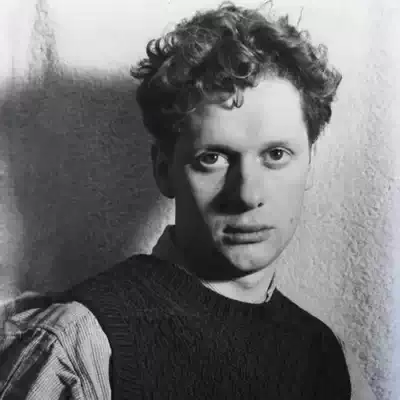
Dylan Thomas
Do Not Go Gentle Into That Good Night
Do not go gentle into that good night,
Old age should burn and rave at close of day;
Rage, rage against the dying of the light.
Though wise men at their end know dark is right,
Because their words had forked no lightning they
Do not go gentle into that good night.
Good men, the last wave by, crying how bright
Their frail deeds might have danced in a green bay,
Rage, rage against the dying of the light.
Wild men who caught and sang the sun in flight,
And learn, too late, they grieved it on its way,
Do not go gentle into that good night.
Grave men, near death, who see with blinding sight
Blind eyes could blaze like meteors and be gay,
Rage, rage against the dying of the light.
And you, my father, there on that sad height,
Curse, bless, me now with your fierce tears, I pray.
Do not go gentle into that good night.
Rage, rage against the dying of the light.
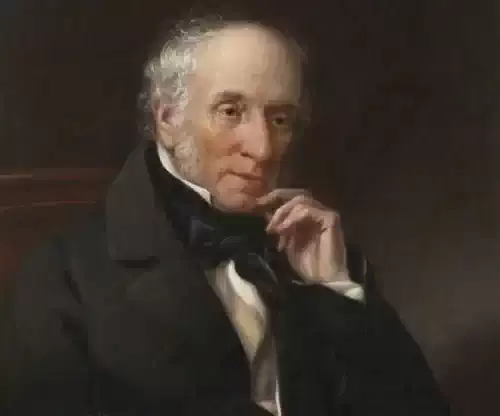
William Wordsworth
The Fountain
A Conversation
We talked with open heart, and tongue
Affectionate and true,
A pair of friends, though I was young,
And Matthew seventy-two.
We lay beneath a spreading oak,
Beside a mossy seat;
And from the turf a fountain broke
And gurgled at our feet.
`Now, Matthew!' said I, `let us match
This water's pleasant tune
With some old border-song, or catch
That suits a summer's noon;
`Or of the church-clock and the chimes
Sing here beneath the shade
That half-mad thing of witty rhymes
Which you last April made!'
In silence Matthew lay, and eyed
The spring beneath the tree;
And thus the dear old man replied,
The grey-haired man of glee:
`No check, no stay, this streamlet fears,
How merrily it goes!
'Twill murmur on a thousand years
And flow as now it flows.
`And here, on this delightful day,
I cannot choose but think
How oft, a vigorous man, I lay
Beside this fountain's brink.
`My eyes are dim with childish tears,
My heart is idly stirred,
For the same sound is in my ears
Which in those days I heard.
`Thus fares it still in our decay:
And yet the wiser mind
Mourns less for what Age takes away,
Than what it leaves behind.
`The blackbird amid leafy trees,
The lark above the hill,
Let loose their carols when they please,
Are quiet when they will.
`With Nature never do they wage
A foolish strife; they see
A happy youth, and their old age
Is beautiful and free:
`But we are pressed by heavy laws;
And often, glad no more,
We wear a face of joy, because
We have been glad of yore.
`If there be one who need bemoan
His kindred laid in earth,
The household hearts that were his own, -
It is the man of mirth.
`My days, my friend, are almost gone,
My life has been approved,
And many love me; but by none
Am I enough beloved.'
`Now both himself and me he wrongs,
The man who thus complains!
I live and sing my idle songs
Upon these happy plains:
`And, Matthew, for thy children dead
I'll be a son to thee!'
At this he grasped my hand and said
`Alas! that cannot be.'
We rose up from the fountain-side;
And down the smooth descent
Of the green sheep-track did we glide;
And through the wood we went;
And ere we came to Leonard's Rock
He sang those witty rhymes
About the crazy old church-clock,
And the bewildered chimes.
William Wordsworth
Simon Lee, The Old Huntsman
In the sweet shire of Cardigan,
Not far from pleasant Ivor-hall,
An old Man dwells, a little man,--
'Tis said he once was tall.
Full five-and-thirty years he lived
A running huntsman merry;
And still the centre of his cheek
Is red as a ripe cherry.
No man like him the horn could sound,
And hill and valley rang with glee
When Echo bandied, round and round,
The halloo of Simon Lee.
In those proud days, he little cared
For husbandry or tillage;
To blither tasks did Simon rouse
The sleepers of the village.
He all the country could outrun,
Could leave both man and horse behind;
And often, ere the chase was done,
He reeled, and was stone-blind.
And still there's something in the world
At which his heart rejoices;
For when the chiming hounds are out,
He dearly loves their voices!
But, oh the heavy change!--bereft
Of health, strength, friends, and kindred, see!
Old Simon to the world is left
In liveried poverty.
His Master's dead,--and no one now
Dwells in the Hall of Ivor;
Men, dogs, and horses, all are dead;
He is the sole survivor.
And he is lean and he is sick;
His body, dwindled and awry,
Rests upon ankles swoln and thick;
His legs are thin and dry.
One prop he has, and only one,
His wife, an aged woman,
Lives with him, near the waterfall,
Upon the village Common.
Beside their moss-grown hut of clay,
Not twenty paces from the door,
A scrap of land they have, but they
Are poorest of the poor.
This scrap of land he from the heath
Enclosed when he was stronger;
But what to them avails the land
Which he can till no longer?
Oft, working by her Husband's side,
Ruth does what Simon cannot do;
For she, with scanty cause for pride,
Is stouter of the two.
And, though you with your utmost skill
From labour could not wean them,
'Tis little, very little--all
That they can do between them.
Few months of life has he in store
As he to you will tell,
For still, the more he works, the more
Do his weak ankles swell.
My gentle Reader, I perceive
How patiently you've waited,
And now I fear that you expect
Some tale will be related.
O Reader! had you in your mind
Such stores as silent thought can bring,
O gentle Reader! you would find
A tale in every thing.
What more I have to say is short,
And you must kindly take it:
It is no tale; but, should you think,
Perhaps a tale you'll make it.
One summer-day I chanced to see
This old Man doing all he could
To unearth the root of an old tree,
A stump of rotten wood.
The mattock tottered in his hand;
So vain was his endeavour,
That at the root of the old tree
He might have worked for ever.
"You're overtasked, good Simon Lee,
Give me your tool," to him I said;
And at the word right gladly he
Received my proffered aid.
I struck, and with a single blow
The tangled root I severed,
At which the poor old Man so long
And vainly had endeavoured.
The tears into his eyes were brought,
And thanks and praises seemed to run
So fast out of his heart, I thought
They never would have done.
--I've heard of hearts unkind, kind deeds
With coldness still returning;
Alas! the gratitude of men
Hath oftener left me mourning.
William Wordsworth
I Know an Old Man Constrained to Dwell
I know an aged Man constrained to dwell
In a large house of public charity,
Where he abides, as in a Prisoner's cell,
With numbers near, alas! no company.
When he could creep about, at will, though poor
And forced to live on alms, this old Man fed
A Redbreast, one that to his cottage door
Came not, but in a lane partook his bread.
There, at the root of one particular tree,
An easy seat this worn-out Labourer found
While Robin pecked the crumbs upon his knee
Laid one by one, or scattered on the ground.
Dear intercourse was theirs, day after day;
What signs of mutual gladness when they met!
Think of their common peace, their simple play,
The parting moment and its fond regret.
Months passed in love that failed not to fulfil,
In spite of season's change, its own demand,
By fluttering pinions here and busy bill;
There by caresses from a tremulous hand.
Thus in the chosen spot a tie so strong
Was formed between the solitary pair,
That when his fate had housed him 'mid a throng
The Captive shunned all converse proffered there.
Wife, children, kindred, they were dead and gone;
But, if no evil hap his wishes crossed,
One living Stay was left, and on that one
Some recompence for all that he had lost.
Oh that the good old Man had power to prove,
By message sent through air or visible token,
That still he loves the Bird, and still must love;
That friendship lasts though fellowship is broken!
William Wordsworth
Fountain, The: A Conversation
We talked with open heart, and tongue
Affectionate and true,
A pair of friends, though I was young,
And Matthew seventy-two.
We lay beneath a spreading oak,
Beside a mossy seat;
And from the turf a fountain broke,
And gurgled at our feet.
"Now, Matthew!" said I, "let us match
This water's pleasant tune
With some old border-song, or catch
That suits a summer's noon;
"Or of the church-clock and the chimes
Sing here beneath the shade,
That half-mad thing of witty rhymes
Which you last April made!"
In silence Matthew lay, and eyed
The spring beneath the tree;
And thus the dear old Man replied,
The grey-haired man of glee:
"No check, no stay, this Streamlet fears;
How merrily it goes!
'Twill murmur on a thousand years,
And flow as now it flows.
"And here, on this delightful day,
I cannot choose but think
How oft, a vigorous man, I lay
Beside this fountain's brink.
"My eyes are dim with childish tears,
My heart is idly stirred,
For the same sound is in my ears
Which in those days I heard.
"Thus fares it still in our decay:
And yet the wiser mind
Mourns less for what age takes away
Than what it leaves behind.
"The blackbird amid leafy trees,
The lark above the hill,
Let loose their carols when they please
Are quiet when they will.
"With Nature never do 'they' wage
A foolish strife; they see
A happy youth, and their old age
Is beautiful and free:
"But we are pressed by heavy laws;
And often, glad no more,
We wear a face of joy, because
We have been glad of yore.
"If there be one who need bemoan
His kindred laid in earth,
The household hearts that were his own;
It is the man of mirth.
"My days, my Friend, are almost gone,
My life has been approved,
And many love me; but by none
Am I enough beloved."
"Now both himself and me he wrongs,
The man who thus complains;
I live and sing my idle songs
Upon these happy plains;
"And, Matthew, for thy children dead
I'll be a son to thee!"
At this he grasped my hand, and said,
"Alas! that cannot be."
We rose up from the fountain-side;
And down the smooth descent
Of the green sheep-track did we glide;
And through the wood we went;
And, ere we came to Leonard's rock,
He sang those witty rhymes
About the crazy old church-clock,
And the bewildered chimes.

William Shakespeare
Sonnet II: When Forty Winters Shall Besiege Thy Brow
When forty winters shall besiege thy brow,
And dig deep trenches in thy beauty's field,
Thy youth's proud livery, so gazed on now,
Will be a tatter'd weed, of small worth held:
Then being ask'd where all thy beauty lies,
Where all the treasure of thy lusty days,
To say, within thine own deep-sunken eyes,
Were an all-eating shame and thriftless praise.
How much more praise deserved thy beauty's use,
If thou couldst answer 'This fair child of mine
Shall sum my count and make my old excuse,'
Proving his beauty by succession thine!
This were to be new made when thou art old,
And see thy blood warm when thou feel'st it cold.
William Shakespeare
Fidele
FEAR no more the heat o' the sun,
Nor the furious winter's rages;
Thou thy worldly task hast done,
Home art gone, and ta'en thy wages:
Golden lads and girls all must,
As chimney-sweepers, come to dust.
Fear no more the frown o' the great,
Thou art past the tyrant's stroke;
Care no more to clothe and eat;
To thee the reed is as the oak:
The sceptre, learning, physic, must
All follow this, and come to dust.
Fear no more the lightning-flash,
Nor the all-dreaded thunder-stone;
Fear not slander, censure rash;
Thou hast finish'd joy and moan:
All lovers young, all lovers must
Consign to thee, and come to dust.
No exorciser harm thee!
Nor no witchcraft charm thee!
Ghost unlaid forbear thee!
Nothing ill come near thee!
Quiet consummation have;
And renowned be thy grave!

William Ernest Henley
Croquis
The beach was crowded. Pausing now and then,
He groped and fiddled doggedly along,
His worn face glaring on the thoughtless throng
The stony peevishness of sightless men.
He seemed scarce older than his clothes. Again,
Grotesquing thinly many an old sweet song,
So cracked his fiddle, his hand so frail and wrong,
You hardly could distinguish one in ten.
He stopped at last, and sat him on the sand,
And, grasping wearily his bread-winner,
Staring dim towards the blue immensity,
Then leaned his head upon his poor old hand.
He may have slept: he did not speak nor stir:
His gesture spoke a vast despondency.
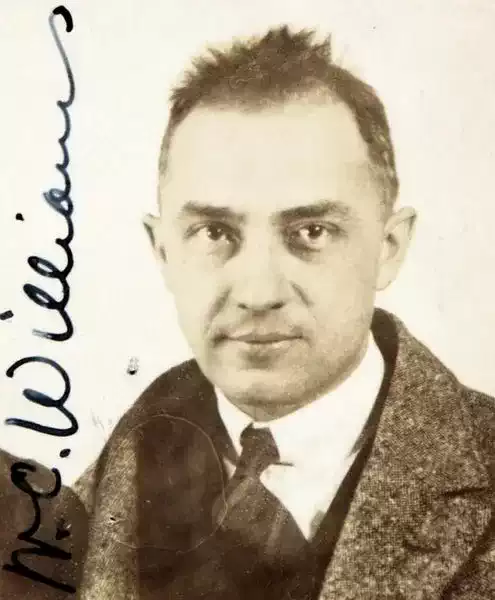
William Carlos Williams
The Last Words of My English Grandmother
There were some dirty plates
and a glass of milk
beside her on a small table
near the rank, disheveled bed--
Wrinkled and nearly blind
she lay and snored
rousing with anger in her tones
to cry for food,
Gimme something to eat--
They're starving me--
I'm all right--I won't go
to the hospital.No, no, no
Give me something to eat!
Let me take you
to the hospital, I said
and after you are well
you can do as you please.
She smiled, Yes
you do what you please first
then I can do what I please--
Oh, oh, oh! she cried
as the ambulance men lifted
her to the stretcher--
Is this what you call
making me comfortable?
By now her mind was clear--
Oh you think you're smart
you young people,
she said, but I'll tell you
you don't know anything.
Then we started.
On the way
we passed a long row
of elms. She looked at them
awhile out of
the ambulance window and said,
What are all those
fuzzy looking things out there?
Trees?Well, I'm tired
of them and rolled her head away.
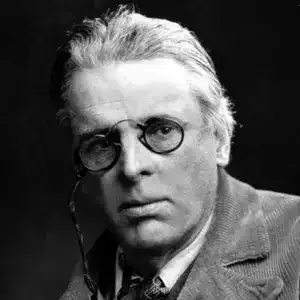
William Butler Yeats
The Scholars
BALD heads forgetful of their sins,
Old, learned, respectable bald heads
Edit and annotate the lines
That young men, tossing on their beds,
Rhymed out in love's despair
To flatter beauty's ignorant ear.
All shuffle there; all cough in ink;
All wear the carpet with their shoes;
All think what other people think;
All know the man their neighbour knows.
Lord, what would they say
Did their Catullus walk that way?
William Butler Yeats
The Old Men Admiring Themselves In The Water
I HEARD the old, old men say,
'Everything alters,
And one by one we drop away.'
They had hands like claws, and their knees
Were twisted like the old thorn-trees
By the waters.
I heard the old, old men say,
'All that's beautiful drifts away
Like the waters.'
William Butler Yeats
The Living Beauty
I BADE, because the wick and oil are spent
And frozen are the channels of the blood,
My discontented heart to draw content
From beauty that is cast out of a mould
In bronze, or that in dazzling marble appears,
Appears, but when wc have gone is gone again,
Being more indifferent to our solitude
Than 'twere an apparition. O heart, we are old;
The living beauty is for younger men:
We cannot pay its rribute of wild tears.
William Butler Yeats
The Lamentation Of The Old Pensioner
ALTHOUGH I shelter from the rain
Under a broken tree,
My chair was nearest to the fire
In every company
That talked of love or politics,
Ere Time transfigured me.
Though lads are making pikes again
For some conspiracy,
And crazy rascals rage their fill
At human tyranny,
My contemplations are of Time
That has transfigured me.
There's not a woman turns her face
Upon a broken tree,
And yet the beauties that I loved
Are in my memory;
I spit into the face of Time
That has transfigured me.
William Butler Yeats
Sailing To Byzantium
I
That is no country for old men. The young
In one another's arms, birds in the trees
---Those dying generations---at their song,
The salmon-falls, the mackerel-crowded seas,
Fish, flesh, or fowl commend all summer long
Whatever is begotten, born, and dies.
Caught in that sensual music all neglect
Monuments of unaging intellect.
II
An aged man is but a paltry thing,
A tattered coat upon a stick, unless
Soul clap its hands and sing, and louder sing
For every tatter in its mortal dress,
Nor is there singing school but studying
Monuments of its own magnificence;
And therefore I have sailed the seas and come
To the holy city of Byzantium.
III
O sages standing in God's holy fire
As in the gold mosaic of a wall,
Come from the holy fire, perne in a gyre,
And be the singing-masters of my soul.
Consume my heart away; sick with desire
And fastened to a dying animal
It knows not what it is; and gather me
Into the artifice of eternity.
IV
Once out of nature I shall never take
My bodily form from any natural thing,
But such a form as Grecian goldsmiths make
Of hammered gold and gold enamelling
To keep a drowsy Emperor awake;
Or set upon a golden bough to sing
To lords and ladies of Byzantium
Of what is past, or passing, or to come.
William Butler Yeats
An Acre Of Grass
PICTURE and book remain,
An acre of green grass
For air and exercise,
Now strength of body goes;
Midnight, an old house
Where nothing stirs but a mouse.
My temptation is quiet.
Here at life's end
Neither loose imagination,
Nor the mill of the mind
Consuming its rag and bonc,
Can make the truth known.
Grant me an old man's frenzy,
Myself must I remake
Till I am Timon and Lear
Or that William Blake
Who beat upon the wall
Till Truth obeyed his call;
A mind Michael Angelo knew
That can pierce the clouds,
Or inspired by frenzy
Shake the dead in their shrouds;
Forgotten else by mankind,
An old man's eagle mind.
William Butler Yeats
A Man Young And Old: VII. The Friends Of His Youth
Laughter not time destroyed my voice
And put that crack in it,
And when the moon's pot-bellied
I get a laughing fit,
For that old Madge comes down the lane,
A stone upon her breast,
And a cloak wrapped about the stone,
And she can get no rest
With singing hush and hush-a-bye;
She that has been wild
And barren as a breaking wave
Thinks that the stone's a child.
And Peter that had great affairs
And was a pushing man
Shrieks, 'I am King of the Peacocks,'
And perches on a stone;
And then I laugh till tears run down
And the heart thumps at my side,
Remembering that her shriek was love
And that he shrieks from pride.
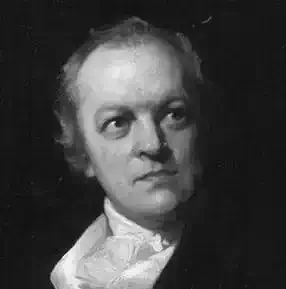
William Blake
Ah! Sunflower
Ah Sunflower, weary of time,
Who countest the steps of the sun;
Seeking after that sweet golden clime
Where the traveller's journey is done;
Where the Youth pined away with desire,
And the pale virgin shrouded in snow,
Arise from their graves, and aspire
Where my Sunflower wishes to go!
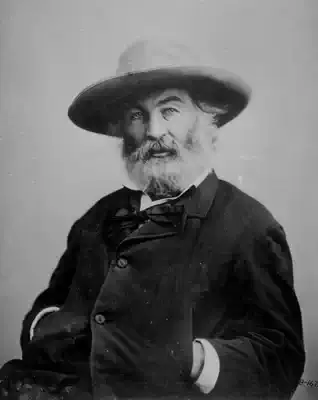
Walt Whitman
To Old Age
I SEE in you the estuary that enlarges and spreads itself grandly as
it pours in the great Sea.
Walt Whitman
Beautiful Women
WOMEN sit, or move to and fro--some old, some young;
The young are beautiful--but the old are more beautiful than the
young.
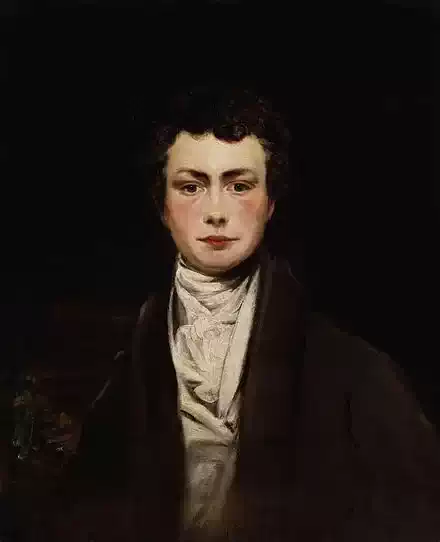
Thomas Moore
Oh, Banquet Not
Oh, banquet not in those shining bowers,
Where Youth resorts, but come to me,
For mine's a garden of faded flowers,
More fit for sorrow, for age, and thee.
And there we shall have our feast of tears,
And many a cup in silence pour;
Our guests, the shades of former years,
Our toasts, to lips that bloom no more.
There, while the myrtle's withering boughs
Their lifeless leaves around us shed,
We'll brim the bowl to broken vows
To friends long lost, the changed, the dead.
Or, while some blighted laurel waves
Its branches o'er the dreary spot,
We'll drink to those neglected graves
Where valour sleeps, unnamed, forgot.
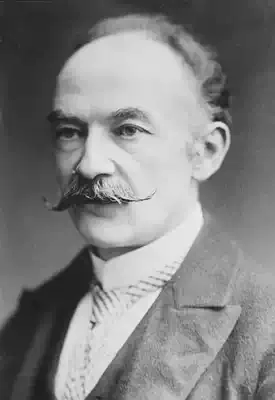
Thomas Hardy
The Colonel's Soliloquy (Southampton Docks: October, )
"The quay recedes. Hurrah! Ahead we go! . . .
It's true I've been accustomed now to home,
And joints get rusty, and one's limbs may grow
More fit to rest than roam.
"But I can stand as yet fair stress and strain;
There's not a little steel beneath the rust;
My years mount somewhat, but here's to't again!
And if I fall, I must.
"God knows that for myself I've scanty care;
Past scrimmages have proved as much to all;
In Eastern lands and South I've had my share
Both of the blade and ball.
"And where those villains ripped me in the flitch
With their old iron in my early time,
I'm apt at change of wind to feel a twitch,
Or at a change of clime.
"And what my mirror shows me in the morning
Has more of blotch and wrinkle than of bloom;
My eyes, too, heretofore all glasses scorning,
Have just a touch of rheum . . .
"Now sounds 'The Girl I've left behind me,'--Ah,
The years, the ardours, wakened by that tune!
Time was when, with the crowd's farewell 'Hurrah!'
'Twould lift me to the moon.
"But now it's late to leave behind me one
Who if, poor soul, her man goes underground,
Will not recover as she might have done
In days when hopes abound.
"She's waving from the wharfside, palely grieving,
As down we draw . . . Her tears make little show,
Yet now she suffers more than at my leaving
Some twenty years ago.
"I pray those left at home will care for her!
I shall come back; I have before; though when
The Girl you leave behind you is a grandmother,
Things may not be as then."
Thomas Hardy
She, To Him
I
WHEN you shall see me lined by tool of Time,
My lauded beauties carried off from me,
My eyes no longer stars as in their prime,
My name forgot of Maiden Fair and Free;
When in your being heart concedes to mind,
And judgment, though you scarce its process know,
Recalls the excellencies I once enshrined,
And you are irked that they have withered so:
Remembering that with me lies not the blame,
That Sportsman Time but rears his brood to kill,
Knowing me in my soul the very same--
One who would die to spare you touch of ill!--
Will you not grant to old affection's claim
The hand of friendship down Life's sunless hill?
Thomas Hardy
An Ancient to Ancients
Where once we danced, where once we sang,
Gentlemen,
The floors are sunken, cobwebs hang,
And cracks creep; worms have fed upon
The doors. Yea, sprightlier times were then
Than now, with harps and tabrets gone,
Gentlemen!
Where once we rowed, where once we sailed,
Gentlemen,
And damsels took the tiller, veiled
Against too strong a stare (God wot
Their fancy, then or anywhen!)
Upon that shore we are clean forgot,
Gentlemen!
We have lost somewhat of that, afar and near,
Gentlemen,
The thinning of our ranks each year
Affords a hint we are nigh undone,
That shall not be ever again
The marked of many, loved of one,
Gentlemen.
In dance the polka hit our wish,
Gentlemen,
The paced quadrille, the spry schottische,
"Sir Roger."--And in opera spheres
The "Girl" (the famed "Bohemian"),
And "Trovatore" held the ears,
Gentlemen.
This season's paintings do not please,
Gentlemen
Like Etty, Mulready, Maclise;
Throbbing romance had waned and wanned;
No wizard wields the witching pen
Of Bulwer, Scott, Dumas, and Sand,
Gentlemen.
The bower we shrined to Tennyson,
Gentlemen,
Is roof-wrecked; damps there drip upon
Sagged seats, the creeper-nails are rust,
The spider is sole denizen;
Even she who voiced those rhymes is dust,
Gentlemen!
We who met sunrise sanguine-souled,
Gentlemen,
Are wearing weary. We are old;
These younger press; we feel our rout
Is imminent to Aïdes' den,--
That evening shades are stretching out,
Gentlemen!
And yet, though ours be failing frames,
Gentlemen,
So were some others' history names,
Who trode their track light-limbed and fast
As these youth, and not alien
From enterprise, to their long last,
Gentlemen.
Sophocles, Plato, Socrates,
Gentlemen,
Pythagoras, Thucydides,
Herodotus, and Homer,--yea,
Clement, Augustin, Origen,
Burnt brightlier towards their setting-day,
Gentlemen.
And ye, red-lipped and smooth-browed; list,
Gentlemen;
Much is there waits you we have missed;
Much lore we leave you worth the knowing,
Much, much has lain outside our ken;
Nay, rush not: time serves: we are going,
Gentlemen.
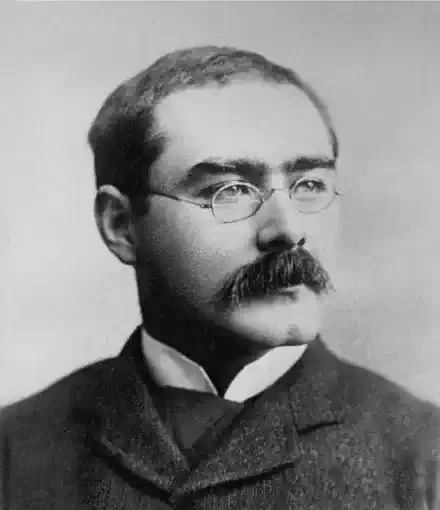
Rudyard Kipling
The Undertaker's Horse
The eldest son bestrides him,
And the pretty daughter rides him,
And I meet him oft o' mornings on the Course;
And there kindles in my bosom
An emotion chill and gruesome
As I canter past the Undertaker's Horse.
Neither shies he nor is restive,
But a hideously suggestive
Trot, professional and placid, he affects;
And the cadence of his hoof-beats
To my mind this grim reproof beats: --
"Mend your pace, my friend, I'm coming. Who's the next?"
Ah! stud-bred of ill-omen,
I have watched the strongest go -- men
Of pith and might and muscle -- at your heels,
Down the plantain-bordered highway,
(Heaven send it ne'er be my way!)
In a lacquered box and jetty upon wheels.
Answer, sombre beast and dreary,
Where is Brown, the young, the cheery,
Smith, the pride of all his friends and half the Force?
You were at that last dread dak
We must cover at a walk,
Bring them back to me, O Undertaker's Horse!
With your mane unhogged and flowing,
And your curious way of going,
And that businesslike black crimping of your tail,
E'en with Beauty on your back, Sir,
Pacing as a lady's hack, Sir,
What wonder when I meet you I turn pale?
It may be you wait your time, Beast,
Till I write my last bad rhyme, Beast --
Quit the sunlight, cut the rhyming, drop the glass --
Follow after with the others,
Where some dusky heathen smothers
Us with marigolds in lieu of English grass.
Or, perchance, in years to follow,
I shall watch your plump sides hollow,
See Carnifex (gone lame) become a corse --
See old age at last o'erpower you,
And the Station Pack devour you,
I shall chuckle then, O Undertaker's Horse!
But to insult, jibe, and quest, I've
Still the hideously suggestive
Trot that hammers out the unrelenting text,
And I hear it hard behind me
In what place soe'er I find me: --
"'Sure to catch you sooner or later. Who's the next?"