

Regret and Guilt
Poems in this topic
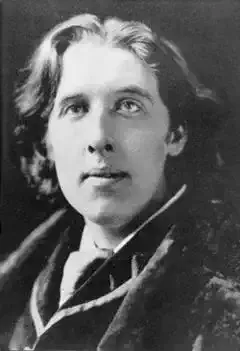
Oscar Wilde
Soneto: The New Remorse
The sin was mine; I did not understand.
So now is music prisoned in her cave,
Save where some ebbing desultory wave
Frets with its restless whirls this meagre strand.
And in the withered hollow of this land
Hath Summer dug herself so deep a grave,
That hardly can the leaden willow crave
One silver blossom from keen Winter's hand.
But who is this who cometh by the shore?
(Nay, love, look up and wonder!) Who is this
Who cometh in dyed garments from the South?
It is thy new-found Lord, and he shall kiss
The yet unravished roses of thy mouth,
And I shall weep and worship, as before.
So now is music prisoned in her cave,
Save where some ebbing desultory wave
Frets with its restless whirls this meagre strand.
And in the withered hollow of this land
Hath Summer dug herself so deep a grave,
That hardly can the leaden willow crave
One silver blossom from keen Winter's hand.
But who is this who cometh by the shore?
(Nay, love, look up and wonder!) Who is this
Who cometh in dyed garments from the South?
It is thy new-found Lord, and he shall kiss
The yet unravished roses of thy mouth,
And I shall weep and worship, as before.
644
Oscar Wilde
Soneto: Helas!
To drift with every passion till my soul
Is a stringed lute on which can winds can play,
Is it for this that I have given away
Mine ancient wisdom and austere control?
Methinks my life is a twice-written scroll
Scrawled over on some boyish holiday
With idle songs for pipe and virelay,
Which do but mar the secret of the whole.
Surely there was a time I might have trod
The sunlit heights, and from life's dissonance
Struck one clear chord to reach the ears of God:
Is that time dead? lo! with a little rod
I did but touch the honey of romance -
And must I lose a soul's inheritance?
Is a stringed lute on which can winds can play,
Is it for this that I have given away
Mine ancient wisdom and austere control?
Methinks my life is a twice-written scroll
Scrawled over on some boyish holiday
With idle songs for pipe and virelay,
Which do but mar the secret of the whole.
Surely there was a time I might have trod
The sunlit heights, and from life's dissonance
Struck one clear chord to reach the ears of God:
Is that time dead? lo! with a little rod
I did but touch the honey of romance -
And must I lose a soul's inheritance?
903
Oscar Wilde
Taedium Vitae
To stab my youth with desperate knives, to wear
This paltry age's gaudy livery,
To let each base hand filch my treasury,
To mesh my soul within a woman's hair,
And be mere Fortune's lackeyed groom, - I swear
I love it not! these things are less to me
Than the thin foam that frets upon the sea,
Less than the thistledown of summer air
Which hath no seed: better to stand aloof
Far from these slanderous fools who mock my life
Knowing me not, better the lowliest roof
Fit for the meanest hind to sojourn in,
Than to go back to that hoarse cave of strife
Where my white soul first kissed the mouth of sin.
This paltry age's gaudy livery,
To let each base hand filch my treasury,
To mesh my soul within a woman's hair,
And be mere Fortune's lackeyed groom, - I swear
I love it not! these things are less to me
Than the thin foam that frets upon the sea,
Less than the thistledown of summer air
Which hath no seed: better to stand aloof
Far from these slanderous fools who mock my life
Knowing me not, better the lowliest roof
Fit for the meanest hind to sojourn in,
Than to go back to that hoarse cave of strife
Where my white soul first kissed the mouth of sin.
772
Oscar Wilde
Quia Multum Amavi
Dear Heart, I think the young impassioned priest
When first he takes from out the hidden shrine
His God imprisoned in the Eucharist,
And eats the bread, and drinks the dreadful wine,
Feels not such awful wonder as I felt
When first my smitten eyes beat full on thee,
And all night long before thy feet I knelt
Till thou wert wearied of Idolatry.
Ah! hadst thou liked me less and loved me more,
Through all those summer days of joy and rain,
I had not now been sorrow's heritor,
Or stood a lackey in the House of Pain.
Yet, though remorse, youth's white-faced seneschal,
Tread on my heels with all his retinue,
I am most glad I loved thee - think of all
The suns that go to make one speedwell blue!
When first he takes from out the hidden shrine
His God imprisoned in the Eucharist,
And eats the bread, and drinks the dreadful wine,
Feels not such awful wonder as I felt
When first my smitten eyes beat full on thee,
And all night long before thy feet I knelt
Till thou wert wearied of Idolatry.
Ah! hadst thou liked me less and loved me more,
Through all those summer days of joy and rain,
I had not now been sorrow's heritor,
Or stood a lackey in the House of Pain.
Yet, though remorse, youth's white-faced seneschal,
Tread on my heels with all his retinue,
I am most glad I loved thee - think of all
The suns that go to make one speedwell blue!
726
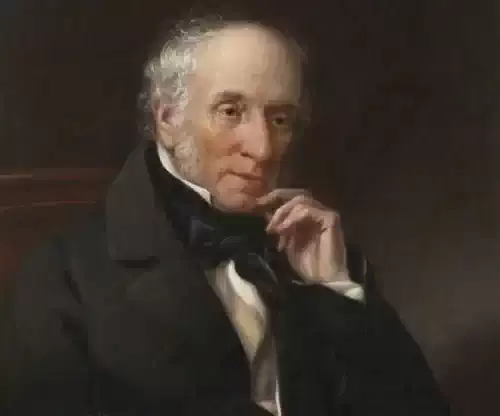
William Wordsworth
Lines Left upon a Seat in a Yew-tree
Lines Left upon a Seat in a Yew-tree
Nay, Traveller! rest. This lonely Yew-tree stands
Far from all human dwelling: what if here
No sparkling rivulet spread the verdant herb?
What if the bee love not these barren boughs?
Yet, if the wind breathe soft, the curling waves,
That break against the shore, shall lull thy mind
By one soft impulse saved from vacancy.
--------------------Who he was
That piled these stones and with the mossy sod
First covered, and here taught this aged Tree
With its dark arms to form a circling bower,
I well remember.--He was one who owned
No common soul. In youth by science nursed,
And led by nature into a wild scene
Of lofty hopes, he to the world went forth
A favoured Being, knowing no desire
Which genius did not hallow; 'gainst the taint
Of dissolute tongues, and jealousy, and hate,
And scorn,--against all enemies prepared,
All but neglect. The world, for so it thought,
Owed him no service; wherefore he at once
With indignation turned himself away,
And with the food of pride sustained his soul
In solitude.--Stranger! these gloomy boughs
Had charms for him; and here he loved to sit,
His only visitants a straggling sheep,
The stone-chat, or the glancing sand-piper:
And on these barren rocks, with fern and heath,
And juniper and thistle, sprinkled o'er,
Fixing his downcast eye, he many an hour
A morbid pleasure nourished, tracing here
An emblem of his own unfruitful life:
And, lifting up his head, he then would gaze
On the more distant scene,--how lovely 'tis
Thou seest,--and he would gaze till it became
Far lovelier, and his heart could not sustain
The beauty, still more beauteous! Nor, that time,
When nature had subdued him to herself,
Would he forget those Beings to whose minds,
Warm from the labours of benevolence,
The world, and human life, appeared a scene
Of kindred loveliness: then he would sigh,
Inly disturbed, to think that others felt
What he must never feel: and so, lost Man!
On visionary views would fancy feed,
Till his eye streamed with tears. In this deep vale
He died,--this seat his only monument.
If Thou be one whose heart the holy forms
Of young imagination have kept pure,
Stranger! henceforth be warned; and know that pride,
Howe'er disguised in its own majesty,
Is littleness; that he, who feels contempt
For any living thing, hath faculties
Which he has never used; that thought with him
Is in its infancy. The man whose eye
Is ever on himself doth look on one,
The least of Nature's works, one who might move
The wise man to that scorn which wisdom holds
Unlawful, ever. O be wiser, Thou!
Instructed that true knowledge leads to love;
True dignity abides with him alone
Who, in the silent hour of inward thought,
Can still suspect, and still revere himself
In lowliness of heart.
Nay, Traveller! rest. This lonely Yew-tree stands
Far from all human dwelling: what if here
No sparkling rivulet spread the verdant herb?
What if the bee love not these barren boughs?
Yet, if the wind breathe soft, the curling waves,
That break against the shore, shall lull thy mind
By one soft impulse saved from vacancy.
--------------------Who he was
That piled these stones and with the mossy sod
First covered, and here taught this aged Tree
With its dark arms to form a circling bower,
I well remember.--He was one who owned
No common soul. In youth by science nursed,
And led by nature into a wild scene
Of lofty hopes, he to the world went forth
A favoured Being, knowing no desire
Which genius did not hallow; 'gainst the taint
Of dissolute tongues, and jealousy, and hate,
And scorn,--against all enemies prepared,
All but neglect. The world, for so it thought,
Owed him no service; wherefore he at once
With indignation turned himself away,
And with the food of pride sustained his soul
In solitude.--Stranger! these gloomy boughs
Had charms for him; and here he loved to sit,
His only visitants a straggling sheep,
The stone-chat, or the glancing sand-piper:
And on these barren rocks, with fern and heath,
And juniper and thistle, sprinkled o'er,
Fixing his downcast eye, he many an hour
A morbid pleasure nourished, tracing here
An emblem of his own unfruitful life:
And, lifting up his head, he then would gaze
On the more distant scene,--how lovely 'tis
Thou seest,--and he would gaze till it became
Far lovelier, and his heart could not sustain
The beauty, still more beauteous! Nor, that time,
When nature had subdued him to herself,
Would he forget those Beings to whose minds,
Warm from the labours of benevolence,
The world, and human life, appeared a scene
Of kindred loveliness: then he would sigh,
Inly disturbed, to think that others felt
What he must never feel: and so, lost Man!
On visionary views would fancy feed,
Till his eye streamed with tears. In this deep vale
He died,--this seat his only monument.
If Thou be one whose heart the holy forms
Of young imagination have kept pure,
Stranger! henceforth be warned; and know that pride,
Howe'er disguised in its own majesty,
Is littleness; that he, who feels contempt
For any living thing, hath faculties
Which he has never used; that thought with him
Is in its infancy. The man whose eye
Is ever on himself doth look on one,
The least of Nature's works, one who might move
The wise man to that scorn which wisdom holds
Unlawful, ever. O be wiser, Thou!
Instructed that true knowledge leads to love;
True dignity abides with him alone
Who, in the silent hour of inward thought,
Can still suspect, and still revere himself
In lowliness of heart.
248
William Wordsworth
Last of The Flock, The
Last of The Flock, The
I
In distant countries have I been,
And yet I have not often seen
A healthy man, a man full grown,
Weep in the public roads, alone.
But such a one, on English ground,
And in the broad highway, I met;
Along the broad highway he came,
His cheeks with tears were wet:
Sturdy he seemed, though he was sad;
And in his arms a Lamb he had.
II
He saw me, and he turned aside,
As if he wished himself to hide:
And with his coat did then essay
To wipe those briny tears away.
I followed him, and said, "My friend,
What ails you? wherefore weep you so?"
--"Shame on me, Sir! this lusty Lamb,
He makes my tears to flow.
To-day I fetched him from the rock;
He is the last of all my flock,
III
"When I was young, a single man,
And after youthful follies ran,
Though little given to care and thought,
Yet, so it was, an ewe I bought;
And other sheep from her I raised,
As healthy sheep as you might see;
And then I married, and was rich
As I could wish to be;
Of sheep I numbered a full score,
And every year increased my store.
IV
"Year after year my stock it grew;
And from this one, this single ewe,
Full fifty comely sheep I raised,
As fine a flock as ever grazed!
Upon the Quantock hills they fed;
They throve, and we at home did thrive:
--This lusty Lamb of all my store
Is all that is alive;
And now I care not if we die,
And perish all of poverty.
V
"Six Children, Sir! had I to feed;
Hard labour in a time of need!
My pride was tamed, and in our grief
I of the Parish asked relief.
They said, I was a wealthy man;
My sheep upon the uplands fed,
And it was fit that thence I took
Whereof to buy us bread.
'Do this: how can we give to you,'
They cried, 'what to the poor is due?'
VI
"I sold a sheep, as they had said,
And bought my little children bread,
And they were healthy with their food
For me--it never did me good.
A woeful time it was for me,
To see the end of all my gains,
The pretty flock which I had reared
With all my care and pains,
To see it melt like snow away--
For me it was a woeful day.
VII
"Another still! and still another!
A little lamb, and then its mother!
It was a vein that never stopped--
Like blood-drops from my heart they dropped.
'Till thirty were not left alive
They dwindled, dwindled, one by one
And I may say, that many a time
I wished they all were gone--
Reckless of what might come at last
Were but the bitter struggle past.
VIII
"To wicked deeds I was inclined,
And wicked fancies crossed my mind;
And every man I chanced to see,
I thought he knew some ill of me:
No peace, no comfort could I find,
No ease, within doors or without;
And, crazily and wearily
I went my work about;
And oft was moved to flee from home,
And hide my head where wild beasts roam.
IX
"Sir! 'twas a precious flock to me,
As dear as my own children be;
For daily with my growing store
I loved my children more and more.
Alas! it was an evil time;
God cursed me in my sore distress;
I prayed, yet every day I thought
I loved my children less;
And every week, and every day,
My flock it seemed to melt away.
X
"They dwindled, Sir, sad sight to see!
From ten to five, from five to three,
A lamb, a wether, and a ewe;--
And then at last from three to two;
And, of my fifty, yesterday
I had but only one:
And here it lies upon my arm,
Alas! and I have none;--
To-day I fetched it from the rock;
It is the last of all my flock."
I
In distant countries have I been,
And yet I have not often seen
A healthy man, a man full grown,
Weep in the public roads, alone.
But such a one, on English ground,
And in the broad highway, I met;
Along the broad highway he came,
His cheeks with tears were wet:
Sturdy he seemed, though he was sad;
And in his arms a Lamb he had.
II
He saw me, and he turned aside,
As if he wished himself to hide:
And with his coat did then essay
To wipe those briny tears away.
I followed him, and said, "My friend,
What ails you? wherefore weep you so?"
--"Shame on me, Sir! this lusty Lamb,
He makes my tears to flow.
To-day I fetched him from the rock;
He is the last of all my flock,
III
"When I was young, a single man,
And after youthful follies ran,
Though little given to care and thought,
Yet, so it was, an ewe I bought;
And other sheep from her I raised,
As healthy sheep as you might see;
And then I married, and was rich
As I could wish to be;
Of sheep I numbered a full score,
And every year increased my store.
IV
"Year after year my stock it grew;
And from this one, this single ewe,
Full fifty comely sheep I raised,
As fine a flock as ever grazed!
Upon the Quantock hills they fed;
They throve, and we at home did thrive:
--This lusty Lamb of all my store
Is all that is alive;
And now I care not if we die,
And perish all of poverty.
V
"Six Children, Sir! had I to feed;
Hard labour in a time of need!
My pride was tamed, and in our grief
I of the Parish asked relief.
They said, I was a wealthy man;
My sheep upon the uplands fed,
And it was fit that thence I took
Whereof to buy us bread.
'Do this: how can we give to you,'
They cried, 'what to the poor is due?'
VI
"I sold a sheep, as they had said,
And bought my little children bread,
And they were healthy with their food
For me--it never did me good.
A woeful time it was for me,
To see the end of all my gains,
The pretty flock which I had reared
With all my care and pains,
To see it melt like snow away--
For me it was a woeful day.
VII
"Another still! and still another!
A little lamb, and then its mother!
It was a vein that never stopped--
Like blood-drops from my heart they dropped.
'Till thirty were not left alive
They dwindled, dwindled, one by one
And I may say, that many a time
I wished they all were gone--
Reckless of what might come at last
Were but the bitter struggle past.
VIII
"To wicked deeds I was inclined,
And wicked fancies crossed my mind;
And every man I chanced to see,
I thought he knew some ill of me:
No peace, no comfort could I find,
No ease, within doors or without;
And, crazily and wearily
I went my work about;
And oft was moved to flee from home,
And hide my head where wild beasts roam.
IX
"Sir! 'twas a precious flock to me,
As dear as my own children be;
For daily with my growing store
I loved my children more and more.
Alas! it was an evil time;
God cursed me in my sore distress;
I prayed, yet every day I thought
I loved my children less;
And every week, and every day,
My flock it seemed to melt away.
X
"They dwindled, Sir, sad sight to see!
From ten to five, from five to three,
A lamb, a wether, and a ewe;--
And then at last from three to two;
And, of my fifty, yesterday
I had but only one:
And here it lies upon my arm,
Alas! and I have none;--
To-day I fetched it from the rock;
It is the last of all my flock."
408
William Wordsworth
Is ample, and some little might be stored
Is ample, and some little might be stored
Wherewith to cheer him in the winter time."
Thus talking of that Peasant, we approached
Close to the spot where with his rod and line
He stood alone; whereat he turned his head
To greet us--and we saw a Mam worn down
By sickness, gaunt and lean, with sunken cheeks
And wasted limbs, his legs so long and lean
That for my single self I looked at them,
Forgetful of the body they sustained.--
Too weak to labour in the harvest field,
The Man was using his best skill to gain
A pittance from the dead unfeeling lake
That knew not of his wants. I will not say
What thoughts immediately were ours, nor how
The happy idleness of that sweet morn,
With all its lovely images, was changed
To serious musing and to self-reproach.
Nor did we fail to see within ourselves
What need there is to be reserved in speech,
And temper all our thoughts with charity.
--Therefore, unwilling to forget that day,
My Friend, Myself, and She who then received
The same admonishment, have called the place
By a memorial name, uncouth indeed
As e'er by mariner was given to bay
Or foreland, on a new-discovered coast;
And POINT RASH-JUDGMENT is the name it bears.
Wherewith to cheer him in the winter time."
Thus talking of that Peasant, we approached
Close to the spot where with his rod and line
He stood alone; whereat he turned his head
To greet us--and we saw a Mam worn down
By sickness, gaunt and lean, with sunken cheeks
And wasted limbs, his legs so long and lean
That for my single self I looked at them,
Forgetful of the body they sustained.--
Too weak to labour in the harvest field,
The Man was using his best skill to gain
A pittance from the dead unfeeling lake
That knew not of his wants. I will not say
What thoughts immediately were ours, nor how
The happy idleness of that sweet morn,
With all its lovely images, was changed
To serious musing and to self-reproach.
Nor did we fail to see within ourselves
What need there is to be reserved in speech,
And temper all our thoughts with charity.
--Therefore, unwilling to forget that day,
My Friend, Myself, and She who then received
The same admonishment, have called the place
By a memorial name, uncouth indeed
As e'er by mariner was given to bay
Or foreland, on a new-discovered coast;
And POINT RASH-JUDGMENT is the name it bears.
199

William Shakespeare
Sonnet XXXVI
Sonnet XXXVI
Let me confess that we two must be twain,
Although our undivided loves are one:
So shall those blots that do with me remain
Without thy help by me be borne alone.
In our two loves there is but one respect,
Though in our lives a separable spite,
Which though it alter not love's sole effect,
Yet doth it steal sweet hours from love's delight.
I may not evermore acknowledge thee,
Lest my bewailed guilt should do thee shame,
Nor thou with public kindness honour me,
Unless thou take that honour from thy name:
But do not so; I love thee in such sort
As, thou being mine, mine is thy good report.
Let me confess that we two must be twain,
Although our undivided loves are one:
So shall those blots that do with me remain
Without thy help by me be borne alone.
In our two loves there is but one respect,
Though in our lives a separable spite,
Which though it alter not love's sole effect,
Yet doth it steal sweet hours from love's delight.
I may not evermore acknowledge thee,
Lest my bewailed guilt should do thee shame,
Nor thou with public kindness honour me,
Unless thou take that honour from thy name:
But do not so; I love thee in such sort
As, thou being mine, mine is thy good report.
337
William Shakespeare
Sonnet CXXIX
Sonnet CXXIX
The expense of spirit in a waste of shame
Is lust in action; and till action, lust
Is perjured, murderous, bloody, full of blame,
Savage, extreme, rude, cruel, not to trust,
Enjoy'd no sooner but despised straight,
Past reason hunted, and no sooner had
Past reason hated, as a swallow'd bait
On purpose laid to make the taker mad;
Mad in pursuit and in possession so;
Had, having, and in quest to have, extreme;
A bliss in proof, and proved, a very woe;
Before, a joy proposed; behind, a dream.
All this the world well knows; yet none knows well
To shun the heaven that leads men to this hell.
The expense of spirit in a waste of shame
Is lust in action; and till action, lust
Is perjured, murderous, bloody, full of blame,
Savage, extreme, rude, cruel, not to trust,
Enjoy'd no sooner but despised straight,
Past reason hunted, and no sooner had
Past reason hated, as a swallow'd bait
On purpose laid to make the taker mad;
Mad in pursuit and in possession so;
Had, having, and in quest to have, extreme;
A bliss in proof, and proved, a very woe;
Before, a joy proposed; behind, a dream.
All this the world well knows; yet none knows well
To shun the heaven that leads men to this hell.
243
William Shakespeare
Sonnet CXX
Sonnet CXX
That you were once unkind befriends me now,
And for that sorrow which I then did feel
Needs must I under my transgression bow,
Unless my nerves were brass or hammer'd steel.
For if you were by my unkindness shaken
As I by yours, you've pass'd a hell of time,
And I, a tyrant, have no leisure taken
To weigh how once I suffered in your crime.
O, that our night of woe might have remember'd
My deepest sense, how hard true sorrow hits,
And soon to you, as you to me, then tender'd
The humble slave which wounded bosoms fits!
But that your trespass now becomes a fee;
Mine ransoms yours, and yours must ransom me.
That you were once unkind befriends me now,
And for that sorrow which I then did feel
Needs must I under my transgression bow,
Unless my nerves were brass or hammer'd steel.
For if you were by my unkindness shaken
As I by yours, you've pass'd a hell of time,
And I, a tyrant, have no leisure taken
To weigh how once I suffered in your crime.
O, that our night of woe might have remember'd
My deepest sense, how hard true sorrow hits,
And soon to you, as you to me, then tender'd
The humble slave which wounded bosoms fits!
But that your trespass now becomes a fee;
Mine ransoms yours, and yours must ransom me.
360
William Shakespeare
Sonnet CX
Sonnet CX
Alas, 'tis true I have gone here and there
And made myself a motley to the view,
Gored mine own thoughts, sold cheap what is most dear,
Made old offences of affections new;
Most true it is that I have look'd on truth
Askance and strangely: but, by all above,
These blenches gave my heart another youth,
And worse essays proved thee my best of love.
Now all is done, have what shall have no end:
Mine appetite I never more will grind
On newer proof, to try an older friend,
A god in love, to whom I am confined.
Then give me welcome, next my heaven the best,
Even to thy pure and most most loving breast.
Alas, 'tis true I have gone here and there
And made myself a motley to the view,
Gored mine own thoughts, sold cheap what is most dear,
Made old offences of affections new;
Most true it is that I have look'd on truth
Askance and strangely: but, by all above,
These blenches gave my heart another youth,
And worse essays proved thee my best of love.
Now all is done, have what shall have no end:
Mine appetite I never more will grind
On newer proof, to try an older friend,
A god in love, to whom I am confined.
Then give me welcome, next my heaven the best,
Even to thy pure and most most loving breast.
270
William Shakespeare
Sonnet CXI: O, for my sake do you with Fortune chide
Sonnet CXI: O, for my sake do you with Fortune chide
O, for my sake do you with Fortune chide,
The guilty goddess of my harmful deeds,
That did not better for my life provide
Than public means which public manners breeds.
Thence comes it that my name receives a brand,
And almost thence my nature is subdu'd
To what it works in, like the dyer's hand.
Pity me then and wish I were renew'd;
Whilst, like a willing patient, I will drink
Potions of eisel 'gainst my strong infection;
No bitterness that I will bitter think,
Nor double penance, to correct correction.
Pity me then, dear friend, and I assure ye
Even that your pity is enough to cure me.
O, for my sake do you with Fortune chide,
The guilty goddess of my harmful deeds,
That did not better for my life provide
Than public means which public manners breeds.
Thence comes it that my name receives a brand,
And almost thence my nature is subdu'd
To what it works in, like the dyer's hand.
Pity me then and wish I were renew'd;
Whilst, like a willing patient, I will drink
Potions of eisel 'gainst my strong infection;
No bitterness that I will bitter think,
Nor double penance, to correct correction.
Pity me then, dear friend, and I assure ye
Even that your pity is enough to cure me.
244
William Shakespeare
Sonnet 66: Tired with all these, for restful death I cry
Sonnet 66: Tired with all these, for restful death I cry
Tired with all these, for restful death I cry,
As to behold desert a beggar born,
And needy nothing trimmed in jollity,
And purest faith unhappily forsworn,
And gilded honour shamefully misplaced,
And maiden virtue rudely strumpeted,
And right perfection wrongfully disgraced,
And strength by limping sway disablèd
And art made tongue-tied by authority,
And folly doctor-like controlling skill,
And simple truth miscalled simplicity,
And captive good attending captain ill.
Tired with all these, from these would I be gone,
Save that to die, I leave my love alone.
Tired with all these, for restful death I cry,
As to behold desert a beggar born,
And needy nothing trimmed in jollity,
And purest faith unhappily forsworn,
And gilded honour shamefully misplaced,
And maiden virtue rudely strumpeted,
And right perfection wrongfully disgraced,
And strength by limping sway disablèd
And art made tongue-tied by authority,
And folly doctor-like controlling skill,
And simple truth miscalled simplicity,
And captive good attending captain ill.
Tired with all these, from these would I be gone,
Save that to die, I leave my love alone.
348
William Shakespeare
Sonnet 36: Let me confess that we two must be twain
Sonnet 36: Let me confess that we two must be twain
Let me confess that we two must be twain,
Although our undivided loves are one;
So shall those blots that do with me remain,
Without thy help, by me be borne alone.
In our two loves there is but one respect,
Though in our lives a separable spite,
Which, though it alter not love's sole effect,
Yet doth it steal sweet hours from love's delight.
I may not evermore acknowledge thee,
Lest my bewailèd guilt should do thee shame,
Nor thou with public kindness honour me
Unless thou take that honour from thy name.
But do not so; I love thee in such sort
As, thou being mine, mine is thy good report.
Let me confess that we two must be twain,
Although our undivided loves are one;
So shall those blots that do with me remain,
Without thy help, by me be borne alone.
In our two loves there is but one respect,
Though in our lives a separable spite,
Which, though it alter not love's sole effect,
Yet doth it steal sweet hours from love's delight.
I may not evermore acknowledge thee,
Lest my bewailèd guilt should do thee shame,
Nor thou with public kindness honour me
Unless thou take that honour from thy name.
But do not so; I love thee in such sort
As, thou being mine, mine is thy good report.
299
William Shakespeare
Sonnet 118: Like as to make our appetite more keen
Sonnet 118: Like as to make our appetite more keen
Like as to make our appetite more keen
With eager compounds we our palate urge,
As to prevent our maladies unseen,
We sicken to shun sickness when we purge.
Even so being full of your ne'er-cloying sweetness,
To bitter sauces did I frame my feeding;
And, sick of welfare, found a kind of meetness
To be diseased ere that there was true needing.
Thus policy in love t' anticipate
The ills that were not, grew to faults assured,
And brought to medicine a healthful state
Which, rank of goodness, would by ill be cured.
But thence I learn and find the lesson true:
Drugs poison him that so fell sick of you.
Like as to make our appetite more keen
With eager compounds we our palate urge,
As to prevent our maladies unseen,
We sicken to shun sickness when we purge.
Even so being full of your ne'er-cloying sweetness,
To bitter sauces did I frame my feeding;
And, sick of welfare, found a kind of meetness
To be diseased ere that there was true needing.
Thus policy in love t' anticipate
The ills that were not, grew to faults assured,
And brought to medicine a healthful state
Which, rank of goodness, would by ill be cured.
But thence I learn and find the lesson true:
Drugs poison him that so fell sick of you.
448
William Shakespeare
Sonnet 111: O, for my sake do you with Fortune chide
Sonnet 111: O, for my sake do you with Fortune chide
O, for my sake do you with Fortune chide,
The guilty goddess of my harmful deeds,
That did not better for my life provide
Than public means which public manners breeds.
Thence comes it that my name receives a brand,
And almost thence my nature is subdued
To what it works in, like the dyer's hand.
Pity me then, and wish I were renewed,
Whilst like a willing patient I will drink
Potions of eisel 'gainst my strong infection;
No bitterness that I will bitter think,
Nor double penance to correct correction.
Pity me then, dear friend, and I assure ye
Even that your pity is enough to cure me.
O, for my sake do you with Fortune chide,
The guilty goddess of my harmful deeds,
That did not better for my life provide
Than public means which public manners breeds.
Thence comes it that my name receives a brand,
And almost thence my nature is subdued
To what it works in, like the dyer's hand.
Pity me then, and wish I were renewed,
Whilst like a willing patient I will drink
Potions of eisel 'gainst my strong infection;
No bitterness that I will bitter think,
Nor double penance to correct correction.
Pity me then, dear friend, and I assure ye
Even that your pity is enough to cure me.
233
William Shakespeare
A Lover's Complaint
A Lover's Complaint
FROM off a hill whose concave womb reworded
A plaintful story from a sistering vale,
My spirits to attend this double voice accorded,
And down I laid to list the sad-tuned tale;
Ere long espied a fickle maid full pale,
Tearing of papers, breaking rings a-twain,
Storming her world with sorrow's wind and rain.
Upon her head a platted hive of straw,
Which fortified her visage from the sun,
Whereon the thought might think sometime it saw
The carcass of beauty spent and done:
Time had not scythed all that youth begun,
Nor youth all quit; but, spite of heaven's fell rage,
Some beauty peep'd through lattice of sear'd age.
Oft did she heave her napkin to her eyne,
Which on it had conceited characters,
Laundering the silken figures in the brine
That season'd woe had pelleted in tears,
And often reading what contents it bears;
As often shrieking undistinguish'd woe,
In clamours of all size, both high and low.
Sometimes her levell'd eyes their carriage ride,
As they did battery to the spheres intend;
Sometime diverted their poor balls are tied
To the orbed earth; sometimes they do extend
Their view right on; anon their gazes lend
To every place at once, and, nowhere fix'd,
The mind and sight distractedly commix'd.
Her hair, nor loose nor tied in formal plat,
Proclaim'd in her a careless hand of pride
For some, untuck'd, descended her sheaved hat,
Hanging her pale and pined cheek beside;
Some in her threaden fillet still did bide,
And true to bondage would not break from thence,
Though slackly braided in loose negligence.
A thousand favours from a maund she drew
Of amber, crystal, and of beaded jet,
Which one by one she in a river threw,
Upon whose weeping margent she was set;
Like usury, applying wet to wet,
Or monarch's hands that let not bounty fall
Where want cries some, but where excess begs all.
Of folded schedules had she many a one,
Which she perused, sigh'd, tore, and gave the flood;
Crack'd many a ring of posied gold and bone
Bidding them find their sepulchres in mud;
Found yet moe letters sadly penn'd in blood,
With sleided silk feat and affectedly
Enswathed, and seal'd to curious secrecy.
These often bathed she in her fluxive eyes,
And often kiss'd, and often 'gan to tear:
Cried 'O false blood, thou register of lies,
What unapproved witness dost thou bear!
Ink would have seem'd more black and damned here!'
This said, in top of rage the lines she rents,
Big discontent so breaking their contents.
A reverend man that grazed his cattle nigh-Sometime
a blusterer, that the ruffle knew
Of court, of city, and had let go by
The swiftest hours, observed as they flew-Towards
this afflicted fancy fastly drew,
And, privileged by age, desires to know
In brief the grounds and motives of her woe.
So slides he down upon his grained bat,
And comely-distant sits he by her side;
When he again desires her, being sat,
Her grievance with his hearing to divide:
If that from him there may be aught applied
Which may her suffering ecstasy assuage,
'Tis promised in the charity of age.
'Father,' she says, 'though in me you behold
The injury of many a blasting hour,
Let it not tell your judgment I am old;
Not age, but sorrow, over me hath power:
I might as yet have been a spreading flower,
Fresh to myself, If I had self-applied
Love to myself and to no love beside.
'But, woe is me! too early I attended
A youthful suit--it was to gain my grace-Of
one by nature's outwards so commended,
That maidens' eyes stuck over all his face:
Love lack'd a dwelling, and made him her place;
And when in his fair parts she did abide,
She was new lodged and newly deified.
'His browny locks did hang in crooked curls;
And every light occasion of the wind
Upon his lips their silken parcels hurls.
What's sweet to do, to do will aptly find:
Each eye that saw him did enchant the mind,
For on his visage was in little drawn
What largeness thinks in Paradise was sawn.
'Small show of man was yet upon his chin;
His phoenix down began but to appear
Like unshorn velvet on that termless skin
Whose bare out-bragg'd the web it seem'd to wear:
Yet show'd his visage by that cost more dear;
And nice affections wavering stood in doubt
If best were as it was, or best without.
'His qualities were beauteous as his form,
For maiden-tongued he was, and thereof free;
Yet, if men moved him, was he such a storm
As oft 'twixt May and April is to see,
When winds breathe sweet, untidy though they be.
His rudeness so with his authorized youth
Did livery falseness in a pride of truth.
'Well could he ride, and often men would say
'That horse his mettle from his rider takes:
Proud of subjection, noble by the sway,
What rounds, what bounds, what course, what stop
he makes!'
And controversy hence a question takes,
Whether the horse by him became his deed,
Or he his manage by the well-doing steed.
'But quickly on this side the verdict went:
His real habitude gave life and grace
To appertainings and to ornament,
Accomplish'd in himself, not in his case:
All aids, themselves made fairer by their place,
Came for additions; yet their purposed trim
Pieced not his grace, but were all graced by him.
'So on the tip of his subduing tongue
All kinds of arguments and question deep,
All replication prompt, and reason strong,
For his advantage still did wake and sleep:
To make the weeper laugh, the laugher weep,
He had the dialect and different skill,
Catching all passions in his craft of will:
'That he did in the general bosom reign
Of young, of old; and sexes both enchanted,
To dwell with him in thoughts, or to remain
In personal duty, following where he haunted:
Consents bewitch'd, ere he desire, have granted;
And dialogued for him what he would say,
Ask'd their own wills, and made their wills obey.
'Many there were that did his picture get,
To serve their eyes, and in it put their mind;
Like fools that in th' imagination set
The goodly objects which abroad they find
Of lands and mansions, theirs in thought assign'd;
And labouring in moe pleasures to bestow them
Than the true gouty landlord which doth owe them:
'So many have, that never touch'd his hand,
Sweetly supposed them mistress of his heart.
My woeful self, that did in freedom stand,
And was my own fee-simple, not in part,
What with his art in youth, and youth in art,
Threw my affections in his charmed power,
Reserved the stalk and gave him all my flower.
'Yet did I not, as some my equals did,
Demand of him, nor being desired yielded;
Finding myself in honour so forbid,
With safest distance I mine honour shielded:
Experience for me many bulwarks builded
Of proofs new-bleeding, which remain'd the foil
Of this false jewel, and his amorous spoil.
'But, ah, who ever shunn'd by precedent
The destined ill she must herself assay?
Or forced examples, 'gainst her own content,
To put the by-past perils in her way?
Counsel may stop awhile what will not stay;
For when we rage, advice is often seen
By blunting us to make our wits more keen.
'Nor gives it satisfaction to our blood,
That we must curb it upon others' proof;
To be forbod the sweets that seem so good,
For fear of harms that preach in our behoof.
O appetite, from judgment stand aloof!
The one a palate hath that needs will taste,
Though Reason weep, and cry, 'It is thy last.'
'For further I could say 'This man's untrue,'
And knew the patterns of his foul beguiling;
Heard where his plants in others' orchards grew,
Saw how deceits were gilded in his smiling;
Knew vows were ever brokers to defiling;
Thought characters and words merely but art,
And bastards of his foul adulterate heart.
'And long upon these terms I held my city,
Till thus he gan besiege me: 'Gentle maid,
Have of my suffering youth some feeling pity,
And be not of my holy vows afraid:
That's to ye sworn to none was ever said;
For feasts of love I have been call'd unto,
Till now did ne'er invite, nor never woo.
''All my offences that abroad you see
Are errors of the blood, none of the mind;
Love made them not: with acture they may be,
Where neither party is nor true nor kind:
They sought their shame that so their shame did find;
And so much less of shame in me remains,
By how much of me their reproach contains.
''Among the many that mine eyes have seen,
Not one whose flame my heart so much as warm'd,
Or my affection put to the smallest teen,
Or any of my leisures ever charm'd:
Harm have I done to them, but ne'er was harm'd;
Kept hearts in liveries, but mine own was free,
And reign'd, commanding in his monarchy.
''Look here, what tributes wounded fancies sent me,
Of paled pearls and rubies red as blood;
Figuring that they their passions likewise lent me
Of grief and blushes, aptly understood
In bloodless white and the encrimson'd mood;
Effects of terror and dear modesty,
Encamp'd in hearts, but fighting outwardly.
''And, lo, behold these talents of their hair,
With twisted metal amorously impleach'd,
I have received from many a several fair,
Their kind acceptance weepingly beseech'd,
With the annexions of fair gems enrich'd,
And deep-brain'd sonnets that did amplify
Each stone's dear nature, worth, and quality.
''The diamond,--why, 'twas beautiful and hard,
Whereto his invised properties did tend;
The deep-green emerald, in whose fresh regard
Weak sights their sickly radiance do amend;
The heaven-hued sapphire and the opal blend
With objects manifold: each several stone,
With wit well blazon'd, smiled or made some moan.
''Lo, all these trophies of affections hot,
Of pensived and subdued desires the tender,
Nature hath charged me that I hoard them not,
But yield them up where I myself must render,
That is, to you, my origin and ender;
For these, of force, must your oblations be,
Since I their altar, you enpatron me.
''O, then, advance of yours that phraseless hand,
Whose white weighs down the airy scale of praise;
Take all these similes to your own command,
Hallow'd with sighs that burning lungs did raise;
What me your minister, for you obeys,
Works under you; and to your audit comes
Their distract parcels in combined sums.
''Lo, this device was sent me from a nun,
Or sister sanctified, of holiest note;
Which late her noble suit in court did shun,
Whose rarest havings made the blossoms dote;
For she was sought by spirits of richest coat,
But kept cold distance, and did thence remove,
To spend her living in eternal love.
''But, O my sweet, what labour is't to leave
The thing we have not, mastering what not strives,
Playing the place which did no form receive,
Playing patient sports in unconstrained gyves?
She that her fame so to herself contrives,
The scars of battle 'scapeth by the flight,
And makes her absence valiant, not her might.
''O, pardon me, in that my boast is true:
The accident which brought me to her eye
Upon the moment did her force subdue,
And now she would the caged cloister fly:
Religious love put out Religion's eye:
Not to be tempted, would she be immured,
And now, to tempt, all liberty procured.
''How mighty then you are, O, hear me tell!
The broken bosoms that to me belong
Have emptied all their fountains in my well,
And mine I pour your ocean all among:
I strong o'er them, and you o'er me being strong,
Must for your victory us all congest,
As compound love to physic your cold breast.
''My parts had power to charm a sacred nun,
Who, disciplined, ay, dieted in grace,
Believed her eyes when they to assail begun,
All vows and consecrations giving place:
O most potential love! vow, bond, nor space,
In thee hath neither sting, knot, nor confine,
For thou art all, and all things else are thine.
''When thou impressest, what are precepts worth
Of stale example? When thou wilt inflame,
How coldly those impediments stand forth
Of wealth, of filial fear, law, kindred, fame!
Love's arms are peace, 'gainst rule, 'gainst sense,
'gainst shame,
And sweetens, in the suffering pangs it bears,
The aloes of all forces, shocks, and fears.
''Now all these hearts that do on mine depend,
Feeling it break, with bleeding groans they pine;
And supplicant their sighs to you extend,
To leave the battery that you make 'gainst mine,
Lending soft audience to my sweet design,
And credent soul to that strong-bonded oath
That shall prefer and undertake my troth.'
'This said, his watery eyes he did dismount,
Whose sights till then were levell'd on my face;
Each cheek a river running from a fount
With brinish current downward flow'd apace:
O, how the channel to the stream gave grace!
Who glazed with crystal gate the glowing roses
That flame through water which their hue encloses.
'O father, what a hell of witchcraft lies
In the small orb of one particular tear!
But with the inundation of the eyes
What rocky heart to water will not wear?
What breast so cold that is not warmed here?
O cleft effect! cold modesty, hot wrath,
Both fire from hence and chill extincture hath.
'For, lo, his passion, but an art of craft,
Even there resolved my reason into tears;
There my white stole of chastity I daff'd,
Shook off my sober guards and civil fears;
Appear to him, as he to me appears,
All melting; though our drops this difference bore,
His poison'd me, and mine did him restore.
'In him a plenitude of subtle matter,
Applied to cautels, all strange forms receives,
Of burning blushes, or of weeping water,
Or swooning paleness; and he takes and leaves,
In either's aptness, as it best deceives,
To blush at speeches rank to weep at woes,
Or to turn white and swoon at tragic shows.
'That not a heart which in his level came
Could 'scape the hail of his all-hurting aim,
Showing fair nature is both kind and tame;
And, veil'd in them, did win whom he would maim:
Against the thing he sought he would exclaim;
When he most burn'd in heart-wish'd luxury,
He preach'd pure maid, and praised cold chastity.
'Thus merely with the garment of a Grace
The naked and concealed fiend he cover'd;
That th' unexperient gave the tempter place,
Which like a cherubin above them hover'd.
Who, young and simple, would not be so lover'd?
Ay me! I fell; and yet do question make
What I should do again for such a sake.
'O, that infected moisture of his eye,
O, that false fire which in his cheek so glow'd,
O, that forced thunder from his heart did fly,
O, that sad breath his spongy lungs bestow'd,
O, all that borrow'd motion seeming owed,
Would yet again betray the fore-betray'd,
And new pervert a reconciled maid!'
FROM off a hill whose concave womb reworded
A plaintful story from a sistering vale,
My spirits to attend this double voice accorded,
And down I laid to list the sad-tuned tale;
Ere long espied a fickle maid full pale,
Tearing of papers, breaking rings a-twain,
Storming her world with sorrow's wind and rain.
Upon her head a platted hive of straw,
Which fortified her visage from the sun,
Whereon the thought might think sometime it saw
The carcass of beauty spent and done:
Time had not scythed all that youth begun,
Nor youth all quit; but, spite of heaven's fell rage,
Some beauty peep'd through lattice of sear'd age.
Oft did she heave her napkin to her eyne,
Which on it had conceited characters,
Laundering the silken figures in the brine
That season'd woe had pelleted in tears,
And often reading what contents it bears;
As often shrieking undistinguish'd woe,
In clamours of all size, both high and low.
Sometimes her levell'd eyes their carriage ride,
As they did battery to the spheres intend;
Sometime diverted their poor balls are tied
To the orbed earth; sometimes they do extend
Their view right on; anon their gazes lend
To every place at once, and, nowhere fix'd,
The mind and sight distractedly commix'd.
Her hair, nor loose nor tied in formal plat,
Proclaim'd in her a careless hand of pride
For some, untuck'd, descended her sheaved hat,
Hanging her pale and pined cheek beside;
Some in her threaden fillet still did bide,
And true to bondage would not break from thence,
Though slackly braided in loose negligence.
A thousand favours from a maund she drew
Of amber, crystal, and of beaded jet,
Which one by one she in a river threw,
Upon whose weeping margent she was set;
Like usury, applying wet to wet,
Or monarch's hands that let not bounty fall
Where want cries some, but where excess begs all.
Of folded schedules had she many a one,
Which she perused, sigh'd, tore, and gave the flood;
Crack'd many a ring of posied gold and bone
Bidding them find their sepulchres in mud;
Found yet moe letters sadly penn'd in blood,
With sleided silk feat and affectedly
Enswathed, and seal'd to curious secrecy.
These often bathed she in her fluxive eyes,
And often kiss'd, and often 'gan to tear:
Cried 'O false blood, thou register of lies,
What unapproved witness dost thou bear!
Ink would have seem'd more black and damned here!'
This said, in top of rage the lines she rents,
Big discontent so breaking their contents.
A reverend man that grazed his cattle nigh-Sometime
a blusterer, that the ruffle knew
Of court, of city, and had let go by
The swiftest hours, observed as they flew-Towards
this afflicted fancy fastly drew,
And, privileged by age, desires to know
In brief the grounds and motives of her woe.
So slides he down upon his grained bat,
And comely-distant sits he by her side;
When he again desires her, being sat,
Her grievance with his hearing to divide:
If that from him there may be aught applied
Which may her suffering ecstasy assuage,
'Tis promised in the charity of age.
'Father,' she says, 'though in me you behold
The injury of many a blasting hour,
Let it not tell your judgment I am old;
Not age, but sorrow, over me hath power:
I might as yet have been a spreading flower,
Fresh to myself, If I had self-applied
Love to myself and to no love beside.
'But, woe is me! too early I attended
A youthful suit--it was to gain my grace-Of
one by nature's outwards so commended,
That maidens' eyes stuck over all his face:
Love lack'd a dwelling, and made him her place;
And when in his fair parts she did abide,
She was new lodged and newly deified.
'His browny locks did hang in crooked curls;
And every light occasion of the wind
Upon his lips their silken parcels hurls.
What's sweet to do, to do will aptly find:
Each eye that saw him did enchant the mind,
For on his visage was in little drawn
What largeness thinks in Paradise was sawn.
'Small show of man was yet upon his chin;
His phoenix down began but to appear
Like unshorn velvet on that termless skin
Whose bare out-bragg'd the web it seem'd to wear:
Yet show'd his visage by that cost more dear;
And nice affections wavering stood in doubt
If best were as it was, or best without.
'His qualities were beauteous as his form,
For maiden-tongued he was, and thereof free;
Yet, if men moved him, was he such a storm
As oft 'twixt May and April is to see,
When winds breathe sweet, untidy though they be.
His rudeness so with his authorized youth
Did livery falseness in a pride of truth.
'Well could he ride, and often men would say
'That horse his mettle from his rider takes:
Proud of subjection, noble by the sway,
What rounds, what bounds, what course, what stop
he makes!'
And controversy hence a question takes,
Whether the horse by him became his deed,
Or he his manage by the well-doing steed.
'But quickly on this side the verdict went:
His real habitude gave life and grace
To appertainings and to ornament,
Accomplish'd in himself, not in his case:
All aids, themselves made fairer by their place,
Came for additions; yet their purposed trim
Pieced not his grace, but were all graced by him.
'So on the tip of his subduing tongue
All kinds of arguments and question deep,
All replication prompt, and reason strong,
For his advantage still did wake and sleep:
To make the weeper laugh, the laugher weep,
He had the dialect and different skill,
Catching all passions in his craft of will:
'That he did in the general bosom reign
Of young, of old; and sexes both enchanted,
To dwell with him in thoughts, or to remain
In personal duty, following where he haunted:
Consents bewitch'd, ere he desire, have granted;
And dialogued for him what he would say,
Ask'd their own wills, and made their wills obey.
'Many there were that did his picture get,
To serve their eyes, and in it put their mind;
Like fools that in th' imagination set
The goodly objects which abroad they find
Of lands and mansions, theirs in thought assign'd;
And labouring in moe pleasures to bestow them
Than the true gouty landlord which doth owe them:
'So many have, that never touch'd his hand,
Sweetly supposed them mistress of his heart.
My woeful self, that did in freedom stand,
And was my own fee-simple, not in part,
What with his art in youth, and youth in art,
Threw my affections in his charmed power,
Reserved the stalk and gave him all my flower.
'Yet did I not, as some my equals did,
Demand of him, nor being desired yielded;
Finding myself in honour so forbid,
With safest distance I mine honour shielded:
Experience for me many bulwarks builded
Of proofs new-bleeding, which remain'd the foil
Of this false jewel, and his amorous spoil.
'But, ah, who ever shunn'd by precedent
The destined ill she must herself assay?
Or forced examples, 'gainst her own content,
To put the by-past perils in her way?
Counsel may stop awhile what will not stay;
For when we rage, advice is often seen
By blunting us to make our wits more keen.
'Nor gives it satisfaction to our blood,
That we must curb it upon others' proof;
To be forbod the sweets that seem so good,
For fear of harms that preach in our behoof.
O appetite, from judgment stand aloof!
The one a palate hath that needs will taste,
Though Reason weep, and cry, 'It is thy last.'
'For further I could say 'This man's untrue,'
And knew the patterns of his foul beguiling;
Heard where his plants in others' orchards grew,
Saw how deceits were gilded in his smiling;
Knew vows were ever brokers to defiling;
Thought characters and words merely but art,
And bastards of his foul adulterate heart.
'And long upon these terms I held my city,
Till thus he gan besiege me: 'Gentle maid,
Have of my suffering youth some feeling pity,
And be not of my holy vows afraid:
That's to ye sworn to none was ever said;
For feasts of love I have been call'd unto,
Till now did ne'er invite, nor never woo.
''All my offences that abroad you see
Are errors of the blood, none of the mind;
Love made them not: with acture they may be,
Where neither party is nor true nor kind:
They sought their shame that so their shame did find;
And so much less of shame in me remains,
By how much of me their reproach contains.
''Among the many that mine eyes have seen,
Not one whose flame my heart so much as warm'd,
Or my affection put to the smallest teen,
Or any of my leisures ever charm'd:
Harm have I done to them, but ne'er was harm'd;
Kept hearts in liveries, but mine own was free,
And reign'd, commanding in his monarchy.
''Look here, what tributes wounded fancies sent me,
Of paled pearls and rubies red as blood;
Figuring that they their passions likewise lent me
Of grief and blushes, aptly understood
In bloodless white and the encrimson'd mood;
Effects of terror and dear modesty,
Encamp'd in hearts, but fighting outwardly.
''And, lo, behold these talents of their hair,
With twisted metal amorously impleach'd,
I have received from many a several fair,
Their kind acceptance weepingly beseech'd,
With the annexions of fair gems enrich'd,
And deep-brain'd sonnets that did amplify
Each stone's dear nature, worth, and quality.
''The diamond,--why, 'twas beautiful and hard,
Whereto his invised properties did tend;
The deep-green emerald, in whose fresh regard
Weak sights their sickly radiance do amend;
The heaven-hued sapphire and the opal blend
With objects manifold: each several stone,
With wit well blazon'd, smiled or made some moan.
''Lo, all these trophies of affections hot,
Of pensived and subdued desires the tender,
Nature hath charged me that I hoard them not,
But yield them up where I myself must render,
That is, to you, my origin and ender;
For these, of force, must your oblations be,
Since I their altar, you enpatron me.
''O, then, advance of yours that phraseless hand,
Whose white weighs down the airy scale of praise;
Take all these similes to your own command,
Hallow'd with sighs that burning lungs did raise;
What me your minister, for you obeys,
Works under you; and to your audit comes
Their distract parcels in combined sums.
''Lo, this device was sent me from a nun,
Or sister sanctified, of holiest note;
Which late her noble suit in court did shun,
Whose rarest havings made the blossoms dote;
For she was sought by spirits of richest coat,
But kept cold distance, and did thence remove,
To spend her living in eternal love.
''But, O my sweet, what labour is't to leave
The thing we have not, mastering what not strives,
Playing the place which did no form receive,
Playing patient sports in unconstrained gyves?
She that her fame so to herself contrives,
The scars of battle 'scapeth by the flight,
And makes her absence valiant, not her might.
''O, pardon me, in that my boast is true:
The accident which brought me to her eye
Upon the moment did her force subdue,
And now she would the caged cloister fly:
Religious love put out Religion's eye:
Not to be tempted, would she be immured,
And now, to tempt, all liberty procured.
''How mighty then you are, O, hear me tell!
The broken bosoms that to me belong
Have emptied all their fountains in my well,
And mine I pour your ocean all among:
I strong o'er them, and you o'er me being strong,
Must for your victory us all congest,
As compound love to physic your cold breast.
''My parts had power to charm a sacred nun,
Who, disciplined, ay, dieted in grace,
Believed her eyes when they to assail begun,
All vows and consecrations giving place:
O most potential love! vow, bond, nor space,
In thee hath neither sting, knot, nor confine,
For thou art all, and all things else are thine.
''When thou impressest, what are precepts worth
Of stale example? When thou wilt inflame,
How coldly those impediments stand forth
Of wealth, of filial fear, law, kindred, fame!
Love's arms are peace, 'gainst rule, 'gainst sense,
'gainst shame,
And sweetens, in the suffering pangs it bears,
The aloes of all forces, shocks, and fears.
''Now all these hearts that do on mine depend,
Feeling it break, with bleeding groans they pine;
And supplicant their sighs to you extend,
To leave the battery that you make 'gainst mine,
Lending soft audience to my sweet design,
And credent soul to that strong-bonded oath
That shall prefer and undertake my troth.'
'This said, his watery eyes he did dismount,
Whose sights till then were levell'd on my face;
Each cheek a river running from a fount
With brinish current downward flow'd apace:
O, how the channel to the stream gave grace!
Who glazed with crystal gate the glowing roses
That flame through water which their hue encloses.
'O father, what a hell of witchcraft lies
In the small orb of one particular tear!
But with the inundation of the eyes
What rocky heart to water will not wear?
What breast so cold that is not warmed here?
O cleft effect! cold modesty, hot wrath,
Both fire from hence and chill extincture hath.
'For, lo, his passion, but an art of craft,
Even there resolved my reason into tears;
There my white stole of chastity I daff'd,
Shook off my sober guards and civil fears;
Appear to him, as he to me appears,
All melting; though our drops this difference bore,
His poison'd me, and mine did him restore.
'In him a plenitude of subtle matter,
Applied to cautels, all strange forms receives,
Of burning blushes, or of weeping water,
Or swooning paleness; and he takes and leaves,
In either's aptness, as it best deceives,
To blush at speeches rank to weep at woes,
Or to turn white and swoon at tragic shows.
'That not a heart which in his level came
Could 'scape the hail of his all-hurting aim,
Showing fair nature is both kind and tame;
And, veil'd in them, did win whom he would maim:
Against the thing he sought he would exclaim;
When he most burn'd in heart-wish'd luxury,
He preach'd pure maid, and praised cold chastity.
'Thus merely with the garment of a Grace
The naked and concealed fiend he cover'd;
That th' unexperient gave the tempter place,
Which like a cherubin above them hover'd.
Who, young and simple, would not be so lover'd?
Ay me! I fell; and yet do question make
What I should do again for such a sake.
'O, that infected moisture of his eye,
O, that false fire which in his cheek so glow'd,
O, that forced thunder from his heart did fly,
O, that sad breath his spongy lungs bestow'd,
O, all that borrow'd motion seeming owed,
Would yet again betray the fore-betray'd,
And new pervert a reconciled maid!'
462

William Ernest Henley
There's a Regret
There's a Regret
There's a regret
So grinding, so immitigably sad,
Remorse thereby feels tolerant, even glad. ...
Do you not know it yet?
For deeds undone
Rnakle and snarl and hunger for their due,
Till there seems naught so despicable as you
In all the grin o' the sun.
Like an old shoe
The sea spurns and the land abhors, you lie
About the beach of Time, till by and by
Death, that derides you too --
Death, as he goes
His ragman's round, espies you, where you stray,
With half-an-eye, and kicks you out of his way
And then -- and then, who knows
But the kind Grave
Turns on you, and you feel the convict Worm,
In that black bridewell working out his term,
Hanker and grope and crave?
"Poor fool that might --
That might, yet would not, dared not, let this be,
Think of it, here and thus made over to me
In the implacable night!"
And writhing, fain
And like a triumphing lover, he shall take,
His fill where no high memory lives to make
His obscene victory vain.
There's a regret
So grinding, so immitigably sad,
Remorse thereby feels tolerant, even glad. ...
Do you not know it yet?
For deeds undone
Rnakle and snarl and hunger for their due,
Till there seems naught so despicable as you
In all the grin o' the sun.
Like an old shoe
The sea spurns and the land abhors, you lie
About the beach of Time, till by and by
Death, that derides you too --
Death, as he goes
His ragman's round, espies you, where you stray,
With half-an-eye, and kicks you out of his way
And then -- and then, who knows
But the kind Grave
Turns on you, and you feel the convict Worm,
In that black bridewell working out his term,
Hanker and grope and crave?
"Poor fool that might --
That might, yet would not, dared not, let this be,
Think of it, here and thus made over to me
In the implacable night!"
And writhing, fain
And like a triumphing lover, he shall take,
His fill where no high memory lives to make
His obscene victory vain.
184
William Ernest Henley
O Gather Me the Rose
O Gather Me the Rose
O gather me the rose, the rose,
While yet in flower we find it,
For summer smiles, but summer goes,
And winter waits behind it.
For with the dream foregone, foregone,
The deed foreborn forever,
The worm Regret will canker on,
And time will turn him never.
So were it well to love, my love,
And cheat of any laughter
The fate beneath us, and above,
The dark before and after.
The myrtle and the rose, the rose,
The sunshine and the swallow,
The dream that comes, the wish that goes
The memories that follow!
O gather me the rose, the rose,
While yet in flower we find it,
For summer smiles, but summer goes,
And winter waits behind it.
For with the dream foregone, foregone,
The deed foreborn forever,
The worm Regret will canker on,
And time will turn him never.
So were it well to love, my love,
And cheat of any laughter
The fate beneath us, and above,
The dark before and after.
The myrtle and the rose, the rose,
The sunshine and the swallow,
The dream that comes, the wish that goes
The memories that follow!
140
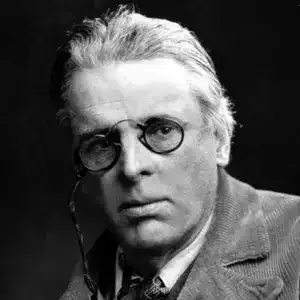
William Butler Yeats
What Was Lost
What Was Lost
I SING what was lost and dread what was won,
I walk in a battle fought over again,
My king a lost king, and lost soldiers my men;
Feet to the Rising and Setting may run,
They always beat on the same small stone.
I SING what was lost and dread what was won,
I walk in a battle fought over again,
My king a lost king, and lost soldiers my men;
Feet to the Rising and Setting may run,
They always beat on the same small stone.
303
William Butler Yeats
To A Shade
To A Shade
IF you have revisited the town, thin Shade,
Whether to look upon your monument
(I wonder if the builder has been paid)
Or happier-thoughted when the day is spent
To drink of that salt breath out of the sea
When grey gulls flit about instead of men,
And the gaunt houses put on majesty:
Let these content you and be gone again;
For they are at their old tricks yet.
A man
Of your own passionate serving kind who had brought
In his full hands what, had they only known,
Had given their children's children loftier thought,
Sweeter emotion, working in their veins
Like gentle blood, has been driven from the place,
And instilt heaped upon him for his pains,
And for his open-handedness, disgrace;
Your enemy, an old fotil mouth, had set
The pack upon him.
Go, unquiet wanderer,
And gather the Glasnevin coverlet
About your head till the dust stops your ear,
The time for you to taste of that Salt breath
And listen at the corners has not come;
You had enough of sorrow before death --
Away, away! You are safer in the tomb.
IF you have revisited the town, thin Shade,
Whether to look upon your monument
(I wonder if the builder has been paid)
Or happier-thoughted when the day is spent
To drink of that salt breath out of the sea
When grey gulls flit about instead of men,
And the gaunt houses put on majesty:
Let these content you and be gone again;
For they are at their old tricks yet.
A man
Of your own passionate serving kind who had brought
In his full hands what, had they only known,
Had given their children's children loftier thought,
Sweeter emotion, working in their veins
Like gentle blood, has been driven from the place,
And instilt heaped upon him for his pains,
And for his open-handedness, disgrace;
Your enemy, an old fotil mouth, had set
The pack upon him.
Go, unquiet wanderer,
And gather the Glasnevin coverlet
About your head till the dust stops your ear,
The time for you to taste of that Salt breath
And listen at the corners has not come;
You had enough of sorrow before death --
Away, away! You are safer in the tomb.
389
William Butler Yeats
The Lover Speaks To The Hearers Of His Songs In Coming Days
The Lover Speaks To The Hearers Of His Songs In Coming Days
O WOMEN, kneeling by your altar-rails long hence,
When songs I wove for my beloved hide the prayer,
And smoke from this dead heart drifts through the violet air
And covers away the smoke of myrrh and frankincense;
Bend down and pray for all that sin I wove in song,
Till the Attorney for Lost Souls cry her sweet cry,
And.call to my beloved and me: 'No longer fly
Amid the hovering, piteouS, penitential throng.'
O WOMEN, kneeling by your altar-rails long hence,
When songs I wove for my beloved hide the prayer,
And smoke from this dead heart drifts through the violet air
And covers away the smoke of myrrh and frankincense;
Bend down and pray for all that sin I wove in song,
Till the Attorney for Lost Souls cry her sweet cry,
And.call to my beloved and me: 'No longer fly
Amid the hovering, piteouS, penitential throng.'
374
William Butler Yeats
The Choice
The Choice
The intellect of man is forced to choose
perfection of the life, or of the work,
And if it take the second must refuse
A heavenly mansion, raging in the dark.
When all that story's finished, what's the news?
In luck or out the toil has left its mark:
That old perplexity an empty purse,
Or the day's vanity, the night's remorse.
The intellect of man is forced to choose
perfection of the life, or of the work,
And if it take the second must refuse
A heavenly mansion, raging in the dark.
When all that story's finished, what's the news?
In luck or out the toil has left its mark:
That old perplexity an empty purse,
Or the day's vanity, the night's remorse.
326
William Butler Yeats
Remorse For Intemperate Speech
Remorse For Intemperate Speech
I RANTED to the knave and fool,
But outgrew that school,
Would transform the part,
Fit audience found, but cannot rule
My fanatic heart.
I sought my betters: though in each
Fine manners, liberal speech,
Turn hatred into sport,
Nothing said or done can reach
My fanatic heart,
Out of Ireland have we come.
Great hatred, little room,
Maimed us at the start.
I carry from my mother's womb
A fanatic heart.
I RANTED to the knave and fool,
But outgrew that school,
Would transform the part,
Fit audience found, but cannot rule
My fanatic heart.
I sought my betters: though in each
Fine manners, liberal speech,
Turn hatred into sport,
Nothing said or done can reach
My fanatic heart,
Out of Ireland have we come.
Great hatred, little room,
Maimed us at the start.
I carry from my mother's womb
A fanatic heart.
336
Page 1
Next