

Travel and Horizons
Poems in this topic
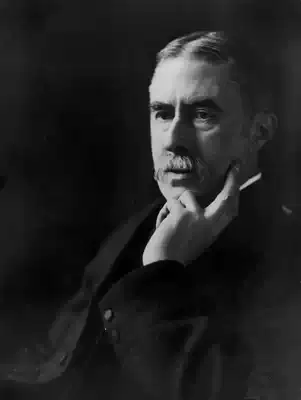
Alfred Edward Housman
Reveille
Reveille
Wake: the silver dusk returning
Up the beach of darkness brims,
And the ship of sunrise burning
Strands upon the eastern rims.
Wake: the vaulted shadow shatters,
Trampled to the floor it spanned,
And the tent of night in tatters
Straws the sky-pavilioned land.
Up, lad, up, 'tis late for lying:
Hear the drums of morning play;
Hark, the empty highways crying
"Who'll beyond the hills away?"
Towns and countries woo together,
Forelands beacon, belfries call;
Never lad that trod on leather
Lived to feast his heart with all.
Up, lad: thews that lie and cumber
Sunlit pallets never thrive;
Morns abed and daylight slumber
Were not meant for man alive.
Clay lies still, but blood's a rover;
Breath's a ware that will not keep.
Up, lad: when the journey's over
There'll be time enough to sleep.
Wake: the silver dusk returning
Up the beach of darkness brims,
And the ship of sunrise burning
Strands upon the eastern rims.
Wake: the vaulted shadow shatters,
Trampled to the floor it spanned,
And the tent of night in tatters
Straws the sky-pavilioned land.
Up, lad, up, 'tis late for lying:
Hear the drums of morning play;
Hark, the empty highways crying
"Who'll beyond the hills away?"
Towns and countries woo together,
Forelands beacon, belfries call;
Never lad that trod on leather
Lived to feast his heart with all.
Up, lad: thews that lie and cumber
Sunlit pallets never thrive;
Morns abed and daylight slumber
Were not meant for man alive.
Clay lies still, but blood's a rover;
Breath's a ware that will not keep.
Up, lad: when the journey's over
There'll be time enough to sleep.
1,114
1
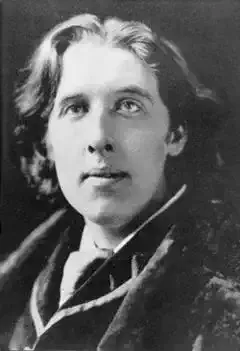
Oscar Wilde
Impression De Voyage
The sea was sapphire coloured, and the sky
Burned like a heated opal through the air;
We hoisted sail; the wind was blowing fair
For the blue lands that to the eastward lie.
From the steep prow I marked with quickening eye
Zakynthos, every olive grove and creek,
Ithaca's cliff, Lycaon's snowy peak,
And all the flower-strewn hills of Arcady.
The flapping of the sail against the mast,
The ripple of the water on the side,
The ripple of girls' laughter at the stern,
The only sounds:- when 'gan the West to burn,
And a red sun upon the seas to ride,
I stood upon the soil of Greece at last!
KATAKOLO.
Burned like a heated opal through the air;
We hoisted sail; the wind was blowing fair
For the blue lands that to the eastward lie.
From the steep prow I marked with quickening eye
Zakynthos, every olive grove and creek,
Ithaca's cliff, Lycaon's snowy peak,
And all the flower-strewn hills of Arcady.
The flapping of the sail against the mast,
The ripple of the water on the side,
The ripple of girls' laughter at the stern,
The only sounds:- when 'gan the West to burn,
And a red sun upon the seas to ride,
I stood upon the soil of Greece at last!
KATAKOLO.
672
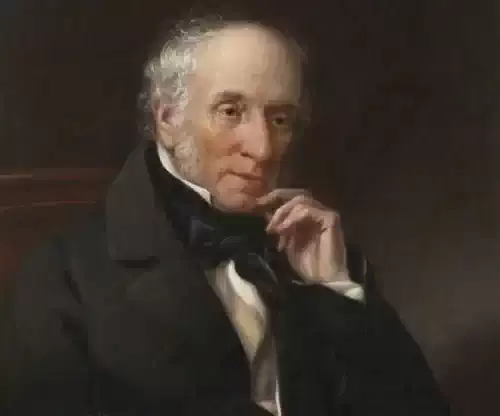
William Wordsworth
Yarrow Unvisited
Yarrow Unvisited
. From Stirling castle we had seen
The mazy Forth unravelled;
Had trod the banks of Clyde, and Tay,
And with the Tweed had travelled;
And when we came to Clovenford,
Then said my "winsome Marrow ,"
"Whate'er betide, we'll turn aside,
And see the Braes of Yarrow."
"Let Yarrow folk, frae Selkirk town,
Who have been buying, selling,
Go back to Yarrow, 'tis their own;
Each maiden to her dwelling!
On Yarrow's banks let her herons feed,
Hares couch, and rabbits burrow!
But we will downward with the Tweed
Nor turn aside to Yarrow.
"There's Galla Water, Leader Haughs,
Both lying right before us;
And Dryborough, where with chiming Tweed
The lintwhites sing in chorus;
There's pleasant Tiviot-dale, a land
Made blithe with plough and harrow:
Why throw away a needful day
To go in search of Yarrow?
"What's Yarrow but a river bare,
That glides the dark hills under?
There are a thousand such elsewhere
As worthy of your wonder."
--Strange words they seemed of slight and scorn;
My True-love sighed for sorrow;
And looked me in the face, to think
I thus could speak of Yarrow!
"Oh! green," said I, "are Yarrow's holms,
And sweet is Yarrow flowing!
Fair hangs the apple frae the rock,
But we will leave it growing.
O'er hilly path, and open Strath,
We'll wander Scotland thorough;
But, though so near, we will not turn
Into the dale of Yarrow.
"Let beeves and home-bred kine partake
The sweets of Burn-mill meadow,
The swan on still St. Mary's Lake
Float double, swan and shadow!
We will not see them; will not go,
To-day, nor yet to-morrow;
Enough if in our hearts we know
There's such a place as Yarrow.
"Be Yarrow stream unseen, unknown!
It must, or we shall rue it:
We have a vision of our own;
Ah! why should we undo it?
The treasured dreams of times long past,
We'll keep them, winsome Marrow!
For when we'er there, although 'tis fair,
'Twill be another Yarrow!
"If Care with freezing years should come,
And wandering seem but folly,--
Should we be loth to stir from home,
And yet be melancholy;
Should life be dull, and spirits low,
'Twill soothe us in our sorrow,
That earth has something yet to show,
The bonny holms of Yarrow!"
. From Stirling castle we had seen
The mazy Forth unravelled;
Had trod the banks of Clyde, and Tay,
And with the Tweed had travelled;
And when we came to Clovenford,
Then said my "winsome Marrow ,"
"Whate'er betide, we'll turn aside,
And see the Braes of Yarrow."
"Let Yarrow folk, frae Selkirk town,
Who have been buying, selling,
Go back to Yarrow, 'tis their own;
Each maiden to her dwelling!
On Yarrow's banks let her herons feed,
Hares couch, and rabbits burrow!
But we will downward with the Tweed
Nor turn aside to Yarrow.
"There's Galla Water, Leader Haughs,
Both lying right before us;
And Dryborough, where with chiming Tweed
The lintwhites sing in chorus;
There's pleasant Tiviot-dale, a land
Made blithe with plough and harrow:
Why throw away a needful day
To go in search of Yarrow?
"What's Yarrow but a river bare,
That glides the dark hills under?
There are a thousand such elsewhere
As worthy of your wonder."
--Strange words they seemed of slight and scorn;
My True-love sighed for sorrow;
And looked me in the face, to think
I thus could speak of Yarrow!
"Oh! green," said I, "are Yarrow's holms,
And sweet is Yarrow flowing!
Fair hangs the apple frae the rock,
But we will leave it growing.
O'er hilly path, and open Strath,
We'll wander Scotland thorough;
But, though so near, we will not turn
Into the dale of Yarrow.
"Let beeves and home-bred kine partake
The sweets of Burn-mill meadow,
The swan on still St. Mary's Lake
Float double, swan and shadow!
We will not see them; will not go,
To-day, nor yet to-morrow;
Enough if in our hearts we know
There's such a place as Yarrow.
"Be Yarrow stream unseen, unknown!
It must, or we shall rue it:
We have a vision of our own;
Ah! why should we undo it?
The treasured dreams of times long past,
We'll keep them, winsome Marrow!
For when we'er there, although 'tis fair,
'Twill be another Yarrow!
"If Care with freezing years should come,
And wandering seem but folly,--
Should we be loth to stir from home,
And yet be melancholy;
Should life be dull, and spirits low,
'Twill soothe us in our sorrow,
That earth has something yet to show,
The bonny holms of Yarrow!"
253
William Wordsworth
Written With a Pencil Upon a Stone In The Wall of The House, On The Island
Written With a Pencil Upon a Stone In The Wall of The House, On The Island
at Grasmere
Rude is this Edifice, and Thou hast seen
Buildings, albeit rude, that have maintained
Proportions more harmonious, and approached
To closer fellowship with ideal grace.
But take it in good part:--alas! the poor
Vitruvius of our village had no help
From the great City; never, upon leaves
Of red Morocco folio, saw displayed,
In long succession, pre-existing ghosts
Of Beauties yet unborn--the rustic Lodge
Antique, and Cottage with verandah graced,
Nor lacking, for fit company, alcove,
Green-house, shell-grot, and moss-lined hermitage.
Thou see'st a homely Pile, yet to these walls
The heifer comes in the snow-storm, and here
The new-dropped lamb finds shelter from the wind.
And hither does one Poet sometimes row
His pinnace, a small vagrant barge, up-piled
With plenteous store of heath and withered fern,
(A lading which he with his sickle cuts,
Among the mountains) and beneath this roof
He makes his summer couch, and here at noon
Spreads out his limbs, while, yet unshorn, the Sheep,
Panting beneath the burthen of their wool,
Lie round him, even as if they were a part
Of his own Household: nor, while from his bed
He looks, through the open door-place, toward the lake
And to the stirring breezes, does he want
Creations lovely as the work of sleep--
Fair sights, and visions of romantic joy!
at Grasmere
Rude is this Edifice, and Thou hast seen
Buildings, albeit rude, that have maintained
Proportions more harmonious, and approached
To closer fellowship with ideal grace.
But take it in good part:--alas! the poor
Vitruvius of our village had no help
From the great City; never, upon leaves
Of red Morocco folio, saw displayed,
In long succession, pre-existing ghosts
Of Beauties yet unborn--the rustic Lodge
Antique, and Cottage with verandah graced,
Nor lacking, for fit company, alcove,
Green-house, shell-grot, and moss-lined hermitage.
Thou see'st a homely Pile, yet to these walls
The heifer comes in the snow-storm, and here
The new-dropped lamb finds shelter from the wind.
And hither does one Poet sometimes row
His pinnace, a small vagrant barge, up-piled
With plenteous store of heath and withered fern,
(A lading which he with his sickle cuts,
Among the mountains) and beneath this roof
He makes his summer couch, and here at noon
Spreads out his limbs, while, yet unshorn, the Sheep,
Panting beneath the burthen of their wool,
Lie round him, even as if they were a part
Of his own Household: nor, while from his bed
He looks, through the open door-place, toward the lake
And to the stirring breezes, does he want
Creations lovely as the work of sleep--
Fair sights, and visions of romantic joy!
186
William Wordsworth
With ships the sea was sprinkled
With ships the sea was sprinkled
WITH ships the sea was sprinkled far and nigh,
Like stars in heaven, and joyously it showed;
Some lying fast at anchor in the road,
Some veering up and down, one knew not why.
A goodly vessel did I then espy
Come like a giant from a haven broad;
And lustily along the bay she strode,
Her tackling rich, and of apparel high.
The ship was nought to me, nor I to her,
Yet I pursued her with a lover's look;
This ship to all the rest did I prefer:
When will she turn, and whither? She will brook
No tarrying; where she comes the winds must stir:
On went she, and due north her journey took.
WITH ships the sea was sprinkled far and nigh,
Like stars in heaven, and joyously it showed;
Some lying fast at anchor in the road,
Some veering up and down, one knew not why.
A goodly vessel did I then espy
Come like a giant from a haven broad;
And lustily along the bay she strode,
Her tackling rich, and of apparel high.
The ship was nought to me, nor I to her,
Yet I pursued her with a lover's look;
This ship to all the rest did I prefer:
When will she turn, and whither? She will brook
No tarrying; where she comes the winds must stir:
On went she, and due north her journey took.
173
William Wordsworth
Resolution and Independence
Resolution and Independence
I
There was a roaring in the wind all night;
The rain came heavily and fell in floods;
But now the sun is rising calm and bright;
The birds are singing in the distant woods;
Over his own sweet voice the Stock-dove broods;
The Jay makes answer as the Magpie chatters;
And all the air is filled with pleasant noise of waters.
II
All things that love the sun are out of doors;
The sky rejoices in the morning's birth;
The grass is bright with rain-drops;--on the moors
The hare is running races in her mirth;
And with her feet she from the plashy earth
Raises a mist, that, glittering in the sun,
Runs with her all the way, wherever she doth run.
III
I was a Traveller then upon the moor,
I saw the hare that raced about with joy;
I heard the woods and distant waters roar;
Or heard them not, as happy as a boy:
The pleasant season did my heart employ:
My old remembrances went from me wholly;
And all the ways of men, so vain and melancholy.
IV
But, as it sometimes chanceth, from the might
Of joy in minds that can no further go,
As high as we have mounted in delight
In our dejection do we sink as low;
To me that morning did it happen so;
And fears and fancies thick upon me came;
Dim sadness--and blind thoughts, I knew not, nor could name.
V
I heard the sky-lark warbling in the sky;
And I bethought me of the playful hare:
Even such a happy Child of earth am I;
Even as these blissful creatures do I fare;
Far from the world I walk, and from all care;
But there may come another day to me--
Solitude, pain of heart, distress, and poverty.
VI
My whole life I have lived in pleasant thought,
As if life's business were a summer mood;
As if all needful things would come unsought
To genial faith, still rich in genial good;
But how can He expect that others should
Build for him, sow for him, and at his call
Love him, who for himself will take no heed at all?
VII
I thought of Chatterton, the marvellous Boy,
The sleepless Soul that perished in his pride;
Of Him who walked in glory and in joy
Following his plough, along the mountain-side:
By our own spirits are we deified:
We Poets in our youth begin in gladness;
But thereof come in the end despondency and madness.
VIII
Now, whether it were by peculiar grace,
A leading from above, a something given,
Yet it befell, that, in this lonely place,
When I with these untoward thoughts had striven,
Beside a pool bare to the eye of heaven
I saw a Man before me unawares:
The oldest man he seemed that ever wore grey hairs.
IX
As a huge stone is sometimes seen to lie
Couched on the bald top of an eminence;
Wonder to all who do the same espy,
By what means it could thither come, and whence;
So that it seems a thing endued with sense:
Like a sea-beast crawled forth, that on a shelf
Of rock or sand reposeth, there to sun itself;
X
Such seemed this Man, not all alive nor dead,
Nor all asleep--in his extreme old age:
His body was bent double, feet and head
Coming together in life's pilgrimage;
As if some dire constraint of pain, or rage
Of sickness felt by him in times long past,
A more than human weight upon his frame had cast.
XI
Himself he propped, limbs, body, and pale face,
Upon a long grey staff of shaven wood:
And, still as I drew near with gentle pace,
Upon the margin of that moorish flood
Motionless as a cloud the old Man stood,
That heareth not the loud winds when they call
And moveth all together, if it move at all.
XII
At length, himself unsettling, he the pond
Stirred with his staff, and fixedly did look
Upon the muddy water, which he conned,
As if he had been reading in a book:
And now a stranger's privilege I took;
And, drawing to his side, to him did say,
"This morning gives us promise of a glorious day."
XIII
A gentle answer did the old Man make,
In courteous speech which forth he slowly drew:
And him with further words I thus bespake,
"What occupation do you there pursue?
This is a lonesome place for one like you."
Ere he replied, a flash of mild surprise
Broke from the sable orbs of his yet-vivid eyes,
XIV
His words came feebly, from a feeble chest,
But each in solemn order followed each,
With something of a lofty utterance drest--
Choice word and measured phrase, above the reach
Of ordinary men; a stately speech;
Such as grave Livers do in Scotland use,
Religious men, who give to God and man their dues.
XV
He told, that to these waters he had come
To gather leeches, being old and poor:
Employment hazardous and wearisome!
And he had many hardships to endure:
From pond to pond he roamed, from moor to moor;
Housing, with God's good help, by choice or chance,
And in this way he gained an honest maintenance.
XVI
The old Man still stood talking by my side;
But now his voice to me was like a stream
Scarce heard; nor word from word could I divide;
And the whole body of the Man did seem
Like one whom I had met with in a dream;
Or like a man from some far region sent,
To give me human strength, by apt admonishment.
XVII
My former thoughts returned: the fear that kills;
And hope that is unwilling to be fed;
Cold, pain, and labour, and all fleshly ills;
And mighty Poets in their misery dead.
--Perplexed, and longing to be comforted,
My question eagerly did I renew,
"How is it that you live, and what is it you do?"
XVIII
He with a smile did then his words repeat;
And said, that, gathering leeches, far and wide
He travelled; stirring thus about his feet
The waters of the pools where they abide.
"Once I could meet with them on every side;
But they have dwindled long by slow decay;
Yet still I persevere, and find them where I may."
XIX
While he was talking thus, the lonely place,
The old Man's shape, and speech--all troubled me:
In my mind's eye I seemed to see him pace
About the weary moors continually,
Wandering about alone and silently.
While I these thoughts within myself pursued,
He, having made a pause, the same discourse renewed.
XX
And soon with this he other matter blended,
Cheerfully uttered, with demeanour kind,
But stately in the main; and when he ended,
I could have laughed myself to scorn to find
In that decrepit Man so firm a mind.
"God," said I, "be my help and stay secure;
I'll think of the Leech-gatherer on the lonely moor!"
I
There was a roaring in the wind all night;
The rain came heavily and fell in floods;
But now the sun is rising calm and bright;
The birds are singing in the distant woods;
Over his own sweet voice the Stock-dove broods;
The Jay makes answer as the Magpie chatters;
And all the air is filled with pleasant noise of waters.
II
All things that love the sun are out of doors;
The sky rejoices in the morning's birth;
The grass is bright with rain-drops;--on the moors
The hare is running races in her mirth;
And with her feet she from the plashy earth
Raises a mist, that, glittering in the sun,
Runs with her all the way, wherever she doth run.
III
I was a Traveller then upon the moor,
I saw the hare that raced about with joy;
I heard the woods and distant waters roar;
Or heard them not, as happy as a boy:
The pleasant season did my heart employ:
My old remembrances went from me wholly;
And all the ways of men, so vain and melancholy.
IV
But, as it sometimes chanceth, from the might
Of joy in minds that can no further go,
As high as we have mounted in delight
In our dejection do we sink as low;
To me that morning did it happen so;
And fears and fancies thick upon me came;
Dim sadness--and blind thoughts, I knew not, nor could name.
V
I heard the sky-lark warbling in the sky;
And I bethought me of the playful hare:
Even such a happy Child of earth am I;
Even as these blissful creatures do I fare;
Far from the world I walk, and from all care;
But there may come another day to me--
Solitude, pain of heart, distress, and poverty.
VI
My whole life I have lived in pleasant thought,
As if life's business were a summer mood;
As if all needful things would come unsought
To genial faith, still rich in genial good;
But how can He expect that others should
Build for him, sow for him, and at his call
Love him, who for himself will take no heed at all?
VII
I thought of Chatterton, the marvellous Boy,
The sleepless Soul that perished in his pride;
Of Him who walked in glory and in joy
Following his plough, along the mountain-side:
By our own spirits are we deified:
We Poets in our youth begin in gladness;
But thereof come in the end despondency and madness.
VIII
Now, whether it were by peculiar grace,
A leading from above, a something given,
Yet it befell, that, in this lonely place,
When I with these untoward thoughts had striven,
Beside a pool bare to the eye of heaven
I saw a Man before me unawares:
The oldest man he seemed that ever wore grey hairs.
IX
As a huge stone is sometimes seen to lie
Couched on the bald top of an eminence;
Wonder to all who do the same espy,
By what means it could thither come, and whence;
So that it seems a thing endued with sense:
Like a sea-beast crawled forth, that on a shelf
Of rock or sand reposeth, there to sun itself;
X
Such seemed this Man, not all alive nor dead,
Nor all asleep--in his extreme old age:
His body was bent double, feet and head
Coming together in life's pilgrimage;
As if some dire constraint of pain, or rage
Of sickness felt by him in times long past,
A more than human weight upon his frame had cast.
XI
Himself he propped, limbs, body, and pale face,
Upon a long grey staff of shaven wood:
And, still as I drew near with gentle pace,
Upon the margin of that moorish flood
Motionless as a cloud the old Man stood,
That heareth not the loud winds when they call
And moveth all together, if it move at all.
XII
At length, himself unsettling, he the pond
Stirred with his staff, and fixedly did look
Upon the muddy water, which he conned,
As if he had been reading in a book:
And now a stranger's privilege I took;
And, drawing to his side, to him did say,
"This morning gives us promise of a glorious day."
XIII
A gentle answer did the old Man make,
In courteous speech which forth he slowly drew:
And him with further words I thus bespake,
"What occupation do you there pursue?
This is a lonesome place for one like you."
Ere he replied, a flash of mild surprise
Broke from the sable orbs of his yet-vivid eyes,
XIV
His words came feebly, from a feeble chest,
But each in solemn order followed each,
With something of a lofty utterance drest--
Choice word and measured phrase, above the reach
Of ordinary men; a stately speech;
Such as grave Livers do in Scotland use,
Religious men, who give to God and man their dues.
XV
He told, that to these waters he had come
To gather leeches, being old and poor:
Employment hazardous and wearisome!
And he had many hardships to endure:
From pond to pond he roamed, from moor to moor;
Housing, with God's good help, by choice or chance,
And in this way he gained an honest maintenance.
XVI
The old Man still stood talking by my side;
But now his voice to me was like a stream
Scarce heard; nor word from word could I divide;
And the whole body of the Man did seem
Like one whom I had met with in a dream;
Or like a man from some far region sent,
To give me human strength, by apt admonishment.
XVII
My former thoughts returned: the fear that kills;
And hope that is unwilling to be fed;
Cold, pain, and labour, and all fleshly ills;
And mighty Poets in their misery dead.
--Perplexed, and longing to be comforted,
My question eagerly did I renew,
"How is it that you live, and what is it you do?"
XVIII
He with a smile did then his words repeat;
And said, that, gathering leeches, far and wide
He travelled; stirring thus about his feet
The waters of the pools where they abide.
"Once I could meet with them on every side;
But they have dwindled long by slow decay;
Yet still I persevere, and find them where I may."
XIX
While he was talking thus, the lonely place,
The old Man's shape, and speech--all troubled me:
In my mind's eye I seemed to see him pace
About the weary moors continually,
Wandering about alone and silently.
While I these thoughts within myself pursued,
He, having made a pause, the same discourse renewed.
XX
And soon with this he other matter blended,
Cheerfully uttered, with demeanour kind,
But stately in the main; and when he ended,
I could have laughed myself to scorn to find
In that decrepit Man so firm a mind.
"God," said I, "be my help and stay secure;
I'll think of the Leech-gatherer on the lonely moor!"
237
William Wordsworth
Elegiac Stanzas
Elegiac Stanzas
Lulled by the sound of pastoral bells,
Rude Nature's Pilgrims did we go,
From the dread summit of the Queen
Of mountains, through a deep ravine,
Where, in her holy chapel, dwells
"Our Lady of the Snow."
The sky was blue, the air was mild;
Free were the streams and green the bowers;
As if, to rough assaults unknown,
The genial spot had 'ever' shown
A countenance that as sweetly smiled--
The face of summer-hours.
And we were gay, our hearts at ease;
With pleasure dancing through the frame
We journeyed; all we knew of care--
Our path that straggled here and there;
Of trouble--but the fluttering breeze;
Of Winter--but a name.
If foresight could have rent the veil
Of three short days--but hush--no more!
Calm is the grave, and calmer none
Than that to which thy cares are gone,
Thou Victim of the stormy gale;
Asleep on ZURICH'S shore!
O GODDARD! what art thou?--a name--
A sunbeam followed by a shade!
Nor more, for aught that time supplies,
The great, the experienced, and the wise:
Too much from this frail earth we claim,
And therefore are betrayed.
We met, while festive mirth ran wild,
Where, from a deep lake's mighty urn,
Forth slips, like an enfranchised slave,
A sea-green river, proud to lave,
With current swift and undefiled,
The towers of old LUCERNE.
We parted upon solemn ground
Far-lifted towards the unfading sky;
But all our thoughts were 'then' of Earth,
That gives to common pleasures birth;
And nothing in our hearts we found
That prompted even a sigh.
Fetch, sympathising Powers of air,
Fetch, ye that post o'er seas and lands,
Herbs, moistened by Virginian dew,
A most untimely grave to strew,
Whose turf may never know the care
Of 'kindred' human hands!
Beloved by every gentle Muse
He left his Transatlantic home:
Europe, a realised romance,
Had opened on his eager glance;
What present bliss!--what golden views!
What stores for years to come!
Though lodged within no vigorous frame,
His soul her daily tasks renewed,
Blithe as the lark on sun-gilt wings
High poised--or as the wren that sings
In shady places, to proclaim
Her modest gratitude.
Not vain is sadly-uttered praise;
The words of truth's memorial vow
Are sweet as morning fragrance shed
From flowers 'mid GOLDAU'S ruins bred;
As evening's fondly-lingering rays,
On RIGHI'S silent brow.
Lamented Youth! to thy cold clay
Fit obsequies the Stranger paid;
And piety shall guard the Stone
Which hath not left the spot unknown
Where the wild waves resigned their prey--
And 'that' which marks thy bed.
And, when thy Mother weeps for Thee,
Lost Youth! a solitary Mother;
This tribute from a casual Friend
A not unwelcome aid may lend,
To feed the tender luxury,
The rising pang to smother.
Lulled by the sound of pastoral bells,
Rude Nature's Pilgrims did we go,
From the dread summit of the Queen
Of mountains, through a deep ravine,
Where, in her holy chapel, dwells
"Our Lady of the Snow."
The sky was blue, the air was mild;
Free were the streams and green the bowers;
As if, to rough assaults unknown,
The genial spot had 'ever' shown
A countenance that as sweetly smiled--
The face of summer-hours.
And we were gay, our hearts at ease;
With pleasure dancing through the frame
We journeyed; all we knew of care--
Our path that straggled here and there;
Of trouble--but the fluttering breeze;
Of Winter--but a name.
If foresight could have rent the veil
Of three short days--but hush--no more!
Calm is the grave, and calmer none
Than that to which thy cares are gone,
Thou Victim of the stormy gale;
Asleep on ZURICH'S shore!
O GODDARD! what art thou?--a name--
A sunbeam followed by a shade!
Nor more, for aught that time supplies,
The great, the experienced, and the wise:
Too much from this frail earth we claim,
And therefore are betrayed.
We met, while festive mirth ran wild,
Where, from a deep lake's mighty urn,
Forth slips, like an enfranchised slave,
A sea-green river, proud to lave,
With current swift and undefiled,
The towers of old LUCERNE.
We parted upon solemn ground
Far-lifted towards the unfading sky;
But all our thoughts were 'then' of Earth,
That gives to common pleasures birth;
And nothing in our hearts we found
That prompted even a sigh.
Fetch, sympathising Powers of air,
Fetch, ye that post o'er seas and lands,
Herbs, moistened by Virginian dew,
A most untimely grave to strew,
Whose turf may never know the care
Of 'kindred' human hands!
Beloved by every gentle Muse
He left his Transatlantic home:
Europe, a realised romance,
Had opened on his eager glance;
What present bliss!--what golden views!
What stores for years to come!
Though lodged within no vigorous frame,
His soul her daily tasks renewed,
Blithe as the lark on sun-gilt wings
High poised--or as the wren that sings
In shady places, to proclaim
Her modest gratitude.
Not vain is sadly-uttered praise;
The words of truth's memorial vow
Are sweet as morning fragrance shed
From flowers 'mid GOLDAU'S ruins bred;
As evening's fondly-lingering rays,
On RIGHI'S silent brow.
Lamented Youth! to thy cold clay
Fit obsequies the Stranger paid;
And piety shall guard the Stone
Which hath not left the spot unknown
Where the wild waves resigned their prey--
And 'that' which marks thy bed.
And, when thy Mother weeps for Thee,
Lost Youth! a solitary Mother;
This tribute from a casual Friend
A not unwelcome aid may lend,
To feed the tender luxury,
The rising pang to smother.
228
William Wordsworth
With Ships the Sea was Sprinkled Far and Nigh,
"With Ships the Sea was Sprinkled Far and Nigh,"
With ships the sea was sprinkled far and nigh,
Like stars in heaven, and joyously it showed;
Some lying fast at anchor in the road,
Some veering up and down, one knew not why.
A goodly vessel did I then espy
Come like a giant from a haven broad;
And lustily along the bay she strode,
Her tackling rich, and of apparel high.
The ship was nought to me, nor I to her,
Yet I pursued her with a lover's look;
This ship to all the rest did I prefer:
When will she turn, and whither? She will brook
No tarrying; where she comes the winds must stir:
On went she, and due north her journey took.
With ships the sea was sprinkled far and nigh,
Like stars in heaven, and joyously it showed;
Some lying fast at anchor in the road,
Some veering up and down, one knew not why.
A goodly vessel did I then espy
Come like a giant from a haven broad;
And lustily along the bay she strode,
Her tackling rich, and of apparel high.
The ship was nought to me, nor I to her,
Yet I pursued her with a lover's look;
This ship to all the rest did I prefer:
When will she turn, and whither? She will brook
No tarrying; where she comes the winds must stir:
On went she, and due north her journey took.
263
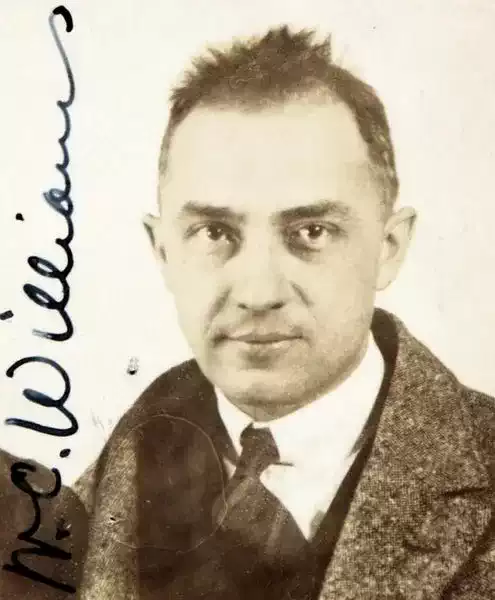
William Carlos Williams
January Morning
January Morning
I
I have discovered that most of
the beauties of travel are due to
the strange hours we keep to see them:
the domes of the Church of
the Paulist Fathers in Weehawken
against a smoky dawn -- the heart stirred --
are beautiful as Saint Peters
approached after years of anticipation.
II
Though the operation was postponed
I saw the tall probationers
in their tan uniforms
hurrying to breakfast!
III
-- and from basement entries
neatly coiffed, middle aged gentlemen
with orderly moustaches and
well-brushed coats
IV
-- and the sun, dipping into the avenues
streaking the tops of
the irregular red houselets,
and
the gay shadows drooping and drooping.
V
-- and a young horse with a green bed-quilt
on his withers shaking his head:
bared teeth and nozzle high in the air!
VI
--and a semicircle of dirt-colored men
about a fire bursting from an old
ash can,
VII
-- and the worn,
blue car rails (like the sky!)
gleaming among the cobbles!
VIII
-- and the rickety ferry-boat "Arden"!
What an object to be called "Arden"
among the great piers, -- on the
ever new river!
"Put me a Touchstone
at the wheel, white gulls, and we'll
follow the ghost of the Half Moon
to the North West Passage -- and through!
(at Albany!) for all that!"
IX
Exquisite brown waves -- long
circlets of silver moving over you!
enough with crumbling ice crusts among you!
The sky has come down to you,
lighter than tiny bubbles, face to
face with you!
His spirit is
a white gull with delicate pink feet
and a snowy breast for you to
hold to your lips delicately!
X
The young doctor is dancing with happiness
in the sparkling wind, alone
at the prow of the ferry! He notices
the curdy barnacles and broken ice crusts
left at the slip's base by the low tide
and thinks of summer and green
shell-crusted ledges among
the emerald eel-grass!
XI
Who knows the Palisades as I do
knows the river breaks east from them
above the city -- but they continue south
-- under the sky -- to bear a crest of
little peering houses that brighten
with dawn behind the moody
water-loving giants of Manhattan.
XII
Long yellow rushes bending
above the white snow patches;
purple and gold ribbon
of the distant wood:
what an angle
you make with each other as
you lie there in contemplation.
XIII
Work hard all your young days
and they'll find you too, some morning
staring up under
your chiffonier at its warped
bass-wood bottom and your soul --
out!
-- among the little sparrows
behind the shutter.
XIV
-- and the flapping flags are at
half-mast for the dead admiral.
XV
All this --
was for you, old woman.
I wanted to write a poem
that you would understand.
For what good is it to me
if you can't understand it?
But you got to try hard --
But --
Well, you know how
the young girls run giggling
on Park Avenue after dark
when they ought to be home in bed?
Well,
that's the way it is with me somehow.
I
I have discovered that most of
the beauties of travel are due to
the strange hours we keep to see them:
the domes of the Church of
the Paulist Fathers in Weehawken
against a smoky dawn -- the heart stirred --
are beautiful as Saint Peters
approached after years of anticipation.
II
Though the operation was postponed
I saw the tall probationers
in their tan uniforms
hurrying to breakfast!
III
-- and from basement entries
neatly coiffed, middle aged gentlemen
with orderly moustaches and
well-brushed coats
IV
-- and the sun, dipping into the avenues
streaking the tops of
the irregular red houselets,
and
the gay shadows drooping and drooping.
V
-- and a young horse with a green bed-quilt
on his withers shaking his head:
bared teeth and nozzle high in the air!
VI
--and a semicircle of dirt-colored men
about a fire bursting from an old
ash can,
VII
-- and the worn,
blue car rails (like the sky!)
gleaming among the cobbles!
VIII
-- and the rickety ferry-boat "Arden"!
What an object to be called "Arden"
among the great piers, -- on the
ever new river!
"Put me a Touchstone
at the wheel, white gulls, and we'll
follow the ghost of the Half Moon
to the North West Passage -- and through!
(at Albany!) for all that!"
IX
Exquisite brown waves -- long
circlets of silver moving over you!
enough with crumbling ice crusts among you!
The sky has come down to you,
lighter than tiny bubbles, face to
face with you!
His spirit is
a white gull with delicate pink feet
and a snowy breast for you to
hold to your lips delicately!
X
The young doctor is dancing with happiness
in the sparkling wind, alone
at the prow of the ferry! He notices
the curdy barnacles and broken ice crusts
left at the slip's base by the low tide
and thinks of summer and green
shell-crusted ledges among
the emerald eel-grass!
XI
Who knows the Palisades as I do
knows the river breaks east from them
above the city -- but they continue south
-- under the sky -- to bear a crest of
little peering houses that brighten
with dawn behind the moody
water-loving giants of Manhattan.
XII
Long yellow rushes bending
above the white snow patches;
purple and gold ribbon
of the distant wood:
what an angle
you make with each other as
you lie there in contemplation.
XIII
Work hard all your young days
and they'll find you too, some morning
staring up under
your chiffonier at its warped
bass-wood bottom and your soul --
out!
-- among the little sparrows
behind the shutter.
XIV
-- and the flapping flags are at
half-mast for the dead admiral.
XV
All this --
was for you, old woman.
I wanted to write a poem
that you would understand.
For what good is it to me
if you can't understand it?
But you got to try hard --
But --
Well, you know how
the young girls run giggling
on Park Avenue after dark
when they ought to be home in bed?
Well,
that's the way it is with me somehow.
457
William Carlos Williams
Heel & Toe To The End
Heel & Toe To The End
Gagarin says, in ecstasy,
he could have
gone on forever
he floated
at and sang
and when he emerged from that
one hundred eight minutes off
the surface of
the earth he was smiling.
Then he returned
to take his place
among the rest of us
from all that division and
subtraction a measure
to and heel
heel and toe he felt
as if he had
been dancing
Gagarin says, in ecstasy,
he could have
gone on forever
he floated
at and sang
and when he emerged from that
one hundred eight minutes off
the surface of
the earth he was smiling.
Then he returned
to take his place
among the rest of us
from all that division and
subtraction a measure
to and heel
heel and toe he felt
as if he had
been dancing
284
William Butler Yeats
Who Goes With Fergus?
Who Goes With Fergus?
WHO will go drive with Fergus now,
And pierce the deep wood's woven shade,
And dance upon the level shore?
Young man, lift up your russet brow,
And lift your tender eyelids, maid,
And brood on hopes and fear no more.
And no more turn aside and brood
Upon love's bitter mystery;
For Fergus rules the brazen cars,
And rules the shadows of the wood,
And the white breast of the dim sea
And all dishevelled wandering stars.
WHO will go drive with Fergus now,
And pierce the deep wood's woven shade,
And dance upon the level shore?
Young man, lift up your russet brow,
And lift your tender eyelids, maid,
And brood on hopes and fear no more.
And no more turn aside and brood
Upon love's bitter mystery;
For Fergus rules the brazen cars,
And rules the shadows of the wood,
And the white breast of the dim sea
And all dishevelled wandering stars.
291
William Butler Yeats
The Pilgrim
The Pilgrim
I FASTED for some forty days on bread and buttermilk,
For passing round the bottle with girls in rags or silk,
In country shawl or Paris cloak, had put my wits astray,
And what's the good of women, for all that they can say
Is fol de rol de rolly O.
Round Lough Derg's holy island I went upon the stones,
I prayed at all the Stations upon my matrow-bones,
And there I found an old man, and though, I prayed all day
And that old man beside me, nothing would he say
But fol de rol de rolly O.
All know that all the dead in the world about that place are stuck,
And that should mother seek her son she'd have but little luck
Because the fires of purgatory have ate their shapes away;
I swear to God I questioned them, and all they had to say
Was fol de rol de rolly O.
A great black ragged bird appeared when I was in the boat;
Some twenty feet from tip to tip had it stretched rightly out,
With flopping and with flapping it made a great display,
But I never stopped to question, what could the boatman say
But fol de rol de rolly O.
Now I am in the public-house and lean upon the wall,
So come in rags or come in silk, in cloak or country shawl,
And come with learned lovers or with what men you may,
For I can put the whole lot down, and all I have to say
Is fol de rol de rolly O.
I FASTED for some forty days on bread and buttermilk,
For passing round the bottle with girls in rags or silk,
In country shawl or Paris cloak, had put my wits astray,
And what's the good of women, for all that they can say
Is fol de rol de rolly O.
Round Lough Derg's holy island I went upon the stones,
I prayed at all the Stations upon my matrow-bones,
And there I found an old man, and though, I prayed all day
And that old man beside me, nothing would he say
But fol de rol de rolly O.
All know that all the dead in the world about that place are stuck,
And that should mother seek her son she'd have but little luck
Because the fires of purgatory have ate their shapes away;
I swear to God I questioned them, and all they had to say
Was fol de rol de rolly O.
A great black ragged bird appeared when I was in the boat;
Some twenty feet from tip to tip had it stretched rightly out,
With flopping and with flapping it made a great display,
But I never stopped to question, what could the boatman say
But fol de rol de rolly O.
Now I am in the public-house and lean upon the wall,
So come in rags or come in silk, in cloak or country shawl,
And come with learned lovers or with what men you may,
For I can put the whole lot down, and all I have to say
Is fol de rol de rolly O.
363

Walter de la Mare
Off the Ground
Off the Ground
Three jolly Farmers
Once bet a pound
Each dance the others would
Off the ground.
Out of their coats
They slipped right soon,
And neat and nicesome
Put each his shoon.
One--Two--Three!
And away they go,
Not too fast,
And not too slow;
Out from the elm-tree's
Noonday shadow,
Into the sun
And across the meadow.
Past the schoolroom,
With knees well bent,
Fingers a flicking,
They dancing went.
Up sides and over,
And round and round,
They crossed click-clacking
The Parish bound;
By Tupman's meadow
They did their mile,
Tee-to-tum
On a three-barred stile.
Then straight through Whipham,
Downhill to Week,
Footing it lightsome,
But not too quick,
Up fields to Watchet
And on through Wye,
Till seven fine churches
They'd seen slip by --
Seven fine churches,
And five old mills,
Farms in the valley,
And sheep on the hills;
Old Man's Acre
And Dead Man's Pool
All left behind,
As they danced through Wool.
And Wool gone by,
Like tops that seem
To spin in sleep
They danced in dream:
Withy -- Wellover --
Wassop -- Wo --
Like an old clock
Their heels did go.
A league and a league
And a league they went,
And not one weary,
And not one spent.
And log, and behold!
Past Willow-cum-Leigh
Stretched with its waters
The great green sea.
Says Farmer Bates,
'I puffs and I blows,
What's under the water,
Why, no man knows !'
Says Farmer Giles,
'My mind comes weak,
And a good man drownded
Is far to seek. '
But Farmer Turvey,
On twirling toes,
Up's with his gaiters,
And in he goes:
Down where the mermaids
Pluck and play
On their twangling harps
In a sea-green day;
Down where the mermaids
Finned and fair,
Sleek with their combs
Their yellow hair. . . .
Bates and Giles --
On the shingle sat,
Gazing at Turvey's
Floating hat.
But never a ripple
Nor bubble told
Where he was supping
Off plates of gold.
Never an echo
Rilled through the sea
Of the feasting and dancing
And minstrelsy.
They called -- called -- called;
Came no reply:
Nought but the ripples'
Sandy sigh.
Then glum and silent
They sat instead,
Vacantly brooding
On home and bed,
Till both together
Stood up and said: --
'Us knows not, dreams not,
Where you be,
Turvey, unless
In the deep blue sea;
But axcusing silver --
And it comes most willing --
Here's us two paying our forty shilling;
For it's sartin sure, Turvey,
Safe and sound,
You danced us a square, Turvey,
Off the ground.'
Three jolly Farmers
Once bet a pound
Each dance the others would
Off the ground.
Out of their coats
They slipped right soon,
And neat and nicesome
Put each his shoon.
One--Two--Three!
And away they go,
Not too fast,
And not too slow;
Out from the elm-tree's
Noonday shadow,
Into the sun
And across the meadow.
Past the schoolroom,
With knees well bent,
Fingers a flicking,
They dancing went.
Up sides and over,
And round and round,
They crossed click-clacking
The Parish bound;
By Tupman's meadow
They did their mile,
Tee-to-tum
On a three-barred stile.
Then straight through Whipham,
Downhill to Week,
Footing it lightsome,
But not too quick,
Up fields to Watchet
And on through Wye,
Till seven fine churches
They'd seen slip by --
Seven fine churches,
And five old mills,
Farms in the valley,
And sheep on the hills;
Old Man's Acre
And Dead Man's Pool
All left behind,
As they danced through Wool.
And Wool gone by,
Like tops that seem
To spin in sleep
They danced in dream:
Withy -- Wellover --
Wassop -- Wo --
Like an old clock
Their heels did go.
A league and a league
And a league they went,
And not one weary,
And not one spent.
And log, and behold!
Past Willow-cum-Leigh
Stretched with its waters
The great green sea.
Says Farmer Bates,
'I puffs and I blows,
What's under the water,
Why, no man knows !'
Says Farmer Giles,
'My mind comes weak,
And a good man drownded
Is far to seek. '
But Farmer Turvey,
On twirling toes,
Up's with his gaiters,
And in he goes:
Down where the mermaids
Pluck and play
On their twangling harps
In a sea-green day;
Down where the mermaids
Finned and fair,
Sleek with their combs
Their yellow hair. . . .
Bates and Giles --
On the shingle sat,
Gazing at Turvey's
Floating hat.
But never a ripple
Nor bubble told
Where he was supping
Off plates of gold.
Never an echo
Rilled through the sea
Of the feasting and dancing
And minstrelsy.
They called -- called -- called;
Came no reply:
Nought but the ripples'
Sandy sigh.
Then glum and silent
They sat instead,
Vacantly brooding
On home and bed,
Till both together
Stood up and said: --
'Us knows not, dreams not,
Where you be,
Turvey, unless
In the deep blue sea;
But axcusing silver --
And it comes most willing --
Here's us two paying our forty shilling;
For it's sartin sure, Turvey,
Safe and sound,
You danced us a square, Turvey,
Off the ground.'
310
Walter de la Mare
Arabia
Arabia
Far are the shades of Arabia,
Where the Princes ride at noon,
'Mid the verdurous vales and thickets,
Under the ghost of the moon;
And so dark is that vaulted purple
Flowers in the forest rise
And toss into blossom 'gainst the phantom stars
Pale in the noonday skies.
Sweet is the music of Arabia
In my heart, when out of dreams
I still in the thin clear mirk of dawn
Descry her gliding streams;
Hear her strange lutes on the green banks
Ring loud with the grief and delight
Of the dim-silked, dark-haired Musicians
In the brooding silence of night.
They haunt me -- her lutes and her forests;
No beauty on earth I see
But shadowed with that dream recalls
Her loveliness to me:
Still eyes look coldly upon me,
Cold voices whisper and say --
'He is crazed with the spell of far Arabia,
They have stolen his wits away.'
Far are the shades of Arabia,
Where the Princes ride at noon,
'Mid the verdurous vales and thickets,
Under the ghost of the moon;
And so dark is that vaulted purple
Flowers in the forest rise
And toss into blossom 'gainst the phantom stars
Pale in the noonday skies.
Sweet is the music of Arabia
In my heart, when out of dreams
I still in the thin clear mirk of dawn
Descry her gliding streams;
Hear her strange lutes on the green banks
Ring loud with the grief and delight
Of the dim-silked, dark-haired Musicians
In the brooding silence of night.
They haunt me -- her lutes and her forests;
No beauty on earth I see
But shadowed with that dream recalls
Her loveliness to me:
Still eyes look coldly upon me,
Cold voices whisper and say --
'He is crazed with the spell of far Arabia,
They have stolen his wits away.'
668
Walt Whitman
The Untold Want
The Untold Want
THE untold want, by life and land ne'er granted,
Now, Voyager, sail thou forth, to seek and find.
THE untold want, by life and land ne'er granted,
Now, Voyager, sail thou forth, to seek and find.
425
Walt Whitman
The Ship Starting
The Ship Starting
LO! THE unbounded sea!
On its breast a Ship starting, spreading all her sails--an ample
Ship, carrying even her moonsails;
The pennant is flying aloft, as she speeds, she speeds so stately-below,
emulous waves press forward,
They surround the Ship, with shining curving motions, and foam.
LO! THE unbounded sea!
On its breast a Ship starting, spreading all her sails--an ample
Ship, carrying even her moonsails;
The pennant is flying aloft, as she speeds, she speeds so stately-below,
emulous waves press forward,
They surround the Ship, with shining curving motions, and foam.
330
Walt Whitman
Pioneers! O Pioneers!
Pioneers! O Pioneers!
COME, my tan-faced children,
Follow well in order, get your weapons ready;
Have you your pistols? have you your sharp edged axes?
Pioneers! O pioneers!
For we cannot tarry here,
We must march my darlings, we must bear the brunt of danger,
We, the youthful sinewy races, all the rest on us depend,
Pioneers! O pioneers!
O you youths, western youths,
So impatient, full of action, full of manly pride and friendship, 10
Plain I see you, western youths, see you tramping with the foremost,
Pioneers! O pioneers!
Have the elder races halted?
Do they droop and end their lesson, wearied, over there beyond the
seas?
We take up the task eternal, and the burden, and the lesson,
Pioneers! O pioneers!
All the past we leave behind;
We debouch upon a newer, mightier world, varied world,
Fresh and strong the world we seize, world of labor and the march,
Pioneers! O pioneers! 20
We detachments steady throwing,
Down the edges, through the passes, up the mountains steep,
Conquering, holding, daring, venturing, as we go, the unknown ways,
Pioneers! O pioneers!
We primeval forests felling,
We the rivers stemming, vexing we, and piercing deep the mines
within;
We the surface broad surveying, we the virgin soil upheaving,
Pioneers! O pioneers!
Colorado men are we,
From the peaks gigantic, from the great sierras and the high
plateaus, 30
From the mine and from the gully, from the hunting trail we come,
Pioneers! O pioneers!
From Nebraska, from Arkansas,
Central inland race are we, from Missouri, with the continental blood
intervein'd;
All the hands of comrades clasping, all the Southern, all the
Northern,
Pioneers! O pioneers!
O resistless, restless race!
O beloved race in all! O my breast aches with tender love for all!
O I mourn and yet exult--I am rapt with love for all,
Pioneers! O pioneers! 40
Raise the mighty mother mistress,
Waving high the delicate mistress, over all the starry mistress,
(bend your heads all,)
Raise the fang'd and warlike mistress, stern, impassive, weapon'd
mistress,
Pioneers! O pioneers!
See, my children, resolute children,
By those swarms upon our rear, we must never yield or falter,
Ages back in ghostly millions, frowning there behind us urging,
Pioneers! O pioneers!
On and on, the compact ranks,
With accessions ever waiting, with the places of the dead quickly
fill'd, 50
Through the battle, through defeat, moving yet and never stopping,
Pioneers! O pioneers!
O to die advancing on!
Are there some of us to droop and die? has the hour come?
Then upon the march we fittest die, soon and sure the gap is fill'd,
Pioneers! O pioneers!
All the pulses of the world,
Falling in, they beat for us, with the western movement beat;
Holding single or together, steady moving, to the front, all for us,
Pioneers! O pioneers! 60
Life's involv'd and varied pageants,
All the forms and shows, all the workmen at their work,
All the seamen and the landsmen, all the masters with their slaves,
Pioneers! O pioneers!
All the hapless silent lovers,
All the prisoners in the prisons, all the righteous and the wicked,
All the joyous, all the sorrowing, all the living, all the dying,
Pioneers! O pioneers!
I too with my soul and body,
We, a curious trio, picking, wandering on our way, 70
Through these shores, amid the shadows, with the apparitions
pressing,
Pioneers! O pioneers!
Lo! the darting bowling orb!
Lo! the brother orbs around! all the clustering suns and planets,
All the dazzling days, all the mystic nights with dreams,
Pioneers! O pioneers!
These are of us, they are with us,
All for primal needed work, while the followers there in embryo wait
behind,
We to-day's procession heading, we the route for travel clearing,
Pioneers! O pioneers! 80
O you daughters of the west!
O you young and elder daughters! O you mothers and you wives!
Never must you be divided, in our ranks you move united,
Pioneers! O pioneers!
Minstrels latent on the prairies!
(Shrouded bards of other lands! you may sleep--you have done your
work;)
Soon I hear you coming warbling, soon you rise and tramp amid us,
Pioneers! O pioneers!
Not for delectations sweet;
Not the cushion and the slipper, not the peaceful and the
studious; 90
Not the riches safe and palling, not for us the tame enjoyment,
Pioneers! O pioneers!
Do the feasters gluttonous feast?
Do the corpulent sleepers sleep? have they lock'd and bolted doors?
Still be ours the diet hard, and the blanket on the ground,
Pioneers! O pioneers!
Has the night descended?
Was the road of late so toilsome? did we stop discouraged, nodding on
our way?
Yet a passing hour I yield you, in your tracks to pause oblivious,
Pioneers! O pioneers! 100
Till with sound of trumpet,
Far, far off the day-break call--hark! how loud and clear I hear it
wind;
Swift! to the head of the army!--swift! spring to your places, Pioneers! O
pioneers.
COME, my tan-faced children,
Follow well in order, get your weapons ready;
Have you your pistols? have you your sharp edged axes?
Pioneers! O pioneers!
For we cannot tarry here,
We must march my darlings, we must bear the brunt of danger,
We, the youthful sinewy races, all the rest on us depend,
Pioneers! O pioneers!
O you youths, western youths,
So impatient, full of action, full of manly pride and friendship, 10
Plain I see you, western youths, see you tramping with the foremost,
Pioneers! O pioneers!
Have the elder races halted?
Do they droop and end their lesson, wearied, over there beyond the
seas?
We take up the task eternal, and the burden, and the lesson,
Pioneers! O pioneers!
All the past we leave behind;
We debouch upon a newer, mightier world, varied world,
Fresh and strong the world we seize, world of labor and the march,
Pioneers! O pioneers! 20
We detachments steady throwing,
Down the edges, through the passes, up the mountains steep,
Conquering, holding, daring, venturing, as we go, the unknown ways,
Pioneers! O pioneers!
We primeval forests felling,
We the rivers stemming, vexing we, and piercing deep the mines
within;
We the surface broad surveying, we the virgin soil upheaving,
Pioneers! O pioneers!
Colorado men are we,
From the peaks gigantic, from the great sierras and the high
plateaus, 30
From the mine and from the gully, from the hunting trail we come,
Pioneers! O pioneers!
From Nebraska, from Arkansas,
Central inland race are we, from Missouri, with the continental blood
intervein'd;
All the hands of comrades clasping, all the Southern, all the
Northern,
Pioneers! O pioneers!
O resistless, restless race!
O beloved race in all! O my breast aches with tender love for all!
O I mourn and yet exult--I am rapt with love for all,
Pioneers! O pioneers! 40
Raise the mighty mother mistress,
Waving high the delicate mistress, over all the starry mistress,
(bend your heads all,)
Raise the fang'd and warlike mistress, stern, impassive, weapon'd
mistress,
Pioneers! O pioneers!
See, my children, resolute children,
By those swarms upon our rear, we must never yield or falter,
Ages back in ghostly millions, frowning there behind us urging,
Pioneers! O pioneers!
On and on, the compact ranks,
With accessions ever waiting, with the places of the dead quickly
fill'd, 50
Through the battle, through defeat, moving yet and never stopping,
Pioneers! O pioneers!
O to die advancing on!
Are there some of us to droop and die? has the hour come?
Then upon the march we fittest die, soon and sure the gap is fill'd,
Pioneers! O pioneers!
All the pulses of the world,
Falling in, they beat for us, with the western movement beat;
Holding single or together, steady moving, to the front, all for us,
Pioneers! O pioneers! 60
Life's involv'd and varied pageants,
All the forms and shows, all the workmen at their work,
All the seamen and the landsmen, all the masters with their slaves,
Pioneers! O pioneers!
All the hapless silent lovers,
All the prisoners in the prisons, all the righteous and the wicked,
All the joyous, all the sorrowing, all the living, all the dying,
Pioneers! O pioneers!
I too with my soul and body,
We, a curious trio, picking, wandering on our way, 70
Through these shores, amid the shadows, with the apparitions
pressing,
Pioneers! O pioneers!
Lo! the darting bowling orb!
Lo! the brother orbs around! all the clustering suns and planets,
All the dazzling days, all the mystic nights with dreams,
Pioneers! O pioneers!
These are of us, they are with us,
All for primal needed work, while the followers there in embryo wait
behind,
We to-day's procession heading, we the route for travel clearing,
Pioneers! O pioneers! 80
O you daughters of the west!
O you young and elder daughters! O you mothers and you wives!
Never must you be divided, in our ranks you move united,
Pioneers! O pioneers!
Minstrels latent on the prairies!
(Shrouded bards of other lands! you may sleep--you have done your
work;)
Soon I hear you coming warbling, soon you rise and tramp amid us,
Pioneers! O pioneers!
Not for delectations sweet;
Not the cushion and the slipper, not the peaceful and the
studious; 90
Not the riches safe and palling, not for us the tame enjoyment,
Pioneers! O pioneers!
Do the feasters gluttonous feast?
Do the corpulent sleepers sleep? have they lock'd and bolted doors?
Still be ours the diet hard, and the blanket on the ground,
Pioneers! O pioneers!
Has the night descended?
Was the road of late so toilsome? did we stop discouraged, nodding on
our way?
Yet a passing hour I yield you, in your tracks to pause oblivious,
Pioneers! O pioneers! 100
Till with sound of trumpet,
Far, far off the day-break call--hark! how loud and clear I hear it
wind;
Swift! to the head of the army!--swift! spring to your places, Pioneers! O
pioneers.
447
Walt Whitman
On Journeys Through The States
On Journeys Through The States
ON journeys through the States we start,
(Ay, through the world--urged by these songs,
Sailing henceforth to every land--to every sea;)
We, willing learners of all, teachers of all, and lovers of all.
We have watch'd the seasons dispensing themselves, and passing on,
We have said, Why should not a man or woman do as much as the
seasons, and effuse as much?
We dwell a while in every city and town;
We pass through Kanada, the north-east, the vast valley of the
Mississippi, and the Southern States;
We confer on equal terms with each of The States,
We make trial of ourselves, and invite men and women to hear; 10
We say to ourselves, Remember, fear not, be candid, promulge the body
and the Soul;
Dwell a while and pass on--Be copious, temperate, chaste, magnetic,
And what you effuse may then return as the seasons return,
And may be just as much as the seasons.
ON journeys through the States we start,
(Ay, through the world--urged by these songs,
Sailing henceforth to every land--to every sea;)
We, willing learners of all, teachers of all, and lovers of all.
We have watch'd the seasons dispensing themselves, and passing on,
We have said, Why should not a man or woman do as much as the
seasons, and effuse as much?
We dwell a while in every city and town;
We pass through Kanada, the north-east, the vast valley of the
Mississippi, and the Southern States;
We confer on equal terms with each of The States,
We make trial of ourselves, and invite men and women to hear; 10
We say to ourselves, Remember, fear not, be candid, promulge the body
and the Soul;
Dwell a while and pass on--Be copious, temperate, chaste, magnetic,
And what you effuse may then return as the seasons return,
And may be just as much as the seasons.
418
Walt Whitman
Now Finale To The Shore
Now Finale To The Shore
NOW finale to the shore!
Now, land and life, finale, and farewell!
Now Voyager depart! (much, much for thee is yet in store;)
Often enough hast thou adventur'd o'er the seas,
Cautiously cruising, studying the charts,
Duly again to port, and hawser's tie, returning:
--But now obey, thy cherish'd, secret wish,
Embrace thy friends--leave all in order;
To port, and hawser's tie, no more returning,
Depart upon thy endless cruise, old Sailor! 10
NOW finale to the shore!
Now, land and life, finale, and farewell!
Now Voyager depart! (much, much for thee is yet in store;)
Often enough hast thou adventur'd o'er the seas,
Cautiously cruising, studying the charts,
Duly again to port, and hawser's tie, returning:
--But now obey, thy cherish'd, secret wish,
Embrace thy friends--leave all in order;
To port, and hawser's tie, no more returning,
Depart upon thy endless cruise, old Sailor! 10
290
Walt Whitman
In Cabin'd Ships At Sea
In Cabin'd Ships At Sea
IN cabin'd ships, at sea,
The boundless blue on every side expanding,
With whistling winds and music of the waves--the large imperious
waves--In such,
Or some lone bark, buoy'd on the dense marine,
Where, joyous, full of faith, spreading white sails,
She cleaves the ether, mid the sparkle and the foam of day, or under
many a star at night,
By sailors young and old, haply will I, a reminiscence of the land,
be read,
In full rapport at last.
Here are our thoughts--voyagers' thoughts,
Here not the land, firm land, alone appears, may then by them be
said; 10
The sky o'erarches here--we feel the undulating deck beneath our
feet,
We feel the long pulsation--ebb and flow of endless motion;
The tones of unseen mystery--the vague and vast suggestions of the
briny world--the liquid-flowing syllables,
The perfume, the faint creaking of the cordage, the melancholy
rhythm,
The boundless vista, and the horizon far and dim, are all here,
And this is Ocean's poem.
Then falter not, O book! fulfil your destiny!
You, not a reminiscence of the land alone,
You too, as a lone bark, cleaving the ether--purpos'd I know
not whither--yet ever full of faith, 20
Consort to every ship that sails--sail you!
Bear forth to them, folded, my love--(Dear mariners! for you I fold
it here, in every leaf;)
Speed on, my Book! spread your white sails, my little bark, athwart
the imperious waves!
Chant on--sail on--bear o'er the boundless blue, from me, to every
shore,
This song for mariners and all their ships.
IN cabin'd ships, at sea,
The boundless blue on every side expanding,
With whistling winds and music of the waves--the large imperious
waves--In such,
Or some lone bark, buoy'd on the dense marine,
Where, joyous, full of faith, spreading white sails,
She cleaves the ether, mid the sparkle and the foam of day, or under
many a star at night,
By sailors young and old, haply will I, a reminiscence of the land,
be read,
In full rapport at last.
Here are our thoughts--voyagers' thoughts,
Here not the land, firm land, alone appears, may then by them be
said; 10
The sky o'erarches here--we feel the undulating deck beneath our
feet,
We feel the long pulsation--ebb and flow of endless motion;
The tones of unseen mystery--the vague and vast suggestions of the
briny world--the liquid-flowing syllables,
The perfume, the faint creaking of the cordage, the melancholy
rhythm,
The boundless vista, and the horizon far and dim, are all here,
And this is Ocean's poem.
Then falter not, O book! fulfil your destiny!
You, not a reminiscence of the land alone,
You too, as a lone bark, cleaving the ether--purpos'd I know
not whither--yet ever full of faith, 20
Consort to every ship that sails--sail you!
Bear forth to them, folded, my love--(Dear mariners! for you I fold
it here, in every leaf;)
Speed on, my Book! spread your white sails, my little bark, athwart
the imperious waves!
Chant on--sail on--bear o'er the boundless blue, from me, to every
shore,
This song for mariners and all their ships.
420
Walt Whitman
From Paumanok Starting
From Paumanok Starting
FROM Paumanock starting, I fly like a bird,
Around and around to soar, to sing the idea of all;
To the north betaking myself, to sing there arctic songs,
To Kanada, till I absorb Kanada in myself--to Michigan then,
To Wisconsin, Iowa, Minnesota, to sing their songs, (they are
inimitable;)
Then to Ohio and Indiana to sing theirs--to Missouri and Kansas and
Arkansas, to sing theirs,
To Tennessee and Kentucky--to the Carolinas and Georgia, to sing
theirs,
To Texas, and so along up toward California, to roam accepted
everywhere;
To sing first, (to the tap of the war-drum, if need be,)
The idea of all--of the western world, one and inseparable. 10
And then the song of each member of These States.
FROM Paumanock starting, I fly like a bird,
Around and around to soar, to sing the idea of all;
To the north betaking myself, to sing there arctic songs,
To Kanada, till I absorb Kanada in myself--to Michigan then,
To Wisconsin, Iowa, Minnesota, to sing their songs, (they are
inimitable;)
Then to Ohio and Indiana to sing theirs--to Missouri and Kansas and
Arkansas, to sing theirs,
To Tennessee and Kentucky--to the Carolinas and Georgia, to sing
theirs,
To Texas, and so along up toward California, to roam accepted
everywhere;
To sing first, (to the tap of the war-drum, if need be,)
The idea of all--of the western world, one and inseparable. 10
And then the song of each member of These States.
422
Walt Whitman
Facing West From California's Shores
Facing West From California's Shores
FACING west, from California's shores,
Inquiring, tireless, seeking what is yet unfound,
I, a child, very old, over waves, towards the house of maternity, the
land of migrations, look afar,
Look off the shores of my Western Sea--the circle almost circled;
For, starting westward from Hindustan, from the vales of Kashmere,
From Asia--from the north--from the God, the sage, and the hero,
From the south--from the flowery peninsulas, and the spice islands;
Long having wander'd since--round the earth having wander'd,
Now I face home again--very pleas'd and joyous;
(But where is what I started for, so long ago? 10
And why is it yet unfound?)
FACING west, from California's shores,
Inquiring, tireless, seeking what is yet unfound,
I, a child, very old, over waves, towards the house of maternity, the
land of migrations, look afar,
Look off the shores of my Western Sea--the circle almost circled;
For, starting westward from Hindustan, from the vales of Kashmere,
From Asia--from the north--from the God, the sage, and the hero,
From the south--from the flowery peninsulas, and the spice islands;
Long having wander'd since--round the earth having wander'd,
Now I face home again--very pleas'd and joyous;
(But where is what I started for, so long ago? 10
And why is it yet unfound?)
347
Walt Whitman
Cavalry Crossing A Ford
Cavalry Crossing A Ford
A LINE in long array, where they wind betwixt green islands;
They take a serpentine course--their arms flash in the sun--Hark to
the musical clank;
Behold the silvery river--in it the splashing horses, loitering, stop
to drink;
Behold the brown-faced men--each group, each person, a picture--the
negligent rest on the saddles;
Some emerge on the opposite bank--others are just entering the ford-
while,
Scarlet, and blue, and snowy white,
The guidon flags flutter gaily in the wind.
A LINE in long array, where they wind betwixt green islands;
They take a serpentine course--their arms flash in the sun--Hark to
the musical clank;
Behold the silvery river--in it the splashing horses, loitering, stop
to drink;
Behold the brown-faced men--each group, each person, a picture--the
negligent rest on the saddles;
Some emerge on the opposite bank--others are just entering the ford-
while,
Scarlet, and blue, and snowy white,
The guidon flags flutter gaily in the wind.
459
Walt Whitman
A Promise To California
A Promise To California
A PROMISE to California,
Also to the great Pastoral Plains, and for Oregon:
Sojourning east a while longer, soon I travel toward you, to remain,
to teach robust American love;
For I know very well that I and robust love belong among you, inland,
and along the Western Sea;
For These States tend inland, and toward the Western Sea--and I will
also.
A PROMISE to California,
Also to the great Pastoral Plains, and for Oregon:
Sojourning east a while longer, soon I travel toward you, to remain,
to teach robust American love;
For I know very well that I and robust love belong among you, inland,
and along the Western Sea;
For These States tend inland, and toward the Western Sea--and I will
also.
445
Page 1
Next