

Work and Profession
Poems in this topic

William Ernest Henley
Barmaid
Barmaid
Though, if you ask her name, she says Elise,
Being plain Elizabeth, e'en let it pass,
And own that, if her aspirates take their ease,
She ever makes a point, in washing glass,
Handling the engine, turning taps for tots,
And countering change, and scorning what men say,
Of posing as a dove among the pots,
Nor often gives her dignity away.
Her head's a work of art, and, if her eyes
Be tired and ignorant, she has a waist;
Cheaply the Mode she shadows; and she tries
From penny novels to amend her taste;
And, having mopped the zinc for certain years,
And faced the gas, she fades and disappears.
Though, if you ask her name, she says Elise,
Being plain Elizabeth, e'en let it pass,
And own that, if her aspirates take their ease,
She ever makes a point, in washing glass,
Handling the engine, turning taps for tots,
And countering change, and scorning what men say,
Of posing as a dove among the pots,
Nor often gives her dignity away.
Her head's a work of art, and, if her eyes
Be tired and ignorant, she has a waist;
Cheaply the Mode she shadows; and she tries
From penny novels to amend her taste;
And, having mopped the zinc for certain years,
And faced the gas, she fades and disappears.
141
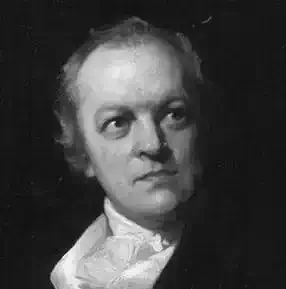
William Blake
The Chimney-Sweeper
The Chimney-Sweeper
When my mother died I was very young,
And my father sold me while yet my tongue
Could scarcely cry 'Weep! weep! weep! weep!'
So your chimneys I sweep, and in soot I sleep.
There's little Tom Dacre, who cried when his head,
That curled like a lamb's back, was shaved; so I said,
'Hush, Tom! never mind it, for, when your head's bare,
You know that the soot cannot spoil your white hair.'
And so he was quiet, and that very night,
As Tom was a-sleeping, he had such a sight! --
That thousands of sweepers, Dick, Joe, Ned, and Jack,
Were all of them locked up in coffins of black.
And by came an angel, who had a bright key,
And he opened the coffins, and let them all free;
Then down a green plain, leaping, laughing, they run,
And wash in a river, and shine in the sun.
Then naked and white, all their bags left behind,
They rise upon clouds, and sport in the wind;
And the Angel told Tom, if he'd be a good boy,
He'd have God for his father, and never want joy.
And so Tom awoke, and we rose in the dark,
And got with our bags and our brushes to work.
Though the morning was cold, Tom was happy and warm:
So, if all do their duty, they need not fear harm.
When my mother died I was very young,
And my father sold me while yet my tongue
Could scarcely cry 'Weep! weep! weep! weep!'
So your chimneys I sweep, and in soot I sleep.
There's little Tom Dacre, who cried when his head,
That curled like a lamb's back, was shaved; so I said,
'Hush, Tom! never mind it, for, when your head's bare,
You know that the soot cannot spoil your white hair.'
And so he was quiet, and that very night,
As Tom was a-sleeping, he had such a sight! --
That thousands of sweepers, Dick, Joe, Ned, and Jack,
Were all of them locked up in coffins of black.
And by came an angel, who had a bright key,
And he opened the coffins, and let them all free;
Then down a green plain, leaping, laughing, they run,
And wash in a river, and shine in the sun.
Then naked and white, all their bags left behind,
They rise upon clouds, and sport in the wind;
And the Angel told Tom, if he'd be a good boy,
He'd have God for his father, and never want joy.
And so Tom awoke, and we rose in the dark,
And got with our bags and our brushes to work.
Though the morning was cold, Tom was happy and warm:
So, if all do their duty, they need not fear harm.
674

Wilfred Owen
Miners
Miners
There was a whispering in my hearth,
A sigh of the coal.
Grown wistful of a former earth
It might recall.
I listened for a tale of leaves
And smothered ferns,
Frond-forests; and the low, sly lives
Before the fawns.
My fire might show steam-phantoms simmer
From Time's old cauldron,
Before the birds made nests in summer,
Or men had children.
But the coals were murmuring of their mine,
And moans down there
Of boys that slept wry sleep, and men
Writhing for air.
And I saw white bones in the cinder-shard,
Bones without number.
For many hearts with coal are charred,
And few remember.
I thought of all that worked dark pits
Of war, and died
Digging the rock where Death reputes
Peace lies indeed.
Comforted years will sit soft-chaired
In rooms of amber;
The years will stretch their hands, well-cheered
By our lifes' ember.
The centuries will burn rich loads
With which we groaned,
Whose warmth shall lull their dreaming lids,
While songs are crooned.
But they will not dream of us poor lads
Left in the ground.
There was a whispering in my hearth,
A sigh of the coal.
Grown wistful of a former earth
It might recall.
I listened for a tale of leaves
And smothered ferns,
Frond-forests; and the low, sly lives
Before the fawns.
My fire might show steam-phantoms simmer
From Time's old cauldron,
Before the birds made nests in summer,
Or men had children.
But the coals were murmuring of their mine,
And moans down there
Of boys that slept wry sleep, and men
Writhing for air.
And I saw white bones in the cinder-shard,
Bones without number.
For many hearts with coal are charred,
And few remember.
I thought of all that worked dark pits
Of war, and died
Digging the rock where Death reputes
Peace lies indeed.
Comforted years will sit soft-chaired
In rooms of amber;
The years will stretch their hands, well-cheered
By our lifes' ember.
The centuries will burn rich loads
With which we groaned,
Whose warmth shall lull their dreaming lids,
While songs are crooned.
But they will not dream of us poor lads
Left in the ground.
244
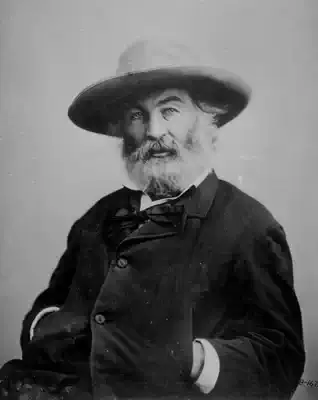
Walt Whitman
The Ox tamer
The Ox tamer
IN a faraway northern county, in the placid, pastoral region,
Lives my farmer friend, the theme of my recitative, a famous Tamer of
Oxen:
There they bring him the three-year-olds and the four-year-olds, to
break them;
He will take the wildest steer in the world, and break him and tame
him;
He will go, fearless, without any whip, where the young bullock
chafes up and down the yard;
The bullock's head tosses restless high in the air, with raging eyes;
Yet, see you! how soon his rage subsides--how soon this Tamer tames
him:
See you! on the farms hereabout, a hundred oxen, young and old--and
he is the man who has tamed them;
They all know him--all are affectionate to him;
See you! some are such beautiful animals--so lofty looking! 10
Some are buff color'd--some mottled--one has a white line running
along his back--some are brindled,
Some have wide flaring horns (a good sign)--See you! the bright
hides;
See, the two with stars on their foreheads--See, the round bodies and
broad backs;
See, how straight and square they stand on their legs--See, what
fine, sagacious eyes;
See, how they watch their Tamer--they wish him near them--how they
turn to look after him!
What yearning expression! how uneasy they are when he moves away from
them:
--Now I marvel what it can be he appears to them, (books, politics,
poems depart--all else departs;)
I confess I envy only his fascination--my silent, illiterate friend,
Whom a hundred oxen love, there in his life on farms,
In the northern county far, in the placid, pastoral region.
IN a faraway northern county, in the placid, pastoral region,
Lives my farmer friend, the theme of my recitative, a famous Tamer of
Oxen:
There they bring him the three-year-olds and the four-year-olds, to
break them;
He will take the wildest steer in the world, and break him and tame
him;
He will go, fearless, without any whip, where the young bullock
chafes up and down the yard;
The bullock's head tosses restless high in the air, with raging eyes;
Yet, see you! how soon his rage subsides--how soon this Tamer tames
him:
See you! on the farms hereabout, a hundred oxen, young and old--and
he is the man who has tamed them;
They all know him--all are affectionate to him;
See you! some are such beautiful animals--so lofty looking! 10
Some are buff color'd--some mottled--one has a white line running
along his back--some are brindled,
Some have wide flaring horns (a good sign)--See you! the bright
hides;
See, the two with stars on their foreheads--See, the round bodies and
broad backs;
See, how straight and square they stand on their legs--See, what
fine, sagacious eyes;
See, how they watch their Tamer--they wish him near them--how they
turn to look after him!
What yearning expression! how uneasy they are when he moves away from
them:
--Now I marvel what it can be he appears to them, (books, politics,
poems depart--all else departs;)
I confess I envy only his fascination--my silent, illiterate friend,
Whom a hundred oxen love, there in his life on farms,
In the northern county far, in the placid, pastoral region.
446
Walt Whitman
Sparkles From The Wheel
Sparkles From The Wheel
WHERE the city's ceaseless crowd moves on, the live-long day,
Withdrawn, I join a group of children watching--I pause aside with
them.
By the curb, toward the edge of the flagging,
A knife-grinder works at his wheel, sharpening a great knife;
Bending over, he carefully holds it to the stone--by foot and knee,
With measur'd tread, he turns rapidly--As he presses with light but
firm hand,
Forth issue, then, in copious golden jets,
Sparkles from the wheel.
The scene, and all its belongings--how they seize and affect me!
The sad, sharp-chinn'd old man, with worn clothes, and broad
shoulder-band of leather; 10
Myself, effusing and fluid--a phantom curiously floating--now here
absorb'd and arrested;
The group, (an unminded point, set in a vast surrounding;)
The attentive, quiet children--the loud, proud, restive base of the
streets;
The low, hoarse purr of the whirling stone--the light-press'd blade,
Diffusing, dropping, sideways-darting, in tiny showers of gold,
Sparkles from the wheel.
WHERE the city's ceaseless crowd moves on, the live-long day,
Withdrawn, I join a group of children watching--I pause aside with
them.
By the curb, toward the edge of the flagging,
A knife-grinder works at his wheel, sharpening a great knife;
Bending over, he carefully holds it to the stone--by foot and knee,
With measur'd tread, he turns rapidly--As he presses with light but
firm hand,
Forth issue, then, in copious golden jets,
Sparkles from the wheel.
The scene, and all its belongings--how they seize and affect me!
The sad, sharp-chinn'd old man, with worn clothes, and broad
shoulder-band of leather; 10
Myself, effusing and fluid--a phantom curiously floating--now here
absorb'd and arrested;
The group, (an unminded point, set in a vast surrounding;)
The attentive, quiet children--the loud, proud, restive base of the
streets;
The low, hoarse purr of the whirling stone--the light-press'd blade,
Diffusing, dropping, sideways-darting, in tiny showers of gold,
Sparkles from the wheel.
469
Walt Whitman
Poems Of Joys
Poems Of Joys
O TO make the most jubilant poem!
Even to set off these, and merge with these, the carols of Death.
O full of music! full of manhood, womanhood, infancy!
Full of common employments! full of grain and trees.
O for the voices of animals! O for the swiftness and balance of
fishes!
O for the dropping of rain-drops in a poem!
O for the sunshine, and motion of waves in a poem.
O the joy of my spirit! it is uncaged! it darts like lightning!
It is not enough to have this globe, or a certain time--I will have
thousands of globes, and all time.
O the engineer's joys! 10
To go with a locomotive!
To hear the hiss of steam--the merry shriek--the steam-whistle--the
laughing locomotive!
To push with resistless way, and speed off in the distance.
O the gleesome saunter over fields and hill-sides!
The leaves and flowers of the commonest weeds--the moist fresh
stillness of the woods,
The exquisite smell of the earth at day-break, and all through the
forenoon.
O the horseman's and horsewoman's joys!
The saddle--the gallop--the pressure upon the seat--the cool gurgling
by the ears and hair.
O the fireman's joys!
I hear the alarm at dead of night, 20
I hear bells--shouts!--I pass the crowd--I run!
The sight of the flames maddens me with pleasure.
O the joy of the strong-brawn'd fighter, towering in the arena, in
perfect condition, conscious of power, thirsting to meet his
opponent.
O the joy of that vast elemental sympathy which only the human Soul
is capable of generating and emitting in steady and limitless
floods.
O the mother's joys!
The watching--the endurance--the precious love--the anguish--the
patiently yielded life.
O the joy of increase, growth, recuperation;
The joy of soothing and pacifying--the joy of concord and harmony.
O to go back to the place where I was born!
To hear the birds sing once more! 30
To ramble about the house and barn, and over the fields, once more,
And through the orchard and along the old lanes once more.
O male and female!
O the presence of women! (I swear there is nothing more exquisite to
me than the mere presence of women;)
O for the girl, my mate! O for the happiness with my mate!
O the young man as I pass! O I am sick after the friendship of him
who, I fear, is indifferent to me.
O the streets of cities!
The flitting faces--the expressions, eyes, feet, costumes! O I cannot
tell how welcome they are to me.
O to have been brought up on bays, lagoons, creeks, or along the
coast!
O to continue and be employ'd there all my life! 40
O the briny and damp smell--the shore--the salt weeds exposed at low
water,
The work of fishermen--the work of the eel-fisher and clam-fisher.
O it is I!
I come with my clam-rake and spade! I come with my eel-spear;
Is the tide out? I join the group of clam-diggers on the flats,
I laugh and work with them--I joke at my work, like a mettlesome
young man.
In winter I take my eel-basket and eel-spear and travel out on foot
on the ice--I have a small axe to cut holes in the ice;
Behold me, well-clothed, going gaily, or returning in the afternoon-my
brood of tough boys accompaning me,
My brood of grown and part-grown boys, who love to be with no one
else so well as they love to be with me,
By day to work with me, and by night to sleep with me. 50
Or, another time, in warm weather, out in a boat, to lift the
lobster-pots, where they are sunk with heavy stones, (I know
the buoys;)
O the sweetness of the Fifth-month morning upon the water, as I row,
just before sunrise, toward the buoys;
I pull the wicker pots up slantingly--the dark-green lobsters are
desperate with their claws, as I take them out--I insert wooden
pegs in the joints of their pincers,
I go to all the places, one after another, and then row back to the
shore,
There, in a huge kettle of boiling water, the lobsters shall be
boil'd till their color becomes scarlet.
Or, another time, mackerel-taking,
Voracious, mad for the hook, near the surface, they seem to fill the
water for miles:
Or, another time, fishing for rock-fish, in Chesapeake Bay--I one of
the brown-faced crew:
Or, another time, trailing for blue-fish off Paumanok, I stand with
braced body,
My left foot is on the gunwale--my right arm throws the coils of
slender rope, 60
In sight around me the quick veering and darting of fifty skiffs, my
companions.
O boating on the rivers!
The voyage down the Niagara, (the St. Lawrence,)--the superb
scenery--the steamers,
The ships sailing--the Thousand Islands--the occasional timber-raft,
and the raftsmen with long-reaching sweep-oars,
The little huts on the rafts, and the stream of smoke when they cook
their supper at evening.
O something pernicious and dread!
Something far away from a puny and pious life!
Something unproved! Something in a trance!
Something escaped from the anchorage, and driving free.
O to work in mines, or forging iron! 70
Foundry casting--the foundry itself--the rude high roof--the ample
and shadow'd space,
The furnace--the hot liquid pour'd out and running.
O to resume the joys of the soldier:
To feel the presence of a brave general! to feel his sympathy!
To behold his calmness! to be warm'd in the rays of his smile!
To go to battle! to hear the bugles play, and the drums beat!
To hear the crash of artillery! to see the glittering of the bayonets
and musket-barrels in the sun!
To see men fall and die, and not complain!
To taste the savage taste of blood! to be so devilish!
To gloat so over the wounds and deaths of the enemy. 80
O the whaleman's joys! O I cruise my old cruise again!
I feel the ship's motion under me--I feel the Atlantic breezes
fanning me,
I hear the cry again sent down from the mast-head--There--she blows!
--Again I spring up the rigging, to look with the rest--We see--we
descend, wild with excitement,
I leap in the lower'd boat--We row toward our prey, where he lies,
We approach, stealthy and silent--I see the mountainous mass,
lethargic, basking,
I see the harpooneer standing up--I see the weapon dart from his
vigorous arm:
O swift, again, now, far out in the ocean, the wounded whale,
settling, running to windward, tows me;
--Again I see him rise to breathe--We row close again,
I see a lance driven through his side, press'd deep, turn'd in the
wound, 90
Again we back off--I see him settle again--the life is leaving him
fast,
As he rises, he spouts blood--I see him swim in circles narrower and
narrower, swiftly cutting the water--I see him die;
He gives one convulsive leap in the centre of the circle, and then
falls flat and still in the bloody foam.
O the old manhood of me, my joy!
My children and grand-children--my white hair and beard,
My largeness, calmness, majesty, out of the long stretch of my life.
O the ripen'd joy of womanhood!
O perfect happiness at last!
I am more than eighty years of age--my hair, too, is pure white--I am
the most venerable mother;
How clear is my mind! how all people draw nigh to me! 100
What attractions are these, beyond any before? what bloom, more than
the bloom of youth?
What beauty is this that descends upon me, and rises out of me?
O the orator's joys!
To inflate the chest--to roll the thunder of the voice out from the
ribs and throat,
To make the people rage, weep, hate, desire, with yourself,
To lead America--to quell America with a great tongue.
O the joy of my soul leaning pois'd on itself--receiving identity
through materials, and loving them--observing characters, and
absorbing them;
O my soul, vibrated back to me, from them--from facts, sight,
hearing, touch, my phrenology, reason, articulation,
comparison, memory, and the like;
The real life of my senses and flesh, transcending my senses and
flesh;
My body, done with materials--my sight, done with my material
eyes; 110
Proved to me this day, beyond cavil, that it is not my material
eyes which finally see,
Nor my material body which finally loves, walks, laughs, shouts,
embraces, procreates.
O the farmer's joys!
Ohioan's, Illinoisian's, Wisconsinese', Kanadian's, Iowan's,
Kansian's, Missourian's, Oregonese' joys;
To rise at peep of day, and pass forth nimbly to work,
To plow land in the fall for winter-sown crops,
To plough land in the spring for maize,
To train orchards--to graft the trees--to gather apples in the fall.
O the pleasure with trees!
The orchard--the forest--the oak, cedar, pine, pekan-tree, 120
The honey-locust, black-walnut, cottonwood, and magnolia.
O Death! the voyage of Death!
The beautiful touch of Death, soothing and benumbing a few moments,
for reasons;
Myself, discharging my excrementitious body, to be burn'd, or
render'd to powder, or buried,
My real body doubtless left to me for other spheres,
My voided body, nothing more to me, returning to the purifications,
further offices, eternal uses of the earth.
O to bathe in the swimming-bath, or in a good place along shore!
To splash the water! to walk ankle-deep--to race naked along the
shore.
O to realize space!
The plenteousness of all--that there are no bounds; 130
To emerge, and be of the sky--of the sun and moon, and the flying
clouds, as one with them.
O the joy of a manly self-hood!
Personality--to be servile to none--to defer to none--not to any
tyrant, known or unknown,
To walk with erect carriage, a step springy and elastic,
To look with calm gaze, or with a flashing eye,
To speak with a full and sonorous voice, out of a broad chest,
To confront with your personality all the other personalities of the
earth.
Know'st thou the excellent joys of youth?
Joys of the dear companions, and of the merry word, and laughing
face?
Joys of the glad, light-beaming day--joy of the wide-breath'd
games? 140
Joy of sweet music--joy of the lighted ball-room, and the dancers?
Joy of the friendly, plenteous dinner--the strong carouse, and
drinking?
Yet, O my soul supreme!
Know'st thou the joys of pensive thought?
Joys of the free and lonesome heart--the tender, gloomy heart?
Joy of the solitary walk--the spirit bowed yet proud--the suffering
and the struggle?
The agonistic throes, the extasies--joys of the solemn musings, day
or night?
Joys of the thought of Death--the great spheres Time and Space?
Prophetic joys of better, loftier love's ideals--the Divine Wife--the
sweet, eternal, perfect Comrade?
Joys all thine own, undying one--joys worthy thee, O Soul. 150
O, while I live, to be the ruler of life--not a slave,
To meet life as a powerful conqueror,
No fumes--no ennui--no more complaints, or scornful criticisms.
O me repellent and ugly!
To these proud laws of the air, the water, and the ground, proving my
interior Soul impregnable,
And nothing exterior shall ever take command of me.
O to attract by more than attraction!
How it is I know not--yet behold! the something which obeys none of
the rest,
It is offensive, never defensive--yet how magnetic it draws.
O joy of suffering! 160
To struggle against great odds! to meet enemies undaunted!
To be entirely alone with them! to find how much one can stand!
To look strife, torture, prison, popular odium, death, face to face!
To mount the scaffold! to advance to the muzzles of guns with perfect
nonchalance!
To be indeed a God!
O, to sail to sea in a ship!
To leave this steady, unendurable land!
To leave the tiresome sameness of the streets, the sidewalks and the
houses;
To leave you, O you solid motionless land, and entering a ship,
To sail, and sail, and sail! 170
O to have my life henceforth a poem of new joys!
To dance, clap hands, exult, shout, skip, leap, roll on, float on,
To be a sailor of the world, bound for all ports,
A ship itself, (see indeed these sails I spread to the sun and air,)
A swift and swelling ship, full of rich words--full of joys.
O TO make the most jubilant poem!
Even to set off these, and merge with these, the carols of Death.
O full of music! full of manhood, womanhood, infancy!
Full of common employments! full of grain and trees.
O for the voices of animals! O for the swiftness and balance of
fishes!
O for the dropping of rain-drops in a poem!
O for the sunshine, and motion of waves in a poem.
O the joy of my spirit! it is uncaged! it darts like lightning!
It is not enough to have this globe, or a certain time--I will have
thousands of globes, and all time.
O the engineer's joys! 10
To go with a locomotive!
To hear the hiss of steam--the merry shriek--the steam-whistle--the
laughing locomotive!
To push with resistless way, and speed off in the distance.
O the gleesome saunter over fields and hill-sides!
The leaves and flowers of the commonest weeds--the moist fresh
stillness of the woods,
The exquisite smell of the earth at day-break, and all through the
forenoon.
O the horseman's and horsewoman's joys!
The saddle--the gallop--the pressure upon the seat--the cool gurgling
by the ears and hair.
O the fireman's joys!
I hear the alarm at dead of night, 20
I hear bells--shouts!--I pass the crowd--I run!
The sight of the flames maddens me with pleasure.
O the joy of the strong-brawn'd fighter, towering in the arena, in
perfect condition, conscious of power, thirsting to meet his
opponent.
O the joy of that vast elemental sympathy which only the human Soul
is capable of generating and emitting in steady and limitless
floods.
O the mother's joys!
The watching--the endurance--the precious love--the anguish--the
patiently yielded life.
O the joy of increase, growth, recuperation;
The joy of soothing and pacifying--the joy of concord and harmony.
O to go back to the place where I was born!
To hear the birds sing once more! 30
To ramble about the house and barn, and over the fields, once more,
And through the orchard and along the old lanes once more.
O male and female!
O the presence of women! (I swear there is nothing more exquisite to
me than the mere presence of women;)
O for the girl, my mate! O for the happiness with my mate!
O the young man as I pass! O I am sick after the friendship of him
who, I fear, is indifferent to me.
O the streets of cities!
The flitting faces--the expressions, eyes, feet, costumes! O I cannot
tell how welcome they are to me.
O to have been brought up on bays, lagoons, creeks, or along the
coast!
O to continue and be employ'd there all my life! 40
O the briny and damp smell--the shore--the salt weeds exposed at low
water,
The work of fishermen--the work of the eel-fisher and clam-fisher.
O it is I!
I come with my clam-rake and spade! I come with my eel-spear;
Is the tide out? I join the group of clam-diggers on the flats,
I laugh and work with them--I joke at my work, like a mettlesome
young man.
In winter I take my eel-basket and eel-spear and travel out on foot
on the ice--I have a small axe to cut holes in the ice;
Behold me, well-clothed, going gaily, or returning in the afternoon-my
brood of tough boys accompaning me,
My brood of grown and part-grown boys, who love to be with no one
else so well as they love to be with me,
By day to work with me, and by night to sleep with me. 50
Or, another time, in warm weather, out in a boat, to lift the
lobster-pots, where they are sunk with heavy stones, (I know
the buoys;)
O the sweetness of the Fifth-month morning upon the water, as I row,
just before sunrise, toward the buoys;
I pull the wicker pots up slantingly--the dark-green lobsters are
desperate with their claws, as I take them out--I insert wooden
pegs in the joints of their pincers,
I go to all the places, one after another, and then row back to the
shore,
There, in a huge kettle of boiling water, the lobsters shall be
boil'd till their color becomes scarlet.
Or, another time, mackerel-taking,
Voracious, mad for the hook, near the surface, they seem to fill the
water for miles:
Or, another time, fishing for rock-fish, in Chesapeake Bay--I one of
the brown-faced crew:
Or, another time, trailing for blue-fish off Paumanok, I stand with
braced body,
My left foot is on the gunwale--my right arm throws the coils of
slender rope, 60
In sight around me the quick veering and darting of fifty skiffs, my
companions.
O boating on the rivers!
The voyage down the Niagara, (the St. Lawrence,)--the superb
scenery--the steamers,
The ships sailing--the Thousand Islands--the occasional timber-raft,
and the raftsmen with long-reaching sweep-oars,
The little huts on the rafts, and the stream of smoke when they cook
their supper at evening.
O something pernicious and dread!
Something far away from a puny and pious life!
Something unproved! Something in a trance!
Something escaped from the anchorage, and driving free.
O to work in mines, or forging iron! 70
Foundry casting--the foundry itself--the rude high roof--the ample
and shadow'd space,
The furnace--the hot liquid pour'd out and running.
O to resume the joys of the soldier:
To feel the presence of a brave general! to feel his sympathy!
To behold his calmness! to be warm'd in the rays of his smile!
To go to battle! to hear the bugles play, and the drums beat!
To hear the crash of artillery! to see the glittering of the bayonets
and musket-barrels in the sun!
To see men fall and die, and not complain!
To taste the savage taste of blood! to be so devilish!
To gloat so over the wounds and deaths of the enemy. 80
O the whaleman's joys! O I cruise my old cruise again!
I feel the ship's motion under me--I feel the Atlantic breezes
fanning me,
I hear the cry again sent down from the mast-head--There--she blows!
--Again I spring up the rigging, to look with the rest--We see--we
descend, wild with excitement,
I leap in the lower'd boat--We row toward our prey, where he lies,
We approach, stealthy and silent--I see the mountainous mass,
lethargic, basking,
I see the harpooneer standing up--I see the weapon dart from his
vigorous arm:
O swift, again, now, far out in the ocean, the wounded whale,
settling, running to windward, tows me;
--Again I see him rise to breathe--We row close again,
I see a lance driven through his side, press'd deep, turn'd in the
wound, 90
Again we back off--I see him settle again--the life is leaving him
fast,
As he rises, he spouts blood--I see him swim in circles narrower and
narrower, swiftly cutting the water--I see him die;
He gives one convulsive leap in the centre of the circle, and then
falls flat and still in the bloody foam.
O the old manhood of me, my joy!
My children and grand-children--my white hair and beard,
My largeness, calmness, majesty, out of the long stretch of my life.
O the ripen'd joy of womanhood!
O perfect happiness at last!
I am more than eighty years of age--my hair, too, is pure white--I am
the most venerable mother;
How clear is my mind! how all people draw nigh to me! 100
What attractions are these, beyond any before? what bloom, more than
the bloom of youth?
What beauty is this that descends upon me, and rises out of me?
O the orator's joys!
To inflate the chest--to roll the thunder of the voice out from the
ribs and throat,
To make the people rage, weep, hate, desire, with yourself,
To lead America--to quell America with a great tongue.
O the joy of my soul leaning pois'd on itself--receiving identity
through materials, and loving them--observing characters, and
absorbing them;
O my soul, vibrated back to me, from them--from facts, sight,
hearing, touch, my phrenology, reason, articulation,
comparison, memory, and the like;
The real life of my senses and flesh, transcending my senses and
flesh;
My body, done with materials--my sight, done with my material
eyes; 110
Proved to me this day, beyond cavil, that it is not my material
eyes which finally see,
Nor my material body which finally loves, walks, laughs, shouts,
embraces, procreates.
O the farmer's joys!
Ohioan's, Illinoisian's, Wisconsinese', Kanadian's, Iowan's,
Kansian's, Missourian's, Oregonese' joys;
To rise at peep of day, and pass forth nimbly to work,
To plow land in the fall for winter-sown crops,
To plough land in the spring for maize,
To train orchards--to graft the trees--to gather apples in the fall.
O the pleasure with trees!
The orchard--the forest--the oak, cedar, pine, pekan-tree, 120
The honey-locust, black-walnut, cottonwood, and magnolia.
O Death! the voyage of Death!
The beautiful touch of Death, soothing and benumbing a few moments,
for reasons;
Myself, discharging my excrementitious body, to be burn'd, or
render'd to powder, or buried,
My real body doubtless left to me for other spheres,
My voided body, nothing more to me, returning to the purifications,
further offices, eternal uses of the earth.
O to bathe in the swimming-bath, or in a good place along shore!
To splash the water! to walk ankle-deep--to race naked along the
shore.
O to realize space!
The plenteousness of all--that there are no bounds; 130
To emerge, and be of the sky--of the sun and moon, and the flying
clouds, as one with them.
O the joy of a manly self-hood!
Personality--to be servile to none--to defer to none--not to any
tyrant, known or unknown,
To walk with erect carriage, a step springy and elastic,
To look with calm gaze, or with a flashing eye,
To speak with a full and sonorous voice, out of a broad chest,
To confront with your personality all the other personalities of the
earth.
Know'st thou the excellent joys of youth?
Joys of the dear companions, and of the merry word, and laughing
face?
Joys of the glad, light-beaming day--joy of the wide-breath'd
games? 140
Joy of sweet music--joy of the lighted ball-room, and the dancers?
Joy of the friendly, plenteous dinner--the strong carouse, and
drinking?
Yet, O my soul supreme!
Know'st thou the joys of pensive thought?
Joys of the free and lonesome heart--the tender, gloomy heart?
Joy of the solitary walk--the spirit bowed yet proud--the suffering
and the struggle?
The agonistic throes, the extasies--joys of the solemn musings, day
or night?
Joys of the thought of Death--the great spheres Time and Space?
Prophetic joys of better, loftier love's ideals--the Divine Wife--the
sweet, eternal, perfect Comrade?
Joys all thine own, undying one--joys worthy thee, O Soul. 150
O, while I live, to be the ruler of life--not a slave,
To meet life as a powerful conqueror,
No fumes--no ennui--no more complaints, or scornful criticisms.
O me repellent and ugly!
To these proud laws of the air, the water, and the ground, proving my
interior Soul impregnable,
And nothing exterior shall ever take command of me.
O to attract by more than attraction!
How it is I know not--yet behold! the something which obeys none of
the rest,
It is offensive, never defensive--yet how magnetic it draws.
O joy of suffering! 160
To struggle against great odds! to meet enemies undaunted!
To be entirely alone with them! to find how much one can stand!
To look strife, torture, prison, popular odium, death, face to face!
To mount the scaffold! to advance to the muzzles of guns with perfect
nonchalance!
To be indeed a God!
O, to sail to sea in a ship!
To leave this steady, unendurable land!
To leave the tiresome sameness of the streets, the sidewalks and the
houses;
To leave you, O you solid motionless land, and entering a ship,
To sail, and sail, and sail! 170
O to have my life henceforth a poem of new joys!
To dance, clap hands, exult, shout, skip, leap, roll on, float on,
To be a sailor of the world, bound for all ports,
A ship itself, (see indeed these sails I spread to the sun and air,)
A swift and swelling ship, full of rich words--full of joys.
577
Walt Whitman
I Hear America Singing
I Hear America Singing
I Hear America singing, the varied carols I hear;
Those of mechanics--each one singing his, as it should be, blithe and strong;
The carpenter singing his, as he measures his plank or beam,
The mason singing his, as he makes ready for work, or leaves off work;
The boatman singing what belongs to him in his boat--the deckhand singing on the
steamboat deck;
The shoemaker singing as he sits on his bench--the hatter singing as he stands;
The wood-cutter's song--the ploughboy's, on his way in the morning, or at the noon
intermission, or at sundown;
The delicious singing of the mother--or of the young wife at work--or of the girl
sewing or washing--Each singing what belongs to her, and to none else;
The day what belongs to the day--At night, the party of young fellows, robust,
friendly,
Singing, with open mouths, their strong melodious songs.
I Hear America singing, the varied carols I hear;
Those of mechanics--each one singing his, as it should be, blithe and strong;
The carpenter singing his, as he measures his plank or beam,
The mason singing his, as he makes ready for work, or leaves off work;
The boatman singing what belongs to him in his boat--the deckhand singing on the
steamboat deck;
The shoemaker singing as he sits on his bench--the hatter singing as he stands;
The wood-cutter's song--the ploughboy's, on his way in the morning, or at the noon
intermission, or at sundown;
The delicious singing of the mother--or of the young wife at work--or of the girl
sewing or washing--Each singing what belongs to her, and to none else;
The day what belongs to the day--At night, the party of young fellows, robust,
friendly,
Singing, with open mouths, their strong melodious songs.
536
Walt Whitman
Debris
Debris
HE is wisest who has the most caution,
He only wins who goes far enough.
Any thing is as good as established, when that is established that
will produce it and continue it.
HE is wisest who has the most caution,
He only wins who goes far enough.
Any thing is as good as established, when that is established that
will produce it and continue it.
483
Walt Whitman
Carol Of Occupations
Carol Of Occupations
COME closer to me;
Push close, my lovers, and take the best I possess;
Yield closer and closer, and give me the best you possess.
This is unfinish'd business with me--How is it with you?
(I was chill'd with the cold types, cylinder, wet paper between us.)
Male and Female!
I pass so poorly with paper and types, I must pass with the contact
of bodies and souls.
American masses!
I do not thank you for liking me as I am, and liking the touch of
me--I know that it is good for you to do so.
This is the carol of occupations; 10
In the labor of engines and trades, and the labor of fields, I find the developments,
And find the eternal meanings.
Workmen and Workwomen!
Were all educations, practical and ornamental, well display'd out of
me, what would it amount to?
Were I as the head teacher, charitable proprietor, wise statesman,
what would it amount to?
Were I to you as the boss employing and paying you, would that
satisfy you?
The learn'd, virtuous, benevolent, and the usual terms;
A man like me, and never the usual terms.
Neither a servant nor a master am I;
I take no sooner a large price than a small price--I will have my
own, whoever enjoys me; 20
I will be even with you, and you shall be even with me.
If you stand at work in a shop, I stand as nigh as the nighest in the
same shop;
If you bestow gifts on your brother or dearest friend, I demand as
good as your brother or dearest friend;
If your lover, husband, wife, is welcome by day or night, I must be
personally as welcome;
If you become degraded, criminal, ill, then I become so for your
sake;
If you remember your foolish and outlaw'd deeds, do you think I
cannot remember my own foolish and outlaw'd deeds?
If you carouse at the table, I carouse at the opposite side of the
table;
If you meet some stranger in the streets, and love him or her--why I
often meet strangers in the street, and love them.
Why, what have you thought of yourself?
Is it you then that thought yourself less? 30
Is it you that thought the President greater than you?
Or the rich better off than you? or the educated wiser than you?
Because you are greasy or pimpled, or that you were once drunk, or a
thief,
Or diseas'd, or rheumatic, or a prostitute--or are so now;
Or from frivolity or impotence, or that you are no scholar, and never
saw your name in print,
Do you give in that you are any less immortal?
Souls of men and women! it is not you I call unseen, unheard,
untouchable and untouching;
It is not you I go argue pro and con about, and to settle whether you
are alive or no;
I own publicly who you are, if nobody else owns.
Grown, half-grown, and babe, of this country and every country, indoors
and out-doors, one just as much as the other, I see, 40
And all else behind or through them.
The wife--and she is not one jot less than the husband;
The daughter--and she is just as good as the son;
The mother--and she is every bit as much as the father.
Offspring of ignorant and poor, boys apprenticed to trades,
Young fellows working on farms, and old fellows working on farms,
Sailor-men, merchant-men, coasters, immigrants,
All these I see--but nigher and farther the same I see;
None shall escape me, and none shall wish to escape me.
I bring what you much need, yet always have, 50
Not money, amours, dress, eating, but as good;
I send no agent or medium, offer no representative of value, but
offer the value itself.
There is something that comes home to one now and perpetually;
It is not what is printed, preach'd, discussed--it eludes discussion
and print;
It is not to be put in a book--it is not in this book;
It is for you, whoever you are--it is no farther from you than your
hearing and sight are from you;
It is hinted by nearest, commonest, readiest--it is ever provoked by
them.
You may read in many languages, yet read nothing about it;
You may read the President's Message, and read nothing about it
there;
Nothing in the reports from the State department or Treasury
department, or in the daily papers or the weekly papers, 60
Or in the census or revenue returns, prices current, or any accounts
of stock.
The sun and stars that float in the open air;
The apple-shaped earth, and we upon it--surely the drift of them is
something grand!
I do not know what it is, except that it is grand, and that it is
happiness,
And that the enclosing purport of us here is not a speculation, or
bon-mot, or reconnoissance,
And that it is not something which by luck may turn out well for us,
and without luck must be a failure for us,
And not something which may yet be retracted in a certain
contingency.
The light and shade, the curious sense of body and identity, the
greed that with perfect complaisance devours all things, the
endless pride and out-stretching of man, unspeakable joys and
sorrows,
The wonder every one sees in every one else he sees, and the wonders
that fill each minute of time forever,
What have you reckon'd them for, camerado? 70
Have you reckon'd them for a trade, or farm-work? or for the profits
of a store?
Or to achieve yourself a position? or to fill a gentleman's leisure,
or a lady's leisure?
Have you reckon'd the landscape took substance and form that it might
be painted in a picture?
Or men and women that they might be written of, and songs sung?
Or the attraction of gravity, and the great laws and harmonious
combinations, and the fluids of the air, as subjects for the
savans?
Or the brown land and the blue sea for maps and charts?
Or the stars to be put in constellations and named fancy names?
Or that the growth of seeds is for agricultural tables, or
agriculture itself?
Old institutions--these arts, libraries, legends, collections, and
the practice handed along in manufactures--will we rate them so
high?
Will we rate our cash and business high?--I have no objection; 80
I rate them as high as the highest--then a child born of a woman and
man I rate beyond all rate.
We thought our Union grand, and our Constitution grand;
I do not say they are not grand and good, for they are;
I am this day just as much in love with them as you;
Then I am in love with you, and with all my fellows upon the earth.
We consider bibles and religions divine--I do not say they are not
divine;
I say they have all grown out of you, and may grow out of you still;
It is not they who give the life--it is you who give the life;
Leaves are not more shed from the trees, or trees from the earth,
than they are shed out of you.
When the psalm sings instead of the singer; 90
When the script preaches instead of the preacher;
When the pulpit descends and goes, instead of the carver that carved
the supporting desk;
When I can touch the body of books, by night or by day, and when they
touch my body back again;
When a university course convinces, like a slumbering woman and child
convince;
When the minted gold in the vault smiles like the night-watchman's
daughter;
When warrantee deeds loafe in chairs opposite, and are my friendly
companions;
I intend to reach them my hand, and make as much of them as I do of
men and women like you.
The sum of all known reverence I add up in you, whoever you are;
The President is there in the White House for you--it is not you who
are here for him;
The Secretaries act in their bureaus for you--not you here for
them; 100
The Congress convenes every Twelfth-month for you;
Laws, courts, the forming of States, the charters of cities, the
going and coming of commerce and mails, are all for you.
List close, my scholars dear!
All doctrines, all politics and civilization, exurge from you;
All sculpture and monuments, and anything inscribed anywhere, are
tallied in you;
The gist of histories and statistics as far back as the records
reach, is in you this hour, and myths and tales the same;
If you were not breathing and walking here, where would they all be?
The most renown'd poems would be ashes, orations and plays would be
vacuums.
All architecture is what you do to it when you look upon it;
(Did you think it was in the white or gray stone? or the lines of the
arches and cornices?) 110
All music is what awakes from you when you are reminded by the
instruments;
It is not the violins and the cornets--it is not the oboe nor the
beating drums, nor the score of the baritone singer singing
his sweet romanza--nor that of the men's chorus, nor that of
the women's chorus,
It is nearer and farther than they.
Will the whole come back then?
Can each see signs of the best by a look in the looking-glass? is
there nothing greater or more?
Does all sit there with you, with the mystic, unseen Soul?
Strange and hard that paradox true I give;
Objects gross and the unseen Soul are one.
House-building, measuring, sawing the boards;
Blacksmithing, glass-blowing, nail-making, coopering, tin-roofing,
shingle-dressing, 120
Ship-joining, dock-building, fish-curing, ferrying, flagging of sidewalks
by flaggers,
The pump, the pile-driver, the great derrick, the coal-kiln and
brick-kiln,
Coal-mines, and all that is down there,--the lamps in the darkness,
echoes, songs, what meditations, what vast native thoughts
looking through smutch'd faces,
Iron-works, forge-fires in the mountains, or by the river-banks--men
around feeling the melt with huge crowbars--lumps of ore, the
due combining of ore, limestone, coal--the blast-furnace and
the puddling-furnace, the loup-lump at the bottom of the melt
at last--the rolling-mill, the stumpy bars of pig-iron, the
strong, clean-shaped T-rail for railroads;
Oil-works, silk-works, white-lead-works, the sugar-house, steam-saws,
the great mills and factories;
Stone-cutting, shapely trimmings for façades, or window or doorlintels--
the mallet, the tooth-chisel, the jib to protect the
thumb,
Oakum, the oakum-chisel, the caulking-iron--the kettle of boiling
vault-cement, and the fire under the kettle,
The cotton-bale, the stevedore's hook, the saw and buck of the
sawyer, the mould of the moulder, the working-knife of the
butcher, the ice-saw, and all the work with ice,
The implements for daguerreotyping--the tools of the rigger,
grappler, sail-maker, block-maker,
Goods of gutta-percha, papier-maché, colors, brushes, brush-making,
glazier's implements, 130
O you robust, sacred!
I cannot tell you how I love you;
All I love America for, is contained in men and women like you.
The veneer and glue-pot, the confectioner's ornaments, the decanter
and glasses, the shears and flat-iron,
The awl and knee-strap, the pint measure and quart measure, the
counter and stool, the writing-pen of quill or metal--the
making of all sorts of edged tools,
The brewery, brewing, the malt, the vats, every thing that is done by
brewers, also by wine-makers, also vinegar-makers,
Leather-dressing, coach-making, boiler-making, rope-twisting,
distilling, sign-painting, lime-burning, cotton-picking-electro-
plating, electrotyping, stereotyping,
Stave-machines, planing-machines, reaping-machines, ploughing
machines, thrashing-machines, steam wagons,
The cart of the carman, the omnibus, the ponderous dray;
Pyrotechny, letting off color'd fire-works at night, fancy figures
and jets;
Beef on the butcher's stall, the slaughter-house of the butcher, the
butcher in his killing-clothes,
The pens of live pork, the killing-hammer, the hog-hook, the
scalder's tub, gutting, the cutter's cleaver, the packer's
maul, and the plenteous winter-work of pork-packing;
Flour-works, grinding of wheat, rye, maize, rice--the barrels and the
half and quarter barrels, the loaded barges, the high piles on
wharves and levees; 140
The men, and the work of the men, on railroads, coasters, fish-boats,
canals;
The daily routine of your own or any man's life--the shop, yard,
store, or factory;
These shows all near you by day and night--workman! whoever you are,
your daily life!
In that and them the heft of the heaviest--in them far more than you
estimated, and far less also;
In them realities for you and me--in them poems for you and me;
In them, not yourself--you and your Soul enclose all things,
regardless of estimation;
In them the development good--in them, all themes and hints.
I do not affirm what you see beyond is futile--I do not advise you to
stop;
I do not say leadings you thought great are not great;
But I say that none lead to greater, than those lead to. 150
Will you seek afar off? you surely come back at last,
In things best known to you, finding the best, or as good as the
best,
In folks nearest to you finding the sweetest, strongest, lovingest;
Happiness, knowledge, not in another place, but this place--not for
another hour, but this hour;
Man in the first you see or touch--always in friend, brother, nighest
neighbor--Woman in mother, lover, wife;
The popular tastes and employments taking precedence in poems or any
where,
You workwomen and workmen of These States having your own divine and
strong life,
And all else giving place to men and women like you.
COME closer to me;
Push close, my lovers, and take the best I possess;
Yield closer and closer, and give me the best you possess.
This is unfinish'd business with me--How is it with you?
(I was chill'd with the cold types, cylinder, wet paper between us.)
Male and Female!
I pass so poorly with paper and types, I must pass with the contact
of bodies and souls.
American masses!
I do not thank you for liking me as I am, and liking the touch of
me--I know that it is good for you to do so.
This is the carol of occupations; 10
In the labor of engines and trades, and the labor of fields, I find the developments,
And find the eternal meanings.
Workmen and Workwomen!
Were all educations, practical and ornamental, well display'd out of
me, what would it amount to?
Were I as the head teacher, charitable proprietor, wise statesman,
what would it amount to?
Were I to you as the boss employing and paying you, would that
satisfy you?
The learn'd, virtuous, benevolent, and the usual terms;
A man like me, and never the usual terms.
Neither a servant nor a master am I;
I take no sooner a large price than a small price--I will have my
own, whoever enjoys me; 20
I will be even with you, and you shall be even with me.
If you stand at work in a shop, I stand as nigh as the nighest in the
same shop;
If you bestow gifts on your brother or dearest friend, I demand as
good as your brother or dearest friend;
If your lover, husband, wife, is welcome by day or night, I must be
personally as welcome;
If you become degraded, criminal, ill, then I become so for your
sake;
If you remember your foolish and outlaw'd deeds, do you think I
cannot remember my own foolish and outlaw'd deeds?
If you carouse at the table, I carouse at the opposite side of the
table;
If you meet some stranger in the streets, and love him or her--why I
often meet strangers in the street, and love them.
Why, what have you thought of yourself?
Is it you then that thought yourself less? 30
Is it you that thought the President greater than you?
Or the rich better off than you? or the educated wiser than you?
Because you are greasy or pimpled, or that you were once drunk, or a
thief,
Or diseas'd, or rheumatic, or a prostitute--or are so now;
Or from frivolity or impotence, or that you are no scholar, and never
saw your name in print,
Do you give in that you are any less immortal?
Souls of men and women! it is not you I call unseen, unheard,
untouchable and untouching;
It is not you I go argue pro and con about, and to settle whether you
are alive or no;
I own publicly who you are, if nobody else owns.
Grown, half-grown, and babe, of this country and every country, indoors
and out-doors, one just as much as the other, I see, 40
And all else behind or through them.
The wife--and she is not one jot less than the husband;
The daughter--and she is just as good as the son;
The mother--and she is every bit as much as the father.
Offspring of ignorant and poor, boys apprenticed to trades,
Young fellows working on farms, and old fellows working on farms,
Sailor-men, merchant-men, coasters, immigrants,
All these I see--but nigher and farther the same I see;
None shall escape me, and none shall wish to escape me.
I bring what you much need, yet always have, 50
Not money, amours, dress, eating, but as good;
I send no agent or medium, offer no representative of value, but
offer the value itself.
There is something that comes home to one now and perpetually;
It is not what is printed, preach'd, discussed--it eludes discussion
and print;
It is not to be put in a book--it is not in this book;
It is for you, whoever you are--it is no farther from you than your
hearing and sight are from you;
It is hinted by nearest, commonest, readiest--it is ever provoked by
them.
You may read in many languages, yet read nothing about it;
You may read the President's Message, and read nothing about it
there;
Nothing in the reports from the State department or Treasury
department, or in the daily papers or the weekly papers, 60
Or in the census or revenue returns, prices current, or any accounts
of stock.
The sun and stars that float in the open air;
The apple-shaped earth, and we upon it--surely the drift of them is
something grand!
I do not know what it is, except that it is grand, and that it is
happiness,
And that the enclosing purport of us here is not a speculation, or
bon-mot, or reconnoissance,
And that it is not something which by luck may turn out well for us,
and without luck must be a failure for us,
And not something which may yet be retracted in a certain
contingency.
The light and shade, the curious sense of body and identity, the
greed that with perfect complaisance devours all things, the
endless pride and out-stretching of man, unspeakable joys and
sorrows,
The wonder every one sees in every one else he sees, and the wonders
that fill each minute of time forever,
What have you reckon'd them for, camerado? 70
Have you reckon'd them for a trade, or farm-work? or for the profits
of a store?
Or to achieve yourself a position? or to fill a gentleman's leisure,
or a lady's leisure?
Have you reckon'd the landscape took substance and form that it might
be painted in a picture?
Or men and women that they might be written of, and songs sung?
Or the attraction of gravity, and the great laws and harmonious
combinations, and the fluids of the air, as subjects for the
savans?
Or the brown land and the blue sea for maps and charts?
Or the stars to be put in constellations and named fancy names?
Or that the growth of seeds is for agricultural tables, or
agriculture itself?
Old institutions--these arts, libraries, legends, collections, and
the practice handed along in manufactures--will we rate them so
high?
Will we rate our cash and business high?--I have no objection; 80
I rate them as high as the highest--then a child born of a woman and
man I rate beyond all rate.
We thought our Union grand, and our Constitution grand;
I do not say they are not grand and good, for they are;
I am this day just as much in love with them as you;
Then I am in love with you, and with all my fellows upon the earth.
We consider bibles and religions divine--I do not say they are not
divine;
I say they have all grown out of you, and may grow out of you still;
It is not they who give the life--it is you who give the life;
Leaves are not more shed from the trees, or trees from the earth,
than they are shed out of you.
When the psalm sings instead of the singer; 90
When the script preaches instead of the preacher;
When the pulpit descends and goes, instead of the carver that carved
the supporting desk;
When I can touch the body of books, by night or by day, and when they
touch my body back again;
When a university course convinces, like a slumbering woman and child
convince;
When the minted gold in the vault smiles like the night-watchman's
daughter;
When warrantee deeds loafe in chairs opposite, and are my friendly
companions;
I intend to reach them my hand, and make as much of them as I do of
men and women like you.
The sum of all known reverence I add up in you, whoever you are;
The President is there in the White House for you--it is not you who
are here for him;
The Secretaries act in their bureaus for you--not you here for
them; 100
The Congress convenes every Twelfth-month for you;
Laws, courts, the forming of States, the charters of cities, the
going and coming of commerce and mails, are all for you.
List close, my scholars dear!
All doctrines, all politics and civilization, exurge from you;
All sculpture and monuments, and anything inscribed anywhere, are
tallied in you;
The gist of histories and statistics as far back as the records
reach, is in you this hour, and myths and tales the same;
If you were not breathing and walking here, where would they all be?
The most renown'd poems would be ashes, orations and plays would be
vacuums.
All architecture is what you do to it when you look upon it;
(Did you think it was in the white or gray stone? or the lines of the
arches and cornices?) 110
All music is what awakes from you when you are reminded by the
instruments;
It is not the violins and the cornets--it is not the oboe nor the
beating drums, nor the score of the baritone singer singing
his sweet romanza--nor that of the men's chorus, nor that of
the women's chorus,
It is nearer and farther than they.
Will the whole come back then?
Can each see signs of the best by a look in the looking-glass? is
there nothing greater or more?
Does all sit there with you, with the mystic, unseen Soul?
Strange and hard that paradox true I give;
Objects gross and the unseen Soul are one.
House-building, measuring, sawing the boards;
Blacksmithing, glass-blowing, nail-making, coopering, tin-roofing,
shingle-dressing, 120
Ship-joining, dock-building, fish-curing, ferrying, flagging of sidewalks
by flaggers,
The pump, the pile-driver, the great derrick, the coal-kiln and
brick-kiln,
Coal-mines, and all that is down there,--the lamps in the darkness,
echoes, songs, what meditations, what vast native thoughts
looking through smutch'd faces,
Iron-works, forge-fires in the mountains, or by the river-banks--men
around feeling the melt with huge crowbars--lumps of ore, the
due combining of ore, limestone, coal--the blast-furnace and
the puddling-furnace, the loup-lump at the bottom of the melt
at last--the rolling-mill, the stumpy bars of pig-iron, the
strong, clean-shaped T-rail for railroads;
Oil-works, silk-works, white-lead-works, the sugar-house, steam-saws,
the great mills and factories;
Stone-cutting, shapely trimmings for façades, or window or doorlintels--
the mallet, the tooth-chisel, the jib to protect the
thumb,
Oakum, the oakum-chisel, the caulking-iron--the kettle of boiling
vault-cement, and the fire under the kettle,
The cotton-bale, the stevedore's hook, the saw and buck of the
sawyer, the mould of the moulder, the working-knife of the
butcher, the ice-saw, and all the work with ice,
The implements for daguerreotyping--the tools of the rigger,
grappler, sail-maker, block-maker,
Goods of gutta-percha, papier-maché, colors, brushes, brush-making,
glazier's implements, 130
O you robust, sacred!
I cannot tell you how I love you;
All I love America for, is contained in men and women like you.
The veneer and glue-pot, the confectioner's ornaments, the decanter
and glasses, the shears and flat-iron,
The awl and knee-strap, the pint measure and quart measure, the
counter and stool, the writing-pen of quill or metal--the
making of all sorts of edged tools,
The brewery, brewing, the malt, the vats, every thing that is done by
brewers, also by wine-makers, also vinegar-makers,
Leather-dressing, coach-making, boiler-making, rope-twisting,
distilling, sign-painting, lime-burning, cotton-picking-electro-
plating, electrotyping, stereotyping,
Stave-machines, planing-machines, reaping-machines, ploughing
machines, thrashing-machines, steam wagons,
The cart of the carman, the omnibus, the ponderous dray;
Pyrotechny, letting off color'd fire-works at night, fancy figures
and jets;
Beef on the butcher's stall, the slaughter-house of the butcher, the
butcher in his killing-clothes,
The pens of live pork, the killing-hammer, the hog-hook, the
scalder's tub, gutting, the cutter's cleaver, the packer's
maul, and the plenteous winter-work of pork-packing;
Flour-works, grinding of wheat, rye, maize, rice--the barrels and the
half and quarter barrels, the loaded barges, the high piles on
wharves and levees; 140
The men, and the work of the men, on railroads, coasters, fish-boats,
canals;
The daily routine of your own or any man's life--the shop, yard,
store, or factory;
These shows all near you by day and night--workman! whoever you are,
your daily life!
In that and them the heft of the heaviest--in them far more than you
estimated, and far less also;
In them realities for you and me--in them poems for you and me;
In them, not yourself--you and your Soul enclose all things,
regardless of estimation;
In them the development good--in them, all themes and hints.
I do not affirm what you see beyond is futile--I do not advise you to
stop;
I do not say leadings you thought great are not great;
But I say that none lead to greater, than those lead to. 150
Will you seek afar off? you surely come back at last,
In things best known to you, finding the best, or as good as the
best,
In folks nearest to you finding the sweetest, strongest, lovingest;
Happiness, knowledge, not in another place, but this place--not for
another hour, but this hour;
Man in the first you see or touch--always in friend, brother, nighest
neighbor--Woman in mother, lover, wife;
The popular tastes and employments taking precedence in poems or any
where,
You workwomen and workmen of These States having your own divine and
strong life,
And all else giving place to men and women like you.
484
Walt Whitman
Brother Of All, With Genesrous Hand
Brother Of All, With Genesrous Hand
BROTHER of all, with generous hand,
Of thee, pondering on thee, as o'er thy tomb, I and my Soul,
A thought to launch in memory of thee,
A burial verse for thee.
What may we chant, O thou within this tomb?
What tablets, pictures, hang for thee, O millionaire?
--The life thou lived'st we know not,
But that thou walk'dst thy years in barter, 'mid the haunts of
brokers;
Nor heroism thine, nor war, nor glory.
Yet lingering, yearning, joining soul with thine, 10
If not thy past we chant, we chant the future,
Select, adorn the future.
Lo, Soul, the graves of heroes!
The pride of lands--the gratitudes of men,
The statues of the manifold famous dead, Old World and New,
The kings, inventors, generals, poets, (stretch wide thy vision,
Soul,)
The excellent rulers of the races, great discoverers, sailors,
Marble and brass select from them, with pictures, scenes,
(The histories of the lands, the races, bodied there,
In what they've built for, graced and graved, 20
Monuments to their heroes.)
Silent, my Soul,
With drooping lids, as waiting, ponder'd,
Turning from all the samples, all the monuments of heroes.
While through the interior vistas,
Noiseless uprose, phantasmic (as, by night, Auroras of the North,)
Lambent tableaux, prophetic, bodiless scenes,
Spiritual projections.
In one, among the city streets, a laborer's home appear'd,
After his day's work done, cleanly, sweet-air'd, the gaslight
burning, 30
The carpet swept, and a fire in the cheerful stove.
In one, the sacred parturition scene,
A happy, painless mother birth'd a perfect child.
In one, at a bounteous morning meal,
Sat peaceful parents, with contented sons.
In one, by twos and threes, young people,
Hundreds concentering, walk'd the paths and streets and roads,
Toward a tall-domed school.
In one a trio, beautiful,
Grandmother, loving daughter, loving daughter's daughter, sat, 40
Chatting and sewing.
In one, along a suite of noble rooms,
'Mid plenteous books and journals, paintings on the walls, fine
statuettes,
Were groups of friendly journeymen, mechanics, young and old,
Reading, conversing.
All, all the shows of laboring life,
City and country, women's, men's and children's,
Their wants provided for, hued in the sun, and tinged for once with
joy,
Marriage, the street, the factory, farm, the house-room, lodgingroom,
Labor and toil, the bath, gymnasium, play-ground, library,
college, 50
The student, boy or girl, led forward to be taught;
The sick cared for, the shoeless shod--the orphan father'd and
mother'd,
The hungry fed, the houseless housed;
(The intentions perfect and divine,
The workings, details, haply human.)
O thou within this tomb,
From thee, such scenes--thou stintless, lavish Giver,
Tallying the gifts of Earth--large as the Earth,
Thy name an Earth, with mountains, fields and rivers.
Nor by your streams alone, you rivers, 60
By you, your banks, Connecticut,
By you, and all your teeming life, Old Thames,
By you, Potomac, laving the ground Washington trod--by you Patapsco,
You, Hudson--you, endless Mississippi--not by you alone,
But to the high seas launch, my thought, his memory.
Lo, Soul, by this tomb's lambency,
The darkness of the arrogant standards of the world,
With all its flaunting aims, ambitions, pleasures.
(Old, commonplace, and rusty saws,
The rich, the gay, the supercilious, smiled at long, 70
Now, piercing to the marrow in my bones,
Fused with each drop my heart's blood jets,
Swim in ineffable meaning.)
Lo, Soul, the sphere requireth, portioneth,
To each his share, his measure,
The moderate to the moderate, the ample to the ample.
Lo, Soul, see'st thou not, plain as the sun,
The only real wealth of wealth in generosity,
The only life of life in goodness?
BROTHER of all, with generous hand,
Of thee, pondering on thee, as o'er thy tomb, I and my Soul,
A thought to launch in memory of thee,
A burial verse for thee.
What may we chant, O thou within this tomb?
What tablets, pictures, hang for thee, O millionaire?
--The life thou lived'st we know not,
But that thou walk'dst thy years in barter, 'mid the haunts of
brokers;
Nor heroism thine, nor war, nor glory.
Yet lingering, yearning, joining soul with thine, 10
If not thy past we chant, we chant the future,
Select, adorn the future.
Lo, Soul, the graves of heroes!
The pride of lands--the gratitudes of men,
The statues of the manifold famous dead, Old World and New,
The kings, inventors, generals, poets, (stretch wide thy vision,
Soul,)
The excellent rulers of the races, great discoverers, sailors,
Marble and brass select from them, with pictures, scenes,
(The histories of the lands, the races, bodied there,
In what they've built for, graced and graved, 20
Monuments to their heroes.)
Silent, my Soul,
With drooping lids, as waiting, ponder'd,
Turning from all the samples, all the monuments of heroes.
While through the interior vistas,
Noiseless uprose, phantasmic (as, by night, Auroras of the North,)
Lambent tableaux, prophetic, bodiless scenes,
Spiritual projections.
In one, among the city streets, a laborer's home appear'd,
After his day's work done, cleanly, sweet-air'd, the gaslight
burning, 30
The carpet swept, and a fire in the cheerful stove.
In one, the sacred parturition scene,
A happy, painless mother birth'd a perfect child.
In one, at a bounteous morning meal,
Sat peaceful parents, with contented sons.
In one, by twos and threes, young people,
Hundreds concentering, walk'd the paths and streets and roads,
Toward a tall-domed school.
In one a trio, beautiful,
Grandmother, loving daughter, loving daughter's daughter, sat, 40
Chatting and sewing.
In one, along a suite of noble rooms,
'Mid plenteous books and journals, paintings on the walls, fine
statuettes,
Were groups of friendly journeymen, mechanics, young and old,
Reading, conversing.
All, all the shows of laboring life,
City and country, women's, men's and children's,
Their wants provided for, hued in the sun, and tinged for once with
joy,
Marriage, the street, the factory, farm, the house-room, lodgingroom,
Labor and toil, the bath, gymnasium, play-ground, library,
college, 50
The student, boy or girl, led forward to be taught;
The sick cared for, the shoeless shod--the orphan father'd and
mother'd,
The hungry fed, the houseless housed;
(The intentions perfect and divine,
The workings, details, haply human.)
O thou within this tomb,
From thee, such scenes--thou stintless, lavish Giver,
Tallying the gifts of Earth--large as the Earth,
Thy name an Earth, with mountains, fields and rivers.
Nor by your streams alone, you rivers, 60
By you, your banks, Connecticut,
By you, and all your teeming life, Old Thames,
By you, Potomac, laving the ground Washington trod--by you Patapsco,
You, Hudson--you, endless Mississippi--not by you alone,
But to the high seas launch, my thought, his memory.
Lo, Soul, by this tomb's lambency,
The darkness of the arrogant standards of the world,
With all its flaunting aims, ambitions, pleasures.
(Old, commonplace, and rusty saws,
The rich, the gay, the supercilious, smiled at long, 70
Now, piercing to the marrow in my bones,
Fused with each drop my heart's blood jets,
Swim in ineffable meaning.)
Lo, Soul, the sphere requireth, portioneth,
To each his share, his measure,
The moderate to the moderate, the ample to the ample.
Lo, Soul, see'st thou not, plain as the sun,
The only real wealth of wealth in generosity,
The only life of life in goodness?
388
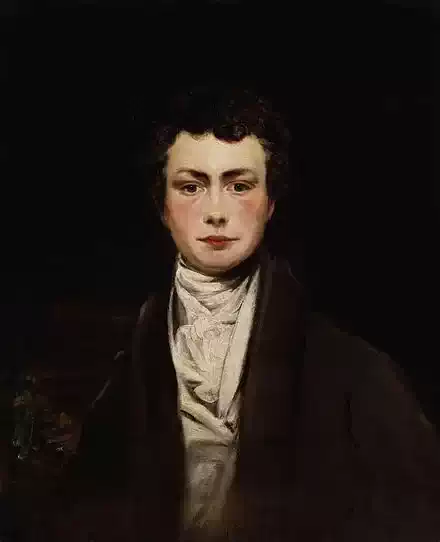
Thomas Moore
Enigma
Enigma
Come riddle-me-ree, come riddle-me-ree,
And tell me, what my name may be.
I am nearly one hundred and thirty years old,
And therefore no chicken, as you may suppose; --
Though a dwarf in my youth (as my nurses have told),
I have, ev'ry year since, been outgrowing my clothes;
Till, at last, such a corpulent giant I stand,
That if folks were to furnish me now with a suit,
It would take ev'ry morsel of scrip in the land
But to measure my bulk from the head to the foot.
Hence, they who maintain me, grown sick of my stature,
To cover me nothing but rags will supply;
And the doctors declare that, in due course of nature,
About the year in rags I shall die.
Meanwhile I stalk hungry and bloated around,
An object of int'rest, most painful, to all;
In the warehouse, the cottage, the palace I'm found,
Holding citizen, peasant, and king in my thrall.
Then riddle-me-ree, oh riddle-me-ree,
Come, tell me what my name may be.
When the lord of the counting-house bends o'er his book,
Bright pictures of profit delighting to draw,
O'er his shoulders with large cipher eye-balls I look,
And down drops the pen from his paralyz'd paw!
When the Premier lies dreaming of dear Waterloo,
And expects through another to caper and prank it,
You'd laugh did you see, when I bellow out "Boo!"
How he hides his brave Waterloo head in the blanket.
When mighty Belshazzar brims high in the hall
His cup, full of gout, to Gaul's overthrow,
Lo, "Eight Hundred Millions" I write on the wall,
And the cup falls to earth and -- the gout to his toe!
But the joy of my heart is when largely I cram
My maw with the fruits of the Squirearchy's acres,
And, knowing who made me the thing that I am,
Like the monster of Frankenstein, worry my makers.
Then riddle-me-ree, come, riddle-me-ree,
And tell, if thou knows't, who I may be.
Come riddle-me-ree, come riddle-me-ree,
And tell me, what my name may be.
I am nearly one hundred and thirty years old,
And therefore no chicken, as you may suppose; --
Though a dwarf in my youth (as my nurses have told),
I have, ev'ry year since, been outgrowing my clothes;
Till, at last, such a corpulent giant I stand,
That if folks were to furnish me now with a suit,
It would take ev'ry morsel of scrip in the land
But to measure my bulk from the head to the foot.
Hence, they who maintain me, grown sick of my stature,
To cover me nothing but rags will supply;
And the doctors declare that, in due course of nature,
About the year in rags I shall die.
Meanwhile I stalk hungry and bloated around,
An object of int'rest, most painful, to all;
In the warehouse, the cottage, the palace I'm found,
Holding citizen, peasant, and king in my thrall.
Then riddle-me-ree, oh riddle-me-ree,
Come, tell me what my name may be.
When the lord of the counting-house bends o'er his book,
Bright pictures of profit delighting to draw,
O'er his shoulders with large cipher eye-balls I look,
And down drops the pen from his paralyz'd paw!
When the Premier lies dreaming of dear Waterloo,
And expects through another to caper and prank it,
You'd laugh did you see, when I bellow out "Boo!"
How he hides his brave Waterloo head in the blanket.
When mighty Belshazzar brims high in the hall
His cup, full of gout, to Gaul's overthrow,
Lo, "Eight Hundred Millions" I write on the wall,
And the cup falls to earth and -- the gout to his toe!
But the joy of my heart is when largely I cram
My maw with the fruits of the Squirearchy's acres,
And, knowing who made me the thing that I am,
Like the monster of Frankenstein, worry my makers.
Then riddle-me-ree, come, riddle-me-ree,
And tell, if thou knows't, who I may be.
238
Thomas Moore
Cotton and Corn
Cotton and Corn
Said Cotton to Corn, t'other day,
As they met and exchang'd salute--
(Squire Corn in his carriage so gay,
Poor Cotton, half famish'd on foot):
"Great Squire, if it isn't uncivil
To hint at starvation before you,
Look down on a poor hungry devil,
And give him some bread, I implore you!"
Quoth Corn, then, in answer to Cotton,
Perceiving he meant to make free --
"Low fellow, you've surely forgotten
The distance between you and me!
To expect that we, Peers of high birth,
Should waste our illustrious acres,
For no other purpose on earth
Than to fatten curst calico-makers! --
That Biships to hobbins should bend --
Should stoop from their Bench's sublimity,
Great dealers in lawn, to befriend
Such contemptible dealers in dimity!
"No -- vile Manufacture! ne'er harbour
A hope to be fed at our boards; --
Base offspring of Arkwright the barber,
What claim canst thou have upon Lords?
"No -- thanks to the taxes and debt,
And the triumph of paper o'er guineas,
Our race of Lord Jemmys, as yet,
May defy your whole rabble of Jennys!"
So saying -- whip, crack and away
Went Corn in his chaise through the throng,
So headlong, I heard them all say,
"Squire Corn would be down, before long."
Said Cotton to Corn, t'other day,
As they met and exchang'd salute--
(Squire Corn in his carriage so gay,
Poor Cotton, half famish'd on foot):
"Great Squire, if it isn't uncivil
To hint at starvation before you,
Look down on a poor hungry devil,
And give him some bread, I implore you!"
Quoth Corn, then, in answer to Cotton,
Perceiving he meant to make free --
"Low fellow, you've surely forgotten
The distance between you and me!
To expect that we, Peers of high birth,
Should waste our illustrious acres,
For no other purpose on earth
Than to fatten curst calico-makers! --
That Biships to hobbins should bend --
Should stoop from their Bench's sublimity,
Great dealers in lawn, to befriend
Such contemptible dealers in dimity!
"No -- vile Manufacture! ne'er harbour
A hope to be fed at our boards; --
Base offspring of Arkwright the barber,
What claim canst thou have upon Lords?
"No -- thanks to the taxes and debt,
And the triumph of paper o'er guineas,
Our race of Lord Jemmys, as yet,
May defy your whole rabble of Jennys!"
So saying -- whip, crack and away
Went Corn in his chaise through the throng,
So headlong, I heard them all say,
"Squire Corn would be down, before long."
269
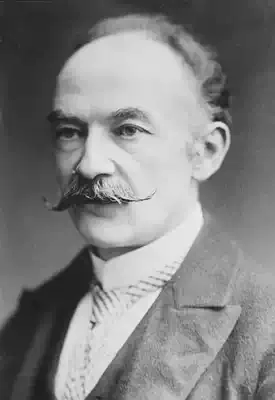
Thomas Hardy
The Stranger's Song
The Stranger's Song
(As sung by Mr. Charles Charrington in the play of "The Three Wayfarers")
O MY trade it is the rarest one,
Simple shepherds all--
My trade is a sight to see;
For my customers I tie, and take 'em up on high,
And waft 'em to a far countree!
My tools are but common ones,
Simple shepherds all--
My tools are no sight to see:
A little hempen string, and a post whereon to swing,
Are implements enough for me!
To-morrow is my working day,
Simple shepherds all--
To-morrow is a working day for me:
For the farmer's sheep is slain, and the lad who did it ta'en,
And on his soul may God ha' mer-cy!
(As sung by Mr. Charles Charrington in the play of "The Three Wayfarers")
O MY trade it is the rarest one,
Simple shepherds all--
My trade is a sight to see;
For my customers I tie, and take 'em up on high,
And waft 'em to a far countree!
My tools are but common ones,
Simple shepherds all--
My tools are no sight to see:
A little hempen string, and a post whereon to swing,
Are implements enough for me!
To-morrow is my working day,
Simple shepherds all--
To-morrow is a working day for me:
For the farmer's sheep is slain, and the lad who did it ta'en,
And on his soul may God ha' mer-cy!
225
Thomas Hardy
An Autumn Rain-Scene
An Autumn Rain-Scene
There trudges one to a merry-making
With sturdy swing,
On whom the rain comes down.
To fetch the saving medicament
Is another bent,
On whom the rain comes down.
One slowly drives his herd to the stall
Ere ill befall,
On whom the rain comes down.
This bears his missives of life and death
With quickening breath,
On whom the rain comes down.
One watches for signals of wreck or war
From the hill afar,
On whom the rain comes down.
No care if he gain a shelter or none,
Unhired moves on,
On whom the rain comes down.
And another knows nought of its chilling fall
Upon him aat all,
On whom the rain comes down.
October
There trudges one to a merry-making
With sturdy swing,
On whom the rain comes down.
To fetch the saving medicament
Is another bent,
On whom the rain comes down.
One slowly drives his herd to the stall
Ere ill befall,
On whom the rain comes down.
This bears his missives of life and death
With quickening breath,
On whom the rain comes down.
One watches for signals of wreck or war
From the hill afar,
On whom the rain comes down.
No care if he gain a shelter or none,
Unhired moves on,
On whom the rain comes down.
And another knows nought of its chilling fall
Upon him aat all,
On whom the rain comes down.
October
292
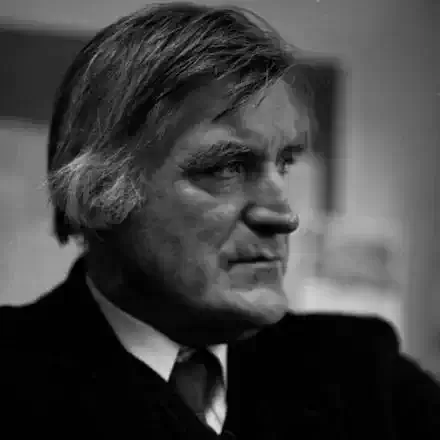
Ted Hughes
Work and Play
Work and Play
The swallow of summer, she toils all the summer,
A blue-dark knot of glittering voltage,
A whiplash swimmer, a fish of the air.
But the serpent of cars that crawls through the dust
In shimmering exhaust
Searching to slake
Its fever in ocean
Will play and be idle or else it will bust.
The swallow of summer, the barbed harpoon,
She flings from the furnace, a rainbow of purples,
Dips her glow in the pond and is perfect.
But the serpent of cars that collapsed on the beach
Disgorges its organs
A scamper of colours
Which roll like tomatoes
Nude as tomatoes
With sand in their creases
To cringe in the sparkle of rollers and screech.
The swallow of summer, the seamstress of summer,
She scissors the blue into shapes and she sews it,
She draws a long thread and she knots it at the corners.
But the holiday people
Are laid out like wounded
Flat as in ovens
Roasting and basting
With faces of torment as space burns them blue
Their heads are transistors
Their teeth grit on sand grains
Their lost kids are squalling
While man-eating flies
Jab electric shock needles but what can they do?
They can climb in their cars with raw bodies, raw faces
And start up the serpent
And headache it homeward
A car full of squabbles
And sobbing and stickiness
With sand in their crannies
Inhaling petroleum
That pours from the foxgloves
While the evening swallow
The swallow of summer, cartwheeling through crimson,
Touches the honey-slow river and turning
Returns to the hand stretched from under the eaves -
A boomerang of rejoicing shadow.
The swallow of summer, she toils all the summer,
A blue-dark knot of glittering voltage,
A whiplash swimmer, a fish of the air.
But the serpent of cars that crawls through the dust
In shimmering exhaust
Searching to slake
Its fever in ocean
Will play and be idle or else it will bust.
The swallow of summer, the barbed harpoon,
She flings from the furnace, a rainbow of purples,
Dips her glow in the pond and is perfect.
But the serpent of cars that collapsed on the beach
Disgorges its organs
A scamper of colours
Which roll like tomatoes
Nude as tomatoes
With sand in their creases
To cringe in the sparkle of rollers and screech.
The swallow of summer, the seamstress of summer,
She scissors the blue into shapes and she sews it,
She draws a long thread and she knots it at the corners.
But the holiday people
Are laid out like wounded
Flat as in ovens
Roasting and basting
With faces of torment as space burns them blue
Their heads are transistors
Their teeth grit on sand grains
Their lost kids are squalling
While man-eating flies
Jab electric shock needles but what can they do?
They can climb in their cars with raw bodies, raw faces
And start up the serpent
And headache it homeward
A car full of squabbles
And sobbing and stickiness
With sand in their crannies
Inhaling petroleum
That pours from the foxgloves
While the evening swallow
The swallow of summer, cartwheeling through crimson,
Touches the honey-slow river and turning
Returns to the hand stretched from under the eaves -
A boomerang of rejoicing shadow.
336
Ted Hughes
Tractor
Tractor
The tractor stands frozen - an agony
To think of. All night
Snow packed its open entrails. Now a head-pincering gale,
A spill of molten ice, smoking snow,
Pours into its steel.
At white heat of numbness it stands
In the aimed hosing of ground-level fieriness.
It defied flesh and won't start.
Hands are like wounds already
Inside armour gloves, and feet are unbelievable
As if the toe-nails were all just torn off.
I stare at it in hatred. Beyond it
The copse hisses - capitulates miserably
In the fleeing, failing light. Starlings,
A dirtier sleetier snow, blow smokily, unendingly, over
Towards plantations Eastward.
All the time the tractor is sinking
Through the degrees, deepening
Into its hell of ice.
The starting lever
Cracks its action, like a snapping knuckle.
The battery is alive - but like a lamb
Trying to nudge its solid-frozen mother -
While the seat claims my buttock-bones, bites
With the space-cold of earth, which it has joined
In one solid lump.
I squirt commercial sure-fire
Down the black throat - it just coughs.
It ridicules me - a trap of iron stupidity
I've stepped into. I drive the battery
As if I were hammering and hammering
The frozen arrangement to pieces with a hammer
And it jabbers laughing pain-crying mockingly
Into happy life.
And stands
Shuddering itself full of heat, seeming to enlarge slowly
Like a demon demonstrating
A more-than-usually-complete materialization -
Suddenly it jerks from its solidarity
With the concrete, and lurches towards a stanchion
Bursting with superhuman well-being and abandon
Shouting Where Where?
Worse iron is waiting. Power-lift kneels
Levers awake imprisoned deadweight,
Shackle-pins bedded in cast-iron cow-shit.
The blind and vibrating condemned obedience
Of iron to the cruelty of iron,
Wheels screeched out of their night-locks -
Fingers
Among the tormented
Tonnage and burning of iron
Eyes
Weeping in the wind of chloroform
And the tractor, streaming with sweat,
Raging and trembling and rejoicing.
The tractor stands frozen - an agony
To think of. All night
Snow packed its open entrails. Now a head-pincering gale,
A spill of molten ice, smoking snow,
Pours into its steel.
At white heat of numbness it stands
In the aimed hosing of ground-level fieriness.
It defied flesh and won't start.
Hands are like wounds already
Inside armour gloves, and feet are unbelievable
As if the toe-nails were all just torn off.
I stare at it in hatred. Beyond it
The copse hisses - capitulates miserably
In the fleeing, failing light. Starlings,
A dirtier sleetier snow, blow smokily, unendingly, over
Towards plantations Eastward.
All the time the tractor is sinking
Through the degrees, deepening
Into its hell of ice.
The starting lever
Cracks its action, like a snapping knuckle.
The battery is alive - but like a lamb
Trying to nudge its solid-frozen mother -
While the seat claims my buttock-bones, bites
With the space-cold of earth, which it has joined
In one solid lump.
I squirt commercial sure-fire
Down the black throat - it just coughs.
It ridicules me - a trap of iron stupidity
I've stepped into. I drive the battery
As if I were hammering and hammering
The frozen arrangement to pieces with a hammer
And it jabbers laughing pain-crying mockingly
Into happy life.
And stands
Shuddering itself full of heat, seeming to enlarge slowly
Like a demon demonstrating
A more-than-usually-complete materialization -
Suddenly it jerks from its solidarity
With the concrete, and lurches towards a stanchion
Bursting with superhuman well-being and abandon
Shouting Where Where?
Worse iron is waiting. Power-lift kneels
Levers awake imprisoned deadweight,
Shackle-pins bedded in cast-iron cow-shit.
The blind and vibrating condemned obedience
Of iron to the cruelty of iron,
Wheels screeched out of their night-locks -
Fingers
Among the tormented
Tonnage and burning of iron
Eyes
Weeping in the wind of chloroform
And the tractor, streaming with sweat,
Raging and trembling and rejoicing.
413

Siegfried Sassoon
What the Captain Said at the Point-to-Point
What the Captain Said at the Point-to-Point
I’ve had a good bump round; my little horse
Refused the brook first time,
Then jumped it prime;
And ran out at the double,
But of course
There’s always trouble at a double:
And then—I don’t know how
It was—he turned it up
At that big, hairy fence before the plough;
And some young silly pup
(I don’t know which),
Near as a toucher knocked me into the ditch;
But we finished full of running, and quite sound:
And anyhow I’ve had a good bump round.
I’ve had a good bump round; my little horse
Refused the brook first time,
Then jumped it prime;
And ran out at the double,
But of course
There’s always trouble at a double:
And then—I don’t know how
It was—he turned it up
At that big, hairy fence before the plough;
And some young silly pup
(I don’t know which),
Near as a toucher knocked me into the ditch;
But we finished full of running, and quite sound:
And anyhow I’ve had a good bump round.
136
Siegfried Sassoon
The Goldsmith
The Goldsmith
This job’s the best I’ve done.’ He bent his head
Over the golden vessel that he’d wrought.
A bird was singing. But the craftsman’s thought
Is a forgotten language, lost and dead.
He sighed and stretch’d brown arms. His friend came in
And stood beside him in the morning sun.
The goldwork glitter’d.... ‘That’s the best I’ve done.
‘And now I’ve got a necklace to begin.’
This was at Gnossos, in the isle of Crete...
A girl was selling flowers along the street.
This job’s the best I’ve done.’ He bent his head
Over the golden vessel that he’d wrought.
A bird was singing. But the craftsman’s thought
Is a forgotten language, lost and dead.
He sighed and stretch’d brown arms. His friend came in
And stood beside him in the morning sun.
The goldwork glitter’d.... ‘That’s the best I’ve done.
‘And now I’ve got a necklace to begin.’
This was at Gnossos, in the isle of Crete...
A girl was selling flowers along the street.
102
Siegfried Sassoon
In Barracks
In Barracks
The barrack-square, washed clean with rain,
Shines wet and wintry-grey and cold.
Young Fusiliers, strong-legged and bold,
March and wheel and march again.
The sun looks over the barrack gate,
Warm and white with glaring shine,
To watch the soldiers of the Line
That life has hired to fight with fate.
Fall out: the long parades are done.
Up comes the dark; down goes the sun.
The square is walled with windowed light.
Sleep well, you lusty Fusiliers;
Shut your brave eyes on sense and sight,
And banish from your dreamless ears
The bugle’s dying notes that say,
‘Another night; another day.’
The barrack-square, washed clean with rain,
Shines wet and wintry-grey and cold.
Young Fusiliers, strong-legged and bold,
March and wheel and march again.
The sun looks over the barrack gate,
Warm and white with glaring shine,
To watch the soldiers of the Line
That life has hired to fight with fate.
Fall out: the long parades are done.
Up comes the dark; down goes the sun.
The square is walled with windowed light.
Sleep well, you lusty Fusiliers;
Shut your brave eyes on sense and sight,
And banish from your dreamless ears
The bugle’s dying notes that say,
‘Another night; another day.’
90
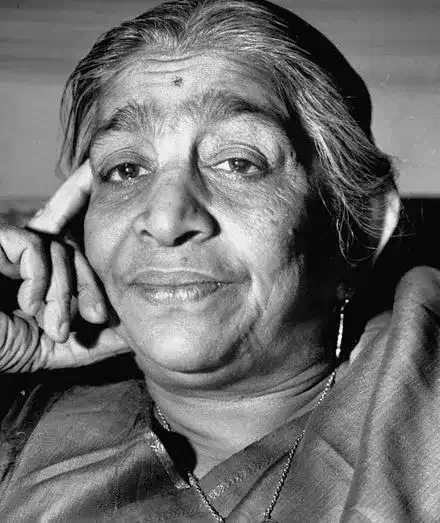
Sarojini Naidu
Street Cries
Street Cries
WHEN dawn's first cymbals beat upon the sky,
Rousing the world to labour's various cry,
To tend the flock, to bind the mellowing grain,
From ardent toil to forge a little gain,
And fasting men go forth on hurrying feet,
Buy bread, buy bread, rings down the eager street.
When the earth falters and the waters swoon
With the implacable radiance of noon,
And in dim shelters koïls hush their notes,
And the faint, thirsting blood in languid throats
Craves liquid succour from the cruel heat,
Buy fruit, buy fruit, steals down the panting street.
When twilight twinkling o'er the gay bazaars,
Unfurls a sudden canopy of stars,
When lutes are strung and fragrant torches lit
On white roof-terraces where lovers sit
Drinking together of life's poignant sweet,
Buy flowers, buy flowers, floats down the singing street.
WHEN dawn's first cymbals beat upon the sky,
Rousing the world to labour's various cry,
To tend the flock, to bind the mellowing grain,
From ardent toil to forge a little gain,
And fasting men go forth on hurrying feet,
Buy bread, buy bread, rings down the eager street.
When the earth falters and the waters swoon
With the implacable radiance of noon,
And in dim shelters koïls hush their notes,
And the faint, thirsting blood in languid throats
Craves liquid succour from the cruel heat,
Buy fruit, buy fruit, steals down the panting street.
When twilight twinkling o'er the gay bazaars,
Unfurls a sudden canopy of stars,
When lutes are strung and fragrant torches lit
On white roof-terraces where lovers sit
Drinking together of life's poignant sweet,
Buy flowers, buy flowers, floats down the singing street.
675
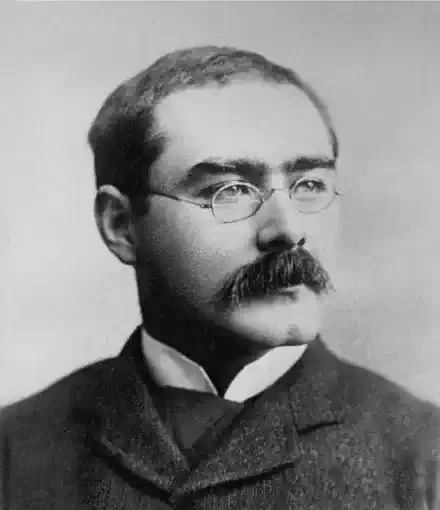
Rudyard Kipling
What Happened
What Happened
Hurree Chunder Mookerjee, pride of Bow Bazaar,
Owner of a native press, "Barrishter-at-Lar,"
Waited on the Government with a claim to wear
Sabres by the bucketful, rifles by the pair.
Then the Indian Government winked a wicked wink,
Said to Chunder Mookerjee: "Stick to pen and ink.
They are safer implements, but, if you insist,
We will let you carry arms wheresoe'er you list."
Hurree Chunder Mookerjee sought the gunsmith and
Bought the tubes of Lancaster, Ballard, Dean, and Bland,
Bought a shiny bowie-knife, bought a town-made sword,
Jingled like a carriage-horse when he went abroad.
But the Indian Government, always keen to please,
Also gave permission to horrid men like these --
Yar Mahommed Yusufzai, down to kill or steal,
Chimbu Singh from Bikaneer, Tantia the Bhil;
Killar Khan the Marri chief, Jowar Singh the Sikh,
Nubbee Baksh Punjabi Jat, Abdul Huq Rafiq --
He was a Wahabi; last, little Boh Hla-oo
Took advantage of the Act -- took a Snider too.
They were unenlightened men, Ballard knew them not.
They procured their swords and guns chiefly on the spot;
And the lore of centuries, plus a hundred fights,
Made them slow to disregard one another's rights.
With a unanimity dear to patriot hearts
All those hairy gentlemen out of foreign parts
Said: "The good old days are back -- let us go to war!"
Swaggered down the Grand Trunk Road into Bow Bazaar,
Nubbee Baksh Punjabi Jat found a hide-bound flail;
Chimbu Singh from Bikaneer oiled his Tonk jezail;
Yar Mahommed Yusufzai spat and grinned with glee
As he ground the butcher-knife of the Khyberee.
Jowar Singh the Sikh procured sabre, quoit, and mace,
Abdul Huq, Wahabi, jerked his dagger from its place,
While amid the jungle-grass danced and grinned and jabbered
Little Boh Hla-oo and cleared his dah-blade from the scabbard.
What became of Mookerjee? Smoothly, who can say?
Yar Mahommed only grins in a nasty way,
Jowar Singh is reticent, Chimbu Singh is mute.
But the belts of all of them simply bulge with loot.
What became of Ballard's guns? Afghans black and grubby
Sell them for their silver weight to the men of Pubbi;
And the shiny bowie-knife and the town-made sword are
Hanging in a Marri camp just across the Border.
What became of Mookerjee? Ask Mahommed Yar
Prodding Siva's sacred bull down the Bow Bazaar.
Speak to placid Nubbee Baksh -- question land and sea --
Ask the Indian Congressmen -- only don't ask me!
Hurree Chunder Mookerjee, pride of Bow Bazaar,
Owner of a native press, "Barrishter-at-Lar,"
Waited on the Government with a claim to wear
Sabres by the bucketful, rifles by the pair.
Then the Indian Government winked a wicked wink,
Said to Chunder Mookerjee: "Stick to pen and ink.
They are safer implements, but, if you insist,
We will let you carry arms wheresoe'er you list."
Hurree Chunder Mookerjee sought the gunsmith and
Bought the tubes of Lancaster, Ballard, Dean, and Bland,
Bought a shiny bowie-knife, bought a town-made sword,
Jingled like a carriage-horse when he went abroad.
But the Indian Government, always keen to please,
Also gave permission to horrid men like these --
Yar Mahommed Yusufzai, down to kill or steal,
Chimbu Singh from Bikaneer, Tantia the Bhil;
Killar Khan the Marri chief, Jowar Singh the Sikh,
Nubbee Baksh Punjabi Jat, Abdul Huq Rafiq --
He was a Wahabi; last, little Boh Hla-oo
Took advantage of the Act -- took a Snider too.
They were unenlightened men, Ballard knew them not.
They procured their swords and guns chiefly on the spot;
And the lore of centuries, plus a hundred fights,
Made them slow to disregard one another's rights.
With a unanimity dear to patriot hearts
All those hairy gentlemen out of foreign parts
Said: "The good old days are back -- let us go to war!"
Swaggered down the Grand Trunk Road into Bow Bazaar,
Nubbee Baksh Punjabi Jat found a hide-bound flail;
Chimbu Singh from Bikaneer oiled his Tonk jezail;
Yar Mahommed Yusufzai spat and grinned with glee
As he ground the butcher-knife of the Khyberee.
Jowar Singh the Sikh procured sabre, quoit, and mace,
Abdul Huq, Wahabi, jerked his dagger from its place,
While amid the jungle-grass danced and grinned and jabbered
Little Boh Hla-oo and cleared his dah-blade from the scabbard.
What became of Mookerjee? Smoothly, who can say?
Yar Mahommed only grins in a nasty way,
Jowar Singh is reticent, Chimbu Singh is mute.
But the belts of all of them simply bulge with loot.
What became of Ballard's guns? Afghans black and grubby
Sell them for their silver weight to the men of Pubbi;
And the shiny bowie-knife and the town-made sword are
Hanging in a Marri camp just across the Border.
What became of Mookerjee? Ask Mahommed Yar
Prodding Siva's sacred bull down the Bow Bazaar.
Speak to placid Nubbee Baksh -- question land and sea --
Ask the Indian Congressmen -- only don't ask me!
463
Rudyard Kipling
The Young British Soldier
The Young British Soldier
When the 'arf-made recruity goes out to the East
'E acts like a babe an' 'e drinks like a beast,
An' 'e wonders because 'e is frequent deceased
Ere 'e's fit for to serve as a soldier.
Serve, serve, serve as a soldier,
Serve, serve, serve as a soldier,
Serve, serve, serve as a soldier,
So-oldier ~OF~ the Queen!
Now all you recruities what's drafted to-day,
You shut up your rag-box an' 'ark to my lay,
An' I'll sing you a soldier as far as I may:
A soldier what's fit for a soldier.
Fit, fit, fit for a soldier . . .
First mind you steer clear o' the grog-sellers' huts,
For they sell you Fixed Bay'nets that rots out your guts --
Ay, drink that 'ud eat the live steel from your butts --
An' it's bad for the young British soldier.
Bad, bad, bad for the soldier . . .
When the cholera comes -- as it will past a doubt --
Keep out of the wet and don't go on the shout,
For the sickness gets in as the liquor dies out,
An' it crumples the young British soldier.
Crum-, crum-, crumples the soldier . . .
But the worst o' your foes is the sun over'ead:
You ~must~ wear your 'elmet for all that is said:
If 'e finds you uncovered 'e'll knock you down dead,
An' you'll die like a fool of a soldier.
Fool, fool, fool of a soldier . . .
If you're cast for fatigue by a sergeant unkind,
Don't grouse like a woman nor crack on nor blind;
Be handy and civil, and then you will find
That it's beer for the young British soldier.
Beer, beer, beer for the soldier . . .
Now, if you must marry, take care she is old --
A troop-sergeant's widow's the nicest I'm told,
For beauty won't help if your rations is cold,
Nor love ain't enough for a soldier.
'Nough, 'nough, 'nough for a soldier . . .
If the wife should go wrong with a comrade, be loath
To shoot when you catch 'em -- you'll swing, on my oath! --
Make 'im take 'er and keep 'er: that's Hell for them both,
An' you're shut o' the curse of a soldier.
Curse, curse, curse of a soldier . . .
When first under fire an' you're wishful to duck,
Don't look nor take 'eed at the man that is struck,
Be thankful you're livin', and trust to your luck
And march to your front like a soldier.
Front, front, front like a soldier . . .
When 'arf of your bullets fly wide in the ditch,
Don't call your Martini a cross-eyed old bitch;
She's human as you are -- you treat her as sich,
An' she'll fight for the young British soldier.
Fight, fight, fight for the soldier . . .
When shakin' their bustles like ladies so fine,
The guns o' the enemy wheel into line,
Shoot low at the limbers an' don't mind the shine,
For noise never startles the soldier.
Start-, start-, startles the soldier . . .
If your officer's dead and the sergeants look white,
Remember it's ruin to run from a fight:
So take open order, lie down, and sit tight,
And wait for supports like a soldier.
Wait, wait, wait like a soldier . . .
When you're wounded and left on Afghanistan's plains,
And the women come out to cut up what remains,
Jest roll to your rifle and blow out your brains
An' go to your Gawd like a soldier.
Go, go, go like a soldier,
Go, go, go like a soldier,
Go, go, go like a soldier,
So-oldier ~of~ the Queen!
When the 'arf-made recruity goes out to the East
'E acts like a babe an' 'e drinks like a beast,
An' 'e wonders because 'e is frequent deceased
Ere 'e's fit for to serve as a soldier.
Serve, serve, serve as a soldier,
Serve, serve, serve as a soldier,
Serve, serve, serve as a soldier,
So-oldier ~OF~ the Queen!
Now all you recruities what's drafted to-day,
You shut up your rag-box an' 'ark to my lay,
An' I'll sing you a soldier as far as I may:
A soldier what's fit for a soldier.
Fit, fit, fit for a soldier . . .
First mind you steer clear o' the grog-sellers' huts,
For they sell you Fixed Bay'nets that rots out your guts --
Ay, drink that 'ud eat the live steel from your butts --
An' it's bad for the young British soldier.
Bad, bad, bad for the soldier . . .
When the cholera comes -- as it will past a doubt --
Keep out of the wet and don't go on the shout,
For the sickness gets in as the liquor dies out,
An' it crumples the young British soldier.
Crum-, crum-, crumples the soldier . . .
But the worst o' your foes is the sun over'ead:
You ~must~ wear your 'elmet for all that is said:
If 'e finds you uncovered 'e'll knock you down dead,
An' you'll die like a fool of a soldier.
Fool, fool, fool of a soldier . . .
If you're cast for fatigue by a sergeant unkind,
Don't grouse like a woman nor crack on nor blind;
Be handy and civil, and then you will find
That it's beer for the young British soldier.
Beer, beer, beer for the soldier . . .
Now, if you must marry, take care she is old --
A troop-sergeant's widow's the nicest I'm told,
For beauty won't help if your rations is cold,
Nor love ain't enough for a soldier.
'Nough, 'nough, 'nough for a soldier . . .
If the wife should go wrong with a comrade, be loath
To shoot when you catch 'em -- you'll swing, on my oath! --
Make 'im take 'er and keep 'er: that's Hell for them both,
An' you're shut o' the curse of a soldier.
Curse, curse, curse of a soldier . . .
When first under fire an' you're wishful to duck,
Don't look nor take 'eed at the man that is struck,
Be thankful you're livin', and trust to your luck
And march to your front like a soldier.
Front, front, front like a soldier . . .
When 'arf of your bullets fly wide in the ditch,
Don't call your Martini a cross-eyed old bitch;
She's human as you are -- you treat her as sich,
An' she'll fight for the young British soldier.
Fight, fight, fight for the soldier . . .
When shakin' their bustles like ladies so fine,
The guns o' the enemy wheel into line,
Shoot low at the limbers an' don't mind the shine,
For noise never startles the soldier.
Start-, start-, startles the soldier . . .
If your officer's dead and the sergeants look white,
Remember it's ruin to run from a fight:
So take open order, lie down, and sit tight,
And wait for supports like a soldier.
Wait, wait, wait like a soldier . . .
When you're wounded and left on Afghanistan's plains,
And the women come out to cut up what remains,
Jest roll to your rifle and blow out your brains
An' go to your Gawd like a soldier.
Go, go, go like a soldier,
Go, go, go like a soldier,
Go, go, go like a soldier,
So-oldier ~of~ the Queen!
512
Rudyard Kipling
The Tour
The Tour
Thirteen as twelve my Murray always took--
He was a publisher. The new Police
Have neater ways of bringing men to book,
So Juan found himself before J.P.'s
Accused of storming through that placed nook
At practically any pace you please.
The Dogberry, and the Waterbury, made
It fifty mile--five pounds. And Juan paid!
Thirteen as twelve my Murray always took--
He was a publisher. The new Police
Have neater ways of bringing men to book,
So Juan found himself before J.P.'s
Accused of storming through that placed nook
At practically any pace you please.
The Dogberry, and the Waterbury, made
It fifty mile--five pounds. And Juan paid!
396
Rudyard Kipling
The Story of Uriah
The Story of Uriah
Jack Barrett went to Quetta
Because they told him to.
He left his wife at Simla
On three-fourths his monthly screw.
Jack Barrett died at Quetta
Ere the next month's pay he drew.
Jack Barrett went to Quetta.
He didn't understand
The reason of his transfer
From the pleasant mountain-land.
The season was September,
And it killed him out of hand.
Jack Barrett went to Quetta
And there gave up the ghost,
Attempting two men's duty
In that very healthy post;
And Mrs. Barrett mourned for him
Five lively months at most.
Jack Barrett's bones at Quetta
Enjoy profound repose;
But I shouldn't be astonished
If now his spirit knows
The reason of his transfer
From the Himalayan snows.
And, when the Last Great Bugle Call
Adown the Hurnai throbs,
And the last grim joke is entered
In the big black Book of Jobs.
And Quetta graveyards give again
Their victims to the air,
I shouldn't like to be the man
Who sent Jack Barrett there.
Jack Barrett went to Quetta
Because they told him to.
He left his wife at Simla
On three-fourths his monthly screw.
Jack Barrett died at Quetta
Ere the next month's pay he drew.
Jack Barrett went to Quetta.
He didn't understand
The reason of his transfer
From the pleasant mountain-land.
The season was September,
And it killed him out of hand.
Jack Barrett went to Quetta
And there gave up the ghost,
Attempting two men's duty
In that very healthy post;
And Mrs. Barrett mourned for him
Five lively months at most.
Jack Barrett's bones at Quetta
Enjoy profound repose;
But I shouldn't be astonished
If now his spirit knows
The reason of his transfer
From the Himalayan snows.
And, when the Last Great Bugle Call
Adown the Hurnai throbs,
And the last grim joke is entered
In the big black Book of Jobs.
And Quetta graveyards give again
Their victims to the air,
I shouldn't like to be the man
Who sent Jack Barrett there.
469
Page 1
Next