
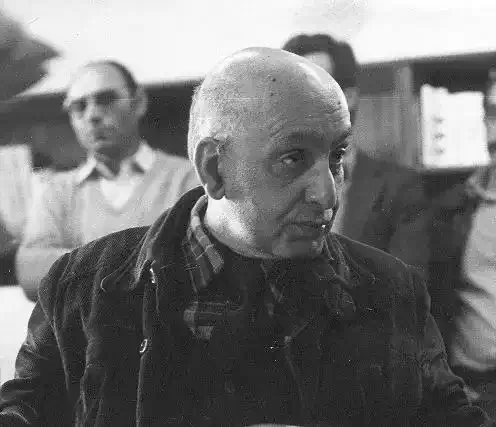
Raul de Carvalho
 PT
PT
Raul de Carvalho was a Portuguese poet whose work stood out for its lyrical and reflective depth. His poetry explores universal themes such as love, death, time, and the human condition, with a refined language and strong musicality. Throughout his career, Carvalho consolidated his own style, marked by introspection and a refined sensitivity to the nuances of existence. His contribution to Portuguese poetry lies in his ability to transfigure the everyday into art, touching the reader with his honesty and the beauty of his poetic imagery.
n. 1920-09-04, Alvito · m. 1984-09-03, Porto
Bio
Identification and Basic Context
Raul de Carvalho, full name Raul Fernando Viana de Carvalho, was born in Lisbon, Portugal. He was a renowned poet in contemporary Portuguese literature. His work is written in Portuguese.Childhood and Education
Raul de Carvalho's childhood and education are intrinsically linked to the Lisbon cultural environment. Specific details about his formal education or early influences are not widely documented, but it is evident that he absorbed a vast literary knowledge.Literary Career
Raul de Carvalho began writing at a time when Portuguese poetry was undergoing various transformations. His work evolved over time, exploring different lyrical and thematic aspects. He collaborated with various publications and anthologies, consolidating his presence in the literary scene.Work, Style, and Literary Characteristics
Among his main works, "O Canto da Sereia" (The Siren's Song), published in 1960, stands out, reflecting a period of poetic maturity. The dominant themes in his poetry include love, saudade (longing), the ephemerality of time, and existential introspection. He frequently used free verse, but also explored more traditional forms. His style is marked by a refined language, with expressive use of metaphors and a cadenced rhythm that gives musicality to his verses. The poetic voice is often confessional and lyrical, conveying a deep sensitivity.Cultural and Historical Context
Raul de Carvalho lived during a period of significant changes in Portugal, from the dictatorship to the democratic transition. His work sometimes subtly reflects the anxieties and aspirations of that period. He maintained relationships with other writers and literary circles of his generation, positioning himself as an attentive observer of society and culture.Personal Life
Detailed information about Raul de Carvalho's personal life is scarce in the public sphere. It is known that his private life may have influenced the depth and introspection present in his work, with affective relationships and existential experiences shaping his poetic vision.Recognition and Reception
Raul de Carvalho achieved considerable recognition in Portuguese literature. Although not an internationally renowned figure, his work is valued by critics and academics. He received distinctions throughout his career, solidifying his place in the canon of contemporary Portuguese poetry.Influences and Legacy
Raul de Carvalho's influences include poets from the Portuguese lyrical tradition and authors who explored the existential dimension of poetry. His legacy lies in his ability to renew lyrical expression, influencing subsequent generations of poets with his unique approach to universal themes.Interpretation and Critical Analysis
Raul de Carvalho's work has been the subject of various critical interpretations, highlighting his philosophical depth and exploration of existential themes. The analysis of his poetry reveals a constant questioning of the meaning of life, the nature of love, and the passage of time.Curiosities and Lesser-Known Aspects
Although his public persona was strongly associated with his poetic work, details about his writing habits or more anecdotal aspects of his life are rarely disclosed, maintaining a certain mystery around the author.Death and Memory
Raul de Carvalho passed away in Lisbon. His memory endures through his work, which continues to be read, studied, and admired, remaining alive in the Portuguese literary landscape.Poems
0No poems found
Comments (0)
No comments yet. Be the first to comment.