
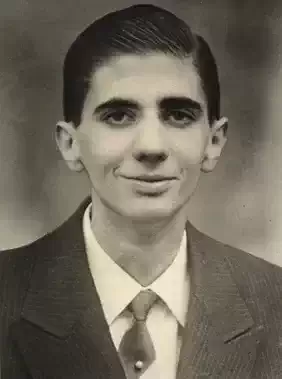
Sérgio Milliet
1898–1966
· lived 68 years
 BR
BR
BR
Sérgio Milliet was a Brazilian art critic, writer, and translator, a prominent figure in the 20th-century cultural scene. His work encompasses art criticism, poetry, and prose, always with a sharp and intellectualized view of artistic and literary production. Known for his erudition and analytical capacity, Milliet played a fundamental role in the dissemination and debate of arts in Brazil, leaving a legacy of texts that continue to be important references for the study of Brazilian culture.
n. 1898-09-20, São Paulo · m. 1966-11-09, São Paulo
61
Views
Bio
Identification and basic context
Sérgio Milliet was born in Rio de Janeiro in 1890 and died in the same city in 1962. He was an important Brazilian art critic, writer, poet, and translator. He wrote in Portuguese.Childhood and education
Sérgio Milliet came from a wealthy family and had access to a privileged education. He graduated in Law from the National Faculty of Law. From an early age, he showed great interest in arts and literature, developing a vast general culture.Literary career
Sérgio Milliet's literary career is marked by his work as an art critic, essayist, poet, and translator. He was one of the founders of the magazine "Orfeu" (1924), a landmark of Brazilian Modernism, although his own poetic production was more discreet and published late. He also worked as a translator of important works of foreign literature.Work, style, and literary characteristics
Milliet's work as a writer includes poetry, with poems reflecting a modern and introspective sensibility, and essays, where he stood out as an art critic. His criticism is characterized by erudition, in-depth analysis, and the ability to contextualize works within their historical periods and artistic movements. In his poetry, the language is precise and the themes address reflections on life, art, and existence. His style is elegant and intellectualized.Cultural and historical context
Sérgio Milliet lived and produced during a period of great cultural and social transformations in Brazil, being a key figure in the Week of Modern Art of 1922 and in the modernist movement. He interacted and dialogued with the main artists and intellectuals of the time, contributing to the renewal of criticism and artistic production in the country. His work reflects the tensions and aesthetic debates of Brazilian Modernism.Personal life
Sérgio Milliet had a life dedicated to culture and intellect. Information about his personal life is more focused on his professional and intellectual relationships with other artists and writers. His dedication to art and writing was a constant in his life.Recognition and reception
Sérgio Milliet was widely recognized as one of Brazil's most important art critics. His role in the dissemination and debate of Brazilian modern art was fundamental. His writings are considered important references for the study of art history and literature in the country.Influences and legacy
Milliet was influenced by European avant-gardes and the aesthetic debates of his time. His legacy lies in his critical work, which helped to shape the perspective on modern Brazilian art, and in his active participation in the movements that shaped 20th-century culture in Brazil.Interpretation and critical analysis
Sérgio Milliet's work is frequently analyzed from the perspective of his contribution to Brazilian art criticism and the consolidation of Modernism. His ability to articulate theory and artistic practice, as well as his erudition, are recurring points in analyses.Curiosities and lesser-known aspects
An interesting aspect is his work as a translator, bringing important works of foreign literature to the Brazilian public. His dual role as critic and creator, although more prominent as a critic, enriches his figure in the cultural landscape.Death and memory
Sérgio Milliet passed away in 1962. His memory is preserved through his writings, which continue to be consulted and studied, and through his historical importance as one of the pillars of Modernism and art criticism in Brazil.Poems
0No poems found
Comments (0)
Log in
to post a comment.
No comments yet. Be the first to comment.