
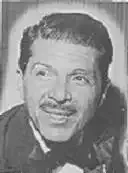
Silva Alvarenga
 BR
BR
Silva Alvarenga was a Brazilian poet of the Arcadian period, known for his work that blends classical influence with themes of nature and love, reflecting the aesthetic ideals of his time. His poetry is characterized by elaborate language, the pursuit of formal perfection, and the exploration of feelings in a restrained and idealized manner. Despite his literary production being relatively scarce compared to other Arcadian poets, Alvarenga left a mark on Brazilian poetry, serving as a link between classical tradition and the early manifestations of a sensibility that foreshadowed Romanticism. His work, although marked by the conventions of his time, reveals a particular lyricism and a pursuit of the expression of an ideal of beauty.
n. 1749-01-01, Ouro Preto · m. 1814-01-01, Rio de Janeiro
Bio
Identification and basic context
Antônio Pereira de Sousa Caldas, better known by the pseudonym Silva Alvarenga, was a Brazilian poet of Arcadianism. He was born in Ouro Preto, Minas Gerais, in 1741, and died in Pernambuco in 1795. He came from an upper-middle-class family, in a region rich in economic and cultural activity, such as the captaincy of Minas Gerais, during the gold cycle. His nationality was Brazilian, and his written language was Portuguese. He lived in a period of great cultural and political effervescence in Colonial Brazil, under Portuguese rule.Childhood and education
Silva Alvarenga received a solid intellectual education for his time. He studied at the Seminary of Mariana and later enrolled at the University of Coimbra, in Portugal, where he studied Law. This European education was crucial for his contact with Enlightenment ideals and Arcadian aesthetics, which were flourishing in Europe.Literary career
Silva Alvarenga's literary career developed during his time in Coimbra and after his return to Brazil. His poetic work is marked by the influence of Arcadianism, with the adoption of pastoral themes, the use of pseudonyms, and the idealization of nature and love. Although he did not have an extensive literary output, his poems, especially 'O Poema de Glauceste', demonstrated a remarkable talent for poetry.Work, style, and literary characteristics
The most well-known work by Silva Alvarenga is 'Poema de Glauceste', published in 1791. His poems are representative of Minas Gerais Arcadianism, with themes such as idealized love, bucolic nature (often referred to as 'Arcadia'), the pursuit of serenity, and pastoral simplicity. Alvarenga's style is characterized by educated language, regular meter, the use of antitheses, and emotional restraint, following the precepts of 'inutilia truncat' (cut the unnecessary) and 'carpe diem' (seize the day). His vocabulary is elevated, with mythological and classical references. The poetic voice is lyrical and idealized, seeking to express feelings in a measured way. Although he adhered to Arcadian conventions, his poetry sometimes presents a subtle melancholy, which foreshadows Romanticism.Work, style, and literary characteristics
Cultural and historical context Silva Alvarenga lived in a period of intense intellectual activity in Brazil, especially in Minas Gerais, with the emergence of Literary Academies and the dissemination of Enlightenment ideas. He belonged to the so-called 'Generation of 1770' of Brazilian Arcadianism. The historical context was one of colonial dependence on Portugal, but also of growing aspirations for autonomy, reflected in some veiled criticisms of colonial society. His work engages with the literary production of his contemporaries, such as Cláudio Manuel da Costa and Tomás Antônio Gonzaga.Work, style, and literary characteristics
Personal life Little is known about Silva Alvarenga's personal life outside of his academic and literary career. It is known that he studied Law in Coimbra and practiced law. His dedication to poetry and classical studies appears to have been his main focus.Work, style, and literary characteristics
Recognition and reception Silva Alvarenga's recognition as an Arcadian poet was consolidated after his death. His work, although less widely circulated than Gonzaga's, is considered important for understanding Minas Gerais Arcadianism and its transition to Romanticism.Work, style, and literary characteristics
Influences and legacy Silva Alvarenga was influenced by classical poets such as Virgil and Horace, and by Portuguese Arcadian poets. His legacy lies in the consolidation of more elaborate lyricism in Brazilian poetry and in the adaptation of Arcadian ideals to the colonial reality, contributing to the formation of national literary identity.Work, style, and literary characteristics
Interpretation and critical analysis Alvarenga's work is generally interpreted as an example of Arcadianism, with its characteristics of idealization and pastoralism. However, more in-depth analyses may point to a certain underlying melancholy, which distinguishes him from other poets of his generation and brings him closer to a sensibility that foreshadowed Romanticism.Work, style, and literary characteristics
Curiosities and lesser-known aspects A curious aspect is that Silva Alvarenga, despite his education and literary production, did not have a life exclusively dedicated to letters, also practicing law.Work, style, and literary characteristics
Death and memory Silva Alvarenga died in Pernambuco in 1795. The exact circumstances of his death and the details of his final years are poorly documented. His literary memory has been preserved through his poems, which continue to be studied and appreciated as an important part of Brazil's literary heritage.Poems
0No poems found
Comments (0)
No comments yet. Be the first to comment.