
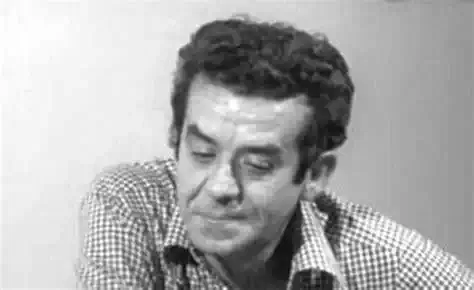
Virgílio Martinho
1928–1994
· lived 66 years
 PT
PT
PT
Virgílio Martinho was a Portuguese poet linked to the surrealist movement. His work is marked by formal experimentation, the exploration of the unconscious, and a language loaded with dreamlike and subversive imagery. He questioned social and literary conventions, seeking radical expressive freedom.
n. 1928, Lisboa · m. 1994-12-04, Lisboa
30
Views
Bio
Identification and basic context
Virgílio Martinho was a Portuguese poet, a prominent figure of surrealism in Portugal. Born in 1911, he stood out for his experimental poetry and his connection with the surrealist movement, which sought to explore the unconscious and subvert social and literary conventions. Nationality: Portuguese. Language of writing: Portuguese.Childhood and education
Information about Virgílio Martinho's childhood and education is scarcer, but it is known that he was part of cultural and intellectual circles that led him to contact with European avant-gardes, namely surrealism. His education, although not detailed in terms of academic path, was evidently influenced by readings and debates on modern art and literature.Literary career
Virgílio Martinho began his literary career in the 1930s, associating himself with the Portuguese surrealist group. He published in avant-garde magazines and anthologies, being one of the active names in the dissemination and practice of surrealism in Portugal. His work is marked by a continuous search for experimentation and rupture with traditional forms of poetic expression.Work, style, and literary characteristics
Virgílio Martinho's work is deeply influenced by surrealism. His poems explore the universe of dreams, the unconscious, the illogical, and the irrational. The language is loaded with dreamlike imagery, unexpected associations, and a strong subversive charge, seeking to deconstruct perceived reality and social norms. He uses free verse radically and explores language experimentally, with an often disturbing and provocative tone. His poetic voice is fragmented and seeks the liberation of thought and expression.Cultural and historical context
Virgílio Martinho lived in a turbulent period in the history of Portugal and Europe, with the advent of the Estado Novo in Portugal and the outbreak of World War II. Surrealism, as an avant-garde movement, represented a form of protest and a search for new forms of expression in a context of repression and conservatism. Martinho dialogued with other Portuguese surrealists, contributing to the consolidation of the movement in the country.Personal life
Little is known about Virgílio Martinho's personal life outside his involvement with the surrealist movement. His dedication to poetry and artistic experimentation suggests a profile of an intellectual engaged with avant-garde ideas and the challenging of established norms.Recognition and reception
Virgílio Martinho's recognition, like that of many surrealists, was more significant in avant-garde circles and among critics specializing in avant-garde poetry. His work, due to its experimental and subversive nature, may not have reached a massive audience, but its importance to the history of surrealism in Portugal is undeniable.Influences and legacy
Virgílio Martinho was influenced by the masters of European surrealism. His legacy lies in his contribution to the introduction and consolidation of surrealism in Portuguese poetry, paving the way for experimentation and the exploration of the unconscious in national literature. His work is an example of poetry's power to challenge limits and provoke reflection.Interpretation and critical analysis
Virgílio Martinho's poetry is often analyzed from the perspective of surrealism, highlighting the exploration of psychic automatism, the deconstruction of logic, and the search for a language that reveals the deepest layers of the human psyche. Interpretations seek to unravel the complex webs of images and meanings in his work.Curiosities and lesser-known aspects
One aspect to highlight is Virgílio Martinho's courage in adhering to an avant-garde movement like surrealism in a conservative political and social context. His work is a testament to the pursuit of creative freedom and the exploration of unexplored literary territories.Death and memory
Virgílio Martinho passed away in 1959. His literary memory is kept alive through his work, which continues to be studied and admired for its originality and its importance in the panorama of Portuguese surrealism.Poems
0No poems found
Comments (0)
Log in
to post a comment.
No comments yet. Be the first to comment.