
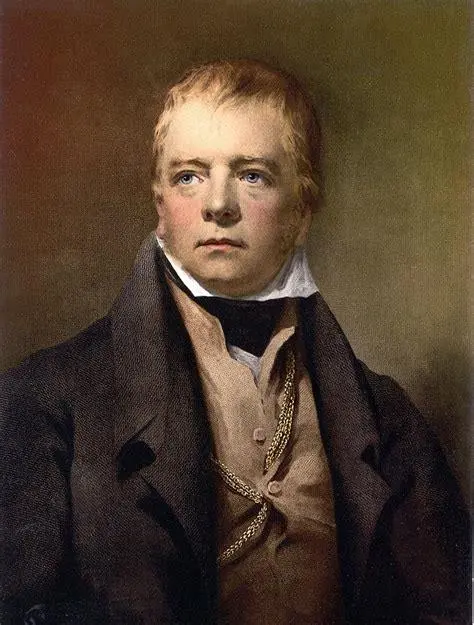
Walter Scott
1771–1832
· lived 61 years
 GB
GB
GB
Sir Walter Scott (15 August 1771 – 21 September 1832) was a prolific Scottish poet, novelist, and historian. He is widely regarded as one of the pillars of the historical novel and a central figure of Romanticism in English literature. His work had an immense impact on the popular imagination, shaping the vision of past eras, especially the Middle Ages and the stories of the Scottish Highlands. Scott not only wrote but also helped preserve and popularize Scottish culture and traditions.
n. 1771-08-15, Edimburgo · m. 1832-09-21, Residência Abbotsford
657
Views
Bio
Sir Walter Scott was born in Edinburgh, Scotland. From an early age, he showed a great interest in Scottish history and popular ballads. After studying law, he became a lawyer, but his passion for writing soon took over. His literary career took off with the publication of poems such as "The Lay of the Last Minstrel" and "Marmion". However, it was with the novel "Waverley" that Scott inaugurated the historical novel genre, followed by masterpieces such as "Ivanhoe", "Rob Roy", and "Kenilworth". His novels are known for their detailed reconstruction of historical periods, memorable characters, and engaging plots. Scott also served as a lawyer and administrator, and was a collector of Scottish antiquities. He played a significant role in the recovery and preservation of the Scottish Crown Jewels. Scott passed away in Abbotsford, Scotland, in 1832, leaving a vast and influential literary legacy.
Poems
0No poems found
Quotes
40Comments (0)
Log in
to post a comment.
No comments yet. Be the first to comment.