
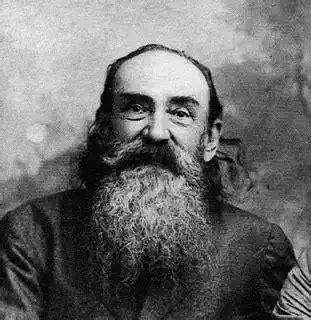
Wenceslau de Morais
1854–1929
· lived 75 years
 PT
PT
Venceslau José de Sousa de Morais was a writer and a military officer in the Portuguese Navy. He was the son of Venceslau de Morais and Maria Amélia Figueiredo.
n. 1854-05-30, Lisboa · m. 1929-07-01, Tokushima
24
Views
Bio
Portuguese poet, born in Lisbon. He embarked on a military career and, having completed his studies at the Naval School in 1875, he served in the navy in Mozambique, Timor, and Macau. There, he served as the harbor master's second-in-command and as a high school teacher, associating with Camilo Pessanha. In 1899, he was appointed consul in Kobe (Japan), where he married and converted to Buddhism. In 1913, shortly after being appointed consul-general, he resigned and retired to the Japanese island of Shikoku. Venceslau de Morais was one of the representatives of exoticism in Portuguese literature, much like Camilo Pessanha or Fernão Mendes Pinto, but in a different way. Fascinated by Japan and its culture, which he adopted, and a fierce critic of Western life, his work reflects, across various genres (letters, novellas, chronicles, intimate impressions), an attentive, instinctive observation of his adopted homeland, combined with a strongly visual, fresh, and lively style in works such as Traços do Extremo Oriente — Sião, China e Japão (1895), Dai-Nippon (1897), Cartas do Japão, Serões no Japão (1905), O Culto do Chá (1905), O Bom-Odori em Tokushima (1916), O-Yoné e Kó-Haru (1923), Paisagens da China e do Japão (1924), Os Serões no Japão (1925), Relance da Alma Japonesa (1926) and Osoroshi (1933)
-----------------------------------------------------------------------------------------------
Venceslau José de Sousa de Morais (Lisbon, May 30, 1854 - Tokushima, July 1, 1929) was a writer and a military officer in the Portuguese Navy.
He was the son of Venceslau José de Sousa de Morais, maternal grandson of a Frenchman, and his wife Maria Amélia de Figueiredo. A Navy officer, he completed his studies at the Naval School in 1875, having served in Mozambique, Macau, Portuguese Timor, and Japan.
After attending the Naval School, he served aboard various ships of the Portuguese Navy. In 1885, he traveled to Macau for the first time, where he settled. He was the second-in-command of the Port of Macau's captaincy and a teacher at the Macau Lyceum since its founding in 1894. During his stay in Macau, he married Vong-Io-Chan (Atchan), a Chinese woman with whom he had two children, and established ties of friendship with Camilo Pessanha.
Meanwhile, in 1889, he traveled to Japan, a country that captivated him and to which he would return several times in the following years in the exercise of his duties. In 1897, he visited Japan in the company of the Governor of Macau, José Maria de Sousa Horta e Costa, and was received by Emperor Meiji. The following year, he abandoned Atchan and his two children and moved permanently to Japan as consul in Kobe.
There, his life was marked by his literary and journalistic activity, his romantic relationships with two Japanese women (Ó-Yoné Fukumoto and Ko-Haru), and his growing "Japanization".
Over the next thirty years, Venceslau de Morais became the primary Portuguese source of information about the Orient, sharing his intimate experiences of daily Japanese life with his Portuguese readers, in an activity parallel to that of Lafcadio Hearn, the great popularizer of Japanese culture in the Anglo-Saxon world, with whom he was a contemporary.
Embittered by the death of Ó-Yoné from illness, Venceslau de Morais resigned from his consular post in 1913, by which time he had reached the rank of Lieutenant Colonel / Frigate Captain, and moved to Tokushima, her hometown. There he lived with Ko-Haru, Ó-Yoné's niece, who would also pass away from illness.
There, his daily life became increasingly identical to that of the Japanese people, albeit against a backdrop of their growing hostility. Increasingly solitary and with his health undermined, Venceslau de Morais passed away in Tokushima on July 1, 1929.
Venceslau de Morais was the author of several books on subjects related to the Orient, especially Japan. Literary contributions by him can also be found in the weekly newspaper Branco e Negro (1896-1898) and the magazines Brasil-Portugal (1899-1914), Serões (1901-1911), and Tiro e Sport (1904-1913).
A Macau 500 patacas banknote was printed featuring his image.
TAP Portugal honored him by naming one of its aircraft after him.
First cousin of Sebastião Teles.
Works
1895 - Traços do Extremo Oriente
1897 - Dai-Nippon
1904 - Cartas do Japão (with various series and volumes published after this date)
1905 - O culto do chá
1906 - Paisagens da China e do Japão
1907 - Cartas do Japão, A vida japonesa : 3.ª Série (1905-1906)
1916 - O "Bon-Odori" em Tokushima
1917 - Ko-Haru
1920 - Fernão Mendes Pinto no Japão
1923 - Ó-Yoné e Ko-Haru
1924 - Relance da história do Japão
1926 - Os serões no Japão
1928 - Relance da alma japonesa
1933 - Osoroshi
Poems
0No poems found
Comments (0)
No comments yet. Be the first to comment.