

Poemas neste tema
Sociedade e Mundo
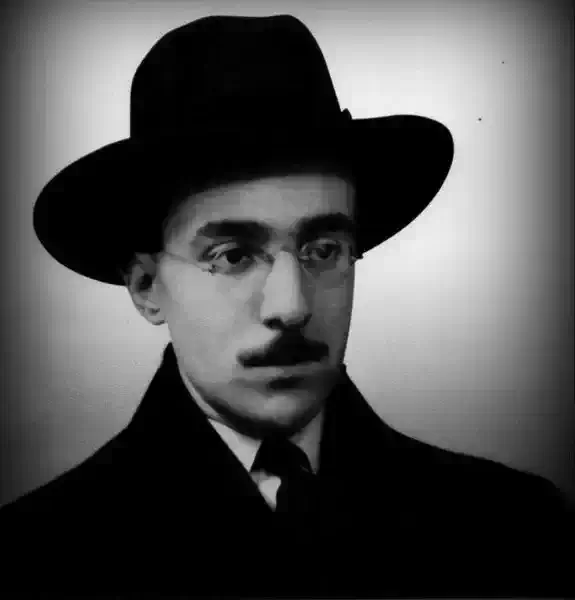
Fernando Pessoa
«À tua porta está lama.
«À tua porta está lama.
Meu amor, quem na faria?»
É assim a velha cantiga
Que como tu principia.
Meu amor, quem na faria?»
É assim a velha cantiga
Que como tu principia.
1 533
Fernando Pessoa
O que sinto e o que penso
O que sinto e o que penso
De ti é bem e é mal.
É como quando uma xícara
Tem o pires desigual.
De ti é bem e é mal.
É como quando uma xícara
Tem o pires desigual.
1 326
Fernando Pessoa
III - Análogo começo,
III
Análogo começo,
Uníssono me peço,
Gaia ciência o assomo —
Falha no último tomo,
Onde prolixo ameaço
Paralelo transpasso
O entreaberto haver
Diagonal a ser.
O interlúdio vernal,
Conquista do fatal,
Onde, veludo, afaga
A última que alaga.
Timbre do vespertino,
Ali, caricia, o hino
Outonou entre preces
Antes que, água, comeces.
Análogo começo,
Uníssono me peço,
Gaia ciência o assomo —
Falha no último tomo,
Onde prolixo ameaço
Paralelo transpasso
O entreaberto haver
Diagonal a ser.
O interlúdio vernal,
Conquista do fatal,
Onde, veludo, afaga
A última que alaga.
Timbre do vespertino,
Ali, caricia, o hino
Outonou entre preces
Antes que, água, comeces.
970
Fernando Pessoa
Lavas a roupa na selha
Lavas a roupa na selha
Com um vagar apressado,
E o brinco na tua orelha
Acompanha o teu cuidado.
Com um vagar apressado,
E o brinco na tua orelha
Acompanha o teu cuidado.
1 434
Fernando Pessoa
40 - ELEVATION
Before light was, light's bright idea lit
God's thought of it,
And, because through God's thought light's thought did pass,
Light ever was,
And from beyond eternity became
The living flame
That trembles into life and reddens with
Our life's soul‑width.
Before light was, when yet the night was queen
O'er what had been,
In God's realized prescience it could be
Light from eternity,
For no time enters into God's thoughts or
Their spaceless Hour.
Take thou therefore, my Song, from light the mood
Of being, and brood,
Like the Dove unbegot, over the abyss
Of consciousness,
Taking as thy true part that thought of God
Whence light issued.
Let my words burst into that divine flame
That lights its name
Of each thing from within with ultimate meaning.
Though earth be screening
With fixed appearance the Sun in each Thing,
Bear, on thy wing
High‑lifted, rays from the unrisen Sun
Whence life is spun.
Soar out, my Song, out of despair and night
And catch that light
Ere it appear, from neath the horizon
Of action,
Borne out of dreams by intuition bright
Of endless light.
Though none believe nor any understand,
Yet feel thee fanned
With those breeze‑breaths that come up with the morn
From the Unborn.
Soar like a lark into the coming day
And bear thy way
Into the possibility of noon
Hid in the dawn.
No matter that none know what thy words speak.
A day shall break
Out of eternity as each day bright
Out of each night.
Thy wings shall touch the slanting light of dawn
And, upwards drawn
By being light‑struck, shall to light be near
When light's yet far.
Hope is thy ready and high‑soaring flight
Out of the night,
Joy is thy touching of the first high rays
That day betrays,
Life is the course thy flight sequesters from
Earth and its nightly doom,
And these three things are one in thy belief
That pain is brief.
II
Thou, unseeen Bird, essence of spiritual light,
That yet art bright
With the epitome of the outer shine,
Thou that art mine
And yet not mine but general to the earth,
Wings of rebirth,
Whose song, though in me heard, participates
Of all that all elates,
Thou point of meeting of me with the wings
Hidden in all things,
Thou breath, thou vapour, seen and not seen, of
Some abstract love,
Thou exhalation of the prisoned flight
Of all things' weight,
Thou that in me art fear, mad splendour, all
To ache and enthral,
Attract me, take me, o pure flight, and rise
With me in thine eyes,
Lost, cast, unpetalled and divine, up to
What thou dost woo!
O Spirit‑Lark that wakest ere the morn
And art reborn
At each recoming of the sun, and art
The wiser part
Of all that message is to our low eyes
Of what shall rise!
Life‑weightless Bird that no meads can attract,
But that must act
Its fate in air, above our marshes sad
And meads low‑laid,
In free heights communing with the Great Horn
As yet unborn!
O sterile Bird that hast no nest nor home
But what shall come,
That hast no song save in the heights above
Nests, homes and love,
Nor any thought save for the coming day,
Though far away
It seem to those who measure yet thy flight
But by its height
And not by its intention, that is carried
From life and married
To those diviner hours that winged things
Find with their wings!
O Bird of ruthless song and untold wishes,
Whose high flight reaches
Heights not of earth, but of pure air, encumbered
With no joys weighed and numbered!
Take all my heart in thy purpose of going
And make the flowing
Down to earth of my song be like thy song,
Something strange, strong
With distance, eerily half‑perishing
From farness! Sing,
And let my heart be what thou meanst with singings
My life with winging.
My hopes and fears with th’tone wherewith thy note
To me doth float
And the great purpose hidden in my fate
With thy mere height!
My heart shall thus be happy even if pained,
Free even if strained
To keep that height of joy whence tremble down
Thy songs to our own.
My soul may thus be happy, full and free.
Oh, happily
Raise me from me and lift my life unto
That thou dost woo -
The light, the sky, the distance and the morn,
Till I be unborn
Again to pure dispersion in the seas
Of the high breeze
That speaks to thee, ere light be born, of light,
Till the delight
Of without being being shall make me
Song and sky be!
God's thought of it,
And, because through God's thought light's thought did pass,
Light ever was,
And from beyond eternity became
The living flame
That trembles into life and reddens with
Our life's soul‑width.
Before light was, when yet the night was queen
O'er what had been,
In God's realized prescience it could be
Light from eternity,
For no time enters into God's thoughts or
Their spaceless Hour.
Take thou therefore, my Song, from light the mood
Of being, and brood,
Like the Dove unbegot, over the abyss
Of consciousness,
Taking as thy true part that thought of God
Whence light issued.
Let my words burst into that divine flame
That lights its name
Of each thing from within with ultimate meaning.
Though earth be screening
With fixed appearance the Sun in each Thing,
Bear, on thy wing
High‑lifted, rays from the unrisen Sun
Whence life is spun.
Soar out, my Song, out of despair and night
And catch that light
Ere it appear, from neath the horizon
Of action,
Borne out of dreams by intuition bright
Of endless light.
Though none believe nor any understand,
Yet feel thee fanned
With those breeze‑breaths that come up with the morn
From the Unborn.
Soar like a lark into the coming day
And bear thy way
Into the possibility of noon
Hid in the dawn.
No matter that none know what thy words speak.
A day shall break
Out of eternity as each day bright
Out of each night.
Thy wings shall touch the slanting light of dawn
And, upwards drawn
By being light‑struck, shall to light be near
When light's yet far.
Hope is thy ready and high‑soaring flight
Out of the night,
Joy is thy touching of the first high rays
That day betrays,
Life is the course thy flight sequesters from
Earth and its nightly doom,
And these three things are one in thy belief
That pain is brief.
II
Thou, unseeen Bird, essence of spiritual light,
That yet art bright
With the epitome of the outer shine,
Thou that art mine
And yet not mine but general to the earth,
Wings of rebirth,
Whose song, though in me heard, participates
Of all that all elates,
Thou point of meeting of me with the wings
Hidden in all things,
Thou breath, thou vapour, seen and not seen, of
Some abstract love,
Thou exhalation of the prisoned flight
Of all things' weight,
Thou that in me art fear, mad splendour, all
To ache and enthral,
Attract me, take me, o pure flight, and rise
With me in thine eyes,
Lost, cast, unpetalled and divine, up to
What thou dost woo!
O Spirit‑Lark that wakest ere the morn
And art reborn
At each recoming of the sun, and art
The wiser part
Of all that message is to our low eyes
Of what shall rise!
Life‑weightless Bird that no meads can attract,
But that must act
Its fate in air, above our marshes sad
And meads low‑laid,
In free heights communing with the Great Horn
As yet unborn!
O sterile Bird that hast no nest nor home
But what shall come,
That hast no song save in the heights above
Nests, homes and love,
Nor any thought save for the coming day,
Though far away
It seem to those who measure yet thy flight
But by its height
And not by its intention, that is carried
From life and married
To those diviner hours that winged things
Find with their wings!
O Bird of ruthless song and untold wishes,
Whose high flight reaches
Heights not of earth, but of pure air, encumbered
With no joys weighed and numbered!
Take all my heart in thy purpose of going
And make the flowing
Down to earth of my song be like thy song,
Something strange, strong
With distance, eerily half‑perishing
From farness! Sing,
And let my heart be what thou meanst with singings
My life with winging.
My hopes and fears with th’tone wherewith thy note
To me doth float
And the great purpose hidden in my fate
With thy mere height!
My heart shall thus be happy even if pained,
Free even if strained
To keep that height of joy whence tremble down
Thy songs to our own.
My soul may thus be happy, full and free.
Oh, happily
Raise me from me and lift my life unto
That thou dost woo -
The light, the sky, the distance and the morn,
Till I be unborn
Again to pure dispersion in the seas
Of the high breeze
That speaks to thee, ere light be born, of light,
Till the delight
Of without being being shall make me
Song and sky be!
1 707
Fernando Pessoa
Quando Neptuno houver alongado
Quando Neptuno houver alongado
Até quase aos bosques ao cimo da praia
Os seus braços com mãos ruidosas de espuma
E Éolo houver
Largado por sobre o mar sob o azul
Onde Apolo aquece
Os cavalos frescos dos ventos leves,
Eu irei contigo
Passear na altura cheirosa a mar
Dos (...) altos
E concluir que esta vida é pouco
Desde que os deuses
Foram velados e os homens ingratos
Dos altares esquecidos tiraram todos
Os ex-votos velhos,
Os ex-votos velhos que eram (...)
(...)
Que Cristo e Maria
E de antes que a cruz pusesse a nudez
Da sua secura
De encontro ao céu sempre velho e novo.
Até quase aos bosques ao cimo da praia
Os seus braços com mãos ruidosas de espuma
E Éolo houver
Largado por sobre o mar sob o azul
Onde Apolo aquece
Os cavalos frescos dos ventos leves,
Eu irei contigo
Passear na altura cheirosa a mar
Dos (...) altos
E concluir que esta vida é pouco
Desde que os deuses
Foram velados e os homens ingratos
Dos altares esquecidos tiraram todos
Os ex-votos velhos,
Os ex-votos velhos que eram (...)
(...)
Que Cristo e Maria
E de antes que a cruz pusesse a nudez
Da sua secura
De encontro ao céu sempre velho e novo.
1 574
Fernando Pessoa
Rezas a Deus ao deitar-te
Rezas a Deus ao deitar-te
Pedindo não sei o quê.
Se rezasses ao demónio,
Eu saberia o que é.
Pedindo não sei o quê.
Se rezasses ao demónio,
Eu saberia o que é.
1 342
Fernando Pessoa
LE MIGNON
Let them speak ill of me. I do not care
Why shouldst thou care that fairer art than I?
My lips so oft have rested on thy hair,
So oft on thy lips, and so oft
On thy white arms that yet pretend to lie
On my dreams cushions like a vague thing soft...
Let them speak. Life is sweet if thy lips mean
Life. Love is sweet if thou art love.
The scorners cannot know what kisses screen
Our throbbing heart from heart nor prove
That full possession our mad love can scene
With perverse actions like an empire's end
That sinks among the galleys and doth blend
Its sunset with the landscape's emerald green.
Let them speak. Put thy hand within my hand
And let us love as maid and boy are said
To love. But we are none and love is red
On our hot souls thrill and understand.
Oh, to thy bed!
Oh to thy bed, fairer than maidens' couches
And curtained over with strange care for strangeness,
Let's to thy bed and kiss naked while touches
Selected from our hotter dreams transcend
Lust with thought lust acted upon our frames.
The magic misery of our wedded names
Shall light the future with impassioned strangeness.
Antinous!
Why shouldst thou care that fairer art than I?
My lips so oft have rested on thy hair,
So oft on thy lips, and so oft
On thy white arms that yet pretend to lie
On my dreams cushions like a vague thing soft...
Let them speak. Life is sweet if thy lips mean
Life. Love is sweet if thou art love.
The scorners cannot know what kisses screen
Our throbbing heart from heart nor prove
That full possession our mad love can scene
With perverse actions like an empire's end
That sinks among the galleys and doth blend
Its sunset with the landscape's emerald green.
Let them speak. Put thy hand within my hand
And let us love as maid and boy are said
To love. But we are none and love is red
On our hot souls thrill and understand.
Oh, to thy bed!
Oh to thy bed, fairer than maidens' couches
And curtained over with strange care for strangeness,
Let's to thy bed and kiss naked while touches
Selected from our hotter dreams transcend
Lust with thought lust acted upon our frames.
The magic misery of our wedded names
Shall light the future with impassioned strangeness.
Antinous!
1 530
Fernando Pessoa
Now are no Janus’ temple-doors thrown wide
Now are no Janus' temple‑doors thrown wide
To utter thougts of war upon the land.
Now doth no double facing God divide
Him from himself, that sight of him may brand
The symbol of opposed things upon
Our hearts that at our eyes on him are thrown.
Now do no pagan cults tremble at Mars' name
Because bad‑auguring birds like clouds have flown
O'er nations' frontiers, nor do oracles frame
Strange answers unto ears of armoured chiefs,
Replies that leave perplexed their perplexed eyes
That know not whether that heart‑pang they hear
Is the first grief heralding their peoples' griefs
Or the strange cold that the Gods' mysteries
Speak to his soul that is to conquest near.
No. All is dead that wreathed war round with Gods.
Nor omens mute, nor the foiled sacrifice,
No dim words spoken by spilt blood on sods.
Nay, nor the later sense that vice and sloth,
When in a people's heart they nestle both
Do on them call the wrath of heaven, us move.
Our souls are void, like a stage mummer's cries
And our hate and our love mock hate and love.
Something of coldness, like the coming winter,
Crosses our autumn like a profecy.
Round our leaves now no swallows circle and twitter.
No more, no more, shall we heart‑wholesome be.
There is a sadness that with us doth stay
Like a billetted guest, and far away
Our ultimate death awaits us like a sea.
Alas! that even the poesy of wars
Should, like a tired thing, have gone where things go.
Alas! alas! that we have come thus far
Knowing still the same nothing that we know,
To meet more than ourselves, nor no throe
That shall be herald of a newer man.
And ever as the old woes the cold new woe
Fills with its deathless measure our life's span.
No, even the Christian manner of love or hate
Is dead. No God that lives in us survives
The winter in us that snow‑kills God and Fate
And has iced o'er the rivers of our lives.
With cuirass and with pike we laid aside
All that made battle worth the death in it.
Our science‑made war‑gestures now deride
The great eternal things that war doth fit
With helm and armour.
With mortal pomp yet pomp. We are on death's side.
All is as if were not part of it.
All clashes, rings and turmoils as if far.
The foiled imagining within our wit
Ousts war's clear image with bare thought of war.
Our plans are cold, our courage cold, our eyes
When they look inwards dream but the far plain
And vague, picture‑seen faces and their pain
Touches no sense of ours, nor do dreamed cries
Rise in us. What cold thing has become of
Our very hatred? What way has strength gone?
We die as if the sky were not above
Our heads and beneath us sand, grass and stone.
The great eternal presence of all things
No longer doth with us collaborate
To lift our hearts up on invisible wings
And bid us tremble at the thrill of Fate.
The possible fall of empires doth no more
Touch us with that great and mysterious dread
That John on Pathmos saw rise o'er his head
Like a space‑filling sea without a shore.
Alas! our nobler fear has gone away
Where our weariness pointed. We are blind
And learned to blindness. Our wild gestures stray
From us like leaves that fall far off with the wind,
And we fight clearly, coldly, night and day.
These things I thought, knowing that far behind
My visible horizon war was slave
Of that Invisible Master who doth wave
His speechless hand o'er continents and seas
And men like reaped things fall, and the blind wind
With groping hands that in the night are blind
Touches the dead men's faces' mysteries.
This I thought when, lo! before me there was
A door of iron, or what iron seemed,
An unsized portal, and its live‑seeming lock
Seemed all the uses of a lock to mock.
To see that door was to know none could pass
Through it, nor could its other‑side be dreamed.
A ribbon of broad stairs led up to it
But had no meaning, like a laugh unseen,
I looked and the door seemed to sway as hit
By blows, but no blows fell on it. That screen
Was interposed between me and no scene,
Yet, like an eye staring from out the night,
It touched my heart cold with its iron mean.
And this was not in space nor in a light.
Somewhere in me where dreams do themselves show
And have an inner meaning God doth know,
The door was set, and it seemed to my soul
That there since some inner eternity
It ever had been and I something had seen,
Yet half forgot, that like a half‑shown scroll,
Concealed its sense in what it showed to me.
And lo! as my heart looked, the door grew clear
As a near‑lit thing seen in a black night,
And a great sense of a great coming fear
Was fear already in my heart's affright.
Then as I looked I saw - yet it did seem
That in my vision that had ever been -
From beneath the strange door down the steps flow
A string of silent blood, that step by step,
Fell with a motion desolate and slow.
The thin red stream seemed conscious of its course
Though its course seemed to be none, but to fall.
I looked and it fell ever, with a force
Of relinquishment to its fall, a knell
To some hope in me, and the blood
That ever was but a small line did flood
All my pained soul and made it red. The spell
Of its thin redness spreade o'er my thought's mood
And all my thoughts became a great red wall
Set up in front of what in me doth brood.
Then everything shifted, yet was the same.
I looked on as one who sees a child's game
And finds its eyes at interest in it
And knows not why. A sense of end did hit
My power of having feelings with a rain
That did with deep red all my dim soul stain
As it had stained that soul.
Then all the outer world was dashed to night
And, though no floor remained, no sides, no light
To that space‑missed new world, set far from being,
Yet by some clearer virtue of my seeing
All I saw was without nor left nor right
With a name to it, without a place
Even in itself, without an I to see.
The mere great door and the red blood's thin trace
And all the rest was void and mystery.
Then all again seemed changing unto some
New, unimaginable and fearful thing.
The door and that blood‑line seemed to come
A strange new‑featured Face looking out through
The Universe's whole frame, traversing
It like light an invisible glass - a wing
Belonging to no bird our thoughts construe.
Then the door seemed to recede - nay, to have
Receded, when I knew not, nor was there
A when, for Time seem'd as seems a far wave
On a wide sea, something gone past. The bare
Eternal door seemed to have gone to the end
Of a visible infinity, and all
That now remained on which my soul could spend
Its terror was the blood ever at its fall.
Then, though still the same small line of red,
The blood seeemed to grow glass and in it I saw
A mighty river full of strange things - dead
Men, children, wrecks of bridges, cities, thrones,
And still the line was a small red line, (...)
Of other meaning than that
That before God for the clear world atones.
But the (...) visions in that line contained
Seemed wide as space. The red line seemed a slit
In a thin door through which our eyes can see
Large fields, a city and the whole sky stained
With clouds, and all this in the line could be;
And from some unknown where I looked on it.
It seemed the edge of a cube opening
Sideways to sides of visions, more and more.
Now and then across its glass - like being a wing
Passed a tremor ran over everything
That had in it a clear and tragic being.
Then ceased. And from, past space, the door
Still held my unconscious consciousness of seeing.
It seemed sometimes a bright, red moving veil
And through it as through a stained window I guessed
A night and stars on a vague pale day pressed,
On a same horizon desolate and pale.
Then, as I stared, suddenly before me,
Like a fan suddenly opened, the blood‑line
Took space from side to side, leaving naught to me
Left or right of it. Its red (...) fact
Became a red Niagara, a cataract.
But there were no steps, nothing: it did fall
As if drawn in the air, over no edge, and all
Was this and this was its own mystery.
Then lo! over the edge, no longer now,
But empires rolled, and I saw Greece and Rome
Pass. And still over the eternal flow
Reddened from left to right my inner sight's home
Of seeing. And all like to God's blood did come
Like a great rain off a huge thorn‑crowned brow.
And I saw more and more strange empires roll
Down and some I knew not, nor seeing them, guessed.
Awhile their falling the fall's brink caressed
Then they sunk down somewhere within my soul,
And my soul was the soul of all the world,
And from my (...) eyes that saw all this
Suddenly I felt, as if a flag unfurled,
God in me look out at these mysteries.
My eyes seemed windows of another sight
Of someone set behind my soul in the night
Looking through my eyes and my sight, mine own
Was but a glass those unknown eyes looked through,
And still the vision was blood falling down
In cataracts into Mystery, red and slow.
I became one with world and Fate and God,
And the great River that came on and fell
Let me see through its veil of (...) blood
The stars shine and a vague moonlight, then fell
Something from me. The cataract came more near
To my sight; then it seemed into mine eyes
To creep to become with them and the fear
To pass behind them into some soul (...).
Then all that did remain was the stars light
And again in the dark infinity
My pity and my dread alone with me
And my dream's meaning like a paling night.
To utter thougts of war upon the land.
Now doth no double facing God divide
Him from himself, that sight of him may brand
The symbol of opposed things upon
Our hearts that at our eyes on him are thrown.
Now do no pagan cults tremble at Mars' name
Because bad‑auguring birds like clouds have flown
O'er nations' frontiers, nor do oracles frame
Strange answers unto ears of armoured chiefs,
Replies that leave perplexed their perplexed eyes
That know not whether that heart‑pang they hear
Is the first grief heralding their peoples' griefs
Or the strange cold that the Gods' mysteries
Speak to his soul that is to conquest near.
No. All is dead that wreathed war round with Gods.
Nor omens mute, nor the foiled sacrifice,
No dim words spoken by spilt blood on sods.
Nay, nor the later sense that vice and sloth,
When in a people's heart they nestle both
Do on them call the wrath of heaven, us move.
Our souls are void, like a stage mummer's cries
And our hate and our love mock hate and love.
Something of coldness, like the coming winter,
Crosses our autumn like a profecy.
Round our leaves now no swallows circle and twitter.
No more, no more, shall we heart‑wholesome be.
There is a sadness that with us doth stay
Like a billetted guest, and far away
Our ultimate death awaits us like a sea.
Alas! that even the poesy of wars
Should, like a tired thing, have gone where things go.
Alas! alas! that we have come thus far
Knowing still the same nothing that we know,
To meet more than ourselves, nor no throe
That shall be herald of a newer man.
And ever as the old woes the cold new woe
Fills with its deathless measure our life's span.
No, even the Christian manner of love or hate
Is dead. No God that lives in us survives
The winter in us that snow‑kills God and Fate
And has iced o'er the rivers of our lives.
With cuirass and with pike we laid aside
All that made battle worth the death in it.
Our science‑made war‑gestures now deride
The great eternal things that war doth fit
With helm and armour.
With mortal pomp yet pomp. We are on death's side.
All is as if were not part of it.
All clashes, rings and turmoils as if far.
The foiled imagining within our wit
Ousts war's clear image with bare thought of war.
Our plans are cold, our courage cold, our eyes
When they look inwards dream but the far plain
And vague, picture‑seen faces and their pain
Touches no sense of ours, nor do dreamed cries
Rise in us. What cold thing has become of
Our very hatred? What way has strength gone?
We die as if the sky were not above
Our heads and beneath us sand, grass and stone.
The great eternal presence of all things
No longer doth with us collaborate
To lift our hearts up on invisible wings
And bid us tremble at the thrill of Fate.
The possible fall of empires doth no more
Touch us with that great and mysterious dread
That John on Pathmos saw rise o'er his head
Like a space‑filling sea without a shore.
Alas! our nobler fear has gone away
Where our weariness pointed. We are blind
And learned to blindness. Our wild gestures stray
From us like leaves that fall far off with the wind,
And we fight clearly, coldly, night and day.
These things I thought, knowing that far behind
My visible horizon war was slave
Of that Invisible Master who doth wave
His speechless hand o'er continents and seas
And men like reaped things fall, and the blind wind
With groping hands that in the night are blind
Touches the dead men's faces' mysteries.
This I thought when, lo! before me there was
A door of iron, or what iron seemed,
An unsized portal, and its live‑seeming lock
Seemed all the uses of a lock to mock.
To see that door was to know none could pass
Through it, nor could its other‑side be dreamed.
A ribbon of broad stairs led up to it
But had no meaning, like a laugh unseen,
I looked and the door seemed to sway as hit
By blows, but no blows fell on it. That screen
Was interposed between me and no scene,
Yet, like an eye staring from out the night,
It touched my heart cold with its iron mean.
And this was not in space nor in a light.
Somewhere in me where dreams do themselves show
And have an inner meaning God doth know,
The door was set, and it seemed to my soul
That there since some inner eternity
It ever had been and I something had seen,
Yet half forgot, that like a half‑shown scroll,
Concealed its sense in what it showed to me.
And lo! as my heart looked, the door grew clear
As a near‑lit thing seen in a black night,
And a great sense of a great coming fear
Was fear already in my heart's affright.
Then as I looked I saw - yet it did seem
That in my vision that had ever been -
From beneath the strange door down the steps flow
A string of silent blood, that step by step,
Fell with a motion desolate and slow.
The thin red stream seemed conscious of its course
Though its course seemed to be none, but to fall.
I looked and it fell ever, with a force
Of relinquishment to its fall, a knell
To some hope in me, and the blood
That ever was but a small line did flood
All my pained soul and made it red. The spell
Of its thin redness spreade o'er my thought's mood
And all my thoughts became a great red wall
Set up in front of what in me doth brood.
Then everything shifted, yet was the same.
I looked on as one who sees a child's game
And finds its eyes at interest in it
And knows not why. A sense of end did hit
My power of having feelings with a rain
That did with deep red all my dim soul stain
As it had stained that soul.
Then all the outer world was dashed to night
And, though no floor remained, no sides, no light
To that space‑missed new world, set far from being,
Yet by some clearer virtue of my seeing
All I saw was without nor left nor right
With a name to it, without a place
Even in itself, without an I to see.
The mere great door and the red blood's thin trace
And all the rest was void and mystery.
Then all again seemed changing unto some
New, unimaginable and fearful thing.
The door and that blood‑line seemed to come
A strange new‑featured Face looking out through
The Universe's whole frame, traversing
It like light an invisible glass - a wing
Belonging to no bird our thoughts construe.
Then the door seemed to recede - nay, to have
Receded, when I knew not, nor was there
A when, for Time seem'd as seems a far wave
On a wide sea, something gone past. The bare
Eternal door seemed to have gone to the end
Of a visible infinity, and all
That now remained on which my soul could spend
Its terror was the blood ever at its fall.
Then, though still the same small line of red,
The blood seeemed to grow glass and in it I saw
A mighty river full of strange things - dead
Men, children, wrecks of bridges, cities, thrones,
And still the line was a small red line, (...)
Of other meaning than that
That before God for the clear world atones.
But the (...) visions in that line contained
Seemed wide as space. The red line seemed a slit
In a thin door through which our eyes can see
Large fields, a city and the whole sky stained
With clouds, and all this in the line could be;
And from some unknown where I looked on it.
It seemed the edge of a cube opening
Sideways to sides of visions, more and more.
Now and then across its glass - like being a wing
Passed a tremor ran over everything
That had in it a clear and tragic being.
Then ceased. And from, past space, the door
Still held my unconscious consciousness of seeing.
It seemed sometimes a bright, red moving veil
And through it as through a stained window I guessed
A night and stars on a vague pale day pressed,
On a same horizon desolate and pale.
Then, as I stared, suddenly before me,
Like a fan suddenly opened, the blood‑line
Took space from side to side, leaving naught to me
Left or right of it. Its red (...) fact
Became a red Niagara, a cataract.
But there were no steps, nothing: it did fall
As if drawn in the air, over no edge, and all
Was this and this was its own mystery.
Then lo! over the edge, no longer now,
But empires rolled, and I saw Greece and Rome
Pass. And still over the eternal flow
Reddened from left to right my inner sight's home
Of seeing. And all like to God's blood did come
Like a great rain off a huge thorn‑crowned brow.
And I saw more and more strange empires roll
Down and some I knew not, nor seeing them, guessed.
Awhile their falling the fall's brink caressed
Then they sunk down somewhere within my soul,
And my soul was the soul of all the world,
And from my (...) eyes that saw all this
Suddenly I felt, as if a flag unfurled,
God in me look out at these mysteries.
My eyes seemed windows of another sight
Of someone set behind my soul in the night
Looking through my eyes and my sight, mine own
Was but a glass those unknown eyes looked through,
And still the vision was blood falling down
In cataracts into Mystery, red and slow.
I became one with world and Fate and God,
And the great River that came on and fell
Let me see through its veil of (...) blood
The stars shine and a vague moonlight, then fell
Something from me. The cataract came more near
To my sight; then it seemed into mine eyes
To creep to become with them and the fear
To pass behind them into some soul (...).
Then all that did remain was the stars light
And again in the dark infinity
My pity and my dread alone with me
And my dream's meaning like a paling night.
1 673
Fernando Pessoa
Now are no Janus’ temple-doors thrown wide
Now are no Janus' temple‑doors thrown wide
To utter thougts of war upon the land.
Now doth no double facing God divide
Him from himself, that sight of him may brand
The symbol of opposed things upon
Our hearts that at our eyes on him are thrown.
Now do no pagan cults tremble at Mars' name
Because bad‑auguring birds like clouds have flown
O'er nations' frontiers, nor do oracles frame
Strange answers unto ears of armoured chiefs,
Replies that leave perplexed their perplexed eyes
That know not whether that heart‑pang they hear
Is the first grief heralding their peoples' griefs
Or the strange cold that the Gods' mysteries
Speak to his soul that is to conquest near.
No. All is dead that wreathed war round with Gods.
Nor omens mute, nor the foiled sacrifice,
No dim words spoken by spilt blood on sods.
Nay, nor the later sense that vice and sloth,
When in a people's heart they nestle both
Do on them call the wrath of heaven, us move.
Our souls are void, like a stage mummer's cries
And our hate and our love mock hate and love.
Something of coldness, like the coming winter,
Crosses our autumn like a profecy.
Round our leaves now no swallows circle and twitter.
No more, no more, shall we heart‑wholesome be.
There is a sadness that with us doth stay
Like a billetted guest, and far away
Our ultimate death awaits us like a sea.
Alas! that even the poesy of wars
Should, like a tired thing, have gone where things go.
Alas! alas! that we have come thus far
Knowing still the same nothing that we know,
To meet more than ourselves, nor no throe
That shall be herald of a newer man.
And ever as the old woes the cold new woe
Fills with its deathless measure our life's span.
No, even the Christian manner of love or hate
Is dead. No God that lives in us survives
The winter in us that snow‑kills God and Fate
And has iced o'er the rivers of our lives.
With cuirass and with pike we laid aside
All that made battle worth the death in it.
Our science‑made war‑gestures now deride
The great eternal things that war doth fit
With helm and armour.
With mortal pomp yet pomp. We are on death's side.
All is as if were not part of it.
All clashes, rings and turmoils as if far.
The foiled imagining within our wit
Ousts war's clear image with bare thought of war.
Our plans are cold, our courage cold, our eyes
When they look inwards dream but the far plain
And vague, picture‑seen faces and their pain
Touches no sense of ours, nor do dreamed cries
Rise in us. What cold thing has become of
Our very hatred? What way has strength gone?
We die as if the sky were not above
Our heads and beneath us sand, grass and stone.
The great eternal presence of all things
No longer doth with us collaborate
To lift our hearts up on invisible wings
And bid us tremble at the thrill of Fate.
The possible fall of empires doth no more
Touch us with that great and mysterious dread
That John on Pathmos saw rise o'er his head
Like a space‑filling sea without a shore.
Alas! our nobler fear has gone away
Where our weariness pointed. We are blind
And learned to blindness. Our wild gestures stray
From us like leaves that fall far off with the wind,
And we fight clearly, coldly, night and day.
These things I thought, knowing that far behind
My visible horizon war was slave
Of that Invisible Master who doth wave
His speechless hand o'er continents and seas
And men like reaped things fall, and the blind wind
With groping hands that in the night are blind
Touches the dead men's faces' mysteries.
This I thought when, lo! before me there was
A door of iron, or what iron seemed,
An unsized portal, and its live‑seeming lock
Seemed all the uses of a lock to mock.
To see that door was to know none could pass
Through it, nor could its other‑side be dreamed.
A ribbon of broad stairs led up to it
But had no meaning, like a laugh unseen,
I looked and the door seemed to sway as hit
By blows, but no blows fell on it. That screen
Was interposed between me and no scene,
Yet, like an eye staring from out the night,
It touched my heart cold with its iron mean.
And this was not in space nor in a light.
Somewhere in me where dreams do themselves show
And have an inner meaning God doth know,
The door was set, and it seemed to my soul
That there since some inner eternity
It ever had been and I something had seen,
Yet half forgot, that like a half‑shown scroll,
Concealed its sense in what it showed to me.
And lo! as my heart looked, the door grew clear
As a near‑lit thing seen in a black night,
And a great sense of a great coming fear
Was fear already in my heart's affright.
Then as I looked I saw - yet it did seem
That in my vision that had ever been -
From beneath the strange door down the steps flow
A string of silent blood, that step by step,
Fell with a motion desolate and slow.
The thin red stream seemed conscious of its course
Though its course seemed to be none, but to fall.
I looked and it fell ever, with a force
Of relinquishment to its fall, a knell
To some hope in me, and the blood
That ever was but a small line did flood
All my pained soul and made it red. The spell
Of its thin redness spreade o'er my thought's mood
And all my thoughts became a great red wall
Set up in front of what in me doth brood.
Then everything shifted, yet was the same.
I looked on as one who sees a child's game
And finds its eyes at interest in it
And knows not why. A sense of end did hit
My power of having feelings with a rain
That did with deep red all my dim soul stain
As it had stained that soul.
Then all the outer world was dashed to night
And, though no floor remained, no sides, no light
To that space‑missed new world, set far from being,
Yet by some clearer virtue of my seeing
All I saw was without nor left nor right
With a name to it, without a place
Even in itself, without an I to see.
The mere great door and the red blood's thin trace
And all the rest was void and mystery.
Then all again seemed changing unto some
New, unimaginable and fearful thing.
The door and that blood‑line seemed to come
A strange new‑featured Face looking out through
The Universe's whole frame, traversing
It like light an invisible glass - a wing
Belonging to no bird our thoughts construe.
Then the door seemed to recede - nay, to have
Receded, when I knew not, nor was there
A when, for Time seem'd as seems a far wave
On a wide sea, something gone past. The bare
Eternal door seemed to have gone to the end
Of a visible infinity, and all
That now remained on which my soul could spend
Its terror was the blood ever at its fall.
Then, though still the same small line of red,
The blood seeemed to grow glass and in it I saw
A mighty river full of strange things - dead
Men, children, wrecks of bridges, cities, thrones,
And still the line was a small red line, (...)
Of other meaning than that
That before God for the clear world atones.
But the (...) visions in that line contained
Seemed wide as space. The red line seemed a slit
In a thin door through which our eyes can see
Large fields, a city and the whole sky stained
With clouds, and all this in the line could be;
And from some unknown where I looked on it.
It seemed the edge of a cube opening
Sideways to sides of visions, more and more.
Now and then across its glass - like being a wing
Passed a tremor ran over everything
That had in it a clear and tragic being.
Then ceased. And from, past space, the door
Still held my unconscious consciousness of seeing.
It seemed sometimes a bright, red moving veil
And through it as through a stained window I guessed
A night and stars on a vague pale day pressed,
On a same horizon desolate and pale.
Then, as I stared, suddenly before me,
Like a fan suddenly opened, the blood‑line
Took space from side to side, leaving naught to me
Left or right of it. Its red (...) fact
Became a red Niagara, a cataract.
But there were no steps, nothing: it did fall
As if drawn in the air, over no edge, and all
Was this and this was its own mystery.
Then lo! over the edge, no longer now,
But empires rolled, and I saw Greece and Rome
Pass. And still over the eternal flow
Reddened from left to right my inner sight's home
Of seeing. And all like to God's blood did come
Like a great rain off a huge thorn‑crowned brow.
And I saw more and more strange empires roll
Down and some I knew not, nor seeing them, guessed.
Awhile their falling the fall's brink caressed
Then they sunk down somewhere within my soul,
And my soul was the soul of all the world,
And from my (...) eyes that saw all this
Suddenly I felt, as if a flag unfurled,
God in me look out at these mysteries.
My eyes seemed windows of another sight
Of someone set behind my soul in the night
Looking through my eyes and my sight, mine own
Was but a glass those unknown eyes looked through,
And still the vision was blood falling down
In cataracts into Mystery, red and slow.
I became one with world and Fate and God,
And the great River that came on and fell
Let me see through its veil of (...) blood
The stars shine and a vague moonlight, then fell
Something from me. The cataract came more near
To my sight; then it seemed into mine eyes
To creep to become with them and the fear
To pass behind them into some soul (...).
Then all that did remain was the stars light
And again in the dark infinity
My pity and my dread alone with me
And my dream's meaning like a paling night.
To utter thougts of war upon the land.
Now doth no double facing God divide
Him from himself, that sight of him may brand
The symbol of opposed things upon
Our hearts that at our eyes on him are thrown.
Now do no pagan cults tremble at Mars' name
Because bad‑auguring birds like clouds have flown
O'er nations' frontiers, nor do oracles frame
Strange answers unto ears of armoured chiefs,
Replies that leave perplexed their perplexed eyes
That know not whether that heart‑pang they hear
Is the first grief heralding their peoples' griefs
Or the strange cold that the Gods' mysteries
Speak to his soul that is to conquest near.
No. All is dead that wreathed war round with Gods.
Nor omens mute, nor the foiled sacrifice,
No dim words spoken by spilt blood on sods.
Nay, nor the later sense that vice and sloth,
When in a people's heart they nestle both
Do on them call the wrath of heaven, us move.
Our souls are void, like a stage mummer's cries
And our hate and our love mock hate and love.
Something of coldness, like the coming winter,
Crosses our autumn like a profecy.
Round our leaves now no swallows circle and twitter.
No more, no more, shall we heart‑wholesome be.
There is a sadness that with us doth stay
Like a billetted guest, and far away
Our ultimate death awaits us like a sea.
Alas! that even the poesy of wars
Should, like a tired thing, have gone where things go.
Alas! alas! that we have come thus far
Knowing still the same nothing that we know,
To meet more than ourselves, nor no throe
That shall be herald of a newer man.
And ever as the old woes the cold new woe
Fills with its deathless measure our life's span.
No, even the Christian manner of love or hate
Is dead. No God that lives in us survives
The winter in us that snow‑kills God and Fate
And has iced o'er the rivers of our lives.
With cuirass and with pike we laid aside
All that made battle worth the death in it.
Our science‑made war‑gestures now deride
The great eternal things that war doth fit
With helm and armour.
With mortal pomp yet pomp. We are on death's side.
All is as if were not part of it.
All clashes, rings and turmoils as if far.
The foiled imagining within our wit
Ousts war's clear image with bare thought of war.
Our plans are cold, our courage cold, our eyes
When they look inwards dream but the far plain
And vague, picture‑seen faces and their pain
Touches no sense of ours, nor do dreamed cries
Rise in us. What cold thing has become of
Our very hatred? What way has strength gone?
We die as if the sky were not above
Our heads and beneath us sand, grass and stone.
The great eternal presence of all things
No longer doth with us collaborate
To lift our hearts up on invisible wings
And bid us tremble at the thrill of Fate.
The possible fall of empires doth no more
Touch us with that great and mysterious dread
That John on Pathmos saw rise o'er his head
Like a space‑filling sea without a shore.
Alas! our nobler fear has gone away
Where our weariness pointed. We are blind
And learned to blindness. Our wild gestures stray
From us like leaves that fall far off with the wind,
And we fight clearly, coldly, night and day.
These things I thought, knowing that far behind
My visible horizon war was slave
Of that Invisible Master who doth wave
His speechless hand o'er continents and seas
And men like reaped things fall, and the blind wind
With groping hands that in the night are blind
Touches the dead men's faces' mysteries.
This I thought when, lo! before me there was
A door of iron, or what iron seemed,
An unsized portal, and its live‑seeming lock
Seemed all the uses of a lock to mock.
To see that door was to know none could pass
Through it, nor could its other‑side be dreamed.
A ribbon of broad stairs led up to it
But had no meaning, like a laugh unseen,
I looked and the door seemed to sway as hit
By blows, but no blows fell on it. That screen
Was interposed between me and no scene,
Yet, like an eye staring from out the night,
It touched my heart cold with its iron mean.
And this was not in space nor in a light.
Somewhere in me where dreams do themselves show
And have an inner meaning God doth know,
The door was set, and it seemed to my soul
That there since some inner eternity
It ever had been and I something had seen,
Yet half forgot, that like a half‑shown scroll,
Concealed its sense in what it showed to me.
And lo! as my heart looked, the door grew clear
As a near‑lit thing seen in a black night,
And a great sense of a great coming fear
Was fear already in my heart's affright.
Then as I looked I saw - yet it did seem
That in my vision that had ever been -
From beneath the strange door down the steps flow
A string of silent blood, that step by step,
Fell with a motion desolate and slow.
The thin red stream seemed conscious of its course
Though its course seemed to be none, but to fall.
I looked and it fell ever, with a force
Of relinquishment to its fall, a knell
To some hope in me, and the blood
That ever was but a small line did flood
All my pained soul and made it red. The spell
Of its thin redness spreade o'er my thought's mood
And all my thoughts became a great red wall
Set up in front of what in me doth brood.
Then everything shifted, yet was the same.
I looked on as one who sees a child's game
And finds its eyes at interest in it
And knows not why. A sense of end did hit
My power of having feelings with a rain
That did with deep red all my dim soul stain
As it had stained that soul.
Then all the outer world was dashed to night
And, though no floor remained, no sides, no light
To that space‑missed new world, set far from being,
Yet by some clearer virtue of my seeing
All I saw was without nor left nor right
With a name to it, without a place
Even in itself, without an I to see.
The mere great door and the red blood's thin trace
And all the rest was void and mystery.
Then all again seemed changing unto some
New, unimaginable and fearful thing.
The door and that blood‑line seemed to come
A strange new‑featured Face looking out through
The Universe's whole frame, traversing
It like light an invisible glass - a wing
Belonging to no bird our thoughts construe.
Then the door seemed to recede - nay, to have
Receded, when I knew not, nor was there
A when, for Time seem'd as seems a far wave
On a wide sea, something gone past. The bare
Eternal door seemed to have gone to the end
Of a visible infinity, and all
That now remained on which my soul could spend
Its terror was the blood ever at its fall.
Then, though still the same small line of red,
The blood seeemed to grow glass and in it I saw
A mighty river full of strange things - dead
Men, children, wrecks of bridges, cities, thrones,
And still the line was a small red line, (...)
Of other meaning than that
That before God for the clear world atones.
But the (...) visions in that line contained
Seemed wide as space. The red line seemed a slit
In a thin door through which our eyes can see
Large fields, a city and the whole sky stained
With clouds, and all this in the line could be;
And from some unknown where I looked on it.
It seemed the edge of a cube opening
Sideways to sides of visions, more and more.
Now and then across its glass - like being a wing
Passed a tremor ran over everything
That had in it a clear and tragic being.
Then ceased. And from, past space, the door
Still held my unconscious consciousness of seeing.
It seemed sometimes a bright, red moving veil
And through it as through a stained window I guessed
A night and stars on a vague pale day pressed,
On a same horizon desolate and pale.
Then, as I stared, suddenly before me,
Like a fan suddenly opened, the blood‑line
Took space from side to side, leaving naught to me
Left or right of it. Its red (...) fact
Became a red Niagara, a cataract.
But there were no steps, nothing: it did fall
As if drawn in the air, over no edge, and all
Was this and this was its own mystery.
Then lo! over the edge, no longer now,
But empires rolled, and I saw Greece and Rome
Pass. And still over the eternal flow
Reddened from left to right my inner sight's home
Of seeing. And all like to God's blood did come
Like a great rain off a huge thorn‑crowned brow.
And I saw more and more strange empires roll
Down and some I knew not, nor seeing them, guessed.
Awhile their falling the fall's brink caressed
Then they sunk down somewhere within my soul,
And my soul was the soul of all the world,
And from my (...) eyes that saw all this
Suddenly I felt, as if a flag unfurled,
God in me look out at these mysteries.
My eyes seemed windows of another sight
Of someone set behind my soul in the night
Looking through my eyes and my sight, mine own
Was but a glass those unknown eyes looked through,
And still the vision was blood falling down
In cataracts into Mystery, red and slow.
I became one with world and Fate and God,
And the great River that came on and fell
Let me see through its veil of (...) blood
The stars shine and a vague moonlight, then fell
Something from me. The cataract came more near
To my sight; then it seemed into mine eyes
To creep to become with them and the fear
To pass behind them into some soul (...).
Then all that did remain was the stars light
And again in the dark infinity
My pity and my dread alone with me
And my dream's meaning like a paling night.
1 673
Fernando Pessoa
Sem clepsidra ou relógio o tempo escorre
Sem clepsidra ou relógio o tempo escorre
E nós com ele, nada o árbitro escravo
Pode contra o destino
Nem contra os deuses o mortal desejo
Hoje, quais servos com ausentes deuses,
Na alheia casa, um dia sem o juiz,
Bebamos e comamos.
Será para amanhã o que aconteça.
Tombai mancebos, o vinho em nobre taça
E o braço nu com que o entornais fique
No lembrando olhar
Como uma água que parece vinho!
Sim, heróis somos todos amanhã.
Hoje adiemos. E na erguida taça
O roxo vinho espelhe
Depois — porque a noite nunca falta.
E nós com ele, nada o árbitro escravo
Pode contra o destino
Nem contra os deuses o mortal desejo
Hoje, quais servos com ausentes deuses,
Na alheia casa, um dia sem o juiz,
Bebamos e comamos.
Será para amanhã o que aconteça.
Tombai mancebos, o vinho em nobre taça
E o braço nu com que o entornais fique
No lembrando olhar
Como uma água que parece vinho!
Sim, heróis somos todos amanhã.
Hoje adiemos. E na erguida taça
O roxo vinho espelhe
Depois — porque a noite nunca falta.
1 002
Fernando Pessoa
O teu cabelo cortado
O teu cabelo cortado
À maneira de rapaz
Não deixa justificado
Aquele amor que me faz.
À maneira de rapaz
Não deixa justificado
Aquele amor que me faz.
1 337
Fernando Pessoa
S. DÂMASO PORTUGUÊS
1 .
Depois de se ter passado
Os noventa mais vereis
Vir aquele desejado
Que há-de fundar novas leis.
2 .
Verá o Leão fatal
Que de Portugal lhe vem
O que lhe há-de fazer mal,
Aquele escondido Rei.
3.
Aquela manhã chuvosa
Com névoa muito escura
Verá de Deus a figura
Fazer Lisboa ditosa.
4.
Névoa já é levantada
Lá junto do meio-dia;
Haveis de a ver descoberta
A oitava maravilha.
Depois de se ter passado
Os noventa mais vereis
Vir aquele desejado
Que há-de fundar novas leis.
2 .
Verá o Leão fatal
Que de Portugal lhe vem
O que lhe há-de fazer mal,
Aquele escondido Rei.
3.
Aquela manhã chuvosa
Com névoa muito escura
Verá de Deus a figura
Fazer Lisboa ditosa.
4.
Névoa já é levantada
Lá junto do meio-dia;
Haveis de a ver descoberta
A oitava maravilha.
1 170
Fernando Pessoa
ARETHUSA
Still Arethusa keeps her course,
For, though the corporal dark of earth
Stifle, like an unconscious nurse,
The impulse for her second birth,
Yet her true will must ever be
These captive waves that shall be free.
So the forgotten water ever
With withdrawn life and hid emotion
Moves on in darkness, still a river,
Towards a sun upon an ocean;
And the found place there will not cease
To be the river's, not the sea's.
So keeps she, under the void dark
Of her oppressed seclusion still
Her careful self, whose soul shall work
Towards the outlet from the hill,
Past hived vaults and humid walls
And her dropped noise of waterfalls.
Uncaught throughout the spell of caves,
Forlorn under the mother stone,
Still the great destined river craves
Its purpose, liquid and alone,
And more, yet less, under the hills
Its unresisting motion wills.
And ever, while time frets the rocks
And space shuts dark the godless flow,
She runs, a will in waves that flocks
Around a darkness for a glow;
And onward still, because it is
What shall be, and the Gods are this.
And, still remembering to forget,
Still onward because Fate inclines,
Veiled Arethusa still doth wet
With purpose the weird cavern shrines,
Where, past their blind, dead, solid being,
Her watery will moves on to seeing.
Dim under phosphorescent zones
Of darkness wronged and stalactites,
Or complete darkness, where the moans
Of waters wail for destined sights,
Her course, that knows no day, doth still
Work out to day its nightly will.
Till, bright at last in the aired arms
Of the lone rocks laid in the sea,
Bare Arethusa free her charms
To light and to its panic glee,
And the sea clasp her, as she were
Venus there born and mistress there.
For, though the corporal dark of earth
Stifle, like an unconscious nurse,
The impulse for her second birth,
Yet her true will must ever be
These captive waves that shall be free.
So the forgotten water ever
With withdrawn life and hid emotion
Moves on in darkness, still a river,
Towards a sun upon an ocean;
And the found place there will not cease
To be the river's, not the sea's.
So keeps she, under the void dark
Of her oppressed seclusion still
Her careful self, whose soul shall work
Towards the outlet from the hill,
Past hived vaults and humid walls
And her dropped noise of waterfalls.
Uncaught throughout the spell of caves,
Forlorn under the mother stone,
Still the great destined river craves
Its purpose, liquid and alone,
And more, yet less, under the hills
Its unresisting motion wills.
And ever, while time frets the rocks
And space shuts dark the godless flow,
She runs, a will in waves that flocks
Around a darkness for a glow;
And onward still, because it is
What shall be, and the Gods are this.
And, still remembering to forget,
Still onward because Fate inclines,
Veiled Arethusa still doth wet
With purpose the weird cavern shrines,
Where, past their blind, dead, solid being,
Her watery will moves on to seeing.
Dim under phosphorescent zones
Of darkness wronged and stalactites,
Or complete darkness, where the moans
Of waters wail for destined sights,
Her course, that knows no day, doth still
Work out to day its nightly will.
Till, bright at last in the aired arms
Of the lone rocks laid in the sea,
Bare Arethusa free her charms
To light and to its panic glee,
And the sea clasp her, as she were
Venus there born and mistress there.
1 578
Fernando Pessoa
SAUDAÇÃO A W. WHITMAN [c]
SAUDAÇÂO A W. WHITMAN
Para cantar-te,
Para cantar-te como tu quererias que te cantassem,
Melhor é cantar a terra, o mar, as cidades e os campos —
Os homens, as mulheres, as crianças,
As profissões, [...], as (...)
Todas as coisas que, juntas, formam a síntese-universo,
Todas as coisas que, separadas, valem a síntese-Universo,
Todas as coisas que universais formam a síntese Deus.
Ah, o poema que te cantasse bem,
Seria o poema que todo cantasse tudo,
O poema em que estivessem todas as vestes e todas as sedas —
Todos os perfumes e todos os sabores
E o contacto em todos os sentidos do tacto de todas as coisas tangíveis.
Poema que dispensasse a música, música com vida,
Poema que transcendesse a pintura, pintura com alma
Para cantar-te,
Para cantar-te como tu quererias que te cantassem,
Melhor é cantar a terra, o mar, as cidades e os campos —
Os homens, as mulheres, as crianças,
As profissões, [...], as (...)
Todas as coisas que, juntas, formam a síntese-universo,
Todas as coisas que, separadas, valem a síntese-Universo,
Todas as coisas que universais formam a síntese Deus.
Ah, o poema que te cantasse bem,
Seria o poema que todo cantasse tudo,
O poema em que estivessem todas as vestes e todas as sedas —
Todos os perfumes e todos os sabores
E o contacto em todos os sentidos do tacto de todas as coisas tangíveis.
Poema que dispensasse a música, música com vida,
Poema que transcendesse a pintura, pintura com alma
1 306
Fernando Pessoa
SAUDAÇÃO A W. WHITMAN [c]
SAUDAÇÂO A W. WHITMAN
Para cantar-te,
Para cantar-te como tu quererias que te cantassem,
Melhor é cantar a terra, o mar, as cidades e os campos —
Os homens, as mulheres, as crianças,
As profissões, [...], as (...)
Todas as coisas que, juntas, formam a síntese-universo,
Todas as coisas que, separadas, valem a síntese-Universo,
Todas as coisas que universais formam a síntese Deus.
Ah, o poema que te cantasse bem,
Seria o poema que todo cantasse tudo,
O poema em que estivessem todas as vestes e todas as sedas —
Todos os perfumes e todos os sabores
E o contacto em todos os sentidos do tacto de todas as coisas tangíveis.
Poema que dispensasse a música, música com vida,
Poema que transcendesse a pintura, pintura com alma
Para cantar-te,
Para cantar-te como tu quererias que te cantassem,
Melhor é cantar a terra, o mar, as cidades e os campos —
Os homens, as mulheres, as crianças,
As profissões, [...], as (...)
Todas as coisas que, juntas, formam a síntese-universo,
Todas as coisas que, separadas, valem a síntese-Universo,
Todas as coisas que universais formam a síntese Deus.
Ah, o poema que te cantasse bem,
Seria o poema que todo cantasse tudo,
O poema em que estivessem todas as vestes e todas as sedas —
Todos os perfumes e todos os sabores
E o contacto em todos os sentidos do tacto de todas as coisas tangíveis.
Poema que dispensasse a música, música com vida,
Poema que transcendesse a pintura, pintura com alma
1 306
Fernando Pessoa
P. DAS HORAS — Parte II
P. DAS HORAS — Parte II —
Grandes estandartes de fumo das chaminés das fábricas
Sobre os telhados (...)
Ó poderosamente gritos de combate!
Vago rumor silencioso e comercial das ruas...
E a ordem inconsciente dos que vão e vêm
Pelas fitas dos passeios...
À hora de sol em que as lojas descem os toldos
Grandes estandartes de fumo das chaminés das fábricas
Sobre os telhados (...)
Ó poderosamente gritos de combate!
Vago rumor silencioso e comercial das ruas...
E a ordem inconsciente dos que vão e vêm
Pelas fitas dos passeios...
À hora de sol em que as lojas descem os toldos
1 313
Fernando Pessoa
Todas as horas faço gaffes de civilidade e etiqueta,
Todas as horas faço gaffes de civilidade e etiqueta
(A vida social é complexa para a minha fraqueza de nervos)
Mas nunca existiu quem só tivesse vivido em alma
Numa eterna luta de Janus.
Arre, a humanidade é uma coisa muito complexa...
Tenho-a observado com os olhos e os
nervos, e ainda não percebi.
(Compreender é um navio ao longe)
Toda a gente que tenho conhecido
Estou farto de semi-deuses!
Onde é que há gente no mundo?
Não tenho um amigo, um conhecido, em quem batessem
Ninguém que eu conheça perdeu o amor de uma mulher.
Tenho feito muitas coisas más, muitas coisas reles, muitas infâmias.
Tenho sido cobarde, revoltante, sujo.
Não encontro ninguém assim.
Todos têm sido príncipes, os que têm andado comigo
(A vida social é complexa para a minha fraqueza de nervos)
Mas nunca existiu quem só tivesse vivido em alma
Numa eterna luta de Janus.
Arre, a humanidade é uma coisa muito complexa...
Tenho-a observado com os olhos e os
nervos, e ainda não percebi.
(Compreender é um navio ao longe)
Toda a gente que tenho conhecido
Estou farto de semi-deuses!
Onde é que há gente no mundo?
Não tenho um amigo, um conhecido, em quem batessem
Ninguém que eu conheça perdeu o amor de uma mulher.
Tenho feito muitas coisas más, muitas coisas reles, muitas infâmias.
Tenho sido cobarde, revoltante, sujo.
Não encontro ninguém assim.
Todos têm sido príncipes, os que têm andado comigo
1 271
Fernando Pessoa
Todas as horas faço gaffes de civilidade e etiqueta,
Todas as horas faço gaffes de civilidade e etiqueta
(A vida social é complexa para a minha fraqueza de nervos)
Mas nunca existiu quem só tivesse vivido em alma
Numa eterna luta de Janus.
Arre, a humanidade é uma coisa muito complexa...
Tenho-a observado com os olhos e os
nervos, e ainda não percebi.
(Compreender é um navio ao longe)
Toda a gente que tenho conhecido
Estou farto de semi-deuses!
Onde é que há gente no mundo?
Não tenho um amigo, um conhecido, em quem batessem
Ninguém que eu conheça perdeu o amor de uma mulher.
Tenho feito muitas coisas más, muitas coisas reles, muitas infâmias.
Tenho sido cobarde, revoltante, sujo.
Não encontro ninguém assim.
Todos têm sido príncipes, os que têm andado comigo
(A vida social é complexa para a minha fraqueza de nervos)
Mas nunca existiu quem só tivesse vivido em alma
Numa eterna luta de Janus.
Arre, a humanidade é uma coisa muito complexa...
Tenho-a observado com os olhos e os
nervos, e ainda não percebi.
(Compreender é um navio ao longe)
Toda a gente que tenho conhecido
Estou farto de semi-deuses!
Onde é que há gente no mundo?
Não tenho um amigo, um conhecido, em quem batessem
Ninguém que eu conheça perdeu o amor de uma mulher.
Tenho feito muitas coisas más, muitas coisas reles, muitas infâmias.
Tenho sido cobarde, revoltante, sujo.
Não encontro ninguém assim.
Todos têm sido príncipes, os que têm andado comigo
1 271
Fernando Pessoa
POEMA DE AMOR EM ESTADO NOVO
Tens o olhar misterioso
Com um jeito nevoento,
Indeciso, duvidoso,
Minha Marta Francisca,
Meu amor, meu orçamento!
A tua face de rosa
Tem o colorido esquivo
De uma nota oficiosa.
Quem dera ter-te em meus braços,
Ó meu saldo positivo!
E o teu cabelo — não choro
Seu regresso ao natural —Abandona o padrão-ouro
Amor, pomba, estrada, porta,
Sindicato nacional!
Não sei por que me desprezas.
Fita-me mais um instante,
Lindo corte nas despesas,
Adorada abolição
Da dívida flutuante!
Com que madrigais mostrar-te
Este amor que é chama viva?
Ouve, escuta: vou chamar-te
Assembleia Nacional
Câmara Corporativa.
Como te amo, como, como,
Meu Acto Colonial!
De amor já quase não como,
Meu Estatuto de Trabalho,
Meu Banco de Portugal!
Meu crédito no estrangeiro!
Meu encaixe — ouro adorado!
Serei sempre o teu romeiro...
Pousa a cabeça em meu ombro,
Ó meu Conselho de Estado!
Ó minha corporativa,
Minha lei de Estado Novo,
Não me sejas mais esquiva!
Meu coração quer guarida
Ó linda Casa do Povo!
União Nacional querida,
Teus olhos enchem de mágoa
A sombra da minha vida
Que passa como uma esquadra
Sobre a energia da água.
Que aristocrático ri,
O teu cabelo em cifrões — Finanças em mise-en-plis! —
Meu activo plebiscito,
Nunca desceste a eleições!
Por isso nunca me escolhes
E a minha esperança é vã.
Nem sequer por dó me acolhes,
Minha imprevidente linda
Civilização cristã!
Bem sei: por estes meus modos
Nunca me podes amar.
Olha, desculpa-mas todas.
Estou seguindo as directrizes
Do professor Salazar.
Com um jeito nevoento,
Indeciso, duvidoso,
Minha Marta Francisca,
Meu amor, meu orçamento!
A tua face de rosa
Tem o colorido esquivo
De uma nota oficiosa.
Quem dera ter-te em meus braços,
Ó meu saldo positivo!
E o teu cabelo — não choro
Seu regresso ao natural —Abandona o padrão-ouro
Amor, pomba, estrada, porta,
Sindicato nacional!
Não sei por que me desprezas.
Fita-me mais um instante,
Lindo corte nas despesas,
Adorada abolição
Da dívida flutuante!
Com que madrigais mostrar-te
Este amor que é chama viva?
Ouve, escuta: vou chamar-te
Assembleia Nacional
Câmara Corporativa.
Como te amo, como, como,
Meu Acto Colonial!
De amor já quase não como,
Meu Estatuto de Trabalho,
Meu Banco de Portugal!
Meu crédito no estrangeiro!
Meu encaixe — ouro adorado!
Serei sempre o teu romeiro...
Pousa a cabeça em meu ombro,
Ó meu Conselho de Estado!
Ó minha corporativa,
Minha lei de Estado Novo,
Não me sejas mais esquiva!
Meu coração quer guarida
Ó linda Casa do Povo!
União Nacional querida,
Teus olhos enchem de mágoa
A sombra da minha vida
Que passa como uma esquadra
Sobre a energia da água.
Que aristocrático ri,
O teu cabelo em cifrões — Finanças em mise-en-plis! —
Meu activo plebiscito,
Nunca desceste a eleições!
Por isso nunca me escolhes
E a minha esperança é vã.
Nem sequer por dó me acolhes,
Minha imprevidente linda
Civilização cristã!
Bem sei: por estes meus modos
Nunca me podes amar.
Olha, desculpa-mas todas.
Estou seguindo as directrizes
Do professor Salazar.
1 476
Fernando Pessoa
POEMA DE AMOR EM ESTADO NOVO
Tens o olhar misterioso
Com um jeito nevoento,
Indeciso, duvidoso,
Minha Marta Francisca,
Meu amor, meu orçamento!
A tua face de rosa
Tem o colorido esquivo
De uma nota oficiosa.
Quem dera ter-te em meus braços,
Ó meu saldo positivo!
E o teu cabelo — não choro
Seu regresso ao natural —Abandona o padrão-ouro
Amor, pomba, estrada, porta,
Sindicato nacional!
Não sei por que me desprezas.
Fita-me mais um instante,
Lindo corte nas despesas,
Adorada abolição
Da dívida flutuante!
Com que madrigais mostrar-te
Este amor que é chama viva?
Ouve, escuta: vou chamar-te
Assembleia Nacional
Câmara Corporativa.
Como te amo, como, como,
Meu Acto Colonial!
De amor já quase não como,
Meu Estatuto de Trabalho,
Meu Banco de Portugal!
Meu crédito no estrangeiro!
Meu encaixe — ouro adorado!
Serei sempre o teu romeiro...
Pousa a cabeça em meu ombro,
Ó meu Conselho de Estado!
Ó minha corporativa,
Minha lei de Estado Novo,
Não me sejas mais esquiva!
Meu coração quer guarida
Ó linda Casa do Povo!
União Nacional querida,
Teus olhos enchem de mágoa
A sombra da minha vida
Que passa como uma esquadra
Sobre a energia da água.
Que aristocrático ri,
O teu cabelo em cifrões — Finanças em mise-en-plis! —
Meu activo plebiscito,
Nunca desceste a eleições!
Por isso nunca me escolhes
E a minha esperança é vã.
Nem sequer por dó me acolhes,
Minha imprevidente linda
Civilização cristã!
Bem sei: por estes meus modos
Nunca me podes amar.
Olha, desculpa-mas todas.
Estou seguindo as directrizes
Do professor Salazar.
Com um jeito nevoento,
Indeciso, duvidoso,
Minha Marta Francisca,
Meu amor, meu orçamento!
A tua face de rosa
Tem o colorido esquivo
De uma nota oficiosa.
Quem dera ter-te em meus braços,
Ó meu saldo positivo!
E o teu cabelo — não choro
Seu regresso ao natural —Abandona o padrão-ouro
Amor, pomba, estrada, porta,
Sindicato nacional!
Não sei por que me desprezas.
Fita-me mais um instante,
Lindo corte nas despesas,
Adorada abolição
Da dívida flutuante!
Com que madrigais mostrar-te
Este amor que é chama viva?
Ouve, escuta: vou chamar-te
Assembleia Nacional
Câmara Corporativa.
Como te amo, como, como,
Meu Acto Colonial!
De amor já quase não como,
Meu Estatuto de Trabalho,
Meu Banco de Portugal!
Meu crédito no estrangeiro!
Meu encaixe — ouro adorado!
Serei sempre o teu romeiro...
Pousa a cabeça em meu ombro,
Ó meu Conselho de Estado!
Ó minha corporativa,
Minha lei de Estado Novo,
Não me sejas mais esquiva!
Meu coração quer guarida
Ó linda Casa do Povo!
União Nacional querida,
Teus olhos enchem de mágoa
A sombra da minha vida
Que passa como uma esquadra
Sobre a energia da água.
Que aristocrático ri,
O teu cabelo em cifrões — Finanças em mise-en-plis! —
Meu activo plebiscito,
Nunca desceste a eleições!
Por isso nunca me escolhes
E a minha esperança é vã.
Nem sequer por dó me acolhes,
Minha imprevidente linda
Civilização cristã!
Bem sei: por estes meus modos
Nunca me podes amar.
Olha, desculpa-mas todas.
Estou seguindo as directrizes
Do professor Salazar.
1 476
Fernando Pessoa
POEMA DE AMOR EM ESTADO NOVO
Tens o olhar misterioso
Com um jeito nevoento,
Indeciso, duvidoso,
Minha Marta Francisca,
Meu amor, meu orçamento!
A tua face de rosa
Tem o colorido esquivo
De uma nota oficiosa.
Quem dera ter-te em meus braços,
Ó meu saldo positivo!
E o teu cabelo — não choro
Seu regresso ao natural —Abandona o padrão-ouro
Amor, pomba, estrada, porta,
Sindicato nacional!
Não sei por que me desprezas.
Fita-me mais um instante,
Lindo corte nas despesas,
Adorada abolição
Da dívida flutuante!
Com que madrigais mostrar-te
Este amor que é chama viva?
Ouve, escuta: vou chamar-te
Assembleia Nacional
Câmara Corporativa.
Como te amo, como, como,
Meu Acto Colonial!
De amor já quase não como,
Meu Estatuto de Trabalho,
Meu Banco de Portugal!
Meu crédito no estrangeiro!
Meu encaixe — ouro adorado!
Serei sempre o teu romeiro...
Pousa a cabeça em meu ombro,
Ó meu Conselho de Estado!
Ó minha corporativa,
Minha lei de Estado Novo,
Não me sejas mais esquiva!
Meu coração quer guarida
Ó linda Casa do Povo!
União Nacional querida,
Teus olhos enchem de mágoa
A sombra da minha vida
Que passa como uma esquadra
Sobre a energia da água.
Que aristocrático ri,
O teu cabelo em cifrões — Finanças em mise-en-plis! —
Meu activo plebiscito,
Nunca desceste a eleições!
Por isso nunca me escolhes
E a minha esperança é vã.
Nem sequer por dó me acolhes,
Minha imprevidente linda
Civilização cristã!
Bem sei: por estes meus modos
Nunca me podes amar.
Olha, desculpa-mas todas.
Estou seguindo as directrizes
Do professor Salazar.
Com um jeito nevoento,
Indeciso, duvidoso,
Minha Marta Francisca,
Meu amor, meu orçamento!
A tua face de rosa
Tem o colorido esquivo
De uma nota oficiosa.
Quem dera ter-te em meus braços,
Ó meu saldo positivo!
E o teu cabelo — não choro
Seu regresso ao natural —Abandona o padrão-ouro
Amor, pomba, estrada, porta,
Sindicato nacional!
Não sei por que me desprezas.
Fita-me mais um instante,
Lindo corte nas despesas,
Adorada abolição
Da dívida flutuante!
Com que madrigais mostrar-te
Este amor que é chama viva?
Ouve, escuta: vou chamar-te
Assembleia Nacional
Câmara Corporativa.
Como te amo, como, como,
Meu Acto Colonial!
De amor já quase não como,
Meu Estatuto de Trabalho,
Meu Banco de Portugal!
Meu crédito no estrangeiro!
Meu encaixe — ouro adorado!
Serei sempre o teu romeiro...
Pousa a cabeça em meu ombro,
Ó meu Conselho de Estado!
Ó minha corporativa,
Minha lei de Estado Novo,
Não me sejas mais esquiva!
Meu coração quer guarida
Ó linda Casa do Povo!
União Nacional querida,
Teus olhos enchem de mágoa
A sombra da minha vida
Que passa como uma esquadra
Sobre a energia da água.
Que aristocrático ri,
O teu cabelo em cifrões — Finanças em mise-en-plis! —
Meu activo plebiscito,
Nunca desceste a eleições!
Por isso nunca me escolhes
E a minha esperança é vã.
Nem sequer por dó me acolhes,
Minha imprevidente linda
Civilização cristã!
Bem sei: por estes meus modos
Nunca me podes amar.
Olha, desculpa-mas todas.
Estou seguindo as directrizes
Do professor Salazar.
1 476
Fernando Pessoa
Não ter deveres, nem horas certas, nem realidades...
Não ter deveres, nem horas certas, nem realidades...
Ser uma ave humana
Que passe haleyonica sobre a intransigência do mundo —
Ganhando o pão da sua noite com o suor da fronte dos outros —
Faz-tudo triste
No coliseu com lágrimas,
E compère antigo, um pouco mais cheio que Vénus de Milo,
Na insubsistência dos acasos.
E um pouco de sol, ao menos, para os sonhos onde não vivo.
Ser uma ave humana
Que passe haleyonica sobre a intransigência do mundo —
Ganhando o pão da sua noite com o suor da fronte dos outros —
Faz-tudo triste
No coliseu com lágrimas,
E compère antigo, um pouco mais cheio que Vénus de Milo,
Na insubsistência dos acasos.
E um pouco de sol, ao menos, para os sonhos onde não vivo.
1 493
Fernando Pessoa
Com bandas militares
Com bandas militares à frente, compostas de volantes e hélices,
Com uma vanguarda sonora de sereia de automóvel e de barco
Com um estardalhaço longínquo, com saltos e alardes
De bombos e pratos, com (...)
Desencadeio-me a saudar-te. Pum!
Pum, pum, pum...
Pu-u-u-u-u-m!
Com uma vanguarda sonora de sereia de automóvel e de barco
Com um estardalhaço longínquo, com saltos e alardes
De bombos e pratos, com (...)
Desencadeio-me a saudar-te. Pum!
Pum, pum, pum...
Pu-u-u-u-u-m!
1 080