

Poemas neste tema
Arte
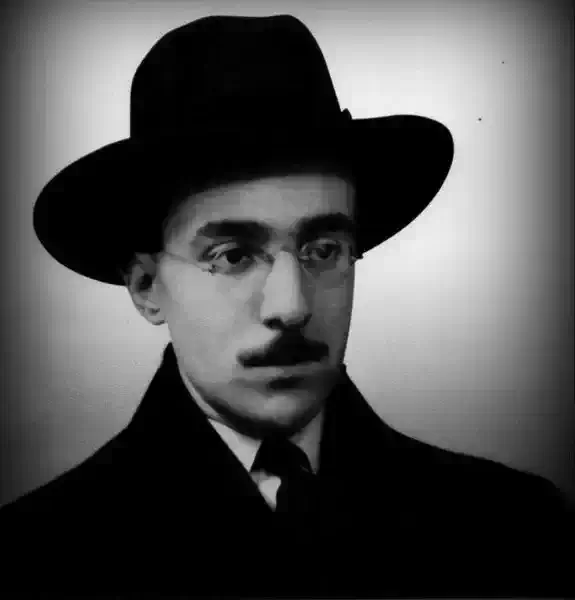
Fernando Pessoa
32 - HER FINGERS TOYED ABSENTLY WITH HER RINGS
A SENSATIONIST POEM
Her fingers toyed absently with her rings
There are fallen angels in the way you look
And great bridges over silent streams in your smile.
Your gestures are a lonely princess dreaming over a book
At a windows over a lake, on some distant isle.
If I were to stretch my hand and touch your that would be
Dawn behind the turrets of a city in some East.
The words hidden in my gesture would be moon light on the sea
Of your being something in my soul like gaiety in a feast
Let your silence tell me of the numberless dreams that are you,
Let the drooping of your eyelids veil landscapes that are you,
I ask no more than that you should come into my dreams and be true
To the wider seas within me and my inner eternal day.
Blossoms, blossoms, blossoms along the road of your going to speak.
Eighteenth century gardens, so sad in the middle of our dreaming them now,
Are the way you are conscious of yourself on your eyelids, by your lips, through your cheek.
O the road to Nowhere all for us and we there and a new God this to allow!
Do not scatter the silence that is the palace where our consciousness
Is now living at unity our duplicate lives of one soul.
What are we, in our dream of each other, but a picture which is
The masterpiece of a painter that never painted at all?
1916
Her fingers toyed absently with her rings
There are fallen angels in the way you look
And great bridges over silent streams in your smile.
Your gestures are a lonely princess dreaming over a book
At a windows over a lake, on some distant isle.
If I were to stretch my hand and touch your that would be
Dawn behind the turrets of a city in some East.
The words hidden in my gesture would be moon light on the sea
Of your being something in my soul like gaiety in a feast
Let your silence tell me of the numberless dreams that are you,
Let the drooping of your eyelids veil landscapes that are you,
I ask no more than that you should come into my dreams and be true
To the wider seas within me and my inner eternal day.
Blossoms, blossoms, blossoms along the road of your going to speak.
Eighteenth century gardens, so sad in the middle of our dreaming them now,
Are the way you are conscious of yourself on your eyelids, by your lips, through your cheek.
O the road to Nowhere all for us and we there and a new God this to allow!
Do not scatter the silence that is the palace where our consciousness
Is now living at unity our duplicate lives of one soul.
What are we, in our dream of each other, but a picture which is
The masterpiece of a painter that never painted at all?
1916
8 531
Fernando Pessoa
28 - ISIS
In the cool pillared portico
That gives white entrance to her moods
Start-lovely stand in a mule row
The statues of her pulchritudes.
Twelve are they and the mind doth gather
Their separate seen lives to one sense;
The thirteenth, which is all together,
Means her soul and its confluence.
Five statues mean the senses five,
Seven are her mysteries of Thought.
The thirteenth seems somehow to live
Beside her life and know it not.
The summer lies outside her shades,
The breezes creep into her halls,
And from her windowed loss the glades
Are something that the soul recalls.
She built her house with heavenly types
Of building in her inner seeing.
The sun makes the long pillars stripes
On the cold hard floors of her being.
Yet she is absent and despairing,
Her statues await her New Hour,
And from the shadows of her hearing
The whisper of the drones doth flower.
This was not anyhow nor when.
All was as cool as dreams are cool
When breezes creep up to our pain
And we are laid beside a pool,
And a far larger pool arises
In our restored imagining,
And all our body's sense despises
Our innate lack of fin and wing.
Still by her portico I stopped.
The shadows there were clear and fast.
Slightly, as with a kiss, I hoped,
And Having, like a swallow passed.
That gives white entrance to her moods
Start-lovely stand in a mule row
The statues of her pulchritudes.
Twelve are they and the mind doth gather
Their separate seen lives to one sense;
The thirteenth, which is all together,
Means her soul and its confluence.
Five statues mean the senses five,
Seven are her mysteries of Thought.
The thirteenth seems somehow to live
Beside her life and know it not.
The summer lies outside her shades,
The breezes creep into her halls,
And from her windowed loss the glades
Are something that the soul recalls.
She built her house with heavenly types
Of building in her inner seeing.
The sun makes the long pillars stripes
On the cold hard floors of her being.
Yet she is absent and despairing,
Her statues await her New Hour,
And from the shadows of her hearing
The whisper of the drones doth flower.
This was not anyhow nor when.
All was as cool as dreams are cool
When breezes creep up to our pain
And we are laid beside a pool,
And a far larger pool arises
In our restored imagining,
And all our body's sense despises
Our innate lack of fin and wing.
Still by her portico I stopped.
The shadows there were clear and fast.
Slightly, as with a kiss, I hoped,
And Having, like a swallow passed.
4 635
Fernando Pessoa
XXII - My soul is a stiff pageant, man by man,
My soul is a stiff pageant, man by man,
Of some Egyptian art than Egypt older,
Found in some tomb whose rite no guess can scan,
Where all things else to coloured dust did moulder.
Whate'er its sense may mean, its age is twin
To that of priesthoods whose feet stood near God,
When knowledge was so great that 'twas a sin
And man's mere soul too man for its abode.
But when I ask what means that pageant I
And would look at it suddenly, I lose
The sense I had of seeing it, nor can try
Again to look, nor hath my memory a use
That seems recalling, save that it recalls
An emptiness of having seen those walls.
Of some Egyptian art than Egypt older,
Found in some tomb whose rite no guess can scan,
Where all things else to coloured dust did moulder.
Whate'er its sense may mean, its age is twin
To that of priesthoods whose feet stood near God,
When knowledge was so great that 'twas a sin
And man's mere soul too man for its abode.
But when I ask what means that pageant I
And would look at it suddenly, I lose
The sense I had of seeing it, nor can try
Again to look, nor hath my memory a use
That seems recalling, save that it recalls
An emptiness of having seen those walls.
4 253
Fernando Pessoa
A criança que ri na rua,
A criança que ri na rua,
A música que vem no acaso,
A tela absurda, a estátua nua,
A bondade que não tem prazo –
Tudo isso excede este rigor
Que o raciocínio dá a tudo,
E tem qualquer coisa de amor,
Ainda que o amor seja mudo.
04/10/1934
A música que vem no acaso,
A tela absurda, a estátua nua,
A bondade que não tem prazo –
Tudo isso excede este rigor
Que o raciocínio dá a tudo,
E tem qualquer coisa de amor,
Ainda que o amor seja mudo.
04/10/1934
4 943
Fernando Pessoa
Do fundo do fim do mundo
Do fundo do fim do mundo
Vieram-me perguntar
Qual era o anseio fundo
Que me fazia chorar.
E eu disse: «É esse que os poetas
Têm tentado dizer
Em obras sempre incompletas
Em que puseram seu ser.»
E assim com um gesto nobre
Respondi a quem não sei
Se me houve por rico ou pobre.
14/07/1934
Vieram-me perguntar
Qual era o anseio fundo
Que me fazia chorar.
E eu disse: «É esse que os poetas
Têm tentado dizer
Em obras sempre incompletas
Em que puseram seu ser.»
E assim com um gesto nobre
Respondi a quem não sei
Se me houve por rico ou pobre.
14/07/1934
4 081
Fernando Pessoa
Tenho escrito mais versos que verdade.
Tenho escrito muitos versos,
Muitas coisas a rimar,
Dadas em ritmos diversos
Ao mundo e ao seu olvidar.
Nada sou, ou fui de tudo.
Quanto escrevi ou pensei
É como o filho de um mudo –
«Amanhã eu te direi».
E isto só por gesto e esgar,
Feito de nadas em dedos
Como uma luz ao passar
Por onde havia arvoredos.
12/04/1934
Muitas coisas a rimar,
Dadas em ritmos diversos
Ao mundo e ao seu olvidar.
Nada sou, ou fui de tudo.
Quanto escrevi ou pensei
É como o filho de um mudo –
«Amanhã eu te direi».
E isto só por gesto e esgar,
Feito de nadas em dedos
Como uma luz ao passar
Por onde havia arvoredos.
12/04/1934
3 788
Fernando Pessoa
Canta onde nada existe
Canta onde nada existe
O rouxinol para seu bem,
Ouço-o, cismo, fico triste
E a minha tristeza também
Janela aberta, para onde
Campos de não haver são
O onde a dríade se esconde
Sem Ser imaginação.
Quem me dera que a poesia
Fosse mais do que a escrever!
Canta agora a cotovia
Sem se lembrar de viver...
07/12/1933
O rouxinol para seu bem,
Ouço-o, cismo, fico triste
E a minha tristeza também
Janela aberta, para onde
Campos de não haver são
O onde a dríade se esconde
Sem Ser imaginação.
Quem me dera que a poesia
Fosse mais do que a escrever!
Canta agora a cotovia
Sem se lembrar de viver...
07/12/1933
4 559
Fernando Pessoa
Já não vivi em vão
Já não vivi em vão
Já escrevi bem
Uma canção.
A vida o que tem?
Estender a mão
A alguém?
Nem isso, não.
Só o escrever bem
Uma canção.
07/05/1927
Já escrevi bem
Uma canção.
A vida o que tem?
Estender a mão
A alguém?
Nem isso, não.
Só o escrever bem
Uma canção.
07/05/1927
4 998
Fernando Pessoa
Não canto a noite porque no meu canto
Não canto a noite porque no meu canto
O sol que canto acabará em noite.
Não ignoro o que esqueço.
Canto por esquecê-lo.
Pudesse eu suspender, inda que em sonho,
O Apolíneo curso, e conhecer-me,
Inda que louco, gémeo
De uma hora imperecível!
02/09/1923
O sol que canto acabará em noite.
Não ignoro o que esqueço.
Canto por esquecê-lo.
Pudesse eu suspender, inda que em sonho,
O Apolíneo curso, e conhecer-me,
Inda que louco, gémeo
De uma hora imperecível!
02/09/1923
2 390
Fernando Pessoa
O binómio de Newton é tão belo como a Vénus de Milo.
O binómio de Newton é tão belo como a Vénus de Milo.
O que há é pouca gente para dar por isso.
óóóó–óóóóóóóóó–óóóóóóóóóóóóóóó
(O vento lá fora).
O que há é pouca gente para dar por isso.
óóóó–óóóóóóóóó–óóóóóóóóóóóóóóó
(O vento lá fora).
4 874
Fernando Pessoa
12 - Os pastores de Virgílio tocavam avenas e outras coisas
Os pastores de Virgílio tocavam avenas e outras coisas
E cantavam de amor literalmente.
(Depois – eu nunca li Virgílio.
Para que o havia eu de ler?)
Mas os pastores de Virgílio, coitados, são Virgílio,
E a Natureza é bela e antiga.
E cantavam de amor literalmente.
(Depois – eu nunca li Virgílio.
Para que o havia eu de ler?)
Mas os pastores de Virgílio, coitados, são Virgílio,
E a Natureza é bela e antiga.
2 397
Anterior
Página 52