
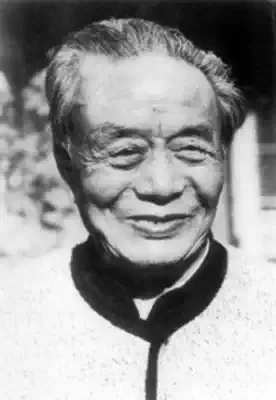
Ai Qing
1910–1996
· lived 86 years
 CN
CN
CN
Ai Qing was a prominent Chinese poet, known for his lyrical and socially conscious poetry. His works address themes such as the lives of ordinary people, the struggle against oppression, and the beauty of nature, reflecting a deep love for his homeland and a humanist spirit. His writing, marked by a direct and emotional style, had a significant influence on modern Chinese poetry, making him a central figure in 20th-century Chinese literature.
n. 1910-03-27, Jinhua · m. 1996-05-05, Pequim
65
Views
Bio
Identification and Basic Context
Ai Qing (艾青) was one of the most important Chinese poets of the 20th century. Born in Zhejiang, China, he wrote primarily in Chinese. He is often associated with the period of great transformations in China, including the civil war, the Japanese occupation, and the founding of the People's Republic of China. His birth name was Jiang Haicheng (蔣海澄).Childhood and Education
Ai Qing was born into a wealthy family in a rural area of Zhejiang province. He received a traditional education but was also exposed to more modern ideas. His education included studies in art and literature, and he went to France to study painting in 1931, where he came into contact with Western poetry, which would strongly influence his later work.Literary Career
Ai Qing began writing poetry in his youth. His literary career gained prominence with the publication of poems such as "Dayang Ge" (Ode to the Ocean) in 1932. During the Second Sino-Japanese War, he wrote patriotic and anti-Japanese poems, which brought him fame. After the founding of the People's Republic of China in 1949, Ai Qing held several official positions in the literary field but also faced periods of political persecution, especially during the Cultural Revolution. His work evolved from early lyricism to more socially and politically engaged poetry, and then to more personal and introspective reflection in later stages of his life.Work, Style, and Literary Characteristics
Ai Qing's work is vast and diverse, encompassing poetry, essays, and criticism. Dominant themes include love for the homeland, exploration of the lives of working people, the nature of China, war, oppression, and hope. His style is often characterized by powerful lyricism, vivid imagery, and accessible language, though it can also be experimental. He was known for his ability to capture the soul of the Chinese people and the country's landscapes. In terms of form, he used both free verse and more traditional forms, but his innovation lay in the fusion of Western influences with Chinese sensibility, creating a unique style that marked Chinese modernism.Cultural and Historical Context
Ai Qing lived through one of the most turbulent periods in Chinese history. He was a contemporary of many writers and intellectuals who shaped modern China. His work is intrinsically linked to historical events, reflecting the nationalism, political struggles, and social aspirations of his time. He was a supporter of the Chinese Communist Party in many phases of his life, but he also suffered persecution, which adds a layer of complexity to his relationship with the regime.Personal Life
Ai Qing's life was marked by profound and sometimes painful experiences. His personal relationships, his marriages, and his experiences with politics and persecution had a significant impact on his work. He was known for his integrity and his dedication to art and the cause of the people.Recognition and Reception
Ai Qing is widely recognized as one of the fathers of modern Chinese poetry. He received various awards and honors throughout his life and posthumously. His poetry was and continues to be widely read and studied in China and internationally. His reputation has had its ups and downs due to political vicissitudes, but his place as a poet of great importance is assured.Influences and Legacy
Ai Qing was influenced by poets such as Pablo Neruda and Walt Whitman. In turn, he influenced countless generations of Chinese poets with his lyricism, his social commitment, and his stylistic innovation. His legacy is that of a poet who gave voice to the Chinese people and land, expressing both the beauty and the pains of his nation.Interpretation and Critical Analysis
Ai Qing's work has been analyzed from various perspectives, including political, social, and aesthetic. His explorations of national identity, collective memory, and the relationship between the individual and the state are recurring themes in the criticism of his work.Curiosities and Lesser-Known Aspects
A curiosity about Ai Qing is his background as a painter, which certainly contributed to his strong ability to create vivid imagery in his poetry. Another lesser-known aspect may be the complexity of his relationship with political power, which led to his rehabilitation and his return to active writing in later stages of his life.Death and Memory
Ai Qing passed away in 1996. After his death, his work continued to be published and celebrated, solidifying his memory as one of the greatest poets of modern China. Many of his works have been reissued and studied in schools and universities.Poems
0No poems found
Comments (0)
Log in
to post a comment.
No comments yet. Be the first to comment.