
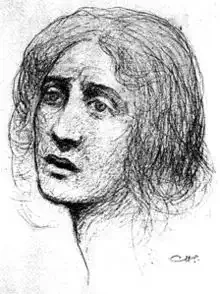
al-Khansa
575–645
· lived 70 years
 SA
SA
SA
Al-Khansa was a pre-Islamic Arab poet known for her poignant elegies, especially those mourning the death of her brothers. Her poetry is a testament to the power of words in expressing grief, honor, and loyalty. She is a prominent figure in Arabic literature, celebrated for her ability to evoke deep emotions and her mastery of the poetic form.
n. 0575-01-01, Néjede · m. 0645-01-01, Néjede
63
Views
Bio
Identification and Basic Context
Al-Khansa, whose birth name was Tumāḍir bint Amr ibn al-Ḥārith ibn Sharīk al-Sulamiyyah, is one of the most celebrated poets of the pre-Islamic era of Arabia. She is widely recognized for her poetry, particularly elegies. Her nationality is Arab, and her written language was Old Arabic. The historical context in which she lived is the pre-Islamic period, an era of deep tribal and oral tradition in the Arabian Peninsula.Childhood and Education
Detailed information about her childhood and education is scarce, as is common for figures from this period. It is known that she belonged to a prominent family of the Banu Sulaym tribe. Oral tradition and family education, focused on tribal values and poetry, would have been the pillars of her upbringing.Literary Career
Al-Khansa's literary career is marked by her exceptional skill in elegiac poetry. She gained renown by composing elegies for her brothers, especially Mu'awiyah and Sakhr, who died in battles. Her poetry was recited in public, solidifying her reputation. She also reportedly participated in poetry competitions, an important element of Arab cultural life at the time.Work, Style, and Literary Characteristics
Al-Khansa's work is dominated by elegies (ritha'), which express deep sorrow, pride, and the valorization of the virtues of the deceased. Her central themes include death, bravery in combat, family and tribal loyalty, and the grief of loss itself. She used a poetic style rich in imagery and emotion, with powerful language and a striking rhythm. Her poetic voice is often described as strong, dignified, and deeply moving. She is associated with the poetic movement of the era, characterized by orality and the importance of memory and tradition.Cultural and Historical Context
Al-Khansa lived in a time of intense tribal rivalry and strong oral tradition. Poetry played a crucial role in society, serving as a means of preserving history, exalting heroes, and expressing feelings. Her work reflects the values of honor, courage, and loyalty that were central to Bedouin culture. She is often mentioned in connection with other poets of her time, such as Imru' al-Qais.Personal Life
Few details about her personal life are known with certainty. It is known that she was the sister of renowned poets and warriors. The loss of her brothers, central figures in her life and work, was a defining event. Accounts suggest she married and had children, but the primary focus of her literary fame lies in her elegies.Recognition and Reception
Al-Khansa was a figure of great prestige in her own time. Her poetic skill was widely recognized, and she is considered one of the greatest female poets in Arabic literature. Her work continued to be studied and admired after her death, solidifying her place in the Arabic literary canon.Influences and Legacy
Al-Khansa influenced generations of Arab poets, especially those who wrote elegies. Her mastery in expressing grief and exalting the deceased set a standard. She is seen as a model of female strength and literary talent in the Arab tradition. Her work is a testament to the rich pre-Islamic poetic tradition.Interpretation and Critical Analysis
Al-Khansa's poetry is often analyzed for its emotional depth and its representation of tribal values. The elegies are seen not only as expressions of personal grief but also as reflections of the society and culture in which she lived.Curiosities and Lesser-Known Aspects
An interesting aspect is her name: "Al-Khansa" (the snub-nosed one), an epithet that became her public name. The strength and resilience demonstrated in her poetry, despite personal losses, are remarkable.Death and Memory
The exact circumstances and date of her death are uncertain, but it is believed she lived into the early Islamic era. Her memory endures through her poems, which were transmitted orally and later compiled, being studied to this day.Poems
0No poems found
Comments (0)
Log in
to post a comment.
No comments yet. Be the first to comment.