
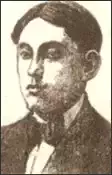
Alcides Freitas

Alcides Freitas was an Angolan poet whose work is part of the context of protest literature and the affirmation of African identity, especially in the pre-independence period of Angola. His poetry is marked by the denunciation of colonial oppression, the exaltation of the Angolan land and people, and a strong call for freedom. Although less known internationally than other contemporaries, his work is significant for understanding the trajectory of modern Angolan literature and its role in the struggle for emancipation. His poetic voice resonates as a testament to the resistance and hope of a people.
n. , Viçosa · m. 1916-03-14
Bio
Identification and basic context
Alcides Freitas was an Angolan poet, whose work stands out in the panorama of Portuguese-language literature, particularly in the context of the struggle for Angola's independence. His poetic production, although not vast, is representative of the spirit of resistance and nationalist affirmation that characterized many Angolan writers of his time.Childhood and education
Information about Alcides Freitas's childhood and education is scarce in available literary records. It is known that his generation of writers was formed under the yoke of Portuguese colonialism, which inevitably influenced their worldview and literary production. Formal education, for many Angolans, was limited and frequently shaped by colonial ideology, which may have encouraged the development of critical awareness and the search for other forms of expression and knowledge.Literary career
Alcides Freitas emerged as a poet at a time when Angolan literature was beginning to gain a voice as an instrument of social and political denunciation. His work largely falls within the current of "protest poetry" or "engaged poetry," which flourished in the 1940s, 1950s, and 1960s in Angola. This period was crucial for the formation of national consciousness and cultural mobilization against Portuguese domination.Work, style, and literary characteristics
The poetry of Alcides Freitas is marked by a tone of vehement denunciation against colonial oppression, exploitation, and the marginalization of the Angolan people. His verses frequently exalt his homeland, the dignity of the African people, and the unwavering desire for freedom and self-determination. The style is direct and incisive, using strong and emotive language to convey his message. The poetic form may vary, but the main focus lies on the political and social content. Themes such as injustice, longing for the homeland, hope for a free future, and national unity are central to his work.Work, style, and literary characteristics
Freitas wrote in a period when Angola was under Portuguese colonial rule, a regime characterized by racial segregation, economic exploitation, and political repression. Literature became one of the few means of expression and resistance for Angolan intellectuals, many of whom were forced into exile or faced persecution. He was part of a generation of writers who paved the way for the emergence of liberation movements and for Angola's eventual independence.Work, style, and literary characteristics
Specific details about Alcides Freitas's personal life are limited. However, it is reasonable to infer that his life experience, like that of many Angolans at the time, was marked by the difficulties imposed by the colonial system, discrimination, and a strong awareness of the need for change.Work, style, and literary characteristics
Although the recognition of Alcides Freitas may not have reached the scope of other more prominent Angolan poets, his work is valued in the context of Angola's literary history. His poetry represents an important testimony to the spirit of struggle and the formation of national identity.Work, style, and literary characteristics
His work engages with the context of African and Antillean protest literature. His legacy lies in his contribution to the construction of an Angolan literary voice that expressed the aspirations for freedom and dignity of his people.Work, style, and literary characteristics
Freitas's poetry can be interpreted as a cry for freedom and a call to action, reflecting the social and political tensions of his time. His work is crucial for understanding the roots of modern Angolan literature.Work, style, and literary characteristics
Due to the scarcity of detailed information, many aspects of his life and work remain less known to the general public, which underscores the importance of further in-depth research on his figure.Work, style, and literary characteristics
There is no information available on the circumstances of Alcides Freitas's death or on significant posthumous publications that stand out.Poems
0No poems found
Comments (0)
No comments yet. Be the first to comment.