
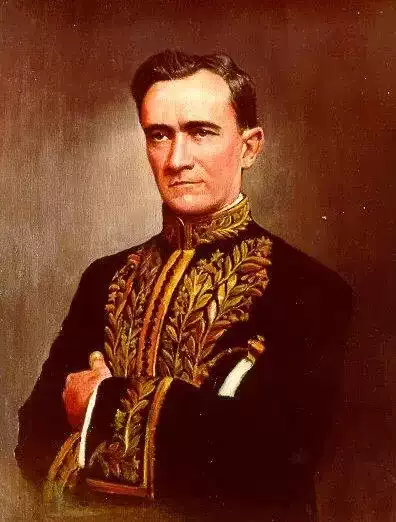
Amadeu Amaral
1875–1929
· lived 53 years
 BR
BR
BR
Amadeu Amaral was a Portuguese poet, playwright, and literary critic, a prominent figure of the Orpheu group and the modernist movement in Portugal. His poetic work is marked by formal innovation, the exploration of urban themes, and the search for a freer and more expressive language. As a critic and theorist, Amaral played a crucial role in defining and disseminating modernist aesthetics, advocating for the renewal of Portuguese literature in the face of previous traditions.
n. 1875-11-06, Capivari · m. 1929-10-24, São Paulo
34
Views
Bio
Identification and basic context
Amadeu Amaral, full name Amadeu Baptista de Carvalho Amaral, was born in Lisbon on May 21, 1894, and died in the same year, on November 24, 1918, in Lisbon. He was a Portuguese poet, playwright, and literary critic, one of the most important figures of the Orpheu group and Portuguese modernism. Despite his short life, he left an indelible mark on Portuguese literature.Childhood and education
Born into an upper-middle-class family in Lisbon, Amadeu Amaral had a privileged upbringing. He attended the Passos Manuel High School and, later, the Faculty of Law at the University of Lisbon, where he graduated. During his academic training, contact with European artistic vanguards and new literary movements shaped his thinking and writing.Literary career
Amadeu Amaral's literary career was brief but intense. He was one of the founders of the Orpheu group and actively participated in the magazine that gave the movement its name, contributing poetic and critical texts. His poetic work, published posthumously in "O Verso," reflects the influence of European vanguards and his search for a renewal of literary expression in Portugal. In addition to poetry, he wrote plays and important critical essays on the literature of the time.Work, style, and literary characteristics
Amadeu Amaral's poetic work, collected in "O Verso" (published in 1919), is characterized by formal experimentation, the use of free verse, and the exploration of themes related to urban life, modernity, and the human psyche. His style is innovative, with a language that reflects the speed and complexity of the modern world. His poetic voice is sometimes ironic, sometimes melancholic, but always attentive to new sensibilities. As a critic, Amaral was a fervent defender of modernism, analyzing and disseminating the new aesthetic and literary currents emerging in Portugal.Work, style, and literary characteristics
Cultural and historical context Amadeu Amaral lived in a period of great cultural effervescence and profound social changes in Portugal and Europe. World War I and its consequences, the development of mass society, and the emergence of artistic vanguards (Futurism, Cubism, Dadaism, Surrealism) created a fertile ground for the aesthetic revolution that Orpheu represented. Amaral was at the center of this movement, interacting with other artists and intellectuals of the time.Work, style, and literary characteristics
Personal life Amadeu Amaral's personal life was marked by his dedication to art and literature. Despite his youth, he demonstrated remarkable intellectual maturity. His fragile health, which would lead to his premature death, did not prevent him from dedicating himself body and soul to his artistic and intellectual projects.Work, style, and literary characteristics
Recognition and reception The recognition of Amadeu Amaral's work was largely posthumous. The short duration of his life and the avant-garde nature of his work meant that his importance to Portuguese modernism was fully understood only decades later. Today, he is recognized as one of the pioneers of literary renewal in Portugal.Work, style, and literary characteristics
Influences and legacy Amadeu Amaral was influenced by European vanguards, such as Italian Futurism. His legacy lies in his contribution to the founding of the Orpheu movement and in his poetic and critical work, which helped pave the way for modern Portuguese-language poetry. His formal audacity and critical vision opened new perspectives for literature.Work, style, and literary characteristics
Interpretation and critical analysis Amaral's work is studied as an example of Portuguese modernity, exploring how poetry confronted the new era and the fragmentation of modern experience. His literary criticism is valued for its insight and its ability to anticipate trends.Work, style, and literary characteristics
Curiosities and lesser-known aspects Amadeu Amaral was known for his sharp intellect and passion for art. His early death, due to the Spanish flu pandemic, was a great loss to Portuguese literature, which lost one of its most promising talents.Work, style, and literary characteristics
Death and memory Amadeu Amaral died in Lisbon in November 1918, a victim of the Spanish flu, a pandemic that claimed millions of lives worldwide. His work, although dispersed and mostly published after his death, left a lasting legacy, and he is celebrated as one of the pillars of Portuguese modernism.Poems
0No poems found
Comments (0)
Log in
to post a comment.
No comments yet. Be the first to comment.