
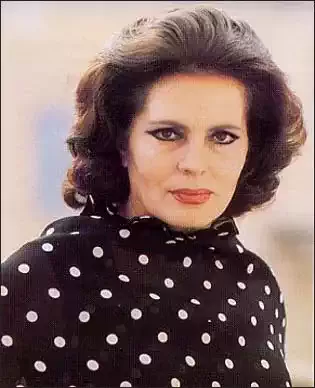
Amália Rodrigues
1920–1999
· lived 79 years
 PT
PT
PT
Amália Rodrigues, known as the Queen of Fado, was one of the greatest performers of Portuguese music and a key figure in Lusophone culture. Her unmistakable voice and her ability to convey the deep emotion of fado made her a global icon. She performed a vast repertoire, ranging from the most traditional fado to original compositions, marking generations with her art and unique personality.
n. 1920-07-23, Freguesia da Pena · m. 1999-10-06, Lisboa
28
Views
Bio
Identification and Basic Context
Amália da Piedade Rodrigues, known worldwide as Amália Rodrigues, was born in Lisbon. She was a Portuguese singer, a fado performer, the most famous and one of the most prolific in the history of this musical genre, often nicknamed the "Queen of Fado." Her career, which spanned more than five decades, brought fado to international recognition.Childhood and Education
Amália was born into a humble family in the Mouraria neighborhood of Lisbon. Her childhood was marked by economic difficulties and a lack of in-depth formal education. Her musical training was essentially self-taught and experienced in the streets and neighborhoods of Lisbon, where fado was a constant presence. Her precocious talent for singing was quickly recognized, and she began performing in fado houses at a very young age.Literary Path
Although primarily known as a singer, Amália Rodrigues also ventured into writing, publishing a book of poems titled "Versos" (1968). These poems, while not representing her main legacy, reveal an intimate and poetic facet of the artist, exploring themes such as love, saudade, and the very essence of fado. However, her "literary path" is inseparable from her career as an interpreter of fado, many of which were set to music from poems by great Portuguese authors, such as David Mourão-Ferreira and Pedro Homem da Costa.Work, Style, and Literary Characteristics
The work of Amália Rodrigues is vast, encompassing hundreds of recordings of traditional fado and original compositions. Her interpretive style is marked by a powerful and expressive voice, capable of conveying the melancholy, passion, and pain inherent in fado. She did not limit herself to interpreting fado but helped reinvent it, adapting it to new audiences and integrating it into diverse musical contexts. Songs like "Uma Casa Portuguesa," "Barco Negro" (which became "Bambolê" in France), "Estranha Forma de Vida," and "Lágrima" became anthems of Portuguese music. Her "literature" as a performer lies in her ability to bring poems to life and transform them into intense emotional experiences.Cultural and Historical Context
Amália Rodrigues emerged in the Portuguese cultural scene at a time when fado was the quintessential musical expression of Portugal. Her career spanned different political regimes in Portugal, from the dictatorship of the Estado Novo to democracy. She became a national symbol, carrying Portugal's name to the world and defending Portuguese cultural identity through her art, especially during the period when the country was under censorship and isolation. She was a cultural ambassador for Portugal.Personal Life
Amália Rodrigues's personal life was, in many ways, a reflection of the themes addressed in fado. She married young to Francisco da Cruz, but her artistic career profoundly shaped her relationships. Her second marriage, to Brazilian producer César Seabra, was more stable and lasting. Amália maintained close relationships with many poets and composers who wrote for her, demonstrating a strong connection with the artistic milieu. Her life was marked by great success, but also by moments of loneliness and the pressure of fame.Recognition and Reception
Amália Rodrigues achieved unprecedented recognition, both in Portugal and internationally. She received numerous distinctions and awards throughout her career, including the degree of Grand Officer of the Order of Prince Henry and the Order of Santiago da Espada in Portugal. She was acclaimed on stages worldwide, from the Olympia in Paris to Carnegie Hall in New York. Her popularity transcended social and geographical barriers, making her a universally respected figure.Influences and Legacy
Amália Rodrigues profoundly influenced generations of fado singers and popular music artists in Portugal and the Lusophone world. She not only preserved fado but also revitalized it and made it accessible to new audiences. Her legacy is immense, ensuring that fado remained a living and relevant musical genre. Artists such as Mariza, Ana Moura, and Carminho, among many others, acknowledge their debt to Amália. Her performance of "Estranha Forma de Vida" was immortalized in Pedro Almodóvar's film of the same name.Interpretation and Critical Analysis
Amália Rodrigues is often analyzed as a cultural phenomenon that transcended music. Her ability to personify the "Portuguese spirit of feeling" and evoke saudade made her an icon of national identity. Critics highlight her mastery of interpretation, her unique voice, and her skill in imbuing each theme with emotional depth. Her appearances in films and her presence in various cultural contexts enrich the analysis of her figure.Curiosities and Lesser-Known Aspects
Amália Rodrigues was known for her strong personality and sense of humor. Despite her melancholic image, she was a vibrant and determined woman. A curiosity is that she attempted, unsuccessfully, to introduce more modern musical elements into fado early in her career, which generated some controversy at the time. Her house in Lisbon, where she lived for many years, has become a museum in her honor.Death and Memory
Amália Rodrigues passed away in 1999, in Lisbon, after a career of great success and recognition. Her death was felt as the loss of a national treasure. Her funeral was an event of great public emotion, with thousands of people paying tribute to her. After her death, her house in Lisbon was transformed into the "Museu Amália Rodrigues," preserving her memory and legacy. Her body was later transferred to the National Pantheon, a highest recognition of her importance to Portuguese culture.Poems
0No poems found
Comments (0)
Log in
to post a comment.
No comments yet. Be the first to comment.