
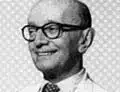
Aníbal Machado
 BR
BR
Aníbal Machado was a Portuguese writer and journalist, known for his work which stands at the transition between naturalism and modernism. His writing is marked by a careful style, psychological exploration of characters, and the approach of social and existential themes. He actively collaborated in the press, playing an important role in the literary dissemination of his time. His work, although not as extensive as that of other contemporary authors, reveals remarkable literary quality and an attentive eye on Portuguese society and the human condition.
n. 1894-12-09, Sabará · m. 1964-01-20, Rio de Janeiro
Bio
Identification and basic context
Aníbal Machado was a Portuguese writer, journalist, and literary critic. He was born in Lisbon on February 28, 1892, and died in the same city on October 16, 1957. Descended from a family of intellectuals and military men, he grew up in an environment that provided him with a solid cultural education. He wrote in Portuguese, and his work belongs to a period of literary effervescence in Portugal, which spanned the end of the modernist period and the beginning of new trends.Childhood and education
Aníbal Machado attended Liceu Passos Manuel in Lisbon, where he showed an early aptitude for studies and writing. His education was marked by reading classic and contemporary authors, and by contact with the intellectual circles of the capital. Although he did not have formal university academic training in literature, he dedicated himself intensely to self-study and literary practice.Literary career
Aníbal Machado's literary career began in his youth with contributions to literary newspapers and magazines. He was a regular contributor to the press, writing chronicles, short stories, and literary reviews. His prose work, though not extensive, reveals significant stylistic maturity and thematic depth. His participation in literary gatherings and salons allowed him to maintain close contact with the main writers of his generation, actively participating in the cultural debate of the time.Work, style, and literary characteristics
Aníbal Machado's work is characterized by a careful style and psychological exploration of characters, moving away from more deterministic naturalism towards a more modern sensibility. His short stories and novels address themes such as loneliness, incommunicability, family and social relationships, and the search for meaning in life. His ability to create dense atmospheres and portray the complexity of human emotions stands out. His language is precise and elegant, with an engaging narrative rhythm. Although associated with a transition between naturalism and modernism, his own style gives him a distinctive mark. Among his most relevant works are the novel "A Nova Vida" (1931) and the collection of short stories "Sombras e Luzes" (1934).Cultural and historical context
Aníbal Machado lived and wrote during a period of great transformations in Portugal and Europe, from World War I to World War II and the beginning of the Estado Novo dictatorship. His work subtly reflects the social and cultural tensions of the time. He was a contemporary of authors such as Fernando Pessoa, Mário de Sá-Carneiro, and Almada Negreiros, and maintained relationships with the literary circle that promoted the magazine "Orpheu," although his work does not directly fit into the radical avant-gardism of the group. His position was that of an attentive observer of Portuguese reality, with a critical sensibility.Personal life
Little is known in detail about Aníbal Machado's personal life, as he dedicated himself mainly to writing and journalism. However, his work suggests deep introspection and attentive observation of human relationships and social dynamics. His life was dedicated to literary and journalistic activity, contributing to Portugal's cultural life.Recognition and reception
The recognition of Aníbal Machado as an author of merit has consolidated over time. Although he did not achieve the fame of some of his more avant-garde contemporaries, his work has been valued by critics for its literary quality and psychological depth. His contribution to Portuguese prose, especially in the short story, is now recognized as an important link in the evolution of national literature.Influences and legacy
Aníbal Machado was influenced by the realist and naturalist tradition, but also by the literary modernity that was emerging in Portugal. His legacy lies in his careful prose, his exploration of the psychological complexity of his characters, and his ability to portray Portuguese society with a critical and sensitive eye. His work, though discreet, contributed to the enrichment of Portuguese literature, paving the way for new thematic and stylistic approaches.Interpretation and critical analysis
Aníbal Machado's work invites an analysis of the human condition, the fragility of relationships, and the search for authenticity in a constantly changing world. His narratives explore the moral and existential ambiguities of his characters, proposing a reflection on the dilemmas of modern life in Portugal.Curiosities and lesser-known aspects
Aníbal Machado was known for his discretion and his dedication to literary and journalistic work. His figure, sometimes overshadowed by other more prominent authors of his time, represents an important testimony to the diversity and richness of Portuguese literary production in the 20th century.Death and memory
Aníbal Machado died in Lisbon in 1957, leaving behind a body of work that, although not voluminous, is distinguished by its quality and originality. His memory is preserved through the re-edition of his books and the study of his contribution to Portuguese literature.Poems
0No poems found
Comments (0)
No comments yet. Be the first to comment.