
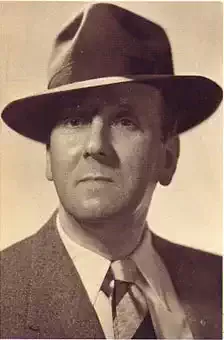
António Botto
1897–1959
· lived 61 years
 PT
PT
PT
António Botto was a Portuguese poet who marked his time by the audacity of his themes and his direct approach to sensuality and love, including homosexual love, in a conservative period. His poetry, although sometimes controversial, revealed a refined lyrical sensitivity and a desire for freedom of expression. Botto is an important figure in the history of Portuguese literature for his courage in addressing taboo subjects and for his contribution to the modernization of poetry.
n. 1897-08-17, Concavada · m. 1959-03-04, Rio de Janeiro
35
Views
Bio
Identification and Basic Context
António Botto, born António Tiago de Oliveira Botto, was a Portuguese poet. He stood out in the first half of the 20th century for his innovative and sometimes controversial poetic work. He was born in Seixal and lived much of his life in Lisbon. His nationality is Portuguese, and his writing language is Portuguese.Childhood and Education
Little is detailed about his childhood and early education, but it is known that Botto developed a particular sensitivity for art and literature from an early age. His education seems to have been more self-taught and linked to the literary circles he frequented.Literary Career
António Botto began his literary career in the early decades of the 20th century. His work began to gain notoriety with the publication of "Noite de Lenda" (1921), which already announced his inclination for bolder themes. His literary evolution was linked to a growing expressive freedom and a search for new ways to approach amorous lyricism. He collaborated in various publications of the time, notably in magazines linked to modernism and the avant-garde.Work, Style, and Literary Characteristics
António Botto's work is recognized for its exploration of themes such as love, sensuality, beauty, and, in a pioneering way in Portuguese literature, homosexuality. His style is marked by intense lyricism, direct and sometimes colloquial language, but also by the ability to create vivid and suggestive images. He used varied poetic forms, adapting them to his personal expression. The tone of his poetry can vary between the idyllic, the erotic, and the confessional. His language is often raw and passionate, devoid of inhibitions. Botto is considered a precursor of modernism in Portugal, paving the way for themes and approaches that were previously taboo.Cultural and Historical Context
António Botto lived in a period of great transformations in Portugal, notably the advent of the First Republic and the political instability that followed. His work emerged in a cultural context still strongly marked by conservative values, which generated reactions of disapproval from some sectors of society and criticism. His connection to the Portuguese modernist movement, although not total, is undeniable, sharing with other authors of the time a spirit of renewal and rupture with tradition. His thematic audacity placed him in tension with the social and literary norms of his time.Personal Life
António Botto's personal life was marked by his sexual orientation, which led him to be a controversial and sometimes marginalized figure. He maintained significant relationships that, in some way, were reflected in his poetry. His dedication to poetry was constant, and his circle of friends included other figures from the literary world.Recognition and Reception
In his time, António Botto's work generated divided reactions. While some acclaimed him for his courage and originality, others criticized him for the subject matter considered immoral. Over time, his work has been re-evaluated and recognized for its literary value and its historical importance as a transgressor of taboos. Today, Botto is seen as a prominent poet in Portuguese literature.Influences and Legacy
António Botto was influenced by poets who explored amorous lyricism and sensuality. His legacy lies in the courage to address themes that were silenced, opening doors for greater freedom of expression in Portuguese literature, especially regarding the representation of sexuality and amorous diversity. He influenced later generations of poets who value authenticity and transgression.Interpretation and Critical Analysis
António Botto's poetry can be interpreted as a celebration of love in all its forms and an affirmation of individual freedom. His work challenges social and moral conventions, inviting reflection on the nature of desire and identity.Curiosities and Lesser-Known Aspects
A curiosity about António Botto is the strong connection he maintained with the poet and critic Fernando Pessoa, who praised his work in public, in a gesture of support for his creative freedom. This friendship and Pessoa's support were crucial at a time when Botto was facing strong opposition.Death and Memory
António Botto passed away in Lisbon. His work continued to be published and studied, ensuring his memory and his place in the history of Portuguese literature.Poems
0No poems found
Comments (0)
Log in
to post a comment.
No comments yet. Be the first to comment.