
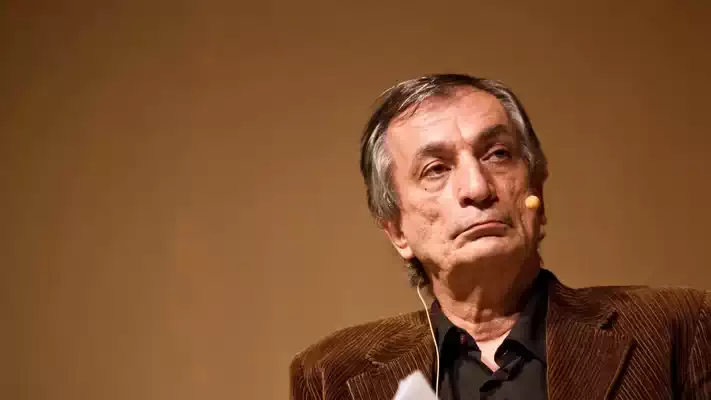
Antonio Cicero
1945–2024
· lived 79 years
 BR
BR
BR
Antonio Cicero was a Brazilian poet, university professor, and literary critic. His poetic work is marked by a profound reflection on language, time, and the human condition, combined with formal rigor and sharp intelligence. His poetry explores the ambiguities of modern experience, the everyday, and the search for meaning in a complex world. He was also an influential intellectual, known for his essays on culture, literature, and philosophy, as well as his work as a professor.
n. 1945-10-06, Rio de Janeiro · m. 2024-10-23, Zurique
55
Views
Bio
Identification and Basic Context
Antonio Cicero was a Brazilian poet, essayist, university professor, and literary critic. He was known for his vast intellectual output and his profound reflections on language, culture, and the human experience. His poetic work is characterized by intelligence, formal rigor, and the exploration of universal themes.Childhood and Education
Antonio Cicero dedicated himself intensely to his studies from an early age, developing a great interest in literature, philosophy, and language. His academic and self-taught education was fundamental to consolidating his critical thinking and poetic expression.Literary Journey
Antonio Cicero's literary journey began with the publication of his poems in magazines and anthologies, gradually gaining recognition for his unique and original voice. Throughout his career, his poetry evolved, exploring different facets of the human condition and language, always maintaining a high level of intellectual and aesthetic demand. He actively participated in literary and cultural debates, establishing himself as an important figure in contemporary Brazilian literature.Work, Style, and Literary Characteristics
Antonio Cicero's main works include poetry collections that reveal a unique style, marked by conceptual density, musicality, and meticulous exploration of language. His recurring themes address the passage of time, the ephemerality of existence, the complexity of human relationships, reflection on poetry itself, and culture. Cicero used resources such as metaphor, metonymy, and irony to construct his poems, often exploring traditional forms with a modern approach. His poetic voice is both personal and universal, capable of transitioning between the intimate and the philosophical. Cicero's language is precise and elaborate, with a rich vocabulary and carefully crafted syntax.Cultural and Historical Context
Antonio Cicero lived and produced during a period of intense cultural and political transformations in Brazil and the world. His work engages with the intellectual context of his time, responding to debates about modernity, postmodernity, language, and identity. As a public intellectual, Cicero participated in relevant discussions about Brazilian society and culture, positioning himself critically and reflectively.Personal Life
Antonio Cicero dedicated a large part of his life to academic activity, being a university professor where he imparted his knowledge and inspired generations of students. His personal life was intimately linked to his intellectual production, with constant dedication to study and writing. Personal experiences and reflections on human existence echo in his poetic work.Recognition and Reception
Antonio Cicero's work was widely recognized by critics and readers, consolidating his place as one of the most important poets in contemporary Brazilian literature. He received several distinctions, and his work is the subject of study in universities, attesting to its value and impact on the literary scene.Influences and Legacy
Antonio Cicero engaged with various literary and philosophical currents, absorbing influences that shaped his worldview and artistic expression. His legacy lies in his contribution to Brazilian poetry, with a body of work that stands out for its originality, depth, and rigorous investigation of language. He influenced later poets and thinkers, who found in his work a model of critical reflection and formal mastery.Interpretation and Critical Analysis
Antonio Cicero's work has been the subject of numerous interpretations and critical analyses, exploring its layers of meaning, its philosophical references, and its relationship with poetic tradition. His poems invite reflection on existential themes such as time, memory, and the search for meaning. The complexity of his language and the depth of his themes generate ongoing debates among scholars and readers.Curiosities and Lesser-Known Aspects
Cicero was known for his sharp intellect and subtle sense of humor. His dedication to writing was remarkable, and he maintained a routine of reading and reflection that fueled his production. The way he approached language, unveiling its intricacies and potentials, was a fascinating aspect of his work.Death and Memory
The death of Antonio Cicero left a void in Brazilian literature and intellectual circles. His memory is preserved through his work, which continues to be read, studied, and admired, perpetuating his legacy as one of Brazil's great poets and thinkers.Poems
0No poems found
Comments (0)
Log in
to post a comment.
No comments yet. Be the first to comment.