
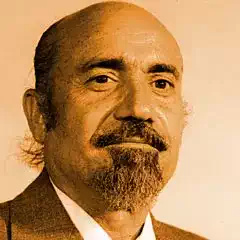
António Jacinto
1924–1991
· lived 66 years
 AO
AO
AO
António Jacinto was an Angolan poet, a prominent figure in Portuguese-language poetry, and one of the most important representatives of Angolan literature. His work is marked by profound lyricism and a strong social and political consciousness, reflecting the aspirations and conflicts of his time. He is recognized for his contribution to the affirmation of African cultural identity and for his rich and expressive language.
n. 1924-09-28, Luanda · m. 1991-06-23, Lisboa
67
Views
Bio
Identification and basic context
António Jacinto do Amador Real, better known as António Jacinto, was born in Angola. He is a central figure in Portuguese-language poetry, especially in the context of African literature in Portuguese. His work is intrinsically linked to issues of national identity, the struggle for freedom, and the valorization of Angolan culture.Childhood and education
António Jacinto was born in Angola and had a childhood marked by the colonial environment. His intellectual formation was shaped by reading Portuguese authors and his own life experience in Africa. He absorbed influences from local culture and literary movements that sought a more authentic expression of the African reality.Literary career
António Jacinto's literary career began early, with the publication of his first poems in newspapers and magazines. His work evolved over time, reflecting the phases of Angola's independence struggle and the search for his own poetic voice. He actively participated in Angolan cultural life, collaborating in various publications and anthologies that brought together writers committed to the national cause.Work, style, and literary characteristics
António Jacinto's work is characterized by profound lyricism and a strong social and political vein. Themes such as land, freedom, hope, and human dignity are central to his poetry. He frequently used free verse, prioritizing musicality and the expressive power of words. His language is dense, rich in imagery, and has an engaging rhythm, often evoking the sonority of African languages. His style can be associated with the African modernist movement, seeking innovation in both form and content, celebrating Angolan identity and culture.Cultural and historical context
António Jacinto lived in a period of intense social and political transformations in Angola, including the struggle for independence. His work reflects this context, positioning him as a voice of resistance and cultural affirmation. He was one of the exponents of the so-called "Generation of the 50s" or "Generation of Semba," a group of Angolan writers who sought to give visibility to the reality and aspirations of their people. He maintained dialogue with other African and Portuguese writers of his time.Personal life
António Jacinto dedicated a large part of his life to the cause of Angola's independence. His personal experience as an Angolan under the colonial regime profoundly influenced his work. Family relationships and ties to his homeland are elements that shine through in his poetry, lending it remarkable authenticity and emotional strength.Recognition and reception
António Jacinto is widely recognized as one of the greatest poets of Angola and of the Portuguese language. His work has received distinctions and is studied in national and international academic contexts. His poetry is valued for its aesthetic quality and its historical and cultural importance, being considered a landmark in African literature.Influences and legacy
António Jacinto was influenced by Portuguese poetry and by literary currents that sought a more authentic expression of African identity. In turn, his legacy is immense, having influenced subsequent generations of Angolan and African poets. His work is fundamental to understanding African literature in Portuguese and to the affirmation of Angolan cultural identity.Interpretation and critical analysis
António Jacinto's work has been the subject of various interpretations, which highlight his lyricism, his social commitment, and his ability to evoke the Angolan soul. His poems explore universal existential themes through the lens of the African experience, raising questions about freedom, belonging, and the search for a dignified future.Curiosities and lesser-known aspects
Besides his facet as a poet, António Jacinto was also a teacher and political activist. His dedication to the cause of Angola's independence led him to face persecution and difficulties, which, however, did not deter him from his artistic expression. His poetry is a testament to the resilience and strength of the human spirit.Death and memory
António Jacinto passed away, but his work remains alive and his memory is celebrated as one of the pillars of Angolan cultural identity. His poems are frequently published and recited, remaining a symbol of national inspiration and pride.Poems
0No poems found
Comments (0)
Log in
to post a comment.
No comments yet. Be the first to comment.