
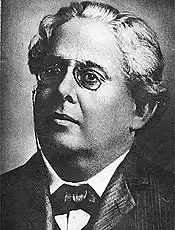
Artur de Azevedo
1855–1908
· lived 53 years
 BR
BR
BR
Considered one of the greatest figures of Portuguese theater, Artur de Azevedo stood out as a playwright, director, and impresario. His vast work, which includes comedies, farces, and dramas, sagaciously and humorously portrays the Lisbon society of his time, exploring the customs, intrigues, and idiosyncrasies of the bourgeoisie. He was a pioneer in the modernization of theater in Portugal, introducing new staging techniques and promoting the renewal of the repertoire.
n. 1855-07-07, São Luís · m. 1908-10-22, Rio de Janeiro
35
Views
Bio
Identification and basic context
Luís António de Azevedo, better known by the pseudonym Artur de Azevedo, was a prominent Portuguese playwright, director, and theater impresario. Born in Funchal, Madeira, on February 22, 1855, he died in Lisbon on July 12, 1908. He is considered one of the most important names in Portuguese theater of the 19th and early 20th centuries, especially in the genre of comedy and farce, with a body of work that vividly portrays Lisbon society of his time. His nationality was Portuguese, and he wrote in Portuguese.Childhood and education
The son of a cavalry captain and a mother with strong cultural ties, Artur de Azevedo had a childhood marked by artistic and literary influences. The family moved to Lisbon when he was young, which provided him with closer contact with the cultural and theatrical centers of the capital. Although he did not have formal academic training in theater, his intelligence and passion for the performing arts allowed him to quickly absorb the necessary knowledge. His youth was spent immersed in the Lisbon theatrical scene, where he observed and learned the mechanisms of dramatic art.Literary career
Artur de Azevedo began his literary career with plays that quickly won over the public. His debut was with "Oração aos Corvos" (1877), a play that already announced his talent for social comedy. His work developed over three decades, characterized by prolific and constant production. He was one of the first to dedicate himself professionally to theatrical writing in Portugal, also taking on the roles of director and impresario. He founded and managed several theaters, such as Teatro do Príncipe Real and Teatro Apolo, contributing to the renewal of the Portuguese theatrical scene.Work, style, and literary characteristics
Artur de Azevedo's work is vast, with over a hundred plays, including "O Barbeiro de Sevilha" (adaptation), "O Cinto de Vénus", "A Brasileira de Prazins", and "O Garfo". His style is characterized by keen social observation, caustic humor, and the construction of lively and witty dialogues. His plays portray the vices, virtues, and contradictions of Lisbon society, especially the bourgeoisie, with archetypal characters and comic situations. He frequently used farce and social comedy, exploring the ridicule of social conventions and the customs of the time. His language is accessible, yet effective in characterizing the figures and creating comic situations.Work, style, and literary characteristics
Cultural and historical context Artur de Azevedo lived in a period of great transformations in Portugal, the transition from a monarchical regime to a republic, although his career was predominantly in the 19th century. He belonged to the so-called "Generation of 1870" or "New Generation" of Portuguese theater, which sought to renew the theatrical landscape, moving away from the prevailing romantic melodrama and embracing greater verisimilitude and social criticism. He engaged with other authors of the time, and his theatrical activity was intrinsically linked to the cultural and social life of Lisbon.Work, style, and literary characteristics
Personal life Little is known about Artur de Azevedo's personal life beyond his almost exclusive dedication to theater. He was a hard worker, balancing the tasks of writer with those of impresario and director. His passion for his craft seems to have been the driving force of his life, leading him to face the challenges and difficulties inherent in managing a theater.Work, style, and literary characteristics
Recognition and reception Artur de Azevedo was a popular author during his lifetime, and his plays were successfully staged in several theaters. His name became synonymous with Portuguese comedy, and he was recognized as a master of the genre. After his death, his legacy was consolidated, and he is remembered today as one of the pillars of modern Portuguese theater, with a body of work that continues to be studied and performed.Work, style, and literary characteristics
Influences and legacy Artur de Azevedo was influenced by review theater and French comedy, adapting and recreating European models to the Portuguese reality. His legacy lies in the renewal he brought to Portuguese theater, in his ability to capture the spirit of the time, and in his contribution to consolidating comedy as a significant genre. He influenced a generation of playwrights and actors, and his work is a valuable document about Portuguese society and customs in the late 19th century.Work, style, and literary characteristics
Interpretation and critical analysis Critics have highlighted in Artur de Azevedo his mastery in constructing comic plots and creating believable characters that serve as mirrors of society. His work is seen as a faithful, sometimes satirical, portrait of the values and conventions of the Lisbon bourgeoisie, addressing themes such as marriage, social climbing, and family relationships with a keen and humorous eye.Work, style, and literary characteristics
Curiosities and lesser-known aspects Artur de Azevedo did not limit himself to writing; he was also an innovative director and a successful theater impresario, taking risks in managing performance spaces and producing shows. His ability to attract audiences and maintain interest in the Portuguese theatrical scene is a testament to his vision and talent.Work, style, and literary characteristics
Death and memory Artur de Azevedo died in Lisbon in 1908, from tuberculosis. His premature death deprived Portuguese theater of one of its most brilliant talents. His memory is perpetuated through his work, which continues to be read and performed, and through his fundamental role in the history of theater in Portugal.Poems
0No poems found
Comments (0)
Log in
to post a comment.
No comments yet. Be the first to comment.