
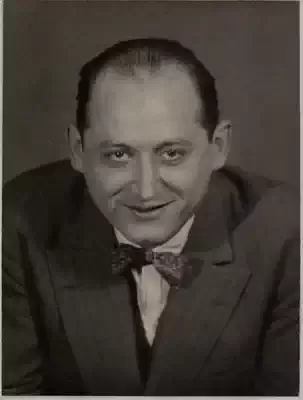
Benjamin Péret
1899–1959
· lived 60 years
 FR
FR
FR
Benjamin Péret was a French surrealist poet, known for his work that challenged conventions and explored the irrational, the dreamlike, and the erotic with transgressive freedom. His poetry is marked by an exuberant imagination, black humor, and fierce criticism of social and religious institutions. Péret was a central figure in the surrealist movement, actively participating in its demonstrations and publications, leaving a legacy of verses that celebrate revolt, love, and the beauty of the absurd.
n. 1899-07-04, Rezé · m. 1959-09-18, 15.º arrondissement de Paris
39
Views
Bio
Identification and Basic Context
Benjamin Péret (1901-1959) was a French surrealist poet. Recognized as one of the most important and radical poets of the surrealist movement, his work reflects his irreverent personality and his commitment to freedom of expression. He wrote primarily in French.Childhood and Education
Born in Moussy-le-Vieux, France, Péret had a childhood marked by an austere and religious upbringing. This initial formation, which he later vehemently rejected, influenced his subsequent opposition to institutions and dogmas. His formal education was complemented by voracious self-study, especially in literature and arts.Literary Career
Péret began his literary journey with Symbolist influences, but soon approached Dadaism and, later, Surrealism, a movement of which he became a pillar. His writing is characterized by constant evolution, always maintaining a tone of transgression and freedom. He was a prolific contributor to surrealist magazines such as "La Révolution surréaliste" and "Minotaure," and also worked as an art critic and translator.Work, Style, and Literary Characteristics
Péret's main works include "Le Grand Jeu" (1928), "De derrière les fagots" (1934), "Je sublime" (1936), and "Air d'escales" (1952). His recurring themes are love, eroticism, revolt against social and religious oppression, delirium, and the marvelous. His poetic form is often free verse, with a daring exploration of imagery, unexpected associations, and corrosive humor. The tone is often ironic, satirical, and transgressive, with a language that seeks to break with conventions. Péret is known for his ability to create a dreamlike and absurd universe, with a strong charge of eroticism and social criticism. He was an innovator in the exploration of psychic automatism and in the creation of a unique imaginary, influenced by mythology and anthropology.Cultural and Historical Context
Péret lived in a turbulent period of European history, marked by two World Wars, the rise of totalitarian regimes, and intense social and cultural transformations. As a surrealist, he firmly positioned himself against war, fascism, and the bourgeoisie, seeking through art a revolution of the mind and society. He maintained close relationships with other important surrealist artists and intellectuals, such as André Breton, Paul Éluard, and Max Ernst.Personal Life
Benjamin Péret had an intense and often turbulent personal life. His romantic relationships, frequently marked by free love and passion, were a source of inspiration for his work. His fervent opposition to social and religious norms led him to confrontations and a bohemian lifestyle. Professionally, in addition to poetry, he worked in various occupations, including a period as a French teacher in Brazil.Recognition and Reception
Although recognized during his lifetime within the surrealist circle and by some critics, Péret's work gained greater prominence and recognition posthumously. His poetry, sometimes considered excessively radical, challenged conservative critical reception but is now widely celebrated for its originality and strength.Influences and Legacy
Péret was influenced by authors such as Arthur Rimbaud, Lautréamont, and the Symbolist poets. His work, in turn, influenced later generations of poets who sought to explore creative freedom, surrealism, and social criticism in their writing. He is considered one of the great names in surrealist poetry.Interpretation and Critical Analysis
Péret's work is often analyzed from the perspective of psychoanalysis and surrealist theory, exploring the liberation of the unconscious and the critique of reason. Interpretations focus on his ability to fuse the erotic, the mystical, and the revolutionary.Curiosities and Lesser-Known Aspects
Péret was known for his sharp sense of humor and his defiant attitude. A curiosity is his stay in Brazil, where he became interested in popular culture and indigenous art, elements that may have infiltrated his work. His passion for travel and exotic cultures also marked his life.Death and Memory
Benjamin Péret died in Paris in 1959. His memory is kept alive through the continuous publication and study of his work, which remains a testament to the transgressive force and unlimited imagination of Surrealism.Poems
0No poems found
Comments (0)
Log in
to post a comment.
No comments yet. Be the first to comment.