
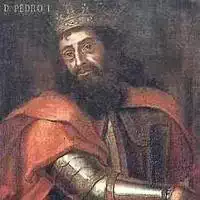
Bernardo Bonaval
1200–1300
· lived 100 years
 ES
ES
ES
Bernardo Bonaval was a Galician-Portuguese troubadour and poet from the Middle Ages. His work, part of the Galician-Portuguese lyrical tradition, is notable for its artistic quality and the expressiveness of its themes. Bonaval is remembered as one of the important representatives of the poetry of the era, whose lyrical production contributed to the enrichment of the Iberian medieval songbook.
n. 1200, Galiza · m. 1300, Unknown
38
Views
Bio
Identification and basic context
Bernardo Bonaval was a troubadour from the Middle Ages, whose origins are linked to the geographical area of Galicia and Portugal, within the Galician-Portuguese lyricism. The exact date of his birth or death is unknown, but his period of poetic activity is likely situated in the 13th century. His work is part of the historical context of the formation of the kingdoms of Portugal and Galicia, in a time of intense literary production in the vernacular language.Childhood and education
Information about Bernardo Bonaval's childhood and education is very limited. As was common among medieval troubadours, it is probable that his education was linked to a courtly or clerical environment, which would have allowed him access to reading, writing, and the musical knowledge necessary for composing and performing songs.Literary career
Bernardo Bonaval is known as the author of cantigas de amor (love songs) and cantigas de amigo (songs of a friend), lyrical genres characteristic of Galician-Portuguese troubadour poetry. His work is preserved in medieval songbooks and is recognized for its aesthetic quality and the depth of the sentiments expressed. His literary career is part of the tradition of troubadours who, through their compositions, portrayed the customs, values, and emotions of the society of the time.Work, style, and literary characteristics
Work, style, and literary characteristics Bernardo Bonaval's work consists of cantigas de amor, where the lyrical 'I' expresses his amorous vassalage to the lady, and cantigas de amigo, which portray the female voice and her laments of love or longing. His style is marked by delicacy in the expression of feelings, musicality, and the use of poetic devices specific to the troubadour tradition. The predominant themes are courtly love, longing, nature, and women's feelings towards love.Work, style, and literary characteristics
Cultural and historical context Bernardo Bonaval is a representative of medieval culture in the Iberian Peninsula, a period when troubadour poetry flourished in the courts of Galicia and Portugal. This poetry was sung and set to music, playing an important role in the social and cultural life of the nobility. The Galician-Portuguese language was the language of literary expression for lyrical poetry during this period.Work, style, and literary characteristics
Personal life Little is known about Bernardo Bonaval's personal life. The identity and careers of many medieval troubadours are generally obscure, with their work being the main legacy that has reached us. It is possible that he belonged to the nobility or to a circle close to the court, which would have facilitated his access to poetic practice.Work, style, and literary characteristics
Recognition and reception Bernardo Bonaval's recognition lies in his inclusion in medieval songbooks and the appreciation of his work by medieval literature studies. His poetry is studied and appreciated for its artistic quality and for being a testimony to lyrical expression in that era.Work, style, and literary characteristics
Influences and legacy As a troubadour, Bernardo Bonaval was influenced by the Provençal poetic tradition and by the Galician-Portuguese lyrical tradition itself. His legacy lies in the preservation of his songs, which enrich the literary heritage of the Portuguese language and contribute to the understanding of medieval sensibility and customs.Work, style, and literary characteristics
Interpretation and critical analysis Bernardo Bonaval's work has been the subject of critical analysis within the framework of Galician-Portuguese lyricism studies, focusing on the interpretation of his cantigas de amor and cantigas de amigo, his meter, rhyme, and style. His compositions are valued for their expressiveness and for their representation of courtly love and feminine feelings.Work, style, and literary characteristics
Curiosities and lesser-known aspects As he is a medieval figure, many aspects of Bernardo Bonaval's life and personality remain unknown. His work is the main point of contact with his world, and his poetic persona is constructed through his compositions.Work, style, and literary characteristics
Death and memory There is no concrete information about Bernardo Bonaval's death. His memory is maintained through his songs preserved in medieval songbooks, which continue to be studied and appreciated as an integral part of the history of Galician-Portuguese literature.Poems
0No poems found
Comments (0)
Log in
to post a comment.
No comments yet. Be the first to comment.