
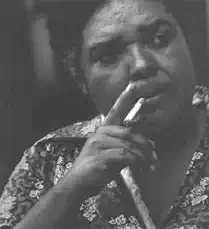
Bessie Head
 BW
BW
Bessie Head was a Motswana writer of South African origin, known for her works that deeply explore identity, exile, the female condition, and the social and political complexities of Southern Africa. Through engaging narrative and memorable characters, Head portrayed the struggles and resilience of marginalized individuals, especially women, in societies marked by colonialism, apartheid, and the search for a place in the world. Her writing, often autobiographical in tone and inspiration, is characterized by brutal honesty, genuine compassion, and profound reflection on human nature. Bessie Head left a significant literary legacy, becoming an essential voice in African literature and an inspiration for generations of writers who address the same universal themes.
n. 1937-07-06, Pietermaritzburg · m. 1986-04-17, Serowe
Bio
Identification and basic context
Bessie Head (born Bessie Emory) was a South African writer who settled in Botswana, becoming one of its most important literary voices. Born in Pietermaritzburg, South Africa, she lived most of her adult life in Serowe, Botswana, where she developed most of her work. Her nationality and identity were complex, shaped by her birth in apartheid South Africa and her subsequent life in voluntary exile in Botswana.Childhood and education
Bessie Head's childhood was deeply marked by her origins. Born to a white South African mother and a black father, her existence was a direct affront to the racial laws of apartheid. She was given up for adoption and raised by white adoptive parents, but the truth about her origins was revealed to her late and traumatically. This experience of secrecy and rejection shaped her perception of herself and the world. Her formal education was interrupted and partly self-taught, through intense reading and a sharp eye for the reality around her.Literary career
Bessie Head's literary career began to take shape when she moved to Botswana in 1964, seeking to escape the political and social pressures of South Africa. It was in Botswana that she found a degree of peace and inspiration to write. Her first novel, "When Rain Clouds Gather" (1968), was published while she was still living in Serowe. This was followed by "Maru" (1971) and "A Question of Power" (1973), works that consolidated her reputation as a writer of profound insight and sensitivity. Her writing evolved into an increasingly intense exploration of the human psyche, madness, and the search for redemption and inner peace.Work, style, and literary characteristics
Bessie Head's works, such as "When Rain Clouds Gather," "Maru," and "A Question of Power," explore central themes such as exile, cultural identity, the impact of colonialism and apartheid, the female condition, madness, religion, and the search for inner peace. Her style is characterized by direct, lyrical, and deeply empathetic prose. Head had a unique ability to create complex and multifaceted characters, often strong and resilient women who struggle against social and personal adversity. Her language, while often simple, is loaded with meaning and deep emotional weight. The poetic voice is often confessional, reflecting her own struggles and longings, but elevating them to a universal dimension. Her work defies easy categorization, blending realism with almost mythical and introspective elements.Cultural and historical context
Bessie Head lived and wrote during a period of immense turmoil in Southern Africa. Her life and work were deeply influenced by the apartheid regime in South Africa, which forced her into exile, and by the complex realities of newly independent Botswana. She closely observed the social tensions, migrations, economic hardships, and the search for identity on a continent in transformation. Her generation of African writers struggled to define and express the new post-colonial realities, and Head, albeit with a unique perspective, was part of this movement of cultural and literary affirmation.Personal life
Bessie Head's personal life was marked by profound difficulties. The secrecy surrounding her origins, her isolated upbringing, and her own struggles with mental health (which led to psychiatric hospitalizations) were recurring themes in her work and life. Her personal relationships were complex, but she developed strong bonds with the Serowe community, where she found a sense of belonging. Her profession as a writer was often a struggle, as she faced financial difficulties and isolation. Her spiritual beliefs, which combined Christian elements with a strong connection to the land and spirits, were also central to her life and worldview.Recognition and reception
Bessie Head's recognition as a great writer came gradually, both in Southern Africa and internationally. Although she faced financial difficulties and the stigma associated with mental health during her life, her work was gradually acclaimed by critics for its originality, depth, and humanity. Today, she is considered a seminal figure in African literature, with her books widely studied and translated.Influences and legacy
Bessie Head was influenced by authors such as Dostoevsky and Kafka, whose explorations of the human condition and psyche resonated with her. However, her legacy in African literature itself is undeniable. She paved the way for the representation of African women and for the exploration of themes of identity and exile in a profoundly personal and penetrating way. She influenced countless African writers who succeeded her, inspiring them to address their own realities with honesty and compassion. Her work is an essential part of the African literary canon and remains a subject of study and admiration.Interpretation and critical analysis
Bessie Head's work has been interpreted in various ways, from psychological readings focused on her struggles with mental health to sociopolitical analyses exploring her critiques of colonialism and apartheid. Her exploration of madness as a form of alternative perception or as a response to an oppressive world is a recurring theme. Her compassion for the marginalized and her search for a form of redemption and integration are central to many critical analyses.Curiosities and lesser-known aspects
A curious aspect of her life is her strong connection with Buddhism, which she integrated into her life and thought, seeking peace and clarity. Her residence in Serowe became a place of pilgrimage for admirers and scholars. The way she channeled her most painful experiences into such beautiful and impactful art is, in itself, a remarkable aspect of her personality.Death and memory
Bessie Head passed away in 1986 in Botswana from hepatitis. Her death was felt as a significant loss to African literature. Her memory is celebrated through the continued publication and study of her work, and by the lasting impact she has had on how Southern Africa is represented in world literature.Poems
0No poems found
Quotes
1No poems found
Comments (0)
No comments yet. Be the first to comment.