
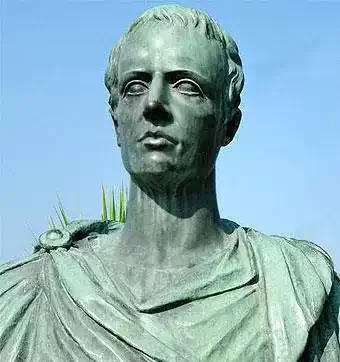
Caio Valério Catulo

Caio Valério Catulo was a Roman lyric poet known for the intensity and passion of his works. His poetry explores themes such as love, sensuality, friendship, and the ephemerality of life, often with a personal and confessional approach. Catullus is famous for his short but deeply emotional poems, which distinguished him in Latin literature for his originality and frankness, influencing later poets.
n. 84ac, Verona · m. 54ac, Roma
72
Views
Bio
Identification and basic context
Caio Valério Catulo, better known as Catullus, was one of the most prominent lyric poets of Ancient Rome. He lived during the late Roman Republic, a time of great political and social turmoil. His work is written in Latin and is characterized by its emotional intensity and exploration of themes such as passionate love, friendship, jealousy, envy, and social criticism.Childhood and education
Catullus was born into a wealthy and influential family in Cisalpine Gaul. He received an excellent education, typical of the Roman elite of the time, which included the study of rhetoric and Greek and Latin literature. His youth was marked by an intense social life in the capital, Rome, where he frequented the most important literary and political circles. His readings included archaic and Hellenistic Greek poets, such as Sappho and Callimachus, whose influences are notable in his work.Literary career
Catullus's writing began in his youth in Rome, where he quickly stood out for his innovative and personal poetry. His work, posthumously collected in the *Corpus Catullanum*, includes poems of various lengths and themes, from short and biting epigrams to longer and more complex poems, such as the so-called *carmina maiora*. Catullus was also known for his critical activity and his participation in literary gatherings, where he presented and debated his verses.Work, style, and literary characteristics
Catullus's work is marked by its sincerity and the rawness with which he approaches feelings. The central themes are love, often tumultuous and obsessive, friendship, politics, and criticism of Roman social customs. His style is characterized by liveliness, musicality, and metrical experimentation, using both traditional forms and free verse. The language is colloquial and direct, but at the same time rich in imagery and rhetorical devices. Catullus is often associated with the Neoteric poetic movement, which distanced itself from epic and didactic poetry, favoring more intimate and personal themes.Cultural and historical context
Catullus lived in a period of transition to the Roman Empire, under the dictatorship of Julius Caesar. Political instability and civil wars deeply marked the society of the time. Catullus maintained relationships with prominent figures in politics and literature, such as Cicero and Cornelius Nepos. His poetry reflects the cynical and hedonistic spirit of an elite grappling with social upheavals and the decline of traditional values.Personal life
Catullus's personal life was intense and often turbulent, marked primarily by his overwhelming passion for Clodia Metela, a woman from Roman high society, whom he calls Lesbia in his poems. This love affair, full of ups and downs, jealousy, and disappointments, forms the core of much of his poetic output. Catullus was known for his irascible temperament and his critical stance towards the powerful.Recognition and reception
Although his work had a great impact among his contemporaries and influenced later poets such as Ovid and Horace, Catullus's widespread recognition as one of the great Latin poets was only consolidated in Late Antiquity and the Middle Ages. His poetry was rediscovered and valued in the Renaissance, becoming a model of lyricism and personal expression.Influences and legacy
Catullus was influenced by archaic Greek poetry, especially Sappho and Callimachus, and by Hellenistic poetry. His legacy is immense, having shaped Western lyric poetry through his ability to express complex emotions with strength and originality. His influence can be seen in poets of all eras, who found in him a model of authenticity and exploration of the human condition through love and pain.Interpretation and critical analysis
Catullus's poetry has been the subject of numerous interpretations, ranging from the analysis of his relationship with Clodia to the reading of his poems as manifestations of an existential and social crisis. His work is seen as a reflection of the complexity of human relationships and the fragility of the human condition in the face of love and death.Curiosities and lesser-known aspects
Catullus was known for his dark humor and his ability to use satire to criticize the customs of his time. His relationship with Clodia was so intense that it inspired a wide range of studies on the nature of love and jealousy in Antiquity. His premature death, still young, contributed to his literary myth.Death and memory
Catullus died prematurely, believed to be around thirty years of age. The exact cause of his death is unknown. His work, however, has endured through the centuries, remaining alive and relevant for posterity, being studied and admired as one of the pillars of Western lyric poetry.Poems
0No poems found
Quotes
13Comments (0)
Log in
to post a comment.
No comments yet. Be the first to comment.