
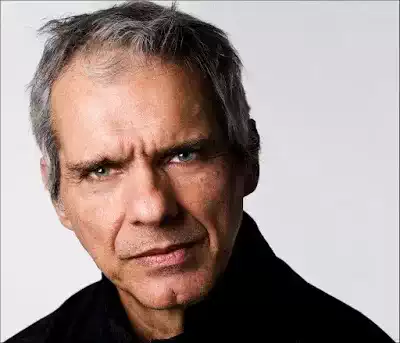
Chacal
b. 1951
 BR
BR
BR
Chacal is a Brazilian poet and cultural activist, known for his urban, irreverent, and experimental poetry, which dialogues with music, performance, and the daily life of metropolises. His work, marked by colloquial language, humor, and social criticism, explores themes such as identity, the city, politics, and human relationships in a direct and forceful way. He is a central figure in the marginal poetry and independent cultural scene in Brazil.
n. 1951-05-24, Rio de Janeiro
69
Views
Bio
Identification and Basic Context
Chacal is the pseudonym of Ricardo Basbaum. Born in Rio de Janeiro, he is one of the most prominent poets of Brazilian marginal poetry and an influential figure in the independent cultural scene. His work is deeply rooted in the urban context of Rio de Janeiro and the social and political transformations of Brazil. His nationality is Brazilian and his language of writing is Portuguese.Childhood and Education
Chacal had a youth in Rio de Janeiro, a period when cultural effervescence and avant-garde artistic movements were beginning to manifest strongly. Although there are not many details about his specific education, his work shows a strong absorption of urban culture, Brazilian popular music, and artistic avant-gardes. The city of Rio de Janeiro and its inhabitants are central elements in his initial perception of the world.Literary Career
His literary career consolidated in the 1970s, at the height of the military dictatorship, as part of the marginal poetry or underground poetry movement. Chacal stood out for publishing his own books, often produced independently and distributed through alternative circuits. His work evolved, accompanying the changes in the urban and social landscape of Brazil, always maintaining a strong experimental and interventionist character.Work, Style, and Literary Characteristics
Among his most famous works are "A Fábrica de Poemas" (1970), "Viagem no Arco-Íris" (1975), "A Língua do Peixe" (1976), "Muito Prazer" (1977), "Memória de um Homem Comum" (1984), "Contra o Amor Perfeito" (2003), "Leite Derramado" (2014), and "O Último Poema" (2018). The central themes of his poetry include the city, social and political criticism, the body, sexuality, madness, identity, and poetic language itself. Chacal experiments with form, using free verse, fragmentation, collage, and the incorporation of everyday elements, such as slang and colloquialisms. His style is marked by orality, acid humor, irony, and a poetic voice that seeks to be close, direct, and questioning. He frequently explores the relationship between poetry and performance, bringing his poems to the stage and the streets. His language is agile, provocative, and innovative, engaging with the tradition of protest poetry and modernist experimentation.Work, Style, and Literary Characteristics
Cultural and Historical Context Chacal emerged as a poet during the most repressive period of the Brazilian military dictatorship, which imbued his work with a strong character of contestation and resistance. He belonged to the marginal poetry generation, which sought to break away from traditional literary structures and connect with the public through more accessible language and independent production. His work reflects the contradictions and aspirations of Brazilian society at the time and in the following decades.Work, Style, and Literary Characteristics
Personal Life Chacal is known for his bohemian and engaged personality. His personal life, marked by intense participation in the Rio de Janeiro cultural scene, is often intertwined with his work. He has always maintained a critical and activist stance, using poetry as a tool for social and cultural intervention. His experiences on the streets and in the alternative spaces of Rio de Janeiro shaped his worldview and his poetic practice.Work, Style, and Literary Characteristics
Recognition and Reception Chacal is a revered poet in the marginal and independent poetry circuit, with a loyal audience that appreciates his irreverence and his ability to translate the spirit of the times. Although he has not achieved the same mainstream recognition as other poets of his generation, his influence on contemporary Brazilian poetry is undeniable, especially regarding poetic performance and the exploration of urban language.Work, Style, and Literary Characteristics
Influences and Legacy Chacal drew from diverse sources, from the poets of the 1945 generation and the Concrete poets to Brazilian popular music and international avant-gardes. His legacy lies in his formal daring, his ability to give voice to the margins of society, and his permanent experimentation with language. He has influenced many poets who seek poetry that is more engaged, experimental, and connected with the urban universe.Work, Style, and Literary Characteristics
Interpretation and Critical Analysis Chacal's work is often analyzed from the perspective of resistance poetry, linguistic experimentation, and criticism of urban alienation. His poetry invites reflection on the human condition in an increasingly complex and fragmented world, with an irreverent and demystifying perspective.Work, Style, and Literary Characteristics
Curiosities and Lesser-Known Aspects Chacal is known for his vibrant and improvisational poetic performances, where words gain body and movement. His independent book production, often handcrafted, is a mark of his cultural activism. He has also been involved in urban intervention projects and various cultural events, always with the aim of bringing poetry closer to the public.Work, Style, and Literary Characteristics
Death and Memory Chacal remains active on the cultural scene, producing and performing. His memory is associated with his transgressive work and his vitality as an artist and activist.Poems
0No poems found
Comments (0)
Log in
to post a comment.
No comments yet. Be the first to comment.