
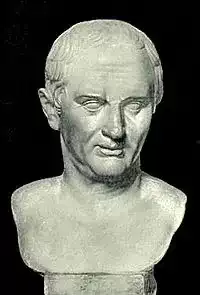
Cícero
106–43
· lived 0 years
 IT
IT
IT
Marcus Tullius Cicero was a prominent Roman statesman, lawyer, orator, and philosopher. Considered one of the greatest Latin orators and writers, Cicero played a crucial role in the transition from the Roman Republic to the Empire. His philosophical works, speeches, and letters offer an invaluable glimpse into the political and intellectual life of ancient Rome.
n. 0106-01-03, Arpino · m. 0043-12-07, Fórmias
6,486
Views
Bio
Born in Arpino, a town south of Rome, Cicero rose through the Roman political ranks, culminating in his consulship in 63 BC, during which he thwarted the Catiline Conspiracy. His political career was marked by his eloquence and his passionate defense of republican institutions. As a lawyer, Cicero is remembered for his powerful and persuasive speeches. As a philosopher, he introduced Greek thought to Rome, adapting Cynic, Skeptic, and Epicurean schools, and developing his own contributions to political and ethical philosophy. His letters are a vital primary source for understanding late Roman history. Despite his efforts to preserve the Republic, Cicero eventually became a victim of the political proscriptions that followed the death of Julius Caesar, being executed in 43 BC. His literary and intellectual legacy endures to this day, influencing Western thought.
Poems
0No poems found
Quotes
40Comments (0)
Log in
to post a comment.
No comments yet. Be the first to comment.