
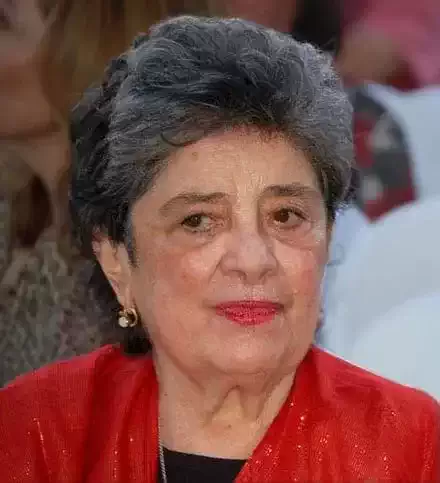
Claribel Alegría
 --
--
Claribel Alegría was a Nicaraguan poet, essayist, and novelist whose work is characterized by its profound lyricism and social commitment. Throughout her life, she explored universal themes such as love, death, memory, and identity, often intertwining them with the history and politics of Latin America. Her poetry is distinguished by an intimate yet collective voice, capable of evoking intense emotions and deep reflections. Her literary legacy is vast and internationally recognized, having received numerous awards and distinctions. Alegría established herself as one of the most important poetic voices in 20th and 21st-century Spanish-language literature, leaving an indelible mark on the culture and memory of the region.
n. 1924-05-12, Estelí · m. 2018-01-25, Managua
Bio
Identification and basic context
Claribel Alegría Vides was a Nicaraguan poet, essayist, narrator, and translator, born in Estelí, Nicaragua. She is a prominent figure in Central American and Latin American literature. Her work encompasses universal themes such as love, death, time, memory, identity, and social protest, often imbued with profound lyricism and a sharp historical and political consciousness.Childhood and education
Born in Estelí, Nicaragua, into a middle-class family. Her father was a doctor and her mother, Salvadoran, was a homemaker. Early exposure to literature and an interest in writing marked her youth. She studied at Colegio de Santa Inés in Managua and later traveled to the United States to pursue studies at George Washington University, where she obtained a degree in Psychology.Literary career
Her foray into literature began in her adolescence. She published her first book of poems, 'Poemas', in 1952. Throughout her career, she became an essential voice in Central American poetry, publishing numerous poetry collections and prose works. She actively collaborated in literary magazines and anthologies, and her work was translated into several languages.Work, style, and literary characteristics
Among her most notable works are 'Vigilia en Ánimas' (1978), 'No me preguntes cómo se pasa el tiempo' (1978), 'La casa de mi abuela' (1982), and 'Umbral' (1994). Her style is characterized by apparent simplicity, the musicality of verse, deep introspection, and the ability to connect the personal with the collective. She uses direct yet emotionally charged language, addressing loneliness, loss, political commitment, and hope. Her poetry is lyrical, confessional, and often elegiac, but always with an underlying current of resistance and vitality.Cultural and historical context
Alegría lived much of her life in exile, especially during the years of the Somoza dictatorship in Nicaragua and the civil war in El Salvador. Her work is deeply marked by these contexts, reflecting the violence, injustice, and struggle for freedom in Central America. She was a close friend of other Latin American intellectuals and artists, actively participating in the cultural and political debates of her time.Personal life
She was married to journalist Darwin J. Flakoll, with whom she shared much of her life and literary projects. The experience of exile, loss, and the search for identity significantly shaped her perspective and writing. Her commitment to the social and political causes of her country and Latin America was a constant in her life.Recognition and reception
Claribel Alegría received numerous awards and distinctions throughout her career, including the International Poetry Prize City of Granada (2005) and the Latin American Literature Grand Prize from the New York Poetry Academy (2010). Her work has been the subject of academic study, and her figure is widely respected in the literary sphere.Influences and legacy
She was influenced by poets such as Pablo Neruda, César Vallejo, and Alfonsina Storni. Her own legacy is immense, inspiring generations of poets in Latin America and beyond, especially for her ability to intertwine individual experience with social and political reality.Interpretation and critical analysis
Alegría's work has been interpreted as a testament to human resilience in the face of adversity, a meditation on memory and oblivion, and a celebration of life in all its facets. Her poetry invites reflection on the human condition and the importance of commitment.Childhood and education
She spent much of her childhood in San Fernando, a small town in northern Nicaragua. Despite her fame, she maintained a relatively discreet and approachable profile. Her deep connection to the nature and culture of her homeland is a recurring theme in her work.Death and memory
Claribel Alegría died in Managua, Nicaragua. Her memory endures through her work, which continues to be read, studied, and admired for its depth, beauty, and social relevance.Poems
0No poems found
Comments (0)
No comments yet. Be the first to comment.