
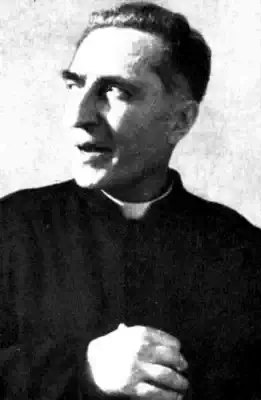
Clemente Rebora
1885–1957
· lived 72 years
 IT
IT
IT
Clemente Rebora was an Italian poet, professor, and soldier, known for his work marked by deep spirituality and engagement in reflections on faith, war, and the human condition. His poetry, often associated with crepuscularism and intense religious sensibility, explores inner struggle and the search for meaning in a changing world. Despite not having a vast literary output, his work left an indelible mark on 20th-century Italian poetry, recognized for its authenticity and existential depth.
n. 1885-01-06, Milão · m. 1957-11-01, Stresa
27
Views
Bio
Identification and Basic Context
Clemente Rebora was an Italian poet, professor, and soldier. He was born in Milan on July 22, 1885, and died in Boretto on March 23, 1957.Childhood and Education
Rebora had a childhood marked by fragile health and strong religious influence. He attended the classical lyceum in Milan, where he developed his interest in literature and philosophy. His university studies in Literature at the University of Pavia were interrupted by health problems and a growing interest in spiritual matters.Literary Career
Rebora's literary career began with the publication of his first poems in literary magazines. His main work, "Canti di prigionia" (Songs of Imprisonment), published in 1920, reflects his experiences as a soldier in World War I and his profound spiritual crisis. Subsequently, he dedicated himself more to teaching and philosophical and religious reflection, publishing prose texts.Work, Style, and Literary Characteristics
Rebora's work is characterized by an intense spiritual and existential charge. Central themes include faith, doubt, suffering, war, nature, and the search for God. His language is dense and meditative, often with an elegiac and confessional tone. Influenced by symbolism and a crepuscular sensibility, Rebora innovated by merging the personal experience of war with profound theological and existential reflection. Free verse is frequently used, but with a strong attention to rhythm and musicality.Cultural and Historical Context
Rebora lived in a period of profound transformations in Italy and Europe, marked by World War I, Fascism, and intense cultural and religious debates. His military experience and subsequent spiritual crisis place him in a context of disillusionment with nationalist ideals and a search for transcendent meaning. His work engages with the crepuscular sensibility and Hermeticism, but maintains a personal and unique voice.Personal Life
Rebora's personal life was marked by strong spirituality and a journey of conversion to Catholicism. The experience of war had a profound impact on his worldview and his poetry. He dedicated a large part of his life to teaching, being a professor of Italian and Latin, and continued his philosophical and theological research until his final days.Recognition and Reception
Although his poetic output is limited, Rebora was recognized by critics for his deep lyricism and authenticity. His work "Canti di prigionia" is considered an important testimony of the war experience and the spiritual quest in the 20th century.Influences and Legacy
Rebora was influenced by Italian Symbolist poets and the tradition of religious poetry. His legacy lies in his ability to transform personal experience and spiritual crisis into poetry of great depth, influencing later generations of poets who explored similar themes.Interpretation and Critical Analysis
Rebora's work is often interpreted as a journey of faith and struggle against doubt, mediated by the experience of war. His poetry is an invitation to reflect on the human condition, suffering, and transcendence.Curiosities and Lesser-Known Aspects
Rebora also dedicated himself to translating religious and philosophical texts, demonstrating his profound erudition. His writing was characterized by a rigorous revision process and a constant search for the exact word.Death and Memory
Clemente Rebora died in 1957, leaving a significant poetic and spiritual legacy. His work continues to be studied and appreciated for its intensity and existential relevance.Poems
0No poems found
Comments (0)
Log in
to post a comment.
No comments yet. Be the first to comment.