
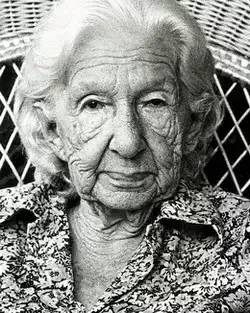
Cora Coralina
1889–1985
· lived 95 years
 BR
BR
BR
Cora Coralina was a Brazilian poet, known for her poetry that portrays the daily life of the interior of Goiás and the memories of her life. Her work, marked by simplicity and popular wisdom, addresses themes such as family, work, nature, and the passage of time, with an accessible and profound language. She is considered one of the most authentic and representative voices of Brazilian poetry of the 20th century, having achieved late but consolidated recognition for her literary contribution.
n. 1889-08-20, Goiás · m. 1985-04-10, Goiânia
84
Views
Bio
Identification and basic context
Cora Coralina is the pseudonym of Anna Lins dos Guimarães Peixoto Bretas. Born in Goiás Velho, Goiás, Brazil, her work is intrinsically linked to the land of Goiás and its memories. Her nationality is Brazilian and the language of writing is Portuguese. She lived in a period of great social and political transformations in Brazil.Childhood and education
Born into a traditional family, Cora Coralina had a childhood marked by the traditions of the interior of Goiás. Her formal education was limited, but she became an avid and self-taught reader, absorbing the popular culture and stories of her region. The influence of her homeland and oral narratives profoundly shaped her poetic sensibility.Literary career
Cora Coralina began writing poetry in her youth, but her work only gained national projection in old age. She published her first book, "Poemas dos Becos de Goiás e Estórias Mais", at the age of 75. Her poetry evolved organically, reflecting her life experiences and her deep connection to her roots. She collaborated with local newspapers and participated in regional anthologies.Work, style, and literary characteristics
Cora Coralina's main works include "Poemas dos Becos de Goiás e Estórias Mais" (1980), "Vintém de Jovem" (1983), "Os Kembs" (1980), "Meninos Verdes" (1980), and "A Casa Velha da Ponte" (1985). Her central themes are simple life, work, family, nature, the inexorable passage of time, and human resilience. Her poetry is marked by free form, musicality, and a vocabulary rich in regional and popular terms. The tone is often lyrical, tender, and wise, with a poetic voice that exudes authenticity and life experience. Her language is direct, without excessive artifice, but full of meaning and imagination. She introduced a unique perspective on daily life and the valorization of the feminine in her work. She is associated with the tradition of Brazilian popular poetry, but with an unmistakable originality.Cultural and historical context
Cora Coralina lived much of her life in Goiás, a state with a strong cultural identity and its own traditions. Her period of greatest recognition coincided with the end of the 20th century in Brazil, a time of redemocratization and revaluation of regional cultures. Although not directly linked to major national literary circles in her youth, her work dialogued with the rediscovery of popular and regional poetry in Brazil.Personal life
Cora Coralina married young and had several children. She lived a life marked by hard work, including as a confectioner, an activity that earned her the nickname "Dona Corinha". She faced losses and difficulties throughout her life, but always maintained an attitude of resilience and wisdom. Her personal life, full of simple and profound experiences, is the raw material of her poetry.Recognition and reception
Cora Coralina's recognition came late, but it was immense. She was honored on various occasions and her work earned a prominent place in Brazilian literature. Her poetry is both popular and academic, admired by critics and the general public alike. Her work is widely studied and revered.Influences and legacy
Cora Coralina was influenced by oral tradition, the popular culture of Goiás, and her readings throughout her life. Her legacy lies in her ability to transform everyday life into universal poetry, valuing the small things and the strength of life. She influenced generations of poets who seek authenticity and connection with their roots. Her work is an invitation to reflect on human values and the beauty found in simplicity.Interpretation and critical analysis
Cora Coralina's work is often interpreted as a hymn to life in its fullness, celebrating resilience, wisdom, and the beauty of the ordinary. Her poems invite reflection on memory, time, and the human condition, with a profoundly humanistic perspective.Curiosities and lesser-known aspects
Cora Coralina dedicated herself to making sweets for many years, an activity that provided her with sustenance and inspiration. Her house in Goiás Velho became a museum and tourist attraction, a testament to her importance. Her manuscripts and diaries reveal the depth of her thoughts and the consistency of her poetic gaze over decades.Death and memory
Cora Coralina passed away in her hometown, Goiás Velho. Her memory is kept alive through her work, which continues to enchant and inspire readers throughout Brazil and the world. Posthumous publications and studies about her life and work ensure the perpetuation of her legacy.Poems
0No poems found
Comments (0)
Log in
to post a comment.
No comments yet. Be the first to comment.