
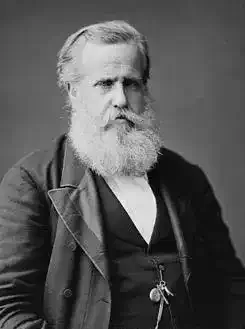
D. Pedro II
 BR
BR
D. Pedro II was a central figure in Brazilian history, known for his role as Emperor of Brazil. During his long reign, the country went through a period of significant political stability and economic development, consolidating its independence and advancing in various areas. His governance was marked by a pragmatic approach and the pursuit of national progress, facing internal and external challenges with diplomacy and firmness. D. Pedro II is remembered as an erudite monarch dedicated to the well-being of his people, leaving a lasting legacy in the formation of modern Brazil.
n. 1825-12-02, Rio de Janeiro RJ · m. 1891-12-05, Paris (França)
Bio
Identification and basic context
Dom Pedro II (Pedro de Alcântara João Carlos Leopoldo Salvador Bibiano Francisco Xavier de Paula Miguel Rafael Joaquim José Gonzaga Pascoal Cipriano Serafim), second and last Emperor of Brazil, was born in Rio de Janeiro. He was the son of Dom Pedro I and Empress Dona Maria Leopoldina of Austria. He ascended the throne at just five years old, after his father's abdication in 1831, and his reign, marked by the Regency until he reached adulthood, lasted almost 50 years. He was known for his culture, erudition, and dedication to the country.Childhood and education
Dom Pedro II's childhood was profoundly marked by the responsibility that fell upon his shoulders with the succession to the throne. Raised in the court environment, he received a meticulous education, focusing on various areas of knowledge, including sciences, philosophy, history, languages, and arts. He was educated by renowned tutors and had contact with the main thinkers and scientists of the era, which shaped his vast culture and worldview.Literary path
Although not primarily known as a literary author in the traditional sense, Dom Pedro II was an intellectual and a great admirer of the arts and letters. His literary contribution lies more in his extensive production of speeches, letters, articles, and in his role as a patron of the arts and sciences. He encouraged literary and cultural production in Brazil, promoting contests, publishing works, and supporting writers and artists.Work, style, and literary characteristics
Dom Pedro II's writing style, when manifested in personal texts or speeches, was characterized by clarity, erudition, and a thoughtful tone. In his writings, his profound knowledge of various areas of expertise and his concern for Brazil's development and progress were evident. He frequently addressed topics such as education, science, history, and politics, always with a vision focused on the empire's future.Work, style, and literary characteristics
Historical and cultural context Dom Pedro II reigned during a period of profound transformations in Brazil and the world. His government coincided with the consolidation of the Brazilian nation-state, the abolition of slavery, the development of infrastructure (railways, telegraphs), and the flourishing of arts and sciences. He maintained diplomatic relations with various nations and navigated complex international political scenarios. His figure is central to understanding the Second Reign and the transition to the Republic.Work, style, and literary characteristics
Personal life Dom Pedro II married Princess Teresa Cristina of the Two Sicilies, with whom he had four children, only two of whom survived: Dona Isabel and Dona Leopoldina. His relationship with Princess Isabel was marked by her preparation to assume a prominent role, especially during the Emperor's absences. He was known for his simple and austere life, dedicating himself intensely to his state responsibilities and his studies. His devotion to Brazil was notorious, and he faced challenges such as the Paraguayan War and growing abolitionist pressure.Work, style, and literary characteristics
Recognition and reception Dom Pedro II was widely respected and admired both in Brazil and abroad during his reign. He was seen as a cultured, just, and progressive monarch. He received numerous honors and titles from various scientific and cultural institutions worldwide. However, the end of his reign, culminating in the Proclamation of the Republic in 1889, represents a turning point in his public image, although his historical figure continues to be an object of study and debate.Work, style, and literary characteristics
Influences and legacy Dom Pedro II was influenced by the Enlightenment, positivism, and a liberal vision of government, adapting these ideals to the Brazilian context. His legacy is immense: the territorial and political consolidation of Brazil, the modernization of the country in various aspects, the encouragement of education, sciences, and arts. He is remembered as one of the most important statesmen in Brazilian history, whose reign brought a period of relative peace and prosperity.Work, style, and literary characteristics
Interpretation and critical analysis Analyses of Dom Pedro II vary. Some see him as a visionary monarch who modernized Brazil and kept it united in turbulent times. Others point to the limitations of his reign, such as the slowness in abolishing slavery and the maintenance of a monarchical regime in an emerging republican context. His role in politics, society, and Brazil's cultural development continues to be fertile ground for historical investigation.Work, style, and literary characteristics
Curiosities and lesser-known aspects Dom Pedro II was a talented amateur photographer and an enthusiast of new technologies, such as the telephone and telegraph. He owned a vast personal library and a scientific laboratory in his palace. He was known for being multilingual and for receiving people from all social classes in audience.Work, style, and literary characteristics
Death and memory Dom Pedro II died in exile in Paris in 1891, just over two years after the Proclamation of the Republic. His body was repatriated to Brazil in 1939 and rests in the imperial mausoleum at the Cathedral of São Pedro de Alcântara, in Petrópolis. His memory is honored as that of a great statesman and one of the pillars of the formation of modern Brazil.Poems
0No poems found
Comments (0)
No comments yet. Be the first to comment.