
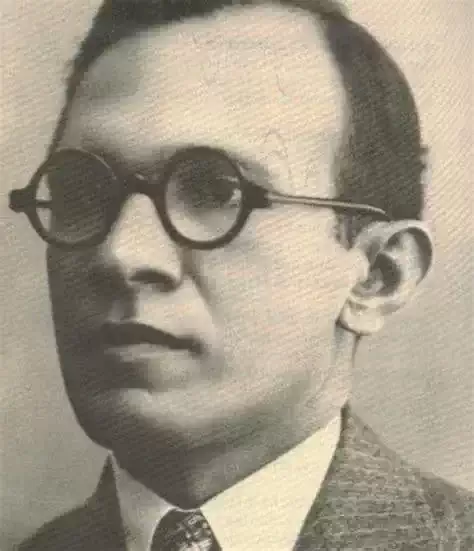
da Costa e Silva
 BR
BR
António Feliciano de Castilho, pseudonym "da Costa e Silva", was a Portuguese poet, writer, and translator, a prominent figure of the Ultra-Romantic movement in Portugal. Known for his vast literary output and pedagogical work, Castilho dedicated himself to disseminating culture and literature, also being notable for his fight for education and his influence on several generations of intellectuals. His poetic work, although sometimes criticized for its excessive sentimentality, marked its time and addressed themes such as love, death, nature, and religiosity, in a melodious and accessible style that captivated a wide audience, leaving a multifaceted legacy in Portuguese literature and culture.
n. 1885-11-23, Amarante · m. 1950-06-29, Rio de Janeiro
Bio
Identification and basic context
António Feliciano de Castilho, who sometimes used the pseudonym "da Costa e Silva", was born on September 18, 1808, and died on June 18, 1875. He was a prolific Portuguese poet, writer, translator, and pedagogue. Born in Lisbon to a family of modest but educated background, Castilho was a staunch advocate for education for all.Childhood and education
Castilho was born blind, but thanks to his father's intervention, who sought innovative methods for his education, and the support of figures like Viscount de Santarém, he developed a remarkable ability to read through touch and a prodigious memory. He was educated at home and at the Seminary of Lisbon, showing early on a great literary talent and a thirst for knowledge. He was strongly influenced by reading and by contact with classical and contemporary culture.Literary career
Castilho's literary career is vast and spans poetry, prose, theater, and translation. He began publishing early, gaining notoriety with his novel "Amor e Melancolia" (1828). He became a central figure in Portuguese literary life, especially during the Romantic period, where he led the Ultra-Romantic current. He was an active contributor to newspapers and magazines of the time, such as "O Panorama", and played a crucial role in translating classical and contemporary works, notably the works of Homer, Virgil, Racine, and Camões. His activity as a translator had a significant impact on the dissemination of classical literature and the formation of new readers.Work, style, and literary characteristics
Castilho's main works include "A Primavera", "O Outono", "O Inverno", "A Noite", "Escavações Poéticas", "Nova Primavera", and his translations of Homer. Themes such as love (often idealized and melancholic), death, nature (seen as a refuge and a mirror of feelings), religion, and homeland are recurrent in his poetry. His style is markedly Ultra-Romantic, characterized by sentimentality, melancholic lyricism, musicality, and the pursuit of an accessible and elegant language. He often used the sonnet and other traditional poetic forms, but also explored free verse in some of his compositions. The tone of his poetry is often elegiac, confessional, and sometimes edifying. Castilho was a literary conservative, defending traditional meter and clarity of language, which put him in conflict with proponents of Realism and Naturalism, such as Eça de Queirós, in the famous "Questão de Palavras" (Matter of Words).Cultural and historical context
António Feliciano de Castilho lived in a time of profound changes in Portugal, marked by political instability after the Liberal Wars, the rise of Romanticism, and tensions between conservative literary currents and those emerging with Realism. He was a central figure in literary and cultural circles, maintaining relationships with other writers of the time, although he had notable conflicts, such as the aforementioned "Questão de Palavras" with Antero de Quental and the Generation of 1865, which advocated for a renewal of Portuguese poetry against what they considered Castilho's conservatism.Personal life
His congenital blindness did not prevent him from leading an active life and having a vast literary output. He maintained close family relationships and dedicated himself intensely to writing and translation. His passion for education and cultural dissemination deeply marked his life, being one of its main driving forces.Recognition and reception
During his lifetime, Castilho enjoyed great popularity and recognition. He was a member of the Academy of Sciences of Lisbon and received various honors and distinctions. His work was widely read and admired by the general public, who saw him as a "national poet." However, his conservative stance in literary terms led to later criticism, especially from proponents of Realism.Influences and legacy
Castilho was influenced by poets such as Camões and Bocage, and by European Romantic currents. His legacy lies in his vast poetic work, his translations that enriched the Portuguese literary heritage, and, above all, his role as an educator and defender of public education. He influenced a generation of readers and writers, both through his work and his exemplary figure.Interpretation and critical analysis
Castilho's work has been the subject of various interpretations. While some value his musicality, lyricism, and his ability to touch the reader's emotions, others point to sentimental superficiality and a lack of thematic depth, in contrast to the new literary proposals that were emerging.Curiosities and lesser-known aspects
His ability to overcome blindness, using touch to read and write, is one of the most remarkable aspects of his life. His deep religious devotion and his optimism, despite adversity, are also striking characteristics.Death and memory
António Feliciano de Castilho died in Lisbon in 1875. His death was widely reported and lamented, confirming his popularity in life. He continues to be remembered as an important figure of Portuguese Romanticism and a tireless defender of culture and education.Poems
0No poems found
Comments (0)
No comments yet. Be the first to comment.