
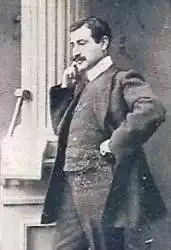
Daniel Varoujan
1884–1915
· lived 31 years
 AM
AM
AM
Daniel Varoujan was an Armenian poet, known for his lyrical work that celebrated the culture, nature, and soul of his people. His words were an echo of Armenian landscapes and traditions, conveying a deep love for his homeland and identity. Varoujan is remembered as one of the most poignant voices in 20th-century Armenian literature, whose poetic legacy continues to inspire and move.
n. 1884-04-20, Dörteylül · m. 1915-08-26, Çankırı
26
Views
Bio
Identification and basic context
Daniel Varoujan (in Armenian: Դանիէլ Վարուժան) was a prominent Armenian poet. He was born on April 20, 1884, in Perche Rich, then part of the Ottoman Empire, and died in 1915, a victim of the Armenian Genocide. He is considered one of the greatest Armenian poets of the 20th century.Childhood and education
Varoujan was born into a family of intellectuals and artists. His childhood was marked by Armenian cultural richness and traditions. He attended schools in various cities, including the St. Petersburg Academy of Arts, where he studied painting and sculpture, and the University of Padua, in Italy, where he studied literature and philosophy. This multidisciplinary education profoundly influenced his artistic and poetic vision.Literary career
Varoujan's literary career began early, with the publication of his first poems in Armenian magazines. His work evolved from more personal themes to a deep immersion in the culture, history, and landscapes of Armenia. He became a prominent voice in Armenian literature, known for his ability to evoke the beauty and spirituality of his homeland.Work, style, and literary characteristics
Varoujan's work is celebrated for its rich language, vivid imagery, and deep connection with Armenian culture and nature. His poems explore themes such as love for the homeland, spirituality, the beauty of rural landscapes, peasant life, and national identity. His style is often epic and lyrical, with remarkable musicality. He used traditional poetic forms and innovated with a rich and expressive vocabulary. **Main works:** * "Triumph" (1902) * "Desert Flowers" (1906) * "Song of the Grain" (1910) * "The Heart of an Armenian" (published posthumously in 1921)Cultural and historical context
Daniel Varoujan lived during a period of intense political and social turmoil in the Ottoman Empire, culminating in the Armenian Genocide. His poetry reflects pride and love for Armenian culture, but also a growing awareness of the threats hanging over his people. He belonged to the generation of Armenian intellectuals who sought to revitalize and preserve national identity through art and literature.Personal life
Varoujan dedicated much of his life to education and the promotion of Armenian culture. He worked as a teacher and director of Armenian schools. His personal experiences and his deep connection with the Armenian people were inexhaustible sources of inspiration for his poetry.Recognition and reception
Daniel Varoujan is universally recognized as one of the most important poets in Armenian literature. His work was widely praised by critics and the public during his lifetime, and his legacy was consolidated after his tragic death. He is considered a symbol of Armenian cultural resilience.Influences and legacy
Varoujan's work was influenced by classical literature and Armenian oral traditions. He, in turn, influenced generations of Armenian poets with his celebration of national identity and his poetic mastery. His legacy is the preservation of the Armenian soul through the written word.Interpretation and critical analysis
Varoujan's poetry is often interpreted as a hymn to the Armenian land and people. His work is analyzed from the perspective of national identity, spirituality, and the intrinsic relationship between man and nature. His tragic fate lends an even more poignant dimension to his celebration of Armenian life and culture.Curiosities and lesser-known aspects
Besides being a poet, Varoujan was a talented visual artist, with training in painting and sculpture. His travels through Armenia inspired many of his poems, allowing him to capture the essence of the landscapes and rural life.Death and memory
Daniel Varoujan was arrested and murdered in 1915 as part of the Armenian Genocide, one of the greatest horrors of the 20th century. His premature death left a void in Armenian literature, but his work continued to be published and celebrated, making him a martyr and a national hero. His memory is honored through posthumous editions and the continued study of his poetry.Poems
0No poems found
Comments (0)
Log in
to post a comment.
No comments yet. Be the first to comment.