
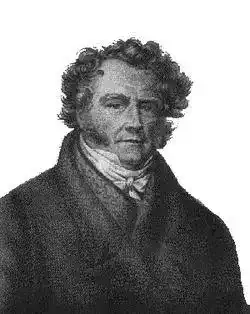
Diogo Bernardes
1530–1605
· lived 75 years
 PT
PT
PT
Diogo Bernardes was a Portuguese Renaissance poet, known for his lyrical work and his ability to express the complexity of human emotions. His poetry reflects the cultural and spiritual context of the time, with a rich and elaborate language. He is considered one of the important figures of Portuguese-language poetry in the 16th century.
n. 1530, Ponte da Barca · m. 1605-01-01
18
Views
Bio
Identification and basic context
Diogo Bernardes was a Portuguese poet. Born in 1535 and died in 1603. His name is associated with the Renaissance period in Portugal.Childhood and education
Little is known about Diogo Bernardes' childhood and education. It is believed that he received a careful education, typical of the time for someone of his social standing, although details are scarce.Literary career
Diogo Bernardes stood out as a lyrical poet in the 16th century. His work was published in anthologies and in his own volumes, being recognized by his contemporaries. His poetry evolved within Renaissance canons, exploring universal themes.Work, style, and literary characteristics
Diogo Bernardes' main work includes poems that address love, death, and spirituality. His style is marked by formal elegance, lexical richness, and the musicality of verse. He frequently used the sonnet, the preferred poetic form of the time. His language is meticulous, and the images he creates are evocative.Work, style, and literary characteristics
Cultural and historical context He lived during the Portuguese Renaissance, a period of great cultural and literary effervescence, marked by maritime expansion and the influence of Italian humanism. He was part of a circle of poets who engaged in dialogue with classical tradition and new European literary trends.Work, style, and literary characteristics
Personal life Details about Diogo Bernardes' personal life are limited. It is known that he dedicated a large part of his life to literary creation, but there is no information about his profession or specific family relationships that explicitly marked his work.Work, style, and literary characteristics
Recognition and reception He was recognized in his lifetime as a valuable poet, integrated into the literary landscape of his time. His work continued to be read and appreciated, consolidating his place in the history of Portuguese poetry.Work, style, and literary characteristics
Influences and legacy Diogo Bernardes was influenced by classical poets and Italian sonneteers. His legacy lies in his contribution to the development of Renaissance lyricism in Portugal, with a work distinguished by its formal quality and expressive depth.Work, style, and literary characteristics
Interpretation and critical analysis Bernardes' work has been analyzed from the perspective of universal themes of love, the fleetingness of life, and spiritual seeking. His poetry is often seen as a reflection of Renaissance sensibility.Work, style, and literary characteristics
Curiosities and lesser-known aspects Few lesser-known aspects of his life are widely publicized, but his dedication to poetry in a period of so much political and social uncertainty is, in itself, a testament to the power of art.Work, style, and literary characteristics
Death and memory Diogo Bernardes died in 1603. His memory endures through his work, preserved and studied by posterity as a landmark of Portuguese Renaissance poetry.Poems
0No poems found
Comments (0)
Log in
to post a comment.
No comments yet. Be the first to comment.