
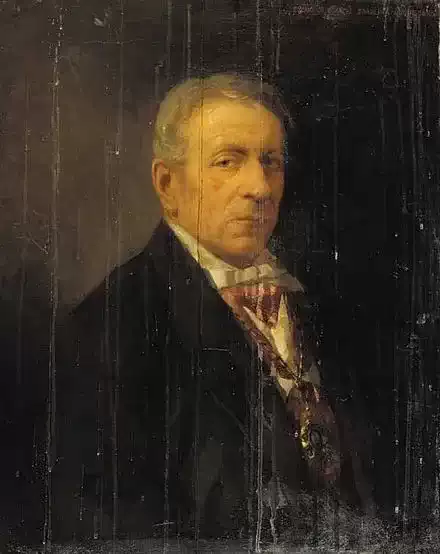
Duque de Rivas
 --
--
Ángel de Saavedra, Duke of Rivas, was a multifaceted figure in Spanish literature, excelling as a poet, playwright, and politician. His work is part of Romanticism, a movement of which he was one of its greatest representatives in Spain. With works like "Don Álvaro o la fuerza del sino" (Don Álvaro or the Force of Destiny), he revolutionized Spanish Romantic theater, characterized by its dramatic intensity, the conflict between destiny and free will, and the exaltation of passions. His poetry, also of a Romantic nature, explores themes such as love, freedom, history, and nature, often with a grandiloquent and emotional tone. The Duke of Rivas was not only a literary creator but also a relevant actor in the political life of his time, which influenced his worldview and his work.
n. 1828-09-13, Valeta · m. 1914-11-07, Madrid
Bio
Identification and basic context
Full name: Ángel María de Saavedra y Ramírez de Baquedano, third Duke of Rivas. He was a prominent Spanish writer, playwright, and politician, a key figure of Romanticism in Spain. Born in Córdoba, his life spanned a crucial period in Spanish history, from the late 18th to the mid-19th century.Childhood and education
Born into an aristocratic Andalusian family. He received a meticulous education, influenced by the ideas of the Enlightenment, but his spirit was soon drawn to the pre-Romantic and Romantic currents that were beginning to take shape in Europe. The early death of his father and his family environment marked his youth.Literary career
His literary career began early, but it was consolidated with the publication of "Don Álvaro o la fuerza del sino" (1835), a work that marked a milestone in Spanish Romantic theater. Before that, he had already cultivated poetry, with "El sueño del proscrito" (The Dream of the Outlaw) (1830) and "Romances históricos" (Historical Romances) (1832), which explored patriotic and legendary themes. His exile in England and France, after the fall of the absolutist regime, allowed him to come into contact with European literary currents. Upon his return to Spain, he became a central figure of the Romantic movement.Work, style, and literary characteristics
The work of the Duke of Rivas is characterized by its Romantic spirit: exaltation of feelings, individualism, freedom, and destiny. In theater, "Don Álvaro o la fuerza del sino" is a paradigmatic example, with its overflowing passions, fatalism, and rupture of the classical unities. In poetry, his "Romances históricos" revive Spain's glorious past, with a sonorous and emotional language. His style combines grandiloquence with moments of deep lyrical introspection. Themes such as tragic love, honor, revenge, and the struggle against adversity are recurrent.Cultural and historical context
The Duke of Rivas lived in a turbulent Spain, marked by the War of Independence, the absolutist restoration of Ferdinand VII, and the struggles between liberals and conservatives. He witnessed and participated in these events, which profoundly influenced his work and thought. He is associated with the first generation of Spanish Romantics, along with authors like Espronceda and Zorrilla.Personal life
His life was marked by political action and liberal commitment. He was exiled twice for his ideas. Despite his noble title, his restless spirit and literary vocation led him to actively participate in the debates of his time. He maintained relationships with important figures of the era, both literary and political.Recognition and reception
He was one of the most recognized authors of his time. His theatrical work was an immediate success, and his poetry was widely read. He held important positions, such as Director of the Royal Spanish Academy and President of the Council of Ministers, demonstrating the high social and political regard he achieved.Influences and legacy
The Duke of Rivas drew from sources such as Walter Scott, Byron, and Schiller, and in turn significantly influenced later Romantic writers. His role was fundamental in establishing the Romantic movement in Spain and renewing national theater. His figure represents the union between art and civic commitment.Interpretation and critical analysis
He is considered a pillar of Spanish Romanticism, an author who knew how to adapt European currents to the sensibility and history of Spain. "Don Álvaro" remains a subject of study for its dramaturgy and its theme of fatality. His epic and lyrical poetry has been valued for its ability to evoke the spirit of his time.Childhood and education
His noble title, "Duke of Rivas," became his best-known literary name. He actively participated in the War of Independence, showing his facet as a man of action. His long life allowed him to witness and participate in great historical changes.Death and memory
He died in Madrid in 1865, leaving an indelible legacy in the literature and history of Spain. His memory is kept alive through his works, which are part of the canon of Spanish literature.Poems
0No poems found
Comments (0)
No comments yet. Be the first to comment.