
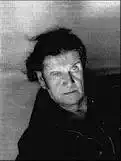
Edgar Bayley
1919–1990
· lived 71 years
 AR
AR
AR
Edgar Bayley was an Argentine poet and literary critic, a prominent figure in his country's literary avant-garde. His work, marked by strong linguistic experimentation and the exploration of existential and social themes, reflects an engagement with the transformations of the 20th century. Bayley is remembered for his relentless pursuit of new forms of poetic expression, in a trajectory that established him as one of the important names in contemporary Argentine poetry.
n. 1919-01-01, Buenos Aires · m. 1990-01-01, Buenos Aires
15
Views
Bio
Identification and basic context
Edgar Bayley, whose full name was Edgar Antonio Bayley, was an Argentine poet, literary critic, and essayist. He was born in Buenos Aires, Argentina, and passed away in the same city. Although not known for significant pseudonyms or heteronyms, his name is intrinsically linked to the Argentine literary scene of the 20th century. His family background and social class are not widely detailed, but his intellectual journey and Argentine nationality are central to his literary identity. He lived in a period of intense social, political, and cultural transformations in Argentina and worldwide.Childhood and education
Information about Edgar Bayley's specific childhood and education is scarce. It is presumed that he had access to a formal education that allowed him to develop his interest in literature and criticism. It is likely that his education was influenced by the intellectual and artistic currents of the time, both in Argentina and internationally. His absorption of literary, philosophical, or artistic movements, as well as significant events in his youth, are not publicly detailed.Literary career
Edgar Bayley's writing career and the chronological evolution of his work are marked by strong linguistic experimentation and the exploration of existential and social themes. He was an active figure in the avant-garde literary circles in Argentina, collaborating in various publications and magazines that promoted new aesthetics. His work as a literary critic and essayist was also fundamental to the understanding and dissemination of contemporary poetry. He was involved in the creation and maintenance of spaces for literary debate and diffusion, contributing significantly to the Argentine cultural landscape.Work, style, and literary characteristics
Edgar Bayley published several poetic works, among which stand out "Poemas de la calle" (1940), "Los Viejos" (1941), "El Clamor" (1942), "Materia y Forma" (1945), "Canciones de la locura" (1946), "La Vida Simple" (1947), "Edades" (1948), and "Canto" (1952). His work is characterized by innovative language, with frequent formal and rhythmic experimentation, seeking to express the complexity of modern life and human anxieties. The themes addressed include daily life, loneliness, existential anguish, social criticism, and the search for meaning in existence. His style is direct, sometimes colloquial, but always dense in meaning and imagery. Bayley is associated with the Argentine avant-garde movement, seeking to break with previous literary traditions and propose new ways of seeing and saying the world.Cultural and historical context
Edgar Bayley lived and produced in a period of cultural and political effervescence in Argentina, marked by populist governments, social tensions, and ideological debates. He belonged to the so-called "Generation of 1940," a group of writers who sought to renew Argentine literature, moving away from previous models and exploring new languages and themes. His work dialogues with the concerns of his time, reflecting social transformations and the search for identity in a context of modernization and instability. His political and philosophical stance is not explicitly defined in partisan terms, but his poetry often carries a critical and reflective tone on the human and social condition.Personal life
Information about Edgar Bayley's personal life is limited in public sources. There are no extensive details about his romantic relationships, family, friendships, or literary rivalries that directly shaped his work. It is known that his dedication to literature was intense, and his profession as a critic and essayist suggests that he lived to a large extent from his intellectual activity. His philosophical and spiritual beliefs, although reflected in his poetry, are not explicitly detailed. His civic engagement, if any, is not widely documented.Recognition and reception
Edgar Bayley is recognized as an important poet of the Argentine literary avant-garde. While he may not have achieved mass or institutional recognition comparable to other authors, his work has secured a significant place in the history of 20th-century Argentine poetry. His critical reception, especially among connoisseurs of avant-garde poetry, has been positive, valuing his originality and his contribution to aesthetic renewal. The academic recognition of his work has been growing, with studies analyzing his linguistic experimentation and thematic contributions.Influences and legacy
Edgar Bayley's influences likely include currents of modern and avant-garde poetry, both in Latin America and Europe. His work, in turn, has influenced later generations of Argentine poets who sought new forms of expression and innovative thematic approaches. His legacy lies in his experimental boldness and his ability to translate the complexities of modern existence into powerful poetic language. His inclusion in the canon of Argentine poetry is consolidated by his originality and relevance.Interpretation and critical analysis
Edgar Bayley's work has been the subject of interpretations that highlight his profound exploration of language as a tool to express the human condition. Critical readings often focus on the existential themes present in his poems, such as loneliness, anguish, and the search for meaning. His formal experimentation is seen as a reflection of the complexity of reality and subjectivity. There are no widely publicized controversies or critical debates associated with his work, but rather a recognition of its importance and originality within the literary landscape.Curiosities and lesser-known aspects
Information about curiosities or lesser-known aspects of Edgar Bayley's personal or artistic life is scarce. His dedication to poetry and literary criticism suggests an intellectual profile focused on his art. There are no widely publicized striking or anecdotal episodes that illuminate his profile in a particular way. His writing habits, objects, places, or rituals associated with poetic creation are little documented.Death and memory
Edgar Bayley passed away in Buenos Aires, Argentina. There is no information about significant posthumous publications that have expanded the knowledge of his work or revealed relevant unpublished material.Poems
0No poems found
Comments (0)
Log in
to post a comment.
No comments yet. Be the first to comment.