
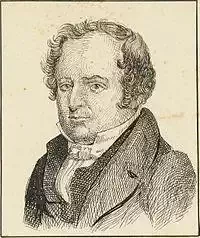
Evaristo da Veiga
1799–1837
· lived 37 years
 BR
BR
BR
Evaristo da Veiga was a 19th-century Brazilian poet, journalist, and politician, a prominent figure of the Romantic period and the nationalist movement. His poetic work, marked by a civic and patriotic tone, celebrated Brazil's independence and exalted the country's heroes and nature. As a journalist and editor, he played a crucial role in disseminating liberal ideas and shaping public opinion, founding the influential newspaper 'Aurora Fluminense'.
n. 1799-10-08, Rio de Janeiro · m. 1837-05-12, Rio de Janeiro
29
Views
Bio
Identification and basic context
Antônio Gonçalves de Azevedo, better known as Evaristo da Veiga, was a Brazilian poet, journalist, lawyer, and politician. He was born in Rio de Janeiro and was a central figure in Brazilian Romanticism, especially in its civic and nationalist strand. He was one of the founders of the Brazilian Academy of Letters.Childhood and education
Evaristo da Veiga was born in Rio de Janeiro on July 22, 1837. The son of a wealthy family, he had access to a good education. He graduated in Law from the Law School of Largo de São Francisco, in São Paulo, in 1859. From an early age, he showed a great interest in literature and politics, influenced by the intellectual environment and political effervescence of the Second Empire.Literary career
Evaristo da Veiga's literary career is strongly associated with Brazilian Romanticism. He began publishing his poems in newspapers and literary magazines at a young age. His work achieved great popularity and contributed to the consolidation of a national literary identity. In addition to poetry, he dedicated himself intensely to journalism, where he exerted significant influence.Work, style, and literary characteristics
Evaristo da Veiga's poetic work is characterized by nationalism, civic spirit, and the exaltation of the homeland, nature, and Brazilian heroes. His poems frequently celebrated Brazil's independence and important historical figures. His style is marked by clear and accessible language, with an elevated and eloquent tone, aiming to inspire patriotic sentiment. He predominantly used traditional poetic forms. Notable works include 'A Estrela do Sul' and 'Canto de Liberdade'. Themes such as love for the homeland, freedom, glory, and the natural beauty of Brazil are recurrent.Cultural and historical context
Evaristo da Veiga lived during the Second Empire in Brazil, a time of consolidation of independence and the search for a national identity. Romanticism was flourishing, and literature was seen as an instrument for building this identity. He was involved with the intellectual and political circles of the time, being a defender of liberal ideals.Personal life
Evaristo da Veiga married Maria Elisa da Veiga. His life was marked by dedication to literature, journalism, and politics. He was an active citizen, participating in public life and defending his convictions.Recognition and reception
Evaristo da Veiga was one of the most popular poets of his generation. His work was widely disseminated and read. He was elected to the Brazilian Academy of Letters, a recognition of his importance in the Brazilian literary scene. His civic poetry strongly resonated with the nationalist sentiment of the time.Influences and legacy
Evaristo da Veiga was influenced by European romantic poets and by Brazilian poets who preceded him. His main legacy lies in his contribution to Brazilian civic and nationalist poetry, helping to shape the poetic image of Brazil and its heroes. His work as a journalist was also fundamental in the formation of the Brazilian press.Interpretation and critical analysis
Evaristo da Veiga's poetry is often interpreted as a reflection of the romantic idealism and nationalist fervor of 19th-century Brazil. Critics highlight his ability to mobilize patriotic sentiment through poetic language, although some point to a certain thematic and formal conventionality in his work.Curiosities and lesser-known aspects
A curiosity is that, despite being known for his patriotic poetry, Evaristo da Veiga also wrote lyrical poems about love and nature. His work as a journalist was as remarkable as his poetry, having founded 'Aurora Fluminense,' a newspaper of great circulation and influence.Death and memory
Evaristo da Veiga passed away on March 23, 1878, in Rio de Janeiro. His death was lamented, and he is remembered as one of the important figures of Brazilian Romanticism and a defender of national identity through literature and journalism. His works continue to be studied as part of Brazil's literary heritage.Poems
0No poems found
Comments (0)
Log in
to post a comment.
No comments yet. Be the first to comment.