
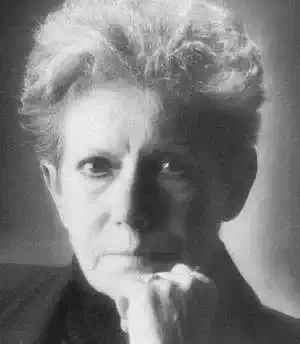
Fernanda Botelho
1926–2007
· lived 81 years
 PT
PT
PT
Fernanda Botelho was a Portuguese writer, recognized for her poetry that frequently explores the female condition, the passage of time, and the ephemerality of life. Her work stands out for its lyrical sensitivity and careful language, which connect her to tradition, but with a perceptive view of modernity. Her poems reflect deep introspection, addressing universal themes with a unique and touching voice, which has earned her a prominent place in contemporary Portuguese literature.
n. 1926-12-01, Porto · m. 2007-12-11, Lisboa
29
Views
Bio
Identification and Basic Context
Fernanda Botelho, literary name of Maria da Graça de Portugal e Castro Guedes de Vasconcelos Botelho, was born in Lisbon on April 26, 1924, and passed away in the same city on November 29, 2007. She was a Portuguese writer whose poetic work was distinguished by its lyrical depth and exploration of existential themes and the human condition.Childhood and Education
Little is publicly known about her childhood and education, but her work suggests a strong sensitivity and an upbringing that allowed her a refined command of language and an understanding of the literary currents of her time.Literary Career
Fernanda Botelho began her literary career with the publication of "Poemas" in 1952, a book that already announced her uniqueness. Throughout her career, she published several poetic works, consolidating her own style and a place in the Portuguese literary landscape.Work, Style, and Literary Characteristics
Fernanda Botelho's main works include "Poemas" (1952), "O Gosto do Tempo" (1977), and "Para que os dias não morram" (1991). The dominant themes in her poetry are the ephemerality of life, the passage of time, solitude, memory, the fragility of human relationships, and the female condition. Her style is marked by musicality, lyrical clarity, and careful, sometimes melancholic, but always precise language. She frequently uses free verse, but with a strong attention to rhythm and sound. Her poetic voice is confessional and introspective, exploring subjectivity with remarkable intensity. Her work dialogues with the tradition of Portuguese lyrical poetry, but with a modern sensibility and a markedly feminine perspective.Cultural and Historical Context
Fernanda Botelho lived much of her life in Portugal during periods of significant social and political transformations, including the Estado Novo dictatorship and the transition to democracy. Although not known for explicit political activism, her poetic work reflects a keen sensitivity to human and existential issues that resonate in any historical context.Personal Life
Details about her personal life are scarce in the public sphere. It is known that she was married and a mother, and that her family life may have had some influence on her work, particularly on themes related to the fragility and depth of human relationships.Recognition and Reception
Although not an author of great media exposure, Fernanda Botelho is recognized by critics and more attentive readers as an important voice in contemporary Portuguese poetry. Her work has been rediscovered and valued for its lyrical quality and depth.Influences and Legacy
Fernanda Botelho's work belongs to a lyrical lineage that goes back to authors like Fernando Pessoa and Sophia de Mello Breyner Andresen, but with an unmistakably her own voice. Her legacy lies in her ability to touch the reader with her lyrical honesty and her profound reflection on the human condition, especially the female one, in a country where female voices in poetry have not always received the same recognition.Interpretation and Critical Analysis
Fernanda Botelho's poetry has been analyzed from the perspective of the exploration of temporality, finitude, and the search for meaning in a constantly changing world. Her approach to the female condition is particularly noted for its subtlety and the way she captures the nuances of the female experience.Curiosities and Lesser-Known Aspects
Few curiosities about Fernanda Botelho are widely publicized. Her personal discretion contrasts with the expressiveness and depth of her work, which seems to emerge from an attentive and sensitive observation of the world and of herself.Death and Memory
Fernanda Botelho passed away in 2007. Her memory is preserved through her work, which continues to be read and studied, keeping her poetic voice alive for new generations.Poems
0No poems found
Comments (0)
Log in
to post a comment.
No comments yet. Be the first to comment.