
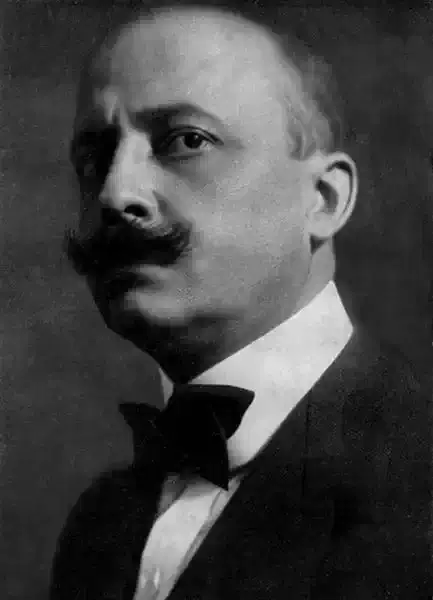
Filippo Tommaso Marinetti

Filippo Tommaso Marinetti

1876–1944 · lived 67 years IT IT

Filippo Tommaso Marinetti was an Italian poet, editor, and literary theorist. He is best known as the founder of Futurism, an artistic and social movement that he described in his 1909 "Futurist Manifesto". Marinetti advocated for speed, technology, youth, and violence, and Futurism had a significant impact on visual arts, literature, theater, and music. His work sought to break with tradition and celebrate the dynamism of the modern era. Marinetti believed that art should reflect the constantly changing world, with its machines, industries, and vibrant cities. He was a controversial figure, with some of his ideas being associated with fascism.

n. 1876-12-22, Reino da Itália · m. 1944-12-02, Bellagio

18 Views
Bio
Filippo Tommaso Marinetti was born in Alexandria, Egypt. He studied law at the University of Pavia and the University of Bologna, where he obtained his doctorate in 1899. Marinetti founded the magazine "Poesia" in 1905, which became an important vehicle for disseminating his ideas. In 1909, he published the "Futurist Manifesto" in the French newspaper "Le Figaro", which outlined the principles of the movement, including the rejection of traditional art, the exaltation of the machine and war, and the pursuit of a new aesthetic based on speed and energy. Futurism spread throughout Europe, influencing artists in various fields. Marinetti continued to be the main ideologue of the movement, publishing several manifestos and literary works, such as "Mafarka, the Futurist" (1909) and "Zang Tumb Tumb" (1914). He was a fervent supporter of Italy's intervention in World War I and, after the war, he approached Benito Mussolini's fascist regime, although his relationship with fascism was complex and sometimes tense. Marinetti passed away in Bellagio, Italy.

Poems

0

No poems found

Quotes

2

Comments (0)

Share
Log in to post a comment.

No comments yet. Be the first to comment.